Tag Archives: Oakland

The Education Report: OUSD Board’s Gary Yee candidate for acting superintendent

Source: Oakland LocalApril 22, 2013
By Katy Murphy

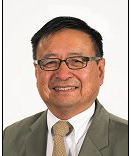
The Oakland Board of Education will host a press conference on Monday April 22nd to announce Dr. Gary Yee as a candidate for the position of Acting Superintendent in the Oakland Unified School District (OUSD). The Board will formally consider the matter during its next Regular Board Meeting on Wednesday, April 24 when a vote will be taken on the replacement for current Superintendent Tony Smith.

Read full announcement.

Oakland Local: East Bay College Fund matches mentors with students for community success

dsc_4582April 10, 2013
By Jon Leckie

By the end of his junior year, Jameil Butler was a promising high school student. He was sociable, popular and a rising star on championship teams in basketball and football. Butler knew he had talent, and he knew that talent could help him take the next step from Oakland Technical High School to the halls of higher education. But after a trip to Sacramento in 2004, Butler would find the life he had imagined for himself out of reach.

“I was having some issues at home, and wanted to get out of town. So I went to visit my brother at Sacramento State,” Butler said. “We were waiting outside a club meeting people and talking to girls. A week before some people from Oakland had killed someone from Sacramento, so these guys weren’t too happy when they found out where I was from.”

Butler says he tried to walk away, but was followed through the parking lot and down the street. “I tried to ignore it,” he said, “but after two blocks I got tired of it and turned around. He pulled a gun and shot me twice in the stomach.”

After two weeks in the hospital, and the loss of one of his kidneys, Butler would return home. But doctors told him the risk of blood clots made it too dangerous to continue to play football; ending any shot he had at an athletic scholarship.

Leaning on the support and encouragement of his mother, Butler was still determined to get a college education. That was when he ran across the East Bay College Fund.

“The East Bay College Fund was started in 2003 by a group of citizens who really wanted to support change in Oakland,” Diane Dodge, the fund’s executive director, said. “We started serving seniors in high school by supporting them through college with the goal of having them graduate and give back to the community.”

In addition to rewarding scholarships to students and helping them find and use resources to get through college, such as the Free Application for Federal Student Aid and navigating them through the college application process, the East Bay College Fund also supports students with one-on-one mentoring for the entirety of their college career.

“I hit some roadblocks personally and academically, but my mentor had my back and made sure I made progress as a student and as a man,” Butler said. “They invested time and energy in me, and that really meant a lot.”

This year, The East Bay College Fund will add 40 scholars to the 150 students they are currently helping through college.

“That means we’re giving out a $16,000 scholarship to each scholar, or $4000 per year over four years. And we’re matching them with a mentor who will be their support and their guide through their entire college journey,” Dodge said. “We have 30 mentors, but need 10 more. We’re looking for community members who have graduated from college and are looking to give back by guiding scholars and supporting them through all the things they will go through in college.”

Mentors at The East Bay College Fund commit to attending two retreats a year with their scholars, and involving themselves in the life of the scholar through regular conversations.

“It’s an art, not a science,” Dodge said. “Mentoring is a privilege. Towards the end people talk about the student like they are their own children, but there are also a lot of challenges with class and race and self-doubt. We let our students know ‘yes, you can’ and we believe in you, and the mentor is the person that reminds them of that.”

Read more.

KQED: Oakland School Board to Replace Outgoing Superintendent

Source: Oakland LocalApril 10, 2013

School board officials in Oakland have begun the process of replacing outgoing superintendent Tony Smith. Smith surprised colleagues last week when he announced he was resigning so that his family can be closer to his ailing father-in-law, who lives in Chicago.

Reporter Stephanie Martin spoke with Jill Tucker, who covers Oakland Unified for the San Francisco Chronicle, about Tony Smith and his record as superintendent — and what a new superintendent could mean for Oakland schools.

Stephanie Martin: Ms. Tucker, when Smith came on board four years ago, the district was trying to turn around very severe financial problems. How did he fare?

Jill Tucker: I think there’s nearly universal agreement that he’s leaving the district better than he found it. Last year, for the first time in a decade or more, the school budget in Oakland had no deficit. Even though they balanced their budget every year, they had been operating with a deficit for a very long time. So he was able to get rid of that structural deficit.

And yet at the same time, he avoided layoffs, even in the midst of a recession and all the budget cuts. When they had a bond on the ballot in November, it passed with 84 percent voter support. And a poll showed the highest support of the district in about 18 years. So in general, I think there are a lot of very sad people in Oakland that he’s leaving.

Stephanie Martin: But he did have to make some controversial calls, like closing schools. How did he weather that criticism?

Jill Tucker: You know, I remember speaking to him at the time. Because he is sort of evangelical in his efforts to address racism and to address race issues in Oakland. And some of the other community issues that are really tough to discuss — violence, inequality in our schools.

And I think it was very difficult for him when they started closing schools. He felt there were too many schools for the population; they’d been losing enrollment. And yet some of the schools that he was closing were predominantly minority schools, and they’d accused him of being a racist. But he was very steadfast, and said, look, when you’re in this position you just have to keep going forward. You can’t stop and think about what people are saying, when you believe you’re doing the right thing, you do the right thing.

So they did shut down a few schools, it was not popular. He also took on the teachers’ union, trying to tackle seniority in hiring issues so that he could get higher-quality teachers in some of the lowest-performing schools. That was not popular with the union.

But in general, he’s a very steadfast person. He has a very strong belief system, and he just has stuck with it. And at times that hasn’t been popular, but in general, the union and everybody else said they were disappointed to hear he was going.

Stephanie Martin: Oakland has really struggled to raise the graduation rates and the test scores. Those have improved overall, but from what I understand there still is an achievement gap. What remains to be done in that area?

Jill Tucker: As Tony Smith said, there’s still a lot to do in Oakland, and I don’t think anybody would disagree with that. Test scores are still below the state average, though they’re moving in the right direction. Graduation rates, dropout rates; we still have issues with at-risk students not achieving, schools where the teachers don’t have the same experience level, the resources that other schools have.

So there’s still a lot of work to do, even though they have gotten clear of direct state control, from the state takeover days of 2003. I think everyone agrees Oakland has a long way to go. But at least most people believe they’re on the right track.

Stephanie Martin: Oakland teachers have complained that they are paid less than those in comparable districts. Could that change under a new superintendent?

Jill Tucker: I think it could, if and only if more money starts coming in to Oakland. And we could see that under the governor’s proposed budget, where schools and districts that serve low-income or English-learner students would see more money. If that passes and Oakland does see an increased share of the state budget for education, you would probably see teachers being paid a little bit more. But it’s very difficult to pay them more when you have a static budget coming in.

On the plus side, Oakland teachers haven’t had gone through as many layoffs as many other districts. They’ve safeguarded them from that. But on the other hand, they are paid lower than many other districts.

Stephanie Martin: What else is the teachers’ union looking for?

Jill Tucker: I think from a new superintendent, or in general, what I’ve heard from the union this week is they want stability. They want to be able to count on their school system, their leaders. I think that was the hardest part of seeing Tony Smith leave, was that he has been here for four years and increased the stability in the district.

And I think that everyone would just love to see Oakland catch a break. It’s going to be a challenge for whoever the school board brings in, to stay the course. The school board has said they don’t want someone to come in and shake things up; they like the road they’re on.

That’s going to be the difficult part, when they look at who they’re going to hire. Because anyone who comes to a large city like Oakland to be superintendent, they’re going to want to put their own mark on it. The job comes with a bit of ego. It’s going to be difficult to find somebody to stay the course, to take the reforms that Tony Smith has implemented and keep on that path.

Stephanie Martin: Is there any sense of whether that new person would come from outside the district or within?

Jill Tucker: They haven’t started the process yet. They’ll start discussing it at the meeting tonight, as you mentioned. The first step is accepting Tony Smith’s resignation. Then they’ll decide whether they want to hire a consulting firm, do a national search, or try to stay a little more local.

There haven’t been any names from inside the district that folks have said, here’s a valid candidate that they might consider. No names have come forward in these few days since the announcement of the resignation. So it’s unclear if there’s anybody inside the district that’s ready to step into that role. We’ll have to see. As Jody London, one of the school board members said when I asked her about a replacement, “I didn’t know Tony Smith existed until I met Tony Smith.”

Listen here.

Oakland Local: Superintendent of Oakland schools resigns, citing family health emergency

superintendent tony smithApril 5, 2013
By Barbara Grady

Oakland Unified School District Superintendent Tony Smith, who has spearheaded a new strategic direction in Oakland of creating community schools that help kids deal with the adversities of poverty in addition to academics and who put the district on sound financial footing, submitted his resignation this morning.

His said last day will be June 30.

Smith said his father-in-law has been hospitalized and is in poor health and the family decided to move to Chicago to help out and to allow Smth’s daughters to spend time with their grandparents.

“I feel very privileged to have been part of bringing quality and stability back to Oakland Pubic Schools. The decision to leave at this time is very difficult. However, my commitment to my family first means this is the right decision at this time,” Smith said in a letter to the board of education shared with the media. “I believe in Oakland, value my relationships and our community, and will always be an ally in the effort to create more opportunity for Oakland children.”

He continued that Oakland schools are in better shape than they used to be and are primed to continue on that path.

“I am proud of the incredible work we have accomplished together and believe the Board, with your leadership, will continue on a positive trajectory,” he said in his letter. “Since the district returned to local control four years ago, we have made great strides in academic outcomes, fiscal solvency, community engagement, and organizational coherence. While there is still much work to do, the district is well positioned to achieve the objectives outlined in the balanced scorecard and meet the goals described in our ambitious strategic plan.”

Smith joined OUSD as superintendent four years ago as the first superintendent following half a decade of state control of the district and its finances resulting from the equivalent of bankruptcy. The state has deemed Oakland the most improved school district in California.

In those years he not only balanced the district budget during a deep recession – sometimes with tough and unpopular decisions like closing five elementary schools last year – but he started it on a path to create Full Service Community Schools and other facets of a seven-year strategic plan called Thriving Students.

Under the belief that kids cannot learn if they are sick, hungry or feeling unsafe, OUSD under Smith opened health and community centers at many district schools, providing kids with access to medical care as well as after-school enrichment, counseling and healthy snacks. At some of the health centers, which are collaborations with the county health department and Children’s Hospital of Oakland, students’ families also have access to medical care.

OUSD also expanded its use of the federally funded Free and Reduced Lunch program to include breakfast at many schools and, this year, even dinner at some schools.

In 2011, on the eve of convincing the board of education to adopt the strategic plan he so ardently worked on, Smith told Oakland Local that “education transformation is a key, if not the primary key to sustainable economic development,” in Oakland. He said educational resources need to be “distributed differently” so that all kids can graduate school and become employable.

Friday, Oakland school board president David Kakishiba said, in his own letter, “After four years, the Superintendent will be leaving a legacy that Oakland can be proud of.” He added, “As the Board of Directors, we commit to supporting the Superintendent in his transition and to standing with the community of staff, students, and families as we move forward in this new chapter for the Oakland Unified School District.”

Oakland Unified, while on stronger financial footing thanks in part to the state of California finally stabilizing education funding, is still facing the challenges of a high drop out rate, particularly among low income students of color, and of decreasing enrollment. In some of its approximately 100 schools it has improved academic performance of low income students and students of color and all but ended discipline practices that sent kids out of school through suspensions and expulsions.

But those improvements have yet to find their way to all schools and the strategic plan Smith so carefully negotiated and built with other officials and teachers is just beginning to be implemented.

Great Oakland Public Schools, a community group of OUSD parents which has pushed the district to revisit policies on teacher hiring and compensation, student absenteeism and other issues, credited Smith with making

“Tony’s leadership has stabilized the district, and brought our community together around a shared vision of quality schools for each and every Oakland student. He created spaces for courageous conversations on race, class and poverty. The Thriving Students plan of full service community schools in every neighborhood has broad community ownership,” said Jonathan Klein, the organization’s executive director.

“We are sad about Tony leaving and wish he and his family the best.”

The OUSD Board of Education plans to meet April 10 to accept Smith’s resignation and consider steps needed to recruit a new superintendent.

See story.

Oakland Local: Martin Luther King Jr. Oratorical Fest presents 1st place winning poetry

Castlemont Orators
MLK Oratorical Fest award winning poet D’Angelo Crosby, far right with blue ribbon, and his Castlemont High School classmates

March 18, 2013By

D’Angelo Crosby

Oakland’s Castlemont High School student D’Angelo Crosby won first place for original poetry with this poem about his life during the Martin Luther King Jr. Oratorical Fest Regional competition 2013.


The Struggle

Mommy and daddy died

When I was young

Felt a lot like losing one of your two lungs

And sister was all I had growing up

She gave me things

But to some people that was a bit much

But I can’t complain

Because things happen for a reason

All the pain and struggle was the best part of my season

And even though sometimes I felt like leaving

It was their love and support that was keeping

Me away from the edge

And leaping

Into darkness

Seeking something that I couldn’t find that was leading

Me down the wrong path

Un-succeeding

Pleading for healing

But only getting a worse beating

Inside it was like not knowing the plays while in the huddle

Or a drug dealer

That couldn’t find their bundle

I tried so hard to understand why

But I guess it’s just the way it is in the struggle
~Copyright 2013 D’Angelo Crosby

To learn more.

The Education Report: Still Seeing High Numbers for African American Male Student Suspensions

Source: Oakland LocalMarch 15th, 2013
By Serena Valdez

At Wednesday night’s school board meeting, Superintendent Tony Smith and a small panel, including two principals, presented the Balanced Scorecard Accountability Report. The topic: suspensions.

One major focus of the report is to work toward reducing suspension rates overall, but specifically with African American male students.

In the 2011-12 school year, African American students accounted for one-third of enrolled OUSD students and 63 percent of the students who were suspended. Of the male students, African Americans make up 16 percent of all OUSD students and 41 percent of suspended students. Compared to other ethnicities in the district, this figure is disproportionate and raises a few red flags.

Latino students, for example, have proportionate suspensions compared to the total students enrolled in the district. They make up 38 percent of all OUSD students and 27 percent of suspended students. Latino males in the district and those who were suspended make up 38 percent and 27 percent respectively.

The report also details possible root causes of student suspensions and strategies schools are and should be utilizing to reduce the number of suspensions and be more proactive to all student success.

The strategies are laid out on a pyramid structure with three tiers of action. The first tier addresses almost all students with early intervention and developing social and emotional learning for all students; tier two focuses on restorative justice and developing manhood for students at risk of suspensions; tier three helps the troubled students on an individual basis.

Read rest of article.

Oakland Local: Join us March 20 for release of study on teaching practices in Oakland (Community Voices)

Teaching Matters PlainMarch 14, 2013

By Marc Tafolla

As a community, we know that no other in-school factor affects students as much as effective teaching. Therefore, Oakland’s parents, teachers and community leaders have expressed a strong desire to help the city’s children access effective teaching in their classrooms. We also know that our children will do best when we work in deep partnership with their teachers to support their work in the classroom.

On March 20, our coalition will be gathering for Teaching Matters: The NCTQ Study Release to talk about the release of a study by the National Council on Teacher Quality, and actions we all can take to support effective teaching in every Oakland classroom (see below for more info).

The Effective Teaching Coalition — which includes Oakland Community Organizations (OCO), SEIU Local 1021, Youth Together, Youth Uprising, The Education Trust-West, GO Public Schools Leadership Center, and the Lawyers’ Committee for Civil Rights — will host this event to highlight the importance of supporting our teachers.

Last Thursday night, more than 150 Oaklanders braved the cold and rain to join the Effective Teaching Coalition at its first event: “Teaching Matters, Series 1: “The Importance of Supporting Teachers So All Children Succeed.”

Around tables, we shared memories of our favorite teachers and what made them effective. We also talked about roadblocks to effective teaching in Oakland and heard from experts, and a representative from each of the coalition members.

View article.

Oakland Local: Oakland teachers, students, community gather to discuss ways to provide ‘quality education’ for all

teachingMarch 11, 2013
By Barbara Grady

Studies indicate the main driver of student achievement is effective teaching. While poverty, trauma and starting kindergarten with no preparation put children at a learning disadvantage, students can catch up if they have effective classroom teachers for at least three years.

But effective teaching doesn’t just happen; it must be nurtured with mentoring, support and collaboration.

Such were among the findings discussed Thursday night when about 200 people gathered at an Oakland public school for a forum on “Teaching Matters,” hosted by seven community organizations led by Great Oakland Public Schools.

They were joined by Education Trust-West, Oakland Community Organizations, Youth Uprising, Youth Together, the Lawyers Committee for Civil Rights and SEIU Local 1021. Spokespeople from these groups spoke of wanting to support improvements at Oakland Unified School District.

Timed to coincide with OUSD’s drafting and negotiation of a new teacher professional development and evaluation system with its teachers union, the Oakland Education Association, the forum drew scores of OUSD and charter school teachers as well as students, parents, community activists and a few administrators.

To read more.

The Education Report: Violence is Traumatic for Teachers, Too

81st March 4, 2013
By Serena Valdez

Stacey Smith is an Oakland school district parent and volunteer who has served on the District GATE Advisory Committee, the school board’s Special Committee on School Based Management, and the Community Advisory Committee for Special Education. What she writes about does not reflect the view of any group.

You may have caught the recent news about street violence near New Highland Academy. On January 10th, teachers and children were preparing to leave on their regular visit to the nearby 81st Avenue Public Library branch when gunfire broke out and about sixty shots were fired. After this traumatic incident, visits to the library ended completely because it was considered too dangerous. The Oakland Tribune’s Tammerlin Drummond wrote a column about the incident and the police-escorted “peace march” to the library a couple of weeks ago that the teachers and the Lincoln Child Center helped organize to create some closure for the second- and third-graders. The march was widely covered and news reports focused on violence the children experience daily both in and near school and at home. Many touched on the trauma counseling the students received and teachers spoke of the great need to support the children. But something seemed missing to me.

Who is helping the teachers and school site staff with their own trauma?

I tracked down Susan Andrien, MFT, who is a Program Manager at the Lincoln Child Center. She told me that her organization has both full-time and part-time staff working on-site at both New Highland Academy and RISE. Both school communities experience high levels of violence including while at school. Last year there were nineteen lockdowns at RISE and as one New Highland Academy teacher mentions in Drummond’s column, the school actually has color codes that indicate the severity of the frequent lockdowns. One teacher shared how the staff was “profoundly impacted” by their situation. The need for student mental health services in these schools is well beyond the available capacity. And for teachers, there is even less support.

“They’re holding so much,” Ms. Andrien says of the teachers. “They’re doing the best they can to manage it and many of them are traumatized themselves, from what they see or hear from the students and from experiencing the violence themselves. They’re doing a great job but they need more support.”

Ms. Andrien discussed the very real consequences of the trauma for adults, like Post-Traumatic Stress Disorder (PTSD). And a quick internet search confirmed there are many other effects: greater risk for depression, substance abuse, general anxiety, and stress that gets in the way of healthy living. I wonder how many teachers and site staff are affected to the point that work and home life are impacted. My heart goes out to these folks, people who have taken on the difficult job of teaching plus the added challenge of navigating dangerous workplace environments to do their jobs.

The good news is that there is some recognition that the adults need mental health support too. Ms. Andrien told me that in addition to the work Lincoln Child Center is doing to provide some coaching and support to teachers and principals, the Oakland Unified School District is looking at a mental health support model that grew out of 9/11 and the lessons learned from treating the mental health needs of responders in New York City. I’m going to look into this and hope I have something to report on in the near future.

The bad news is that it sounds like any substantial plan to provide support for school staff who experience violence is still only in the planning stages. In the meantime, we have a lot of teachers and other site staff out there who continue to be exposed to violence every day and who may not be getting the support they need to cope with the issue. As one teacher confessed, “I worry that the District will lose many great educators if their fears aren’t addressed.”

Of course, violence and its related trauma are not limited to these two schools. Are you a teacher or staff member facing this problem at New Highland Academy, RISE or another site? How does the violence affect you and your colleagues? Are you getting the support you need and, if not, what do you think would help?

View article.

Oakland Voices: Oakland Teacher Alison Ball Breathes Life into Math & Science

Alison Ball and her friendly classroom skeleton Photo: Oakland Voices/January 2013February 22, 2013
By Debora Gordon

After early teaching stints in far flung locales from Ecuador and China to New York and Sunnyvale, 4th year middle school teacher Alison Ball, 29, came to Urban Promise Academy (UPA), where she is having a blast teaching seventh grade.
Aside from computation and life science, Alison is excited about Crew, a UPA program focusing on the social and emotional learning skills that are part of OUSD’s strategic plan.
“What drives my work,” Alison said, “is that it’s such a time of self discovery, with students getting to discover themselves as people, figuring out, ‘what do I stand for as a person? How can I navigate the social world that I’m in?’”
Allison helps provide opportunities for students to talk with one another about what they are studying. “What I find is that in general students will have the conversation when they have the skills to have the conversation. If sometimes there’s some goofing off, it’s because they don’t know how to have that conversation or they don’t know how to explain their thinking.”
She uses a variety of strategies to help prepare students to talk about their thinking and how they arrive at conclusions.
“The math,” she explained, “is about the element of logic – students being able to see the logic and predictability, being able to solve problems, to ask what are my tools, beyond math, figure out possible outcomes. That element of mathematical thinking provides reasoning beyond math. Those kinds of things can be really empowering for students.”
Alison finds that the greatest reward of teaching is getting to spend time with young people. “My job never gets old, it’s never boring. There is always something that I‘m working on professionally, always new goals I’m setting.”
Although Alison did not originally set out to be a teacher, she says she tries to emulate her 3rd grade teacher Mr. Kramer. “He had a sense of wonder in the classroom. There were always weird, gooey, crawly things around the classroom – worms and brine shrimp, and I loved the ‘ew, gross!’ factor.” She also values the high standard he had for his students.
Alison advises new teachers not to take on too much that first year, which can often backfire, she says. She also reminds them to “breathe. At that moment, when you have a decision to make in the classroom, about how to respond to a student, that can feel really overwhelming, watching yourself making a decision, I definitely can and do breathe, on many occasions.”

See original post.