The Education Blog
May 29, 2012
Written By Katy Murphy
The Sustainable Urban Design Academy is slated to expand this fall as part of Castlemont’s controversial merger and redesign — which was the subject of an early morning protest on the campus last week; another is planned for tomorrow morning.
The students have undertaken a number of projects on the campus, including a community mapping initiative featured in the below video. They have been documenting the strengths and challenges of their neighborhood from various perspectives: public health, economic opportunity and the natural vs. “built” environment, among others.
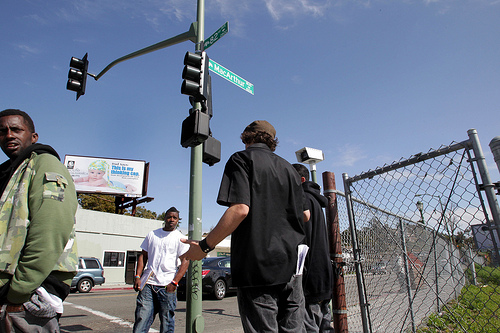
In addition to learning about various `green’ career paths, the students hope to weigh in on city and school district projects. The MacArthur Boulevard strip outside the high school campus could sure use a little TLC.
The Education Blog
Tuesday, May 22nd, 2012
Written by Katy Murphy
This morning, Urban Strategies Council released a series of reports about the experience of black boys in the Oakland school district: one on out-of-school suspensions, one on chronic absenteeism, and lastly, an analysis of numerous factors to estimate how many children are on track to graduate high school — beginning in elementary.
There is so much data here that the short story in today’s Tribune (which is long by today’s standards) and blog post can’t do it justice. Each school will receive a data profile to further the district’s African American Male Achievement initiative. These reports were produced in partnership with OUSD as part of the initiative.
Some of the stats that I pulled for the paper on African-American boys in OUSD. The suspension rates are the percentage of individual students that received an out-of-school suspension at least once during a single school year.
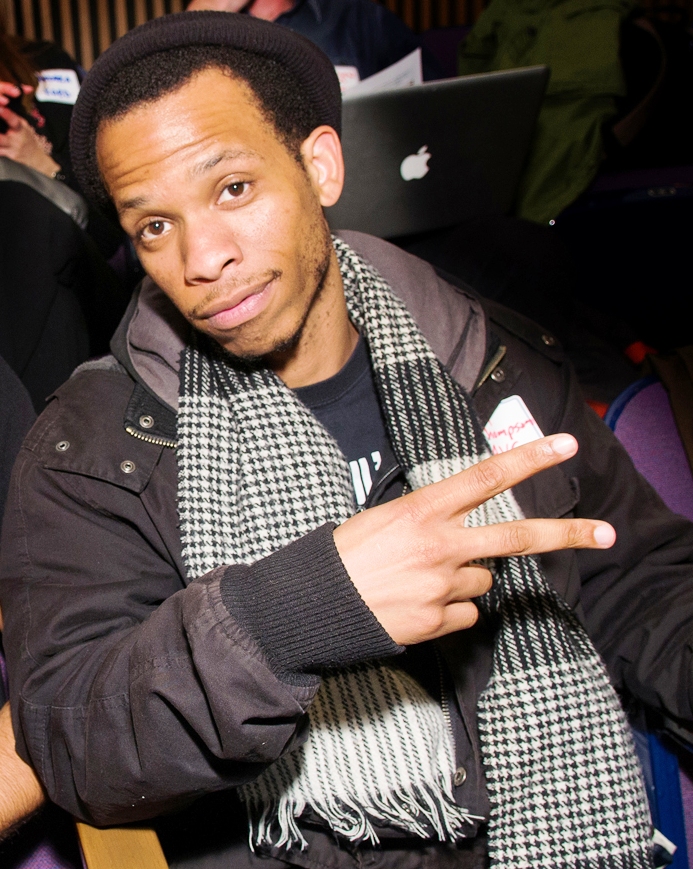
Written by Yo Ann Martinez Interviewed: Davin Thompson, Artist Mentor @ BUMP Records and Jason Jakaitis, Factory Manager
KQED and the Bay Area Video Coalition (BAVC) Factory and BUMP Records are working together to produce an original soundtrack and short film vignettes whose central purpose will be to counteract the high school drop out rate in Oakland from the youth’s perspective. Here are some of the questions we asked the coordinators of the program.
KQED will be uploading three vignettes before the final projects are due. Look out for them in this blog.
What is the students’ creative process?
JJ: First the filmmakers acquire stories – spoken word poetry from Queen Shabazz and Cesar Cruz, plus iPhone testimonials from OUSD youth – and then they begin to plan out who these stories can be told in an engaging, visually compelling fashion. Then they write a script, create shot lists and storyboards, cast their actors, shoot the film, edit the content into a rough for feedback, and finally polish their rough cut into a fine cut.
DT: These particular young artists came in to the project with their own opinions and ideas about what they wanted to say and how they wanted to say it. My job was more about helping to frame their thoughts and align the perspective with the larger mission of achieving a well rounded project. So the process consisted of a lot of group check-ins and one-on-one sessions with me and the artist involved.
What has been most exciting for them in this process?
Jason Jakaitis, Factory Manager
JJ: It’s definitely been taking the stories of individual like Cesar Cruz and Queen Shabazz and visualizing them stylistically – accentuating their voice with light, color, composition and sound.
DT: Aside from the stipend payment and being place one a national stage, I’d say it is the opportunities express themselves using an art form and the love on a topic they’re passionate about. For some of the individuals involved some excitement came from the challenge having to talk about things they weren’t used to. For our producers the excitement came from producing a whole project. Over all I’d say the whole process have been exciting though.
How many of them have been touched by this issue? Example.
JJ: All of our participants know young people who have dropped out of high school and all of them have seen the social and economic consequences of these students not having received their diploma. And many more of their friends are struggling with the choice – they fail to see their education as something that will benefit them.
DT: One of the producers of the BUMP/KQED collaboration project has had quite a few difficulties with school over the past couple of years, from the administration of the school to the actual location of the school he’s been through it. On the track “Perfect School” he gets a chance to thoroughly express his experience via his 1st recorded rhyme! I interpreted his process as being very cathartic.
What are their thoughts/experiences on the dropout issue? How are they translating that into film and music?
JJ: They believe deeply that the dropout crisis is something that is institutionally manufactured to perpetuate class inequity and maintain the status quo. They are creating stories that they hope will address young people directly and speak to their lived experiences while still providing them with helpful information and resources that will encourage them to stay in school.
DT: The artist in BUMP records definitely empathize with the students who drop out of school. They recognize how imperfect the educational system is in this country and dissect it with sharp criticism. These artists have done a wonderful job at looking at the whole picture and have attempted to incorporate this into the music and the writing. Even though the artist them selves can empathize with the dropouts they still value education and encourage their peers to stick it out and fight the good fight for a better life and a brighter future.
Written By: Marty Mannion, Education Director-America SCORES Bay Area
Anthony Spears barely spoke to anyone other than his parents during 1st and 2nd grade at ER Taylor Elementary School. Looking back he explained “It was hard to talk to strangers the most because you don’t know them. How are you supposed to talk to people you don’t know?” Anthony’s anxiety highlights the fundamental challenge facing teachers at the beginning of the school year. They must transform a room full of “strangers” into a team of students that support each other in writing, sharing and learning together. This is especially challenging with students who are new to the country or dealing with poverty.
Anthony and hundreds of other students each year who struggle in the traditional classroom setting find the answer in America SCORES Bay Area’s magic mix of soccer, writing and community service. After school students practice soccer and write poetry with their team and on Saturdays they compete against other schools, where they also share poems before each game.
You might wonder, “A soccer and writing program? Why and how?” America SCORES helps students discover that writing is a social action and writing is for everybody. It is a dialogue between a speaker and the world, which must include a responsive, safe audience. What better audience and writing community is there than a team that is already working together towards a common goal?
When poet-athletes on America SCORES teams want to be heard by their teammates, opponents, coaches or communities, they have no choice but to become the author of their own story. Most of all, poetry and soccer make a great team because they both know how to have fun! The America SCORES Bay Area program is a year-long festival and celebration of all that children have to say, and all the soccer they can play.
For students like Anthony, joining the America SCORES team transforms the school experience from a building full of strangers to a team full of friends who value each other’s writing. Only after every student experiences this transformation can we expect them to stay engaged and meet their full potential in the classroom.
KQED takes a deeper look into the Teacher Town Hall event held at Laney College on March 13, 2012. Watch this video and learn more about the impact that teachers have on their students success.
Perfect example of how KQED’s American Graduate Initiative can make an impact of the lives of high school students who are eager to learn and expand their experiences.
As Cesar Cruz, ARISE High, Adelante Coordinator, Raza History Teacher explained, “It was a great experience for them to see people of color from their neighborhood at KQED and then to sit in on lectures that are inspiring and life changing. It was a powerful day! It made students who are dropping out in high school envision themselves at SF State and working at KQED!”
Homies Empowerment Youth in the Adelante Leaders program at ARISE High travel to KQED thanks to Yo Ann Martinez and then to SF State thanks to Dr. Jeff Duncan-Andrade and explore media, education and life long learning.
Watch this compelling story of how a child found his voice through the transformative powers of poetry, friendship, and soccer.
http://www.youtube.com/watch?v=2T76E6IEOKE&feature=colike
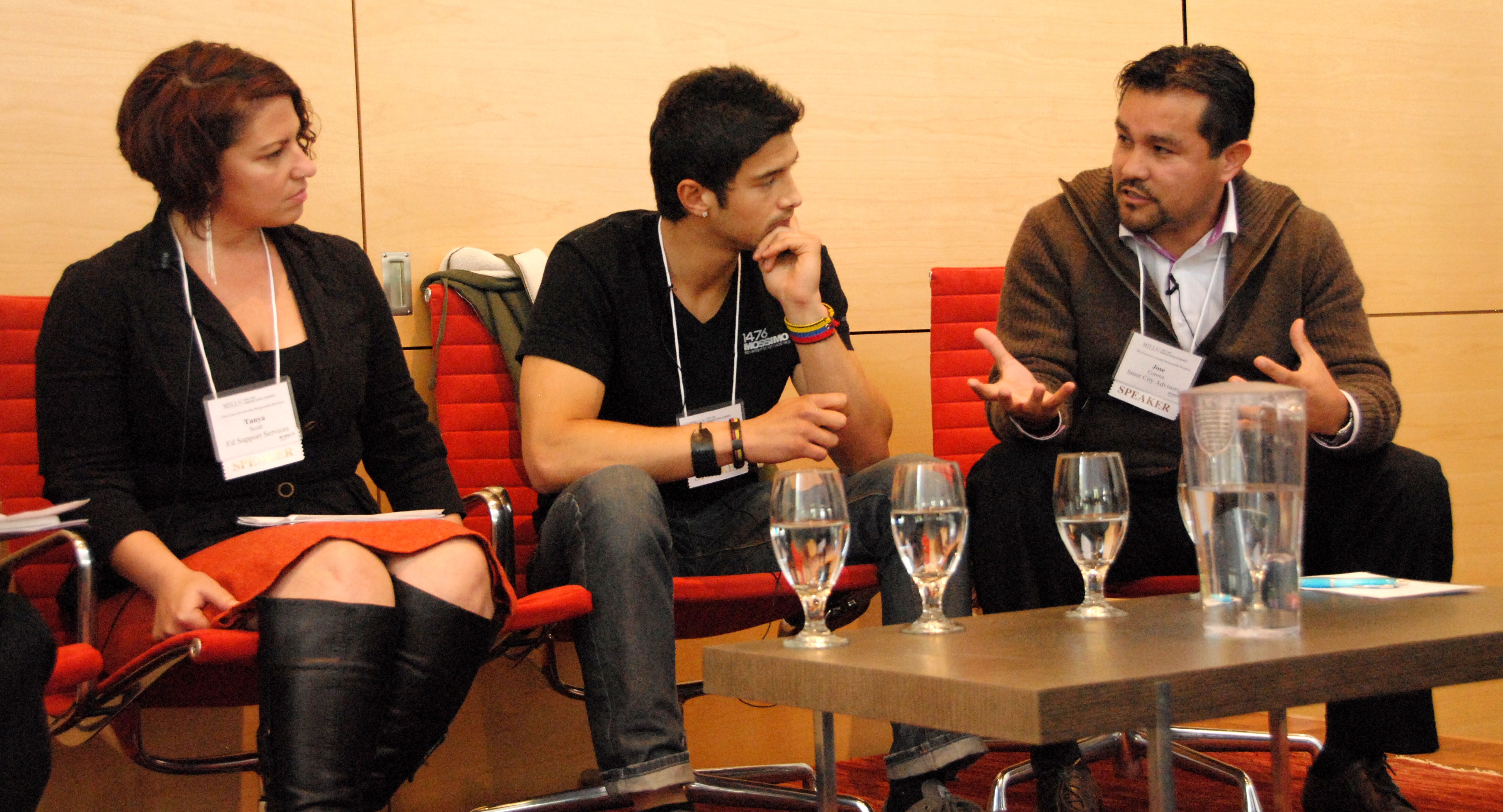
Jose Corona, CEO Inner City Advisors,Tanya Scott, Founder of Ed Support Services and Alejandro Velez, Founder of Back To The Roots
Written By Jose Corona
With the imperative to reduce inequality and restore local economic growth, Inner City Advisors (ICA) is accelerating the impact economy with an innovative, equity-driven growth model that’s successfully growing local, small businesses, creating good jobs and generating equity for inner city residents with high barriers to employment.
ICA is a San Francisco Bay Area based nonprofit that selects, manages and invests in high-impact entrepreneurs in order to create good jobs and equity for inner city residents. We provide high quality services to help Bay Area entrepreneurs grow their businesses and make a positive impact on the people they employ, the communities where they operate and the world.
On May 23, 2012 at 5PM at the historic Oakland Fox Theater, ICA will convene 1500 of the Bay Area’s most diverse and innovative entrepreneurs, community, philanthropic, business and local political leaders at its ALL IN 2012 event to dramatically increase our collective investment in the local small businesses that are creating good jobs and equitable growth in our communities.
ALL IN 2012 also showcases the release of ICA’s 2012 Agenda for Action, highlighting the organization’s impact on the growth of Bay Area small businesses, the creation of 2,445 good jobs—60% of which are held by women, 68% held by minorities—and the generation of $111 million in wages for local residents of the San Francisco Bay Area. The Agenda for Action provides compelling evidence for how to build a better future and an equitable economy that works for all citizens.
We know that a new economic development strategy is needed in these difficult times. In order to sustain our nation’s growth and prosperity, all citizens, young and adult alike, must be incorporated into an economic model that embraces our country’s changing demographics, and ensures investment in future generations.
By bringing people together who are passionate about building small business as well as thriving communities we’ve seen our model for job creation work. ICA has leveraged its partnerships to increase the size and strength of our entrepreneurial support ecosystem, mobilizing government, private business, nonprofits and the public to work in concert towards supporting entrepreneurs and creating good jobs.
Our ecosystem is our greatest asset. It brings like-minded entrepreneurs, advisors, investors, corporate partners and small businesses together to deliver a high quality of service as well as added value for all members of our network. Today, an unparalleled network of people are invested in the ICA mission but it is time to invest more resources and dramatically increase our impact. By expanding our model, we will build healthy communities that nurture families, making it possible for all residents, regardless of their socioeconomic status, to have equal access to good jobs and wealth.
Our impact means nothing if it does not inspire an “all in” investment that creates the conditions for the next generation to prosper. We must act now and make bigger investments in public schools, higher education, workforce development, and quality job creation so that every resident can co-create and prosper from economic growth. This is not just a matter of social equity. Our national competitiveness and security hinge upon our ability to prepare tomorrow’s workers—especially our youth—for the good jobs we’re creating today.
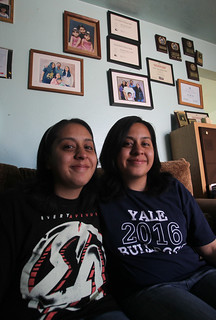
Photo of Kim and Jack (left to right) by Jane Tyska/Bay Area News Grou
The Education Blog
May 8, 2012
Written By Katy Murphy
I recently had the chance to sit down with Kim and Jack Mejia-Cuellar, twin sisters from Media Academy (Fremont campus) in East Oakland who have both been awarded full scholarships to Yale University. It was inspiring to hear their story — and how, as one of their teachers put it, they shaped their education into something rigorous and meaningful.
I was struck by something Kim said about feeling like outsiders, at times, for working so hard:
“No one said it outright, but our behavior was strange,” Kim said. “By setting goals for ourselves while other people were setting limits, we were always sort of the odd ones out. We felt pressured, but we didn’t let the pressure get to us.”
Both said that they doubted they’d be where they are if they didn’t have the other as a support system. What about the other bright minds who will show up to school tomorrow, but without an identical twin or best friend with the same drive, discipline and self-assurance? What can their families, friends and the school system do (or avoid doing) to help them set goals instead of limits?