Ed-Data Blog
July 25, 2012
Four-year cohort graduation and dropout data by student group for 2010-11 are now available at the state, county, district, and school level on the Performance tab of the Accountability reports on Ed-Data.
Of the students who started high school in 2007, just over 76 percent graduated with their class in 2011, an increase of 1.5% over the previous year.
Until 2009-10, when the California Department of Education (CDE) began using student-level data to track dropouts and graduates, the graduation and dropout rates were estimates based on the number of students enrolled in grade 9 and the number who graduated four years later. The cohort data provides a more accurate picture as it tracks individual students and, for example, is able to account for students who transfer from one school to another.
The city of Oakland has suffered a spate of violence recently, including seven people killed in just seven days earlier this month. We’ll discuss ways to combat the violence with Oakland’s police chief, residents, experts and listeners. How is the city doing at keeping residents safe?
Host: Michael Krasny
Guests:
Howard Jordan, chief of the Oakland Police Department
Brenda Grisham, executive director of the Christopher Lavell Jones Foundation, a foundation in honor of her son who was killed in 2010 in Oakland
Junious Williams Jr., CEO of the Urban Strategies Council, which works to support youth, family and community development as a means of building healthy, vibrant communities
Tammerlin Drummond, columnist for The Oakland Tribune
Community organizers meet at the World Ground Cafe to make plans for "Save-a-Life-Saturday" a one-day cease fire throughout the city of Oakland on August 11th.
KQED News
July 24, 2012
Written by Andrew Stelzer
Earlier this month, seven Oakland residents were killed in seven days. That led city council member Rebecca Kaplan to introduce a resolution establishing gun violence reduction as the city’s top public safety priority. It’s largely symbolic. For many Oaklanders, stemming violence has long been their number-one demand. Andrew Stelzer reports that rather than just look to officials for answers, a group of street-level community organizers has an idea that starts with just one day. Listen here>
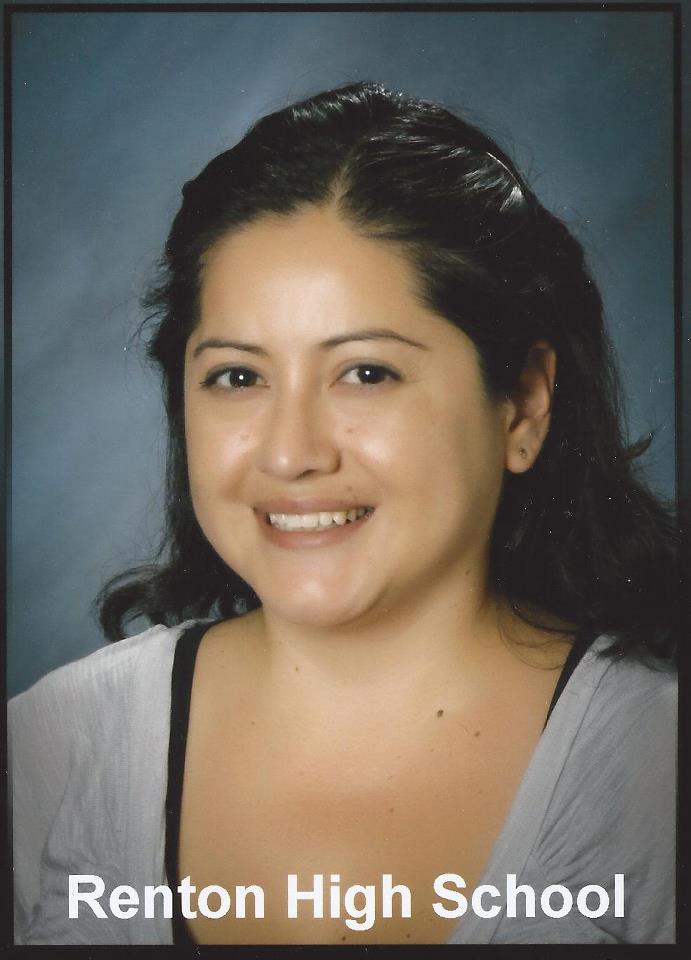
Nancy Martinez, Renton High School English Teacher Renton, WA
Voxxi
July 12, 2012
Written By Hope Gillette
For decades, the presence of teachers representing minority groups has been sorely lacking in the education system in the United States. That’s the conclusion offered by a report from a study by Education Week and Flora Family Foundation, that explored data from 1980-2009 taken from a U.S. Department of Education national survey of teachers and school administrators.
Researchers found a significant gap between the number of minority students and the number of minority teachers. During one test year, the percentage of children in school representing minorities was 41 percent, but only 16.5 percent of educators were from a minority demographic.
According to experts, minority teachers are important in the education system; parents of minority children often feel more comfortable discussing school issues with a teacher from similar heritage, and a diverse teacher population ensures children from all races have a supply of role models.
Research suggests that access to minority teachers may increase attendance, lead to higher test scores, and decrease the number of suspensions in the system.
As one of the fastest growing minorities, Hispanics are a prime example of the education gap. Latino children enrolled in school have far surpassed the number of Latino teachers available. The gap was recognized in the 1990s, when the Exxon Education Foundation revealed 11.8 percent of students were Hispanic and only 3.7 percent of teachers shared that heritage. More recent numbers indicate 21 percent of students are Hispanic compared to 7 percent of Hispanic teachers.
Created by Carla Tamayo
On June 14, 2011, 20 High School juniors from East Oakland participated in the 6th Annual Youth Showcase and Cultural Symposium were they lead presentations and workshops using poetry, architectural school re-design, and research on trauma to talk about their experiences learning and living in a city that’s considered on of the most dangerous in the country (according to the FBI stats).
KQED American Graduate is proud to share four of these stories.
Hallie is a seventeen-year-old Gay-Straight Alliance Network youth leader who attends the Haven Program at Peninsula High School.
Why I Stay In School
By Hallie Cohen
School has always been difficult for me even in my elementary school years, mainly because of social anxieties. It showed through my horrendous attendance record. By my fifteenth year, I had stopped going to school entirely. That was the same year that my mental health completely disintegrated. The depression became debilitating, and the eating disorder drained my energy. I heard and saw things that no one else could. Being in school was impossible and I missed my entire sophomore year of high school. I asked my mom to fill out papers allowing me to officially drop out when I turned sixteen. Ironically, there was a problem with my paperwork and I was mistakenly referred to another school. That mistake changed my world around, and I’ll be forever grateful that it led me to the place I am now.
Now I stay in school because it’s my haven. The teachers, therapists, and students all do an exceptional job in ensuring that my school is an emotionally and physically safe place to be. This kind of safety, along with the academic support I need, allows for me to thrive. I am given the tools to dream and do, with unbridled encouragement all along the way.
The students in my new school all have one thing in common: we all have some form of anxiety. To combat the anxious feelings, we start every morning with a yoga session consisting of four or five sun salutations with a couple of balance poses thrown in for good measure. Another way we are taught to manage our anxiety is Over Energy Correction: a type of deep breathing exercise. Some tricks we use are maybe a little less conventional, like blowing bubbles, which also regulates your breathing.
One major contributor to my anxiety is leaving the confines of my small separate classroom and going onto the main campus. There, it is not so friendly. I stand out from the crowd and am constantly harassed because of my genderqueer/transgender identity and perceived sexual orientation. For example, no matter which restroom I enter, I am punished by the other students. I’m too masculine to be in the women’s, and too feminine to be in the men’s. I am lucky that my teachers understand and allow me to use the single-stall staff bathrooms, because without that accommodation, I would have no gender-neutral options.
The bullying and harassment leaves marks, literally and figuratively. My school’s incredible Gay-Straight Alliance (GSA) club has become one of the few places I feel comfortable enough to share my true thoughts and feelings. The students in the GSA are dedicated to making positive change, and are supportive, protective, and truly interested in each individual and how to make school a safer place for everyone. After our GSA enacted a new anti-slur policy, and did a teacher training on the subject, the amount of hateful language used on campus has dramatically decreased. This was a huge victory for our GSA and for students like me who were being bullied on a daily basis.
I consider my school to be my second family, and I couldn’t ask for better relatives. The teachers and therapists are adults that I not only admire, but also wish to emulate. They are my role models, and have been my heroes by introducing me to life-saving resources like the Trevor Lifeline and Gay-Straight Alliance Network. School is a stable force and comforting routine in my life. If it weren’t for the support that I receive at school, I wouldn’t be here today. I stay in school because it’s the place I crave to be when I am homesick, or lonely, or both; because there is no place on earth that is safer; and finally, because our Uno games get pretty intense. We have fun, and that’s important.
So thank you, Haven Program and Peninsula High School, for being there when I needed it most. Thank you for laughing with me, crying with me, and keeping me on the right path to a bright future. You helped me get from zero attendance, to now having one hundred and twelve days of uninterrupted perfect attendance. One hundred and twelve reasons to be proud, and counting…
KQED Edspace blog
July 10, 2012
Written By: Almetria Vaba
Educators and parents are turning more frequently to open educational resources including online games and educational apps to engage 21st century learners. Summer can be a great opportunity to blend a child’s interest in science or history with their fascination for digital games. And studies show that summer is a crucial time for students as much learning is lost during the hot months. PBS LearningMedia, launched a year ago, has a robust collection of free interactive games to experiment, manipulate, and investigate with this summer.
Education Blog
June 27, 2012
Written By Katy Murphy
The four-year graduation rate in Oakland Unified rose about four points in the latest estimate released today by the California Department of Education. About 59 percent of students who started high school in 2007 graduated with their classmates in 2011. About 28 percent dropped out, and 12 percent were still enrolled in school when the data were collected.
Some Oakland high schools had dropout rates in the 40s. Life Academy and Metwest lost the lowest percentage of students among OUSD schools, though their dropout rates were still higher than 10 percent. Charter schools are listed separately; you have to call each of them up individually to see how they did.
This is the second year the state has followed a cohort of students — each, with a unique ID — through four years of high school to get what is supposed to be the most reliable estimate yet.
Education Blog
July 3, 2012
Written by Katy Murphy
After three years, Tony Smith can no longer be described as Oakland Unified’s new superintendent. Still, he’s said the systemic changes outlined in OUSD’s strategic plan — approved a year ago — will take several more years to take root.

 Ed-Data Blog