BAYMN Presents Rise to the Occasion Youth Media Festival — Call for Entries

Applications are now open for BAYMN’s Rise to the Occasion Youth Media Festival, hosted at the Kaiser Center in Oakland on October 13, 2012, 2-5pm.

Deadline for submission: August 27, 2012

For its first public festival, the Bay Area Youth Media Network (BAYMN) is seeking youth-produced videos that tell stories or highlight issues of social change. Two issues of specific interest are:

  1. The 2012 Presidential Election
  2. The High School Dropout Crisis

Prizes will be awarded in both of these categories as well as in the general competition.

So what constitutes social change? Issues that affect people in your community, nationally and globally. Issues such as gang violence, drug abuse, bullying, college access, unemployment, affordable housing, medical care, teen pregnancy, racism, sexism, financial inequity… you get the picture. Any issue that you feel passionate about and want your voice to be heard. We want to hear it. And so do your peers.

We are now accepting submissions from youth ages 12–24 who have made video projects in school, in an after-school program, in a summer program, or independently. The video must be self-contained and able to stand alone (e.g., not a segment of a larger project). Digital media presentations that are not film or video (e.g., PowerPoint, Prezi, etc.) will not be accepted. Projects must be published on a video-hosting site such as YouTube, SchoolTube, or Vimeo. Videos may not exceed 15 minutes and must have been produced AFTER June 1, 2011.

Download our criteria for selecting entries to the Rise to the Occasion Youth Media Festival.

Youth whose entries are accepted to the festival will receive iTunes gift cards. Grand prizes include Apple mobile devices.


SUBMISSION

Before submitting your project, post the video on a video-hosting site such as YouTube, SchoolTube or Vimeo, and make sure that your video is public (we will not be able to view or judge a project that is set to private). To submit your project, fill out our online entry form below. Please read the guidelines completely BEFORE filling out the form. You can download a copy of the entry form HERE to review it.

Submission Guidelines:

  1. Rise to the Occasion showcases the work of youth media makers (ages 12-24). If you are younger than 13, please have a parent, teacher or instructor submit your project. All communication will be sent to the email listed in the form, so please be sure it is active and checked often.
  2. Teachers: For classroom projects, please submit only the “best” one or two for consideration (e.g., if your students are all creating similar projects on air pollution, please submit no more than two for consideration for the Festival).
  3. Create a complete, high-resolution copy of your project. This is required for all projects that are selected for the Festival.
  4. Entries must be received by 11:59pm PST, August 27, 2012.
  5. Entries must represent work that was completed after June 1, 2011.
  6. All entries must be submitted online using a preferred web-hosting partner or other media-hosting provider (e.g. SchoolTube, YouTube, Vimeo, etc.). All entries MUST have a valid, public URL that our judges can access.
  7. If your project includes copyrighted material, please follow the Center for Social Media guidelines for Fair Use or view the post on KQED Edspace and be sure to cite your sources in the end credits.

Please contact mwilliams@kqed.org with submission questions, or if you need an alternate submission option.
Guest Blogger: Robyn Bykofsky Oakland Innovation Film Lab – Youth Mobile Media Workshop

June 25th 2012
Written by Robyn Bykofsky

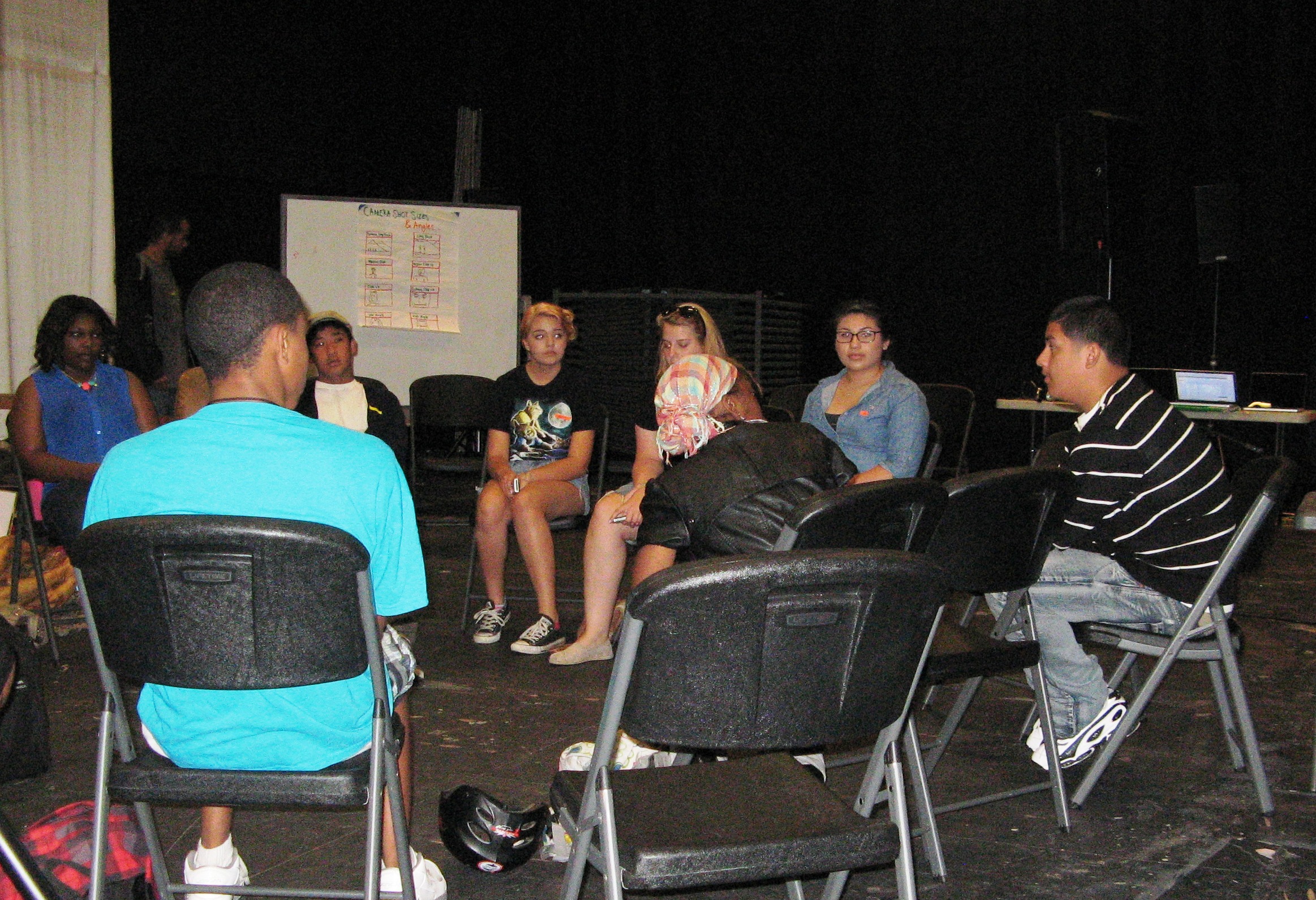
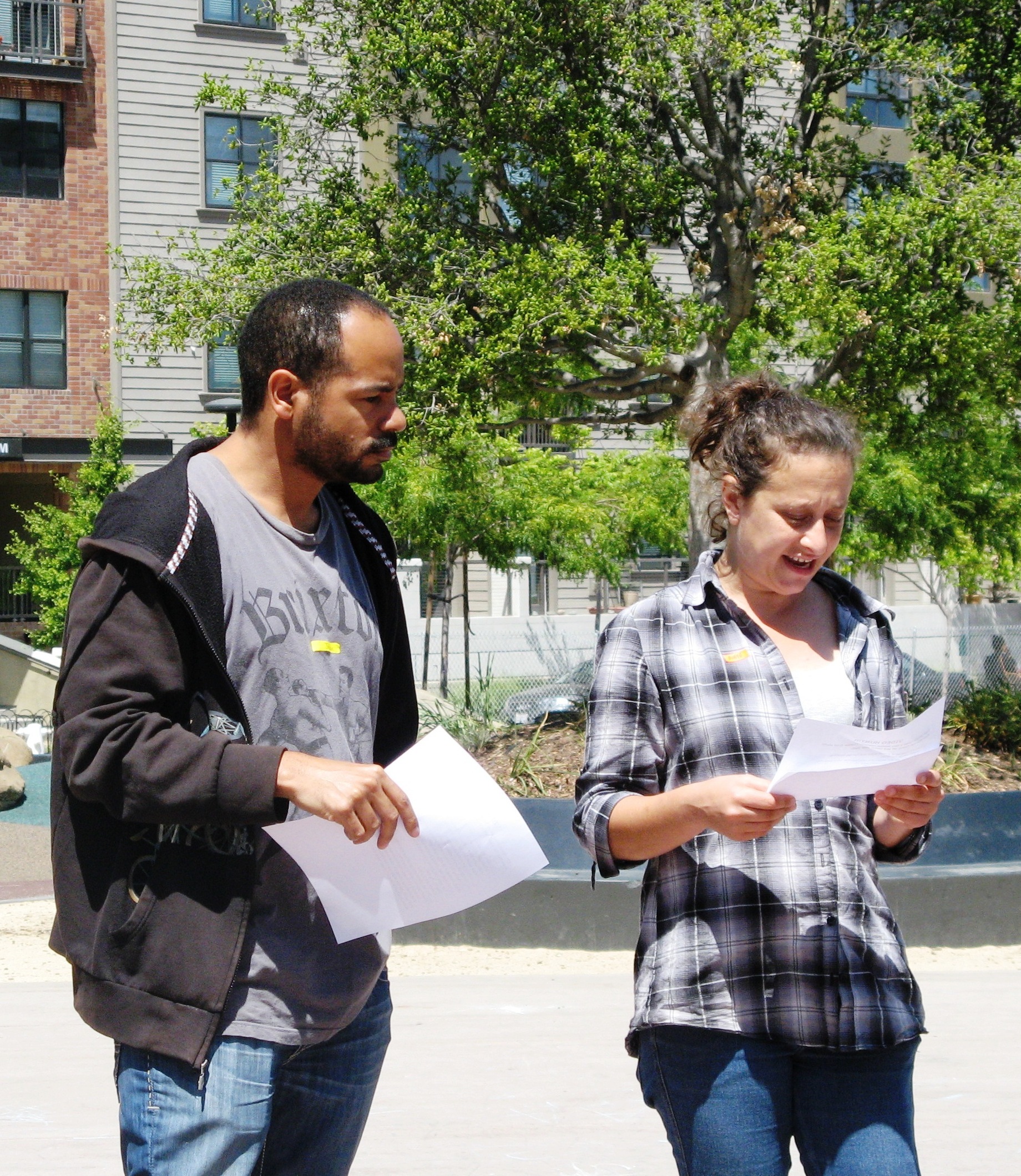
I have been facilitating media literacy and video production workshops with Bay Area youth and educators for over 12 years and the Youth Film Lab was the experience of a lifetime.  It was the first workshop I taught in which teens produced and edited their videos within 4.5 hours and then an hour later screened the videos to a live audience at the Oakland School of the Arts Black Box Theater.
 
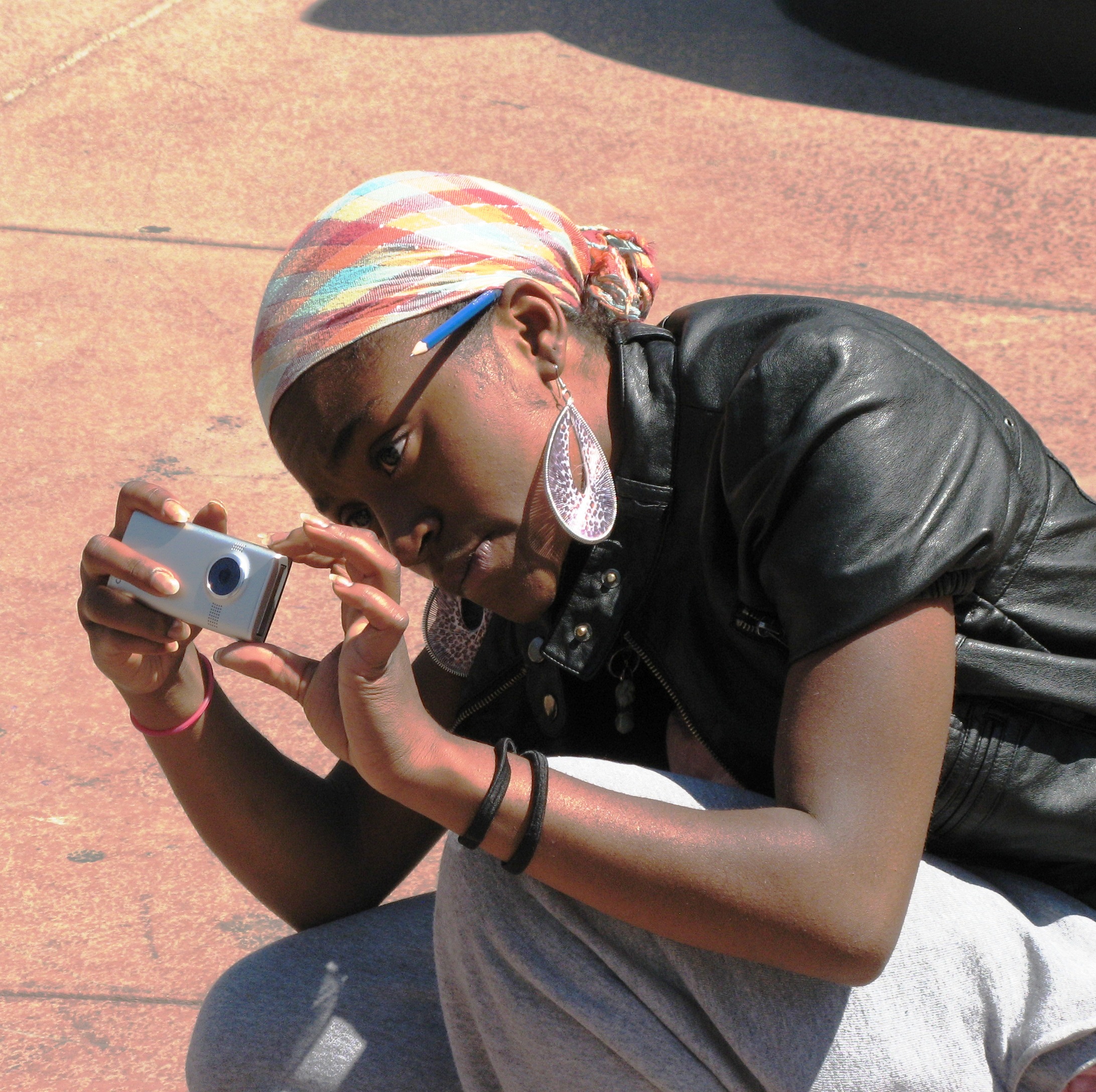
How did we accomplish this task? First, we had a talented and motivated group of 14 teens from all over Oakland.  Second, TILT (the youth media program at Ninth Street Independent Film Center) and Disposable Film Festival (DFF) crafted an action-packed curriculum that had the teens on the flip cameras right away.  Teens were able to express themselves in the hands-on video activity When People See Me.  This effective icebreaker allowed the teens to quickly get to know each other and therefore they were ready to jump into a brief discussion about using mobile media for social action and change.
 
The next hands-on camera activity focused on Media Aesthetics and the importance of framing camera shots, sound and lighting.  Teens were broke into teams of two to explore the neighborhood (well block radius) as they practiced different types of camera shot-sizes, angles, and movement.
 
(Example of a few of the Video Scavenger Hunt camera directions)
___  Extreme close up of a small object that has big meaning
___  Smooth pan of the street
___  A shot (any size and angle) of a reflection that represents YOU

___  Smooth tilt up to a positive message
 
Once the group had a chance to practice and explore, it was time to move onto the main mobile media event…Mobile Mission Speed Production.  Once again the teens broke into teams of two to brainstorm topics and themes related to success, leadership, learning, education, etc.  Since time was limited – only 1 hour to per-production and production, each step of the process was timed.
Brainstorming – 5 min
Deciding on an idea – 5 min
Writing 1-2 sentence synopsis describing the message of the short video – 5 min
Writing a shot list – (what will the video look like) – 15 min
Video shoot – 30 min
 
After a very short break the production teams spent the next 2 hours editing, which included getting acquainted with iMovie – learning its advantages and limitations; making difficult editing decisions – what shots to keep? What shots to delete; add  video transition that would lend to the storytelling; choosing royalty-free music that will help in the delivery of the message; and adding credits.
During the teens dinner break, Katie (Managing Director of DFF), Jason (TILT Assistant Instructor), and myself (TILT Youth Media Manager) worked diligently in exporting the 6 short videos and prepping them for the Screening at 7:30pm.This was an amazing experience and I look forward to partnering with KQED and DFF for another whirlwind mobile media workshop. 
I also want to give a big shout out to the teen media makers…
Thank you Ana, Anthony, Aramonti, Bela, Elijah, Gervonne, Jaison, Justine, Katie, Marvin, Nakia, Tiffany, Tiphereth, and Ysabelle!!! 

What Keeps Jorge Paredes from American Indian Charter in Oakland, CA Motivated?

As part of the American Graduate Initiative, KQED will serve as a community convener and will work with local media, education, community, civic, corporate and other relevant organizations, to create a better understanding of the community impact of the dropout crisis in the Bay Area with a focus on Oakland and implement effective plans to positively impact the situation.
KQED made a recent visit to the Junior Statesman of America Regional Conference in San Jose, CA. Learn more about Junior Statement America.