Category Archives: Uncategorized

Audio: Perspectives:

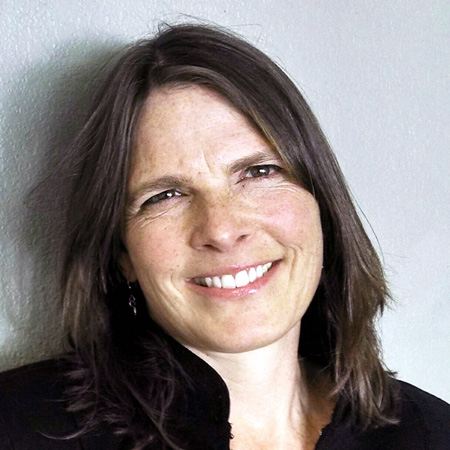
00Story: Sarah Baker

A couple of months ago, a tearful social worker showed me a letter that her eight-year-old client had written. She had helped him to write it as a way for him to talk about his recent loss. His foster parents had made the decision to have him removed from their home. He had experienced years of neglect and abuse and his behaviors were becoming more aggressive. In dark pencil lead he had drawn a sad face with tear drops under each eye. Below it read, “Please let me come home. I’ll be good, I promise.”

I’ve been a social worker for almost 20 years, working at an agency that serves children and families. Most of the children are involved in the child welfare system and many are in foster care. The stories of these children’s lives are heartbreaking. I remember in graduate school being told that I needed to remain objective for the sake of my clients and to protect myself.

When I first started working in the field, I vacillated between feeling completely overwhelmed and numb. I tried to suppress my feelings, fearing that I would become paralyzed. It was my mother who encouraged me to talk about my feelings. At the time I was working in an inner-city school. Many of the school staff disapproved of therapy, believing that we were indulging “bad” kids. I would sit in my car, on my phone, crying to my mother.

Listen and read more.

Mind Shift: What Keeps Students Motivated to Learn?

Story by Katrina Schwartz

Photo by Erin Scott

erinscott_-7080Educators have lots of ideas about how to improve education, to better reach learners and to give students the skills they’ll need in college and beyond the classroom. But often those conversations remain between adults. The real test of any idea is in the classroom, though students are rarely asked about what they think about their education.

A panel of seven students attending schools that are part of the “deeper learning” movement gave their perspective on what it means for them to learn and how educators can work to create a school culture that fosters creativity, collaboration, trust, the ability to fail, and perhaps most importantly, one in which students want to participate.

INTEGRATED PROJECTS

Project-based learning is the norm among these students, but they also have a lot of ideas about what makes a good project work. Students want projects to be integrated across subjects, not separated by discipline. “When it’s integrated, each student can find something they like and everyone can get into it,” said Erina Chavez, a junior at High Tech High North County. “I love when projects are integrated so you can find so many different aspects,” said Daniel Cohen, also a North County junior.

Read more.

NPR: Fed Up With Zero Tolerance In Schools, Advocates Push For Change

Story by Laura Isensee

Photo Credit: KUHF

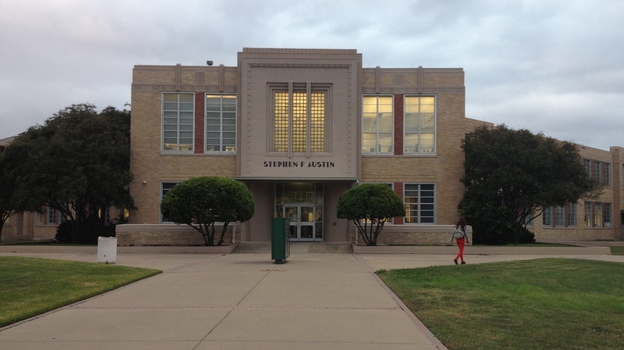
stephen-f-austin-middle-In 2010, De’angelo Rollins got into a fight with a bully at his new middle school in Bryan, Texas. His mother, Marjorie Rollins Holman, says her shy son reported the bullying, but the teacher didn’t stop it.

Then it came to blows.

“The boy ended up hitting my son in the face first,” Holman says. “My son hit him back, and they got in a little scuffle.”

That scuffle landed her then-12-year-old son in the principal’s office — and in adult criminal court after the school police officer wrote the sixth-grader a ticket.

“We end up paying for everything for our son and made sure he did everything the judge had passed down to him. But we were outraged,” Holman says. “We couldn’t believe that this was happening.”

Since the mid-1990s, schools have increasingly disciplined students with harsh tactics like suspensions and, in some cases, the criminal courts. Now, the pendulum is swinging in the other direction — even in Texas, one of the most aggressive states in criminalizing students’ misbehavior.

Audio: Perspectives: Jooksing

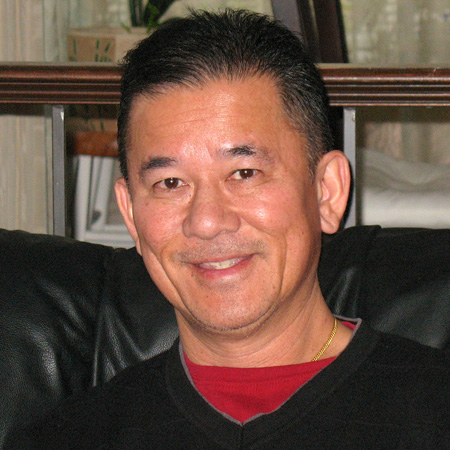
LarryLeeStory by Larry Lee

Since I was a child my elders would call me, an American- born Chinese, “jooksing,” meaning empty bamboo. All form, no substance. My father’s friends would ask me in Cantonese, “Hey Jooksing! Why don’t you learn to speak Chinese?” In contrast, white people would ask me where I learned to speak English so well. How crazy-making is that?

Years ago, on vacation with my family, a store clerk asked where I learned to I speak English so well. The same day at a Chinese restaurant the waiter got my order wrong even though I ordered in Cantonese. “Brainless jooksing,” he muttered under his breath. At that moment it hit me: I was culturally homeless, not Chinese enough, not white enough. The betwixt and between dilemma of my life.

Listen to the story here.

Mind Shift: How Opening Up Classroom Doors Can Push Education Forward

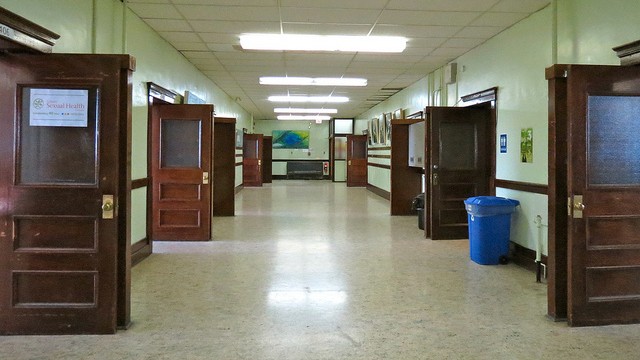
classroomTransparency is not a word often associated with education. For many parents, the time between 8 a.m. and 3 p.m. can feel like a mysterious part of their child’s life. Questioning students about their school day often results in an unsatisfying answer and not every parent has the time to be in constant communication with their student’s teacher.

For teachers, transparency can have a distinctly negative connotation. In the political debate, the word is often used in connection to hot button issues like posting teacher salaries and benefits publicly or publishing test scores. And within the school walls, transparency can feel like judgement. Teachers can see principal visits as inspections, not respectful check-ins to offer encouragement and suggestions. No school is the same and dynamics between teaching staff and the administration are different everywhere, but for many teachers the classroom is a sacrosanct, personal space.

Read more.

KQED Forum: David Kirp’s Strategy for Public Schools

In rebuilding our public schools, education policy expert David Kirp says we should stick to what works, like quality early-childhood education and creating word-rich curriculums. In other words, avoid getting carried away by quick fixes and the latest trends. His new book, “Improbable Scholars,” tells the success story of Union City, New Jersey, and argues that all our public schools can benefit from what was learned there.
Guest:
David L. Kirp, James D. Marver Professor of Public Policy at the Goldman School of Public Policy at UC Berkeley, member of President Obama’s 2008 education policy transition team, and author of “Improbable Scholars: The Rebirth of a Great American School System and a Strategy for America’s Schools”
Listen here>>

OUSD's College and Career Readiness Office


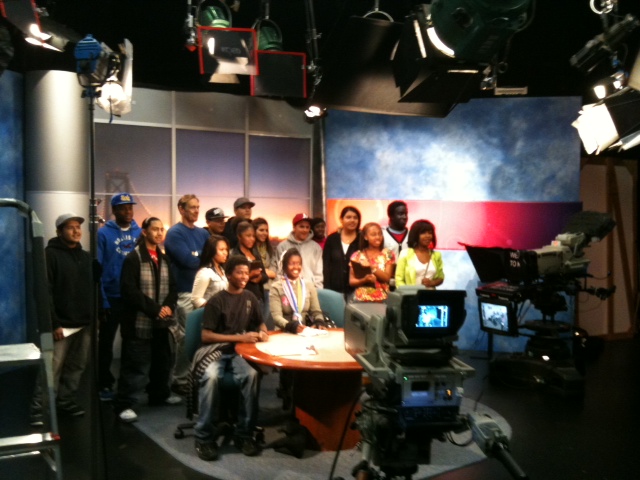
Media Academy from OUSD Fremont High School at KQED

January 14, 2013
By Lisa Hewitt

“What kids need in college, to get into college, and to get through college without remediation is pretty much all the same skills that you need in a career. You need to be able to collaborate, you need to be able to synthesize your own learning, you need to be creative, and show initiative. You need to have 21st century skills. What employers, industry sectors are telling us is, ‘We’re not really concerned about the technical skills that a student comes out of high school with.’ What they really want us to teach kids is how to learn, how to work, how to be persistent, how to show initiative, how to be a good person who is contributing to a company, a community, and a classroom. Those are universal skills.”–Susan Benz

The College and Career Readiness Office of Oakland Unified School District’s Linked Learning model is an innovative approach to education, comprised of four aspects of education, targeted to prepare high school students for college and the world of work. They can explore fields such as healthcare, engineering, as well as arts and media, while each student follows a chosen pathway through their time in high school. The pathways consists of four core components, an academic module, (all students must take the necessary course load to make them eligible to attend a CSU or UC) a technical component or vocational training, worked based learning (internship, externship, or apprenticeship) and as well as social and emotional supports, that can consist of intervention for struggling students through counseling or tutoring.

Gretchen Livesey, the Director of the College and Career Readiness Office and Susan Benz, the Coordinator of Career Readiness, want to reimagine how students experience high school. They realize school can seem boring and pointless to many teenagers, so their goal is to make the high school experience feel relevant. Livesey explains the purpose of the pathway model,

“It’s all right in 8th grade that you don’t know exactly what you want to do. We always say, ‘You’re not deciding the rest of your life today’. People often go through college and have a variety of careers. But hopefully something sparks your interest. Maybe you have a grandparent who is in and out of the hospital with diabetes and you have an interest in figuring out what that’s all about so you choose a health pathway…You’ve always been artistic so you gravitate to the performing arts. What we’re hoping is that when you’re able to express that passion in a series of courses that integrate both [academics and your passion] that you’ll be more successful through high school.”

Through the pathway model, the goal is to make learning more concrete. In order to expose students to life outside the classroom, the College and Career Readiness Office works with outside partners to bring in guest speakers from businesses and organizations, take students on tours of operating businesses in order to help them understand what career opportunities are available. Benz continues, “It’s really going out and finding partners and saying, ‘Will you please take part in the education of Oakland’s children? Will you please step up and get your needs met for an educated, ready to work workforce and help our teachers and help our kids.’ And honestly, Oakland has been more than willing and generous, it’s a good time to be in Oakland because industry, businesses, local businesses [say] ‘yeah, we’ll do it. We’ll do whatever we can’.” From big corporations like AT&T and Clorox, government agencies like Caltrans, to entrepreneurs and small business owners such as filmmakers and designers, the opportunities to meet with professionals in different industries are vast. Benz explains, “If you can get those kids outside of class or if you can get the world to come into a class and make that learning really tangible, that does more or as much as anything else you can do to keep a kid in school, to keep them interested, and to keep them coming back. Oakland has a really hard time doing that,” but with work based learning opportunities increasing, OUSD’s graduation rates rising, and the drop out rate falling, the district has made some significant gains.

If you’re interested in getting involved as a community partner please visit linkedlearningousd.org.

Josue Diaz Jr.: Director and Teacher of The Green Academy at Oakland Technical High School

December, 28 2012
By Lisa Hewitt

Growing up in the San Fernando Valley, Josue Diaz Jr. never thought he’d be teacher. It wasn’t until his mother helped get him a TA position in a local kindergarten class that he began to consider the possibilities of a career in education. School wasn’t always his central focus; Diaz graduated from Cal State Northridge and after dropping out once he reapplied and returned to school. Diaz worked days and took classes in the evenings where he was surrounded by much older adults making him feel alienated by the entire process. As the first in his family to go to college, it was unclear to him what was involved in the college system,

“I didn’t know what financial aid was until my senior year of college. I didn’t even know you could get financial aid. I had no idea how the college system worked. I just knew my mom put an application in front of me, I filled it out and I got into Cal State Northridge. I had no idea about all the opportunities because I was the first in my family to go to college. I didn’t have anyone to help me out or guide me through high school. So I sort of fell through the cracks.”

Struggling with his own college experience, he knows the importance of preparing students for life after high school. He feels an obligation to guide the students he comes in contact with, from helping students with their transcripts to providing his classroom for after school clubs.

After graduating with a degree in education and his teaching credential, he moved to San Diego and began teaching elementary classes at a charter school and eventually went on to middle school and high school where he taught Earth Science. Working for over 13 years in education, Diaz has taught in a variety of schools, some with world class laboratories and state of the art learning tools.

“They tore down this one [high school], it was in South East San Diego, the part that’s not on the postcards, they tore down the school and rebuilt the school from scratch. And put laptop carts…and smart boards in every room. Our lab was just as good as [The University of California’s]. The thinking was the more resources you have the [more the] scores will go up. But I just found it more challenging to keep the students engaged especially in the labs. And they took a lot more things for granted. It was so much easier for them, ‘Oh here’s a graduated cylinder, oh it broke…we got boxes of them in the back,’ whereas at the charter school with those 6th grades we got really creative with some of the stuff. I think that’s what’s lacking, the imaginative…side of science.”

In the schools with limited resources Diaz and his students had to be more creative. At his first job in San Diego teaching elementary science labs, all the supplies they used could be found at home or bought cheaply, so the lessons could be recreated with their families in order to solidify the lesson they learned in class. After spending several years in the San Diego school system, Diaz and his wife moved to Oakland when her former high school assistant principal at Oakland Tech informed her of an opening in the science department. Diaz took over as director of the Green Academy in his first year of teaching.

As part of the Oakland Unified School District’s Linked Learning initiative, the Green Academy offers students academic and practical training in the sciences in order to prepare them for work in the growing environmental sector. Community partners in the sustainable energy sector help provide students with academic training, internships, and job shadowing. They also come to Oakland Tech and give guest lectures and teach labs. They often have equipment unavailable to the average high school, for instance, the East Bay Young Scientists from the Lawrence Hall of Science, are currently helping to test the water quality of Oakland Tech.

The aim of the Green Academy is to make science less abstract and more relevant to the lives of Oakland Tech’s students. Beginning four years ago, the Green Academy focused on broader scientific concepts, since Diaz has taken over, he’s sought to change the focus and explore more of the students’ interests and emphasize action research, which are projects designed to effect social change. At the beginning of the year, students think of a problem they see in their community that relates to the environment. Throughout the year, Diaz and the students do experiments outside of the school to guide their research, which results in a lengthy term paper.

Beyond the academic side, it also functions as a community service activity; it has to affect the community in a positive way. Some projects that have come out of the Green Academy were a fundraising project for community planter beds and promoting South Pacific culture while researching the effects of global warming and rising sea levels. Due to lack of staffing and Diaz’s own demands as a teacher, the Green Academy is going on indefinite hiatus, but he’d like to bring it back when the support and preparation are solidified. For the time being, Diaz hopes to continue to work with Bay Area partners to bring alternative education and job experience to his students.

If you’re interested in contacting Josue Diaz as a community partner please visit http://oaklandtech.com/staff/jdiaz/.