Category Archives: Uncategorized

Mercury News: In California schools’ test scores, state sees success while feds’ No Child Left Behind act sees growing failure

October 11, 2012
By Sharon Noguchi

California schools continued their steady gains in achievement, and for the first time more than half of them met the state’s target score, according to California’s annual index of school achievement released Thursday.

As always, Santa Clara, San Mateo and Contra Costa county schools in general outperformed state averages. The statewide numbers offered some encouraging trends: Black and Latino students made greater gains than did white and Asian students but still lag far behind in scores. The scores for the 2011-12 school year are based on standardized tests administered last spring.

But the slew of scores released also highlighted the stark divergence between state and federal scores. Even while more schools are meeting state targets, more of them are missing federal ones. That’s because the state measures year-to-year improvement in achievement, while the federal system looks only at proficiency, or how many children are at or above grade level. And its demands for the proportion of students expected to meet that benchmark rise steeply every year. For 2011-12, about 78 percent of students had to test proficient in math and English.

By the standards of the No Child Left Behind Act, only 26 percent of California schools met federal targets. That’s a drop from 35 percent last year, largely because that target was raised by 11 percentage points last year.

To read more.

The Education Report: In Oakland, tumult in special education leads teachers to organize

October 8, 2012
By Katy Murphy

A series of decisions about the costs, staffing and structure of Oakland Unified’s special education department caused parents to mobilize in June against last-minute reductions to the program.

Months later, the 11th-hour reassignment of dozens of special education teachers appears to have had a similar effect on teachers. (District staff have since reported that many, but not all, of those changes have been rescinded.)

Within the teacher’s union, a new group has emerged: The OEA Special Education Caucus website features a blog, a statement of purpose, and possible solutions for improved communication and logistics, including something as simple as a roster with department staff names and contact information.

Emily Sacks, one of the organizers, said the upheaval brought teachers together. The thinking?  ”We can get really specific about things that are not rocket science, but that could impact the situation dramatically.”

At Wednesday night’s board meeting, as new special education director Karen Mates gives a presentation about plans for the department (and community involvement in the making of those plans), there could be a large special education contingent.

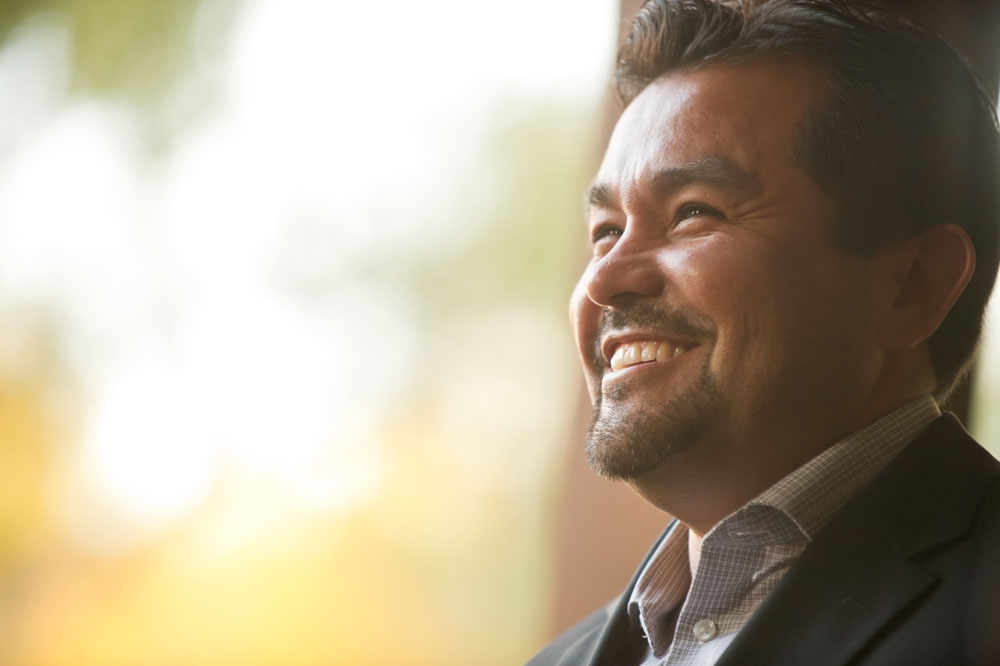
Jose Corona: CEO of Inner City Advisors

October 9, 2012
By Lisa Hewitt

“If we can expose more young people to the business sector, we can inspire more people to be entrepreneurs.”-Jose Corona

Jose Corona, the CEO of Inner City Advisors (ICA), a non-profit serving the entire Bay Area, strives to create locally-based jobs. From an early age Jose had a passion for entrepreneurship. His father, a strawberry grower in Watsonville, CA, demonstrated the importance of community-based businesses as a tool to aid the local economy.  Before venturing into non-profit work, Jose worked in the corporate world for several years, learning operation and management skills. Marrying practical business skills and a passion for community development, Jose joined Inner City Advisors in 2004.

By providing entrepreneurship education, management consulting and advisory services, and capital investment into socially responsible entrepreneurs, ICA seeks to aid companies in their efforts to employ populations with higher barriers to employment. Jose explains, “by higher barriers to employment, we mean, lower educational attainment levels, English as a second language learners, formally incarcerated and aged-out foster youth. We try to connect them to the right workforce partners.” ICA’s mission mandates that they take on companies that are in the position to create a substantial number of jobs. Jose adds, “they have to have a social responsibility component to their business model. So it can either be environmental or it could be through supporting education. It has to be a core value or their business model. It can’t be something that all the sudden they instituted a recycling program and all the sudden they’re green and responsible. It has to be core, as part of their core model. So it has to be from deep down in their values.”

ICA works primarily with companies, but over the past couple of years, they’ve found that they need to be more intentional with their companies, specifically connecting them to the workforce. “Companies are coming back to us and asking, ‘Well we want to hire, from the populations you care about. Can you help us get to those populations?” Jose sees where ICA has grown in the last few years and where it would like to extend its reach in the future. “We’ve started to think about how ICA can be more thoughtful and really create some strategic alliances with some existing work force development partners. So we don’t have to create another workforce development program, but work with ones that are working out there; connecting their populations and their clients with the jobs that are being created through our companies.”

Jose sees the importance in engaging and working with young people, specifically those living in moderate to low-income households and emancipated youth. “I think for me personally, and as an organization, I think it’s critical that we engage youth in the work force. The whole discussion right now around job creation, there’s a lot of rhetoric about it, and it typically focuses on the adult that are unemployed and don’t have jobs. Too often, I think especially now, the youths are often overlooked as part of that unemployment figure. They focus on the adults that don’t have jobs or they lost jobs, but what about the youth that are up-in-coming and are going to be that next generation of work force with the jobs that we’re creating? For us it has become a critical population. How do we work with not only our companies, but with ICA ourselves to provide these job opportunities for the youth…from high school, undergrad, to grad school students to become engaged in projects or internships with ICA, and engage our companies to actually invest in the youth?” One means is through strong community outreach.

Jose believes the missions of ICA and KQED are the same, “KQED is hugely inline with our mission. [KQED adds] value to communities through information, [and by] educating communities. We try to do the same thing. We try to educate our companies on how to be better, more active and committed community members.”  KQED caters to an audience that might not know about ICA, but cares about solving the same issues they do.

If you’re interested in getting involved with ICA please visit: http://innercityadvisors.org/

Jose attending the Oakland Youth Friendly Business Awards.

Oakland Tribune: School closures an issue in Oakland school board race

October 4, 2012
By Katy Murphy

Until now, Thearse Pecot’s decades-long involvement in Oakland’s public education system has focused mainly on the schools her children and grandchildren have attended. But the latest round of school closures — which included Santa Fe, her grandchildren’s school — prompted her to challenge Jody London for the District 1 seat on the Oakland school board.

“We’ve got to stop tearing down our communities by closing neighborhood schools,” Pecot said.

Pecot sued the district in April to block the closures, alleging that it was discriminating against poor and minority families. While the case has yet to make it to court, she said it demands the reopening of Santa Fe Elementary. Pecot said that if she succeeds in unseating London, she will fight to prevent additional school closures. None are being considered at the moment, though if statewide tax measures fail and education funding “trigger cuts” proceed, schools throughout California will face some painful choices.

The other priorities Pecot listed — from improving safety on school campuses to lowering the dropout and truancy rates — were broad and ambitious, though she offered few specifics of how her approaches would compare to the district’s current policies and initiatives. She said she would advocate giving children more enriching activities to keep them interested in school.

To read more.

Oakland School Aims to Help Black Boys

An eager kindergarten student raises his hand to ask teacher Xavier Buster a question. Most of the teachers are black men. Photo: Mike Kepka, The Chronicle / SF
An eager kindergarten student raises his hand to ask teacher Xavier Buster a question. Most of the teachers are black men. Photo: Mike Kepka, The Chronicle / SF Read more: http://www.sfgate.com/education/article/Oakland-school-aims-to-help-black-boys-3840007.php#ixzz266etlo5R

San Francisco Chronicle
September 4, 2012
Written by Jill Tucker

In the first hour of the first day of school Tuesday, the sixth-grade Oakland boy was sure he was in trouble for goofing off.

His teacher, Peter Wilson, had stopped his lesson in mid-sentence and turned his attention to the African American preteen, who now wore an uh-oh expression as he braced for a rebuke.

“Did you eat breakfast this morning?” Wilson asked quietly as the confused boy shook his head no. “Your actions are telling me you’re hungry.”

The teacher, also African American, then promised to bring fruit and granola bars the next day and returned to teaching. The boy’s behavior immediately improved.

That might not have been the result at other Oakland middle schools, where a third of black males were suspended at least once last year.

But at the 100 Black Men Community School, a new all-male public charter school, educators and organizers say they refuse to accept those odds – or any of the other statistics associated with black boys that include higher dropout rates, lower test scores and disproportionate placement in special education programs.

The school, started and financially supported by the Bay Area chapter of the 100 Black Men nonprofit organization, is open to all male students, but it was created specifically for issues facing black boys – including difficult family lives, street culture, community violence and lack of male role models outside professional sports and the music industry.

“We know our children can perform as well as any other children,” said Dr. Mark Alexander, an epidemiologist and chairman of the board for the local 100 Black Men. “We’re going to create a culture that hopefully will be stronger than the streets.”

Read More>>

Radio Forum: Overhauling Teacher Evaluations

Originally aired August 31, 2012

A state bill overhauling teacher evaluations, which was set to be voted on by the Legislature today, has been withdrawn. AB-5 would have made test scores optional in assessing teachers. We’ll discuss the controversy the bill has stirred up in Sacramento, and the broader issue of teacher evaluations.

  • Eric Heins, vice president of the California Teacher’s Association
  • Gary Ravani, vice president of the California Federation of Teachers, president of the Early Childhood/K-12 Council for the California Federation of Teachers and a classroom teacher for 35 years
  • Jill Tucker, education writer for The San Francisco Chronicle
  • Jill Wynns, president of the California School Boards Association and former commissioner of the San Francisco Board of Education
  • Tim Melton, vice president of legislative affairs for Students First, a bipartisan grassroots organization focusing on education

Listen in>>

KQED Perspectives: The Life Academy Perspectives Project

Recently a class of sophomores attending the Life Academy of Health and Biosciences High School in the Fruitvale area of Oakland wrote and recorded their own personal Perspectives. With the help of their world history and English teacher, Annie Hatch, these students explored issues ranging from bullying and harrowing immigration stories to the embarrassment of blushing and the simple joy of skateboarding. Below you’ll find Ms. Hatch’s account of the project and the Perspectives of 15 of her students.

Read about teacher Annie Hatch’s experience with this Perspectives project.

Listen to all Perspectives>>

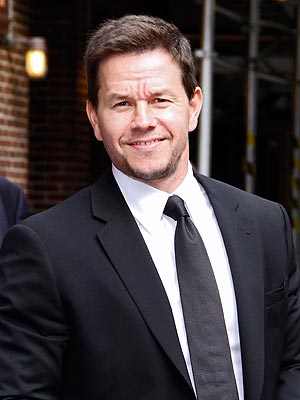
Mark Wahlberg Heading Back to High School

Mark Wahlberg Will Earn His High School Diploma Online

CBS News
June 13, 2012

Actor Mark Wahlberg is returning to school later this month to study for his high school diploma.

The star quit school at the age of 13 and, after a stint behind bars for assault, he became a model and pop star before making it in Hollywood.

Last year, the Massachusetts-born Wahlberg admitted he was eager to go back to school so he can become a better role model for his children – and the actor has now enrolled in an online course to complete his education.

He tells David Letterman, “I am going back now. They have this new program in Massachusetts now where you can actually take the courses online, so I’m starting this month; I’m gonna go and get my high school diploma.”

Wahlberg admits he is “a little nervous” at the prospect of returning to his school books, but he is determined to pass with flying colors – and he’s hoping to take advantage of his spare time in between filming movies so he can speed through the tests and graduate within months.

He says, “It’s an actual diploma, so I gotta take up all the courses that I missed and I’m a little nervous, but … I have a lot of down time on sets and in trailers so I just wanna blast through (the course). Hopefully be able to do it (graduate) in six to eight months.”

Wahlberg’s kids aren’t the only reason behind his desire to complete school. He feels guilty serving as the spokesman for Taco Bell’s Graduate To Go program, which provides support to at-risk students.

He adds, “They asked me to do this and I was like, ‘Dude, I never graduated, why would you pick me to do this?’”

And Wahlberg has his sights set on another type of studies once he passes his high school exams.

He says, “I would love to, at some point, go to film school.”