Tag Archives: KQED American Graduate

Oakland Local: A Better Chance Celebrates 50 Years of Increasing High-Quality Education for Youth of Color

Image_0May 2, 2013
By Corey Olds

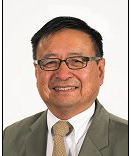
Approximately 75 directors of admission and diversity from Bay Area independent schools gathered for breakfast at the UC-Berkeley, Clark Kerr Campus Wednesday to celebrate the 50th anniversary of A Better Chance (ABC), a national organization headquartered in New York City, that annually places 500 or so academically-promising students of color in grades 6-12 in more than 300 ABC Member Schools throughout 27 states.

In 1963, A Better Chance partnered with 16 prestigious independent schools (14 of them in New England) to provide talented, but economically-disadvantaged students access to the best education available.

Over the decades, ABC and its Member Schools such as Milton Academy, the Ethical Culture Fieldston School, and Phillips Academy have produced nationally-renowned figures like Massachusetts Governor Deval Patrick, NAACP Legal and Educational Defense Fund president Debo P. Adegbile, founder and president of the Fellowship of Latino Pastors of New England Dr. Roberto Miranda, and creator of the Violence Prevention Program and trauma surgeon at the University of Maryland Medical Center Dr. Carnell Cooper. Including these distinguished men, ABC boasts 13,800 alumni nationwide.

Yesterday’s “50th Anniversary Member School Breakfast” marked the second of four such celebrations planned for this year. Earlier this spring, a celebration breakfast was held in Washington, D.C., and there will be one in Atlanta, prior to the June 11, 2013, “50th Anniversary A Better Chance Awards” in New York City.

Besides honoring the 16 original member schools, Roger W. Ferguson Jr., Chief Executive Officer of TIAA-CREF, will receive the Chairman’s Award and ABC alumnus Theo Killion, Chief Executive Officer of Zale Corporation, will accept the DreamBuilder Award.

A local educational leader, Kareem J. Weaver, who serves as executive director for the San Francisco office of New Leaders, a nonprofit that develops transformational school leaders and designs leadership policies for school systems nationwide, delivered the keynote address.

Oakland Local: Much at stake for Oakland students in governor's education funding proposal

0430131759May 3, 2013
By Barbara Grady

Underpaid teachers, kids wishing they had counselors to talk with and crowded classrooms where students learning English don’t get enough help could all be in the past for Oakland schools if the governor’s plan for reforming education funding prevails.

Gov. Jerry Brown’s Local Control Funding Formula being debated in the state legislature would boost funding for all school districts, but give substantially more per pupil funding for students who are low income, are English learners or who are in foster care. Also, school districts with concentrations of such students would get an additional bonus.

For Oakland, this could mean as much as much as $3,860 more per student in seven years from now, according to state figures – half again as much as Oakland receives per pupil now. If it gets passed by the legislature before June 30, it could mean a boost of $271 per student right away in September.

So much is at stake for Oakland schools, that students at Castlemont and Skyline High Schools asked three legislators representing Oakland, the county education superintendnet and the Oakland acting superintendent-elect to commit to supporting the measure and work for its passage. Inviting them to a youth event at Castlemont High School on Wednesday, they received those commitments from assistants to Rep. Nancy Skinner (D-Berkeley and Oakland), Rep. Rob Bonta (D-Oakland) and Alameda County Education Superintendent Sheila Jordan and personally from Dr. Gary Yee, superintendent-elect of Oakland. They all listened to the students.

“To me, it seems very important,” said Precious Brazil, one of the student campaigners and a sophomore at Castlemont. “I was a foster youth for a while. I feel that is I had support when I was going though my situation, I would have done better in school.”

Yee, who will become acting superintendent on June 30, not only committed to advoate for the measure but said he’s arranged to meet with legislators next week to convince them of its importance.

To read more.

Oakland Local: GO Public Schools: reading, teaching and OUSD's progress towards goals (Community Voices)

Healey Pic

April 25,2013
By Caitlin Healey

Which Oakland schools are producing promising results and raising achievement for all students? Who are the people teaching in our schools and what are they like? How is OUSD meeting its goals for operational excellence and student achievement?

We are running a series of blogs at GO Public Schools Leadership Center and our sister organization, GO Public Schools:


• Oakland achieves bright spot schools

• Getting to know Oakland teacher policy fellows

• OUSD scorecard updates

Here’s a sampling of each:

Oakland achieves bright spot schools

Where are Oakland students thriving? And what are these schools doing right? The Oakland Achieves report identifies “bright spots” – areas in which Oakland schools are beating expectations. In this post, Manzanita SEED third grade teacher Anne Perrone discusses how reading is an essential part of the school day at her school:

“Students are processing language at SEED throughout the day, and using their expertise in one language to help understand another. This makes reading and rereading text, even more essential, as students absorb and process vocabulary and concepts they may only be hearing, talking, reading and writing about at school.

“Students soon learn that they are experts for part of the day and depend on the expertise of classmates for another part of the day. This need to collaborate also makes SEED unique, as students support each other as they process difficult texts and concepts.”

To read more.

KRON 4: Oakland Middle School Teacher Honored at White House

oaklandteacher1
April 23, 2013
By Sylvia Ramirez

An Oakland teacher was honored by President Obama at a White House ceremony on Tuesday.

I’Asha Warfield is a 7th grade English teacher at Oakland’s Frick Middle School. She is California’s only nominee for the 2013 National Teacher of the Year Award.

“It is my aim that students are able to use their life experiences and connect them to the world through analysis and evaluation. Simultaneously, I hope that with the skills they develop they are able to look beyond their own experience to critically and creatively engage in this world,” Warfield wrote in her application.

Warfield has taught English and reading intervention, and world history at Frick Middle School since 2000. She also works as a coach in the Beginning Teacher Support and Assessment program to help guide new teachers through their self-assessment process in order to clear their California credential.

Warfield serves as a representative in Frick’s Instructional Leadership Team to help assess the instructional needs of the school through data analysis and teacher feedback. She also works as a consultant to the Bay Area Writing Project that presents teacher trainings on secondary literacy with an emphasis on writing.

Prior experience for Warfield includes working as a consultant with the California Reading and Literature Project; a corps member advisor at Teach for America Summer Institute; a collaborating teacher at the University of California, Berkeley and Mills College; and an assistant language teacher with the Japanese Exchange Teaching Programme, Miyagi, Japan.

The Oakland teacher and other nominated teachers from around the country applauded when Jeff Charbonneau, a high school science teacher from Zillah, Washington, was awarded the National Teacher of the Year by the president.

Charbonneau teaches chemistry, physics and engineering at Zillah High School, all subjects he knows many students look at as the “hard” science classes. He is also founder and director of the award-winning Zillah Robot Challenge, which is open to students and schools across the state and is designed to help students gain confidence in addressing science and engineering concepts.

A National Board Certified teacher, Charbonneau has been teaching for 12 years. He has a bachelor’s degree in biology and a master’s degree in education from Central Washington University.

He is the 63rd National Teacher of the Year, a contest sponsored by the Council of Chief State School Officers. The winner, chosen by a committee of representatives from 15 education organizations, is pulled from the cohort of State Teachers of the Year, who themselves are selected through different processes in various states.

The Education Report: OUSD Board’s Gary Yee candidate for acting superintendent

Source: Oakland LocalApril 22, 2013
By Katy Murphy

The Oakland Board of Education will host a press conference on Monday April 22nd to announce Dr. Gary Yee as a candidate for the position of Acting Superintendent in the Oakland Unified School District (OUSD). The Board will formally consider the matter during its next Regular Board Meeting on Wednesday, April 24 when a vote will be taken on the replacement for current Superintendent Tony Smith.

Read full announcement.

KQED: High-Performing American Indian Charter School Struggles for Survival

April 15, 2013
By Laird Harrison
Sometimes success is not enough. Students at the American Indian Model Schools have consistently outperformed most of their peers, nationwide. But Sunday night found parents and board members groping for a way to keep the schools’ doors open.

The Oakland School Board voted on March 20 to revoke the schools’ charter at the end of the year because of financial improprieties. At an emergency meeting on Sunday night, parents, teachers and administrators tried to figure out how they could effectively appeal the decision.

Read more.

Oakland Local: East Bay College Fund matches mentors with students for community success

dsc_4582April 10, 2013
By Jon Leckie

By the end of his junior year, Jameil Butler was a promising high school student. He was sociable, popular and a rising star on championship teams in basketball and football. Butler knew he had talent, and he knew that talent could help him take the next step from Oakland Technical High School to the halls of higher education. But after a trip to Sacramento in 2004, Butler would find the life he had imagined for himself out of reach.

“I was having some issues at home, and wanted to get out of town. So I went to visit my brother at Sacramento State,” Butler said. “We were waiting outside a club meeting people and talking to girls. A week before some people from Oakland had killed someone from Sacramento, so these guys weren’t too happy when they found out where I was from.”

Butler says he tried to walk away, but was followed through the parking lot and down the street. “I tried to ignore it,” he said, “but after two blocks I got tired of it and turned around. He pulled a gun and shot me twice in the stomach.”

After two weeks in the hospital, and the loss of one of his kidneys, Butler would return home. But doctors told him the risk of blood clots made it too dangerous to continue to play football; ending any shot he had at an athletic scholarship.

Leaning on the support and encouragement of his mother, Butler was still determined to get a college education. That was when he ran across the East Bay College Fund.

“The East Bay College Fund was started in 2003 by a group of citizens who really wanted to support change in Oakland,” Diane Dodge, the fund’s executive director, said. “We started serving seniors in high school by supporting them through college with the goal of having them graduate and give back to the community.”

In addition to rewarding scholarships to students and helping them find and use resources to get through college, such as the Free Application for Federal Student Aid and navigating them through the college application process, the East Bay College Fund also supports students with one-on-one mentoring for the entirety of their college career.

“I hit some roadblocks personally and academically, but my mentor had my back and made sure I made progress as a student and as a man,” Butler said. “They invested time and energy in me, and that really meant a lot.”

This year, The East Bay College Fund will add 40 scholars to the 150 students they are currently helping through college.

“That means we’re giving out a $16,000 scholarship to each scholar, or $4000 per year over four years. And we’re matching them with a mentor who will be their support and their guide through their entire college journey,” Dodge said. “We have 30 mentors, but need 10 more. We’re looking for community members who have graduated from college and are looking to give back by guiding scholars and supporting them through all the things they will go through in college.”

Mentors at The East Bay College Fund commit to attending two retreats a year with their scholars, and involving themselves in the life of the scholar through regular conversations.

“It’s an art, not a science,” Dodge said. “Mentoring is a privilege. Towards the end people talk about the student like they are their own children, but there are also a lot of challenges with class and race and self-doubt. We let our students know ‘yes, you can’ and we believe in you, and the mentor is the person that reminds them of that.”

Read more.

KQED: Oakland School Board to Replace Outgoing Superintendent

Source: Oakland LocalApril 10, 2013

School board officials in Oakland have begun the process of replacing outgoing superintendent Tony Smith. Smith surprised colleagues last week when he announced he was resigning so that his family can be closer to his ailing father-in-law, who lives in Chicago.

Reporter Stephanie Martin spoke with Jill Tucker, who covers Oakland Unified for the San Francisco Chronicle, about Tony Smith and his record as superintendent — and what a new superintendent could mean for Oakland schools.

Stephanie Martin: Ms. Tucker, when Smith came on board four years ago, the district was trying to turn around very severe financial problems. How did he fare?

Jill Tucker: I think there’s nearly universal agreement that he’s leaving the district better than he found it. Last year, for the first time in a decade or more, the school budget in Oakland had no deficit. Even though they balanced their budget every year, they had been operating with a deficit for a very long time. So he was able to get rid of that structural deficit.

And yet at the same time, he avoided layoffs, even in the midst of a recession and all the budget cuts. When they had a bond on the ballot in November, it passed with 84 percent voter support. And a poll showed the highest support of the district in about 18 years. So in general, I think there are a lot of very sad people in Oakland that he’s leaving.

Stephanie Martin: But he did have to make some controversial calls, like closing schools. How did he weather that criticism?

Jill Tucker: You know, I remember speaking to him at the time. Because he is sort of evangelical in his efforts to address racism and to address race issues in Oakland. And some of the other community issues that are really tough to discuss — violence, inequality in our schools.

And I think it was very difficult for him when they started closing schools. He felt there were too many schools for the population; they’d been losing enrollment. And yet some of the schools that he was closing were predominantly minority schools, and they’d accused him of being a racist. But he was very steadfast, and said, look, when you’re in this position you just have to keep going forward. You can’t stop and think about what people are saying, when you believe you’re doing the right thing, you do the right thing.

So they did shut down a few schools, it was not popular. He also took on the teachers’ union, trying to tackle seniority in hiring issues so that he could get higher-quality teachers in some of the lowest-performing schools. That was not popular with the union.

But in general, he’s a very steadfast person. He has a very strong belief system, and he just has stuck with it. And at times that hasn’t been popular, but in general, the union and everybody else said they were disappointed to hear he was going.

Stephanie Martin: Oakland has really struggled to raise the graduation rates and the test scores. Those have improved overall, but from what I understand there still is an achievement gap. What remains to be done in that area?

Jill Tucker: As Tony Smith said, there’s still a lot to do in Oakland, and I don’t think anybody would disagree with that. Test scores are still below the state average, though they’re moving in the right direction. Graduation rates, dropout rates; we still have issues with at-risk students not achieving, schools where the teachers don’t have the same experience level, the resources that other schools have.

So there’s still a lot of work to do, even though they have gotten clear of direct state control, from the state takeover days of 2003. I think everyone agrees Oakland has a long way to go. But at least most people believe they’re on the right track.

Stephanie Martin: Oakland teachers have complained that they are paid less than those in comparable districts. Could that change under a new superintendent?

Jill Tucker: I think it could, if and only if more money starts coming in to Oakland. And we could see that under the governor’s proposed budget, where schools and districts that serve low-income or English-learner students would see more money. If that passes and Oakland does see an increased share of the state budget for education, you would probably see teachers being paid a little bit more. But it’s very difficult to pay them more when you have a static budget coming in.

On the plus side, Oakland teachers haven’t had gone through as many layoffs as many other districts. They’ve safeguarded them from that. But on the other hand, they are paid lower than many other districts.

Stephanie Martin: What else is the teachers’ union looking for?

Jill Tucker: I think from a new superintendent, or in general, what I’ve heard from the union this week is they want stability. They want to be able to count on their school system, their leaders. I think that was the hardest part of seeing Tony Smith leave, was that he has been here for four years and increased the stability in the district.

And I think that everyone would just love to see Oakland catch a break. It’s going to be a challenge for whoever the school board brings in, to stay the course. The school board has said they don’t want someone to come in and shake things up; they like the road they’re on.

That’s going to be the difficult part, when they look at who they’re going to hire. Because anyone who comes to a large city like Oakland to be superintendent, they’re going to want to put their own mark on it. The job comes with a bit of ego. It’s going to be difficult to find somebody to stay the course, to take the reforms that Tony Smith has implemented and keep on that path.

Stephanie Martin: Is there any sense of whether that new person would come from outside the district or within?

Jill Tucker: They haven’t started the process yet. They’ll start discussing it at the meeting tonight, as you mentioned. The first step is accepting Tony Smith’s resignation. Then they’ll decide whether they want to hire a consulting firm, do a national search, or try to stay a little more local.

There haven’t been any names from inside the district that folks have said, here’s a valid candidate that they might consider. No names have come forward in these few days since the announcement of the resignation. So it’s unclear if there’s anybody inside the district that’s ready to step into that role. We’ll have to see. As Jody London, one of the school board members said when I asked her about a replacement, “I didn’t know Tony Smith existed until I met Tony Smith.”

Listen here.

Oakland Local: Superintendent of Oakland schools resigns, citing family health emergency

superintendent tony smithApril 5, 2013
By Barbara Grady

Oakland Unified School District Superintendent Tony Smith, who has spearheaded a new strategic direction in Oakland of creating community schools that help kids deal with the adversities of poverty in addition to academics and who put the district on sound financial footing, submitted his resignation this morning.

His said last day will be June 30.

Smith said his father-in-law has been hospitalized and is in poor health and the family decided to move to Chicago to help out and to allow Smth’s daughters to spend time with their grandparents.

“I feel very privileged to have been part of bringing quality and stability back to Oakland Pubic Schools. The decision to leave at this time is very difficult. However, my commitment to my family first means this is the right decision at this time,” Smith said in a letter to the board of education shared with the media. “I believe in Oakland, value my relationships and our community, and will always be an ally in the effort to create more opportunity for Oakland children.”

He continued that Oakland schools are in better shape than they used to be and are primed to continue on that path.

“I am proud of the incredible work we have accomplished together and believe the Board, with your leadership, will continue on a positive trajectory,” he said in his letter. “Since the district returned to local control four years ago, we have made great strides in academic outcomes, fiscal solvency, community engagement, and organizational coherence. While there is still much work to do, the district is well positioned to achieve the objectives outlined in the balanced scorecard and meet the goals described in our ambitious strategic plan.”

Smith joined OUSD as superintendent four years ago as the first superintendent following half a decade of state control of the district and its finances resulting from the equivalent of bankruptcy. The state has deemed Oakland the most improved school district in California.

In those years he not only balanced the district budget during a deep recession – sometimes with tough and unpopular decisions like closing five elementary schools last year – but he started it on a path to create Full Service Community Schools and other facets of a seven-year strategic plan called Thriving Students.

Under the belief that kids cannot learn if they are sick, hungry or feeling unsafe, OUSD under Smith opened health and community centers at many district schools, providing kids with access to medical care as well as after-school enrichment, counseling and healthy snacks. At some of the health centers, which are collaborations with the county health department and Children’s Hospital of Oakland, students’ families also have access to medical care.

OUSD also expanded its use of the federally funded Free and Reduced Lunch program to include breakfast at many schools and, this year, even dinner at some schools.

In 2011, on the eve of convincing the board of education to adopt the strategic plan he so ardently worked on, Smith told Oakland Local that “education transformation is a key, if not the primary key to sustainable economic development,” in Oakland. He said educational resources need to be “distributed differently” so that all kids can graduate school and become employable.

Friday, Oakland school board president David Kakishiba said, in his own letter, “After four years, the Superintendent will be leaving a legacy that Oakland can be proud of.” He added, “As the Board of Directors, we commit to supporting the Superintendent in his transition and to standing with the community of staff, students, and families as we move forward in this new chapter for the Oakland Unified School District.”

Oakland Unified, while on stronger financial footing thanks in part to the state of California finally stabilizing education funding, is still facing the challenges of a high drop out rate, particularly among low income students of color, and of decreasing enrollment. In some of its approximately 100 schools it has improved academic performance of low income students and students of color and all but ended discipline practices that sent kids out of school through suspensions and expulsions.

But those improvements have yet to find their way to all schools and the strategic plan Smith so carefully negotiated and built with other officials and teachers is just beginning to be implemented.

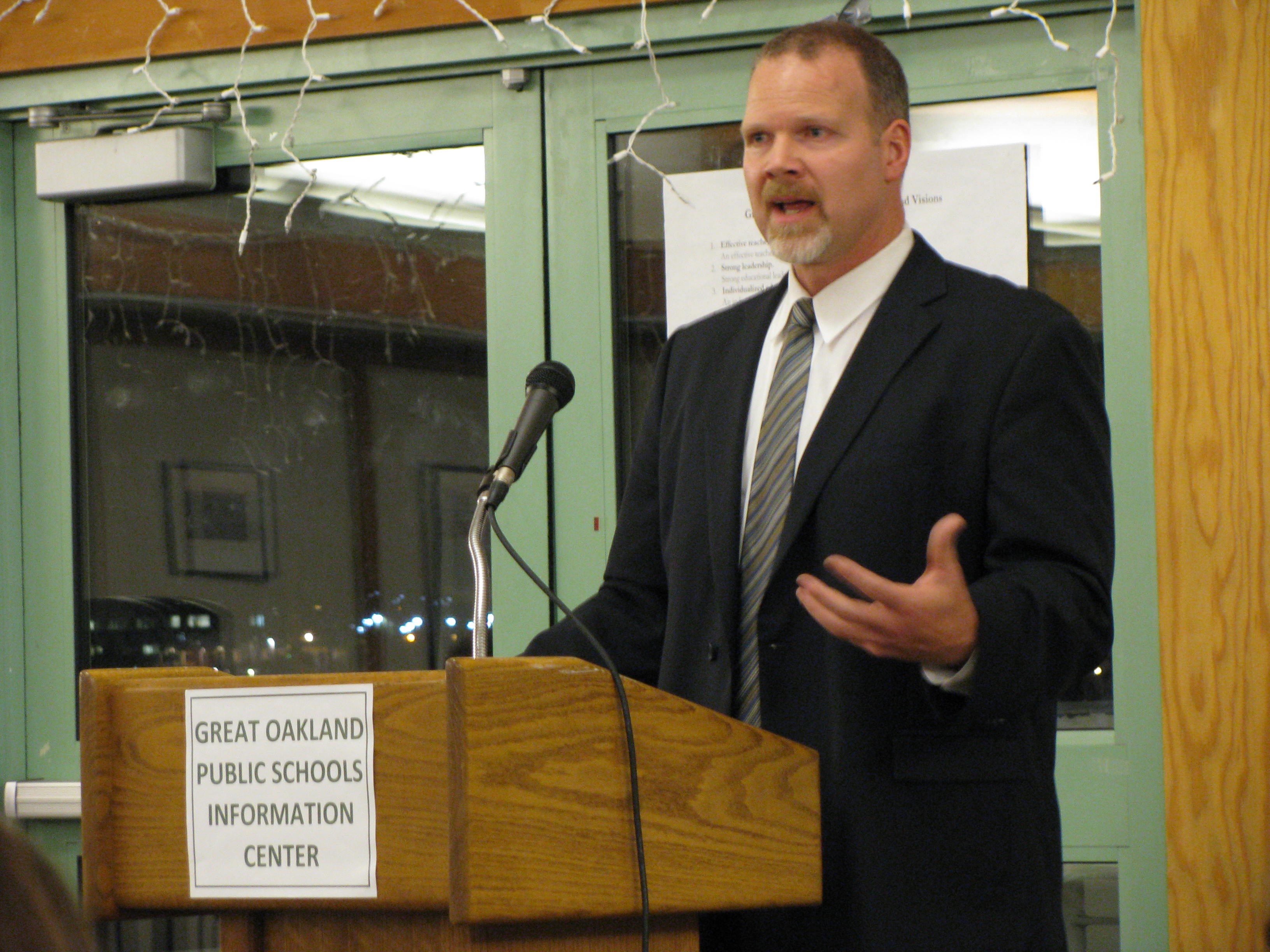
Great Oakland Public Schools, a community group of OUSD parents which has pushed the district to revisit policies on teacher hiring and compensation, student absenteeism and other issues, credited Smith with making

“Tony’s leadership has stabilized the district, and brought our community together around a shared vision of quality schools for each and every Oakland student. He created spaces for courageous conversations on race, class and poverty. The Thriving Students plan of full service community schools in every neighborhood has broad community ownership,” said Jonathan Klein, the organization’s executive director.

“We are sad about Tony leaving and wish he and his family the best.”

The OUSD Board of Education plans to meet April 10 to accept Smith’s resignation and consider steps needed to recruit a new superintendent.

See story.

Oakland Local: Martin Luther King Jr. Oratorical Fest presents 1st place winning poetry

Castlemont Orators
MLK Oratorical Fest award winning poet D’Angelo Crosby, far right with blue ribbon, and his Castlemont High School classmates

March 18, 2013By

D’Angelo Crosby

Oakland’s Castlemont High School student D’Angelo Crosby won first place for original poetry with this poem about his life during the Martin Luther King Jr. Oratorical Fest Regional competition 2013.


The Struggle

Mommy and daddy died

When I was young

Felt a lot like losing one of your two lungs

And sister was all I had growing up

She gave me things

But to some people that was a bit much

But I can’t complain

Because things happen for a reason

All the pain and struggle was the best part of my season

And even though sometimes I felt like leaving

It was their love and support that was keeping

Me away from the edge

And leaping

Into darkness

Seeking something that I couldn’t find that was leading

Me down the wrong path

Un-succeeding

Pleading for healing

But only getting a worse beating

Inside it was like not knowing the plays while in the huddle

Or a drug dealer

That couldn’t find their bundle

I tried so hard to understand why

But I guess it’s just the way it is in the struggle
~Copyright 2013 D’Angelo Crosby

To learn more.