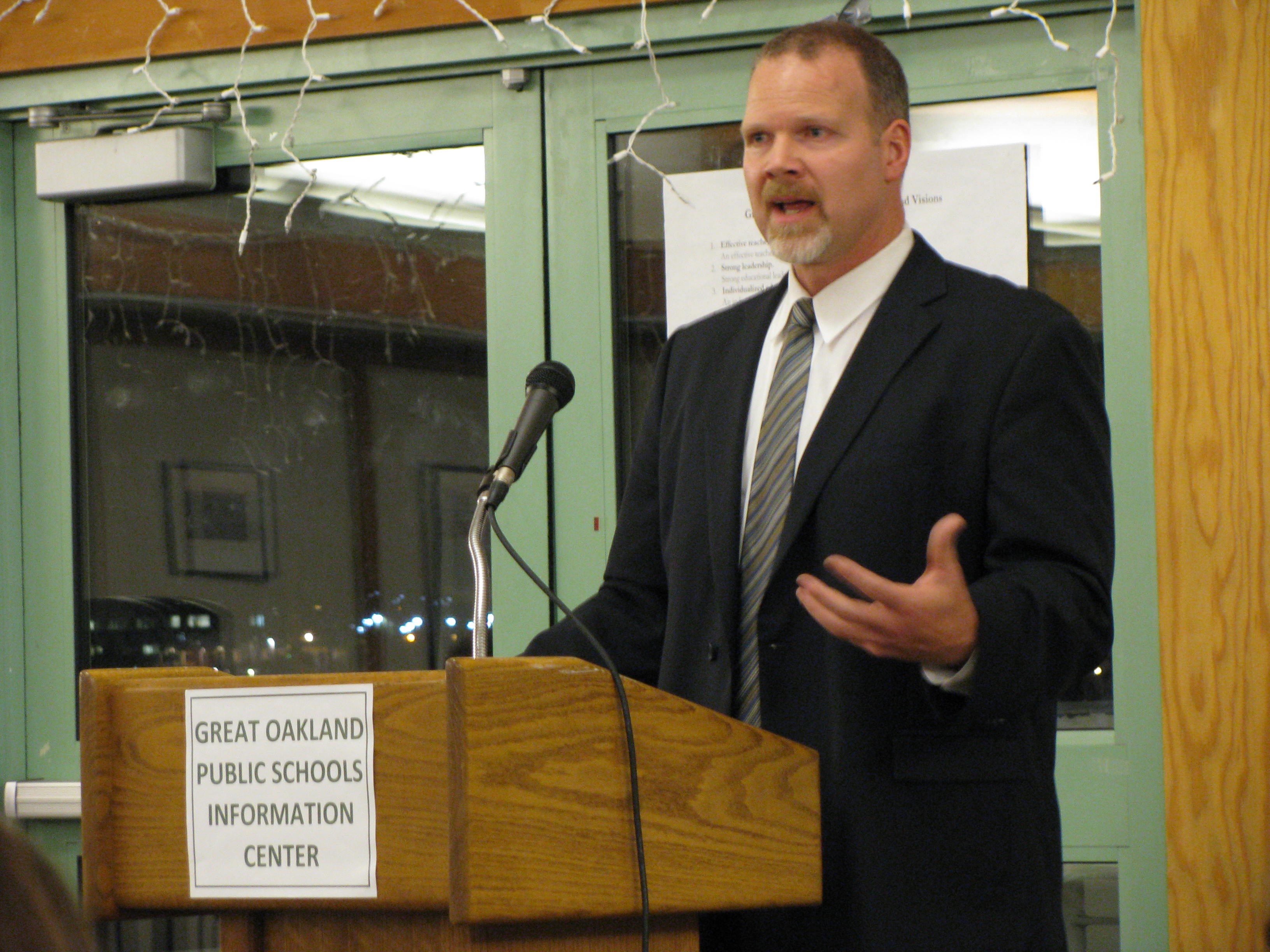
At Wednesday night’s school board meeting, Superintendent Tony Smith and a small panel, including two principals, presented the Balanced Scorecard Accountability Report. The topic: suspensions.
One major focus of the report is to work toward reducing suspension rates overall, but specifically with African American male students.
In the 2011-12 school year, African American students accounted for one-third of enrolled OUSD students and 63 percent of the students who were suspended. Of the male students, African Americans make up 16 percent of all OUSD students and 41 percent of suspended students. Compared to other ethnicities in the district, this figure is disproportionate and raises a few red flags.
Latino students, for example, have proportionate suspensions compared to the total students enrolled in the district. They make up 38 percent of all OUSD students and 27 percent of suspended students. Latino males in the district and those who were suspended make up 38 percent and 27 percent respectively.
The report also details possible root causes of student suspensions and strategies schools are and should be utilizing to reduce the number of suspensions and be more proactive to all student success.
The strategies are laid out on a pyramid structure with three tiers of action. The first tier addresses almost all students with early intervention and developing social and emotional learning for all students; tier two focuses on restorative justice and developing manhood for students at risk of suspensions; tier three helps the troubled students on an individual basis.
As a community, we know that no other in-school factor affects students as much as effective teaching. Therefore, Oakland’s parents, teachers and community leaders have expressed a strong desire to help the city’s children access effective teaching in their classrooms. We also know that our children will do best when we work in deep partnership with their teachers to support their work in the classroom.
On March 20, our coalition will be gathering for Teaching Matters: The NCTQ Study Release to talk about the release of a study by the National Council on Teacher Quality, and actions we all can take to support effective teaching in every Oakland classroom (see below for more info).
The Effective Teaching Coalition — which includes Oakland Community Organizations (OCO), SEIU Local 1021, Youth Together, Youth Uprising, The Education Trust-West, GO Public Schools Leadership Center, and the Lawyers’ Committee for Civil Rights — will host this event to highlight the importance of supporting our teachers.
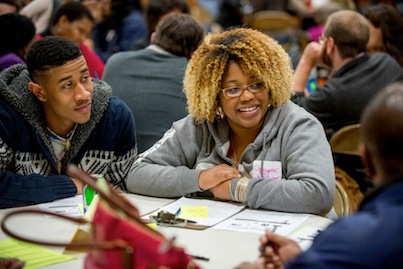
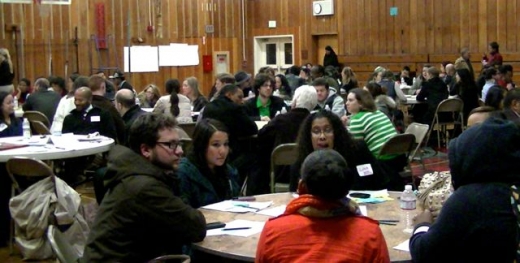
Last Thursday night, more than 150 Oaklanders braved the cold and rain to join the Effective Teaching Coalition at its first event: “Teaching Matters, Series 1: “The Importance of Supporting Teachers So All Children Succeed.”
Around tables, we shared memories of our favorite teachers and what made them effective. We also talked about roadblocks to effective teaching in Oakland and heard from experts, and a representative from each of the coalition members.
Studies indicate the main driver of student achievement is effective teaching. While poverty, trauma and starting kindergarten with no preparation put children at a learning disadvantage, students can catch up if they have effective classroom teachers for at least three years.
But effective teaching doesn’t just happen; it must be nurtured with mentoring, support and collaboration.
Such were among the findings discussed Thursday night when about 200 people gathered at an Oakland public school for a forum on “Teaching Matters,” hosted by seven community organizations led by Great Oakland Public Schools.
They were joined by Education Trust-West, Oakland Community Organizations, Youth Uprising, Youth Together, the Lawyers Committee for Civil Rights and SEIU Local 1021. Spokespeople from these groups spoke of wanting to support improvements at Oakland Unified School District.
Timed to coincide with OUSD’s drafting and negotiation of a new teacher professional development and evaluation system with its teachers union, the Oakland Education Association, the forum drew scores of OUSD and charter school teachers as well as students, parents, community activists and a few administrators.
The red outline of a neon cross from the nearby Korean Community Christian Church church emanated above 1-O.A.K.’s head like an electric halo, as the Oakland singer stood at the Telegraph and 24th St. Peace Stage, wearing a green RespectOurCity t-shirt and performing a cover of William DeVaughn’s R&B classic, “Be Thankful for What You’ve Got.”
The lyrics—you may not have a car at all, but remember, brothers and sisters, you can still stand tall—seemed thoroughly appropriate, considering the circumstances: Following the prior month’s First Friday celebration, gunfire erupted, leaving 18 year-old Kiante Campbell dead and several wounded, and causing event organizers (myself included), concerned stakeholders, and city officials, to rethink the future of the event, and institute numerous changes, the most salient of which was tightly-curated antiviolence messaging throughout the entire FF footprint.
***
Just moments earlier, District 3 City Councilperson Lynette Gibson-McElhaney led the Peace Stage crowd, which conservatively looked to number upwards of a thousand people, in observing a moment of silence in honor of Campbell, and other victims of gun violence in Oakland. Gibson-McElhaney called for everyone in the crowd to raise the peace sign in the air; a sea of hands followed suit. The hands remained held high for what seemed like an eternity, but was in actuality just a couple of minutes.
No one said a word.
“When that happened, I could feel, this city is still–from [24th st.] to [14th],” said Amber McZeal, a member of the FF organizing group. “It was a change… I didn’t recognize how many people were in the audience [because] all I could feel was stillness.”
The moment of silence was followed by an invocation led by Hub Oakland’s Ashara Ekundayo, who poured several libations into a large bowl, held by McZeal. The peace vibe had been set earlier in the day—aided by the widespread presence of ROC shirts, worn by community members, artists, DJs, event organizers, and Mayor Quan’s volunteer monitors—and was maintained throughout the night, which ended quietly and without incident, around 9 pm. (disclosure: I’m one of the ROC organizers as well.)
***
Even with the new guidelines and thematic programming, First Fridays was still a celebration of Oakland artists and homegrown culture, a point brought home by 1-O.A.K., and all the other inspired Peace Stage performers: Jennifer Johns, The Kev Choice Ensemble, Los Rakas, The Seshen, Chinaka Hodge, DNas, Do D.A.T., Chris Riggins, DJ Aebl Dee, DJ Tap-10, La Gente, and Candelaria. The music was a diverse mix of conscious hip-hop, reggaeton, jazz, funk, electronic, cumbia and R&B.
March 1’s event had less music programming overall; only two amplified sound areas were permitted by the city, the other one being the “Heal the Hood” stage curated by original First Fridays vendor Needa Bee, which featured DJs ((Local 1200)), Ras Ceylon, and numerous spoken word artists, poets, and youth organizers.
There was still lots of art on display, including the interactive paint wall at “the Art Zone,” along with local artisans and vendors. I did see less public drinking, though I wouldn’t say there was 100% compliance with zero tolerance. Overall, the event seemed less chaotic than in previous months, and the reduced number of sound systems resulted in less aural bombardment from every direction.
If heads can remain cool and calm, First Fridays might have a future after all.
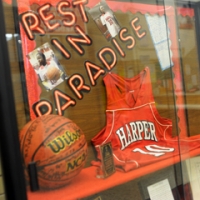
This American Life spent five months at Harper High School in Chicago, where last year alone 29 current and recent students were shot. 29. They went to get a sense of what it means to live in the midst of all this gun violence, how teens and adults navigate a world of funerals and Homecoming dances. We found so many incredible and surprising stories, this show is a two-parter.
Stacey Smith is an Oakland school district parent and volunteer who has served on the District GATE Advisory Committee, the school board’s Special Committee on School Based Management, and the Community Advisory Committee for Special Education. What she writes about does not reflect the view of any group.
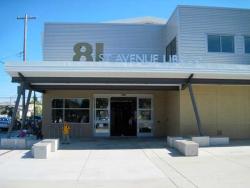
You may have caught the recent news about street violence near New Highland Academy. On January 10th, teachers and children were preparing to leave on their regular visit to the nearby 81st Avenue Public Library branch when gunfire broke out and about sixty shots were fired. After this traumatic incident, visits to the library ended completely because it was considered too dangerous. The Oakland Tribune’s Tammerlin Drummond wrote a column about the incident and the police-escorted “peace march” to the library a couple of weeks ago that the teachers and the Lincoln Child Center helped organize to create some closure for the second- and third-graders. The march was widely covered and news reports focused on violence the children experience daily both in and near school and at home. Many touched on the trauma counseling the students received and teachers spoke of the great need to support the children. But something seemed missing to me.
Who is helping the teachers and school site staff with their own trauma?
I tracked down Susan Andrien, MFT, who is a Program Manager at the Lincoln Child Center. She told me that her organization has both full-time and part-time staff working on-site at both New Highland Academy and RISE. Both school communities experience high levels of violence including while at school. Last year there were nineteen lockdowns at RISE and as one New Highland Academy teacher mentions in Drummond’s column, the school actually has color codes that indicate the severity of the frequent lockdowns. One teacher shared how the staff was “profoundly impacted” by their situation. The need for student mental health services in these schools is well beyond the available capacity. And for teachers, there is even less support.
“They’re holding so much,” Ms. Andrien says of the teachers. “They’re doing the best they can to manage it and many of them are traumatized themselves, from what they see or hear from the students and from experiencing the violence themselves. They’re doing a great job but they need more support.”
Ms. Andrien discussed the very real consequences of the trauma for adults, like Post-Traumatic Stress Disorder (PTSD). And a quick internet search confirmed there are many other effects: greater risk for depression, substance abuse, general anxiety, and stress that gets in the way of healthy living. I wonder how many teachers and site staff are affected to the point that work and home life are impacted. My heart goes out to these folks, people who have taken on the difficult job of teaching plus the added challenge of navigating dangerous workplace environments to do their jobs.
The good news is that there is some recognition that the adults need mental health support too. Ms. Andrien told me that in addition to the work Lincoln Child Center is doing to provide some coaching and support to teachers and principals, the Oakland Unified School District is looking at a mental health support model that grew out of 9/11 and the lessons learned from treating the mental health needs of responders in New York City. I’m going to look into this and hope I have something to report on in the near future.
The bad news is that it sounds like any substantial plan to provide support for school staff who experience violence is still only in the planning stages. In the meantime, we have a lot of teachers and other site staff out there who continue to be exposed to violence every day and who may not be getting the support they need to cope with the issue. As one teacher confessed, “I worry that the District will lose many great educators if their fears aren’t addressed.”
Of course, violence and its related trauma are not limited to these two schools. Are you a teacher or staff member facing this problem at New Highland Academy, RISE or another site? How does the violence affect you and your colleagues? Are you getting the support you need and, if not, what do you think would help?
After early teaching stints in far flung locales from Ecuador and China to New York and Sunnyvale, 4th year middle school teacher Alison Ball, 29, came to Urban Promise Academy (UPA), where she is having a blast teaching seventh grade.
Aside from computation and life science, Alison is excited about Crew, a UPA program focusing on the social and emotional learning skills that are part of OUSD’s strategic plan.
“What drives my work,” Alison said, “is that it’s such a time of self discovery, with students getting to discover themselves as people, figuring out, ‘what do I stand for as a person? How can I navigate the social world that I’m in?’”
Allison helps provide opportunities for students to talk with one another about what they are studying. “What I find is that in general students will have the conversation when they have the skills to have the conversation. If sometimes there’s some goofing off, it’s because they don’t know how to have that conversation or they don’t know how to explain their thinking.”
She uses a variety of strategies to help prepare students to talk about their thinking and how they arrive at conclusions.
“The math,” she explained, “is about the element of logic – students being able to see the logic and predictability, being able to solve problems, to ask what are my tools, beyond math, figure out possible outcomes. That element of mathematical thinking provides reasoning beyond math. Those kinds of things can be really empowering for students.”
Alison finds that the greatest reward of teaching is getting to spend time with young people. “My job never gets old, it’s never boring. There is always something that I‘m working on professionally, always new goals I’m setting.”
Although Alison did not originally set out to be a teacher, she says she tries to emulate her 3rd grade teacher Mr. Kramer. “He had a sense of wonder in the classroom. There were always weird, gooey, crawly things around the classroom – worms and brine shrimp, and I loved the ‘ew, gross!’ factor.” She also values the high standard he had for his students.
Alison advises new teachers not to take on too much that first year, which can often backfire, she says. She also reminds them to “breathe. At that moment, when you have a decision to make in the classroom, about how to respond to a student, that can feel really overwhelming, watching yourself making a decision, I definitely can and do breathe, on many occasions.”
“We could go out right now and pull 5 random people and ask them is there a difference between public schools in this country that serve poor children and public schools in this nation that serve wealthy children and everyone would say yes. So everyone knows. Then to me that’s deliberate, it’s not an accident, it’s not a mystery everyone knows. Everyone knows [schools] are fundamentally unequal in almost everyway. And yet the narrative of meritocracy, narrative of opportunity persists. Even though everyone knows it’s a myth. It’s a rigged game. And you don’t have a choice to play; everybody’s on the same Monopoly board trying to get home, but there are a group of people that everybody knows starts with way more money in their bank and then we act as though we’re all playing the same game under the same set of rules.”–Jeff Duncan-Andrade Ph.D
Jeff Duncan-Andrade Ph.D, is an Associate Professor of Raza Studies, Education Administration and Interdisciplinary Studies at San Francisco State University. He serves as Director of the Educational Equity Initiative at the Wangari Maathai Institute for Sustainable Cities and Schools. He is an English teacher at Mandela High School, where he is the director of the East Oakland Step to College Program. Working as a middle school and high school teacher for 21 years, while researching urban school pedagogy, has inspired a new project, Roses in Concrete, a charter school, which redesigns many of the standardized practices of the modern educational system.
On Improving Teacher Recruitment, Training and Professional Support and Development
With almost half of new teachers estimated to leave the profession within five years, Jeff Duncan-Andrade suggests some solutions to the staggering teacher turnover rate. First, teacher recruitment needs to be a priority of colleges or universities the way they pursue students of other disciplines. He asserts, “There are certainly relationships between colleges and communities, but it’s not about finding the best educators.” Duncan-Andrade concedes colleges are no strangers to recruiting; athletes are sought out from middle school. He believes colleges should be recruiting educators the same way they recruit athletes. It’s important to be able to recognize who potentially would be the best educators and without a strong recruitment system, it’s impossible to actively find them. District wide policies should require recruiting teachers who know what’s happening on the ground and are culturally responsive to the area.
Beyond recruitment, training and education are areas Duncan-Andrade believes need a complete overhaul. In California, an undergraduate student cannot major in Education. The belief is, if you have content expertise then you must be able to teach it; the art of teaching is highly undervalued. Our system for training teachers needs to be rethought, “[Learning how to teach is] crammed into two semesters and a few weeks of student teaching and then you’re handed keys to go and serve the community that has the highest needs and the least amount of resources and we have a 50% leave rate for teachers in their first two years. No surprise why.” Duncan-Andrade proposes a teacher training system modeled on the medical field: teachers are trained for 4-6 years and do a minimum of a two-year apprenticeship. “Just like in the medical field, you do your residency and at the end of your residency if you’re chief resident decides that you’re not fit, you don’t become a doctor.”
The third tier pertains to professional development and teacher longevity. Often the best training comes from experience, Duncan-Andrade explains, “What we know from the fairly extensive body of research about longevity is a lot of teachers leave the classroom because of the working conditions. So it wasn’t about their training, it wasn’t about their recruitment, it was about, ‘now I got my own site, I’m getting no support, I’m not getting meaningful professional development and…frankly a lot of the stuff that I was actually trained in, I believe in, things like social justice, around things like care, loving your students, building a family environment. All those things I received in my training, those things are not allowed…” Duncan-Andrade has set about to develop a set of tools that identify who are the most successful teachers and to begin positioning them as leaders in policy-making practices. “We do [recruitment, training, retention] badly, I mean really badly. And everybody knows, that’s the thing that makes me upset. Everybody knows. At best it’s been benign neglect, at worst it’s deliberate.”
On Full Service Community Schools
“I think the people who are talking about [community full service schools] are so far removed from the reality of the classroom.”
Duncan-Andrade explains there’s a gap in education between theory and practice, between imagining how issues can be addressed and how they should realistically be addressed. “On the white board everything works. On the ground it’s messier… and I think the problem is the people having those conversations don’t understand the ground, because you don’t have the top 100 teachers. You couldn’t even say who the top 100 teachers in Oakland are. How are you going to develop school wide, city wide, district wide policies that are reflective of what actually works on the ground?” Duncan-Andrade points to the health clinic at Fremont High School. He explains, “My kids won’t go to the health clinic because it’s staffed by people who don’t understand them. They have all the medical training, they’re from UCSF and Berkeley. All that training they don’t understand our community, they don’t understand our kids. So our kids go there, they get referred there and they come back and they’re like ‘I’m not going back there.’ So I have to get them medical referrals to community doctors that I know that are culturally responsive that actually understand what it’s like to be a black woman or what it’s like to be a Latino immigrant. That’s the gap. Do I think [Superintendent Smith] ideas are right headed? Yes. Do I think they have a long way to go to understanding how to actually take those really good ideas and make them manifest on the ground? Yes.”
On Roses in Concrete Charter School
“I don’t think the point of education is escape poverty. I think the point of education is to end it, but we’re not taught that in our schools. Not when you grow up poor. School is your way out and I think that’s why poverty persists because the people who are most able to understand poverty and be able to fundamentally attack it and change it with the way that they think and the way that they’re educated, they are encouraged to escape it and attack it from the distance with a checkbook. I think ideologically, our school will be fundamentally different than say Head Royce [a private school in Oakland, Ca.]. Cosmetically it might look somewhat similar…but ideologically, it will be different. The kinds of students we’ll produce and the sense of purpose about their lives they’ll have, will be somewhat different than what a lot of schools produce.”
The planned Roses in Concrete Charter School is modeled on the Maori educational system in New Zealand. It’s centered on the belief that everyone in the school is a family. Maori schools are overseen by their own school board and by local members of the community. Duncan-Andrade explains, “[With local control] the accountability changes… they control the food, they control the building design.” The Maori classrooms have no walls, which is very much a part of the their cultural traditions and norms; they have several classes occurring in one large area. They don’t separate students by age, often 16 year olds can be seen working with 8 year olds. The students don’t rotate from teacher to teacher. Duncan-Andrade goes on to explain, “When we thought about building this school…[we thought] about what does it mean to be a family? How does it actually operate? We eat together. A couple nights a week kids and faculty stay at the school. They go to sleep at the school.”
He plans to build a state of the art campus, that responds to and reflects the cultural values of Oakland’s community. It’ll focus on an Ethnic Studies driven model of education, which concentrates on the student’s sense of self and cultural identity; the students must know themselves, love themselves first and understand their own greatness. This allows them to enter a diverse society in a much more meaningful way. His vision includes a full serve community center within the school similar to the model set out by the Oakland Unified School District, “It’s not just about having doctors, it’s about having doctors that really understand our community. It’s not just about having access to housing, it’s about having access to having housing that’s responsive to the needs of our community. I think those are the conversations that we’re most interested in having with people. It’s not only about the kind of resources you can bring, but how can they fit into the particular contexts of East Oakland.”
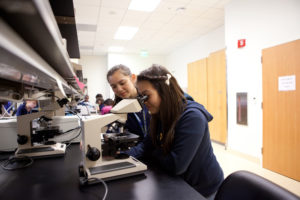
SMASH is a three-year enrichment program that assists talented high-achieving low to moderate income high school students of color from historically underrepresented communities (i.e. African American, Latino/Hispanic, Native American, Southeast Asian and/or Pacific Islander) to become competitive and successful in science, technology, engineering, and mathematics (STEM) studies at selective colleges.
They are currently looking for current 9th grade students attending Bay Area public high schools or private schools on scholarship in the San Francisco Bay Area to attend our UC Berkeley and Stanford programs. Students should have at least a 3.0 GPA or better, currently be enrolled in (or have already completed) Geometry or the equivalent with a B average. This is a FREE program for ALL participants!
They are searching for students who show a particular interest in math or science and are willing to maximize the opportunity to reside and attend classes on a college campus for five weeks with like-minded students.
The application and additional information about SMASH can be found on our website http://lpfi.org/smash. Online application is due March 8, 2013 (Note: Letters of Recommendation, Transcripts and Test Scores must be received via mail or uploaded by no later than March 23, 2013).
The Gay-Straight Alliance Network (GSA Network) is a national organization which links school-based Gay-Straight Alliances across the country with each other, to community partners, as well as aids in leadership development and activist training. Jill Marcellus, the Communications Manager at GSA Network based in San Francisco, explains how deeply involved youth are in their organization, “GSA Network is a youth-driven organization, and we operate on a model of youth-adult partnership. This carries all the way to the top of the organization: young people comprise about half of GSA Network’s Board of Directors. There are a number of opportunities for youth to become leaders within the organization, from becoming a youth trainer and leading the peer-to-peer workshops that are at the heart of our work to joining a regional Youth Council and helping shape our program work for the year. We train young people not only to change their schools, but to become leaders in LGBT and other social justice movements.”
One component of the work the GSA Network does is the Youth Empowerment Summit (YES) held annually. December 5, 2012 marked the 8th YES summit and drew over 700 allied youth and adults to Mission High School in San Francisco. Those who attended heard four keynote speakers, attended over 40 workshops, met with community partners in a resource fair, participated in discussion groups and students could take part in a youth only drag show and dance.
As part of the conference, three panelists, Emery Cohen, Espii Gutierrez, Raymond Ferronato, T. Murray, and moderator Isaias Guzman discussed this year’s theme: the school-to-prison pipeline and how it affects their community and themselves. As one GSA member, Sabina Jacobs, a senior at Sequoia High School in Redwood City, explains, “the…pipeline is polices and practices that school districts use to unintentionally push out LGBT, people of color, people with disabilities, or low income youth.” Sabina believes this year was a huge success and in the years to come would like to see the workshops’ topics expand. Sabina explains, “[I’d like to see] more comprehensive workshops on gender identity in general,” and beyond the YES conference, Sabina expresses the need for a system to be put in place to educate young people about the gay, lesbian, bisexual, and transgender community and demystify the continuing stigma. “We need to educate people and make school a safe place for learning. While it is a safe place for some, it’s not for all. Especially if you’re going to school and worried about getting beat up in the locker room for how you’re dressing or who you’re dating. We need to make school an actual safe place and help people out who need the help.”

 March 15th, 2013
 March 14, 2013
 March 11, 2013
 March 5, 2013
 February 15/22, 2013
 March 4, 2013
 February 22, 2013
 January 31, 2013