Asides

Brenda Wong Aoki

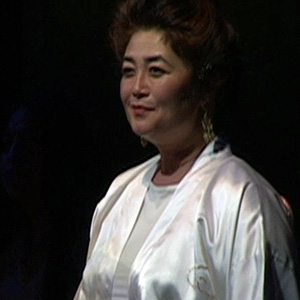
Brenda Wong Aoki’s ancestors were Chinese, Japanese, Spanish and Scottish. She’s shares the stage at Yerba Buena Center for the Arts with Gayle Ross a descendent of John Ross, Chief of the Cherokee Nation. The two women come from cultures that are worlds apart but they share a lifelong passion for telling stories in this segment of Spark.

  • Array

Herb Parker

Editor’s note: In 2005, Montalvo changed its name to Montalvo Arts Center.

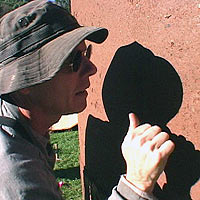
Not your traditional landscape artist, Herb Parker redefines nature-based sculpture, bringing a contemporary innovation and vision to the traditional art form that leaves topiary rabbits in the leafy dust. Since the early 1980s, Parker, who is a professor of art at the College of Charleston in North Carolina, has created more than two dozen structures throughout the United States, Canada and Italy, harmonizing the disciplines of art and landscape. Parker’s “grass temples” and “houses made of lawn” function as fun, organic shelters that create, as Parker puts it, “environments for people to interact with.”

Visiting Parker on the site of his piece, “Caracol,” (Spanish for snail) Spark gets a firsthand look at how he turns sod into art. Inspired by his 4-year-old son’s snail collection, “Caracol,” like Parker’s other works, is fashioned almost entirely out of natural materials. Using tightly compacted clay and sand as a base, Parker constructs his nautilus-shaped creation entirely out of sod. Parker says he enjoys working with sod “because it is a living, growing entity” that eventually becomes “a very exciting support.”

Sod is not Parker’s only support — the artist relies on volunteers and assistants to make his art a reality. Although the unveiling of Parker’s pieces is a celebration, Parker admits he gets a little depressed at the end as he says goodbye to his collaborators. “It’s not just an object I’m placing somewhere,” Parker says of his art, “it’s a place I’m building with people.”

Commissioned by the Montalvo Association’s artist in residency program, Parker’s commission marks the launch of a new phase of growth and development for Montalvo that includes the construction of 10 new artist studios. Originally the estate of Senator James Duval Phelan, Villa Montalvo is now the 175-acre home to a nonprofit organization dedicated to inspiring love of the arts; presenting literary, performing and visual arts; and supporting practicing artists.

Montalvo
villamontalvo.org
Where: 15400 Montalvo Rd., Saratoga
Phone: (408) 961-5800

  • Array
  • Array
  • Array

Jo Kreiter

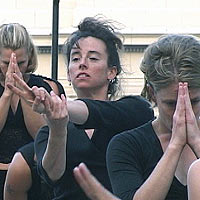
Jo Kreiter is a former gymnast who danced and trained as a choreographer with ZACCHO Dance Theater before founding her own company, Flyaway Productions, in 1996. She chose “flyaway” because of the emotional power and physicality of freedom symbolized by the concept of flight. Her dance troupe performs in the air in both traditional and site-specific venues such as on trapezes, rooftops, fire escapes, suspended steel merry-go-rounds and outdoor walls. It is breathtakingly audacious work, using the physicality of risk as public spectacle. Kreiter says of her company, “It’s a company of women, and in our art we use physical strength as a metaphor for female empowerment.”

In the Spark episode “Art in Public Places,” Kreiter clearly articulates her values and what motivates her to create politically responsive works such as “How to Be a Citizen.” Flyaway Productions’ public performance of this commissioned piece brings to life the place that San Francisco’s Market Street holds the history of protest and progressive ideas. As such, it encapsulates Kreiter’s approach to public art — making a political statement by making use of a specific site to call upon the importance of its own history.

Market street and the buildings on it have borne witness to those who have taken to the street to make their voices heard. Flyaway Productions’ performance honors the courage of the thousands of ordinary people in history who have come forward to strive for justice and social change by assembling and taking to the streets. “How to Be a Citizen” was inspired specifically by the February 2003 peace march in San Francisco against the war in Iraq declared by President Bush. It is not a literal translation of the events of that month, nor is it a protest movement. It is a physical expression of the feelings and emotions of protesters as interpreted by Kreiter.

Performing on a 74-foot-long ramp rising 7-feet high with the words “dissent,” “compassion” and “justice” stenciled on it, the eight dancers’ unified movements symbolize the unity of public protest. “How to Be a Citizen” also featured a number of collaborators who made significant contributions to the work, including Pamela Z, who composed the haunting, chanting musical score, and designer Lalo Cervantes, who constructed the ramp. During the performance, local labor historian Harvey Schwartz recounted a number of historical reference points along the timeline of the history of protest in San Francisco that were integral to the piece.

Jo Kreiter has been a recipient of numerous awards, including a 2001 CA Dancemakers/Irvine Fellowship and a 2000 Gerbode Foundation Award for Choreography. She has been nominated for Isadora Duncan Dance Awards in Choreography (2000) and Performance (1999). She also teaches classes and workshops that highlight her unique approach to dance and physicality. To illuminate the importance of risk in her work, she quotes the British writer Jeanette Winterson “What you risk reveals what you value.”

Array

  • Array
  • Array
  • Array

David Edgar

English playwright David Edgar was commissioned to write “Continental Divide” in 2000 by Berkeley Repertory Theatre‘s artistic director Tony Taccone, as a co-production with the Oregon Shakespeare Festival. Three years later, after months of research, the play opened as part of Berkeley Rep’s 2003-04 season. From first meeting to opening night, Spark is there for the backstage drama as the script is finalized against the backdrop of California’s real-life gubernatorial drama.

Edgar describes this production as a “European epic play that has an American subject.” Taking the form of two three-hour interconnected plays that explore the complex political landscape of contemporary America, the setting is a gubernatorial election — “Mothers Against” looks at the Republican campaign and “Daughters of the Revolution” concentrates on the Democratic Party. With the same characters appearing in both plays, the plays can be seen in either order, and each one can also stand alone.

“Continental Divide” explores what has happened to the ideals of the 1960s, exploring the dissipation of the beliefs of the American Right and Left. Although “Continental Divide” takes place in a state that seems to resemble the West Coast of the United States, Edgar maintains that any resemblance to real events in Californian politics is purely coincidental. Additionally, the ending is deliberately ambiguous so that the focus of the play is the political process and the possibilities of the future as seen on either side.

More about David Edgar
Edgar lives in Birmingham, England, and has been a lifelong supporter of the Labour Party. Politics have always been his central concern as a dramatist, but he does not use drama to answer questions, rather to raise them. His works include the Tony Award-winning adaptation of Dickens’s “Nicholas Nickleby” along with the original plays “Death Story,” “That Summer” and “Entertaining Strangers.” Edgar is a professor at the University of Birmingham, where he founded and directed Britain’s first postgraduate course in playwriting.

More about Berkeley Repertory Theatre
Michael W. Leibert founded Berkeley Rep in 1968 as a storefront community theater. Winner of the 1997 Tony Award for Outstanding Regional Theater, its national reputation draws theater artists from around the country to work on a variety of productions from September through July. The season consists of seven productions of the finest classic, contemporary and new plays. The Berkeley Rep School of Theatre offers classes and activities for both youth and adults and tours a fully staged professional production to schools throughout the 11-county greater Bay Area.

Berkeley Repertory Theatre
berkeleyrep.org
Where: 2025 Addison St., Berkeley
Phone: (510) 647-2949

Array

  • Array
  • Array
  • Array

Michael Franti

“The bass, the treble, don’t make a rebel/Having your life together does.” Those words, rapped by Michael Franti back in 1992, seem eerily prophetic today. In an industry notorious for perpetrating fantasy and the philosophy of “getting mine,” the Bay Area-based musician is a thinking, feeling person joyously out of step with his contemporaries in the music industry. Spark talks politics with Franti, from the set of his latest music video to backstage of a free performance at Amoeba Music.

Franti’s dedication to making politics personal began in the late ’80swith the agitprop punk band The Beatnigs, continued in the early ’90s with the industrial hip-hop forum Disposable Heroes of Hiphoprisy, to arrive at what he is today: a mesmerizing spoken word artist and leader of the politically astute San Francisco band Spearhead.

He makes conscious music that engages brain, booty and soul in a funky soundtrack of hip-hop, reggae, Latin, blues, spoken word and R&B. He’s stepping in the oversized footprints of Curtis Mayfield, Marvin Gaye, Bob Marley, Gil Scott-Heron, Sly Stone, Linton Kwesi Johnson and Chuck D yet creating his own path — embracing new music and communities as he goes along. Live shows have included drum circles, alternative energy generators, DJs, potlucks, massage therapy and information tables.

He’s rapped about AIDS awareness (“Positive”) and homelessness (“Hole in the Bucket”). After the band’s second major-label album, “Chocolate Supa Highway,” Spearhead put attracting mainstream attention on the back burner to remain true to its consciousness-raising mission. Its 2001 album “Stay Human” centered on the death penalty. In July 2003, the band released “Everyone Deserves Music,” a conscious party that drags speakers onto the White House lawn until the break of dawn.

Franti documents injustice, but more important, he does something about it. He’s inhaled tear gas on the front lines of anti-WTO rallies and lent his time and talent to support Mumia Abu-Jamal, anti-death penalty legislation, marijuana decriminalization, conscientious objector groups and the anti-war organization Not in Our Name.

For artists struggling to make it in the rap game, songs with politically progressive messages practically beg for radio banishment and audience alienation. Michael Franti has put his mind on record for more than 15 years and enjoys a supportive and loyal worldwide fan base. And he doesn’t wait for an election year to get political. The heart that beats inside his chest — booming louder than any passing car stereo system — simply won’t let him.

  • Array
  • Array
  • Array

Ashkenaz Music & Dance Community Center

Ashkenaz

Ashkenaz Music & Dance Community Center is a non-profit music and culture venue that has operated as a self-contained global village, specializing in the presentation of live roots music. The mission of Ashkenaz is to bring people of all classes, races, cultures and ages together with musical programs. Their programs are as diverse as the communities it hosts, including Balkan, Celtic, Cajun/Zydeco, Middle Eastern, African, Caribbean, and Reggae, as well as American roots traditions from Appalachian to the Blues. In the Spark episode “Community Institutions for the Arts,” viewers visit this nationally renowned venue and meet its dedicated staff as they provide a much-needed space for thousands of people in the Bay Area to enjoy traditional music and dance from around the world.

In 1973, David Nadel founded Ashkenaz as a community gathering place, expressing his belief that dancing and moving to music was akin to a spiritual experience that united peoples of all ages, backgrounds, and ethnic heritages. What began as a folkdance venue with recorded music gradually expanded to feature live bands representing the diversity of the region. And indeed, people from all over the Bay Area come for the performances and dance classes. Even Sue Schleiffer, the Executive Director, started coming to Ashkenaz in the 1970s to enjoy folk dancing and has been there ever since.

Despite the fact that Nadel himself is no longer part of the daily life of Ashkenaz, his spirit lives on. Nadel was shot and killed in 1996 by a disgruntled visitor who was asked to leave and returned to the venue after-hours. Dedicated friends and colleagues have worked tirelessly to keep the organization and Nadel’s dream going, exemplified by staff members such as night manager Larry Chin, who has worked at Ashkenaz for 20 years. Today, Chin walks in Nidel’s footsteps, doing everything from bartending to taking care of the artists.

Many artists and national acts come to Ashkenaz knowing that it may not be as profitable as performing at other venues, but the loyal, diverse, and appreciative audience amply compensates. Additionally, folk artists often find that there is a sense of community at Ashkenaz that immediately connects them to their audience, as if they are playing to people from their own countries, hometowns, and villages, encouraging them on their path towards sharing their traditions and cultures.

Ashkenaz Music & Dance Community Center
ashkenaz.com
Where: 1317 San Pablo Ave., Berkeley
Phone: (510) 525-5054

Ashkenaz is wheelchair accessible and family friendly with free admission for those 12 and under.

Array

  • Array
  • Array
  • Array

Woodminster Summer Musicals

Woodminster Summer Musicals

Jim and Harriet Schlader have been staging Woodminster Summer Musicals since 1967. In the Spark episode “Community Institutions for the Arts,” take a behind-the-scenes look at as the Schladers direct cast and crew for their production of “Singin’ in the Rain” with only 40 hours of rehearsal over three weeks.

After completing successful Broadway careers — Harriet was a dancer at Radio City Music Hall, while Jim acted in original productions of “The Music Man” and “Brigadoon” — the Schladers moved to Oakland and founded Producers Associates, Inc., a non-profit organization dedicated to bringing American musical theater to new generations. Since its inception in 1967, Producers Associates Inc. has staged more than one hundred productions, making summertime Broadway musicals along-standing tradition for many Bay Area families at the Woodminster Amphitheater in Oakland’s Joaquin Miller Park.

Besides providing an opportunity for family members to come together and enjoy American musical theater, the long-time married couple has transformed Woodminster into a family legacy with the passing of the directorial torch to their son, Joel. However, far from retiring, Jim and Harriet continue to be involved at Woodminster, with Jim planning to stay on as producer, and Harriet continuing to manage the box-office and oversee costumes and choreography.

To date, Jim and Harriet have directed more than 2000 actors on stage, including their own four children. Many of these performers have continued to return to Woodminster over the years, such as choreographer Cynthia Ferrer and actor Carl Danielsen. Ferrer, who started at Woodminster when she was thirteen, says “I always feel likethe best stuff I learned, everything I learned, I learned here.” Carl Danielsen, whose role in “Singin’ in the Rain” marks his fifty-first show at Woodminster, attributes his career in theater to his “second parents” Jim and Harriet, without whom, he says, “I wouldn’t be in the theater.”

Woodminster Amphitheater
woodminster.com
Where: 3300 Joaquin Miller Rd., Oakland
Phone: (510) 531-9597

  • Array
  • Array
  • Array

Kuumbwa Jazz Center

Kuumbwa

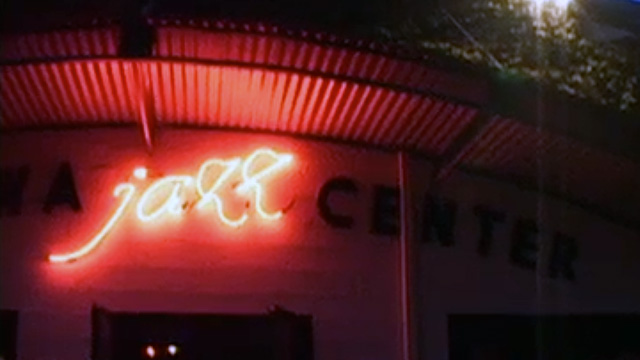
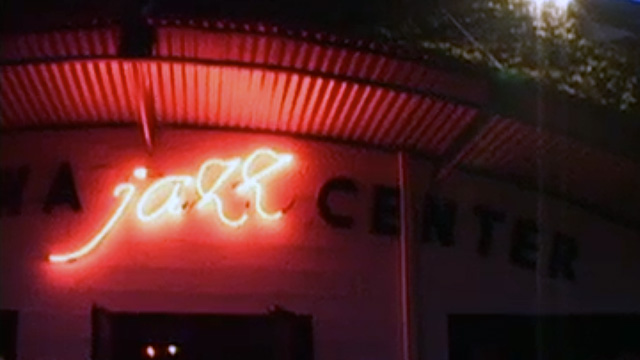
Spark heads to Santa Cruz’s Kuumbwa Jazz Center for their 28th year celebration as the West Coast’s oldest year-round jazz performance venue and education center. The place seats just 200, which means a chance to get up close and personal with well-known artists like John Scofield.

  • Array

Loren Chasse

Spark follows sound artist Loren Chasse as he scavenges for unique acoustic environments from which he uses found objects in a variety of techniques such as dragging, rubbing, or striking them together. Chasse then takes this vast repertoire of sounds back to his studio to manipulate into layers of sound, placing multiple recordings together or complementing them with previously recorded clips, creating soundscapes that are evocative of another place or perhaps even planet.

The origin of sound art dates back to the early 1900s, when artists responded to the intense changes in the urban landscape by embracing the mechanical noises around, using the world as their instruments to create pieces celebrating industry. Chasse works like a visual artist, creating a palette of unique and interesting sounds from the natural world to create sonic landscapes. As part of the movement of experimental and free music, Chasse explores unlikely sources for sound, such as industrial ruins, natural environments, and simple common objects used in unlikely ways. Using his microphone as an extension of his ear, Chasse makes acoustical portraits of places and things we might otherwise never hear.

At the heart of Chasse’s work is his interest in and ability to listen. Using his sound locations as both the instrument and the studio, Chasse looks for particularly resonant and acoustical situations that are reflected in a peculiar way. Like many artists who push the boundaries of traditional art forms, Chasse is continuously drawn to seek new acoustic possibilities, and he is continually searching for new venues and modes of self-expression. Chasse has completed many aural projects and has worked with many other artists and bands, such as Thuja and idBattery. His work is also becoming increasingly popular to exhibit in visual art galleries as part of the ever-blurring line between visual art and other forms of creative expression.

Chasse credits his work with young people for helping him recognize the importance of listening in the moment. It is important to just listen, Chasse believes, and not feel obliged to capture and preserve every sound on tape. This valuable lesson is one that he passes on to his students as a teacher in the San Francisco Unified School District. Chasse is also the Director of Education of the sound arts collective called 23five, a non-profit organization dedicated to increasing the awareness of sound in the public arena.

Also, in this Spark story follow Chasse and a group of young people from the Julia Morgan Center for the Arts’ summer camp as they take a “listening hike,” an outdoor search for and exploration of sounds. Under Chasse’s guidance, the students gain first-hand experience of the physics of sound as they explore how the near poetic qualities of listening awaken the imagination.

Array

  • Array
  • Array
  • Array
  • Array

(Jon Brumit and Marc Horowitz) Sliv & Dulet

For five weeks during the summer of 2003, artists Jon Brumit and Marc Horowitz took over the San Francisco gallery New Langton Arts, and reinvented themselves as the business team of Sliv & Dulet, the fictional enterprise behind 2001’s much-publicized one-minute art show. In the Spark episode “The Bleeding Edge … is this really art?” meet these unusual art entrepreneurs as they collaborate with 25 other artists to “develop new products and services” for The Summer Line 2003, an experiential installation that comments with great humor on the conventions of office life and the art world.

Brumit and Horowitz, who met through the Artist-in-Residence Program at San Francisco Recycling & Disposal, create interactive performance works that predominately focus on social exchanges and the creative potential of ordinary objects. Incorporating elements of absurdity and the mundane, Brumit and Horowitz have collaborated on numerous Bay Area events that push the boundaries of public/performance art including: The One-Minute Show (2001), a 30-person group exhibition that took place in 60 seconds; Bring Your Own Big Wheel Race (2002), an annual public big wheel race down historic Lombard street; and the first annual Duct Tape Festival (2002) in Oakland.

Jon Brumit holds an MFA from Cranbrook Academy of Art. He designs tools, instruments, and scenarios for interaction which often produce unpredictable results — oftenhumorous and highly interpretable — although typically arising frompublic spectacles, dynamic failures and intentionally problematizedconstructions. Solo projects include “Door to Door,” “VendettaRetreat,” and “BYOBW.” Collaborative projects include NeighborhoodPublic Radio and numerous performance installations such as “Crossover” and “Strip Club.”

Marc Horowitz communicates through the highly personal and often ironic language of material objects in his installations and sculptures, which have been described as “encounters.” He often uses photography as a way of presenting visual and conceptual discordance and harmonies. In 2001 he founded Your Local Gallery in Oakland, and has curated and performed in numerous exhibitions including Think Again, Pictures, Photos, Sculptures, Sounds & Installation, and Stuffed Animal Golf over the Great Highway, a collaborative public performance. Horowitz holds a degree in marketing from Indiana University and lives and works in San Francisco.

  • Array
  • Array
  • Array
  • Array
  • Array

FlockSmart

If you’ve come across them, you might think that their behavior might seem inexplicable — but is it? A “smart mob” is defined as “a group of strangers organized by electronic media, who gather in a public space, behave in a pre-determined manner for pre-determined amount of time, and quickly disperse.” They come together for all kinds of reasons, from those inspired by politics or artistic creativity to a simple desire for ridiculousness.

A smart mob could be classified as group performance art or a public prank, but its collaborative nature makes it a unique social gathering that encourages positive interaction, often between perfect strangers. Spark watched as a San Francisco’s FlockSmart came together in 2003 via cell phone and instant messaging to spread a little holiday cheer in Union Square — in July.

  • Array

San Francisco School of the Arts (SOTA)

Editor’s note: SOTA was renamed the Ruth Asawa San Francisco School of the Arts in 2010.

Spark visits the San Francisco School of the Arts (SOTA), humming with end of the year excitement as students prep for final art shows, theater reviews, and end of the year concerts. Meet, among others, student Anna Pasternak and teacher Elvia Marta, who give an insider’s look at SOTA’s dance department as students prepare for final exams — a four-night run of concerts.

SOTA is a public visual and performing arts high school dedicated to providing students with an alternative educational program that fosters artistic development and creativity. Since its founding in 1982, SOTA has admitted students selected by audition from all over the Bay Area in areas of performing, visual, and literary arts, thus creating an ethnically diverse and energetic student body.

In what the school calls its “pre-professional” program, SOTA engages students in a curriculum that combines academics with art instruction. SOTA offers art instruction in nine disciplines, including creative writing, dance, film and video arts, instrumental music, piano, theater arts, theater design and technology, visual arts, and voice. The teaching staff at SOTA, which is comprised of specialized arts teachers as well as artists in residence, create an educational program which allows students to study their selected discipline for at least two hours a day.

SOTA was originally founded by a group of renegade artists and teachers, and has continued to be a work-in-progress, frequently changing campuses and even sharing spaces with other schools. However, as of fall 2002, SOTA moved to its own campus where it has since been awarded the title of California Distinguished School. SOTA is not merely being recognized on a local level but also is well on its way to establishing a national reputation for itself. Pending on the allocation of funds, the school may eventually move to the Civic Center where it would neighbor the Symphony, Opera, Ballet, and Asian Art Museum. By joining the art mecca of downtown San Francisco, SOTA would no doubt increase its visibility and attract even more students to its growing population of young and emerging artists.

  • Array
  • Array
  • Array

Young Audiences of Northern California

Editor’s note: In May 2004, Young Audiences of San Jose and Silicon Valley merged with Young Audiences of the Bay Area to become Young Audiences of Northern California

Young Audiences of the Bay Area (YA Bay Area) is the area’s oldest and largest provider of arts education programs and services. Founded in 1958, YA Bay Area is one of 32 non-profit chapters of Young Audiences, Inc. across the nation. Collectively, Young Audience chapters are the single largest provider of arts education programs in the US. In 2001-02, the 5,016 professional artists working for YA chapters provided 102,980 arts programs for 8.1 million young people and educators.

As one of the YA network’s top 10 chapters, YA Bay Area is dedicated to making the arts (classical, contemporary, and multicultural) an essential part of every young person’s education and life. Founded in 1958, the organization offers performance assembly performance, workshops, artist residencies, and professional development in dance, music, theater, media, storytelling, and circus, literary, and visual arts to K-12 and public audiences.

In 2000-2001, YA Bay Area reached 189,976 students, teachers, and families through its in-school, community, and public programs in ten counties of the Bay Area. YA Bay Area’s diverse roster includes over 150 professional artists and ensembles from the Bay Area and the greater US. All of YA Bay Area’s artists are auditioned on an annual basis by YA Bay Area staff and advisory committee to ensure the highest quality programs.

In the Spark episode “Art Goes Back to School,” tag along with a few of the artists represented by YA Bay Area from in-school assemblies with Kulintang Dance Theatre and Eddie Madril from Native American Dance & Arts, to artist residencies with Poet Gail Newman and Photographer Shashari Murphy. Assembly performances are 45-minute performance demonstrations designed to introduce an artform(s) and usually the culture or tradition of the practicing artists. Artist residencies are longer-term (8-32 weeks) experiences between an artist(s) and a group of students designed to provide hands-on learning beyond the introductory level.

In addition to these valuable educational programs, YA Bay Area also offers the ArtsCard, a free family arts program offering discounts to over 50 arts and culture organizations throughout the Bay Area — including discounts on admission, special events, membership, and classes. Enrollment is open to all families with children between preschool and grade 12.

Array

  • Array
  • Array
  • Array

SFJAZZ Jazz in the Middle

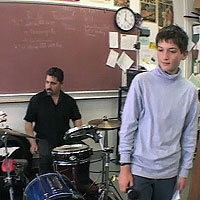
California public schools are notoriously lacking in funds for adequate arts education. That’s why in 2001 SFJAZZ started the Jazz in the Middle program, which brings music into the language arts classroom. The curriculum, which is based on the artistic connections between language and music, exposes students to the teachings of professional jazz artists and the San Francisco poet laureate. Spark goes into the classrooms to meet students participating in the program as they perform their own poems in collaboration with jazz musicians.

  • Array