Category Archives: Theater

Octavio Solis

The short story collection The Pastures of Heaven isn’t the first title that springs to mind when you talk about author John Steinbeck, but his sharp-eyed portraits of human nature and life in a Salinas Valley farming community in the 1920s have inspired a new play by San Francisco-based playwright Octavio Solis.

Commissioned by the California Shakespeare Theater as part of their New Works, New Communities series, John Steinbeck’s The Pastures of Heaven takes viewers on a journey into the heart of the American Dream as seen through the eyes of the Munroe family and the other ordinary folks of Las Pasturas del Cielo, a small village situated along the stretch of Highway 68 between Monterey and Salinas. Spark follows Solis as he explores Salinas and the stunning valley of Corral de Tierra, the real-life setting for The Pastures of Heaven, in order to draw inspiration for his adaptation.

Solis, a native of El Paso, Texas, has seen his poetic dramas produced at festivals and venues all over the country, from the Oregon Shakespeare Festival to the Magic Theater in San Francisco, from the New York Summer Play Festival to the Yale Repertory Theatre. He is the literary heir of a generation of Chicano playwrights, and his works, such as El Paso Blue and Lydia, trace a Latino experience that might not be prominent in The Pastures of Heaven. But in Steinbeck’s brief vignettes, Solis finds a dark undercurrent of human foibles and struggles that transcends culture.

The verdant pastures of green that inspired Steinbeck’s short story cycle were discovered accidentally in 1776 by a Spanish corporal, whose name has been lost to history. Throughout the 19th and early 20th centuries, ranchers and homesteaders established a loose community in the area, but from the late 1950s onward, development in the lush valley and the establishment of the posh Corral de Tierra Country Club gradually eroded the remnants of the farm community, as wealthy Silicon Valley businessmen built multimillion-dollar estates on the subdivided plots of land where cattle once grazed.

Partnering with the Word for Word Performing Arts Company, Solis and his fellow collaborators began extensive research and workshops in October 2007, all leading to the play’s premiere at the Bruns Amphitheater in Orinda in June 2010. The community outreach aspect of the project took the cast and crew to Salinas to work in the fields and learn firsthand about the world Steinbeck portrays, one that, even in 1932, Steinbeck saw slowly vanishing, like the dreams of his characters.

“If I have any vision, I tell you this,” says one of Steinbeck’s characters, in the author’s uncannily accurate voice, “some day there’ll be big houses in that valley, stone houses and gardens, golf links, and big gates and iron work. Rich men will live there, men that are tired of working away in town, men that have made their pile and want a quiet place to settle down to rest and enjoy themselves.”

  • Array
  • Array
  • Array

Jonathan Moscone

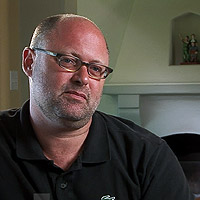
Spark visits California Shakespeare Theater’s Jonathan Moscone and Berkeley Repertory Theatre’s Tony Taccone at the first read-through of their play at the Oregon Shakespeare Festival. Their collaboration on American Revolutions: The United States History Cycle is inspired by the turbulent 1970s, brought into focus by the assassination of Moscone’s father, George Moscone, the San Francisco mayor who was shot, along with gay rights activist City Supervisor Harvey Milk on November 27, 1978. Aiming less to put George Moscone’s story into historical perspective, than to investigate what it means to be father and son, the play is scheduled to debut in 2011.

A New York native and graduate of Boston College, Tony Taccone arrived at Berkeley Rep in 1988, after directing San Francisco’s Eureka Theater for six years. As one of the leading directors in American regional theater, Taccone has developed a reputation for finding and nurturing unusual new works that have gone on to critical acclaim, including The Convict’s Return, Culture Clash in AmeriCCa, The First 100 Years, Geni(us), Ravenshead, and Virgin Molly. For some productions — like Tony Kushner’s Angels in America, Stew’s Passing Strange, Carrie Fisher’s Wishful Drinking and Sarah Jones’s Bridge and Tunnel — Taccone has shaped and honed them before they made successful moves to off-Broadway and Broadway. Others have successfully gone on to different arenas, such as David Edgar’s Continental Divide, which transferred to London’s Barbican Theater and garnered international praise.

Taccone and Jonathan Moscone worked with each other during Moscone’s directorial internship at Berkeley Rep in 1989 before he left to pursue an M.F.A at Yale School of Drama. In 2000, Moscone assumed the directorship of Orinda’s California Shakespeare Festival, expanding the repertoire of the company to include award-winning productions of works by George Bernard Shaw, Oscar Wilde, Anton Chekhov, and Tom Stoppard. Critical accolades have also greeted his productions of Man and Superman, Nicholas Nickleby, Twelfth Night, and The Seagull as well as his production of Henrik Ibsen’s Ghosts for Berkeley Rep.

In a 2008 interview with the Bay Area Reporter, the younger Moscone, who was 14 years old at the time of the shooting, noted that his father “changed City Hall. He made a Harvey Milk possible. He helped Harvey succeed. He opened the doors of city power to those who had been denied entrance.”

  • Array
  • Array
  • Array
  • Array

San Francisco Mime Troupe

View Spark segment on the San Francisco Mime Troupe. Original air date: November 2009. (Running Time: 6:30)


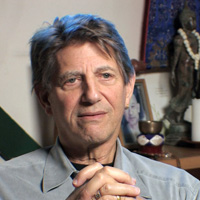
View Spark Web extra of Peter Coyote, actor and a major player in the counterculture of the 1960s, talk about his experiences as a member of the San Francisco Mime Troupe, the power of comedy, and the legacy of the 1960s. (Running Time: 3:54)

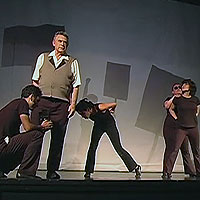
Decidedly unsilent, the San Francisco Mime Troupe’s gadfly theater, played for free in city parks and spaces, has long defined a distinctly San Francisco brand of experimental theater. Spark talks with actors Ed Holmes, Michael Sullivan, and Velina Brown in Dolores Park as the San Francisco Mime Troupe gets ready for a 2009 performance of “Too Big to Fail” during their 50th anniversary season.

Founded in 1959 by actor Ronnie Davis, the Mime Troupe’s debut work, “Mime and Word,” took commedia dell’arte as its model. But as the turbulent, politically charged 1960s unfolded, the troupe evolved into a fast-moving, agitprop theater — or as alumnus Peter Berg described it, “guerrilla theater” — bringing caustic political and cultural satire to the city’s streets and parks.

The troupe’s freewheeling productions ran afoul of the law in 1965 when the San Francisco Recreation and Park Department denied the troupe a permit to perform and arrested Davis, citing “obscenity.” The Mime Troupe won the subsequent lawsuit, establishing the right of artists to perform uncensored in city parks.

In 1968, the troupe — which tours throughout the United States and internationally — won its first Obie Award “for uniting theater and revolution and grooving in the parks” with its contemporary version of “L’Amant Militaire.” The production protested the Vietnam War and the involvement of Dow Chemical Company — which then manufactured napalm — and featured a young Peter Coyote. Since 1970, the Mime Troupe has operated as a collective, and among the many who’ve participated are such notables as concert promoter Bill Graham (who organized his first show at the Fillmore as a bail benefit for the Mime Troupe), musician Bruce Barthol, poet Lawrence Ferlinghetti, and Teatro Campesino’s Luis Valdez.

The Mime Troupe has won two more Obies (in 1973 and 1990) and a special 1987 Tony Award for excellence in regional theater. They’ve performed in Communist Cuba and in Sandinista Nicaragua; taken a modern Israeli-Palestinian farce to both West and East Jerusalem, garnering their third Obie for that production; and continued to tackle topics from corporate imperialism to terrorism to religious fanaticism, fulfilling the troupe’s mission to identify the forces that shape our lives and dramatize the operation of these giant forces in small, close-up stories that help audiences feel the impact of political events on personal life.

  • Array
  • Array

Dan Hoyle

Editor’s note: Right? was renamed The Real Americans after the original broadcast of this story.

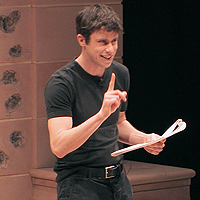
San Francisco writer, performer and playwright Dan Hoyle set off in a Ford E-150 conversion van on a three-month-long summer journey into America’s heartland to discover just what — and who — lies between the liberal-leaning cultures of the East and West coasts. Hoyle, a Fulbright scholar and son of well-known Bay Area circus performer Geoff Hoyle, shares with Spark what he found during his rambling adventure across some 20 states. Hoyle’s travels through countless small towns and the people he met along the way inspired the solo show Right?, a humorous and thought-provoking window into American lives lived far outside the big city.

Using his talent for capturing the language and mannerisms of real people and translating their personas into vignettes for the stage, Hoyle’s latest effort features a host of characters drawn from personalities encountered along his journey, first transmitted to the reading public through Beyond the Bubble, a series of articles for the San Francisco Chronicle and Salon.com. Among these characters are an enthusiastic Arizona gun show vendor and a Nebraska businessman with allegiances to the Aryan Brotherhood.

Instead of shying away from stereotypes and painting a picture of a cohesive America, Hoyle’s show raises questions for audiences living within the liberal bubble covering much of the nation’s outermost flanks.

“I’m throwing myself open to accusations that I’m poking fun at people, I’m judging people. … I think what I’m trying to do with this show is, first of all, to just show people some of what it’s like and to do it in a detailed and nuanced way. The other thing is, I’m trying to ask, ‘So what does it mean for us to all be a part of this country?'” says Hoyle.

Right?, which premiered at the February 2009 GAP Festival at Aurora Theatre Company, is not Hoyle’s first solo performance. His one-person show about Nigerian culture and politics, Tings Dey Happen, won the 2007 Will Glickman Award for Best New Play and was nominated for a Lucille Lortel Award for Outstanding Solo Show. His other shows include Circumnavigator and Florida 2004: The Big Bummer. Hoyle is the recipient of a Fulbright scholarship to explore politics and oil in Nigeria, and he is a teacher at the San Francisco School of the Arts through the artist-in-residence program.

  • Array
  • Array

W. Kamau Bell

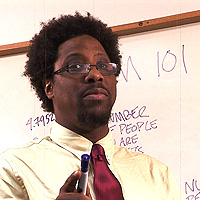
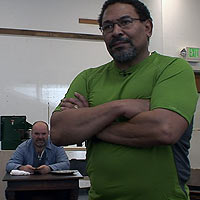
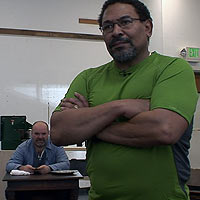
Sorting out the complexities of racism in 60 minutes might seem an impossible proposition, but that’s exactly the challenge San Francisco comedian W. Kamau Bell undertakes in his one-man show, The W. Kamau Bell Curve: Ending Racism in About an Hour. Spark visits Bell to discuss race and check out his show.

After years of performing standup in comedy clubs, the Chicago transplant to the Bay Area has been delivering his solo show before local audiences since 2007. Trading the comedy club circuit to pursue his solo show has given him new freedom to explore race and its impact on American culture in a public setting. Like his earlier work, the show is rooted in comedy. But Bell’s underlying agenda is much more serious.

“I want people to actually walk out talking about racism in different ways. We don’t ever really have open discussions about race …. Normally it’s quiet, it’s only our group. And that’s what this show’s about,” Bell explains.

During the show, Bell riffs on everything from race and politics to interracial friendships and the sort of subtle racism that is likely to emerge, as Bell puts it, “around the water cooler, at the Xerox machine, often while holding a latte.”

“An audience shows up to my solo show knowing I’m going to talk about race. It leaves me open to talk about race in ways I could never really get away with in a comedy club,” he says.

Bell was named the 2008 Bay Area Comedian of the Year by San Francisco Weekly. He can be heard on radio station Live 105 and online at Roof Top Comedy as half of the rant-and-rave team Siskel and Negro. Along with television appearances on Comedy Central and Comics Unleashed, he has performed at numerous festivals and comedy events, including the New Faces show, the Just for Laughs Festival in Montreal and the Best of the Uptown Comics show.

  • Array

Amy Tan

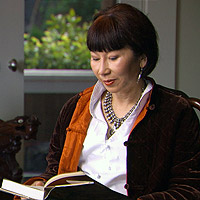
Bay Area author Amy Tan is a critically acclaimed novelist with a literary resume that includes The Joy Luck Club, The Kitchen God’s Wife, The Hundred Secret Senses and, more recently, The Bonesetter’s Daughter.

Like Tan’s other novels, The Bonesetter’s Daughter revolves around the complicated relationship between an immigrant Chinese mother and her American-born daughter. But this story is Tan’s most personal, written while her mother was dying of Alzheimer’s disease. During her mother’s illness, Tan learned more about her family history, in particular about her grandmother, who took her own life when Tan’s mother was young after being raped by a wealthy man. In Tan’s story, the ghost of the grandmother leads the daughter to learn the secrets of her mother’s past.

For her birthday in 2001, Tan’s friend and composer Stewart Wallace turned the first few lines of The Bonesetter’s Daughter into an a cappella musical composition for three women’s voices. Wallace composed the piece without reading the book and was unaware that the story coincidentally revolved around three main female characters. Tan was pleased and surprised by this musical offering, and Wallace was unable to get the story and music out of his head. This musical gift became the seed of inspiration for what was to become a full-length opera.

Tan became the librettist for the opera. She and Wallace embarked on a five-year collaboration that involved several trips to China to explore Chinese music and culture. They visited towns and villages, and attended gatherings where traditional Chinese music was performed, including a rural funeral. They listened to Chinese musicians and instruments, and were introduced to professional Chinese opera singers and conductors who understood how the music, lyrics and emotional heart of the story are intertwined. In the process, Wallace discovered how to evoke the spirit of China in his score by incorporating Chinese instruments and sounds into the musical narrative.

Bringing the opera to the stage of the San Francisco Opera has required the talents of hundreds of American and Chinese singers, musicians, acrobats and behind-the-scenes personnel, including director Chen Shi-Zheng, who directed The Peony Pavilion (a 19-hour Chinese opera that previously had not been presented in its entirety for 500 years); Li Zhonghua, master percussionist and director of the Beijing Opera; mezzo-soprano Zheng Cao (she played Suzuki in The San Francisco Opera’s 2007 production of Madama Butterfly); mezzo-soprano Ning Liang, who plays the mother; and the star of The Peony Pavilion, Qian Yi, who plays the role of the ghost of the grandmother.

The end result of this highly collaborative effort is a distinctly American opera with its roots in traditional Chinese music. It is a compelling account of a contemporary human story that merges the past and the present, love and loss, grief and forgiveness, as expressed through Chinese and American voices.

Array

  • Array
  • Array
  • Array
  • Array

Circus Center

Lu Yi is transplanting the centuries-old art of Chinese circus to the Bay Area. Since the early 1990s, the former star performer and artistic director of the world-renowned Nanjing Acrobatic Troupe has turned the Circus Center into the most comprehensive Chinese acrobatics program outside of China. Spark checks in on Lu Yi as two of his American protégés, Olga Kosova and Philip Rosenberg, share their professional debut in the Pickle Circus’s “The Birdhouse Factory.”

Before coming to America, Lu Yi was well-known in China, as both an acrobat and an artistic director, for his whimsical tricks that stunned circus audiences. His skills in this traditional art form, however, were not popular with the Communist regime. In 1970, followers of Mao Tse Tung’s Cultural Revolution ransacked his house and demanded that he give up his art. When Lu Yi refused, he was locked away, unable to see family or loved ones for an entire year. After the Tiananmen Square Massacre in 1989, Lu Yi decided to leave China for good, to establish his art in the United States and eventually, he hopes, across the world.

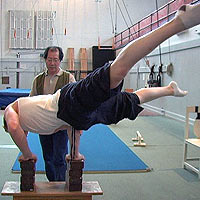
Chinese circus is a far cry from the loud spectacles of lion tamers and human cannonballs most often associated with Western big tops. Chinese acrobats spend a lifetime studying the subtle, even spiritual principles of force, balance and agility. Learning the acrobatic arts is excruciatingly difficult, and Lu Yi teaches his students to always keep in mind the traditional Chinese saying “Training is bitter.” But years of tireless effort have paid off for Lu Yi’s students, as their debut is met with resounding success. The circus’s careful combination of theater, dance and art direction produces an unusual, lyrical performance unlike any other.

San Francisco School of Circus Arts was founded as a project of the Pickle Family Circus in 1984 by Wendy Parkman and Judy Finelli. Lu Yi became a trainer and artistic director of the school in 1990 and established the San Francisco Circus in 1996 to give his students performing opportunities. The school changed its name in 2001 to the Circus Center, which now encompasses the San Francisco School of Circus Arts, the New Pickle Circus and the San Francisco Youth Circus. The Circus Center is the only school outside of China that specializes in Chinese acrobatics.

Array

  • Array
  • Array

A.C.T.’s “Blood Knot”

BloodknotSouth African playwright Athol Fugard‘s “The Blood Knot” was first performed in Johannesburg in 1961, in a makeshift theater inside an old factory. The performance was both historic and illegal being the first public performance under Apartheid with a black and white actor on stage together. Over the years Fugard’s radical plays have brought international attention to the inhumanity of apartheid, but his plays are far from being purely political; they are also explorations of family and relationships focusing on the deep bonds between people that cannot be severed.
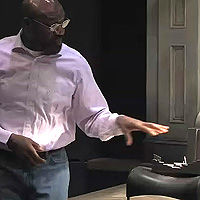
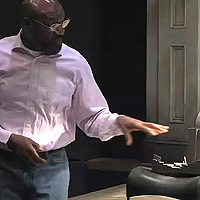
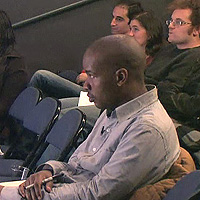
Spark goes behind the scenes of the 2008 production of “Blood Knot” at the American Conservatory Theater (A.C.T.). Directed by Charles Randolph-Wright and featuring original music composed by singer/songwriter Tracy Chapman, the play has only two characters — a pair of mixed-race brothers played by actors Steven Anthony Jones, and Jack Willis. To prepare for these complex roles, Willis and Jones traveled to Fugard’s homeland, to absorb the sights, sounds, and smells of South African township life.

More about the American Conservatory Theater
Founded in 1965 by William Ball, A.C.T. opened its first San Francisco season at the Geary Theater in 1967. Since then, more than 300 A.C.T. productions have been performed, along the way winning a Tony Award for outstanding theater performance and training. A.C.T.’s conservatory was the first training program in the United States not affiliated with a college or university that is accredited to award a master of fine arts degree. Danny Glover, Annette Bening, Denzel Washington, Benjamin Bratt and Winona Ryder are among the conservatory’s distinguished former students. A.C.T.’s performance, education and outreach programs reach more than 250,000 people in the San Francisco Bay Area every year.

  • Array
  • Array
  • Array

Delroy Lindo

Delroy Lindo

Charismatic, versatile and eloquently formidable, the Delroy Lindo that most audiences know is a dynamic force on both stage and screen. Whether playing manic West Indian Harlem numbers-runner Archie in Spike Lee’s “Malcolm X” or sympathetic jazz musician and father Woody Carmichael in “Crooklyn,” Lindo’s sensitivity and ability to uncover what makes people tick has long been admired. A prolific actor, Lindo has been in more than 45 films and television shows as well as dozens of stage productions.

Spark goes inside the development and rehearsal process as Lindo adds the role of director to his impressive list of credits, with a critically acclaimed 2007 production of Tanya Barfield’s “The Blue Door” for Berkeley Repertory Theatre. For this two-man tour de force production, Lindo directs the actors through a journey in time told through the eyes of an African American mathematics professor haunted by the stories and dreams of his ancestors.

Lindo’s film career, which has interspersed with his theater work, started in 1979 with a small role in “More American Graffiti.” Throughout the 1990s, Lindo appeared in a wide range of good guy and bad guy roles in both mainstream and indie films, from Rodney Little in “Clockers” to the colonel in John Woo’s “Broken Arrow” to Mr. Rose in “Cider House Rules,” for which he earned a Screen Actor’s Guild nomination. In 2006, Lindo starred as FBI agent Latimer King in the short-lived NBC drama “Kidnapped.”

The only son of Jamaican immigrants, Delroy Lindo was born and raised in England, but he has lived in the Bay Area since the 1970s and is a graduate of the American Conservatory Theater. In 1982, Lindo made his Broadway debut in Athol Fugard’s “Master Harold and the Boys,” playing the role of Willie. In 1987, playing Walter Lee Younger in “A Raisin in the Sun” won him a Helen Hayes Award nomination as well as an NAACP Image Award for Best Actor. He earned additional nominations for the NAACP Image Award (one in 1992 for his role in “Malcolm X” and two in 1996, for his work in HBO’s “Soul of the Game” and for his role opposite Mel Gibson in “Ransom”). In 1988, Lindo earned a Tony nomination for his work as Herald Loomis in August Wilson’s “Joe Turner’s Come and Gone.”

  • Array
  • Array
  • Array

Marcus Gardley

When Shotgun Players was looking for a playwright from the Bay Area to write a play about South Berkeley, it was Marcus Gardley who got the gig. The result being “Love is a Dream House in Lorin,” which was community theater in the truest of senses — the cast of 30 people ranged in age from 9 to 69, consisted of professional actors and residents of the neighborhood.

Although Gardley lives in New York, he continues to work on projects about the Bay Area community. Spark catches up with the poet and playwright as he works on “Love Song for the Night in Gail.”

“Love Song” was workshopped at the Traveling Jewish Theatre while still in the writing phase. This process important to Gardley, provides him a deeper insight into his characters’ mind by utilizing what he considers the most valuable resource a playwright has: actors. For him, it is the actors’ whose embodiment of the characters brings them to life.

Born and raised in Oakland, Marcus Gardley authored his first play as an undergraduate at San Francisco State. He then went on to earn an M.F.A. at Yale School of Drama and now teaches creative writing at Columbia University in New York.

  • Array
  • Array

San Francisco Running Crew

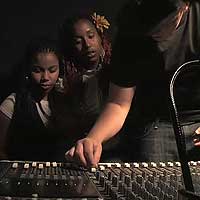
In San Francisco’s Mission District, the San Francisco Running Crew is doing its part to keep theater arts thriving in the Bay Area. Every Monday and Wednesday afternoon for three months, 10 teenagers and young adults, aged 14 through 24, learn the backstage skills of running a theater, including lighting, sound, scenic carpentry, and stage management.

The program is designed for young people who are under-represented in the technical theater fields. Competition for a spot in the demanding program is intense, and a high level of commitment is required from those who gain entry – they are expected to absorb a great deal of information in a short period of time. Spark follows the crew backstage as they prepare for the stage production they will run.

The San Francisco Running Crew is one of the programs under the Brava Theater Academy, which is the educational arm of Brava! for Women in the Arts. Through its educational programs, the academy extends economic and social opportunities to local people, especially young people aged 6 through 25. Four hundred students per year attend classes in acting, writing, scene study, directing, and theater design, all taught by experienced theater professionals. Students are also given the opportunity to visit local theaters.

Brava! for Women in the Arts was founded in 1986 at the Galería de la Raza in San Francisco, and in the same year, it purchased York Theatre, a former art movie house. Boasting a 13,000-square-foot theater and training facility, Brava is dedicated to its community in the Mission District of San Francisco and to producing new work by women of color and lesbian playwrights. In addition to San Francisco Running Crew, the academy’s programs include Performance Workshop, Brava! for Literacy, La Moda, Drama Divas and Alumni Job Development Workshops.

Array

  • Array
  • Array

Erika Chong Shuch

Choreographer, director, dancer and teacher, Erika Chong Shuch crosses over boundaries. She melds theater, dance, science, poetry, music, video and mechanics to formulate works of art that are multidisciplinary — in the truest sense of the word. Inspired by a wide range of subjects, from cannibalism to extraterrestrial intelligence, Shuch nevertheless puts the focus on the drama of human experiences.

A restless intellect, Shuch dropped out of high school in San Jose at age 17, yet still found her way into theater and dance at the University of California at Santa Cruz. After graduating, Shuch danced in Seattle and in Berlin with Alex B Company and Sommer Ulrickson (Wee Dance Company) before returning to California to earn an M.F.A. at San Francisco’s New College of California, where she also co-founded the multidisciplinary Experimental Performance Institute.

In 2002, she started her own company, the ESP Project, composed of a mix of artists that come from a wide variety of backgrounds. With works such as “Vis-à-Vis” and “All You Need,” Shuch quickly established herself as one of the Bay Area’s most interesting young performance artists. Her piece “ORBIT (notes from the edge of forever),” which was inspired by the research of her father, H. Paul Shuch, was nominated for a 2007 Izzie Award for visual design.

A resident company at Intersection for the Arts since 2004, the ESP Project developed “51802” through the Intersection for the Arts’ Prison Project, a year-long series of events and programs exploring the California prison system. “51802” examines our relationships to boundaries and confinement. Spark follows Shuch from the earliest stages of the creative process as she embarks on this work.

  • Array
  • Array
  • Array

Mark Jackson

From Stanislavsky to “The Bugs Bunny/Road Runner Hour,” movement intersecting with drama is the primary interest of writer, director and actor Mark Jackson, one of the Bay Area’s most exciting and original young playwrights. With “American $uicide,” a commission for the Magic Theater and the Z Space Studio New Works Initiative, he satirizes Americans’ fascination with their 15 minutes of fame. Spark visits with Jackson during rehearsal for his adaptation of the 1929 Nikolai Erdman play.

A graduate of San Francisco State University’s theater arts program, Jackson has created a brand of physical theater that integrates the theories of gesture and biomechanics that he studied under Gennadi Bogdanov and at the Saratoga International Theater Institute. Jackson, who has a flair for perceptive commentary on contemporary society, uses a modern sensibility to create dramatic works that present age-old ideas of theater in a fresh light.

Jackson first received widespread critical attention when he founded San Francisco’s Art Street Theatre in 1995. In his nine-year stint as the company’s artistic director, he created seven new plays, including “I Am Hamlet,” for which he won his first Bay Area Critics Circle Award in 2002. Jackson’s reinventions of classic plays, such as “R&J” and “Io, Princess of Argos!,” drew inspiration from sources as varied as Greek tragedy and Shakespeare.

For his acclaimed “Death of Meyerhold,” which premiered in 2003 at Berkeley’s Shotgun Players, Jackson turned to the work of legendary and revolutionary theater director Vselovod Meyerhold to craft a powerful and heady mix of dance, commedia, kabuki and circus. In 2004, following the success of “Meyerhold” — which won him a second Bay Area Critics Circle Award — Jackson accepted a fellowship from the Alexander von Humboldt Foundation to study at the Mime Centrum in Berlin, where he continued to explore the relationship between dance and theater.

Jackson returned to the Bay Area scene directing highly regarded productions of Oscar Wilde’s “Salome” for the Aurora Theatre Company, Bertolt Brecht’s “Caucasian Chalk Circle” for A.C.T.’s MFA program and “The Forest War” for the Shotgun Players. Jackson wrote as well as directed “The Forest War,” a Kabuki-inspired morality tale with echoes of current-day politics.

  • Array
  • Array
  • Array

Carlos Baron

A childhood in Chile marked by both the lyricism of Pablo Neruda’s poetic legacy and the violence of the Pinochet regime flavors the experiences that poet and playwright Carlos Baron has brought to his writings over decades as an exile from his homeland. Spark follows Baron as he and a group of young actors rehearse and perform his play “Poeta Pan” in San Francisco and in Chile.

“Poeta Pan,” or “Bread Poet,” is an evocation of Baron’s Chilean roots through the poetry of Neruda. A multifaceted collaboration with Latin jazz flutist John Calloway, Rafael Manriquez and choreographer Martha Zepeda, the play calls up comparisons between September 11, 2001, and the Pinochet coup d’etat that occurred 28 years earlier on the same date.

After studying sociology and theater arts at the University of California at Berkeley in the late 1960s and early 1970s, Baron returned briefly to Chile to defend the Salvador Allende government, for which he was imprisoned. Upon returning to the Bay Area, in 1975 he helped to found La Peña Cultural Center in Berkeley. La Peña provides, among other things, a cultural meeting ground for Chilean exiles. Baron was the center’s first cultural coordinator.

Multiculturalism and Latino theater remain the primary interests of Baron, who was also the theater and dance coordinator for the Mission Cultural Center and founder of San Francisco’s Teatro Latino. As a professor of theater arts at San Francisco State University, Baron not only has helped to expand La Raza and multicultural studies at the university, but also directs the university’s Teatro Arcoiris, or Rainbow Theater, a multicultural theater workshop.

An activist and an actor, Baron has worked with Berkeley Rep, the Magic Theatre and San Jose Repertory Theater. He has also had a hand in radio and television for many years, as a programmer for both KPFA and KPOO, and has consulted for Antenna Theater, Intercultura and the “McNeil/Lehrer NewsHour,” among others. Also a poet and a professional storyteller, Baron has exhibited his impassioned work at festivals in Cuba, Chile and the United States.

Array

  • Array
  • Array
  • Array