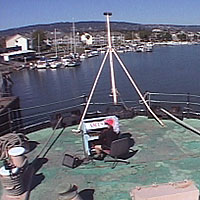
The Artship was one of the more unusual Bay Area arts venues. A cargo-passenger ship built in 1939, the vessel was used as a gallery, studio, classroom and performance space by visual and performing artists from 1999 to 2004. Unfortunately, the public gathering space and house for the arts lost its East Bay dock space due to commercial development.
Spark takes you inside the Artship as it was. Today, the Artship organization continues to support and produce exhibitions and performances through their dance/theater and urban/visual arts programs. The program particularly encourages artistic endeavors that build community by working to reclaim public space or increase audience/performer exchange.
Editor’s note: In 2008, the San Francisco Performing Arts Library and Museum became the Museum of Performance & Design
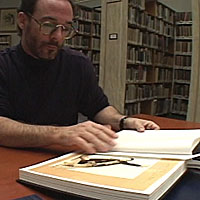
Jeff Friedman became concerned about the vulnerability of the dance community to loss of documented work as many of his colleagues in the arts began contracting AIDS in the 1980s. In order to preserve not only the work of younger dancers at risk for AIDS but also the elders in his community, Friedman began the Legacy Oral History Program.
Friedman’s dance heritage program joined with the San Francisco Performing Arts Library and Museum to preserve not only dance but also theater, music, and other performing arts. The collection includes audio and video taped life history interviews, transcripts, photographs and other illustrations, as well as additional ephemera — all of which are available to the public. Spark talks to Friedman about how this project began.
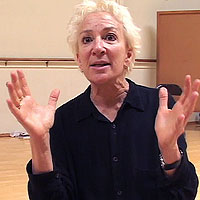
Ruth Zaporah‘s technique may have seemed radical when she began performing it in the 1970s, but today her style is well established and internationally practiced. Zaporah’s improvisational acting technique is known as “Action Theater,” and it encourages freedom of movement, language and mind in improvisation. Spark drops in on one of her classes to see Zaporah and her students at work.
Zaporah’s students range from those who are entering the professional performance world as actors or dancers to those who simply have hopes of theatrical stardom. She takes the adage of “stage presence” to a new level by demanding that her students stay present in the moment by abandoning past, future, and current thoughts and give themselves up to improvisation.
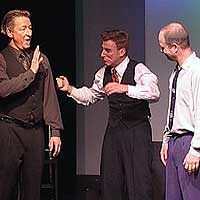
Driven by the artistic principle of “on a stage with no rules,” improv group 3 For All hits the floor with no script, no format, no preconceptions and no safety net — making their audiences roll with laughter. They are Bay Area improv comedians Rafe Chase, Stephen Kearin and Tim Orr.
Having met in the late ’80s through the improv company, Bay Area Theatresports (BATS), the trio formed an ensemble in the summer of 1996 to pursue their distinctive brand of high-stakes improvisation, releasing a self-titled CD in February 2003. Chase, a founding member of Improv Theater, as well as other local groups, teaches improv for BATS and A.C.T., and in private classes. Kearin, a visiting instructor at Stanford University, has recently appeared on HBO’s “Curb Your Enthusiasm” and a pilot of “The Phil Fuller Show.” Orr, like Chase, coaches improv at BATS and A.C.T. in addition to being cast in Bay Area plays and Brien Burrough’s improvised films “Suckerfish” and “Security.”
Spark follows 3 For All, taking you into the art of spur-of-the-moment improvisation. The three actors, along with the musical and lighting improvisers, work together to twist audience suggestions into narratives that last anywhere from a few minutes to over an hour. Whereas most actors spend countless hours getting into character, 3 For All live in the “adrenaline shots” of spontaneity. Nothing is rehearsed, nothing is discussed before or during shows, nothing is held over or reworked in future shows — nothing but pure improvisation.
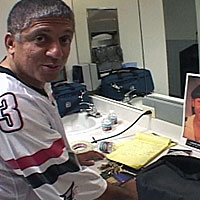
Comedian Donald E. Lacy tours nationally and internationally and has appeared on comedy programs on the BET and HBO networks. In addition, he founded the LoveLife Foundation in 1997 to provide at-risk Bay Area youth with supportive opportunities such as mentoring, multimedia training, and career development. Spark goes backstage with Lacy as he prepares to perform at the AfroSolo Arts Festival: An Explosion of Comedy.
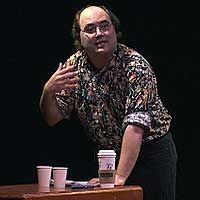
Monologuist Josh Kornbluth grew up in New York City. After working for several years as a journalist in Chicago and Boston, he relocated to San Francisco, where he performed his first monologue, “Josh Kornbluth’s Daily World,” in 1989. His second show, “Haiku Tunnel,” debuted in 1990. The film adaptation of “Haiku Tunnel,” was co-directed by Kornbluth and his brother Jacob. Sony Pictures Classics released the film nationwide in 2001. Currently, Kornbluth tours the United States performing “Red Diaper Baby,” “Haiku Tunnel” and “The Mathematics of Change.” Three of Kornbluth’s stage pieces have been collected in a book titled “Red Diaper Baby” (Mercury House).
In the Spark “Solo Acts” episode, we travel along the bumpy road of the creative process with Kornbluth. Two months before the debut of his latest full-length autobiographical monologue, “Love and Taxes,” he hasn’t written a word of it down on paper. Under the direction of The Z Space Studio’s David Dower, see how Kornbluth pulls it all together, mixing humor, angst and the IRS in his one-man show.
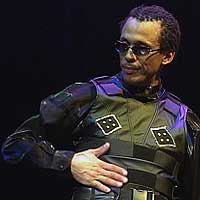
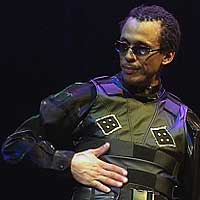
In his high-energy show of “Hambone, Hamtech Bring on the Groove,” performing artist Derique retells the story of how African-American slaves were deprived of drums and contributed to dance through other means, namely Hambone, a traditional form of body percussion. In the Spark “Solo Acts” episode, Derique’s passion for passing down this history becomes a celebration of music, dance, circus and high-tech Hambone.
Derique has introduced his unique blend of physical comedy and Hambone body music on stages and television shows around the world, with tours in Asia, Europe, the Americas and South Africa. He has performed with countless entertainers, including Bobby McFerrin, Lou Rawls and the late Sammy Davis Jr. Derique also shares his passion for performance with children, and has been featured on the Disney Channel and has hosted the Emmy Award-winning children’s television show “Short Stories and Tall Tales” for KQED.
The multitalented Derique began his career at age 15 — clowning, juggling, unicycling, dancing, doing gymnastics and performing Hambone body percussion. While working as a main attraction with Circus A La Mode in 1981, Derique “ran away” to join the Pickle Family Circus and Make*A*Circus in San Francisco. Currently, Derique is the Circus Arts program director at Oakland’s Children’s Fairyland and teaches circus arts at Bay Area schools.
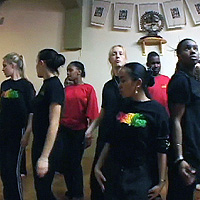
Spark talks with teens in programs at the Destiny Arts Center. The center, which offers a range of classes including martial arts, modern dance, theater and leadership training, has been building self-esteem and confidence in youth since 1988. By using movement to express emotion and incorporating performance into a violence prevention program, the center encourages self-awareness while simultaneously aiding in conflict resolution.
Destiny, which stands for “de-escalation skills training inspiring nonviolence in youth” provides a supportive, positive environment for Oakland-area children and teens. Its arts education program includes classes culminating in recitals by the participants, and many of its programs, such as Dance for Social Change, unite the arts and social issues. The center also hosts a multicultural youth performance company, which creates performance art pieces that critique contemporary society.
Youth Speaks is a San Francisco-based nonprofit dedicated to helping young people find their “voice” through programs led by experienced poets and writers; presentation opportunities; events and competitions; and collaborative experiences with other young people. One of the country’s premier youth programs in creative writing and spoken word, Youth Speaks has inspired young people to become poets and spoken-word artists and has provided them with valuable empowering experiences that help them hone their creative and critical thinking skills, writing skills, and presentation skills and abilities.
Founded in 1996 in San Francisco, the organization recently started sister programs in New York and Seattle. Youth Speaks offers workshops, in-school and after-school programs for young people; youth development; professional development for teachers; and performances and festivals open to the general public. The organization also publishes chapbooks (workbooks), CDs and videos. Each year, Youth Speaks records the incredibly popular Teen Slam for release on their “Bringing the Noise” CD.
Whether working with students or teachers, the goal of Youth Speaks remains the same: to encourage people to engage with spoken word; to develop their abilities to read, write, revise, edit and present their ideas; and to share themselves. In the Spark episode “The Next Generation,” we follow two young spoken-word artists, Yalie Kamara and Emiliano Bourgois-Chacon as they wrestle through the creative writing process and hone their writing and presentation talents to compete in the local poetry semifinals in hopes of winning a place on the San Francisco team that will advance to the next level.
Programs like those offered by Youth Speaks provide critical opportunities for young people to begin to consider what they think and believe about themselves and the world they live in, to organize their thoughts, to revise and edit their words, and to consider how to present themselves and their ideas. In the last 10 years, spoken word has received increased attention as the number of participants continues to grow and the important relationship between literacy and self-confidence and the spoken word is further elucidated. Every state in the country has spirited and motivated spoken-word organizations and opportunities, including poetry slams, retreats, contests, festivals and drop-in workshops for anyone interested. Many participate in local, regional and larger competitions and festivals where young people get a chance to hear the perspectives of youths they otherwise might never have heard or met.
Youth Speaks youthspeaks.org Where: 2169 Folsom St., San Francisco Phone: (415) 255-9035
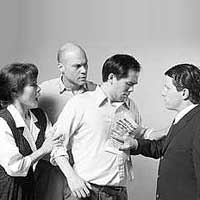
Pulling out all the stops, Teatro Visión takes on its biggest challenge yet — an opening night on a shoestring. In the episode “Opening Nights,” Spark captures all the creative trials and tribulations as the staff of this small theater company tries to fill their new 500-seat theater for the 2003 world premiere of a potentially controversial new work, “Conjunto” by Oliver Mayer.
A co-production of Teatro Visión and Contemporary Asian Theater Scene, “Conjunto” takes place during World War II and tells the story of California farm workers of Mexican, Filipino and Japanese descent. The play addresses issues surrounding the internment of Japanese Americans and the deportation of Mexican immigrants. Los Angeles playwright Mayer developed “Conjunto” at the Sundance Lab, San Jose Rep and the Mark Taper Forum New Work Festival.
Teatro Visión produces bilingual (Spanish/English) plays and their new theater boasts being the largest on the West Coast for Chicano/Latino theater. Originally named Teatro Huipil, Teatro Visión was founded in 1984 as a nonprofit arts organization. The company is committed to providing a forum for aspiring Latino/Latina actors, playwrights, directors and a host of other artists living Santa Clara County. It is also dedicated to promoting multicultural participation at all levels of the organization. In addition, the Academia de Teatro Program offers training workshops taught by its core ensemble members.
Teatro Visión teatrovision.org Where: Mexican Heritage Plaza, 1700 Alum Rock Ave., San Jose Phone: (408) 272-9926