Category Archives: Music

Afghan Culture in Little Kabul

Following the 1979 Soviet invasion of Afghanistan, 5 million refugees left the country; some seeking refuge in the US. From 2006 to 2011, the Afghan population in the US has grown from 66,000 to 300,000, due to the US invasion and war following 9/11. The Bay Area is home to the largest community of Afghan Americans in the US and has become a cultural haven for a growing number of Afghan artists and musicians. The Centerville district of Fremont, known as Little Kabul, has its own mosque, shops, restaurants, food stores, and bookstores.

Artist Shokoor Khusrawy is among the latest wave of refugees, settling in the US in 2010 in order to escape the ongoing violence in his home city of Kabul. In Afghanistan he made a living selling portraits and landscapes to American servicemen at the ISAF base near the US Embassy in Kabul. Now he is attempting to start over, living with his brother Jelani in a tiny apartment in Fremont with the balcony doubling as his art studio.

Crippled by fall at the age of 7, Shokoor’s leg never healed, so he does all of his painting seated on the floor, using a palette knife in place of a brush to achieve his impressionistic style. Since his escape from the war, his subject matter has changed to reflect his new surroundings. He’s drawn to the bright colors of San Francisco, visiting again and again to take photos of its iconic buildings and landmarks.

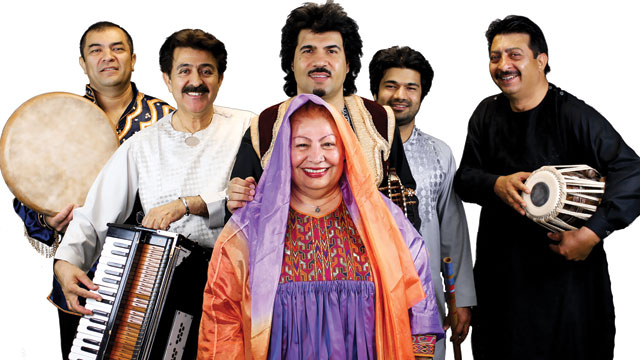
Musician Homayoun Sakhi is world-renowned for his mastery of the rubab, a double-chambered lute with origins that can be traced back 2,000 years. His repertoire spans classical Afghan folk music, with lyrics derived from the poetry of Rumi, to his own contemporary fusion compositions. Sakhi also leads “Voices of Afghanistan,” a touring and recording group of Afghan musicians and singers who perform traditional folk songs representing the diverse regions of their homeland. Taking center stage with the ensemble is Afghan diva Ustad Farida Mahwash, one of very few women to achieve the title of “Ustad,” considered a master of music in the Afghan community.

Array

  • Array
  • Array
  • Array

San Ramon Valley High School Concert Choir

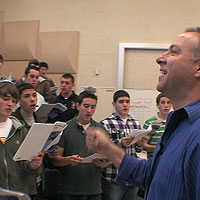
Ken Abrams has been the choir director at San Ramon Valley High School (SRVHS) in Danville, California since the 1980s. Under his direction are several choirs, including the SRVHS Concert Choir and the Treble Clef Choir, which were both first place winners at the 2009 Golden State Choral Competition. Many of the SRVHS choirs tour the country in the summer as well as record an annual CD. Spark visits with the 82-member SRVHS Concert Choir as they prepare for their 2010 spring concert, which features selections from Antonio Carlos Jobim, George Gershwin, and Freddie Mercury.

  • Array
  • Array

Kitka

Bay Area vocal group Kitka began their journey in 1979 as a gathering of amateur singers fascinated with the exploration of traditional Eastern European women’s vocal music. Under the direction of Bon Singer from 1981 to 1996 and now led by executive director Shira Cion and music director Janet Kutulas, Kitka has developed into a professional touring company dedicated to performing, recording and presenting collaborative and educational opportunities related to Balkan, Slavic and Caucasian music for audiences across the globe. Celebrating their 30th year in 2009, Kitka continues to grow artistically with challenging new projects, tours and collaborations.

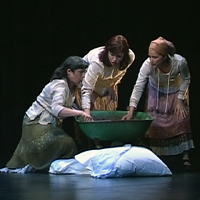
The process by which the company acquires new repertoire is rooted in careful study. The eight-member group works with renowned masters from all over Eastern Europe and travels to various countries to conduct fieldwork and make critical personal connections with women in small villages, many of whom are the last to sing the songs of their ancestors. Over the years, members of Kitka were inspired by the legends of the Rusalki, siren-like mythical creatures thought to be the spirits of women who suffered tragic or untimely deaths. Working with Ukrainian singer and composer Mariana Sadovska, they returned to Ukraine to learn songs and rituals surrounding the Rusalki directly from the women in rural communities, and they created a vocal-theater piece based on their research. The Rusalka Cycle opened to resounding success in 2005 and again in 2008, and it is being remounted to tour Eastern Europe in 2009.

Each year brings new projects and a new concert season, and to celebrate their 30th anniversary, Kitka released their recording Lullabies and Songs of Childhood. This collection of reinterpreted traditional lullabies has been passed on in the oral tradition by generations of Balkan, Slavic, Georgian and Armenian women. For their project Singing Through the Darkness: A Dramatic Song-Cycle Performance, they gathered songs and stories that express the multifaceted experience of wartime, with a special effort to invite contributions from the survivors of the Balkan conflict living in the Bay Area.

As part of their ongoing commitment to preserving endangered vocal traditions and collaborations with traditional artists, Kitka developed a program called Song Routes in a New Land: Folk Song Master Residencies, in which they work with several master folk singers and teachers dedicated to transmitting their vocal heritage both at home and within immigrant communities in the United States. Artists for 2009 include Birol Topaloglu (Laz vocalist from Turkey), Tzvetanka Varimezova (Bulgaria), Ensemble Kedry (Siberia) and Hasmik Harutyunyan (Armenia).

Array

  • Array

Firebird Youth Chinese Orchestra

For hundreds of the South Bay’s young Chinese Americans, reconnecting to their cultural heritage happens through the Firebird Youth Chinese Orchestra (FYCO). Founded in 2000 by Gordon Lee, the FYCO originally attracted only 13 young musicians. Today it boasts more than 100 youngsters, ranging in age from 9 to 17 years old, who come together once a week to practice on instruments whose origins date back thousands of years.

Lee and his core of musicians formed the orchestra after the successful premiere performance in Cupertino of one of Lee’s compositions, a work based on the Disney movie Mulan. Spark takes viewers behind the scenes with the Firebird Youth Chinese Orchestra as they prepare the classic folk piece “The General’s Command” for a concert at the San Jose Center for the Performing Arts in 2009.

Although the instruments they play — the lute-like pipa, the ancient moon-shaped ruan, the two-stringed fiddle called an erhu, the seven-string zither called a guqin and the hammered yanqin, among many others — date as far back as 200 B.C., the concept of a large orchestra of Chinese instruments is relatively modern. China’s first modern orchestra was founded in 1935 in Nanjing by Jilue Chen, one of Lee’s own teachers. In 2004, by invitation of the People’s Republic of China, the FYCO traveled to Beijing, Chengdu and Shanghai to perform at three of the country’s most prestigious music conservatories, becoming the first Chinese orchestra from the West to perform in China.

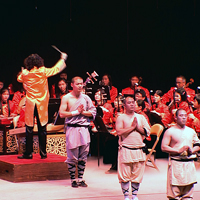
The Beijing-born Lee, whose love for traditional Chinese music was not dimmed by “reeducation” during the Cultural Revolution, began learning to play the pipa at age 13 and studied under Chen at the Sichuan National Conservatory. After emigrating to the United States in 1989, Lee earned an M.A. from San Jose State University in 1995, and since 2002, he has been on the faculty of San Jose City College, where the FYCO also offers music lessons for Chinese instruments. The composer and conductor, who creates his own arrangements of traditional Chinese works for the FYCO, has also fostered collaborations for the orchestra with other performing groups, including the Shaolin monks, who appeared with the orchestra in March 2009.

  • Array
  • Array

Dhol Di Awaz

The driving, high-energy Indian folk dance known as “bhangra” has a long history that takes it from the fields of northern India and Pakistan to modern-day dance halls. It has become the connection to the Punjabi culture for a generation of Indian Americans who have grown up far from home. Spark goes inside the Dhol Di Awaz competition held at Cupertino’s Flint Center and meets one of the Bay Area’s top bhangra teams.

Founded in 1999 by the Berkeley Sikh Student Association, Dhol Di Awaz — which translates as “the sound of the dhol [an Indian drum]” — is the oldest bhangra competition on the West Coast. With participating teams that hail from as far away as Canada, it has also become one of the largest events of its kind.

Vigorous and dynamic, bhangra arose out of dances that Punjabi farmers once performed while working in the fields during the spring harvest. From there, it gradually evolved into a popular folk dance for festive occasions, such as weddings and parties. Although originally it was danced primarily by men, in modern competition it’s not unusual to see co-ed groups dressed in colorful outfits — the men usually in long tunics called “kurtas” and the women in bright baggy pants, or “salwar kameez.” Bhangra dancers traditionally bound and bob to the relentless beat of the dhol, a two-sided Indian bass drum, accompanied by such other instruments as the stringed sarangi, the jingling chimta and the sups, which resemble a long section of a wooden folding gate.

As young people of Southeast Asian descent rediscover their roots, they’ve found that bhangra’s heavy backbeat and coordination of nonstop foot and hand motions has made it a natural match to other styles of dance and music, and its distinctive rhythms have filtered into dance clubs and fused with reggae, raggamuffin, house music and hip hop, all of them breathing contemporary life into an ancient style. No longer confined to just the Punjabi area, bhangra fusion can be heard in Apache Indian’s ragga hit “Chok There,” on Missy Elliot’s 2001 Get Ur Freak On in “Beware,” in Jay-Z’s remix of the bhangra song “Mundian to Bach Ke” and even in Britney Spears’s “Me Against the Music.”

Array

  • Array
  • Array

Wil Blades

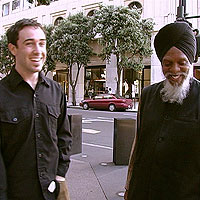
Wil Blades is at the top of the local music scene as a Hammond B3 organ player. The B3 is that big warm sultry, funky tone that provided the groove to many of the 1960s and 1970s R&B recordings. The B3 is experiencing a revival today, particularly among jazz saxophonists who find it a nice complement to a trio.

Blades is only in his 20s but plays like a veteran, and his knowledge of the instrument is encyclopedic. He has accompanied the greats, including good friend and B3 legend Dr. Lonnie Smith. Their relationship is based in part on their love of music, but also Smith has been a mentor to Blades.

There aren’t a lot of places besides the Boom Boom Room that have a B3, so Blades owns three of his own organs. For many of his performances, Blades lugs his organ around the Bay Area in his van — as Spark witnesses. As he says, “It’s like a piece of furniture.” Imagine taking a 400-pound desk around with you, and you begin to get the idea.

Originally from Chicago, Blades began playing and studying drums at the age of 8, guitar at 13 and organ at 18. He studied at New College of California. He teaches at Berkeley Jazz School and plays in a number of different groups, including the Wil Blades Trio, O.G.D., Steppin’ and BluesBeat. Blades can be seen performing regularly as the house organist at John Lee Hooker’s Boom Boom Room.

Array

  • Array
  • Array

Vienna Teng

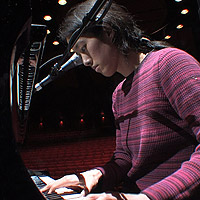
In Silicon Valley, software engineers often exit lucrative careers and strike out on their own. What’s less common is leaving the fast-paced epicenter of technological innovation to bet on success as an independent singer-songwriter. But that’s exactly what Bay Area-raised performer Vienna Teng did in 2002. And before she knew what was happening, Teng was landing gigs on NPR and David Letterman, and she was on her way to performing hundreds of concerts around the globe.

“Like so many other aspiring pre-meds, I was undone by organic chemistry. And that was around the time I started to think, ‘Well, maybe this is not really what I’m supposed to do,'” Teng tells Spark during a visit to perform at the Palace of Fine Arts in San Francisco.

After falling out of love with the idea of a future in medicine, Teng put her computer science degree from Stanford University to work at Cisco Systems. In her off-hours, she channeled the music skills she’d been honing since she was a little girl into original songs that drew upon the classical training of her youth and her parents’ music collection, one steeped in folk rock, Mozart and Mandarin pop tunes. Promoting her music through open mic nights and online under the stage name she created as a pre-teen, Teng — whose birth name is Cynthia Shih — soon secured a record deal with a small startup label.

“When I was 12, that’s when I came up with the name, and I thought, ‘Oh, if I’m a rock star, I’m going to have this stage name, and, like, no one will know my real identity,'” Teng recalls.

Along with a new identity, Teng brought forth an eclectic, hybrid sound she dubs “chamber folk.” Narrative-driven songs featuring Teng’s high, agile vocals unfold against a genre-defying backdrop of violin, cello, piano and percussion into a sonic landscape that’s strikingly unconventional despite its classical underpinnings.

Teng has released three albums. Her fourth, titled Inland Territories, is due out in April 2009. According to the singer-songwriter, Inland Territories is her most personal album yet. Says Teng, “I think ultimately I was more interested in being a storytelling kind of songwriter.”

  • Array
  • Array

Amy Tan

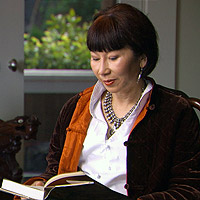
Bay Area author Amy Tan is a critically acclaimed novelist with a literary resume that includes The Joy Luck Club, The Kitchen God’s Wife, The Hundred Secret Senses and, more recently, The Bonesetter’s Daughter.

Like Tan’s other novels, The Bonesetter’s Daughter revolves around the complicated relationship between an immigrant Chinese mother and her American-born daughter. But this story is Tan’s most personal, written while her mother was dying of Alzheimer’s disease. During her mother’s illness, Tan learned more about her family history, in particular about her grandmother, who took her own life when Tan’s mother was young after being raped by a wealthy man. In Tan’s story, the ghost of the grandmother leads the daughter to learn the secrets of her mother’s past.

For her birthday in 2001, Tan’s friend and composer Stewart Wallace turned the first few lines of The Bonesetter’s Daughter into an a cappella musical composition for three women’s voices. Wallace composed the piece without reading the book and was unaware that the story coincidentally revolved around three main female characters. Tan was pleased and surprised by this musical offering, and Wallace was unable to get the story and music out of his head. This musical gift became the seed of inspiration for what was to become a full-length opera.

Tan became the librettist for the opera. She and Wallace embarked on a five-year collaboration that involved several trips to China to explore Chinese music and culture. They visited towns and villages, and attended gatherings where traditional Chinese music was performed, including a rural funeral. They listened to Chinese musicians and instruments, and were introduced to professional Chinese opera singers and conductors who understood how the music, lyrics and emotional heart of the story are intertwined. In the process, Wallace discovered how to evoke the spirit of China in his score by incorporating Chinese instruments and sounds into the musical narrative.

Bringing the opera to the stage of the San Francisco Opera has required the talents of hundreds of American and Chinese singers, musicians, acrobats and behind-the-scenes personnel, including director Chen Shi-Zheng, who directed The Peony Pavilion (a 19-hour Chinese opera that previously had not been presented in its entirety for 500 years); Li Zhonghua, master percussionist and director of the Beijing Opera; mezzo-soprano Zheng Cao (she played Suzuki in The San Francisco Opera’s 2007 production of Madama Butterfly); mezzo-soprano Ning Liang, who plays the mother; and the star of The Peony Pavilion, Qian Yi, who plays the role of the ghost of the grandmother.

The end result of this highly collaborative effort is a distinctly American opera with its roots in traditional Chinese music. It is a compelling account of a contemporary human story that merges the past and the present, love and loss, grief and forgiveness, as expressed through Chinese and American voices.

Array

  • Array
  • Array
  • Array
  • Array

San Jose Taiko

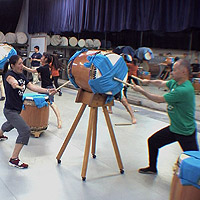
San Jose Taiko (SJT) is a drumming ensemble based in San Jose’s Japantown. They are renowned for their unique blend of traditional Japanese music with world-music influences. Spark joins SJT as they prepare for their 35th anniversary celebration.

SJT was started in 1973 by Reverend Hiroshi Abiko, Roy Hirabayashi, and Dean Miyakusu. They were looking to promote Japanese cultural awareness in San Jose, a city with one of the longest established Japanese communities in the United States. They chose taiko for its excitement and athleticism, and because it offered them a chance to engage with third generation Asian Americans who had not been raised with the traditional music of their ancestors.

Early on, SJT developed its unique take on taiko by fusing it with a variety a beats from the R&B music the members grew up on, and the percussion sounds of Bali, Africa, and Brazil. While some early critics were skeptical of the SJT’s departure from the traditional, they’ve started a trend of innovation in the art form that has spread across the country. The ethnically diverse performing company tours extensively both nationally and internationally, reaching over 100,000 people each year.

  • Array

Hot Club of San Francisco

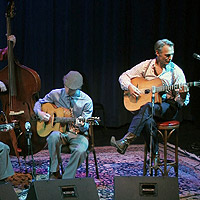
Bay Area musician Paul Mehling is helping to introduce a new generation of music lovers to the work of legendary guitarist Django Reinhardt. Known as one of the godfathers of the Gypsy jazz revival, Mehling, along with his band, Hot Club of San Francisco, attempts to recreate the sounds, tales, and atmosphere of Reinhardt’s band, Quintette du Hot Club de France, active mostly in and around Paris in the 1930s and 40s.

Reinhardt was one of the first European-born jazz musicians to gain international acclaim, and was commonly considered to be the most virtuosic guitar player alive. Reinhardt was single-handedly responsible for the invention and popularization of Gypsy jazz — or “jazz manouche,” a style of music that fused Gypsy guitar technique with swing jazz. Reinhardt’s influence was felt far beyond the arena of Gypsy jazz, his music continuing to inform guitarists working in a wide spectrum of idioms.

Mehling first discovered Reinhardt’s music as a teenager while listening to his father’s record collection. Inspired by the rhythms and inflections of Gypsy jazz, these recordings fueled Mehling’s desire to learn the guitar. In search of Gypsy jazz players, Mehling moved to Paris at the age of 23. He spent six months honing his skills and retracing the footsteps of his hero. He has since become a teacher, instructing Reinhardt enthusiasts in Gypsy guitar technique.

For about two decades, Mehling has led the Hot Club of San Francisco, which copies the exact, unusual instrumentation of the Quintette du Hot Club de France, combining three guitarists with violinist and string bassist. Though jazz manouche is usually associated with fast, hot guitar licks, Mehling is particularly attached to the more mysterious, melancholy aspects of the genre, incorporating many haunting, wistful tunes into the band’s repertoire.

Spark follows Mehling’s band to the 2008 San Francisco/Mill Valley Djangofest, one of several festivals around the world that bring together musicians from diverse backgrounds to celebrate Reinhardt’s legacy. Playing at Mill Valley’s historic 142 Throckmorton Theatre, the Hot Club of San Francisco, along with many other bands working in the jazz manouche style, are helping bring Reinhardt’s sounds to a new generation of music lovers.

Array

  • Array
  • Array

Rebeca Maule贸n

Pianist Rebeca Maule贸n grew up in San Francisco listening to Carlos Santana. When she started playing professionally in her early twenties, Maule贸n performed and recorded with some of the luminaries of Latin and jazz including Tito Puente, Israel “Cachao” Lopez, even Santana himself.

Today, she’s a prolific player, composer, and arranger, but she does more than create music. Maule贸n is a musicologist and author, having written several texts on Latin music technique, including the Salsa Guidebook. Spark catches up with Maule贸n as she switches hats, more than once — composing Latin music for software companies, teaching Caribbean music traditions at City College of San Francisco, and leading her own ensemble on stage and off.

  • Array
  • Array
  • Array

Jewish Music Festival

For more than 20 years, the Jewish Music Festival has brought eclectic music from every corner of the Jewish diaspora to Bay Area audiences. For their 23rd annual event, festival director Ellie Shapiro has commissioned nine artists from Israel, Ukraine, New York, New Orleans and the Bay Area to create groundbreaking new Jewish music — and they only have six days to do it.

While the festival is underway, the musicians hole up in the basement of a divinity school in the Berkeley hills. On the seventh day, The Ark artists premiere the work at the closing night on the 2008 Jewish Music Festival. Spark gets an insider’s look at the process.

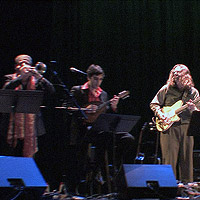
The Ark musicians all share a deep commitment to traditional music (from Mississippi Delta blues, to Ukrainian village ballads and Old World klezmer) and have used their talent to take these forms in creative new directions. Almost all of them have worked together before in different configurations. The Ark artists include: Frank London (trumpet), Aaron Alexander (percussion), Avi Avital (mandolin), Stuart Brotman (bass), Jewlia Eisenberg (vocals), Glenn Hartman (accordion and piano), Mariana Sadovska (vocals and harmonium player), John Schott (guitar), and Jessica Ivry (cello).

  • Array

Yoshi’s

After more than 35 years, Yoshi’s, an internationally known East Bay jazz nightclub and restaurant, has recently opened a second outpost in San Francisco’s historic Fillmore District. Incredibly, the same three friends who started Yoshi’s in 1973, Kaz Kajimura, Yoshie Akiba, and Hiroyuki Hori, have owned and ran both clubs until when Hori announced his retirement in 2008.

The new club in San Francisco is Yoshi’s biggest gamble yet. The Fillmore, nicknamed the Harlem of the West, was a jazz and blues hot spot in the 1940s and ’50s. But the neighborhood was obliterated by a redevelopment project begun by the city of San Francisco in 1958.

Many hope that Yoshi’s, and some of the other smaller music venues, will spark a revitalization of the old jazz district. But some critics feel that the upscale club is out of place with the rest of the neighborhood. In an effort to keep the music accessible to the community, Yoshi’s puts on a series of concerts dubbed “Local Legends,” featuring homegrown musicians and lower ticket prices.

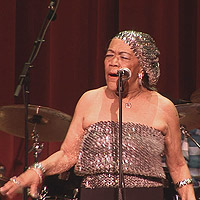
Spark captures a fiery performance by blues singer Sugar Pie de Santo, who returns to the Yoshi’s Fillmore stage — just around the corner from where she grew up and was discovered by Johnny Otis in 1955 at the Eddy Street theater talent show. Kajimura and Akiba also discuss the club’s history, from its start as a tiny Japanese restaurant in Berkeley, to their move to Oakland’s Jack London Square, and now its current incarnation.

  • Array

KlezCalifornia

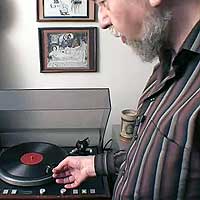
For the past 30 years, Martin Schwartz has gathered an impressive collection of rare 78 rpm records, many of them klezmer, a type of instrumental music originating from Eastern European Jews. In the 1970s, Schwartz met some Berkeley musicians who shared his passion for klezmer. They began learning from the old recordings and started a band called Klezmorim, fostering a burgeoning nationwide revival of the genre.

Meaning literally “vessel of song,” klezmer can be played on a variety of instruments – including trombone, clarinet, violin, accordion, tsimbl (a kind of hammered dulcimer), drums, bass viol – but is most commonly associated with the violin and the clarinet. These lead instruments are played in a style that mimics the human voice, common to liturgical singing styles.

Klezmer harkens back to a time when music was an integral part of daily life, supporting weddings, bar mitzvahs, and other sacred and secular celebrations. Today, Schwartz is on the Advisory Council of KlezCalifornia, which was founded in 2003 to celebrate klezmer music and Yiddish culture in the San Francisco Bay Area.

KlezCalifornia offers workshops on music, dance and singing. Participants learn the music by listening and playing back what they hear — no written music is handed out, which is true to the way klezmer has been passed down for hundreds of years. Spark explores this revival at KlezCalifornia shedding light on a tradition that has endured through time and hardships to prove its vitality and relevance to new generations.

Array

  • Array
  • Array
  • Array