Editor’s note: In 2008, the San Francisco Performing Arts Library and Museum became the Museum of Performance & Design
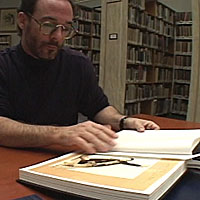
Jeff Friedman became concerned about the vulnerability of the dance community to loss of documented work as many of his colleagues in the arts began contracting AIDS in the 1980s. In order to preserve not only the work of younger dancers at risk for AIDS but also the elders in his community, Friedman began the Legacy Oral History Program.
Friedman’s dance heritage program joined with the San Francisco Performing Arts Library and Museum to preserve not only dance but also theater, music, and other performing arts. The collection includes audio and video taped life history interviews, transcripts, photographs and other illustrations, as well as additional ephemera — all of which are available to the public. Spark talks to Friedman about how this project began.
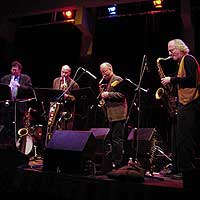
In the Spark episode “The Art of Improvisation,” we meet the members of Rova Saxophone Quartet as they prepare for a unique 25th anniversary concert at Yerba Buena Center for the Arts in San Francisco. Beginning with an introduction to improvised music, witness the behind-the-scenes rehearsal process of Rova and their international musical guests as they work on a series of musical pieces inspired by soprano saxophone legend Steve Lacy.
The Rova Saxophone Quartet was founded in the San Francisco Bay Area in October 1977 by Jon Raskin, Larry Ochs, Andrew Voigt and Bruce Ackley. The ensemble performed its first concert at the third annual Free Music Festival at Mills College in Oakland in 1978. The group is inspired by a broad range of musicians, including Charles Ives, Edgard Varese, Olivier Messiaen and John Cage to John Coltrane, Anthony Braxton, Steve Lacy and Ornette Coleman. Rova began writing new material, touring, recording and collaborating with like-minded colleagues such as guitarist Henry Kaiser and Italian percussionist Andrea Centazzo.
Early in its history, Rova performed both at the Vancouver New Music Society (1978) and the Moers International Festival of New Jazz in Germany (1979). Over the next few years Rova performed widely throughout North America and Europe, and in 1983 it became the first new music group from the US to tour the Soviet Union. “Saxophone Diplomacy,” a documentary video of the Rova USSR tour aired on PBS. Rova returned to the USSR again in November 1989 and released a CD titled “This Time We Are Both.” In 1986, in between visits to the USSR, Rova hosted the Ganelin Trio, the first Soviet jazz group to appear in the US. The trio performed with the Rova Saxophone Quartet at its first Pre-Echoes series of collaborative events, which would later include concerts with Anthony Braxton, John Zorn, Terry Riley and others.
Founding member Andrew Voigt left Rova in August 1988 and was replaced by Steve Adams, formerly with the Boston-based Your Neighborhood Saxophone Quartet. In addition, members of the quartet have been commissioned to write music for Rova by both Meet the Composer/Commissioning Music USA and Chamber Music America, which has commissioned 20 works from Rova over the years.
In 1999, Rova began presenting two annual events in the San Francisco Bay Area: New Music on the Mountain and Rovate. New Music on the Mountain presents several acts outdoors at Mount Tamalpais every September. Rovate presents special collaborations between Rova and such guest artists as Sam Rivers, Wadada Leo Smith, Gerry Hemingway, Satoko Fujii and Nels Cline as well as commissioning up-and-coming local composers to write new music for Rova.
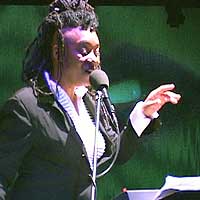
Pamela Z is a composer, performer, sound artist and vocalist who creates works primarily with and about the voice, using her voice, sampling technology and electronic processing to produce performance events and recordings of layered aural compositions. She creates solo works combining operatic bel canto, experimental extended vocal techniques, spoken word and sampled sounds triggered with a MIDI (music instrument digital interface) controller called The BodySynth which allows her to manipulate sound with physical gestures. Her performances range in scale from small concerts in galleries to large-scale multimedia orchestrations in proscenium halls and flexible black-box venues.
Pamela Z has toured extensively throughout the United States, Europe, and Japan, performing in numerous festivals. She has composed, recorded and performed original scores for choreographers and for film and video artists and has done vocal work for other composers. Her multimedia performance works have been included in exhibitions in San Francisco, New York and Germany.
In the Spark “Technology Enabled Art” episode, we see Pamela Z creating and performing a layered, multi-media performance called “Voci” (“Voices”). “Voci” explores the sonic, cultural, physical and artistic worlds of the voice, celebrates the broad range of colors in the singing and speaking voices, and examines the scientific and cultural phenomena surrounding the voice and its many metaphors. In addition to Pamela Z’s performance and live electronic processing, “Voci” features vivid, tall video projections designed by filmmakers Jeanne Finley and John Muse and a stunning lighting design by Elaine Buckholtz.
Editor’s note: In 2004, Hula Halau Aloha Pumehana ‘o Polynesia officially changed their name to Halau ‘o Keikiali’i.
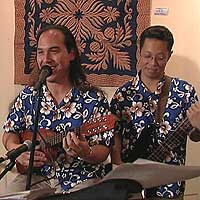
The flourishing presence of hula schools around the Bay Area is proof that distance makes the heart grow fonder. Spark spends time with Halau ‘o Keikiali’i‘s Käwika Alfiche, who has devoted his life to reviving ancient Hawaiian music and dance traditions which have been threatened by two centuries of assimilation.
Hula is a form of storytelling and dance that is traditionally learned with a teacher, who is called a “ke kumu.” Käwika Alfiche, the ke kumu of Halau ‘o Keikiali’i, has been teaching hula and other aspects of Hawai’ian culture for more than 10 years. Study of this art form includes “oli” (chanting), “mele” (traditional songs), “himeni” (modern songs), “nä mea hula” (arts, crafts and toolmaking), “lole hula” (hula regalia), ´ölelo (language) and “mo’olelo” (stories and storytelling).
The San Francisco-based Halau ‘o Keikiali’i is a “ka hälau,” a traditional Hawai’ian performance ensemble. Founded in 1994, their mission is to educate the general public about Hawai’ian people, customs, values and protocols by focusing on performance and preservation of Hula Kahiko, or ancient dance. The multi-generational group offers classes, stage performances and cultural events throughout the year.
Halau ‘o Keikiali’i keikialii.com Where: 415 423 Baden Ave., South San Francisco
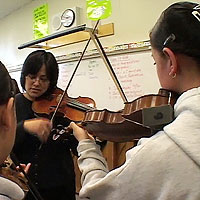
The Mariachi Youth Program, sponsored by the Mexican Heritage Plaza in San Jose, has been available to children in public schools since 1992. Mariachi, a style that combines Spanish composition with traditional indigenous music, has been passed on orally for generations in the Latino community. Spark drops in on the program while they train youth in trumpet, violin, guitar, guitarrón, vihuela and vocals.
Editor’s note: Ali Akbar Khan passed away on June 18, 2009.
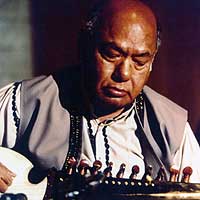
In his native India, Ali Akbar Khan is considered a national living treasure. This revered figure has passed down his musical mastery to more than 10,000 students worldwide. With a teaching style very distinct from Western classical musicians, Khan composes new “ragas” (melodies) on the spot as his students listen and try to play by ear. Spark sits in on a class at the Ali Akbar College of Music and watch Khan in concert to experience his unique melody-making.
Born in Bangladesh in 1922, Khan began his musical studies at the age of 3. Later, concentrating on vocals and the sarode (a lute like instrument made of 25 metal strings), Khan became the court musician to the Maharaja of Jodhpur and made the first Western LP recording of Indian classical music. Throughout his career, he has also composed and recorded music for international films.
In 1956, Khan founded the Ali Akbar College of Music in Calcutta, India. Almost a decade later, recognizing the extraordinary interest and abilities of his Western students, he established a college of the same name in San Rafael, California, where he currently maintains a teaching schedule of six classes a week for nine months out of the year. Khan continues to perform all over the world and has earned some of music’s highest honors, including the National Heritage Fellowship from the National Endowment for the Arts.
Over a lifetime of practice and performance, sarode maestro Khan has learned about 75,000 different ragas.
Ali Akbar College of Music aacm.org Where: 215 West End Avenue, San Rafael Phone: (415) 454-6264
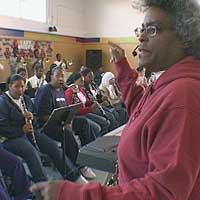
Helena Jack was a successful jazz musician, playing and traveling with distinguished jazz artists like Nancy Wilson and Eddie Fisher. She recalls that as a child, music was what kept her going — staying in school, being motivated and having fun — so she went back to school and got her credential to bring jazz music to students of Oakland. In the episode “Master Teachers,” Spark follows Jack and her school’s award-winning jazz band in preparation for an upcoming jazz festival, from fundraising to performance.
In 1995, Jack became the director of the music department at Elmhurst Middle School in the Oakland Unified School District, where she developed a program of instrumental and choral instruction. Jack found that once she had worked with the students in the junior high most went off to Castlemont High School where there wasn’t a music program. Not satisfied with that arrangement, she began splitting her time between the two schools, becoming the only instrumental music teacher for a total of 2600 students.
In a neighborhood plagued by poverty, Jack finds it important to provide the students with music programs, but also to take them to outside activities and events like jazz festivals and competitions. Since many of them have never gone much further than their own homes and schools, it gives the students exposure to other people and places as well as other music styles, genres and methodologies. They get to experience working with renowned jazz musicians, competing against other bands and performing for the public.
In 2002, she founded Standing Ovation Performing Arts (SOPA) with the mission to provide quality jazz music education within a nurturing environment to East Oakland youth. SOPA is dedicated to fostering aesthetic growth as an essential part of a child’s total education by providing scholarships, creating enrichment programs and funding a summer school music workshop. Performances and active exchanges with other schools are developed throughout the year, culminating in an annual trip to a music festival.
Teaching the students to play and having them play together is something that is important to Jack. Though the schedule and the budget can be a challenge, she would hate to see the programs die in the district. The students need to have a creative outlet, so Jack keeps going. “What keeps me going and coming back as tired as I am, is looking at the kids and seeing the success … It gives you energy!”
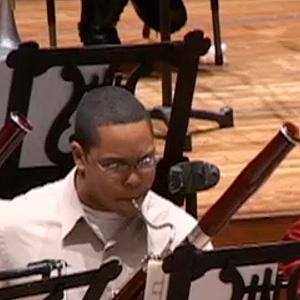
The young people in the San Francisco Symphony Youth Orchestra come from every corner of the Bay Area, from private and public schools. Some got their start in school, some in private lessons, some just doodling on their own. Spark talks to Michael Tilson Thomas and members of the San Francisco Symphony Youth Orchestra about what makes a teacher great.
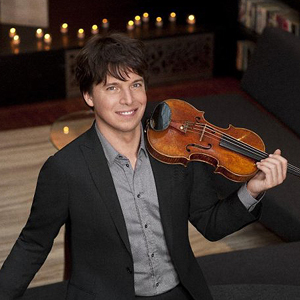
Violinist Joshua Bell is one of the world’s top classical soloists. He debuted with the Philadelphia Orchestra at the age of 14. Twenty years later, he’s still packing concert halls wherever he goes. Joshua is, by anyone’s definition, a superstar complete with fan club and recording contract.
Spark visits him at rehearsal at Davies Symphony Hall, San Francisco.