Category Archives: Dance

Benjamin Levy

With a body of work noted for its pulsing athleticism and intelligent composition, Benjamin Levy has become one of the Bay Area’s most sought-after choreographers, creating a style marked by personal inspiration distilled into pure movement.

In his 2007 work tentatively called “Bone Lines,” Levy translates into dance the story of his own family, Persian Jewish immigrants who fled Iran during the religious revolution of the 1970s. Levy brings Spark inside the process of creating this piece premiering at the Jewish Community Center in San Francisco. For this production, he collaborates with his five-member troupe along with designers Colleen Quen and Rick Lee and composer Keeril Makan, whose original score will be recorded by the Kronos Quartet.

Born and raised in California, Levy studied dance as a teen, appearing with Janet Roston’s Advanced Dance Theater Group at Beverly Hills High School. His love of dance solidified when he encountered the work of Martha Graham as a student in the dance department at the University of California at Berkeley, where he earned his bachelor’s degree.

As a dancer, Levy has trained with such noted Bay Area choreographers and teachers as Janice Garrett, Ellie Klopp and Robert Moses. He has also performed with Marni Woods’s Bay Area Dance Repertory Company and the Lula Washington Dance Theater, and he spent two seasons as a company member of the Joe Goode Performance Group.

His creative and choreographic spirit, however, led him to form his own company, LEVYdance, in 2002, while he was still at UC Berkeley. The following year, the young company made a splash with its residency and performances during ODC Theater’s “House Special” series, for which he created LEVYdance’s acclaimed “Holding Pattern.” The very next year, Levy was named among the “25 to Watch” artists by “Dance Magazine.”

Within only five years, Levy’s company garnered national attention, appearing not only throughout the Bay Area, but also at the Joyce SoHo in New York, at the Dance Place in Washington, D.C., and with the Los Angeles Philharmonic in the Minimalist Jukebox Festival. Described by “Dance Magazine” contributor Heather Wisner as “a balance of brain and brawn,” Levy’s work buzzes with life and intensity.

  • Array
  • Array
  • Array
  • Array

Dhol Di Awaz

The driving, high-energy Indian folk dance known as “bhangra” has a long history that takes it from the fields of northern India and Pakistan to modern-day dance halls. It has become the connection to the Punjabi culture for a generation of Indian Americans who have grown up far from home. Spark goes inside the Dhol Di Awaz competition held at Cupertino’s Flint Center and meets one of the Bay Area’s top bhangra teams.

Founded in 1999 by the Berkeley Sikh Student Association, Dhol Di Awaz — which translates as “the sound of the dhol [an Indian drum]” — is the oldest bhangra competition on the West Coast. With participating teams that hail from as far away as Canada, it has also become one of the largest events of its kind.

Vigorous and dynamic, bhangra arose out of dances that Punjabi farmers once performed while working in the fields during the spring harvest. From there, it gradually evolved into a popular folk dance for festive occasions, such as weddings and parties. Although originally it was danced primarily by men, in modern competition it’s not unusual to see co-ed groups dressed in colorful outfits — the men usually in long tunics called “kurtas” and the women in bright baggy pants, or “salwar kameez.” Bhangra dancers traditionally bound and bob to the relentless beat of the dhol, a two-sided Indian bass drum, accompanied by such other instruments as the stringed sarangi, the jingling chimta and the sups, which resemble a long section of a wooden folding gate.

As young people of Southeast Asian descent rediscover their roots, they’ve found that bhangra’s heavy backbeat and coordination of nonstop foot and hand motions has made it a natural match to other styles of dance and music, and its distinctive rhythms have filtered into dance clubs and fused with reggae, raggamuffin, house music and hip hop, all of them breathing contemporary life into an ancient style. No longer confined to just the Punjabi area, bhangra fusion can be heard in Apache Indian’s ragga hit “Chok There,” on Missy Elliot’s 2001 Get Ur Freak On in “Beware,” in Jay-Z’s remix of the bhangra song “Mundian to Bach Ke” and even in Britney Spears’s “Me Against the Music.”

Array

  • Array
  • Array

Mary Sano

The free-spirited passion of neo-Romanticism remains alive at Mary Sano’s Studio of Duncan Dancing, where Sano passes on the work and teaching of the great early-20th-century modern dancer Isadora Duncan. Spark follows Sano as her company prepares for its 10th-anniversary performances and as she passes on the legacy of Isadora Duncan to a new generation of dancers.

Sano was first introduced to the world of Duncan’s dancing in 1979 during a visit to San Francisco. The daughter of a Japanese mother and an American father, Sano found a connection to the San Francisco-born Duncan through teacher Mignon Garland, who studied with Irma and Anna Duncan, themselves original students of Isadora Duncan.

Impressed by the freedom and imagination of Duncan’s style, Sano founded Japan’s first school of Duncan dancing in 1983, and after moving to San Francisco a couple of years later, she earned her M.A. in dance from Mills College in 1991. Sano established her own company — Mary Sano and her Duncan Dancers — in 1993 and finally opened the doors to her SOMA studio in 1997.

Sano sees her goal as not just the transmission and preservation of the hundreds of dance pieces that Duncan left behind, but also the creation of new work inspired by the Duncan style. At her company’s annual Dionysian Festival, a commemoration of Isadora Duncan’s birthday in May, and at the Terpisichorean Celebration in the fall, Sano not only has presented historical compositions by Isadora Duncan, but also has hosted guest dance artists performing with their own companies.

Melding Duncan’s philosophy with dance forms as diverse as Japanese butoh, hula, Indian classical bharata natyam and Native American dance, Sano also regularly works with artists from a wide variety of cultural backgrounds. For her company’s 10th-anniversary performances in 2008, “Dancing Dreaming Isadora,” Sano collaborated with Japanese koto player Shoko Hikage on an original piece of dance theater as well as with drummer Dennis Banks on a work inspired by Native American themes.

  • Array
  • Array
  • Array
  • Array
  • Array

Janice Garrett

Since its founding in 2001, the San Francisco-based Janice Garrett & Dancers has rapidly become one of the most respected small modern dance troupes in the Bay Area. Garrett’s choreography is notable as much for its craftsmanship as for its dazzling speed, musical clarity and wit. Spark follows Garrett and her dancers on the road to their sixth San Francisco season and reveals why all the hard work and sacrifices are worth it.

Garrett came to dance relatively late, at the age of 23, after she had already graduated with a B.S. in mathematics from Stanford. She subsequently studied dance at Mills College, then, in 1980, moved to New York, where she joined the modern dance company of Dan Wagoner, an alumnus of the Martha Graham, Merce Cunningham and Paul Taylor companies.

After 10 years in New York, Garrett returned to the Bay Area, although she continued to work extensively in Europe, choreographing pieces for the Scottish Dance Theatre, London Contemporary’s 4D Performance Group, the London Contemporary Dance School and the School for Modern Dance in Denmark. At the London Contemporary Dance Theater, she collaborated with British director and choreographer Jonathan Lunn on a range of productions and built a reputation for whimsical, kinetic dances.

In 2001, Garrett put together an evening of her own work at San Francisco’s ODC Theater, assembling a group of eight local dancers who would later form the core of her own company, Janice Garrett & Dancers. In only a few short years, her company attracted substantial attention, garnering five nominations from the Isadora Duncan Dance Awards. Garrett herself was nominated in 2004 as one of Dance Magazine’s “25 to Watch,” and demand for her skills and talent grew, abroad as a teacher for Rambert Dance Company, DV8 Physical Theatre and Matthew Bourne’s New Adventures and at home as a teacher for ODC Commons.

Garrett’s work, which has been described by one critic as “exuberantly fluid,” draws not only on her wealth of experience as a choreographer, but also on events in her life. The patterns and connections that tie lives together forms a theme in her work, and it’s an interest that she pursues in her capacity as director of performing arts for the Center for Changing Systems, where she develops new and innovative models of communication and nonlinear decision making.

  • Array
  • Array

Sean Dorsey

Transgender performer Sean Dorsey brings stories of his own struggles with gender and sexuality to the stage, making them accessible to a wider audience. Spark visits with Dorsey while he works on “Lost/Found.” For this work, Dorsey uses journal entries, memoirs and letters culled from the trans and queer community to piece together a narrative in which he fantasizes about the normal childhood he might have had if he was born a boy.

In addition to performing his own choreography around the country, Dorsey is the founder and artistic director of the Fresh Meat Festival, a trailblazing annual performance event featuring queer and transgender performers. Founded in 2002, the festival features a wide-range of genres from hip hop and opera to traditional clogging.

San Francisco-based modern dancer and choreographer Sean Dorsey is also the performance director of the Tranny Fest Film and Video Festival and a member of Lizz Roman and Dancers. Dorsey’s first major body of work, “The Outsider Chronicles,” garnered him two Isadora Duncan Awards and a Goldie Award for performance. Dorsey is the recipient of a Wallace Alexander Gerbode Choreographer’s Commission and an Individual Artist Commissions from the San Francisco Arts Commission.

  • Array
  • Array

Suhaila Salimpour

Belly dance is one of the oldest known forms of dance, believed to have originated in the Middle East. In El Cerrito, California, belly dancers flock to a modern day mecca — the dance studio of legendary performer and teacher Suhaila Salimpour, who is from a belly-dancing dynasty. Her mother, Jamila Salimpour, ran the Baghdad Cabaret, a popular venue for Middle Eastern dance and music in the 1960s in San Francisco’s North Beach. Jamila went on to become a pioneering belly dance instructor, writing the first manual to categorize Middle Eastern dance movements.

Suhaila started dancing at the age two, and as a young woman toured the Middle East and Europe. When she returned to California she opened her school to teach a new generation of dancers, but she continued choreographing and performing. At one of her shows she attracted a talented fan, comedian Margaret Cho, who is now one of her pupils. Spark captures Suhaila giving Cho a private lesson, as well as Suhaila performing with her young daughter Isabella at Rakkasah West, the largest belly dance festival in the world.

  • Array
  • Array

Benjamin Levy

With a body of work noted for its pulsing athleticism and intelligent composition, Benjamin Levy has become one of the Bay Area’s most sought-after choreographers, creating a style marked by personal inspiration distilled into pure movement.

In his 2007 work tentatively called “Bone Lines,” Levy translates into dance the story of his own family, Persian Jewish immigrants who fled Iran during the religious revolution of the 1970s. Levy brings Spark inside the process of creating this piece premiering at the Jewish Community Center in San Francisco. For this production, he collaborates with his five-member troupe along with designers Colleen Quen and Rick Lee and composer Keeril Makan, whose original score will be recorded by the Kronos Quartet.

Born and raised in California, Levy studied dance as a teen, appearing with Janet Roston’s Advanced Dance Theater Group at Beverly Hills High School. His love of dance solidified when he encountered the work of Martha Graham as a student in the dance department at the University of California at Berkeley, where he earned his bachelor’s degree.

As a dancer, Levy has trained with such noted Bay Area choreographers and teachers as Janice Garrett, Ellie Klopp and Robert Moses. He has also performed with Marni Woods’s Bay Area Dance Repertory Company and the Lula Washington Dance Theater, and he spent two seasons as a company member of the Joe Goode Performance Group.

His creative and choreographic spirit, however, led him to form his own company, LEVYdance, in 2002, while he was still at UC Berkeley. The following year, the young company made a splash with its residency and performances during ODC Theater’s “House Special” series, for which he created LEVYdance’s acclaimed “Holding Pattern.” The very next year, Levy was named among the “25 to Watch” artists by “Dance Magazine.”

Within only five years, Levy’s company garnered national attention, appearing not only throughout the Bay Area, but also at the Joyce SoHo in New York, at the Dance Place in Washington, D.C., and with the Los Angeles Philharmonic in the Minimalist Jukebox Festival. Described by “Dance Magazine” contributor Heather Wisner as “a balance of brain and brawn,” Levy’s work buzzes with life and intensity.

  • Array
  • Array
  • Array
  • Array

Ballet Afsaneh Art and Culture Society

From Uzbekistan to India, Turkey to Afghanistan, the Ballet Afsaneh Art and Culture Society brings to the stage the vibrant sights and sounds of the ancient route through Asia known as the Silk Road. Spark sits in as they rehearse Sharlyn Sawyer’s “Song of Generations,” a multi-generational collaboration with the Nejad World Music Daf Ensemble that celebrates Persian culture and history.

A crossroads of trade in ideas as well as goods, the 7,000-mile-long Silk Road connected the empires of Byzantium, the Ottomans, India, Persia and Mongolia with Western Europe for more than 2,000 years. Combining music, poetry and dance, Ballet Afsaneh’s performances offer a richly textured perspective on cultures that originate in modern-day Iran, Tajikstan, Uzbekhistan and Afghanistan — an alternative to the usual news about political upheaval and war in that region.

Founded in 1986 by California native Sawyer, Ballet Afsaneh’s repertoire spans the traditional as well as the contemporary, with colorful dances created by Sawyer in collaboration with the other members of the troupe. Sawyer’s training includes both Eastern and Western dance styles, and she focuses on preserving and presenting the traditional dances of women from the various countries that make up Central Asia and Asia Minor.

Lyrical, classically influenced dances like Barg e Behesht — with its expressive, twining arms and graceful movements under a canopy of blue silk representing the sky — evoke the elegant storytelling traditions of the Persian courts. In contrast, the company’s Uzbekh repertoire includes dances in the playful Bukhuran style as well as the softer, more emotional Ferghana style, which reenacts celebrations, such as weddings and festivals.

A troupe mainly composed of women, Ballet Afsaneh also showcases its members in the traditional folkloric and ritual dances of Afghanistan, such as the Loghari and Attan, as a response to the religious and political strife that has kept women from dancing or performing in public in Afghanistan during the rule of the Taliban.

The company, whose name comes from a Persian word meaning “fairytale” or “legend,” is composed not only of dancers but also of poets and musicians, most of whom come from a Central Asian background. Each member of the troupe, however, performs in a wide variety of styles, crossing over cultural barriers in the same way that migrating travelers have intermingled along the Silk Road for thousands of years.

  • Array
  • Array

Sally Streets

After 25 years of running Berkeley Ballet Theater, there is no sign of Sally Streets slowing down. Five days a week, you can find the Oakland native teaching and testing her newest choreography on her students.

Streets first began dancing because of a recommendation from her pediatrician to help control her distended belly. She eventually worked her way into the positions of ballet mistress and principal dancer with the Oakland Ballet and Pacific Ballet. In 1982 Streets set out to open her own dance company, with steep competition on the rise, Streets opted for a dance school.

Although considered a school, Berkeley Ballet Theater acts much like a dance company, giving students many opportunities to perform. With 275 students actively enrolled, the school boasts alumni headed to prestigious dance schools to further their dance education. One of Streets most famous students is her daughter Kyra Nichols, who is now retired but was once a member of the New York City Ballet.

Acting as co-founder, director, choreographer and teacher, Sally Streets aims at making her dances fun so that her students don’t realize all of the hard work that is going into it. One of her favorite groups to teach is advanced teenagers because they are so eager to learn. Spark catches up with Streets while she prepares the Berkeley Ballet Theater for their annual spring performance.

  • Array
  • Array

Lily Cai

Since 1988, Lily Cai and her dance company have presented works in the Bay Area and beyond related to the Chinese female experience. In her choreography, Cai strives to portray contrasts of beauty and power, strength and struggle. Spark captures the final rehearsal period for Cai’s, “Red Typhoon,” which premiered in April 2007 at the Cowell Theater at Fort Mason in San Francisco.

“Red Typhoon” is based on Cai’s personal experience in China, when Mao Tse-tung’s Red Guards would ambush homes, arresting hundreds of innocent people they deemed counterrevolutionary. This piece explores the Chinese Cultural Revolution, while marking its 40th anniversary and serving as a memorial to those who suffered during this time.

Integrating traditional Chinese dance, both folk and classical, with Western ballet and modern dance, Cai creates highly visual works of art that incorporate costumes, props and multimedia imagery that connect the past and present. Many of her productions are set to original music by Bay Area composer and Lily Cai Chinese Dance Company music director, Gang Situ.

Cai encourages her dancers to fully embody the movement and emotions related to the context of her choreography. To fulfill its founder’s artistic vision, the Lily Cai Chinese Dance Company is composed of only female dancers of Chinese heritage.

Lily Cai is originally from Shanghai, China, and was a principal dancer with the Shanghai Opera House. She moved to the Bay Area in 1983. Recent works include “She: Portraits of the Chinese Woman,” “Si Ji (Four Seasons)” and “Bamboo Girls.” Her honors and accomplishments include commissions for the San Francisco Ethnic Dance Festival and the Santa Fe Opera and two Bay Area Isadora Duncan Dance Awards.

Array

  • Array

Erika Chong Shuch

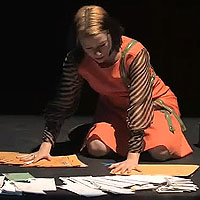
Choreographer, director, dancer and teacher, Erika Chong Shuch crosses over boundaries. She melds theater, dance, science, poetry, music, video and mechanics to formulate works of art that are multidisciplinary — in the truest sense of the word. Inspired by a wide range of subjects, from cannibalism to extraterrestrial intelligence, Shuch nevertheless puts the focus on the drama of human experiences.

A restless intellect, Shuch dropped out of high school in San Jose at age 17, yet still found her way into theater and dance at the University of California at Santa Cruz. After graduating, Shuch danced in Seattle and in Berlin with Alex B Company and Sommer Ulrickson (Wee Dance Company) before returning to California to earn an M.F.A. at San Francisco’s New College of California, where she also co-founded the multidisciplinary Experimental Performance Institute.

In 2002, she started her own company, the ESP Project, composed of a mix of artists that come from a wide variety of backgrounds. With works such as “Vis-à-Vis” and “All You Need,” Shuch quickly established herself as one of the Bay Area’s most interesting young performance artists. Her piece “ORBIT (notes from the edge of forever),” which was inspired by the research of her father, H. Paul Shuch, was nominated for a 2007 Izzie Award for visual design.

A resident company at Intersection for the Arts since 2004, the ESP Project developed “51802” through the Intersection for the Arts’ Prison Project, a year-long series of events and programs exploring the California prison system. “51802” examines our relationships to boundaries and confinement. Spark follows Shuch from the earliest stages of the creative process as she embarks on this work.

  • Array
  • Array
  • Array

Pandit Chitresh Das

Editor’s note: Pandit Chitresh Das passed away on January 4, 2015.

Pandit Chitresh Das was born in Calcutta, India, in 1944. At age 9, he began studying kathak under teacher and guru Pandit Ram Narayan Misra. In 1970, Das was brought to the United States on a Whitney Fellowship. A year later, Ustad Ali Akbar Khan brought Das to the Ali Khan College of Music in San Rafael to teach kathak.

In 1980 Das created the Chhandam School of Kathak Dance and the Chitresh Das Dance Company. It grew to five Bay Area locations as well as schools in Boston, Canada and India. Spark visits with Das and discusses his personal history and his work, including his school and, more recently, the Kathak Festival and Symposium.

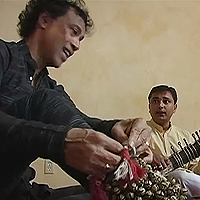
A classical dance from northern India, kathak is improvisational and takes a lifetime to learn. “Kathak” comes from the word “katha,” meaning “to tell stories.” Kathak has two main elements, storytelling and abstract dance. A solo kathak dance can last several hours, progressing through various specific elements. The dancer, who wears about five pounds of bells around the ankles, recites a spontaneous rhythmic phrase that is repeated back by the musicians.

For centuries, the form has been passed from guru to disciple. Das has passed this traditional dance form to a broad range of students. His classes involve not only dance, but also history, philosophy and math. Das has also taken the art to a new level through the creation of kathak yoga, a meditation technique in which participants dance, drum and sing simultaneously.

In 2006, the Chitresh Das Dance Company organized a three-day festival of kathak dance at Yerba Buena Center for the Arts in San Francisco. The largest kathak festival ever to take place outside of India, it brought together dancers from all over the world and incorporated both traditional and innovative elements. Das performed with Emmy Award-winning tap dancer Jason Samuels Smith in “India Jazz Suites,” which has since received a Bay Area Dance Award and the Isadora Duncan Dance Award for Best Ensemble Performance.

Array

  • Array
  • Array

Jess Curtis

Choreographer Jess Curtis founded Jess Curtis/Gravity in 2000. He’s had a hand in creating bodies of work with companies such as San Francisco’s Contraband and the Franco-American Circus project Cie Cahin Caha, Cirque Batard. Along the way he has been commissioned to make works across Europe and has won numerous awards.

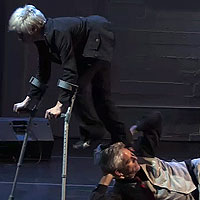
Spark visits with Curtis as he premieres a work called “Under the Radar” at San Francisco’s counterPULSE. “Under the Radar” is a cabaret piece focusing on the issues of visibility, ability and disability and features an international cast of disabled and non-disabled performers.

  • Array
  • Array

Janice Garrett

Since its founding in 2001, the San Francisco-based Janice Garrett & Dancers has rapidly become one of the most respected small modern dance troupes in the Bay Area. Garrett’s choreography is notable as much for its craftsmanship as for its dazzling speed, musical clarity and wit. Spark follows Garrett and her dancers on the road to their sixth San Francisco season and reveals why all the hard work and sacrifices are worth it.

Garrett came to dance relatively late, at the age of 23, after she had already graduated with a B.S. in mathematics from Stanford. She subsequently studied dance at Mills College, then, in 1980, moved to New York, where she joined the modern dance company of Dan Wagoner, an alumnus of the Martha Graham, Merce Cunningham and Paul Taylor companies.

After 10 years in New York, Garrett returned to the Bay Area, although she continued to work extensively in Europe, choreographing pieces for the Scottish Dance Theatre, London Contemporary’s 4D Performance Group, the London Contemporary Dance School and the School for Modern Dance in Denmark. At the London Contemporary Dance Theater, she collaborated with British director and choreographer Jonathan Lunn on a range of productions and built a reputation for whimsical, kinetic dances.

In 2001, Garrett put together an evening of her own work at San Francisco’s ODC Theater, assembling a group of eight local dancers who would later form the core of her own company, Janice Garrett & Dancers. In only a few short years, her company attracted substantial attention, garnering five nominations from the Isadora Duncan Dance Awards. Garrett herself was nominated in 2004 as one of Dance Magazine’s “25 to Watch,” and demand for her skills and talent grew, abroad as a teacher for Rambert Dance Company, DV8 Physical Theatre and Matthew Bourne’s New Adventures and at home as a teacher for ODC Commons.

Garrett’s work, which has been described by one critic as “exuberantly fluid,” draws not only on her wealth of experience as a choreographer, but also on events in her life. The patterns and connections that tie lives together forms a theme in her work, and it’s an interest that she pursues in her capacity as director of performing arts for the Center for Changing Systems, where she develops new and innovative models of communication and nonlinear decision making.

  • Array
  • Array