Asides

ODC Dance

View Spark Web extra with Brenda Way discussing the new ODC Dance Commons. (Running Time: 2:02)


View Spark segment on ODC Dance. Original air date: September 2003. (Running Time: 8:20)

Editor’s note: In 2004, ODC/San Francisco officially changed their name to ODC Dance.

In the 1970s, a group of dancers, musicians and artists from Oberlin College formed the Oberlin Dance Collective (ODC/San Francisco), a collaborative project dedicated to developing and performing new modern dance works. ODC has since become the premier contemporary dance company of the West Coast, performing for more than 50,000 people a year.

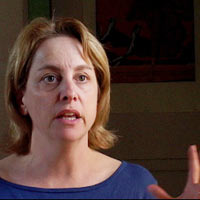
One of the founding enthusiasts was Oberlin College faculty member Brenda Way, who for more than 30 years has managed to preserve the spirit and intention of this original inspiration in ODC. Way has received numerous awards and accolades for her innovative work, including a Guggenheim Fellowship awarded in 2000. Trained at the School of American Ballet and a student of dance legend George Balanchine, Way is both a dancer and an intellectual whose more than 70 works explore the potential of movement. She has been called the first “post-modern” choreographer, who “constructs” dances.

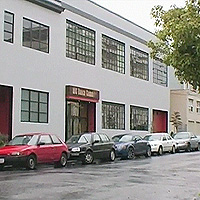
The women who run ODC along with Way, co-artistic director KT Nelson and associate choreographer Kimi Okada, are considered some of the finest contemporary female choreographers in the United States. Their collaboration supports Way’s vision of ODC as a “family,” a theme that runs throughout both the creative and administrative sides of the organization. Under Way’s leadership, ODC became the first modern dance company in the United States to build its own facility, which includes the ODC School, Theater, and Gallery, serving as a home for the resident dance company, offering classes for adults and young people, and presenting programs of national and international dance performers and companies.

Today, ODC is a corps of dancers who actively participate with Way to develop and perform a dynamic repertoire of modern dance. To keep this constant rate of development, performance and outreach, ODC company members work 40 to 42 weeks a year, an unparalleled commitment in the dance world. In the Spark episode, “Leaders,” viewers are afforded rare views inside auditions and rehearsals for “Noir.”

Array

  • Array
  • Array
  • Array

Michael Morgan

Michael Morgan

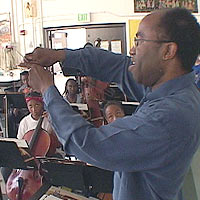
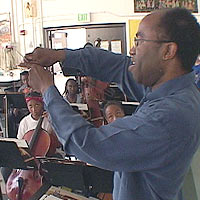
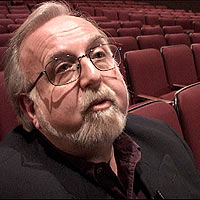
Currently in his 14th year as music director of the Oakland East Bay Symphony (OEBS), Michael Morgan has led an impressive turnabout of a once-troubled orchestra and inspired a broad revitalization of the musical landscape in the East Bay. From middle school visits and young musician tutorials to symphony and opera rehearsals, Spark tries to keep up with Morgan and his busy schedule.

Born in 1957 in Washington DC, Morgan began conducting at age 12 while attending public school. While a student at Oberlin College Conservatory of Music, Morgan spent a summer at the Berkshire Music Center at Tanglewood, where he studied under Gunther Shuller and Seiji Ozawa and worked with Leonard Bernstein. In 1980, he won first prize in the Hans Swarovsky International Conductors Competition in Vienna, and later went on to become the assistant conductor at the St. Louis and Chicago symphony orchestras and conductor at the Civic Orchestra of Chicago and the Chicago Youth Symphony Orchestra.

In September 1990, Morgan was named music director at the OEBS, which was founded in 1988 when musicians from the former Oakland Symphony and the Oakland Symphony League joined together to form a new orchestra. Besides being music director at OEBS, Morgan serves as artistic director of the Oakland Youth Orchestra, Music Director at the Sacramento Philharmonic, and Artistic Director of Festival Opera in Walnut Creek. As if his schedule were not hectic enough, he also makes appearances as a guest conductor with orchestras throughout the United States including the New York Philharmonic.

In the episode “Leaders,” Spark follows Morgan as he juggles conducting the Oakland East Bay Symphony, working with young musicians such as those in Randy Porter’s class at Westlake Middle School in Oakland, and helping promising, young musicians get private music lessons with instructors like Debbra Schwartz. Each year, Morgan makes more than 100 visits to public schools to speak about the importance of arts education, as well as about minority participation in the arts.

  • Array
  • Array
  • Array
  • Array

TheatreWorks

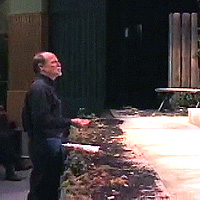
In 1970, Robert Kelley founded TheatreWorks, a regional theater company that stages performances in Mountain View and Palo Alto. Since then, he has helped the small company grow to its contemporary status as the fourth largest in the Bay area and has directed over 100 of its productions. In this segment, he discusses the art of being a good leader and how he has contributed to TheatreWorks evolution.

Spark also goes behind the scenes at the company’s production of the 2001 Pulitzer Prize and Tony Award-winning play, “Proof.” Written by David Auburn, “Proof” opened the 2003-2004 TheatreWorks season and deals with the relationship between a mathematician and her mathematical genius of a father.

  • Array

Ann Chamberlain

Editor’s note: Ann Chamberlain passed away on April 18, 2008.

Visual artist Ann Chamberlain worked in a variety of contexts (ranging from public art and printed books to installations) where she incorporated all kinds of media, including text, photographic imagery and found materials. In her works Chamberlain explored how public spaces and places express the identity, history and experience of the communities they serve.

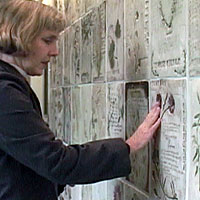
Spark joined Chamberlain as she visited the UCSF Mount Zion Women’s Health Center, where she worked with others to replace a barren, concrete courtyard with a lush garden where cancer patients could share their personal stories with others. Wanting to give the patients’ stories a more permanent home, Chamberlain decided to take the Healing Garden “inside,” and created a 70 foot-long wall of ceramic tablets, each tablet containing the impression of a plant and the story of someone who had dealt with illness.

Spark also visited with Chamberlain while she worked on two other collaborations: a memorial to the Abraham Lincoln Brigade (a group of Americans who fought fascism during the Spanish Civil War) and a project for the residents of Laguna Honda Hospital. By relating the narratives of everyday life through public art, Chamberlain created art that not only celebrates ordinary people, but also offers satisfaction and enrichment for the surrounding community.

Formerly the program director at the Headlands Center for the Arts in Marin, her public art commissions in California include a collaborative work with Ann Hamilton at the San Francisco Public Library and an exhibit at the California Supreme Court Building.

Array

  • Array
  • Array
  • Array

Flo Oy Wong

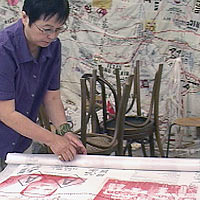
Driven by a need to explore family memories and identity, at the age of 40 South Bay resident Flo Oy Wong decided to embark on a path of artistic creation that has resulted, 25 years later, in a body of provocative artwork that illustrates the rich yet painful history of Asian Americans. Spark follows Wong down the collective memory lane of the Asian American experience.

Born in 1938, Wong was raised in Oakland’s Chinatown, where her family owned a variety of businesses (grocery store, a Chinese lottery and two restaurants) from the 1940s through the 1960s. After graduating from the University of California at Berkeley, and California State University Hayward, Wong began a teaching career. However, in her late 30s Wong decided to pursue her passion for art and enrolled in community college art classes, where she started to explore gender, racial and cultural issues. Since then, Wong has become widely recognized for her mixed media installations.

Her project “made in usa: Angel Island Shhh,” is a three-year oral history-based project that explores the false identities that many Chinese immigrants were forced to adopt when detained and interrogated in the United States. The installation uses rice-sacks embellished with text, beads, sequins and American flags in order to narrate the stories of Chinese immigrants, including Wong’s own parents, who assumed false identities in order to enter the country following the creation of the 1882 Chinese Exclusion Act.

In another work, entitled “Kindred Spirit,” Wong relates the plight of Wen Ho Lee, the Chinese American scientist who was wrongly accused of passing nuclear secrets to China in the 1990s and subsequently jailed. By using certain foodstuffs that Lee was denied during his 278-day incarceration, Wong portrays Lee not as a scientist, but rather, as a father who was taken away from his home and family.

Spark also visits Wong as she works on her latest project, “1942: Luggage From Home to Camp,” a collaboration with the Japanese American Museum of San Jose. Wong’s homage to the internment of Japanese Americans consists of a re-created internment camp barracks filled with suitcases containing personal items and photos of six Japanese Americans who were detained during World War II.

Wong is co-founder of the Asian American Women Artists Association and has exhibited at various venues around the country, including the M.H. de Young Memorial Museum, the Oakland Museum of California and the Smithsonian Institution.

  • Array
  • Array
  • Array
  • Array
  • Array
  • Array

Virginia Harrison

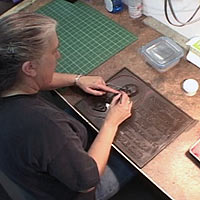
Virginia Harrison began creating what she calls “memory markers” after the death of her young son. These unique bronze plaques commemorate loved ones. In addition to the memory markers, she also creates other bronze artwork such as intricate baskets woven from bronze wire. Spark visits with Harrison at her foundry.

  • Array
  • Array

Klein International String Competition

The Spark episode “The Business of Art” charts the progress of the young competitors of the Irving M. Klein International String Competition as they vie for the grand prize of $10,000 and the chance to headline a series of prestigious concerts. In a field where many are called but few are chosen, watch these up-and-coming musicians get last-minute advice from teachers and steel their nerves to play their best for the judges. “When you go out there, a billion things could be going through your head. But you must be focused and clear, alert and active, spontaneous and free. I just think — you make your music, you show them what you have to offer,” says Eunice Keem, a 2003 competitor.

In 1985, Mitchell Klein founded the Irving M. Klein String Competition in memory of his father, a well-known chamber musician. His vision was to create opportunities for young string musicians to compete for very prestigious awards in an environment that was less cutthroat and aggressive than that of many other such events. The prizes range from $200 to $10,000 as well as a series of debut performances as a concerto soloist and recitalist.

With fewer and fewer performing opportunities available to solo artists, musicians depend on competitions to gain notoriety and establish their careers. Among them, the Irving M. Klein Competition is seen by many as one of the most prestigious international events. Mitchell Klein sums up the experience, saying, “It’s a hard life they’ve chosen for themselves. If you succeed the rewards are fabulous. You get to play the greatest music, commune with the greatest artistic minds and perform with wonderful colleagues … but there are no guarantees, that’s for sure. It’s a great life, but it’s not open to too many people.”

For the 2003 competition, Klein received applications from more than 60 musicians from 11 countries. Virtually all of those who apply are students of renowned teachers and conservatories and are on the edge of major careers as solo performers. Of these, only 12 were chosen to compete in the semifinals. Each participant must prepare a Bach piece, a movement from a sonata and one major concerto. They are also asked to perform part of a new work commissioned just for the competition that they have never seen before. From the semifinalists, the judges select five finalists to return the next day to present a longer performance. From these contestants, the top three finalists are chosen to perform a full concerto backed by an orchestra on the final evening of the competition, which is open to the public.

Array

  • Array
  • Array
  • Array
  • Array

Aesha Ash

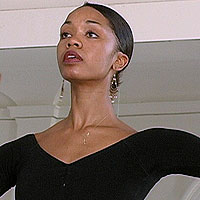
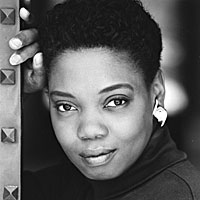
In the career of a dancer, taking new steps as an artist can also mean changing your life. That’s what Aesha Ash has done over and over, moving from the New York City Ballet to Switzerland’s Béjart Ballet Lausanne and then to Alonzo King’s LINES Ballet in 2005. Spark visited Ash during a rehearsal, where she discussed her adjustment to the third dance company change of her career.

Ash’s willingness to move from place to place is an effect of her motivation to grow artistically as a dancer. Before joining LINES, Ash was about to retire from the dance scene; worn out from the scrutiny of her body that is not like most ballet dancers’ stick-thin figures and the pressures of being the only African American woman in the New York City Ballet. However, her move to LINES has revived her love for dance through King’s improvisation and contemporary choreography.

Aesha Ash has been featured in the PBS special “Live From Lincoln Center” and photographed for Bazaar, Marie Claire, New Woman, Dance Spirit and Essence. She is the recipient of the Dance Master of America Honor and was the double for actress Zoe Saldana in the dance sequences of the film “Center Stage.” Alonzo King’s LINES Ballet is considered one of San Francisco’s premier dance companies, famous for King’s sinuous choreography and his dancers’ athleticism and expressive movement.

  • Array
  • Array

Charles Linder

Like everything else in San Francisco, the world of art dealing is a bit more laid back here than in other major cities. Spark joins Lincart gallery owner Charles Linder, whose business model is based on providing a comfortable environment to view art and working with artists that he and his gallery employees like on a personal level. We follow Linder in a typical day, from Rebecca Miller’s art opening at Linc to the studio of Tucker Nichols.

An artist himself, Linder came to the Bay Area in 1987 to attend the San Francisco Art Institute. After receiving his MFA from University of California Berkeley, he started his first art gallery, refusalon, in his home, a converted garage South of Market. Eventually, he moved refusalon out of his home, then sold it in 1999. In 2000, Linder opened Lincart with business partner Holly Fouladi.

Linc has become a venue for contemporary fine art, design and lifestyle branding. What makes Linc unique is an informal environment combining elements of domesticity and informality in which visitors may view new artwork, art books and videos. In addition, Linder and Fouladi firmly believe that collecting art is a learned passion that reflects a collector’s enthusiasm for knowing the artists. “We make an investment of time and space. Then the artist, we hope or assume, will return the favor in terms of … giving us great work and effort,” says Linder. The gallery usually presents solo exhibits, but at least once a year, Linc curates a group show featuring new local and international work.

Relative to New York or Los Angeles, the San Francisco art scene tends to be seen as small and regional. Artists sometimes feel they need to move to bigger cities in order to get national and international recognition. Art galleries like Lincart, work against the sense of regional limitations by taking the work of Bay Area artists to European art capitals and by bringing the work of European artists to San Francisco.

California Shakespeare Theater

California Shakespeare Theater

Jonathan Moscone, California Shakespeare Theater‘s artistic director, is drawn to the political themes in “Julius Caesar” for very personal reasons. In the Spark episode “Page to Stage,” watch as Moscone breathes new life into an oft-performed Shakespeare classic, bringing his unique and personal perspective to bear on this timeless political thriller.

In producing “Julius Caesar,” Moscone faces the directorial challenge of producing a historical play from 44 b.c. Rome that is relevant to 21st-century audiences. Although many viewers may not know the play’s entire story, many know Caesar was betrayed and murdered. The effectiveness of “Julius Caesar” and other classics depends largely upon whether the audience perceives the story as being relevant to their lives. This task largely falls upon the director, who must direct the action in a manner that supports and deepens the audience’s understanding of the text. Oftentimes, developing these understandings can be difficult, given that the language, social customs and historical contexts in such works no longer exist, as is the case with “Julius Caesar.”

But Moscone has an unusually unique and personal relationship with the story, as his father, San Francisco mayor George Moscone, was slain along with supervisor Harvey Milk by former city supervisor Dan White in 1978. In his adapation of “Julius Caesar,” Moscone stages a truthful depiction of just how violent and horrifying it is to take another person’s life — slowing down the action of the murder scene and allowing the blood to seep from Caesar’s body in a long and dramatic silence — an expression of the belief that a political assassination is never justifiable.

More about California Shakespeare Theater

Formerly located in Berkeley’s John Hinkel Park, California Shakespeare Theater (also known as Cal Shakes) is located in Bruns Memorial Amphitheater nestled in the Berkeley Hills. Founded in 1974 as an artist collective, the company is known for its innovative productions of classic theater. Although its mainstay is still Shakespeare, since 2000, Director Moscone has expanded the repertoire of Cal Shakes to include works by Anton Chekov, George Bernard Shaw, Tom Stoppard, and Jack London as part of its continuing commitment to rediscovering seminal theatrical works.

California Shakespeare Theater
calshakes.org
Where: Bruns Memorial Amphitheater, 100 Gateway Blvd. at Hwy. 24, Orinda
Phone: (510) 548-3422

Array

  • Array
  • Array
  • Array

Word for Word

Word for Word

Based on Seattle’s Book-It Repertory Theatre, San Francisco’s Word for Word is an innovative professional theater company that transforms short works of fiction into fully staged pieces of theater without changing a word of the original text. Spark follows the entire process as Word for Word develops and stages “The Fall River Axe Murders.”

Founded by JoAnne Winter and Susan Harloe, Word for Word made its official debut in 1993 with Edith Wharton’s “Xingu” at the Fort Mason Center’s Bayfront Theatre. Since then, Word for Word has become a permanent Z Space program, staging more than 60 pieces that include works by Tobias Wolfe, Barbara Kingsolver, Langston Hughes, Julia Alvarez and Upton Sinclair.

For their 10th anniversary, Word for Word has chosen author Angela Carter’s gothic deconstruction of the infamous Lizzie Borden murders, “The Fall River Axe Murders.” This special production includes all 10 charter members of Word for Word and is directed by Amy Freed, who directed the group’s first production and has since gone on to a successful career as both director and playwright (“The Beard of Avon”).

Dedicated to the written word, Word for Word will not edit the author’s original text — even pages of background descriptions and all the “he saids” and “she saids” get acted out on stage. So with each production, problematic sections arise and need to be imaginatively worked out. “The Fall River Axe Murders” is no exception with a nonlinear timeline and constantly shifting points of view, but these challenges are what make this theater company’s work genius.

  • Array
  • Array
  • Array
  • Array

African-American Shakespeare Company

Have you ever wondered how theater companies take an idea and make it into a performance? For the African-American Shakespeare Company, it starts with a brainstorming session. Spark visits executive director Sherry Young and their development group as they start work on a production of “Beauty and the Beast” at the Zeum Theater.

The African-American Shakespeare Company is dedicated to presenting classical European works in a contemporary African-American context. The company hopes to encourage cross-cultural communication and reflect the world’s diversity by using stories that encompass the shared human experience.

  • Array
  • Array

David Best

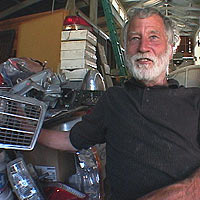
Cut it, tweak it, weld it, and crank it up to your wildest imagination. Welcome to the creative obsession of the art car world with grand crankster David Best, the modern master of assemblage who has transformed more than 30 vehicles into mobile works of art. In the Spark episode “Art Meets Pop Culture,” tag along as Best and his team transform a 1973 Cadillac into a 40-foot rocket car, their mode of transportation at the 2003 Burning Man Festival.

In creating his art cars, Best strips vehicles down to the core before reconstructing them, striving to make the car’s original form unrecognizable. Rather than merely gluing objects to the body of a car, Best, who religiously goes to the dump, likes to use found object materials that ultimately take on their own personality. After making 30 art cars and 2 buses, Best has worked with over 10,000 people. The car artist attributes his success to his collaborators, as he believes a mixture of talents is what brings spark to his projects.

Based in Petaluma, Best’s work has been shown at the San Francisco Museum of Modern Art, the Oakland Museum of California, the San Jose Museum of Art, and the di Rosa Preserve, where the collection includes Best’s “Rhinocar” and “Mother Tina’s Car.”

  • Array
  • Array
  • Array
  • Array

Keith Knight

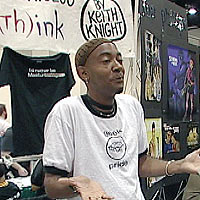
Comic artist and rapper, Keith Knight is the creator of the “K Chronicles” and “(th)ink” and heads up a hip hop/garage band. Knight talks to Spark about what it takes to be a cartoonist and how it relates to his music career.

Born in the greater Boston area and educated at Salem State College, Keith now lives and works in San Francisco, where he develops his cartoons and performs with his band The Marginal Prophets. His weekly K Chronicles comic strip, which ran in the “San Francisco Examiner” for five years, is often an irreverent combination of politics, race, family and humor. He highlights the “aha!” moments and the “huh?” questions we share as humans struggling to make sense and meaning of our complex, contemporary urban society.

Since Knight crafts his comics from his own life and experience, they regularly address issues related to his experience and observation of racism. As an African-American cartoonist, Knight raises issues of race with the same poignant combination of witty insinuations and gravity he uses to handle sensitive political topics and personal epiphanies, balancing the obligations of humor and insight without compromising the veracity of the content.

Knight has received praise from cartoonist Garry Trudeau “Doonesbury,” filmmaker Spike Lee and author Maya Angelou, among others. Knight’s work has appeared in a number of magazines, including “MH-18,” “Cracked,” “Futures,” “Fabula” and “Pulse!” He has published three books of the “K Chronicles” with Manic D Press, the most recent of which, “What a Long Strange Strip It’s Been,” came out in July 2003.

Keith Knight is committed to sharing his voice, not just through his images, but also as a speaker through Speakout: The Institute for Democratic Education and Culture, offering his experience and perspective to schools and other community venues to inspire colleagues and young people alike.

Array

  • Array
  • Array
  • Array
  • Array
  • Array