Brought to you by PBS LearningMedia and The Henry Ford
We want to recognize YOU — America’s innovative PreK-12 classroom educators, media specialists, technology coordinators and homeschool educators who use digital media to enhance student learning.
Thirty winners across grades and subject areas will be recognized and receive a plethora of prizes from PBS LearningMedia, The Henry Ford, PBS TeacherLine, and Promethean! Find inspiration using resources from PBS LearningMedia and The Henry Ford’s On Innovation.
Hurry … the contest closes December 12, 2012. Enter now!
Thank you!
The PBS LearningMedia and The Henry Ford teams
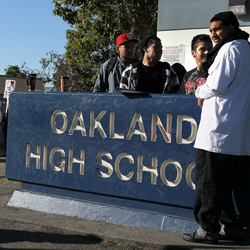
The Oakland Unified School District board agreed Thursday night to take specific steps to eradicate racial bias in school discipline, voting unanimously to enter a voluntary resolution with the U.S. Department of Education’s Office of Civil Rights.
The resolution focuses on replacing suspensions – which historically OUSD meted out to African American boys with much greater frequency than to other students – with restorative justice and positive behavior intervention practices and requiring training for all OUSD staff in these practices as well as in classroom management. The resolution includes about a dozen other specific actions the school district must take, many of which it has already begun.
At a packed school board meeting Thursday night, OUSD Superintendent Tony Smith called the agreement “an exciting opportunity to continue work,” along a path that OUSD started with its strategic plan of creating Full Service Community Schools in the district and launching the African American Male Achievement Initiative. But he and others acknowledged the resolution means accelerating those efforts.
“We will further work that is already underway” Smith said. What have been pilot projects in restorative justice will need to be expanded and brought to every school, starting with 38 the DOE cited for disproportionate use of suspensions as discipline of African American boys.
The Oakland Unified School District and the U.S. Department of Education reached an agreement last week that would allow federal officials to monitor the district’s efforts to curb the number of out-of-school suspensions of its African American students.
The resolution, which the Oakland school board passed unanimously, closes an investigation by the Department of Education’s Office for Civil Rights into whether African American students were disciplined more frequently and harshly than their white classmates. The agreement was reached Thursday.
Last school year, African American students made up about 39% of the district’s total enrollment but accounted for 63% of students with at least one suspension and 61% of those who were expelled, said Russlynn Ali, the department’s assistant secretary for civil rights.
As part of the American Graduate initiative, FRONTLINE will premiere “Dropout Nation,” a special two-hour documentary portrait of four students in crisis and the teachers, counselors, and principal waging a daily struggle to get them to graduation.
The film airs TONIGHT 9/25 at 9 p.m. on KQED 9. Join the conversation live-tweeting at 9. @frontlinepbs via PBS LearningMedia
September 22, 2012 is American Graduate Day, a multi- platform event featuring a live television broadcast, radio playlist with premiere documentaries, and participation from more than 20 national partner organizations, celebrities and athletes to spotlight solutions to the nation’s dropout crisis in which one in four students do not finish high school. Viewers and listeners will be encouraged to become an “American Graduate Champion” by offering their time, donating resources, connecting with the organizations on social media or learning more about the crisis. American Graduate Day is part of the public media initiative, American Graduate: Let’s Make It Happen, made possible by the Corporation for Public Broadcasting (CPB).
With special guests including Michael Powell, representing America’s Promise Alliance, and PBS NewsHour senior correspondent Ray Suarez, the national television broadcast will air live on public television stations from the Tisch WNET Studios at Lincoln Center from 1:00 to 8:00 p.m. EST on Sept. 22 (check their local listings). The event will feature 20 national organizations that are working with local public media stations to help young people stay in school and on track for on-time graduation, segments about local community groups, compelling stories from students themselves, and highlights from PBS national and local content – from PBS NewsHour and Need to Know to Jim Glassman’s Ideas in Action and Tavis Smiley Reports: Too Important To Fail. The broadcast will also include the premiere of a new student film from Reel Works New York and a preview of the upcoming FRONTLINE documentary, Dropout Nation.
Since March of this year, musicians and filmmakers in BAVC’s Next Gen youth programs have been contributing to a nationwide project focusing on the high school dropout crisis in the United States. Supported by the Corporation for Public Broadcasting, American Graduate is a public media initiative created in response to the staggering 1.3 million young people who drop out of high school each year. The project engages with 68 public broadcasting stations and 300 community partners throughout the country to create locally-based solutions and media content.
Working in partnership with KQED, youth from BAVC’s Factory and BUMP Records programs were recruited to create work that documents the state of the American educational system as experienced by the students in it. Artists in BUMP Records recently completed a compilation of music that explores the complexity of the situation in Oakland, California. Touching on topics like the links between education level and income/incarceration, student alienation, and the challenges faced by teachers working in the system, the songs approach difficult subject matter with nuance and honesty. The album, An American Graduate, can be downloaded for free at BUMP Records’ Bandcamp site: http://bumprecords.bandcamp.com/
In support of the album release and larger project goals, BUMP artists Bhindi G, JustKidding and 3ss3ns3 performed a short selection of songs from An American Graduate on Saturday, August 18 at Frank Ogawa Plaza in Oakland.
Visit: KQED’s Sound Cloud site to listen to the album.
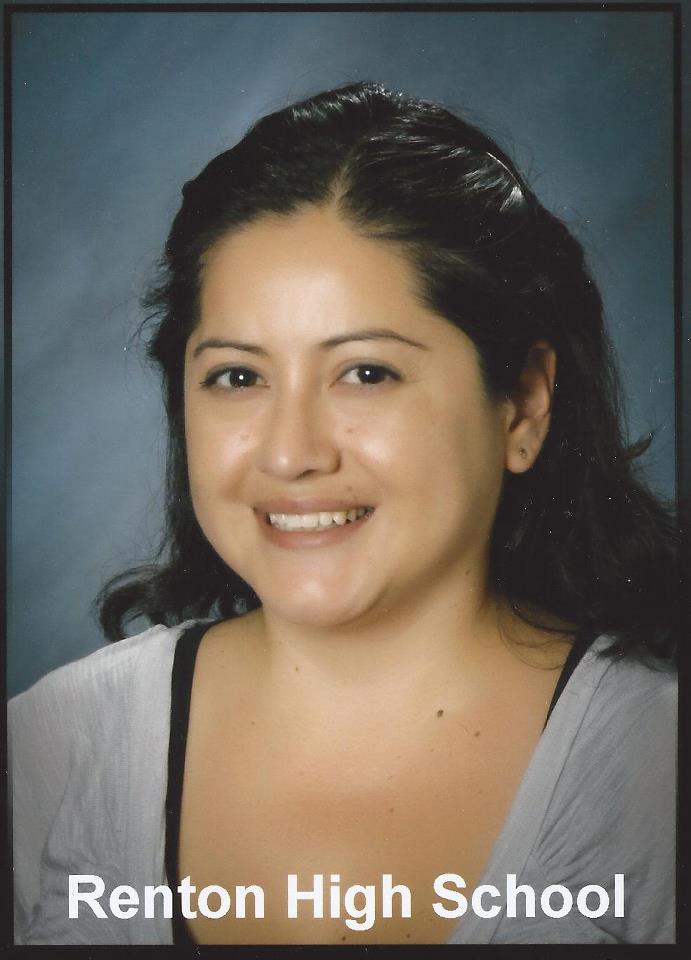
Nancy Martinez, Renton High School English Teacher Renton, WA
Voxxi
July 12, 2012
Written By Hope Gillette
For decades, the presence of teachers representing minority groups has been sorely lacking in the education system in the United States. That’s the conclusion offered by a report from a study by Education Week and Flora Family Foundation, that explored data from 1980-2009 taken from a U.S. Department of Education national survey of teachers and school administrators.
Researchers found a significant gap between the number of minority students and the number of minority teachers. During one test year, the percentage of children in school representing minorities was 41 percent, but only 16.5 percent of educators were from a minority demographic.
According to experts, minority teachers are important in the education system; parents of minority children often feel more comfortable discussing school issues with a teacher from similar heritage, and a diverse teacher population ensures children from all races have a supply of role models.
Research suggests that access to minority teachers may increase attendance, lead to higher test scores, and decrease the number of suspensions in the system.
As one of the fastest growing minorities, Hispanics are a prime example of the education gap. Latino children enrolled in school have far surpassed the number of Latino teachers available. The gap was recognized in the 1990s, when the Exxon Education Foundation revealed 11.8 percent of students were Hispanic and only 3.7 percent of teachers shared that heritage. More recent numbers indicate 21 percent of students are Hispanic compared to 7 percent of Hispanic teachers.
"In order for the teachers to get you through the next hurdle, they have to make it more memorization based. And so what we say is no, let's just to do the opposite." — Salman Khan
TED Radio Hour
June 22, 2012
TED/NPR Staff
In 2004, Salman Khan, a senior hedge fund analyst, began posting math tutorials on YouTube for his cousins. Six years later, he’s posted more than 3,200 carefully structured educational videos offering complete curricula in math and other subjects.
In his TEDTalk, Khan demonstrates the power of interactive exercises and calls for teachers to consider flipping the traditional classroom script. He suggests giving students video lectures to watch at home, and says they should do “homework” in the classroom with the teacher available to help.
In his first Talk, Schools Kill Creativity, education expert Sir Ken Robinson makes a moving case for creating an education system that nurtures, rather than undermines, creativity.
In the second Talk, Bring On The Learning Revolution, he makes the case for a radical shift from standardized schools to personalized learning — creating conditions where kids’ natural talents can flourish.
There is a growing consensus among economists and world leaders that girls’ education is the single most effective tool for fighting poverty in developing countries. While not a panacea, education yields enormous benefits for girls, their families, and society, including increased future income, lower risk of HIV/AIDS, and improved health outcomes. Yet not all approaches to educating girls are equally effective. Join Ann Cotton, Wanjiru Kamau-Rutenberg, and Joel Samoff as they discuss the benefits and the challenges of educating girls in Africa, and share lessons learned from years of experience working in the sector.
Listen to these great episodes tonight at 8:00pm on KQED 88.5FM and a rebroadcast tomorrow May 8, 2012 at 2:00am.