OUSD's College and Career Readiness Office


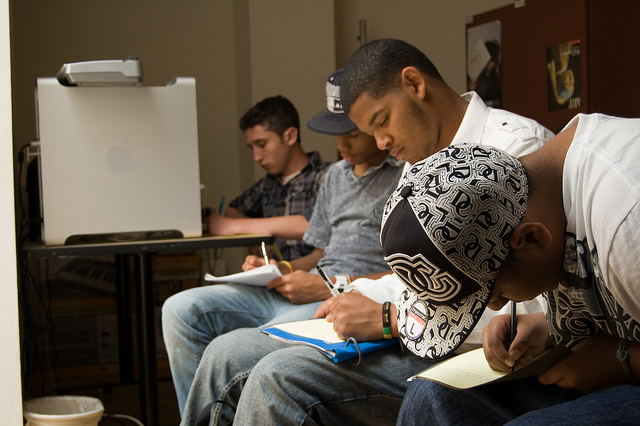
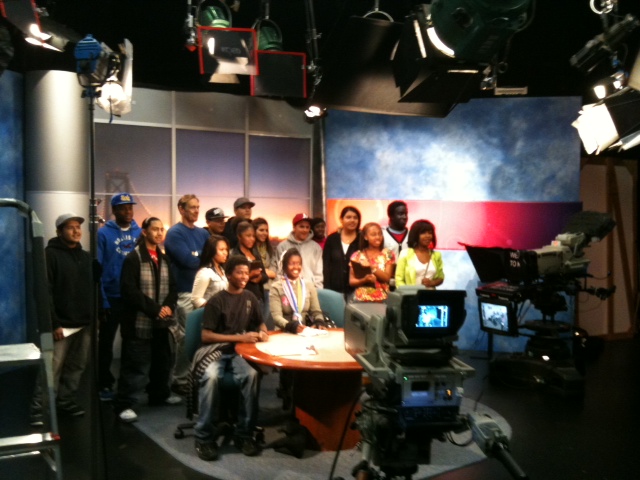
Media Academy from OUSD Fremont High School at KQED

January 14, 2013
By Lisa Hewitt

“What kids need in college, to get into college, and to get through college without remediation is pretty much all the same skills that you need in a career. You need to be able to collaborate, you need to be able to synthesize your own learning, you need to be creative, and show initiative. You need to have 21st century skills. What employers, industry sectors are telling us is, ‘We’re not really concerned about the technical skills that a student comes out of high school with.’ What they really want us to teach kids is how to learn, how to work, how to be persistent, how to show initiative, how to be a good person who is contributing to a company, a community, and a classroom. Those are universal skills.”–Susan Benz

The College and Career Readiness Office of Oakland Unified School District’s Linked Learning model is an innovative approach to education, comprised of four aspects of education, targeted to prepare high school students for college and the world of work. They can explore fields such as healthcare, engineering, as well as arts and media, while each student follows a chosen pathway through their time in high school. The pathways consists of four core components, an academic module, (all students must take the necessary course load to make them eligible to attend a CSU or UC) a technical component or vocational training, worked based learning (internship, externship, or apprenticeship) and as well as social and emotional supports, that can consist of intervention for struggling students through counseling or tutoring.

Gretchen Livesey, the Director of the College and Career Readiness Office and Susan Benz, the Coordinator of Career Readiness, want to reimagine how students experience high school. They realize school can seem boring and pointless to many teenagers, so their goal is to make the high school experience feel relevant. Livesey explains the purpose of the pathway model,

“It’s all right in 8th grade that you don’t know exactly what you want to do. We always say, ‘You’re not deciding the rest of your life today’. People often go through college and have a variety of careers. But hopefully something sparks your interest. Maybe you have a grandparent who is in and out of the hospital with diabetes and you have an interest in figuring out what that’s all about so you choose a health pathway…You’ve always been artistic so you gravitate to the performing arts. What we’re hoping is that when you’re able to express that passion in a series of courses that integrate both [academics and your passion] that you’ll be more successful through high school.”

Through the pathway model, the goal is to make learning more concrete. In order to expose students to life outside the classroom, the College and Career Readiness Office works with outside partners to bring in guest speakers from businesses and organizations, take students on tours of operating businesses in order to help them understand what career opportunities are available. Benz continues, “It’s really going out and finding partners and saying, ‘Will you please take part in the education of Oakland’s children? Will you please step up and get your needs met for an educated, ready to work workforce and help our teachers and help our kids.’ And honestly, Oakland has been more than willing and generous, it’s a good time to be in Oakland because industry, businesses, local businesses [say] ‘yeah, we’ll do it. We’ll do whatever we can’.” From big corporations like AT&T and Clorox, government agencies like Caltrans, to entrepreneurs and small business owners such as filmmakers and designers, the opportunities to meet with professionals in different industries are vast. Benz explains, “If you can get those kids outside of class or if you can get the world to come into a class and make that learning really tangible, that does more or as much as anything else you can do to keep a kid in school, to keep them interested, and to keep them coming back. Oakland has a really hard time doing that,” but with work based learning opportunities increasing, OUSD’s graduation rates rising, and the drop out rate falling, the district has made some significant gains.

If you’re interested in getting involved as a community partner please visit linkedlearningousd.org.


KQED: Oakland Unified Changes Attendance Boundaries of Some Grade Schools

January 10, 2013
By Barbara Grady

A year after expanding the attendance boundaries of several schools to accommodate kids from four schools it closed, the Oakland school board on Wednesday voted to shrink the boundaries of Crocker Highland Elementary School area after huge enrollment in September led the school to scramble to open a fourth kindergarten.

Figuring it would have “chronic oversubscription” at the school based on 2010 U.S. Census data showing the number of toddlers in the neighborhood and realtor reports of new families moving in, district staff recommended making the boundaries a smaller circumference around that  school and widening the attendance area of nearby Cleveland Elementary School. Cleveland is a similarly high performing school with an education program that is much like Crocker Highland’s, district staff said. Crocker Elementary had an Academic Performance Index score of 953 last year and Cleveland a score of 837. Both of those numbers are considered high.

Dozens of parents showed up to the Oakland Unified School District board meeting. Most of them have children who are not yet old enough to attend school, but the spoke of worries about where their kids would go. Many agreed with the plan that eventually was adopted by the board. It can be read on the board’s agenda HERE as the fourth. It takes a triangular area that stretches from Lakeshore Avenue to Grand Avenue up to Rosal/Fairbanks avenues and puts that in the Cleveland Elementary School attendance area. Most of the triangle used to be part of the Lakeview Elementary School attendance neighborhood before Lakeview was closed last summer.

The OUSD has struggled with adjusting to ever changing enrollment. With its total enrollment rapidly declining, it voted in 2012 – amid much protest – to close five elementary school buildings over the summer and reassign the students. The parents and teachers of one school transformed their school to a charter school rather than accept the closure. Now some schools in the district are over subscribed, typically the highest performing ones.

Wednesday’s board meeting was the first for newly-elected members Roseann Torres and James Harris. Both were quiet and voted in tandem with other board members in approving this plan, as well as other items.

To read more.

Bay Area Video Coalition (BAVC)

January 7, 2013
By Lisa Hewitt

The Bay Area Video Coalition (BAVC) has a long history in Oakland, San Francisco and surrounding areas, beginning 36 years ago as a small media arts nonprofit, the organization was founded by community organizers and artists. They aimed to tell social justice stories and support independent filmmaking.  Over the last four decades, BAVC has grown as technology developed; originally focusing largely on the PortaPak video camera, BAVC now works with a multitude of technologies, from filmmaking to music recording tools.

BAVC’s original mission still remains, to facilitate storytelling. They do this through alternative technical education in order to contribute to social change and justice. It is a complex and highly inclusive organization with a common purpose through all the departments, whether it’s preservation, adult education or the youth programs. Ian Davis, a Digital Pathways instructor for BUMP Records explains,

“Though there are a few different departments throughout the organization, the linking thread throughout is to bring the community in and help people who otherwise might not have, or mostly likely, would not have the opportunity to tell their stories…It gives them an opportunity to keep these stories alive…A tree falls, no one hears it, it doesn’t make a sound? I think [BAVC] helps the trees make sound.”

Much of the work BAVC does centers around youth educational training, their Next Gen Youth program offers instruction in audio engineering, video production and filmmaking for students 14-24 years old. BAVC seeks to level the playing field for youth who may not have the resources or opportunities to acquire emerging technical skills elsewhere. Chris Runde, the Manager of BUMP Records explains,

“I think that in current economy especially, we’ve seen a real emergence of where jobs actually exist. There is really a need for really specific skill sets in the technology sector. And the ability to jump in and navigate this world and provide services that are valuable to corporations, companies, [and the] government…People who don’t have those skills or the access to the training are really being left behind. Access to that kind of training tends to favor people from privilege backgrounds, so I think the work that we do here, we’re really trying to bridge that gap and provide some of those same opportunities for folks who in other cases wouldn’t have that access to it.”

BAVC aims to help students become well rounded artists, producers, or filmmakers possessing skills that enable them to find work in the tech industry. If the student is a singer or rapper they learn to record music, or if they’re a filmmaker they learn design. The work that students produce comes from their perspective; the work is compelling because it’s relevant to their lives and their communities. As part of KQED’s American Graduate initiative, the station partnered with BAVC’s Bump Records (the advanced recording program) and The Factory (the advanced video program) to produce an album entitled An American Graduate and a series of short films which examine the current dropout crisis in Oakland. Runde and Davis assert it challenged the students to work outside their comfort zones and address an issue that is very pertinent to their lives. An American Graduate album and the short films Stay the Course, Checkmate, and There is No Crisis in American Education address issues such as education, incarceration, student alienation, and one song on the album explores the teachers’ perspectives.

Ingrid Dahl, the Director of Next Gen Programs explains how BAVC’s youth programs can serve as alternative to the traditional high school experience, “I also think that Chris and Ian and all the staff of BAVC are more situated as mentors to students, [they] are much closer to a colleague or peer. It’s very different from the power structure unfortunately of… traditional education. I think all of us are sensitive to the fact that high school can be very hard. A lot of us didn’t like high school. I didn’t like high school at all. And there are reasons for that. We’ve spent most of our early adult lives having to break that down, dismantle it and try to understand it and the intersection of sexism, racism, classism, discrimination homophobia, hatred and why people need to categorize themselves so much and so deeply…We’re…creating an alternative way of being, way of seeing and that too is why students come back. They understand this is a place that they can be understood better. And maybe it’s a break from the pressure and the exhaustion that surviving in high school requires.”

To learn more please visit: http://www.bavc.org/

“This series of short videos profiles four parents whose students have pursued a STEM (Science Technology Engineering Math) field career through the Bay Area Video Coalition’s NextGen programs.”: http://bavcfactory.tumblr.com/post/30338539979/parents-talk-stem-directed-by-jacob-hirsohn-owen

KQED / FACTORY American Graduate films: http://bavcfactory.tumblr.com/

BUMP/American Graduate compilation: http://bumprecords.bandcamp.com/album/bump-records-and-kqed-present-an-american-graduate


The California Report: In Oakland, School Officials Tackle Rising Suspensions

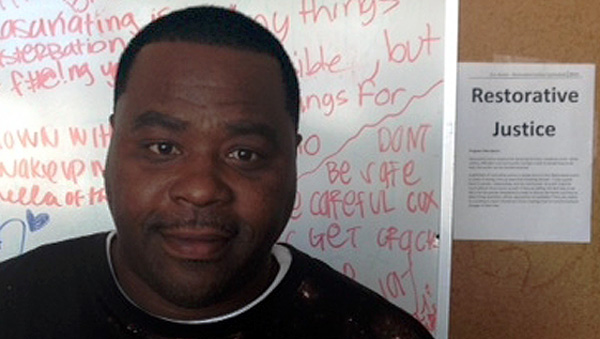
A number of new education laws in California tackle a particularly alarming issue: the state’s schools now issue more suspensions to students than diplomas, especially to African-American students. Nowhere is that more apparent than in the Oakland Unified School District. But now, district officials are pinning their hopes on a new approach to student discipline, called “Restorative Justice.”

Listen here.


KQED: Education Nonprofit to Help Expand Math, Science Program in Oakland Middle Schools

December 21, 2012
By Barbara Grady

Oakland Unified School District this week became a beneficiary of a major federal grant that will bring science, technology, engineering and math – STEM – educational experiences to as many as two thousand OUSD students.

It is one of many efforts underway to close a “digital divide” in Oakland in which low-income students have less access to the Internet and connected computers.

The U.S. Department of Education this week awarded a $3 million “Investing in Innovation” grant to Citizens Schools, a non-profit that plans to use it in 23 school districts across the country including Oakland Unified. Citizen Schools winning proposal, Closing Inspiration and Achievement Gaps in STEM with Volunteer-Led Apprenticeships, will set up and expand after-school programs in Oakland to be apprenticeships with tech professionals who would involve them in hands-on engineering and computer science projects.  Citizen Schools will be recruiting tech volunteers in Oakland.

“These hands-on STEM apprenticeships not only help students build skills but also spark their interest in STEM subjects,” said Stacey Gilbert Lee of Citizen Schools when asked about the program that has not yet been formally announced. In Oakland, Citizen Schools will expand a program it already started in three middle schools.

Much is being done in Oakland to try to close the digital divide, with a host of non-profit organizations collaborating with the school district to bring computers into classrooms and train students in digital tools. Yet other organizations work over the summer through summer camps and programs at recreation centers.

This happens as the stakes for being left behind in digital literacy and Internet access become increasingly high in a world that revolves around the Internet.

“As more information becomes electronic, the inability to get online can leave entire communities at an extremely dangerous disadvantage,” notes Kimberly Bryant, founder of Black Girls Who Code, which ran a summer camp in Oakland last June.

Yet, according to estimates of Oakland Mayor Jean Quan’s administration and the Pew Research Center, about 50 percent of OUSD children whose families earn less than $30,000 a year do not have Internet access at home. That income is the benchmark for qualifying for the federal free and reduced lunch program and 69 percent of OUSD students qualify.

In a loose survey of West Oakland residents done this year by Oakland Technology Exchange West (OTX), another non-profit working hard to close the digital divide, only 22 percent had both Internet access and a currently working computer. Some had Internet access but not a currently working computer. Others had no computer at home. OTX as the non-profit is called, gives away free computers to OUSD high school and middle school students who take its one afternoon course.

OTX is yet another of the plethora of organizations trying to bridge the divide.

At OTX’s vast West Oakland warehouse, retired IBM executive and OTX founder Bruce Buckelew, along with his small staff of local hires, arrange for thousands of refurbished computers to be delivered to public schools across Oakland.  Collecting computers from corporations when they replace their stock and then refurbishing them to new condition, OTX through the years has provided 35,000 computers to Oakland school children and low-income adults. It has delivered 18,000 computers to OUSD schools alone, charging the school district about $240 per computer. Then it has handed out another 17,000 to Oakland kids who come with a parent to take a one-afternoon computer course in computer basics at OTX’s plant. OTX has also supplied free computers to adults who volunteer time refurbishing donated computers.

See more and for ways to get involved.

Student Voices in San Jose: Designing the 21st Century School

December 22, 2012
By Daniel Zapien, Fernando Perez of Silicon Valley De-Bug

On November 15th at 2:30pm, De-Bug started making its way to the Schools of Arts and Culture at the Mexican Heritage Plaza for an event called “Designing the 21st Century School.” This event was created for the students from all over the Santa Clara County to come out and talk about how school could be better suited for them and their futures. The event also represented a coming together of various organizations who united in the interest of improving our school system – groups such as San Jose 2020, Santa Clara County Office of Education, Californians for Justice, American Leadership Forum, San Jose Youth Commission, School of Arts and Culture, De-Bug, and more.

As we got to the event, Malcolm Halcrombre was setting up the DJ booth, which was designed to entertain, and keep background music for the youth during the dialogues of the event. We began setting up the “21st Century School Graduation Photo Booth” where kids stood in front of a graphic Adrian Avila made of the school of the future. Students, who got to wear a cap and gown, chose which “diploma” they wanted to be pictured with, which were themes based on what schools could be. So the diplomas to choose from read that the youth graduated from a school of the future where students:Have Full Use of Technology, Have Teachers That Students Connect With, Never Have to Worry About Being Hungry in Class, Get Support for Issues They Face Off of Campus, Won’t Feel Judged Based on How You Look.

As the school buses started coming in, the youth started to come out and sign in, some would sit down and listen to the music, while others would walk over to the photo booth and take pictures with their friends. After the music was getting really funky, and the kids took as many pics as they could, before the event started. There were over 200 students, who sat in small groups, ready to create new possibilities for education.

As the room got silent, Dr Xavier De La Torre (Santa Clara County Schools Superintendent of Schools), and Christian Sanchez (San Jose High student and Youth Commissioner) grabbed the microphones and started making announcements for the evening full of events. They then introduced the first act — De-Bug who showed the  ‘Schoolin the Schools’ media contest entrees. Fern and myself (Ookie), went up to let the youth see what other youth were doing for the contest. Claps and cheers were heard as the students watched and listened to the videos and slideshows.

After getting the crowd live we gave the mic back to Christian and Dr. De La Torre who introduced the next part of the evening. This was the research portion that was done through surveys all across East San Jose schools by Californians for Justice. It was amazing to see to see the amount of concern students have regarding the level and quality of their education. Then we came to the part of the evening where the youth sat in circles and began giving their opinions on certain questions that was asked by community leaders and educators in a fashion that let everyone speak. The discussion was lead by youth facilitators. Students were asked to reflect on the media and research they all just saw, then proceeded to answer the question, “ If you invented school, what would it look like?” The students had plenty to say – giving direction and ideas that could transform our schools into education hubs that really prepare and inspire youth.

And they connected their dreams to the current realities facing their schools. In my small group, as students were speaking about how important one on one time with a teacher is, one student said, “The teacher at my school would only tutor three kids out of every class. She has six classes. It’s sad because now there is no one to help the rest of us students, because the school won’t get more teachers to help.”

Even the youngest of attendees got a lot out of the discussion, and what it represented. Samaj Kenney, age 12, was there to perform through his dance crew Monster Motion, but also participated in the small group discussion. He said, “It was amazing how they got all the kids out there to attend the event and actually listen and participate.”

After all the small groups were done, it was the last portion of the evening where the performances started. Danae James Johnican performed his submission to Schoolin the Schools, a song called “Hard Lessons.” After he performed, two members of Monster Motion got a chance to dance and make the crowd go wild.

View entire article.


Josue Diaz Jr.: Director and Teacher of The Green Academy at Oakland Technical High School

December, 28 2012
By Lisa Hewitt

Growing up in the San Fernando Valley, Josue Diaz Jr. never thought he’d be teacher. It wasn’t until his mother helped get him a TA position in a local kindergarten class that he began to consider the possibilities of a career in education. School wasn’t always his central focus; Diaz graduated from Cal State Northridge and after dropping out once he reapplied and returned to school. Diaz worked days and took classes in the evenings where he was surrounded by much older adults making him feel alienated by the entire process. As the first in his family to go to college, it was unclear to him what was involved in the college system,

“I didn’t know what financial aid was until my senior year of college. I didn’t even know you could get financial aid. I had no idea how the college system worked. I just knew my mom put an application in front of me, I filled it out and I got into Cal State Northridge. I had no idea about all the opportunities because I was the first in my family to go to college. I didn’t have anyone to help me out or guide me through high school. So I sort of fell through the cracks.”

Struggling with his own college experience, he knows the importance of preparing students for life after high school. He feels an obligation to guide the students he comes in contact with, from helping students with their transcripts to providing his classroom for after school clubs.

After graduating with a degree in education and his teaching credential, he moved to San Diego and began teaching elementary classes at a charter school and eventually went on to middle school and high school where he taught Earth Science. Working for over 13 years in education, Diaz has taught in a variety of schools, some with world class laboratories and state of the art learning tools.

“They tore down this one [high school], it was in South East San Diego, the part that’s not on the postcards, they tore down the school and rebuilt the school from scratch. And put laptop carts…and smart boards in every room. Our lab was just as good as [The University of California’s]. The thinking was the more resources you have the [more the] scores will go up. But I just found it more challenging to keep the students engaged especially in the labs. And they took a lot more things for granted. It was so much easier for them, ‘Oh here’s a graduated cylinder, oh it broke…we got boxes of them in the back,’ whereas at the charter school with those 6th grades we got really creative with some of the stuff. I think that’s what’s lacking, the imaginative…side of science.”

In the schools with limited resources Diaz and his students had to be more creative. At his first job in San Diego teaching elementary science labs, all the supplies they used could be found at home or bought cheaply, so the lessons could be recreated with their families in order to solidify the lesson they learned in class. After spending several years in the San Diego school system, Diaz and his wife moved to Oakland when her former high school assistant principal at Oakland Tech informed her of an opening in the science department. Diaz took over as director of the Green Academy in his first year of teaching.

As part of the Oakland Unified School District’s Linked Learning initiative, the Green Academy offers students academic and practical training in the sciences in order to prepare them for work in the growing environmental sector. Community partners in the sustainable energy sector help provide students with academic training, internships, and job shadowing. They also come to Oakland Tech and give guest lectures and teach labs. They often have equipment unavailable to the average high school, for instance, the East Bay Young Scientists from the Lawrence Hall of Science, are currently helping to test the water quality of Oakland Tech.

The aim of the Green Academy is to make science less abstract and more relevant to the lives of Oakland Tech’s students. Beginning four years ago, the Green Academy focused on broader scientific concepts, since Diaz has taken over, he’s sought to change the focus and explore more of the students’ interests and emphasize action research, which are projects designed to effect social change. At the beginning of the year, students think of a problem they see in their community that relates to the environment. Throughout the year, Diaz and the students do experiments outside of the school to guide their research, which results in a lengthy term paper.

Beyond the academic side, it also functions as a community service activity; it has to affect the community in a positive way. Some projects that have come out of the Green Academy were a fundraising project for community planter beds and promoting South Pacific culture while researching the effects of global warming and rising sea levels. Due to lack of staffing and Diaz’s own demands as a teacher, the Green Academy is going on indefinite hiatus, but he’d like to bring it back when the support and preparation are solidified. For the time being, Diaz hopes to continue to work with Bay Area partners to bring alternative education and job experience to his students.

If you’re interested in contacting Josue Diaz as a community partner please visit http://oaklandtech.com/staff/jdiaz/.

KQED: Oakland Schools' New Effort to Fight Soaring Suspension Rates


December 26, 2012
By Ana Tintocalis

Oakland’s public schools are heading into the New Year with an ambitious plan to curb a skyrocketing student suspension rate.

The vast majority of Oakland’s suspended kids are African-American, even though they make up just a third of the school population.

Federal civil rights officials investigated the suspension rate. And that led the school district to adopt a plan requiring all teachers to use so-called “Restorative Justice” practices in the classroom.

That approach keeps kids in school, encouraging them to examine their attitudes and the impact of their behavior.

But faculty members like Benjie Achtenburg, who teaches eighth grade at Melrose Leadership Academy, says the district is not providing enough resources and training.

“Being a public school teacher in Oakland,” Achtenburg says, “you are already overwhelmed by everything you have to do, no matter how many years you’ve taught in this district.”

Superintendent Tony Smith says teacher buy-in is one of the district’s big hurdles.

OUSD has five years to reverse the troubling discipline trend or face sanctions.

View article.

KQED's Forum: Living With Gun Violence

December 21, 2012

The entire nation has been shaken by the brutal killings of 20 children and six adults from Sandy Hook Elementary School in Newtown, Connecticut. Less discussed has been the pervasive gun violence in some urban communities. Last year in Oakland, nearly 150 kids under the age of 18 were victims of shootings. Six were killed. We discuss the effects of gun violence on a community. How does it impact children and their families, and what can be done to help?

Hear audio.