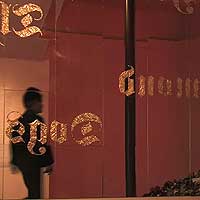
Cultures collide in the work of Julio Cesar Morales, an artist offering hisinterpretation of a post-apocalyptic city based on his experiences growingup on the border of California and Mexico. Morales’s exhibit “There’s Gonna Be Sorrow” was also influenced by the first album he ever purchased, David Bowie’s “Diamond Dogs.” Bowie’s album, which was influenced by George Orwell’s dystopian novel, “1984.” Spark catches up with Morales to chat about his installation at Galería de la Raza.
San Francisco-based Morales is a conceptual and installation artist who expresses his thoughts on labor issues and personal identity through sculpture, photography, video and other medias. In “There’s Gonna Be Sorrow” Morales employs idiosyncratic symbols to express his bi-cultural identity, fusing elements of traditional Mexican culture with contemporary, technology-infused aspects.
Born in Tijuana, Mexico, Julio Cesar Morales studied new genres at the San Francisco Art institute. An artist, educator and curator, Morales founded San Francisco gallery Queen’s Nails Annex and has exhibited throughout the world. He has received awards from The Rockefeller Foundation, The Arts Council, The Fleishhacker Foundation, and The Creative Work Fund.
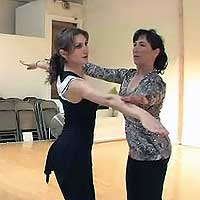
From Uzbekistan to India, Turkey to Afghanistan, the Ballet Afsaneh Art and Culture Society brings to the stage the vibrant sights and sounds of the ancient route through Asia known as the Silk Road. Spark sits in as they rehearse Sharlyn Sawyer’s “Song of Generations,” a multi-generational collaboration with the Nejad World Music Daf Ensemble that celebrates Persian culture and history.
A crossroads of trade in ideas as well as goods, the 7,000-mile-long Silk Road connected the empires of Byzantium, the Ottomans, India, Persia and Mongolia with Western Europe for more than 2,000 years. Combining music, poetry and dance, Ballet Afsaneh’s performances offer a richly textured perspective on cultures that originate in modern-day Iran, Tajikstan, Uzbekhistan and Afghanistan — an alternative to the usual news about political upheaval and war in that region.
Founded in 1986 by California native Sawyer, Ballet Afsaneh’s repertoire spans the traditional as well as the contemporary, with colorful dances created by Sawyer in collaboration with the other members of the troupe. Sawyer’s training includes both Eastern and Western dance styles, and she focuses on preserving and presenting the traditional dances of women from the various countries that make up Central Asia and Asia Minor.
Lyrical, classically influenced dances like Barg e Behesht — with its expressive, twining arms and graceful movements under a canopy of blue silk representing the sky — evoke the elegant storytelling traditions of the Persian courts. In contrast, the company’s Uzbekh repertoire includes dances in the playful Bukhuran style as well as the softer, more emotional Ferghana style, which reenacts celebrations, such as weddings and festivals.
A troupe mainly composed of women, Ballet Afsaneh also showcases its members in the traditional folkloric and ritual dances of Afghanistan, such as the Loghari and Attan, as a response to the religious and political strife that has kept women from dancing or performing in public in Afghanistan during the rule of the Taliban.
The company, whose name comes from a Persian word meaning “fairytale” or “legend,” is composed not only of dancers but also of poets and musicians, most of whom come from a Central Asian background. Each member of the troupe, however, performs in a wide variety of styles, crossing over cultural barriers in the same way that migrating travelers have intermingled along the Silk Road for thousands of years.
A dirty kitchen, a motionless man watching a flock of birds taking flight, a woman disappearing around the corner of a motel building — these are the kinds of seemingly mundane scenes photographer Henry Wessel has been capturing since the 1960s. But under his careful hand and watchful eye, these scenes are transformed into unique and unforgettable images of life in the American West, and in California in particular, that led the San Francisco Museum of Modern Art to launch a major retrospective of Wessel’s work in 2007.
“He’s a photographer’s photographer — a craftsman of the highest caliber,” says Corey Keller, an associate curator of photography at the SF MOMA.
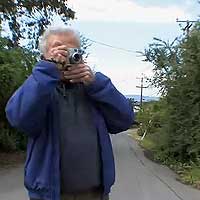
Indeed, Wessel — who is one of the Bay Area’s most respected artists — is often credited with changing the art world’s perspective on landscape photography. Wessel began traveling around the country taking pictures in 1967 and was immediately drawn to the quality of light in California. Shortly after, he moved to the Golden State, so that he could photograph year-round. Spark takes a walk with him and his camera.
“It can happen anytime, anywhere. I mean, you don’t have to be in front of stuff that’s going to make a good photograph. It’s possible anywhere,” says Wessel, whose process involves finding intrigue in everything.
A prolific photographer who works mostly in black and white using a manual camera, Wessel prints hundreds of contact sheets each year and stores them in his studio. Years later, after he has had time to distance himself from the images, he will sift through them, looking for the special ones that catch his eye.
“You’re suddenly seeing the coherence and the interconnectedness of everything, left to right, top to bottom, front to back. It’s all connected, and, somehow, it’s all in balance. And that’s, of course, when you go, ‘Yes!'” says Wessel.
Born in 1942 and raised in New Jersey, Henry Wessel earned a B.A. in psychology from Pennsylvania State University and an M.F.A. in photography from the State University of New York. He is the recipient of three National Endowment for the Arts fellowships and two Guggenheim fellowships. Wessel has been living in Point Richmond since the early 1970s and is a resident faculty member of the San Francisco Art Institute.
After looking at Mitra Fabian‘s work, it’s not surprising to learn that she got her start fabricating sculpture for the HBO series “Six Feet Under.” She works with everyday materials creating forms that mimic or hint at organic growths. Often resembling organs or tumors, these “growths” are seductively grotesque, tactile, beautiful and playful.
Her impeccably clean studio is full of small, seemingly medical instruments, looking more like a doctor’s office than a typical artist’s studio. Working in a pseudo-scientific manner, Fabian painstakingly pieces individual lengths of tape together to create bulbous forms reminiscent of growths or cancerous mutations. She finds her labor-intensive process to be deeply meditative.
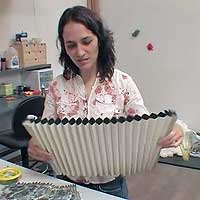
Spark checks in with Fabian as she creates “Multiplicity” and “Ventilate” for an exhibition at the San Jose Institute for Contemporary Art. The former resembles hatched insect eggs and is composed of casts made of white glue. The latter is a sculptural experiment made from window blinds, and it highlights Fabian’s signature awareness of how materials relate to the human body.
Fabian aims to shift the way viewers relate to common materials, giving them a new understanding of what those materials can do. Her fascination with mysterious biological forms is a reflection of her personal relationship with loved ones who have battled cancer. Although she doesn’t intend for every viewer to connect on this level, her work does evoke an eerie sense of isolation and contemplation.
Los Angeles native Mitra Fabian earned an M.F.A. in sculpture from California State University, Northridge. She teaches sculpture at Sacramento City College during the week and returns to her art studio in San Jose on weekends. Her work has been exhibited internationally.
When Shotgun Players was looking for a playwright from the Bay Area to write a play about South Berkeley, it was Marcus Gardley who got the gig. The result being “Love is a Dream House in Lorin,” which was community theater in the truest of senses — the cast of 30 people ranged in age from 9 to 69, consisted of professional actors and residents of the neighborhood.
Although Gardley lives in New York, he continues to work on projects about the Bay Area community. Spark catches up with the poet and playwright as he works on “Love Song for the Night in Gail.”
“Love Song” was workshopped at the Traveling Jewish Theatre while still in the writing phase. This process important to Gardley, provides him a deeper insight into his characters’ mind by utilizing what he considers the most valuable resource a playwright has: actors. For him, it is the actors’ whose embodiment of the characters brings them to life.
Born and raised in Oakland, Marcus Gardley authored his first play as an undergraduate at San Francisco State. He then went on to earn an M.F.A. at Yale School of Drama and now teaches creative writing at Columbia University in New York.
For Lucy Arai, communication has very little to do with words. In fact, the mixed media artist learned “sashiko,” traditional Japanese embroidery that appears throughout her body of work, without speaking at all. Spark tags along with Arai as she installs a commissioned piece and demonstrates her craft at the Asian Art Museum.
The daughter of a Japanese mother and a European American father, Arai struggled to reconcile her bicultural heritage with her own identity while she was growing up in the 1960s. In 1971, her parents sent her to Tokyo to experience her mother’s native culture firsthand. While there, she lived with her aunt and uncle, neither of whom spoke English — and Arai spoke no Japanese. So instead of communicating with words, Arai and her uncle began interacting through art as he taught her sashiko.
“He would see me make a mistake, and without blinking, without taking his eyes off the TV, he would take it out of my hand, take the stitching out, give it back to me, and I would have to figure out what I did wrong,” Arai says. “That’s how I learned, figuring it out on my own without the benefit of language.”
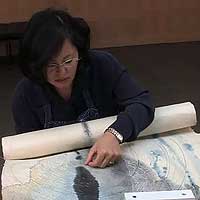
More than three decades later, Arai’s work continues to carry on its own wordless conversation. White and gray silk threads neatly march across handmade paper painted with sumi ink and indigo cotton dye. The rich black brush strokes of the ink create an unspoken exchange, a kind of aesthetic tension with the concentric circles stitched ever so carefully upon the paper’s surface.
In recent years, Arai has added gold leaf detailing to the conversation. Finished works often have forms reminiscent of Japanese landscape paintings, calligraphy and the natural world, though Arai, who has been known to stitch upwards of 18 hours a day, says she only discovers those resemblances after completing a work.
“I don’t have in mind that the work has anything narrative about it, and I don’t have anything specific in mind when I’m working. I look at my response and what’s going on with pigments mostly as gesture and formal elements, and it’s only after the fact that I see things that suggest landscape or narrative,” she explains.
Lucy Arai earned a B.F.A. in ceramics, an M.F.A. and a graduate certificate of museum practices from the University of Michigan. She lives with her husband in Oakley, California.
Drive into Sebastopol, a town of about 7,800 people located 50 miles north of San Francisco, and you won’t be greeted with the sort of welcome plaque commonly posted at the entrances of so many small towns. Instead, you’ll meet the “Star Caster,” a fanciful fisherman created by artist Patrick Amiot using more than 1,000 can lids and other cast-offs. Another 170 of his sculptures are scattered up and down the town’s streets. On Florence Avenue, where Amiot lives, at least 25 sculptures are on display, many on neighbors’ lawns.
There’s “Surfer Girl,” who rides an ironing board across a wave made from a Volkswagen car hood, and the “Garden Lady,” whose floppy hat gives new life to a battered washtub. And who could miss the “Zucchini Brothers,” a three-man juggling act reaching high into the air?
“When I do a project, I never know where it’s going to lead me. It all has to do with what kind of junk I’ll find,” Amiot tells Spark as he goes to work on a sculpture for Sebastopol’s annual Apple Blossom Parade.
Amiot is nothing if not prolific. His yard is littered with the fruits of his labors and with fodder for many more. The raw materials for his work come from any number of sources: junkyards, flea markets, locals who barter old car parts and other cast-offs. Many donate their junk to Amiot instead of throwing it away. Once a ceramicist living in Montreal, Amiot became known for his junk art sculptures after a months-long cross-country road trip that landed the artist and his family in this Northern California town in 1997.
“The way it started was that I had this desire to do something other than my clay, so I decided to make this giant fisherman. I just put it right in front of the house and figured, well, if there was a city ordinance that tells me to take it away, that’ll be fine. To my amazement, people actually enjoyed looking at it. People slowed down and waved. So that was the beginning, and then came another one, and they eventually started to go onto other people’s front yards — on my street, of course — and then after six months I sold my first one,” he says.
Today, Amiot’s body of work includes the junk sculptures for which he is best known as well as ceramics and pop rivet sculptures made of metal pieces, which are painted by his wife, Brigitte Laurent. For Amiot and his family, the art literally spilling out of their home and throughout Sebastopol is about much more than art for art’s sake. Amiot sums it all up perfectly: “What it says is, ‘Welcome to our humble, but whimsical, fun, recycled, conscientious community.”
In San Francisco’s Mission District, the San Francisco Running Crew is doing its part to keep theater arts thriving in the Bay Area. Every Monday and Wednesday afternoon for three months, 10 teenagers and young adults, aged 14 through 24, learn the backstage skills of running a theater, including lighting, sound, scenic carpentry, and stage management.
The program is designed for young people who are under-represented in the technical theater fields. Competition for a spot in the demanding program is intense, and a high level of commitment is required from those who gain entry – they are expected to absorb a great deal of information in a short period of time. Spark follows the crew backstage as they prepare for the stage production they will run.
The San Francisco Running Crew is one of the programs under the Brava Theater Academy, which is the educational arm of Brava! for Women in the Arts. Through its educational programs, the academy extends economic and social opportunities to local people, especially young people aged 6 through 25. Four hundred students per year attend classes in acting, writing, scene study, directing, and theater design, all taught by experienced theater professionals. Students are also given the opportunity to visit local theaters.
Brava! for Women in the Arts was founded in 1986 at the GalerÃa de la Raza in San Francisco, and in the same year, it purchased York Theatre, a former art movie house. Boasting a 13,000-square-foot theater and training facility, Brava is dedicated to its community in the Mission District of San Francisco and to producing new work by women of color and lesbian playwrights. In addition to San Francisco Running Crew, the academy’s programs include Performance Workshop, Brava! for Literacy, La Moda, Drama Divas and Alumni Job Development Workshops.
After 25 years of running Berkeley Ballet Theater, there is no sign of Sally Streets slowing down. Five days a week, you can find the Oakland native teaching and testing her newest choreography on her students.
Streets first began dancing because of a recommendation from her pediatrician to help control her distended belly. She eventually worked her way into the positions of ballet mistress and principal dancer with the Oakland Ballet and Pacific Ballet. In 1982 Streets set out to open her own dance company, with steep competition on the rise, Streets opted for a dance school.
Although considered a school, Berkeley Ballet Theater acts much like a dance company, giving students many opportunities to perform. With 275 students actively enrolled, the school boasts alumni headed to prestigious dance schools to further their dance education. One of Streets most famous students is her daughter Kyra Nichols, who is now retired but was once a member of the New York City Ballet.
Acting as co-founder, director, choreographer and teacher, Sally Streets aims at making her dances fun so that her students don’t realize all of the hard work that is going into it. One of her favorite groups to teach is advanced teenagers because they are so eager to learn. Spark catches up with Streets while she prepares the Berkeley Ballet Theater for their annual spring performance.
Since 1988, Lily Cai and her dance company have presented works in the Bay Area and beyond related to the Chinese female experience. In her choreography, Cai strives to portray contrasts of beauty and power, strength and struggle. Spark captures the final rehearsal period for Cai’s, “Red Typhoon,” which premiered in April 2007 at the Cowell Theater at Fort Mason in San Francisco.
“Red Typhoon” is based on Cai’s personal experience in China, when Mao Tse-tung’s Red Guards would ambush homes, arresting hundreds of innocent people they deemed counterrevolutionary. This piece explores the Chinese Cultural Revolution, while marking its 40th anniversary and serving as a memorial to those who suffered during this time.
Integrating traditional Chinese dance, both folk and classical, with Western ballet and modern dance, Cai creates highly visual works of art that incorporate costumes, props and multimedia imagery that connect the past and present. Many of her productions are set to original music by Bay Area composer and Lily Cai Chinese Dance Company music director, Gang Situ.
Cai encourages her dancers to fully embody the movement and emotions related to the context of her choreography. To fulfill its founder’s artistic vision, the Lily Cai Chinese Dance Company is composed of only female dancers of Chinese heritage.
Lily Cai is originally from Shanghai, China, and was a principal dancer with the Shanghai Opera House. She moved to the Bay Area in 1983. Recent works include “She: Portraits of the Chinese Woman,” “Si Ji (Four Seasons)” and “Bamboo Girls.” Her honors and accomplishments include commissions for the San Francisco Ethnic Dance Festival and the Santa Fe Opera and two Bay Area Isadora Duncan Dance Awards.
As a successful blues man, Mike Henderson has performed widely and released several albums. As a painter, Henderson’s work has been exhibited across the country. And as if that weren’t impressive enough, he’s also an accomplished filmmaker. Spark visits Henderson in his San Leandro home studio as he jams on the guitar and creates a new series of paintings for the Haines Gallery.
As a young artist and musician in the mid-1960s, Henderson entrenched himself in the political rallies of the era. Inspired by these events, his artwork leaned toward the figurative, but after a fire destroyed many of his unsold paintings in 1985, he began to create increasingly more abstract pieces.
His oil work today is characterized by large brush strokes, spread and layered thick, then scraped away, leaving bold panes of color that many times reflect his visual interpretation of music. “I started painting these thoughts I had about music, using this big red, like Ray Charles screaming or an Albert King lick.”
Born in the small farming town of Marshall, Missouri, in 1944, Mike Henderson was supposed to work in the local factory with his father. But his passion for art led him across the country to one of the first integrated art schools in the United States, the San Francisco Art Institute. He earned a B.F.A. in 1969 and an M.F.A. in 1970. Henderson has been teaching art and art history at the University of California at Davis ever since, and he is considered a prominent figure among the second generation of Bay Area abstract painters.
June Schwarcz did not set out to become a legend. In fact, the enamel artist first encountered the medium for which she would become famous on a lark. She was introduced to it by some friends who were taking enameling classes at the Denver Art Museum in 1954.
Fascinated by the complexities of enameling, a process in which glass fuses to metal when fired at high temperatures, Schwarcz began experimenting and was soon breaking new ground by enameling electroplated gold, silver and copper forms. Since then her work has garnered enough attention for the California State Assembly to pass an official resolution recognizing Schwarcz as a Living Treasure of California.
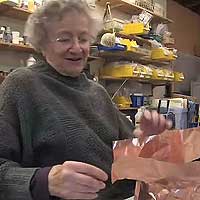
Over the decades that she has been creating enamel pieces, Schwarcz’s bowls and abstract vessels have come to be synonymous with the medium itself. Working from her Sausalito home studio, Schwarcz begins her process with a three dimensional maquette made out of paper. Next, she builds the vessel using thin copper sheets or metal mesh. She then has the form electroplated to render it sturdy enough to undergo the enameling process. Finally, she carefully applies enamel.
“I’m very drawn to subtle colorations and the quality of light, maybe because I live with a lot of fog — or maybe I like light behind a little bit of obscurity. Lots of people wish I’d do brighter, stronger things, but by now I figure, ‘I’m old and I can do what I want,'” she tells Spark with her characteristic chutzpah.
In January 2007, June Schwarcz, along with artists Bill Helwig and Bill Harper, was selected to exhibit at the Long Beach Museum in the first major retrospective of American enamel art held in the United States since 1959. Her work is held in the permanent collections of premier art institutions, including the de Young Museum, the Museum of Arts and Design in New York, the Metropolitan Museum in New York, the Museum of Fine Arts in Boston, and many others.
For the past 30 years, Martin Schwartz has gathered an impressive collection of rare 78 rpm records, many of them klezmer, a type of instrumental music originating from Eastern European Jews. In the 1970s, Schwartz met some Berkeley musicians who shared his passion for klezmer. They began learning from the old recordings and started a band called Klezmorim, fostering a burgeoning nationwide revival of the genre.
Meaning literally “vessel of song,” klezmer can be played on a variety of instruments – including trombone, clarinet, violin, accordion, tsimbl (a kind of hammered dulcimer), drums, bass viol – but is most commonly associated with the violin and the clarinet. These lead instruments are played in a style that mimics the human voice, common to liturgical singing styles.
Klezmer harkens back to a time when music was an integral part of daily life, supporting weddings, bar mitzvahs, and other sacred and secular celebrations. Today, Schwartz is on the Advisory Council of KlezCalifornia, which was founded in 2003 to celebrate klezmer music and Yiddish culture in the San Francisco Bay Area.
KlezCalifornia offers workshops on music, dance and singing. Participants learn the music by listening and playing back what they hear — no written music is handed out, which is true to the way klezmer has been passed down for hundreds of years. Spark explores this revival at KlezCalifornia shedding light on a tradition that has endured through time and hardships to prove its vitality and relevance to new generations.
As Silicon Valley’s next-door neighbor, San Jose is often considered prime stomping grounds for techies and corporate desk jockeys — not necessarily the sort of place one would expect to find a burgeoning underground art movement. But in 2001, a program called Phantom Galleries began filling empty downtown storefronts with the work of local artists, and San Jose has since become one of the Bay Area’s most art-friendly cities.
One of the most recent venues to open as part of the Phantom Galleries program is the Kaleid art gallery. This once-empty space in a downtown parking garage now shows the work of 60 local artists and holds a monthly reception for featured artists during the city’s ongoing South First Fridays Gallery Walk. This provides artists in and around San Jose with an opportunity to exhibit and sell their work close to home. Spark visits with two of these artists while they prepare for an exhibit at Kaleid.
Longtime South Bay artist and educator Charlotte Kruk N’Kempken’s dresses and capes made from thousands of candy wrappers may have yielded cease and desist letters from candy corporations over the years, but her intricately tailored designs have also won her myriad fans. “It sort of seemed to work for me to express some ideas that I had — kind of looking at our society and the way that we package everything and the way that we package ourselves to present ourselves to society,” Kruk N’Kempken says of her art.
Ema Harris-Sintamarian, a recent transplant to the Bay Area from Romania, works with another kind of recycled material — ideas. Inspired by magazine advertisements and popular culture, Sintamarian employs a variety of techniques, ranging from graffiti to architectural composition, to create larger-than-life drawings that are narrative and imbued with dreamlike fantasy.
“We were really pegged as software companies and a bunch of techies who stayed in our cubicles from 9 a.m. to 9 p.m., but the truth is that a lot of these people who work in those corporations are also artists,” says designer Cherri Lakey, one of the founders of Phantom Galleries.
Kaleid and the Phantom Galleries program are produced by Two Fish Design in partnership with the San Jose Downtown Association and the San Jose Redevelopment Agency. The South First Fridays Gallery Walk also includes Anno Domini, GreenRice Gallery, MACLA, San Jose Institute of Contemporary Art, San Jose Museum of Quilts & Textiles, Works San Jose and various other Phantom Galleries’ locations.