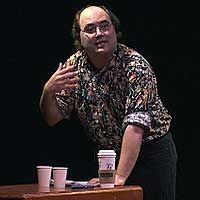
Monologuist Josh Kornbluth grew up in New York City. After working for several years as a journalist in Chicago and Boston, he relocated to San Francisco, where he performed his first monologue, “Josh Kornbluth’s Daily World,” in 1989. His second show, “Haiku Tunnel,” debuted in 1990. The film adaptation of “Haiku Tunnel,” was co-directed by Kornbluth and his brother Jacob. Sony Pictures Classics released the film nationwide in 2001. Currently, Kornbluth tours the United States performing “Red Diaper Baby,” “Haiku Tunnel” and “The Mathematics of Change.” Three of Kornbluth’s stage pieces have been collected in a book titled “Red Diaper Baby” (Mercury House).
In the Spark “Solo Acts” episode, we travel along the bumpy road of the creative process with Kornbluth. Two months before the debut of his latest full-length autobiographical monologue, “Love and Taxes,” he hasn’t written a word of it down on paper. Under the direction of The Z Space Studio’s David Dower, see how Kornbluth pulls it all together, mixing humor, angst and the IRS in his one-man show.
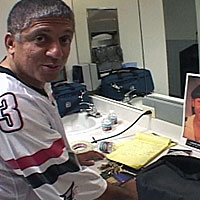
Comedian Donald E. Lacy tours nationally and internationally and has appeared on comedy programs on the BET and HBO networks. In addition, he founded the LoveLife Foundation in 1997 to provide at-risk Bay Area youth with supportive opportunities such as mentoring, multimedia training, and career development. Spark goes backstage with Lacy as he prepares to perform at the AfroSolo Arts Festival: An Explosion of Comedy.
Beneath all the smoke and lights of popular stage shows like “Riverdance” and “Lord of the Dance” lies the precise and fleet-footed drama of Irish step dancing, a traditional folk dance with a history hundreds of years old, that continues to be passed down from generation to generation.
With its lively and intricate music — jigs, hornpipes, reels — and a scrupulously unbending carriage of the torso, Irish dancing is uniquely demanding, requiring both a high level of skill and of concentration to create the right combination of mesmerizing rhythms and graceful movement.
As with many forms of folk dance, step dancing originated as an entertainment for social gatherings — dancers would often perform in barns or pubs, and sometimes dance on unhinged doors to amplify the rhythms of their feet. It was a natural part of local festivals of music, dance and storytelling, which evolved in the late 19th century into a kind of colorful competition known today as the feis.
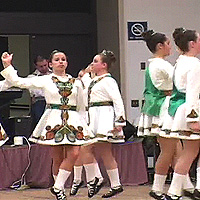
Scores of feisanna (the plural of feis) can be seen throughout the country every year, and in order to compete, a dancer must train at a school accredited by the organization that sponsors a feis, such as the Irish Dancing Commission. In “Roots,” Spark visits the San Francisco 2003 Feis to follow the progress of young Megan Anderson, a talented and dedicated young dancer from Healy Irish Dance Studio, as she dons her own brightly sequinned costume complete with wig, to keep up a highflying tradition.
Young performers from the Healy Irish Dance Studio, compete in annual San Francisco Feis under the tutelage of Ann Healy, her daughter Patti Ann Ranum and granddaughters Christina and Alisa Ranum. Healy’s grandfather, William J. Healy brought the traditions of Irish dance from his home in Kilcorney, Cork where a local feis has been held annually since 1910, and his son — Ann’s father — William P. Healy founded the still family-run dance studio.
Editor’s note: In 2004, Hula Halau Aloha Pumehana ‘o Polynesia officially changed their name to Halau ‘o Keikiali’i.
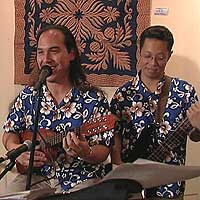
The flourishing presence of hula schools around the Bay Area is proof that distance makes the heart grow fonder. Spark spends time with Halau ‘o Keikiali’i‘s Käwika Alfiche, who has devoted his life to reviving ancient Hawaiian music and dance traditions which have been threatened by two centuries of assimilation.
Hula is a form of storytelling and dance that is traditionally learned with a teacher, who is called a “ke kumu.” Käwika Alfiche, the ke kumu of Halau ‘o Keikiali’i, has been teaching hula and other aspects of Hawai’ian culture for more than 10 years. Study of this art form includes “oli” (chanting), “mele” (traditional songs), “himeni” (modern songs), “nä mea hula” (arts, crafts and toolmaking), “lole hula” (hula regalia), ´ölelo (language) and “mo’olelo” (stories and storytelling).
The San Francisco-based Halau ‘o Keikiali’i is a “ka hälau,” a traditional Hawai’ian performance ensemble. Founded in 1994, their mission is to educate the general public about Hawai’ian people, customs, values and protocols by focusing on performance and preservation of Hula Kahiko, or ancient dance. The multi-generational group offers classes, stage performances and cultural events throughout the year.
Halau ‘o Keikiali’i keikialii.com Where: 415 423 Baden Ave., South San Francisco
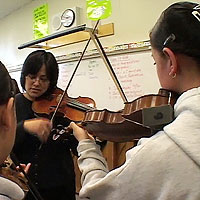
The Mariachi Youth Program, sponsored by the Mexican Heritage Plaza in San Jose, has been available to children in public schools since 1992. Mariachi, a style that combines Spanish composition with traditional indigenous music, has been passed on orally for generations in the Latino community. Spark drops in on the program while they train youth in trumpet, violin, guitar, guitarrón, vihuela and vocals.
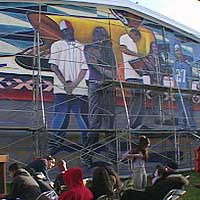
Founded in collaboration with the Boys & Girls Club of the Peninsula and the Ravenswood School District in March, 2001, the East Palo Alto Mural Art Project (EPAMAP), which began as a summer project, was created in response to the lack of teen enrichment programs and employment opportunities in East Palo Alto. Following the completion of two large murals in September 2001, and with tremendous encouragement from the community and project collaborators, EPAMAP ultimately expanded its summer program to include after-school programs which run throughout the year.
At EPAMAP, local youths are employed and trained in color theory, perspective drawing and painting. However, EPAMAP’s educational outreach does not stop at art. In addition to honing their art skills, students are also given the chance to develop research skills as they conduct directed research to assist in the design and fabrication of each mural. EPAMAP also give students the opportunity to use their mathematical capabilities as they rely on algebra, geometry, and physics to transform an artist’s sketch into a 60 foot mural. Besides providing educational enrichment, EPAMAP offers students a safe and supportive environment where they can earn money and acquire positive work experience.
In the “Next Generation” episode, Spark joins EPAMAP as they work on a mural for the Green Oaks Academy in East Palo Alto. Watch as over the course of 8 weeks, students contribute to every stage of the mural’s creation, from priming walls to voting on the mural’s design.
Youth Speaks is a San Francisco-based nonprofit dedicated to helping young people find their “voice” through programs led by experienced poets and writers; presentation opportunities; events and competitions; and collaborative experiences with other young people. One of the country’s premier youth programs in creative writing and spoken word, Youth Speaks has inspired young people to become poets and spoken-word artists and has provided them with valuable empowering experiences that help them hone their creative and critical thinking skills, writing skills, and presentation skills and abilities.
Founded in 1996 in San Francisco, the organization recently started sister programs in New York and Seattle. Youth Speaks offers workshops, in-school and after-school programs for young people; youth development; professional development for teachers; and performances and festivals open to the general public. The organization also publishes chapbooks (workbooks), CDs and videos. Each year, Youth Speaks records the incredibly popular Teen Slam for release on their “Bringing the Noise” CD.
Whether working with students or teachers, the goal of Youth Speaks remains the same: to encourage people to engage with spoken word; to develop their abilities to read, write, revise, edit and present their ideas; and to share themselves. In the Spark episode “The Next Generation,” we follow two young spoken-word artists, Yalie Kamara and Emiliano Bourgois-Chacon as they wrestle through the creative writing process and hone their writing and presentation talents to compete in the local poetry semifinals in hopes of winning a place on the San Francisco team that will advance to the next level.
Programs like those offered by Youth Speaks provide critical opportunities for young people to begin to consider what they think and believe about themselves and the world they live in, to organize their thoughts, to revise and edit their words, and to consider how to present themselves and their ideas. In the last 10 years, spoken word has received increased attention as the number of participants continues to grow and the important relationship between literacy and self-confidence and the spoken word is further elucidated. Every state in the country has spirited and motivated spoken-word organizations and opportunities, including poetry slams, retreats, contests, festivals and drop-in workshops for anyone interested. Many participate in local, regional and larger competitions and festivals where young people get a chance to hear the perspectives of youths they otherwise might never have heard or met.
Youth Speaks youthspeaks.org Where: 2169 Folsom St., San Francisco Phone: (415) 255-9035
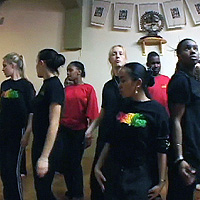
Spark talks with teens in programs at the Destiny Arts Center. The center, which offers a range of classes including martial arts, modern dance, theater and leadership training, has been building self-esteem and confidence in youth since 1988. By using movement to express emotion and incorporating performance into a violence prevention program, the center encourages self-awareness while simultaneously aiding in conflict resolution.
Destiny, which stands for “de-escalation skills training inspiring nonviolence in youth” provides a supportive, positive environment for Oakland-area children and teens. Its arts education program includes classes culminating in recitals by the participants, and many of its programs, such as Dance for Social Change, unite the arts and social issues. The center also hosts a multicultural youth performance company, which creates performance art pieces that critique contemporary society.
The highs and lows of dumpster diving are all too familiar to Northern California artist Ann Weber. Whenever she runs out of her medium of choice — cardboard — Weber hunts through hulking metal trash receptacles for more. Pieces with clear packing tape or panels faded by sun make Weber’s eyes light up. “It gives a nicer bit of variety in the texture of the piece,” she explains.
Weber’s lightweight, often large-scale pieces are a significant departure from the uniform bowls and plates she once made and sold through her own fine porcelain business in New York City. After years of working with clay, Weber became frustrated with heavy materials and the seemingly endless hours she spent churning out utilitarian pieces at her potter’s wheel. Weber then discovered cardboard, an ordinary medium that presented limitless challenges and possibilities. She still creates objects inspired by forms that look as if they could have come off a potter’s wheel, but her newfound medium allows her the freedom to work on a monumental scale.
Spark captures the process Weber uses to transform abandoned cardboard into voluminous, often towering, sculptures characterized by their rounded, organic shapes. The way Weber uses cardboard in her art differs from piece to piece. She can cut the cardboard into strips and weave it into shapes or wrap sections of cardboard in a circular fashion similar to the coil method used in creating ceramic pots. She then uses polyurethane to bind the pieces together into shapes.
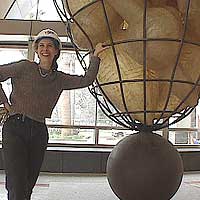
Weber was one of 24 California artists chosen to contribute art to a new five-building government complex in the state Capitol. To create this permanent installation, Weber faced a challenge. She had to create her sculpture using materials more durable than cardboard. With the help of the Manuel Palos studio in San Francisco, Weber was able to transform her original cardboard forms into lasting fiberglass reproductions. Now on display in Sacramento, the “Enough, Not Enough” project resembles a large basket overflowing with translucent forms and shapes.
“I wanted these forms to represent abundance,” Weber explains. “But also since the sculpture is precariously balanced, I wanted to talk about abundance or the lack of it, how some people have it and some people don’t.”
Ann Weber received a BA from Purdue University and an MFA from California College of Arts and Crafts, where she studied under Viola Frey. She has had solo exhibits across the country including at the SFMOMA Artist Gallery and Greenwich House Pottery New York City. She has created commission pieces in California and in Washington state (“Slow Life” for the Seattle Arts Commission).
Nikolas Weinstein was born in New York City into a family involved in the visual arts. His aesthetic derives from a long-standing interest in the natural world. The influence of organic forms on his work dates to a young age, established during his internships at the American Museum of Natural History and the Scripps Institution of Oceanography. After moving to San Francisco, Weinstein briefly worked as a graphic designer’s assistant before founding Nikolas Weinstein Studios.
Nikolas Weinstein and the artists in the Nikolas Weinstein Studio produce glassworks for commissions, custom projects and limited editions series. The glassworks range in style, form and color, including architectural and contracting works, objects, and lighting pieces. The pieces vary greatly in size, from just a few pounds to multiple tons. The works that Nikolas produces at the studio are primarily “natural” forms that resemble the organic shapes and colors of the natural world.
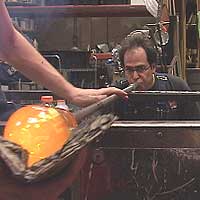
Glass is a difficult and temperamental material to work with, requiring artists to work quickly with precision under hot and dangerous circumstances. To create works of large-scale, cohesive and familiar teamwork is essential. An integral and important part of Nikolas Weinstein’s work is the collaborative teamwork of the studio. Similar in organization to historical glassmaking guilds and studios, Nikolas Weinstein Studio consists of artists of different skill levels bringing with them skills in design, fabrication, collaborative studio work and fine arts that enhance the range of the studio’s work and ability.
In the Spark “Taking Craft to the Limit” episode, we watch the artist and the studio team work on two pieces: a large architectural chandelier piece and a commissioned work of strung glass beads. The “Pariser Platz 3 Chandelier” (named after the street on which the building is located) was commissioned by renowned architect Frank Gehry to hang in the atrium of the DZ Bank in Berlin, Germany. Weighing two and half tons, the chandelier consists of 34 glass panels suspended on cables across a 2,000 square foot glass ceiling. Despite the word “chandelier” in its title, the panels are not lights, but are designed to enhance the openness of the atrium by dispersing light without obstructing the view through the glass.
Like many artists who push the boundaries of traditional materials, Weinstein continuously challenges himself to invent new processes to accomplish new ideas. For the chandelier, the studio built a custom kiln to arch the panels into the desired shapes. For the beaded piece, Weinstein created a strong armature of metal wire from which to suspend the blown glass beads. In both cases, Weinstein and the studio had to solve a myriad of technical and design problems in the execution of the works, challenging the usual fabrication methods of the material.
Nikolas Weinstein Studios nikolas.net Where: 1649 Valencia St., San Francisco Phone: (415) 643-5418; studio visits are welcome, please call for an appointment.
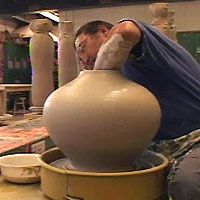
Although master ceramicist David Kuraoka lives in San Francisco, he has been named a State Living Treasure in Hawaii, where he was born and returns to several months each year. Kuraoka throws enormous pots weighing 100 pounds and more, a process that requires an extraordinary level of skill, patience and strength. Spark watches him at work in his studio at San Francisco State University, where he is a professor of art and head of the ceramics department.
Editor’s note: Rene di Rosa passed away on October 3, 2010.
Having made his fortune growing some of Napa Valley’s most sought-after grapes, Rene di Rosa transformed his Napa Valley property into an art preserve devoted solely to Bay Area art. Spark traveled along with di Rosa as he scouted galleries and studios, seeking out artists and artworks that appealed to his eclectic tastes.
Rene di Rosa was born in Boston in 1919. After graduating from Yale University and serving in the Navy, di Rosa moved to France, where he started collecting art. Today, the collection of di Rosa and his late wife, Veronica, consists of more than 2,000 works of art by more than 750 contemporary Bay Area artists.
In 1960, di Rosa purchased 460 acres in Carneros Valley near Napa. A portion of this land has been established as the di Rosa Preserve to house his art collection and serve as a wildlife refuge. The preserve includes three large galleries and a sculpture meadow that are open to the public. Migratory birds, vineyards, ancient olive trees, a 35-acre lake, a 130-year old stone winery and an extraordinary art collection amassed throughout the last four decades makes the di Rosa Preserve an unparalleled haven where art and nature share the landscape.
Reservations are required.
From the di Rosa Web site: The art on display may not be age appropriate for all groups. Children must be under adult supervision at all times.
With more than 200 pieces, Richard and Pamela Kramlich have one of the world’s largest private collections of video and new media arts. In the “Collectors and Their Collections” episode, Spark gets a rare insider’s look at what it takes to acquire, preserve, and display this challenging contemporary art form. Plus, tour the Kramlich home and comb the city for new works with their private curator, Christopher Eamon.
The Kramlichs have been collecting film and video-based art since the late 1980s. Their collection includes pieces by such historical figures as Vito Acconci, Dara Birnbaum, Marcel Broodthaers, Dan Graham and Bruce Nauman as well as works by leading contemporary artists including Matthew Barney, Stan Douglas, Steve McQueen, Mariko Mori, Keith Tyson and Jeff Wall.
In 1997, the Kramlichs established the New Art Trust to advance the media arts through the support of research and scholarship in the field. This foundation also collects and maintains new media art installations between San Francisco and New York Museums of Modern Art and the Tate Modern in London.
Editor’s note: Ali Akbar Khan passed away on June 18, 2009.
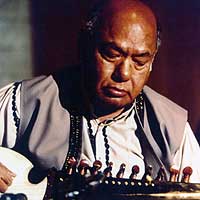
In his native India, Ali Akbar Khan is considered a national living treasure. This revered figure has passed down his musical mastery to more than 10,000 students worldwide. With a teaching style very distinct from Western classical musicians, Khan composes new “ragas” (melodies) on the spot as his students listen and try to play by ear. Spark sits in on a class at the Ali Akbar College of Music and watch Khan in concert to experience his unique melody-making.
Born in Bangladesh in 1922, Khan began his musical studies at the age of 3. Later, concentrating on vocals and the sarode (a lute like instrument made of 25 metal strings), Khan became the court musician to the Maharaja of Jodhpur and made the first Western LP recording of Indian classical music. Throughout his career, he has also composed and recorded music for international films.
In 1956, Khan founded the Ali Akbar College of Music in Calcutta, India. Almost a decade later, recognizing the extraordinary interest and abilities of his Western students, he established a college of the same name in San Rafael, California, where he currently maintains a teaching schedule of six classes a week for nine months out of the year. Khan continues to perform all over the world and has earned some of music’s highest honors, including the National Heritage Fellowship from the National Endowment for the Arts.
Over a lifetime of practice and performance, sarode maestro Khan has learned about 75,000 different ragas.
Ali Akbar College of Music aacm.org Where: 215 West End Avenue, San Rafael Phone: (415) 454-6264