Asides

Conceição Damasceno

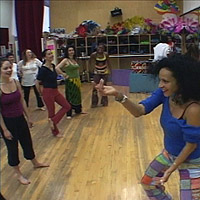
Conceição Damasceno brought the spirit of Carnaval with her when she came to the San Francisco Bay Area from Brazil. She teaches different styles of Brazilian dance and is president and artistic director of BrasArte, which is a nonprofit organization created to preserve Brazilian music, dance, and culture. Spark heads to Damasceno’s class and learns about the meaning of Carnaval in the life of the dancer/choreographer.

  • Array

Gospel Travelers

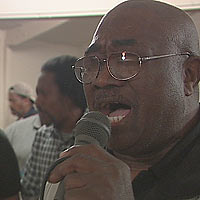
Though they’ve been playing together only a short time, the Gospel Travelers are quickly gaining a reputation as one of the country’s most exciting and inspiring contemporary gospel groups. Formed in 2003 in San Jose by Deacon George Pierce and led by Reverend Milton “Bill” Johnson, the Gospel Travelers have toured extensively in the southern United States and played in churches and clubs all over the Bay Area as well as at the All Faiths Gospel Festival. The Spark episode “Ensembles” offers a glimpse into Northern California’s hardest-working gospel group as they celebrate their one-year anniversary.

Born to a poor family in rural Arkansas, Johnson has endured more than his share of hardships. He left school at the age of 11 to help support his family by picking cotton and didn’t learn to read until just recently, at the age of 61. As a young man, he toured the South as a gospel singer until two of his bandmates died tragically. He moved to California, where he raised six children, working as a mattress hauler to support them. Johnson credits gospel music with having been his one solace throughout, allowing him to maintain his faith and trust in a higher power.

Gospel music uses traditional slave-era spirituals and melds them with the driving rhythmic emphasis that is characteristic of blues and early jazz. Traditionally, when it was performed in churches, gospel music was sung by a choir with individual soloists occasionally taking the spotlight. Often performed in a “call and response” form, the choir or the soloist would repeat or respond to the lyrics sung by the other, with the soloist improvising embellishments of the melody for greater emphasis. As the music developed, these soloists became more and more virtuosic, performing with wild emotion to express the spiritual ecstasy the music was intended to evoke. In the 1950s and 1960s, gospel music had an enormous impact on the development of R&B and soul music, which channeled gospel’s spiritual intensity into nonreligious themes.

In the spirit of the community-based roots of the music they play, the Gospel Travelers have become more than a musical group: To one another, they are a makeshift family, helping each other out in any way possible in difficult times. Johnson has taken on the role of spiritual leader to the other musicians and often gets calls from group members looking for guidance and assistance.

Though performing primarily in churches, the Gospel Travelers have recently moved their act to more secular venues in an attempt to reach a wider audience. Spark follows the group as they play Biscuits and Blues, a blues club in downtown San Francisco. Their hard work is beginning to pay off: Thanks to recent recordings and a groundswell of support from local audiences — both religious and secular — the group not only has many upcoming church performances booked, but also has been invited to play at the internationally acclaimed Monterey Bay Blues Festival.

  • Array
  • Array
  • Array
  • Array

San Francisco Symphony Chorus

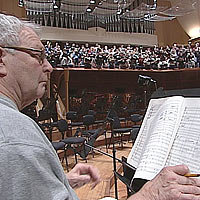
They come from all over the Bay Area, commuting into San Francisco from as far away as the Central Valley. Rehearsing up to three times a week and performing at least 26 times a season (in 2004, they will have performed 32 concerts), they sing texts in French, Russian, German and Italian, a task complicated enough to require the help of voice coaches and linguists. They are the 200 members of the San Francisco Symphony Chorus, making it one of the largest of its kind in this country. Even more remarkable is the fact that 170 of the choristers are volunteers.

What makes people dedicate themselves to a task such as this? Perhaps it is the prestige of being a member of a celebrated singing ensemble. Or perhaps, more fundamentally, it is the opportunity to take one’s voice and blend it in with a couple of hundred others that can’t be replicated in any other setting. Spark goes behind the scenes while the San Francisco Symphony Chorus rehearses and performs Gabriel Faure’s “Requiem” at Davies Symphony Hall in San Francisco.

More about the San Francisco Symphony Chorus
The San Francisco Symphony Chorus was established in 1972, created at the request of Seiji Ozawa, then the music director of the San Francisco Symphony. Louis Magor served as the chorus’s director during its first decade. In 1982, Margaret Hillis, from the Chicago Symphony Chorus, assumed the ensemble’s leadership, followed by Vance George in 1983 and then Ragnar Bohlin in 2007. Since then, they have sung under such conductors as Michael Tilson Thomas, Laureate Herbert Blomstedt, Kurt Masur, Wolfgang Sawallisch and Robert Shaw.

San Francisco Symphony
sfsymphony.org
Where: Davies Symphony Hall, 201 Van Ness Ave., San Francisco
Phone: (415) 864-6000

  • Array
  • Array

Sonos Handbell Ensemble

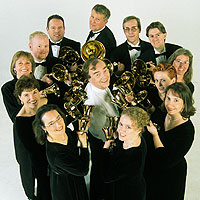
Watching the members of the Sonos Handbell Ensemble prepare, you might think that they were getting ready to play in a major sporting event — rather than preparing to play music: taping fingers, wrapping wrists, stretching, and putting on gloves. But Spark learns that being part of a handbell ensemble is more challenging and fun than anyone might expect.

The ensemble was founded in 1990, and hopes to move handbells out of the church-only realm and into the world of more mainstream contemporary music. The group has toured nationally, recorded three CDs and performed with the San Francisco Symphony Chorus, Oakland East Bay Symphony and San Jose Symphony.

  • Array

Cal Performances and Robert Cole

Since he became director of Cal Performances in 1986, Robert Cole has turned the performing arts presenter of the University of California, Berkeley, into a venue that rivals New York’s Carnegie Hall and Washington, D.C.’s Kennedy Center. The Spark episode “Movers and Shakers” offers a glimpse into one of the country’s most renowned performing arts centers.

After studying music at the University of Southern California, Cole began his career as a high school music teacher and part-time conductor. As a conductor, he became interested in other aspects of the orchestra, raising money and organizing a board of directors for a little opera company and a ballet company. In the 1970s, Cole moved from his native California to New York, where he took the job of associate conductor under Michael Tilson Thomas at the Buffalo Philharmonic and began presenting companies like the New York City Ballet and the Dance Theater of Harlem.

When he came to Cal Performances, Cole saw a unique opportunity to turn U.C. Berkeley’s Zellerbach Hall into the premiere performing arts theater in the region, attracting acts accustomed to playing the most prestigious venues of London, New York, Paris and other cultural centers. He also set out to expand the number and variety of performances, and over the course of his tenure has increased annual ticket sales nearly tenfold, from $700,000 to more than $6 million.

In 1991, Cole booked a little known mezzo-soprano, Cecilia Bartoli, who has since become internationally celebrated as one of the greatest opera talents of her generation. In recent years, Cole has taken on the role of producer as well, enabling artists like choreographer Mark Morris to create new works whose world premieres are presented by Cal Performances.

Cole has been able to achieve this remarkable expansion in part by booking a combination of world-renowned performers and emerging young talents. Every January, Cole travels to the Arts Presenters Conference in New York, where he selects acts from among the thousands that meet there. Over the years, the New York conference has enabled Cole to bring performers from more than 50 countries to Berkeley, attracting new audiences to Cal Performances from the diverse ethnic communities that are characteristic of the Bay Area.

Cal Performances
calperfs.berkeley.edu
Where: U.C. Berkeley, Zellerbach Hall, Berkeley
Phone: (510) 642-9988

  • Array
  • Array
  • Array
  • Array

Community School of Music and Arts

Enter the world of Angela McConnell, executive director of the Community School of Music and Arts (CSMA) in Mountain View. Her task: to raise almost $9 million within three years. Hired July 2001 in the depths of the dot-com crash, two months before September 11, McConnell was charged with raising the funds necessary to give the CSMA something it has never had in its 36 years of existence: a permanent home to call its own.

Founded in 1968, the CSMA has served Silicon Valley residents for more than three decades, already providing education for 325,000 Bay Area residents — adults and children alike, following its motto, “Arts for All.” The school offers a variety of classes and programs in its effort to accommodate the region’s cultural diversity. Examples of these include after-school classes, private lessons, free family concerts, community outreach events and the Arts in Action programs in local schools.

The unfortunate truth is that even in the world of art, money makes the world go ’round. Add to that a soft economy, a quarter-century of Prop 13 in California (a law that held down property values, cutting off a major source of revenue for the state government and leading to drastic cutbacks in arts education), and you’ve got yourself a local institutional maelstrom. That McConnell succeeded in raising the funds, let alone within three years, is a great victory for the community. But it could also be seen as a natural extension of McConnell’s own interests — she sings opera, and her twins, Emily and Jake, currently take classes at CSMA.

In the Spark episode “Movers and Shakers,” see how McConnell makes everything happen. A usual day for her starts at 5:30am with some time at the gym that includes networking. Then she’s off to meetings with local figures, such as the mayor of Mountain View. Also on her agenda: seeking the attendance of Governor Arnold Schwarzenegger at a CSMA event and obtaining funding from giants like the Silicon Valley-based Google. In the end, it is her hard work and her ability to inspire the members of her own organization that has made McConnell one of the most formidable fund-raisers of her kind — and a pricelessresource for the advancement of arts in the Bay Area.

  • Array
  • Array
  • Array

East Bay Center for the Performing Arts

East Bay Center for the Performing Arts (EBCPA) was founded in 1968 by five teachers to provide music lessons for 45 students in a rented church. Since then the organization has grown to include many other performing art forms that reflect the diverse range of the communities on the East Bay. Spark visits EBCPA and talks with the center’s artistic director, Jordan Simmons.

  • Array

Tamalpais High School’s Conservatory Theater Ensemble

In the Spark episode “First Person Narrative,” visit the Conservatory Theater Ensemble (CTE), an award-winning theater education program that offers a four-year training program in all aspects of theatrical production. Based at Tamalpais High School, whose drama program boasts the participation of almost a third of the students, the CTE is a student-run theater company that draws particularly committed drama students and instills within them a professional approach to theatrical production. The CTE program has opened the door for many to pursue a variety of careers in this field.

Under the direction of guest artist John Warren, students develop, write, produce and perform an original play. The current production, being put on by 13 students, is “Vaulting the Median: Stories of Protest on Camino Alto.” The production examines social protest in Mill Valley through the stories of the town’s residents. As a documentary theater project, the play’s dialogue is scripted entirely from interviews conducted by the students themselves. On stage, the actors speak the words of the people they interviewed, seeking to understand and and accurately represent their views. The Spark story follows the students through the entire development of this production, leading up to opening night. Through this process, the production team gains knowledge of Mill Valley’s rich history and a better understanding of the complex social issues that surround the act of protesting.

“Vaulting the Median” echoes another CTE documentary theater piece, “Patterns of Interference: The John Walker Lindh Project.” Similarly, the play was based upon the words of the local residents of Marin County and scripted from more than 50 interviews conducted by students to elicit an understanding of the residents’ responses to the issue. Also directed by Warren, the intention was to articulate the multiple opinions in a dynamic and accurate way and in so doing, to promote a deeper understanding of the controversy. Warren is committed to this principle of dialogue and debate, offering ordinary people the chance to be heard.

The CTE is one of the most comprehensive public-school theater programs in the country. Students are trained in all aspects of the theater, from fund-raising and business management to production and stage management — together with all the technical skills involved. In its use of ensemble performances, the CTE also teaches students a collaborative approach to theater and the benefits of effective teamwork. Everyone, from actors to playwrights to backstage crew, contributes to the power of the performance.

Array

  • Array
  • Array
  • Array

Porchlight

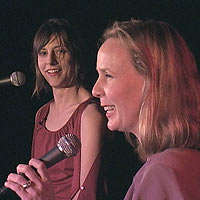
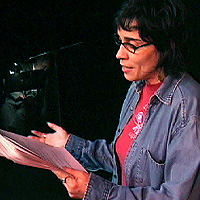
Every month Beth Lisick and Arline Klatte organize Porchlight, a venue for unscripted and unrehearsed storytelling. The Spark episode “First-Person Narratives” follows Lisick and Klatte as they put together an evening of testimonials at San Francisco’s Café du Nord that share the theme “I Quit.”

Both of Porchlight’s organizers have long been involved with the art of storytelling. Klatte is a widely published freelance journalist and former lifestyles editor for the “Moscow Times,” and Lisick has done performance art, written fiction and poetry, and works as a columnist for SF Gate. But Porchlight is not a venue for experienced storytellers. In an attempt to present a more spontaneous, everyday kind of tale telling, Lisick and Klatte consistently bring together groups of people who, though comfortable enough to get up on stage and speak before a full house, are not professional performers. Stories are unscripted and performers are permitted only one rehearsal in front of Porchlight organizers and fellow presenters.

Lisick and Klatte pride themselves on their commitment to selecting performers that come from varying backgrounds and experiences. And certainly, one of the greatest strengths of the Porchlight series is the broad range of people who contribute. In addition to a number of emerging local literary talents, past storytellers have included cartoonist Keith Knight, a 70-year-old mushroom hunter, a tow truck driver, a forensic scientist and formal mayoral candidate Matt Gonzalez.

Performers are encouraged to reveal as many details and feelings as possible, as Lisick and Klatte have found that audiences respond to authenticity. Lisick and Klatte also have been pleased to discover that such testimonials help to create a sense of community. In the breaks between the storyteller’s stories audience members often share their own, similar tales.

  • Array
  • Array
  • Array

Marga Gomez

Nationally touring comedienne and actress Marga Gomez writes and performs solo shows based primarily on biographical material. Spark goes backstage with Gomez at The Marsh as she discusses her transitions between the worlds of stage comedy and Hollywood and workshops “Los Big Names,” which is about her experience growing up in a show-business family.

  • Array
  • Array

Gypsy Snider

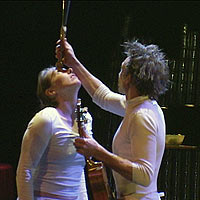
Circus artist Gypsy Snider is familiar with the circus arts. At age 4, she began performing in the Pickle Family Circus in San Francisco with its founders, her mother Peggy Snider and stepfather Larry Pisoni. Since then, she has studied theater and circus arts at the world-famous Teatro Dimitri in Verscio, Switzerland, and has enjoyed a full career as a performing artist in a variety of circus companies, including the world-renowned Cirque du Soleil. The Spark episode “All in the Family” follows Snider as she mounts a performance with her new troupe at San Francisco’s Palace of Fine Arts Theatre.

Snider has recently joined forces with six other passionate and talented artists to create Les Sept Doigts de la Main (the seven fingers of the hand), a Montreal-based company that tours internationally. All seven members were at the height of their careers, performing with Cirque du Soleil, when they decided to leave the big arena for a smaller company dedicated to a new kind of circus performance.

The concept behind Les Sept Doigts’ work is to create a show that combines the wonder of circus performance with the reality of people’s everyday lives. The show presents the performers as seven real people interacting with each other, learning to live together, and entertaining one another. The set resembles a simple, inner-city apartment and the performers are costumed in just T-shirts and long underwear, and they use minimal makeup.

Without elaborate sets and costumes to distract them, audience members are able to focus on the virtuoso performances of the players. By incorporating juggling, aerial acts, clowning, contortion and hand balancing into their interactions, performers are able to play off the individual strengths and talents of each other, transforming real-life situations into something fantastic.

Just as the circus was inseparable from her childhood family life, the adult Snider also integrates family and performance. She is married to Patrick Leonard, a classically trained performer and fellow member of Les Sept Doigts, and together they are raising their young daughter, Laska, within the collective. Laska goes on the road with her parents, but has not been put in the show. Although Laska is surrounded by circus performers and is learning acrobatics, Snider wants her daughter to make her own decisions about her future.

Array

  • Array
  • Array
  • Array

Sahara and Elisabeth Sunday

“The New York Times” has called her “the answer to the book industry’s multicultural dreams.” “If There Would Be No Light: Poems from My Heart” was published when she was 8 years old; the forward was written by Gloria Steinem. Her work has been praised by the likes of Phoebe Snow, Bill Cosby, Quincy Jones and Bonnie Raitt. This kind of literary accomplishment would be enough for most kids in middle school; however, writing is only a part of artist Sahara Sunday Spain‘s creative arsenal. In addition to being an accomplished poet, Spain is a dancer, a songwriter, a singer, a visual artist and a globe-trotting social activist.

One cannot look at Spain without looking at her environment as well. Her talents, impressive regardless of context, might have languished without the presence of her mother, professional photographer Elisabeth Sunday. It was Sunday’s decision to raise Spain in a world scrubbed clean of the noxious influence of popular culture. Without television, electronic toys or junk food to impede her creative development, the young poet was speaking in complete sentences by 14 months. Spain was 5 years old when she wrote her first poem, entitled “Mother’s Milk,” which reads, “When I drink mother’s milk/my heart sweats with love.”

As for her activism, Spain keeps with the family spirit. Her father is Johnny Spain, a former Black Panther who has spent a long time in jail and is no longer an active presence in his daughter’s life. Nevertheless, she carries on his tradition of activism. She has taken it upon herself to aid village girls in Mali by creating the Kah-Monno group — a name taken from the one she was given by Mali elders. “Kah-Monno” means unity and understanding through conversation. Spain plans to fund the education of 35 girls there, hoping to use the proceeds from her sale of rights to a song she wrote, “The Night of the Day.”

If you’re an artist with a family, working to nurture your child’s creativity while sustaining your own can become two sides of the same coin. Sunday herself notes, “We are a creative family. It’s easy to be inspired.” Indeed, in addition to having a photographer for a mother, Spain has a grandfather who’s a stained-glass designer, a grandmother who’s a potter and a great-grandfather who’s a painter. For this reason, Spain’s second book of poetry, “River of Ancestors,” is an homage to her deeply artistic heritage.

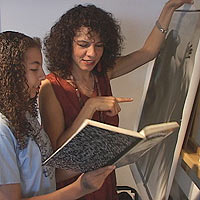
In the Spark episode “All in the Family,” spend a day in the life of Sahara Sunday Spain and her mother Elisabeth Sunday, the latter working hard to make it as both an artist and a single parent, having to squeeze her creativity in between dropping Spain off at school in the mornings and picking her up in the afternoon. Learn about the artistic stream running through Spain and Sunday from their relatives. Above all, see that behind these artists is a loving family to support and inspire them.

  • Array
  • Array
  • Array

La Familia Peña-Govea

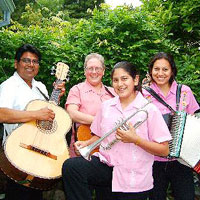
Michael Govea is a Latin composer and artist, and leader of other bands like Los Compas and Cascada de Flores. He met a musician and lawyer named Susan Peña more than twenty years ago. Today, the two of them and their daughters Rene and Cecilia form, the band known as La Familia Peña-Govea, and play Latin music around the Bay Area. They have released two recordings, “Rene at 15” and “Cohetes.”

Spark joins the the family as they practice in their living room: each member alternates between guitar, accordion, vocals and percussion. Playing primarily Tex-Mex and Colombian music, La Familia Peña-Govea has recorded two CDs and appears at festivals and events around Northern California.

  • Array

BAYCAT

“Environment is the cornerstone of community,” says Bill Strickland, co-founder of San Francisco-based Bayview-Hunters Point Center for Arts and Technology (BAYCAT). “In my view, there can’t be any change unless the fundamentals of the environment are in place to encourage that growth and creativity.”

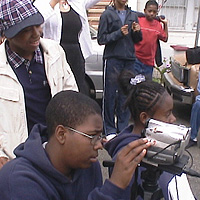
In the Spark episode “Making Room for Art,” follow Villy Wang, BAYCAT’s executive director and co-founding team member, as she helps a group of students create a film project entitled “Hunters Point Heroes,” which documents members of the local community who have made a difference in these children’s lives — figures such as Bayview filmmaker Kevin Epps, who, like the students, has used film to bring about awareness of the neighborhood in all its forms. See how the process of making art empowers these students, and ultimately their families and their community, to see themselves in a different light.

The environment, like art, is inherently intangible, simultaneously fragile and a powerful force for change. Luckily for the residents of Bayview-Hunters Point, some prominent figures in the arts are working with the BAYCAT team to increase the role of art in the neighborhood, not only for art’s sake, but also to bring about social and economic uplift. Strickland, a ceramic artist and social entrepreneur who has spearheaded social initiatives in the past, teamed up with jazz legend Herbie Hancock, one of BAYCAT’s board members, for this project. “We know that in the next millennium, the convergence of art and technology is going to be a big factor,” says Hancock.

BAYCAT focuses on youth and adult programming, training participants for jobs and business opportunities in fields that San Francisco is best known for: arts, graphic design and media, biotechnology and medical technology, the culinary arts, and the financial sector. With major funders such as the Skoll Foundation and the Pierre and Pamela Omidyar Fund, the BAYCAT team is realizing its mission, a school that conducts art and technology programs to inspire inner-city youth’s and adults to become not just artists, but business-savvy individuals who will be an asset to their communities. BAYCAT envisions an accessible education and training system that instills every individual with the self-confidence and self-respect needed to define and achieve his or her own life’s dream.

BAYCAT’s 5,000-square-foot site is currently being renovated. When completed, it will serve as a state-of-the-art multiuse, multidimensional learning and presentation environment. BAYCAT is a powerful example of bringing together training, education, art, music, culture and enterprise as a community focal point to enrich one of the most underserved districts in San Francisco, providing opportunity for a neighborhood greatly in need of it.

  • Array
  • Array
  • Array