Asides

Oxbow School

Since 1999, The Oxbow School, in Napa Valley, has been giving young people from around the country an opportunity to develop their artistic skills in advanced programs that go beyond those offered in high schools. In the episode “The Young and the Restless,” Spark follows the progress of a group of students from their arrival on campus to graduation day.

Ann Hatch, who also founded San Francisco’s residence gallery Capp Street Project, conceived The Oxbow School as a way for high school students to study art in a professional environment, interacting with living artists and surrounded by other students interested in making art. Oxbow’s program mirrors those of college undergraduate and graduate programs, creating a close-knit community of artists who work together and exchange ideas about art. Students get to participate in critique sessions in which they present their work in front of teachers and peers, who respond with questions, constructive criticism and suggestions.

Oxbow offers small programs, with only 48 students and eight faculty members attending each semester. The result is an intimate environment, in which students interact on a daily basis, living in residence together, taking meals together and exploring the Bay Area arts scene together. As a way of expanding the classroom outside the school’s walls, students are taken on field trips to art institutions and art colleges in the region, as well as to the studios of working artists to get a glimpse into the workings of the contemporary art scene.

At the end of the semester, students present a final project, the culmination of the skills and knowledge that they have gained over the preceding months. Parents come to visit from all over the country and are often surprised by the high level of work produced by their children. For many students, the Oxbow program has been a transformative experience, providing them with new ways of thinking about their work and an in-depth understanding of the art world. While some may go on to become working artists, many others have found that the experience has made them more aware of other creative outlets they could pursue professionally, such as music, video production and fashion.

Array

  • Array
  • Array
  • Array

SFJAZZ All-Star High School Ensemble

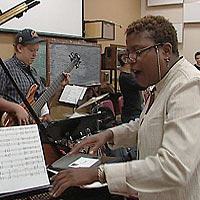
The SFJAZZ All-Star High School Ensemble, a program of SFJAZZ, has proven to be fertile ground for some of the most promising jazz talents in the Bay Area. For the hundreds of students auditioning for the 20-piece ensemble, the experience provides a unique opportunity to play with other accomplished student musicians. Spark shows the group from audition to performance in the episode “The Young and the Restless.”

Auditions are held every September, and Spark follows two students, drummer Ruthie Price and trombonist Emma Kelp-Stebbins. Dr. Dee Spencer, director of the ensemble, talks about her responses to both young women’s auditions and why they were accepted. Proud of all her students, she states, “I couldn’t play like that when I was that age. To have your own voice at 16 or 15 — that’s remarkable.”

For the young players, the prestige of being part of this ensemble is inspiring. Price says that “being on stage is like the home for all performers — where everyone sees you play your best or your worst.” Kelp-Stebbins says one of the main reasons she pursues jazz is that it is one of the hardest kinds of music, and “you can literally play it your whole life and always be learning something new about it and yourself because it is so complex.”

When the final ensemble has been assembled, Dr. Spencer leads and directs them, ensuring that they sound as polished as possible in the very short period of time they have to prepare for two high-profile events. Dr. Spencer chooses a challenging arrangement of the tune “Oleo,” by Sonny Rollins, one that many adult groups would not perform. Knowing her students’ abilities and their dedication, Dr. Spencer is uncompromising and has faith that it will come together.

More about SFJAZZ
Founded in 1983 under the name of Jazz in the City, the organization adopted its new identity as SFJAZZ in late 1999. SFJAZZ is dedicated to the growth of jazz and jazz audiences, celebrating this music as a living art built on a constantly evolving tradition, with concert performers ranging from acknowledged masters to the newest and most promising talents on the international, national and Bay Area scenes. Through the SFJAZZ Meet the Masters program, the students participating in the SFJAZZ All-Star High School Ensemble enjoy regular workshops, master classes and mentoring sessions with leading jazz artists, such as Branford Marsalis and Toshiko Akiyoshi, as well with as the SFJAZZ Collective. The SFJAZZ All-Star High School Ensemble have played in Jazz at Lincoln Center’s Essentially Ellington Competition and the San Francisco Jazz Festival and in top professional jazz venues throughout California.

Array

  • Array
  • Array
  • Array
  • Array
  • Array

‘Til Dawn

‘Til Dawn is a co-ed teen a cappella singing group. They perform popular songs as well as original compositions written by the group’s members and have recorded several CDs. ‘Til Dawn is one of five programs sponsored by Youth in Arts, which has provided arts education and opportunities to Bay Area youth since 1970.

  • Array

Kent Nagano

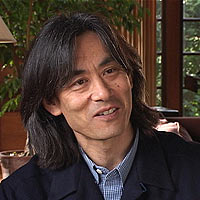
On the Spark episode “World Premieres,” encounter things previously unseen and unheard. Join maestro Kent Nagano and the Berkeley Symphony Orchestra (BSO) as they work with young Japanese composer Naomi Sekiya to bring her brand-new concerto for two guitars to fruition as part of the BSO’s first Composer-in-Residence program.

Most great musicians start very early in life, but not so for Sekiya. Having grown up in a small rural Japanese village, Sekiya had never played an instrument or written a single note of music. It wasn’t until receiving a scholarship and attending college that she enrolled in her first music course. She now holds degrees from UCLA and USC, and her career in music has exploded. She is catching the eyes of conductors and orchestras worldwide.

Sekiya first met the French-Spanish guitarists Gaëlle Chiche and Francisco Bernier, who perform as duo ASTOR, in Italy at Alessandria’s International Competition. She was so impressed by their playing that she decided to create a work for two guitars and a large orchestra. The world premiere of her “Double Guitar Concerto” marks the second work by Sekiya included in the BSO’s 2003-04 season as part of her residency.

Maestro Nagano, the music director and conductor of the Berkeley Symphony Orchestra since 1978, is a champion of undiscovered and cutting-edge works. Nagano has conducted the world premieres of John Adams’s “Death of Klinghoffer” and Debussy’s unperformed opera “Rodriguez et Chimene.” In 1997, he presented the world premiere of Leonard Bernstein’s posthumous “White House Cantata” with the London Symphony and performed and recorded Benjamin Britten’s original — and neglected — four-act version of “Billy Budd” with the Hallé Orchestra.

The partnership between Nagano, Sekiya and the entire Berkeley Symphony Orchestra hopefully marks the beginning of a productive Composer-in-Residence program, bringing new works to ever-greater visibility and rewarding risk and innovation with prominence.

More about the Berkeley Symphony Orchestra
The Berkeley Symphony Orchestra has a history of operating off the beaten path. Founded by Thomas Rarick in 1969 as the Berkeley Promenade Orchestra, the orchestra members abandoned the traditional tuxedo in favor of street clothing and opted to performed in unusual settings, such as the University Art Museum in Berkeley. They later adopted formal wear, but have never lost their pioneering spirit, presenting programs that comprise rarely heard 20th-century scores. The orchestra became the Berkeley Symphony Orchestra in 1981, and in 1989, it moved from the 750-seat First Congregational Church to UC Berkeley’s 2,015-seat Zellerbach Hall.

  • Array

John O’Keefe

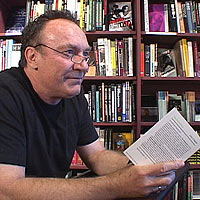
In the episode “World Premieres,” Spark talks to John O’Keefe, a San Francisco playwright who’s been on the scene for decades. From the first draft to final rehearsals, from his home in the artist community Project Artaud to the stage at Cinnabar Theater, watch the development of his new play, “Queer Theory,” set to make its world premiere in Petaluma.

“Queer Theory” is the story of the meeting of two women following separate paths that have lead them to the birthplace of the Brontës. One woman, Rebecca, is a ruthless power broker in the academic world; the other, an Iowa farm woman. These seemingly mismatched characters eventually become roommates.

That the farm woman is from Iowa is perhaps a personal touch — O’Keefe himself is a native Iowan. Born in Waterloo, Iowa, in 1940, O’Keefe was drawn first to singing. He attended the University of Iowa on a vocal scholarship. However, O’Keefe switched tracks in college, going on to graduate with a B.A. in philosophy and an M.F.A. in theater arts. He then became involved with the Center for New Performing Arts and the Iowa Theater Lab.

O’Keefe came to San Francisco in the early 1970s, beginning an affiliation with Magic Theater that continues to this day. O’Keefe also co-founded the Blake Street Hawkeyes, a performance-lab ensemble based in Berkeley. In 2000, O’Keefe embarked on a residency with Cinnabar Theater to create a trilogy exploring the ethos and personal traumas of the World War II era. “Queer Theory” is the fourth O’Keefe play to premiere at Cinnabar — the others being “Glamour,” “Times Like These” and “Spook.” The relationship allows O’Keefe to test his new works before producing them in larger venues and cities.

Internationally renowned, his works have toured the country and abroad. O’Keefe has received numerous awards and honors throughout his career, including winning the Bay Area Critic’s Award for his play “All Night Long,” a Bessie Award for “Shimmer,” and residencies at the Sundance Film Institute and the University of Iowa. Most recently, O’Keefe has been awarded a Gerbode Foundation grant to write a libretto for the Berkeley Opera for 2004 and a 2002-2003 Los Angeles Drama Critics Circle Award for “Times Like These.”

More about Cinnabar Theater
Cinnabar Theater is part of the larger Cinnabar Arts Corporation, established in 1974 by Marvin and Jan Klebe to operate the theater and to provide an umbrella organization under which all the various projects and companies could operate. Cinnabar presents a wide array of performances, from operatic to experimental to little-known classics. The theater’s Young Rep program offers classes in musical theater, voice training, classical and contemporary acting techniques, opera, dance, and technical theater taught by professional singers, actors and directors.

Cinnabar Theater
cinnabartheater.org
Where: 3333 Petaluma Blvd., North Petaluma
Phone: (707) 763-8920

  • Array
  • Array
  • Array

Robert Moses’ Kin

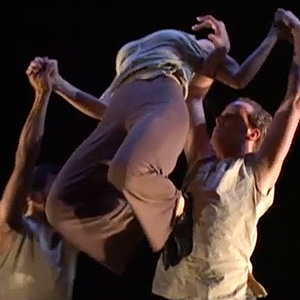
Spark catches up with choreographer Robert Moses and the young poets of Youth Speaks as they debut a new collaboration called “Cause” that looks at hate — it’s history, legacy, and future. Robert Moses met weekly with the poets over the course of several months in a writing workshop to compose the piece that incorporates prose and poetry in the composition. The poets will be performing on stage with the dancers. Excerpts from their poems are incorporated into the original soundtrack/score by Jonathan Norton.

  • Array
  • Array

A.C.T. and Carey Perloff

Considered the greatest success of Samuel Beckett’s career, “Waiting for Godot” premiered on January 5, 1953, at the tiny Theatre de Babylone in Paris. Although critics labeled “Godot” as “the strange little play in which nothing happens,” it gradually became a success through strong word of mouth and eventually ran for 400 performances. Since then, “Godot” has been produced the world over and translated into more than 20 languages. Beckett later won the Nobel Prize for literature in 1969.

In the Spark episode “The Art of Interpretation,” the American Conservatory Theater (A.C.T.) celebrates the 50th anniversary of the Paris premiere of “Waiting for Godot” with a new production directed by artistic director Carey Perloff. Abandoning conventional techniques of plot, character, setting and dialogue while distilling life and art to their very essence, “Waiting for Godot,” Perloff believes, is at once an existential vaudeville, an anatomy of a marriage, a plea for resistance and a philosophical meditation on being in the world.

As a former English literature scholar at both Stanford and Oxford, Perloff is well versed in the classics. Her passion for Beckett was sparked by her mother, Marjorie Perloff, who is a renowned Beckett scholar and professor emerita of English at Stanford. Marjorie’s writings on the play expand on Hugh Kenner’s observations that the play resembles Beckett’s experience in the French resistance — part of Beckett’s job was to wait to receive coded messages about German troop movements, translate them, pass them along to a stranger, then continue to wait for the next message.

“The truth is, all of us have spent a good portion of our lives waiting — waiting for something to happen,” says Perloff. “We believe there is a purpose to our existence, but for much of our time on Earth, that true purpose seems mysterious and hidden. The reality that Beckett so brilliantly explores in ‘Godot’ is that while we’re never certain of what is ahead of us at any moment, we go on longing for certainty anyway. That is what it means to be human, and it is what makes the characters in ‘Godot’ so moving: In the bleakest hour in the most desolate landscape, they never give up hope. What better play for this moment in history?”

More about the American Conservatory Theater
Founded in 1965 by William Ball, A.C.T. opened its first San Francisco season at the Geary Theater in 1967. Since then, more than 300 A.C.T. productions have been performed, along the way winning a Tony Award for outstanding theater performance and training. A.C.T.’s conservatory was the first training program in the United States not affiliated with a college or university that is accredited to award a master of fine arts degree. Danny Glover, Annette Bening, Denzel Washington, Benjamin Bratt and Winona Ryder are among the conservatory’s distinguished former students. A.C.T.’s performance, education and outreach programs reach more than 250,000 people in the San Francisco Bay Area every year.

Array

  • Array
  • Array
  • Array
  • Array

Mark Morris

Internationally renowned New York-based choreographer Mark Morris has been spending more and more time in the Bay Area. In addition to his long-standing relationship with the San Francisco Ballet, Morris recently announced a partnership with Berkeley’s Cal Performances that will bring the Mark Morris Dance Group to the University of California campus for two seasons a year. In the episode “The Art of Interpretation,” Spark follows Morris as he choreographs his latest project, a production of Léo Delibes’s little-known ballet “Sylvia” for the San Francisco Ballet.

In 1999, San Francisco Ballet artistic director Helgi Tomasson approached Morris to do a full-length ballet, a rare event given the deep investment of time, money and resources required for such a production — and a great show of confidence in Morris’s skill and talent. Morris chose to do “Sylvia,” a work that has not been staged in its entirety for more than 100 years, and never by an American company. The production will also be Morris’s first evening-length work for any dance company other than his own.

Morris chose Delibes’s work primarily for the score, but also for its libretto, which the choreographer found to be unusual in a classical ballet. Whereas ballet narratives often feature women abandoned at the alter, forever brokenhearted and doomed to a life of celibacy, “Sylvia” tells the story of a self-sufficient nymph who is dedicated to Diana, Roman goddess of the hunt. An unusually modern coming-of-age tale set amidst a backdrop of forests, fantasy and mythological beings, the story follows Sylvia’s transformation as she switches her allegiance to Eros, god of love and sex. Rather than lose her self-sufficiency in this transformation, she becomes a fully fulfilled, sexually conscious and ever-powerful woman.

In an effort to maintain a sense of the original Victorian feel of the work while updating it to a more modern sensibility, set designer Allen Moyer has chosen to use a heavily swagged curtain motif throughout the ballet’s three acts. His choice was inspired by the Paris Opera House, where the work was first performed. Using more than 3,300 square yards of a variety of fabrics, including a richly textured crushed velvet and a fine linen specially woven in Belgium, the sets juxtapose an opulent luxuriance of materials with an uncluttered, spare arrangement. As a backdrop, each act uses a translucent painted scrim featuring images inspired by period wallpaper.

Morris is known for his fresh approach to both modern dance and classical ballet, a reputation that has earned him the distinction of being one of America’s youngest certified national treasures. Instead of having his dancers awe their audiences with a series of difficult moves, Morris tries to instill in his performers a sense of the meaning of the piece so that they may use their skills to express the narrative in ways that are both spontaneous and subtly nuanced. Emphasizing natural over virtuoso movement, Morris believes that this kind of emotive communication has been at the heart of artistic endeavors since antiquity and that is why art continues to affect audiences deeply and personally.

More about San Francisco Ballet
San Francisco Ballet was founded as San Francisco Opera Ballet in 1933. Initially its primary purpose was to train dancers to appear in lavish, full-length opera productions. In 1942, the ballet company became a totally separate entity and was renamed San Francisco Ballet. As America’s first professional ballet company, the company presented the first full-length productions of “Nutcracker” and “Swan Lake” in the United States. Today, under the artistic direction of Helgi Tomasson since 1985, San Francisco Ballet continues to push boundaries with cutting-edge new works by contemporary international artists while remaining committed to the classical tradition.

  • Array
  • Array
  • Array

The Crucible

In what might qualify as an unlikely artistic collaboration, the San Francisco Opera and Oakland’s industrial arts center, The Crucible team up to stage a pyrotechnic version of Purcell’s “Dido and Aeneas.” Spark visits The Crucible’s cavernous warehouse as The Crucible director Michael Sturtz and San Francisco Opera director Roy Rallo are preparing to unveil something never before seen — the world’s first fire opera.

  • Array
  • Array

Anna Von Mertens

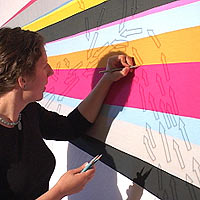
Anna Von Mertens‘s quilts are works of extraordinary depth and complexity. Composed of bold colors in broad geometric patterns, Von Mertens’s quilts at first glance resemble color field paintings or minimalist sculptures. Up close, however, it becomes apparent that Von Mertens has superimposed multiple systems and layers of meaning in a single piece, merging the psychological with the geographic, the aesthetic with the scientific. The Spark episode “Needlework” follows Von Mertens as she begins work on her new series of three quilts, provisionally titled “Gray Area.”

For Von Mertens, the process of making a quilt requires an enormous investment of both time and painstaking labor. Once she has developed the concept for a piece, Von Mertens begins her design on a computer, working out the colors and overall arrangement of the piece. Using the colors she has selected in the computer model, she goes about hand-dyeing the material for the quilt, attempting to match the colors of the model as closely as possible. After she has cut and machine sewn the individual pieces of the quilt, she goes back to the computer to work out the stitching pattern, which can come from a variety of sources — from geological profiles of landmasses to patterns of energy dispersion to the topography of her own body. Using a transparency, Von Mertens projects the pattern and traces it onto the material itself. Von Mertens then sets about the laborious process of stitching the pattern. Since a single work may incorporate as many as 100,000 stitches, this arduous task may take several months to finish.

Von Mertens’s most recent series uses the West Coast as a metaphor for the future and the inevitable uncertainty that comes with it. The works draw on the vibrant colors of the Western sunset, laid out in wide bands that are pulled out to a point just beyond the surface of the quilt. For Von Mertens, this suggests the uncertainty of the future, a point beyond the horizon that is always just outside of view. For the stitched layer, Von Mertens has decided to use the tide patterns of the San Francisco Bay, but has rotated and overlain them to create an image of chaos.

Whereas many contemporary quilt artists have tried to separate their quilt making from the medium’s traditional status as craft by hanging their work on walls as one might a painting, Von Mertens insists on exhibiting her work on flat platforms, in order to deliberately associate her creations with beds. For Von Mertens, the bed provides a context rich in associations — birthing, sexual activity, sleeping and dreaming, death — that embody themes to which Von Mertens regularly returns.

Array

  • Array
  • Array
  • Array

Don Ed Hardy

Ever since Don Ed Hardy was a boy, he has been making tattoos. At the age of 10, Hardy opened a toy tattoo shop out of his mom’s house and drew designs on the neighborhood kids using colored pencils and eyeliner. Since then he has done literally hundreds of thousands of tattoos. The Spark episode “Needlework” joins one of the world’s best-known tattoo artists as he looks back on a lifetime of putting ink to skin, a journey that has taken him from the tattoo parlor to the gallery and back again.

Hardy is internationally recognized as a pioneer in tattooing, having been among the first to cross Western and Japanese tattoo styles. Western tattoos are typically single, isolated emblems; Japanese tattoos often integrate a number of images in a single design that might cover a person’s entire torso. Hardy first became interested in Japanese tattooing in the early 1950s — his father had taken an engineering job in Tokyo and began sending him Japanese artifacts and clothes as well as books of Japanese art.

In the mid-1960s, Hardy attended the San Francisco Art Institute, where he completed a B.F.A. in printmaking. He was offered a scholarship to Yale in the M.F.A. program, but decided instead to pursue tattooing full time. He sharpened his technical skills working in a series of shops in sailor districts along the West Coast and forged contacts with accomplished older artists, such as the legendary Honolulu tattooist Sailor Jerry Collins.

In 1973, Hardy became the first non-Asian to gain access to the Japanese tattooing subculture when he was invited to study with renowned classical tattoo master Horihide. He returned to California after six months and began doing tattoos by appointment, working collaboratively with his customers to develop large-scale designs. Later, in San Francisco’s North Beach, he opened Tattoo City, which has since become a mecca for tattoo enthusiasts.

Hardy has helped to transform tattooing in America, bringing to it a greater sophistication, depth and sense of experimentation. What had been a marginal practice when Hardy began making tattoos in the 1960s, something relegated to drunken sailors, is now a widespread, even mainstream phenomenon. The number of tattoo artists in North America has risen from about 500 when Hardy began his career to about 50,000 now.

Although Hardy mainly did only tattoos for about 20 years, lately he’s been doing other forms of art. To celebrate the new millennium — a dragon year in the Chinese zodiac — Hardy produced a 500-foot-long painting on paper featuring 2,000 dragons. The piece took him seven months to complete and opened him up to producing more gallery work. For Hardy, painting and tattooing are not separate activities; rather, they inform one another. With all his artwork, Hardy attempts to create a world of mystery, humor and weird beauty that eludes categorization.

Array

  • Array
  • Array

Anna Maltz

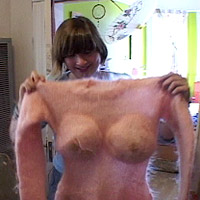
San Francisco-based artist Anna Maltz uses humor and sculptural textiles to explore identity and societal taboos. For her series One Size Fits All, she takes conventional portraits of families (of various configurations) wearing her “naked” suits — full body, pink-colored mohair outfits with anatomically correct appendages. Spark tags along with Maltz on a photo shoot.

Born in London, England, Anna Maltz earned a B.F.A. from the Middlesex University in London and an M.F.A. from California College of Arts in 2004. Her work has been exhibited internationally.

  • Array

Julia Parker

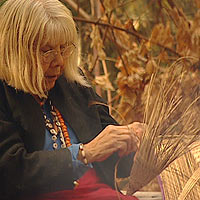
For Julia Parker, weaving baskets connects her to the lives and traditions of her ancestors, telling the story of a people that for more than 4,000 years populated villages throughout the Yosemite Valley. In the Spark episode ” Legacies,” Parker guides viewers through the area where her village had once been as she explains the traditional process of making her baskets.

Born in 1929 in Sonoma County of the Coast Miwok and Kashaya Pomo peoples of the Yosemite, Parker moved to the Yosemite Valley in 1949 to live in the village of her husband, of Miwok Paiute descent. As a young woman, Parker was compelled to learn everything she could about the old ways of basket weaving. She studied basketry with the elders of her village, including her husband’s grandmother Lucy Telles. Telles was a highly innovative and celebrated weaver, whose masterpiece — a colossal 3-foot-by-19-inch storage basket — is now on display at the Yosemite Museum. Parker remained in her husband’s Yosemite Valley village until 1969, when the government bulldozed the region to make way for campsites.

Concerned that these ancient methods of making baskets would die out with the weavers of Telles’s generation, Parker dedicated her life to passing on the knowledge and skills she’d gained. Since 1960, Parker has demonstrated basket weaving behind Yosemite’s Indian Museum, in the same spot where Telles used to weave and sell her baskets and beadwork to tourists. She graciously answers visitors’ questions in an effort to share her culture with others.

Parker is an innovator in her own right, with samples of her work in the Smithsonian Institution and in the collection of the Queen of England. Her baskets demonstrate a staggering complexity of design, that is unparalleled in the work of her colleagues. She makes every one of her baskets by first collecting the needed grasses and sticks, then treating them with moisture and heat in order to make them supple. She also prepares the dyes from natural materials. And since there are no established patterns for different types of baskets, the entire design of the basket has to be formed in Parker’s mind before she begins weaving. The process is slow and labor-intensive, which means that a single basket can take several months, sometimes well over a year to complete.

Parker, now in her 70s, has inspired her daughter Lucy Parker and granddaughter Ursula Jones to continue making traditional basketry. Spark follows Parker and her family as they make the 350-mile journey to see the work of their ancestors at the Phoebe A. Hearst Museum of Anthropology at UC Berkeley, which houses approximately 9,000 baskets.

Array

  • Array
  • Array
  • Array
  • Array

Shri Krupa Dance Foundation

In the Spark episode “Legacies,” dancer and teacher Vishal Ramani talks about how she came to the United States from India 30 years ago and has since fostered a creative environment in which Indian traditions have taken root in the Silicon Valley. Ramani is the founder of Shri Krupa Dance Foundation, a center where students go to learn the traditional art form of Bharata Natyam seven days a week, year-round.

Born in India, Vishal Ramani was a child prodigy. At 7 years of age, she made her dance debut, or “arangetram,” in Bombay, performing the dance art of Bharata Natyam. However, her dream of becoming a professional dancer in India ended when she came to the United States with her husband in 1974, at that time finding only a small Indian community in the Bay Area. Ramani soon found a new passion — being a teacher. Today, after teaching for more than 30 years, Ramani runs Shri Krupa, an important cultural center for Indian Americans — the fastest-growing community in the country.

Dating back for centuries, Bharata Natyam is the oldest classical dance form in India. The dance is a storytelling art form based on Hindu mythology and executed through a complex series of body gestures, facial expressions, music and rhythmic movement. Students learn how to contact the earth with their bare feet and use 28 single-handed gestures, 24 double-handed gestures, and many more body and facial expressions to portray dramatic events and emotions.

Of Ramani’s guiding principles as a teacher, the two most important are to instill dedication and devotion in her students. These two elements, she says, are the most significant in order to master any great art form. However, she emphasizes, Indian dance teaches much more than just dance. Movement, confidence, charisma and poise as well as an entire value system are embedded within the process of learning Bharata Natyam, and students carry these skills with them for a lifetime, regardless of what career they pursue.

In additional, Ramani has been co-hosting a weekly show on local television that presents a wide range of subjects of interest to the local Indian community, including music and dance. It is one more indication of how much the community has grown and how culturally vibrant it is. And as the community grows, her students are being called upon to perform for weekly events, and religious holidays and at the Hindu temples.

Array

  • Array
  • Array
  • Array