Asides

Djerassi Resident Artists Program

For decades, the Djerassi Resident Artists Program has provided a place where artists from all over the country could come together, reflect and work in a beautiful natural setting located in Woodside, California. But after Hurricane Katrina devastated Louisiana’s Gulf Coast, Djerassi has made it a priority to host displaced artists from that region, offering them an environment in which to regroup and re-energize their creativity. Spark checked in on two New Orleans artists that found refuge at Djerassi.

After Katrina hit, the Alliance of Artists Communities set about creating the Gulf Coast Artists Hurricane Relief Program to take in displaced artists. Through this program, Djerassi, along with several other organizations in California (the 18th Street Art Center, Montalvo, the Kala Art Institute, Headlands Center for the Arts and the Exploratorium), has been able to provide a peaceful, inspirational and meditative environment far from the trauma of the disaster.

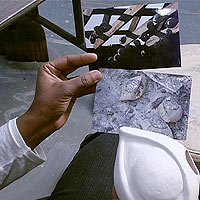
One of the artists selected for the Djerassi program was Rashida Ferdinand, a ceramicist whose studio in New Orleans’s Ninth Ward was destroyed during the hurricane. The Djerassi program provided her with a work space to resume projects interrupted by the hurricane. For Ferdinand, the experience has added another layer to her psyche as well as to her work, causing her to re-examine the uneasy balance that exists between financial interest and human life.

Another artist selected was writer Michael Patrick Welch, who was also evacuated from New Orleans but who has since returned home. Spark visited him as he worked on a collection of essays about his experience of the flood and its aftermath. Each story revolves around his pet goat, Chauncy. For Welch, the Djerassi program provided the mental and physical rehabilitation he needed after the trauma of Katrina as well as the peace and quiet he needed to write.

More about the Djerassi Resident Artists Program
The Djerassi Resident Artists Program was founded in 1979 by Dr. Carl Djerassi in honor of the memory of his daughter Pamela, a painter and poet who died the previous year. In the 1980s, with the renovation of structures on a nearby ranch into fully operational living quarters and studio spaces, the project was transformed into a comprehensive residency program. Today the Djerassi Resident Artists Program is the largest program of its kind in the West and ranks among the best in the country. Tours of the sculptures on the Djerassi property are offered.

Djerassi
djerassi.org
Where: 2325 Bear Gulch Rd., Woodside
Phone: (650) 747-1250

  • Array
  • Array
  • Array
  • Array

Peter Riegert

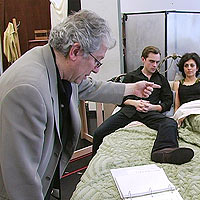
When the David Mamet play “Sexual Perversity in Chicago” premiered at New York’s Off Broadway Cherry Lane Theater in 1976, it not only put Mamet on the theatrical map, but it also boosted the career of the then 28 year old actor Peter Riegert. Spark checks in on Riegert as he returns to the play 30 years later, this time as director of San Francisco’s A.C.T. production.

Mamet’s play, which won an Obie for its 1976 premiere production, follows the experiences of four single people in 1970s Chicago. The piece was controversial in its time for its liberal use of off-color language as well as its frank portrayal of contemporary sexual mores. But perhaps the play’s greater innovations lie in its formal structure, which condenses a staggering 34 scenes into just over an hour.

For the actors in the 2006 A.C.T. production of “Sexual Perversity,” its rapid-fire pace is both demanding and energizing. Mamet’s script leaves no margin for error as the play’s staccato rhythm transforms the dialogue into something like a musical score, wherein every pause and note is meticulously timed and carefully executed. The play is difficult to master for actors and directors alike, often making it difficult to realize Mamet’s dramatic vision.

A devoted student of Mamet since taking on the role of Danny in the 1976 production, Riegert brings a consciousness to the production that can only come from an intimate knowledge of the material. For Riegert, who continues to have a long and successful career in acting, directing is a welcome new frontier, rife with fresh challenges and opportunities for experimentation.

Riegert is a veteran actor who has appeared in more than 60 movies and television series, including “Animal House” (1978), “Local Hero” (1983) and “Crossing Delancey” (1989). David Mamet is one of the most acclaimed American playwrights of the last century. He is known for overturning narrative conventions and crafting contentious situations characterized by emotional confrontations. In addition to “Sexual Perversity,” Mamet’s best known plays include “The Duck Variations” and “American Buffalo.” In 1984, Mamet was awarded the Pulitzer Prize for “Glengarry Glen Ross.”

  • Array
  • Array
  • Array

Kara Davis

As the host for the Dancer/Musician Improv Extravaganza at the Margaret Jenkins Dance Lab in San Francisco, Kara Davis creates an atmosphere where dancers and musicians can share their talents with each other and the audience. A dancer is paired with a musician — based on names chosen from a hat — to create a three-minute improvisational performance. There are no rules and no mistakes, only a chance to explore creativity with the combination of spontaneous sound and movement.

Davis is a classically trained ballet dancer who now focuses on modern and contemporary dance with Kunst-Stoff. She has taught at Berkeley Ballet and received an Isadora Duncan Award for outstanding achievement in individual performance for her entire 2002 and 2003 season performing with Margaret Jenkins Dance Company, Janice Garrett & Dancers and Kunst-Stoff.

Spark visited Davis at the Dance Lab to see the outcome of her experiment. As expected, unusual but interesting teams such as drummer/ballet dancer were formed. For more information on the Dancer/Musician Improv Extravaganza, which usually occurs the last Sunday of the month, check the Kunst-Stoff’s Web site under “Special Events.”

  • Array
  • Array

de Young Museum


View Spark segment on the de Young Museum. Original air date: March 2006. (Running Time: 5:39)

View Spark Web extra on the de Young Museum. (Running Time: 1:25)

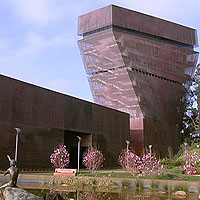
After closing its doors three years ago, the de Young Museum reopened in a spectacular new building in October 2005. Since then, the museum, located in Golden Gate Park, has been host to more than 100,000 visitors a month. Spark pays a visit to the museum to find out what’s new at the new de Young.

Hailed as being among the finest modern museum buildings in the world, the new de Young is considered a masterpiece of the internationally acclaimed Swiss architectural team of Jacques Herzog and Pierre de Meuron. Replacing a traditional mission-style building, the new design is an angular, asymmetrical structure that provides exciting and unexpected views from every angle. The majority of the building is clad in a copper foil that will oxidize over time, giving it a green patina. The museum’s design also incorporates the work of a number of sculptors, including a subtle path of cracks created by English environmental sculptor Andy Goldsworthy.

With a new building come new opportunities. The de Young now has ample temporary galleries capable of housing major traveling exhibits from all over the world. And gallery space for the de Young’s famous permanent collection of American art has been greatly expanded. The new museum now displays fully a third of its collection of paintings, whereas most other American museums have space for only about 5 percent of their collections.

The new de Young also contains an artist’s studio, accommodating month-long artist-in-residence programs. Spark visits with Sharon Virtue, a San Francisco-based ceramics artist hard at work on a major installation. Virtue is building a full-sized African mud structure completely by hand. The vessel represents a womb, the interior walls of which Virtue is planting with submissions from children meant to represent their best intentions for the future.

  • Array
  • Array

ASCEND School

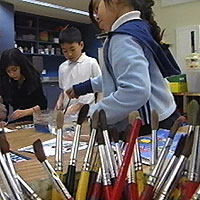
ASCEND School is a unique K-8 school located in the Fruitvale neighborhood of Oakland. It is one of a growing number of small autonomous schools in the Oakland Unified School District in Alameda County. The school is an arts-integrated, Expeditionary Learning school that prioritizes family and community partnerships. Arts integration means that students participate in instruction with objectives in an art form and another content area — for example, math, English or history.

In “New Beginnings,” Spark visited ASCEND as it transitioned from temporary classrooms to a new building and dropped into a class in which students were learning the art of storytelling. They began by reading several Native American myths. What resulted was the students’ own theatrical production, “Raffa and the Gold Volcano,” a morality-hinged musical created by combining attributes taken from the various Native American mythic and legendary sources they had studied. As the students prepared to stage their musical, they learned that storytelling incorporates much more than the spoken word, that stories could be told through music, movement, costumes and setting and through an understanding of how character traits inform actions.

Founded in 2001 with fewer than 100 students, today the school has more than 250 students. The first priority at ASCEND is student literacy — teaching students to be fluent and comfortable with the written and spoken word, technology, contemporary culture, history, media, mathematics, science, arts and the environment. The inquiry-based model employed in the school curricula pushes students and teachers alike to grow and change, maximizing student performance and providing valuable professional development and personal growth for teachers.

ASCEND is one of more than 30 arts learning anchor schools, which is part of a larger initiative spearheaded by the Alameda County Office of Education. The first phase of implementation of a new countywide strategic plan will provide equitable classrooms through arts learning for every child, in every school, every day. ASCEND aspires to grow into a K-8 learning community and family center serving 380 students with 40 to 44 students, at each grade level.

Although it is a local model, ASCEND is also exemplary of a national movement in which schools all over the United States, in rural, suburban and urban communities, are addressing seemingly ever-increasing problems with solutions that put a more holistic approach to student learning at the center, despite the conflicting mandates from the state and federal education systems requiring increased standardized testing, with fewer resources. In their mission and philosophical approach, these schools are actively responding to a growing body of research that continues to reveal the critical importance of arts study and learning to the growth and development of all students throughout their education and throughout life.

Array

  • Array
  • Array

Bill Owens

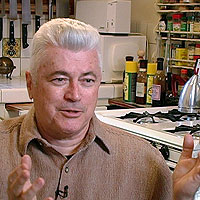
Bill Owens is rediscovering an artistic medium that he thought he had left behind more than 20 years ago. Owens made his mark on the art world in the 1970s with “Suburbia,” a collection of photographs that documented suburban life in Livermore, California. The book won him critical acclaim, including a prestigious Guggenheim Award. But by the time Owens was working on his fourth book, money ran out, and he decided to follow other paths in order to pay the bills.

More than 20 years later, the reissue of “Suburbia” in 1999 brought new interest in Owens’s achievements, providing the artist with fresh opportunities. Spark checks in on the Bay Area photographer as he mounts an exhibition of his photographs and short films at the Berkeley Art Museum.

After giving up photography in the 1980s, Owens turned to teaching as well as a variety of odd jobs and business enterprises to make ends meet. He even sold his cameras to raise some extra money. But the renewed acclaim for Owens’s work after the reissue of “Suburbia” enabled him to publish his unfinished Leisure collection. He also decided to return to photography, now made cheaper and more accessible by digital technology.

When he discovered that his new digital cameras could also be used to make short videos, Owens began exploring the possibilities of motion pictures. He now has a collection of short films that he directed, shot and edited entirely himself. Like his still images, his short videos are meditations on daily routines, capturing the commonplace realities of everyday life.

Recently, Owens has returned to a subject that was conspicuous in his earlier series in the 1970s – food. Spark follows the artist to the Berkeley Bowl market, where Owens collects images for a photo essay and new book dedicated to what and how we eat. As they did with his “Suburbia” series, Owens’s photos still endeavor to capture American habits directly, honestly and without judgment.

After graduating from California State University at Chico in 1963, Bill Owens began to pursue photography while serving in the Peace Corps. In 1968, he landed a job as a newspaper photographer for the “Independent News” in Livermore, where he was assigned the daily beat of the suburban activities of his friends and neighbors. He published his first book, “Suburbia,” in 1972, which was followed by “Our Kind of People” (1976), “Working” (1978) and “Leisure” (2004).

  • Array
  • Array
  • Array

Andy Goldsworthy

In the episode “Work in Progress,” Spark visits with international artist Andy Goldsworthy as he installs “Drawn Stone” (formerly called “Faultline”) in the entrance courtyard of the new de Young Museum. The site-specific piece consists of carefully placed paving stones and boulders brought from a quarry in England and installed over the course of a few months in spring 2005.

Goldsworthy is an artist who creates artworks in the natural landscape using nature’s materials to form sculptural work of deceptive simplicity, often achieving amazing feats of balance and timing in the process. Whether ephemeral, permanent or designed to age with time, Goldsworthy’s works inspire quiet introspection about the beauty of the world as a living organism in a state of continuous change.

Across the expanse of the courtyard stones, a long crack draws visitors into the de Young Museum. Spark hears Goldsworthy’s vision and the challenges he faced in creating this major installation for the new building. Designed by the Swiss architecture firm Herzog & de Meuron and San Francisco’s Fong & Chan Architects, the building is scheduled to open in October 2005 in Golden Gate Park in San Francisco.

Goldsworthy is just one of the renowned artists to be offered commissions at the new de Young Museum, joining James Turrell, Gerhardt Richter and Kiki Smith. “Drawn Stone” is Goldsworthy’s fourth large-scale permanent commission, following “Stone River” (2001) at Stanford, “Garden of Stone” (2003) at New York’s Museum of Jewish Heritage and “Roof” (2004) at the National Gallery in Washington, D.C.

The original de Young Museum was a complex of buildings constructed between 1919 and 1965 that had suffered damage in the 1989 earthquake and was torn down in 2002. The de Young spent 10 years raising funds for a new facility to showcase its world-class collection of American paintings, decorative arts and crafts, art of Africa, Oceania and the Americas, and textiles. It also offers a wide range of education programs about these fields of art.

The paving stones Goldsworthy used in “Drawn Stone” are of Appleton Greenmoore sandstone, a stone imported from Yorkshire, England, where Goldsworthy was raised. The stone, with its rich orange and red colors from oxidized iron, was chosen to carry through the colors of the copper exterior of the new building.

Andy Goldsworthy holds a B.A. in fine art from Preston Polytechnic. He has produced numerous commissions and has had solo exhibitions internationally. He has received many awards, including the North West Arts Award, the Yorkshire Arts Award and the Northern Arts Award, which he won numerous times. In the 1980s, Goldsworthy began publishing books of photographs documenting his work. German director Thomas Riedelsheimer created a documentary about Goldsworthy in 2001 called “Andy Goldsworthy’s Rivers and Tides.”

Array

  • Array
  • Array
  • Array
  • Array
  • Array
  • Array

Liz Duffy Adams

Since 1997, the Crowded Fire Theater Company has strived to produce challenging and provocative plays, making the group a key player in San Francisco’s experimental theater scene. Spark visits Crowded Fire hard at work as it prepares “One Big Lie,” a new work written by New York playwright Liz Duffy Adams especially for the company’s actors.

Adams’s play tells the story of a family that is reincarnated several times only to encounter similar problems again and again. The three-act play moves from mythical Greek times to the 1930s to a point in the post-industrial age that is just beyond our own. Each time, the family members struggle to discover some truth about the world as they are subjected to the whims and fancies of the same malicious gods.

For the players that make up the Crowded Fire Theater Company, “One Big Lie” offers a rare and exciting opportunity. The play was designed with the input of the actors in mind. Each member was asked what his or her dream role would be, which formed the basis of the characters Adams developed. The original score by David Rhodes was commissioned by Crowded Fire, along with the Playwrights Foundation.

The play does offers certain challenges. Despite the fact that most of the actors have had little musical training, the play calls for them to perform 20 songs, along with a live orchestra. As if this were not difficult enough, the performers also must wear elaborate animal masks that cover their entire heads, leaving gaps only for showing facial expressions.

More about the Crowded Fire Theater Company
The Crowded Fire Theater Company is dedicated to discovering and developing work that challenges audiences to see the world differently. Founded after a successful Fringe Festival by a small group of artists, Crowded Fire has since grown to a core group of 15 members. Each year, Crowded Fire produces three plays, including commissioned pieces and existing work. Past productions include plays by such noted contemporary writers as Charles Mee, Mac Wellman and Naomi Wallace. Crowded Fire also offers educational programming, including workshops open to the community at large.

More about Liz Duffy Adams
A graduate of NYU’s Experimental Theatre Wing and Yale School of Drama, Liz Duffy Adams is, in her own words, “interested in the poetics and formal expansiveness common both to classical and experimental theater.” Her play “Dog Act” won the Glickman Award for Best New Play. Her published work includes “Greeks and Centaurs” in Smith and Kraus’s anthology “Rowing to America” and “Poodle With Guitar and Dark Glasses” in Applause’s “Best American Short Plays 2000-2001.” Crowded Fire also staged the West Coast premiere of Adams’s “The Train Play” in 2002.

  • Array
  • Array

William Kraft

williamkra-headshot

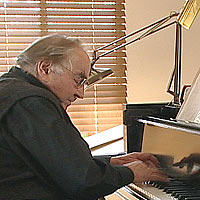
In the Spark episode “Work in Progress,” go behind the scenes with the San Francisco Symphony in the rehearsal of a groundbreaking new work for timpani and orchestra by renowned composer William Kraft. “The Grand Encounter” (or “Timpani Concerto no. 2”) premiered in June 2005 at Davies Symphony Hall in San Francisco to a sold-out audience, many of whom were timpanists from around the country who had traveled to hear the instrument played in an innovative way.

Timpani are classical percussion instruments usually consisting of four large pitched drums made of copper with stretched skin heads. They stand at waist-level and are played with two timpani sticks (also called mallets). Timpani sounds are modulated by adjusting the six or eight tuning screws around the rim and by using the foot pedals. The drums have been fundamental in the classical symphonic repertoire since the 17th century, although they are rarely the main solo instruments.

Kraft wrote the first-ever work for timpani and orchestra, which the San Francisco Symphony premiered in 1999. San Francisco Symphony’s music director Michael Tilson Thomas collaborated with David Herbert, the symphony’s principal timpanist, to commission a second timpani concerto from Kraft that would require the construction of a special set of 15 timpani drums.

The expansion to 15 drums widens the pitch capabilities of the instrument, enabling a timpanist to make seamless transitions between pitches as if the timpanist was playing a single drum with a very large range. This innovation marks only the second time a modification of this type has been made to the instrument since the early 1900s when the pedals were added. The expansion also pushes the physical agility of the timpanist — requiring deft, highly time-sensitive movements between the drums.

More about William Kraft
William Kraft served as the principal timpanist for the Los Angeles Philharmonic for 18 years and as the composer-in-residence from 1981 to 1985. He founded the Los Angeles Philharmonic New Music Group. Kraft holds a B.A. and M.A. from Columbia University. His many accomplishments includes such awards as Guggenheim Fellowships and Anton Seidl Fellowships and commissions from the Kronos Quartet, the U.S. Library of Congress and the Boston Pops Orchestra.

More about the San Francisco Symphony
The San Francisco Symphony has enjoyed more than 90 years of widespread musical success. Michael Tilson Thomas is the symphony’s 11th music director. MTT is also the founding artistic director of the New World Symphony, an intensive three-year fellowship program headquartered in Miami, Florida.

  • Array
  • Array
  • Array

Lu Huan

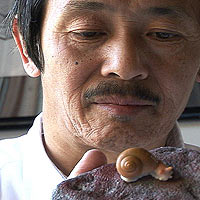
An accomplished painter, sculptor and poet, Lu Huan was one of China’s most celebrated artists. Now living in the United States, Lu Huan is struggling to build a reputation for himself in America. Spark visits this extraordinary artist at his home in Alameda as he works on a new carving of a rare Australian insect known in China as the Emperor’s Scorpion.

Lu Huan is best known in China for his miniature carvings of insects and amphibians done in painstaking detail. His works are made of single pyrophyllite stones — rare and valuable metamorphic rocks that the artist imports from mines in China and Inner Mongolia. The stones contain veins of surprising color and clarity that Lu Huan transforms into astonishingly lifelike creatures.

Each of Lu Huan’s carvings contains a poem that the artist composes and inscribes into the stone. The poems are written in classical five- and seven-word verse format and make use of a sparse imagery, reflecting the artist’s ascetic disposition. The poems are often meditations on animal behavior that reveal deeper truths about human existence and interactions.

Lu Huan was born in 1948 in Hebei Province, China. After graduating from the Central Academy of Fine Arts in 1969, he became an artist-in-residence at the Palace Museum in Beijing (also known as the Forbidden City) for 16 years. In 1989, after touring the United States accompanying a solo exhibition of his work, he decided to remain in America. His carvings can be seen in the Palace Museum, where Lu Huan enjoys the distinction of being the only living artist whose sculptures are in the collection.

Thai Bui

Vietnamese-born sculptor Thai Bui makes haunting works of art that speak to a sense of displacement and longing that has characterized the artist’s own turbulent life. Bui’s extraordinary objects combine references to his experiences in both the United States and Vietnam, simultaneously communicating a witty humor and penetrating sense of loss. In “Looking East,” Spark visits with Bui as he installs a major public commission for the city of Palo Alto.

Growing up in Hanoi during the Vietnam War, Bui’s childhood was marked by uncertainty and terror. In 1981, at the age of 21, Bui emigrated to the United States to study art. The transition was difficult for the artist, who has had to deal with language and cultural barriers. In addition, as a northerner, Bui often feels like an outsider within the Vietnamese community in the Bay Area, which is largely composed of southern Vietnamese.

Much of Bui’s work deals with these experiences, making reference to childhood games as well as feelings of displacement. Spark visits the artist in his studio as he makes a series of shallow clay bowls. While they are still wet, Bui slams the bowls onto the floor, blowing a hole in the base of the pots and making a loud sound. The activity references a simple childhood game in which the participant that makes the loudest sound wins. Bui then gathers the remnants and incorporates them into an installation.

In several other works, Bui creates odd juxtapositions that suggest his own experience of being a cultural and linguistic outsider in the United States, mixing diverse materials, forms and cultural references. In “Twins,” Bui pairs two materials, one natural — wood — one man-made — concrete — in a diptych. Though the title suggests that the two objects are identical, in fact they are opposites of one another, each alternating the others arrangement of wood and concrete blocks. For Bui, these combinations connect his own experience with the opposing, but harmonious cosmological forces of yin and yang that help to form the basis of Zen philosophy.

Thai Bui earned a B.F.A. from the San Francisco Art Institute in 1988 and an M.F.A. from Stanford University in 1992. He has taught sculpture at Stanford and the University of California, Santa Cruz. Bui is the recipient of a Skowhegan scholarship, a SOBEL scholarship, a Stanford University scholarship and the Harold E. Weiner Memorial Prize. His work has been shown in locations across California and in galleries in New York.

Array

  • Array
  • Array

Theatre of Yugen

The Theatre of Yugen was founded in 1978 by Yuriko Doi to bring classical Japanese theater to American audiences. Based on Japanese Noh drama and Kyogen comedy, the Yugen ensemble crafts highly stylized productions from dramatic and literary classics. Spark goes backstage for their adaptation of Ernest Hemingway’s “The Old Man and the Sea.”

Dating back to the 14th century, Noh is the oldest form of theater in Japan. It is highly stylized, nonrealistic and ritualized as a theatrical form, emphasizing stillness rather than action, symbolism and allusion rather than realism and representation. With minimal dialogue, a slow meditative pace and mannered movement, there is a stillness and grace to this dramatic form that can challenge American audiences, who bring different cultural expectations to the art of performance.

“The Old Man and the Sea” adapts well to the world of Noh. As a fusion piece, the production presents unhurried musical rhythms, chanting, controlled choreography, masks, shadows and puppetry. Noh works well with Hemingway’s simple tale, which is recounted sparingly in distilled prose and is rich in symbolism and allegory.

Using the theatrical elements and techniques of Noh theater, Jubilith Moore stylizes “The Old Man and the Sea.” Props such as puppetry, costumes and masks play an important part. The set is sparse and has pieces uniquely fashioned from glass, designed by Kana Tanaka.

More about the Theatre of Yugen
In 2001, Moore, Libby Zilber and Lluis Valls took over from Doi as co-artistic directors of Theatre of Yugen and have continued her mission. The Theatre of Yugen has presented visiting master Noh performers in the Bay Area, working in collaboration with Cal Performances, the Asian Art Museum, the Consul General of Japan and the Japan Society of Northern California. The Theatre of Yugen also provides ongoing training and education programs for K-12 and university students as well as adults.

Theatre of Yugen
theatreofyugen.org
Where: Noh Space, 2840 Mariposa St., San Francisco
Phone: (415) 621-7978

Array

  • Array
  • Array

Great Wall Youth Orchestra

Since 1995, music teacher and performer Sherlyn Chew has been bringing young people together to learn and play traditional Chinese music. Spark gets to know Chew and her Great Wall Youth Orchestra as they perform at the San Francisco Performing Arts Museum and Library and at Oakland’s Allen Temple Baptist Church.

The Great Wall Youth Orchestra plays Chinese musical instruments and performs a variety of music. One of their specialties is Chinese opera, an art form that combines storytelling, acting, singing, dancing and martial arts and dates as far back as the 12th century. Many of the students are recent immigrants or first-generation Americans, and the orchestra offers a special connection between their origins and heritage and their life in the United States.

For Tyler Thompson, however, the orchestra provides something different. An African American and star singer in the orchestra, Thompson has gained an international reputation for his performances with Great Wall Youth. Though he cannot speak the language, Thompson can sing perfect Mandarin Chinese opera, and he became an international symbol of cross-cultural exchange when Great Wall Youth’s 2005 performance for Chinese New Year was televised in China.

During rehearsals, Chew teaches the orchestra to play a range of styles from throughout the world, including African and European music as well as American ragtime. For Chew, it is about preserving traditions as well as promoting exchange between cultures. Spark was there for Great Wall Youth’s Allen Temple Baptist Church performance, which brought traditional Chinese music to a whole new audience.

Great Wall Youth Orchestra is one of the programs offered by the Purple Silk Music Education Foundation. Founded by Sherlyn Chew, the foundation’s purpose is to teach Chinese music to K-12 students in Oakland. The foundation’s other programs include the Purple Bamboo Orchestra and the Purple Bamboo Chorus.

  • Array
  • Array
  • Array

Lauren Shera

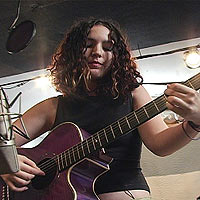
Lauren Shera has a lot to be excited about. In 2003, she opened for former Grateful Dead bass player Phil Lesh and Friends at San Francisco’s Warfield Theatre, where Lesh said of Shera that “… her voice will define the next generation of folk singers.” Spark catches up with this young prodigy as she records her first album at Rancho Armadillo studios in Santa Cruz.

Growing up in Monterey, the singer/songwriter/guitarist/poet Shera took an interest in poetry at a young age and soon began winning awards for her work. At the age of 13, she began writing and playing music and performing at open mike nights in local coffeehouses with her signature purple guitar, named “Titania.”

Shunning major label interest, Shera believes that it is very important to remain independent so that she may have as much control as possible over her music. She writes all of her own songs and is recording and releasing her album on her own. The upcoming release, entitled “A Million Light-Years Long,” will be a collection of confessional, personal songs inspired by many of the folk artists Shera admires.

Shera’s singular vision is starting to get attention. The young musician has also performed and appeared with Jason Mraz, Joan Osborne, Greg Brown, Todd Snider, Mindy Smith, Garrison Starr and Iris De Ment.

  • Array
  • Array