Category Archives: Music

Bay Unity Music Project (BUMP)

What with budget cuts depleting funding for arts and music programs statewide, traditional student bands in California’s public schools are getting fewer and farther between. But that doesn’t mean students have stopped making music. In an innovative after-school program, West Oakland’s McClymonds High School has found a relatively cost-effective way to teach music theory and immerse students in the arts. Instead of forming a band, students involved in the Bay Unity Music Project (BUMP) run their own micro recording label.

BUMP was founded by co-directors Patrick Huang and Matthew Meschery, who began working as a substitute Spanish teacher at the high school and noticed that there wasn’t a music program for students. A trained sound engineer with recording industry experience, Meschery began volunteering his time to develop BUMP.

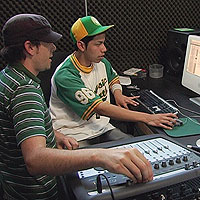
First, Huang and Meschery set up a digital music production lab for students and began teaching them how to compose their own digital tracks. It was an instant hit with the high school kids. Raised on hip hop and R&B, the kids were eager to combine their newfound skills with rapping and lyric composition. Meschery then brought in hip hop industry professionals as vocal coaches to work with the students on techniques ranging from freestyling to beatboxing. Later, the program became a part of Youth Sounds, an Oakland-based media and arts organization serving low-income teens that merged with the Bay Area Video Coalition in 2006.

Three times a year, 15 to 20 students audition to participate in the program, which produces two CDs annually. Proceeds from sales of the CDs fund student field trips to recording studios and offset program costs. Students are responsible for everything from producing the music to packaging and promoting the final product. They learn to use standard industry software for digital music composition and recording. Along with real-world technical skills, BUMP participants come away with the knowledge that they have the creativity and confidence to create their own music and follow careers in the entertainment industry.

“It’s great to create a product where [students] are like, ‘Oh, wait, I can do that. I can do the same thing’ as this artist or that artist they hear on the radio,” Meschery tells Spark.

In 2006, BUMP released “True 2 Life, Vol. 2” and produced a CD-release concert to showcase the record label’s work.

  • Array
  • Array

Gang Situ

Music is in the blood for composer Gang Situ, whose mother was a mezzo-soprano with the Shanghai Opera and whose father was the music director and conductor of the Shanghai Philharmonic. Born in 1954 in Shanghai, Situ studied piano and violin at an early age. But as a teenager, Situ — whose given name means “steel” — was swept up in China’s Cultural Revolution and was sent for a four-year “reeducation” that found him harvesting rice and gathering firewood in the countryside. Ironically, the experience would indirectly bolster his love of music, as he and his fellow workers would secretly listen to banned recordings of Western artists, such as David Oistrakh playing Tchaikovsky’s Violin Concerto.

In 1985, Situ arrived in the United States. He had only $40 to his name and spoke only a few words of English. By 1994, just nine years later, he had attracted notice as a composer with his Double Concerto for Violin and Erhu, which has since been performed by more than a dozen orchestras around the world, including the San Francisco Symphony.

Situ’s work embraces the mix of different cultures, finding common ground between what is traditionally thought of as Eastern and Western. In his 1997 “San Francisco Suite,” premiered by the San Francisco Symphony, he created solos for Chinese, Japanese, South American and African American jazz instruments as a way of acknowledging San Francisco’s own multifaceted musical traditions.

A composer of original works for dance as well as orchestra, chorus and chamber, Situ writes music that is not only a reflection of his dual background, but also a meeting ground, a merging of cultural sensibilities. Finding a way toward a natural fusion has been the underlying theme of many of his works, including his 1997 “Common Ground” – created for Dimensions Dance Theater and Lily Cai Chinese Dance as a response to the riots that took place after the 1992 Rodney King trial in Los Angeles – which explored the connection between Chinese and African themes.

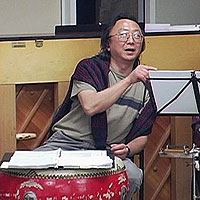
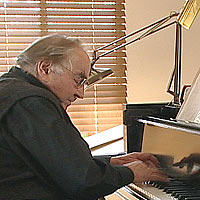
Spark visits with Gang Situ in rehearsal as he imaginatively bridges cultures and time periods with “The Grand Seducers,” an opera that melds Western and Eastern conventions while telling the tale of two notorious womanizers: Mozart’s Don Giovanni and Xi-men Qing, the rakish protagonist of the 13th-century Song Dynasty novel “Water Margin Heroes.”

  • Array
  • Array
  • Array

Matt Davignon

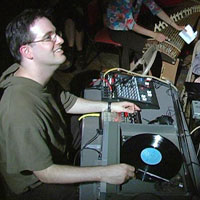
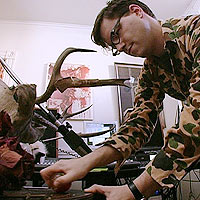
Oakland-based musician Matt Davignon has become a fixture in the Bay Area’s bourgeoning experimental music scene. Since the early 1990s, Davignon has been captivating audiences by fashioning compelling soundscapes using sound textures and arrhythmic patterns, as well as processed and found sound. Spark checks in on Davignon as he orchestrates Soundwave/Live Play at the noted San Francisco experimental art space, Artist’s Television Access (ATA).

Experimental music has a reputation for being difficult and inaccessible; some experimental composers have even argued that experimental music’s historical inability to gain a wide audience is a mark of its success. Coming from a background in industrial and noise music, Davignon was surprised to discover that the Bay Area’s experimental music scene has a prevalence of acoustic instrumentation, which he had begun to use in his own compositions. Over the years, Davignon has worked hard to create soundscapes that simultaneously stretch perceived notions of composition and create music that is both interesting and pleasurable for the listener.

Live Play is the first event of the Soundwave series of experimental musical events organized by promoter Alan So. The event at ATA combines acoustic and electronic performances all improvised to a montage of found footage selected by Sarah Lockhart of 21 Grand, Oakland’s center for experimental composition. Invited to be guest curator for the event, Davignon put together three groups of Bay Area musicians to improvise soundtracks for an experimental film, including the duo Myrmyr, Luz Alibi/Mr. Marauder, and a quintet composed of Moe! Staiano, Kanoko Nishi, Lance Grabmiller, David Michalak and Davignon himself.

Matt Davignon has developed a unique form of improvisation over the last 10 years. Combining acoustic and electronic elements, he attempts to create dynamic, biological music from seemingly limited source material. Since 2003, he has been working with the drum machine as a primary instrument, processing the sounds with several devices to create a unique sound palette. Davignon uses turntables, prepared guitars, cassette tape recorders, looping devices, and an assortment of household objects and toy instruments in his performances. He has organized events such as the San Francisco Found Objects Festival and Sound/Shift Oakland.

Array

  • Array
  • Array
  • Array
  • Array
  • Array
  • Array

Conspiracy of Beards

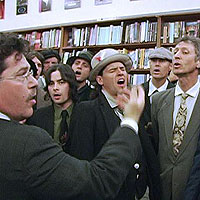
The Conspiracy of Beards is San Francisco’s only male choir that exclusively sings the songs of Leonard Cohen in a cappella form. Cohen is a Canadian poet, novelist, and singer-songwriter. Directed by Daryl Henline, the 30-member group, was founded in 2003.

  • Array

Walter Kitundu

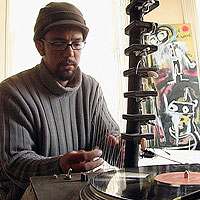
Since the late 1990s, sound artist Walter Kitundu has been creating his own musical instruments, all of which are built around one central element — the phonographic turntable. Kitundu disassembles and reconfigures his turntables to integrate elements from traditional instruments, alternative and unstable power sources, and other technologies, including effect pedals and MIDI equipment. Spark takes a tour of Kitundu’s impressive output as the artist gears up for a solo show at San Francisco’s Luggage Store Gallery. Entitled “LP,” the show features Kitundu’s handmade instruments, alongside diagrams and drawings of ideas about the turntable’s past, present and future as a musical instrument.

Kitundu has not received formal musical training. He was first introduced to making music by Alton Heraldon, a Chicago-based hip hop deejay and turntablist. Kitundu began playing the turntable as a percussion instrument and found the stylus and cartridge to be tremendously sensitive in picking up and amplifying sound. He began work on a series of stylophones, instruments that combined styli as resonators for single strings that could be struck or plucked.

In 2001, Kitundu extended the technology of Stylophones to produce his first phonoharp, which combines multiple strings with a turntable set into a beautifully crafted resonant wooden box. As does the stylophone, the phonoharp receives and amplifies all the sound through the turntable stylus and cartridge.

Kitundu has also developed what he calls “elemental turntables,” record players that are powered by the elements of water, fire or air. Each of these elaborate machines combines a turntable with an elemental power source, which then determines how fast or how consistently a record placed on the turntable will be played. In 2005, Kitundu built an ocean-powered turntable and demonstrated the piece at the Marin Headlands Center for the Arts. Kitundu’s machine featured an accordion and melodica that were powered by the ocean’s waves, alongside an old 78-rpm record player that was driven by the ocean breeze.

Born in Dar es Salaam, Tanzania, Walter Kitundu has an ongoing residency at the Exploratorium Museum of Science in San Francisco. He has been an artist in residence at Skriduklaustur (Iceland), Eagle Rock School (Colorado), the Science Museum of Minnesota and the Singapore Science Centre. Currently, he is developing a geologic sound casting project for volcanically active regions.

Array

  • Array
  • Array
  • Array
  • Array

Jared Choclatt

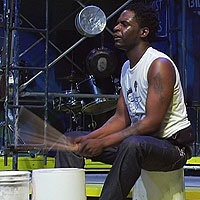
To close their 25th anniversary season, the Lorraine Hansberry Theatre chose a musical extravaganza, Jared “Choclatt” Crawford‘s wildly percussive autobiographical journey “Hit It!” which celebrates the drum-infused music of Big Band sounds, Latin styles, rhythm and blues, soul and today’s hip hop masters. Spark goes behind the scenes as the star, director, cast and crew of “Hit It!” prepare for its world premiere.

The Lorraine Hansberry Theatre was founded in 1985 by artistic director Stanley E. Williams and executive director Quentin Easter. Named for Lorraine Hansberry, the first African American woman to have a play produced on Broadway, the company strove to showcase the work of African American playwrights and give voice to an underrepresented population in Bay Area theater.

Williams and Easter felt that the Bay Area’s rich variety of cultures wasn’t visible on the stages of mainstream theaters. Convinced that these theaters were underestimating theatergoers’ desire to see plays representing diverse cultural experiences, they produced work by playwrights such as Ntozake Shange and August Wilson and commissioned new works by local writers. Their belief has been validated by an audience that consistently fills the 300-seat theater and that considers the Lorraine Hansberry Theatre a beloved and integral part of the Bay Area cultural scene.

At the age of 3, Choclatt Crawford began playing drums. At the age of 12, he found his singing voice. Performing in subway stations and on the sidewalks of New York City, Crawford became one of the New York Bucket Drummers. Crawford caught the attention of Broadway producer George C. Wolfe and tap-dancing prodigy Savion Glover. The two asked him to choreograph the on-stage percussion for “Bring in ‘da Noise, Bring in ‘da Funk” as well as to join the cast as a featured performer.

Opening on Broadway in 1996, “Bring in ‘da Noise, Bring in ‘da Funk” traced centuries of African American history through evocative music and dance. The show had a nearly three-year run, then Crawford moved on to create and star in “Keep Bangin’,” a critically acclaimed musical featuring different drumming styles from around the world.

In “Hit it!” Crawford took his own coming-of-age story and created a musical under the direction of Williams, with choreography by Antonio Naranjo. The show’s book (the text and narrative of the production) is made up of poems by “Bring in ‘da Noise, Bring in ‘da Funk” writer reg E. Gaines that pay homage to jazz history and Manhattan’s African American heritage. The book also includes story segments from Crawford’s life written by André C. Andrée, who is Crawford’s father and a regular performer at the Lorraine Hansberry Theatre.

As Crawford’s character takes a magical ride through the subways of New York, each subway stop represents a different style of percussion-driven urban music. The audience follows him on an odyssey through the history of drumming, from the Big Band sounds of Chic Webb, Max Roach, Cab Calloway and Buddy Rich to the Latin styles of Tito Puente, Mongo Santamaria and Celia Cruz. Crawford also covers rhythm and blues/soul legends Al Green, Marvin Gaye, Sam Cooke and Aretha Franklin as well as hip hop performers Sheila E., Grand Master Flash, Doug E. Fresh and Run-DMC.

Array

  • Array

San Francisco Conservatory of Music

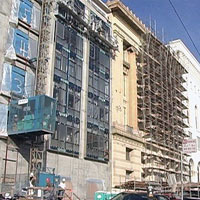
On April 23, 2006, the San Francisco Conservatory of Music (SFCM) held its final concert at its Sunset District home of 50 years. For conservatory students, faculty and staff, the event was as much a farewell to a building filled with history and memories as it was a new beginning. In the fall of 2006, the 89 year-old conservatory, considered one of the West Coast’s premier institutions for higher music education, will make a much-anticipated move into an eight-story building in the heart of the city, a building that school officials, students and members of the community hope will match the talent that has long been associated with the school with state-of-the-art facilities and adequate space.

Six years in the making, the $80 million project joins two buildings into one facility on Oak Street near the Civic Center, just blocks from some of the city’s most vibrant musical performance spaces, including Davies Symphony Hall and the Opera House. Both venues are visible from the new conservatory’s upper floors. “This is really a view of dreams for our students,” President Colin Murdoch tells Spark as he gazes out a window at the surrounding cityscape.

Keeping its 1914-era historic façade intact, the new building, designed by Simon Martin-Vegue Winkelstein Moris Architects of San Francisco, more than doubles the size of the conservatory’s library, recording studio and computer lab and increases the number of practice rooms from 15 to 33. Students will have access to more than 40 new Steinway and Yamaha pianos and to equipment that will turn out commercial-quality CD recordings. And the new 450-seat concert hall, 140-seat recital hall and 120-seat salon not only come with better acoustics for those at the school, but also translate into many new opportunities to showcase the students’ musical gifts in front of music lovers from all over the Bay Area.

Acoustic upgrades, designed for different types of music and performances, include “floating” rooms isolated from noise both outside the building and in neighboring interior rooms and adjustable sound absorption systems and acoustical climates. The state-of-the-art acoustics were implemented by Kirkegaard Associates, which has previously completed projects for Carnegie Hall, Davies Symphony Hall, Tanglewood, Barbican Concert Hall and many more.

“We spent three years looking almost nonstop for this particular site, and it was one of a kind. It was certainly more money than we had anticipated spending, and it was a larger fund-raising effort than we ever imagined would be possible. But we simply had to do it,” Murdoch says.

In 1917, Ada Clement and Lillian Hodgehead started the Ada Clement Piano School with just three pianos, four studios, two blackboards and 40 students. Though the resources were limited, the student population continued to grow. In 1923, they transformed the school into the San Francisco Conservatory of Music. Since then, the SFCM has grown by leaps and bounds. The school has a preparatory division for young people aged 4 through 18 and programs for undergraduates, graduates and adults who continue to study music. The SFCM is the first conservatory in the United States to add Asian music to the curriculum, to offer a degree in classical guitar and to offer a master’s degree in chamber music.

  • Array

Wil Blades

Wil Blades is at the top of the local music scene as a Hammond B3 organ player. The B3 is that big warm sultry, funky tone that provided the groove to many of the 1960s and 1970s R&B recordings. The B3 is experiencing a revival today, particularly among jazz saxophonists who find it a nice complement to a trio.

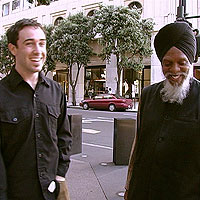
Blades is only in his 20s but plays like a veteran, and his knowledge of the instrument is encyclopedic. He has accompanied the greats, including good friend and B3 legend Dr. Lonnie Smith. Their relationship is based in part on their love of music, but also Smith has been a mentor to Blades.

There aren’t a lot of places besides the Boom Boom Room that have a B3, so Blades owns three of his own organs. For many of his performances, Blades lugs his organ around the Bay Area in his van — as Spark witnesses. As he says, “It’s like a piece of furniture.” Imagine taking a 400-pound desk around with you, and you begin to get the idea.

Originally from Chicago, Blades began playing and studying drums at the age of 8, guitar at 13 and organ at 18. He studied at New College of California. He teaches at Berkeley Jazz School and plays in a number of different groups, including the Wil Blades Trio, O.G.D., Steppin’ and BluesBeat. Blades can be seen performing regularly as the house organist at John Lee Hooker’s Boom Boom Room.

Array

  • Array
  • Array

Barbara Bonney

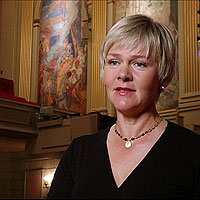
The New Jersey-born soprano Barbara Bonney has garnered international praise as one of the world’s most accomplished concert artists. She began her professional singing career in the late 1970s when she secured a repertory position with Germany’s Darmstadt City Opera. Since then, Bonney has gone on to perform in the major world opera houses, gaining special acclaim for her roles in works by Strauss and Mozart. But all along, Bonney has had a passion for performing “lieder,” or European classical songs.

Most popular in the 19th century, lieders were traditionally performed in an intimate setting — such as a salon or living room — to a small group of people. According to Bonney, only recently has the art of song recital been developed for the big stage. In lieder recitals, there are no sets, costumes or orchestras, so the singer can achieve a more immediate connection with an audience through song alone. Bonney enjoys being on stage with only her piano accompanist, to tell her audience a story. She calls these songs “little jewels.”

Despite her packed performance schedule, Bonney still finds time to teach classes in many of the cities she visits to share her love of singing. Whereas most master classes cater to students with professional dreams, Bonney gears hers toward amateurs. Following her 2006 recital for San Francisco Performances, Spark sat in on one of Bonney’s master classes, in which each student was given the chance to sing a song of his or her choice on the Herbst Theatre stage.

Barbara Bonney estimates her lieder repertoire now includes more than 460 songs. Over her career she has made 90 recordings, spanning Baroque to 20th-century music, by such artists as Schubert, Mozart and Sibelius. She has performed with the Vienna Philharmonic, the Berlin Philharmonic, the Boston Symphony, the Berlin Radio Symphony and the San Francisco Symphony. Bonney, who lives in London, has been a regular presenter for the Cardiff Singer of the World competition and has hosted “Masterclasses for Amateurs” for the BBC.

  • Array
  • Array
  • Array

Stephen Kent

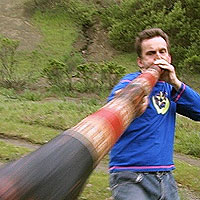
Composer and musician Stephen Kent has been playing the didgeridoo, a traditional aboriginal instrument, for more than 25 years. In that time, he has created a unique, contemporary style of execution influenced more by his travels than by a desire to continue within the Australian aboriginal musical tradition.

The didgeridoo is created out of hollowed Eucalyptus branches and is played with a technique known as circular breathing, where the musician keeps a constant flow of air through the instrument by breathing in through the nose while simultaneously blowing it out through the mouth.

Kent’s music has evolved from his international lifestyle — he was raised in Africa and England and lived in Australia before relocating to the Bay Area. He has recorded three solo albums as well as collaborated with other artists, and he has toured internationally. His radio show, “Music of the World,” airs live KPFA from 10am-noon every Thursday (PST).

  • Array
  • Array

Matmos

If you aren’t sure how rock salt crunching underfoot, slow kisses and a five-gallon bucket of oatmeal could be instruments, then you probably haven’t listened to Matmos, a musical duo composed of San Francisco sound artists M.C. Schmidt and Drew Daniel. Their special brand of electronica, which melds manipulated audio fragments and electronic beats, has led them to tour with Bjork, to teach in Harvard classrooms and to exhibit work in New York’s Whitney Museum of American Art.

Listening to a Matmos track is something like digesting an intensely colorful collage or intricate mosaic with your ears. The duo’s ability to explore sound and create highly listenable tracks using non-traditional sources has captivated fellow musicians, art institutions and electronic music fans since Schmidt and Daniel began collaborating in 1999.

Whereas many electronic DJs concentrate on pounding, crowd-pleasing tracks for clubs and live music venues, the Matmos sound is more cerebral, introspective and experimental. It should come as no surprise, then, that Daniel and Schmidt have diverse academic backgrounds. Daniel pursued a graduate degree in Renaissance literature at U.C. Berkeley. Schmidt heads up the San Francisco Art Institute’s conceptual art department and dabbles in numerous other avant-garde musical projects, including lao Core and X/I.

When Spark caught up with Matmos in the episode “Experimenting,” the two were finishing a sound installation for the Natural History Museum of Los Angeles County show “Sonic Scenery” to correspond with 17 animal dioramas. But in true Matmos fashion, the final product is no ordinary sound display. Instead of playing the music continuously as museum visitors milled about the show, the exhibit required guests to don headphones and personal music players and walk in a counterclockwise direction so they heard the right tracks at the right time.

In 2006, Matmos released its eighth album, “The Rose Has Teeth in the Mouth of the Beast,” which like every album they produce, has a central theme. Each track on “The Rose” is a biographical sound portrait dedicated to a particular person. The sounds that serve as the minute building blocks for the full-length electronic songs come from things in some way related to the biographical subject. For example, a track dedicated to author Patricia Highsmith incorporates sounds created when snails, her favorite creature, crawl across a light-sensitive theremin (electronic instrument) and trigger changes in the instrument’s pitch.

Previous Matmos albums include “California Rhinoplasty” (2001), “A Chance to Cut Is a Chance to Cure” (2001), “The Civil War” (2003) and “Wide Open Spaces” with People Like Us and Wobbly (2005).

  • Array
  • Array

Toychestra

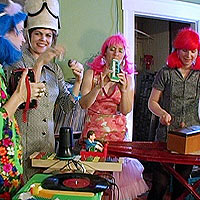
If fond memories of your childhood include a brightly colored xylophone, plastic saxophone or Fraggle Rock drum kit, then you’d probably enjoy Toychestra. The group began as a one-off performance in 1996 for a women’s music festival at Hotel Utah, when they decided to abandon their regular instruments and play only toys. Their songs were a hit, and Toychestra was born.

Since then, Toychestra has played for a diverse audience in various venues, including rock clubs, experimental music venues and classrooms. In addition to their original compositions, the group plays covers of such diverse artists ranging from Dvorak to Black Flag. They have made several recordings, including a collaborative effort with Dan Plonsey and Fred Frith called “Concerto for Guitar and Toy Orchestra.”

  • Array

ASCEND School

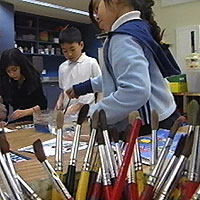
ASCEND School is a unique K-8 school located in the Fruitvale neighborhood of Oakland. It is one of a growing number of small autonomous schools in the Oakland Unified School District in Alameda County. The school is an arts-integrated, Expeditionary Learning school that prioritizes family and community partnerships. Arts integration means that students participate in instruction with objectives in an art form and another content area — for example, math, English or history.

In “New Beginnings,” Spark visited ASCEND as it transitioned from temporary classrooms to a new building and dropped into a class in which students were learning the art of storytelling. They began by reading several Native American myths. What resulted was the students’ own theatrical production, “Raffa and the Gold Volcano,” a morality-hinged musical created by combining attributes taken from the various Native American mythic and legendary sources they had studied. As the students prepared to stage their musical, they learned that storytelling incorporates much more than the spoken word, that stories could be told through music, movement, costumes and setting and through an understanding of how character traits inform actions.

Founded in 2001 with fewer than 100 students, today the school has more than 250 students. The first priority at ASCEND is student literacy — teaching students to be fluent and comfortable with the written and spoken word, technology, contemporary culture, history, media, mathematics, science, arts and the environment. The inquiry-based model employed in the school curricula pushes students and teachers alike to grow and change, maximizing student performance and providing valuable professional development and personal growth for teachers.

ASCEND is one of more than 30 arts learning anchor schools, which is part of a larger initiative spearheaded by the Alameda County Office of Education. The first phase of implementation of a new countywide strategic plan will provide equitable classrooms through arts learning for every child, in every school, every day. ASCEND aspires to grow into a K-8 learning community and family center serving 380 students with 40 to 44 students, at each grade level.

Although it is a local model, ASCEND is also exemplary of a national movement in which schools all over the United States, in rural, suburban and urban communities, are addressing seemingly ever-increasing problems with solutions that put a more holistic approach to student learning at the center, despite the conflicting mandates from the state and federal education systems requiring increased standardized testing, with fewer resources. In their mission and philosophical approach, these schools are actively responding to a growing body of research that continues to reveal the critical importance of arts study and learning to the growth and development of all students throughout their education and throughout life.

Array

  • Array
  • Array

William Kraft

williamkra-headshot

In the Spark episode “Work in Progress,” go behind the scenes with the San Francisco Symphony in the rehearsal of a groundbreaking new work for timpani and orchestra by renowned composer William Kraft. “The Grand Encounter” (or “Timpani Concerto no. 2”) premiered in June 2005 at Davies Symphony Hall in San Francisco to a sold-out audience, many of whom were timpanists from around the country who had traveled to hear the instrument played in an innovative way.

Timpani are classical percussion instruments usually consisting of four large pitched drums made of copper with stretched skin heads. They stand at waist-level and are played with two timpani sticks (also called mallets). Timpani sounds are modulated by adjusting the six or eight tuning screws around the rim and by using the foot pedals. The drums have been fundamental in the classical symphonic repertoire since the 17th century, although they are rarely the main solo instruments.

Kraft wrote the first-ever work for timpani and orchestra, which the San Francisco Symphony premiered in 1999. San Francisco Symphony’s music director Michael Tilson Thomas collaborated with David Herbert, the symphony’s principal timpanist, to commission a second timpani concerto from Kraft that would require the construction of a special set of 15 timpani drums.

The expansion to 15 drums widens the pitch capabilities of the instrument, enabling a timpanist to make seamless transitions between pitches as if the timpanist was playing a single drum with a very large range. This innovation marks only the second time a modification of this type has been made to the instrument since the early 1900s when the pedals were added. The expansion also pushes the physical agility of the timpanist — requiring deft, highly time-sensitive movements between the drums.

More about William Kraft
William Kraft served as the principal timpanist for the Los Angeles Philharmonic for 18 years and as the composer-in-residence from 1981 to 1985. He founded the Los Angeles Philharmonic New Music Group. Kraft holds a B.A. and M.A. from Columbia University. His many accomplishments includes such awards as Guggenheim Fellowships and Anton Seidl Fellowships and commissions from the Kronos Quartet, the U.S. Library of Congress and the Boston Pops Orchestra.

More about the San Francisco Symphony
The San Francisco Symphony has enjoyed more than 90 years of widespread musical success. Michael Tilson Thomas is the symphony’s 11th music director. MTT is also the founding artistic director of the New World Symphony, an intensive three-year fellowship program headquartered in Miami, Florida.

  • Array
  • Array
  • Array