The Bay Area Restaurant System Was Always Broken. How Do We Fix It?

Before the COVID-19 pandemic, the Bay AreaĀ foodĀ industry was in a quiet but persistent crisis. The majority ofĀ restaurantĀ workers earned far below a living wage for the region, even for jobs with tips factored in. Steadily rising residential and commercial rents meant thatĀ restaurant owners swallowed slim margins as an industry standard that would outlive their ambitions. Farmworkers across the state toiled from dusk until dawn with no employer or government safety nets to count on.

Then the pandemic hit and ā€œeverything changed,ā€ said Mourad Lahlou, the chef and owner of Mourad and Aziza in San Francisco. ā€œIt shattered what was solid, and it exposed what was weak.ā€

From farms to restaurants and workers, there’s a lot of uncertainty that hangs over food systems and its fragile infrastructure. Amidst the crisis, is there potential to rebuild a more equitable food industry? What solutions could address the flaws that predate the pandemic? These are the questions we asked seven Bay Area food figures who are grappling with long-lived issues magnified by a new reality.

The Restaurant Dilemma

Mourad Lahlou, chef and owner of Mourad and Aziza: The problem is not so much when we’re going to be able to open our restaurants again. What’s going to happen is they’re going to let us open at half capacity. People are going to be freaked out about sitting around other people. We’re going to start taking temperatures of people who come in. We’re going to start wearing gloves and masks and have disposable menus as if we were a business that had a big margin where we can afford to do these things. Our rent is going to be the same. The insurance companies are going to charge the same premiums. Minimum wage is still the same. It’s incomprehensible to even think that anybody is going to survive this.

If we don’t really address these issues now in a very forceful way, I truly believe that the impact of this is going to last way beyond the vaccine or the eradication of this pandemic. That’s what keeps me up at night. It’s so scary to me that only the big corporations are going to have the means and the possibility to open restaurants whenever they want, wherever they want. That desire for people to share their culture wherever they’re coming from, I’m afraid that’s going to go away and the diversity [of the industry] is going to be damaged.
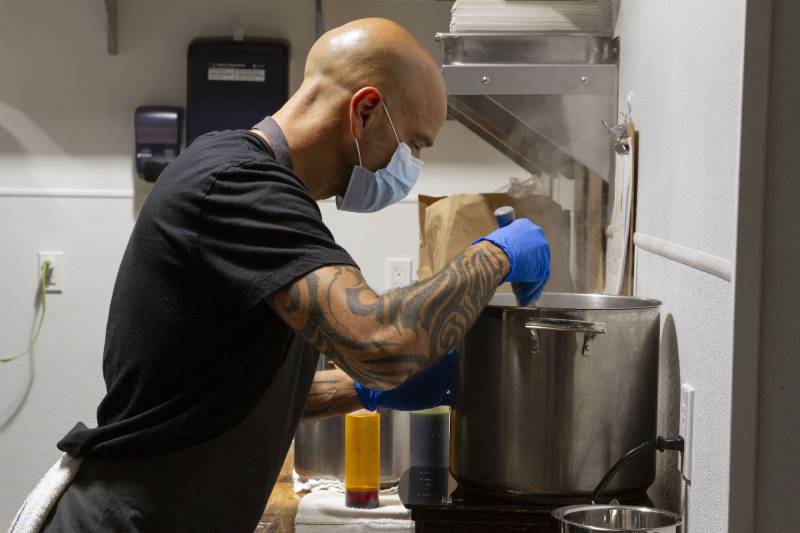
Mourad Lahlou of Aziza and Mourad in San Francisco fears the pandemic and its aftermath will decimate diversity in dining.
Mourad Lahlou of Aziza and Mourad in San Francisco fears the pandemic and its aftermath will decimate diversity in dining. (Jude Rywelski )

There were almost immoral conditions for people to be able to survive in cities like San Francisco where people could not even afford to live in the places they work. We, as a public and as operators, talked about it quite a bit, but we were never able to turn the corner on it. In return, we were squeezing everybody from the farmer to staff.

[pullquote citation=’Emiliana Puyana’]’For some folks reopening their doors will be a similar investment to the investment they had to make when they opened their restaurant in the first place.'[/pullquote]

Emiliana Puyana, Program Manager, La Cocina: What we’ve overwhelmingly seen at La Cocina is a reduction in sales and revenue, anywhere from 80% all the way up to 100%. The food industry is incredibly difficult. It’s a business with such slim profit margins where seven to 10 percent is an industry standard. Commercial real estate in this town is untenable. That piece of the puzzle has played a big role in this effort to survive the crisis. The vast majority of businesses that cannot reach some sort of full rent abatement or meaningful rent negotiations with their landlords — it will be impossible [for them] to reopen. And that’s not taking into account other outstanding loans that businesses might have, rehiring so many employees and restocking your kitchens. For some folks, reopening their doors will be a similar investment to the investment they had to make when they opened their restaurant in the first place.

It’s a really difficult time, a time that puts a lot of people’s livelihoods at risk. Not just the restaurant owners, but everybody that’s employed within this industry. But it also allows this industry a chance to reassess and build a system that takes more factors into account. Not all restaurants are built the same. What a small mom-and-pop shop in the Mission needs might look very different than what a small mom-and-pop shop in [San Francisco’s] Chinatown needs. It’s not until we start really working together with the support of folks who can bring about change and fight on our behalf that we’ll see the outcome we need.
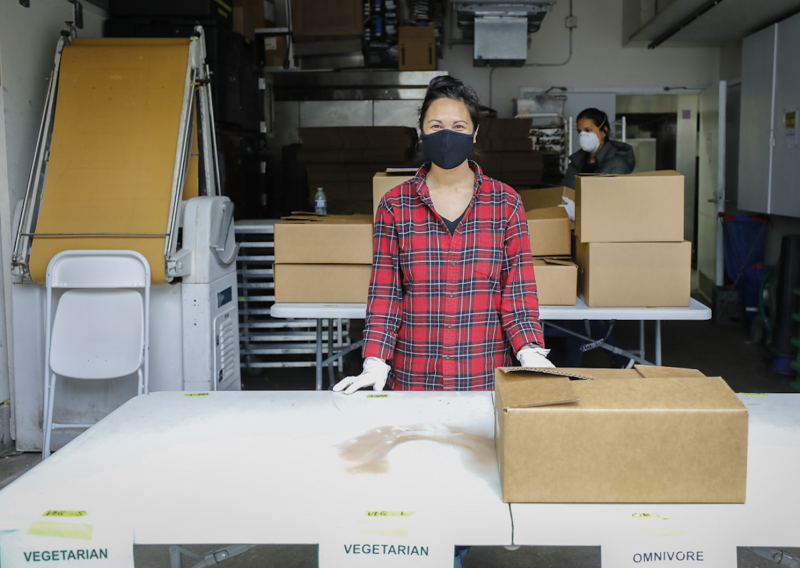
Incubator La Cocina's is offering multi-meal food boxes to offset the severe fall in revenue its businesses have experienced.
Incubator La Cocina offers food boxes from its businesses to offset their revenue losses. (Gene X Hwang / Orange Photography )

We are very fortunate to not have a tipped minimum wage here in the state of California. But at the same time, the vast majority of our employees in the food industry are not [getting] a living wage [and] restaurant owners are unable to bear any more weight on that front. I don’t know what the answer is there, but it seems like we need to ensure that we have affordable housing and more of it so that we can keep folks wanting to work in this industry in our area, which was already a huge problem before this crisis hit. Will there be anybody willing to work for $15 an hour or $16 an hour, when they’re going to need to be on a crowded train coming into cities to work from wherever they live in order to be able to afford housing?

Maria Moreno, Community Organizer, Restaurant Opportunities Center: I feel really privileged and honored to be doing this work during this time. I feel like now more than ever an organization like ours has proved to be essential for workers. [We’re] getting funds out to people, answering people’s critical questions [so they can] receive benefits for those who have benefits, advocating for those who don’t receive any benefits, and uplifting the voice of workers from all sectors and from all socioeconomic backgrounds. It has felt really purposeful.

[pullquote citation=’Maria Moreno’]’This industry is so fragile and there’s so many people that depend on it. Why continue to pretend that it’s not a professional career?'[/pullquote]

This industry is so fragile and there’s so many people that depend on it. Why continue to pretend that it’s not a professional career? It is for so many. So why don’t we treat it like that? I want an industry where we’re considered a real professional career. We can send that message by providing paid sick time for everyone, [by] providing health benefits, by providing ways for people to save their money in the same way that other companies allow you to [make] investments.

Inequities that Predate the Pandemic

Shakirah Simley, Director of San Francisco’s Office of Racial Equity:Ā 

There was a disaster before the pandemic. Public health emergencies exploit existing systemic inequalities across the board. Prior to the pandemic, one in four San Franciscans, that’s over 200,000 people, were experiencing food insecurity. And now, [that] number has likely skyrocketed. We have existing food insecurity, we have people who are laid off and becoming newly food insecure. We have the particulars of the pandemics that make it hard to access food: transportation, the need to socially distance, the need to wear face covering, limitation on store hours and the impact that COVID-19 continues up the chain for our farmers, for our producers. In the Bay Area, we are surrounded by so much wealth. For us to be tackling such a baseline need and how much it has expanded is really intense.

I don’t think just because we open again, it’s going to go back to ā€œnormal.ā€ This society was never normal for a lot of people. It was never normal for communities of color, for LGBTQI communities, for folks who are undocumented.

Vincent Medina, co-founder, Cafe Ohlone: We come from this community that’s had disease imposed as a weapon and weaponized against our people in the past. When we shut down [Cafe Ohlone], we knew that we had to turn that moment into focused work for our community: making sure that our elders [had] enough food, that our grandparents had what they needed; that people knew to prepare before grocery stores would be entirely swarmed; that we were able to find ways to provide culture to our community, even if it meant digitally; finding ways to share language, [and] spend this extent of time really searching through those old archives about ways that our community has historically responded to epidemics.
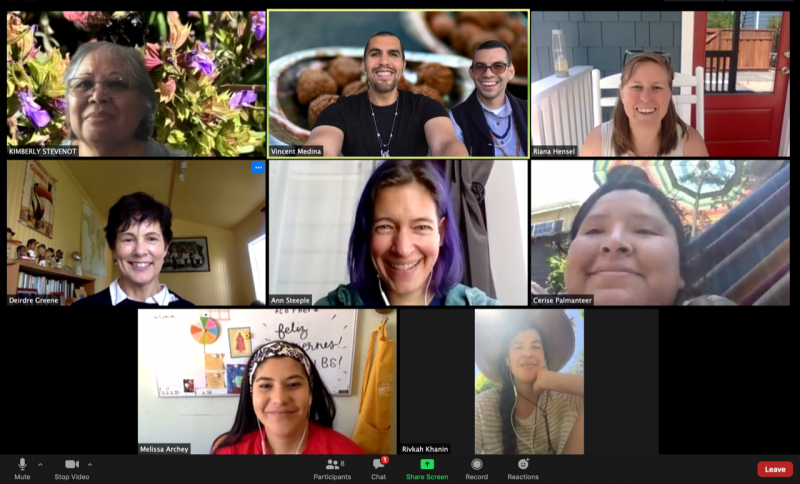
Vincent Medina and Louis Trevino have convened with Cafe Ohlone staff digitally while focusing their attention towards caring for elders in their community. (Courtesy of Cafe Ohlone)

Our Tribe, the Muwekma Ohlone Tribe, was historically recognized by the American government, called the Verona Band Alameda County and based on the Pleasanton Rancheria, which was the sovereign piece of Indian land in Pleasanton. That’s where my great grandmother was born. As a result of UC Berkeley in 1925 erroneously writing that our people were extinct, in 1927 an agent from the Bureau of Indian affairs struck our Tribe off the list of recognized tribes. Ever since then, our Tribe has been working to have that federal recognition restored. What this means [is] that we don’t have a protected land base where we could be able to live together as a community. Nowadays, what we do is we negotiate relationships with park districts. We negotiated gathering permits with certain East Bay regional parks [and] we’ve been able to gather our foods there.

Louis Trevino, co-founder, Cafe Ohlone: The East Bay Park District and the Hayward Area Recreation District and other park districts in the area deciding to close trails and parks [where it is] difficult to social distance is a responsible thing to do, but it is also a way that the park districts are exercising the ability to lock the gates. [Doing so] excludes the most local indigenous people, Vincent’s family here in the East Bay, the Muwekma Ohlone Tribe, from being able to go out into their ancestral places. It sheds light on the fact that even though today we have been able to negotiate leverage positive relationships with the East Bay park park district, that relationship still exists within a colonial framework.

[pullquote citation=’Vincent Medina’]’In this time of a slowdown, we can really dream and imagine.'[/pullquote]

Vincent Medina: We want to make sure that we’re continuing to do what we do, where we gather our foods with prayer and gratitude. We feed our community and we teach the public. But we also know that whatever we’re going to do into the future, it’s going to have to move slowly, carefully and cautiously. And Cafe Ohlone, it’s not going to look exactly like what it did before the shutdown where the cafe was so full that we would have to turn some people away for that time and invite them back. One of the potential outcomes of all of this could be this beautiful transformative time where a lot of those flaws that are having light shed on them can be corrected and fixed. In this time of a slowdown, we can really dream and imagine right now as we’re, as we’re all stuck inside. We know that our wisdom as Ohlone people and the wisdom that our elders carry and teach is more needed right now than ever. It has the ability to teach us that there’s a better way forward that can transform the faltering society that we’re living in, into something that’s much more meaningful and richer.

Finding Solutions and Leveraging Momentum

Shakirah Simley: Sometimes what you see within pandemics is that you can be more flexible and creative in thinking about recovery. Advocates have been working for half a decade to get people to be able to buy groceries online with food stamps, and it happened in a snap. I’m hoping [we keep] the flexibility and adaptability of some of these federal and state programs.

I’m hoping there’s a greater appreciation or direct relationships with people who feed you, from restaurant owners to farmers to artisans folks to your grocer. People are asking themselves, “If our industrial food system fails, what can I get locally to help me meet this need?” [The answer] is built on relationships.

A lot of our local restaurants, farmers markets and grocers have rather been extremely adaptive. That’s really powerful and I hope they’re able to sustain that model and so we’d have more community, neighborhood-based feeding models. Even from aunty who lives in one housing development making plates for everybody and delivering it door to door with plates wrapped in aluminum foil. That needs to be maintained. The industry itself is stepping up and being adaptive, but there’s individual people who have stepped up to feed their neighborhood, and often for free.

Mourad Lahlou: The majority of the work we’ve been doing with [Bay Area Hospitality Coalition] is to help the community and our fellow industry people. But at the same time, it’s been good for us because we are talking to each other. It’s a therapeutic session every day where we cry one day, we yell one day, we laugh one day. We’re supportive of each other and it’s been really wonderful. I’ve never been closer to my chef or hospitality community as much as I am right now. One of the ideas that I had was to ask the federal or state government to compensate us if we’re mandated to open at half capacity. To compensate the other half so that we are able to pay people what we’re supposed to pay them. We are able to pay our rents without being harassed. We are able to pay our purveyors, our farmers without asking them to wait 30 days or 60 days before they get a check.
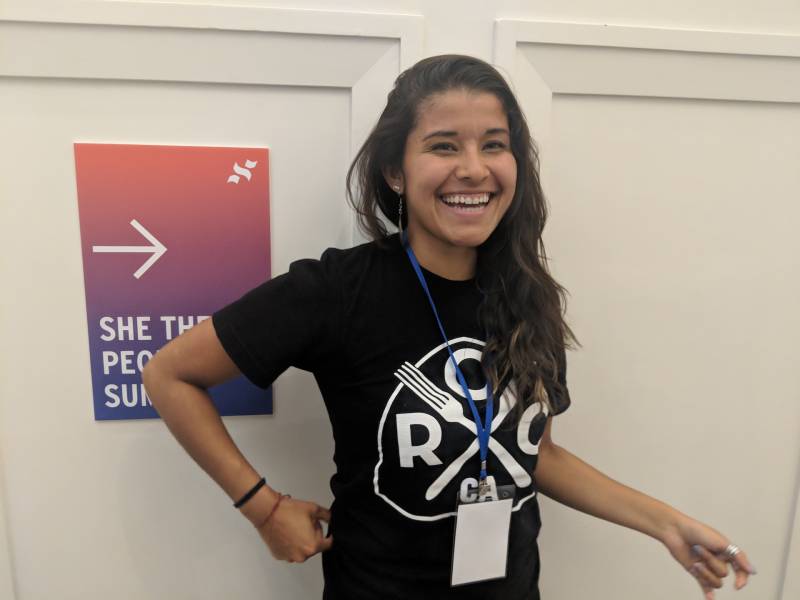
Restaurant Opportunity Center's Maria Moreno is working towards safety nets for undocumented workers in the restaurant industry.
Restaurant Opportunity Center’s Maria Moreno insists service work in the restaurant industry be treated as a career. (Courtesy of Maria Moreno)

Maria Moreno: Right now we’re working on a ā€œright to returnā€ policy to ensure that workers who were already hired by restaurants all over the Bay Area actually have a place to come back to. And not just in restaurants, but all kinds of jobs. The policy requires [businesses] to rehire laid-off workers before hiring other people. If they only need 50% of the staff that they had before, that’s okay. They just have to bring back laid-off workers who have worked there the longest and in qualifications that they need until they have as many workers as they need. It’s not asking businesses to take on more than they can handle.

Personal and Corporate Accountability

Jocelyn Jackson, co-founder of People’s Kitchen Collective: People want to say ā€œYou have my thoughts and prayers,ā€ or there’s the feeling of wanting to do the hero worship [of] the folks that are on the frontline. I appreciate the intention of that, but what doesn’t happen at that celebration of their sacrifice is acknowledging that the people deeply impacted by these capitalists or profit-driven decisions are being put in harm’s way. It doesn’t matter if we call them heroes if they can’t also be supported in their humanity. And that means having the pay that respects the value of who they are, the safety equipment that they need, the healthcare that they need, the housing. To have the visibility that’s required for our economy to totally, absolutely shift forevermore away from something that invisibilizes and dehumanizes them. Folks that are getting the support like the medical community, they deserve it, absolutely they do—but are food workers getting that same support? Are they getting the offers of free meals for a year? Are they being offered hotel rooms so they can quarantine so they don’t put their families at risk? No, because the disposable nature of the food community is so entrenched in the habits of this industry.

[pullquote citation=’Jocelyn Jackson’]’ It doesn’t matter if we call them heroes if they can’t also be supported in their humanity.'[/pullquote]

Accountability is often achieved through watchdog groups—people taking the initiative and the personal responsibility to hold corporations accountable for their actions. There needs to be a new wave of that in the activist world. It’s not simply mutual aid. It’s not just the activism of protest. It’s not an easy task. [But] it’s essential because we’re using this phrase ā€œessential workers,ā€ and it feels like a misnomer because of the treatment that they’re experiencing. The essential quality is their humanity and for that to be lifted up and for that to be amplified is one of the biggest parts of re-shaping the food community so that it is supportive of everyone at every level and not filled with the dynamics of disposability.
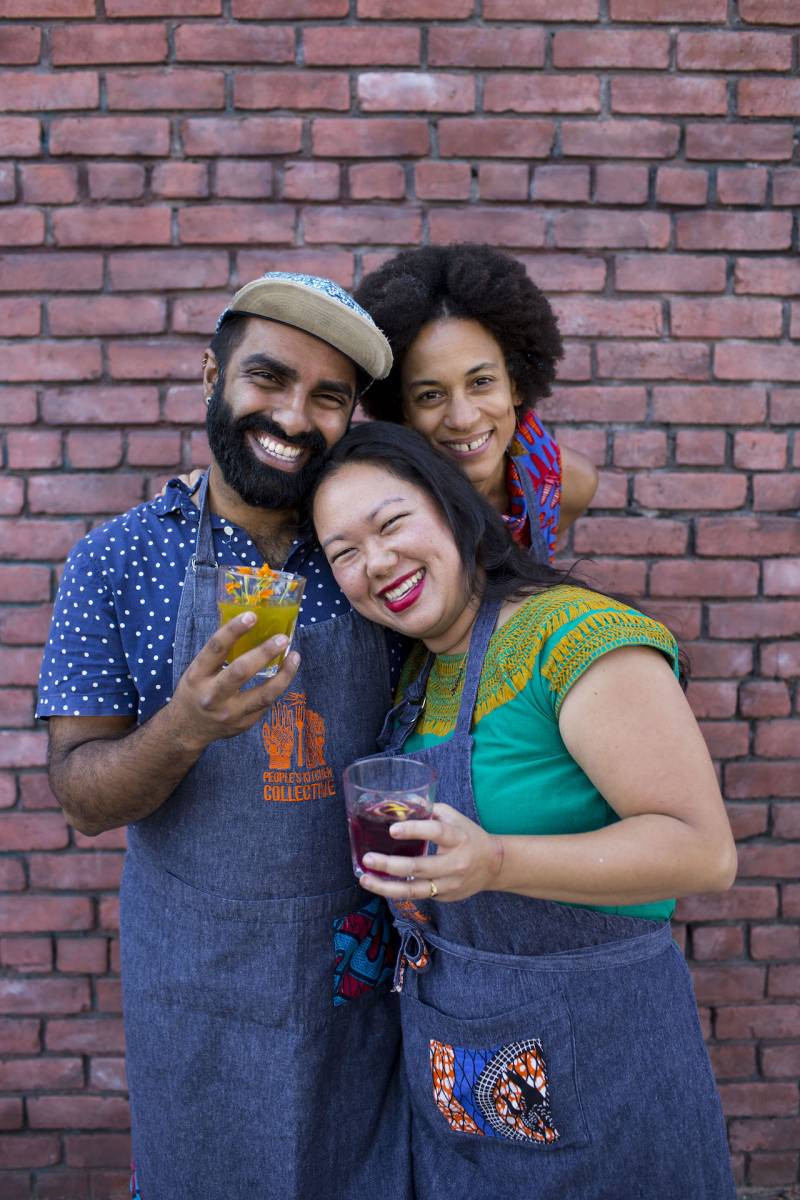
People’s Kitchen Collective founders Saqib Keval, Sita Kuratomi Bhaumik and Jocelyn Jackson have spent the past 10 years imagining and working towards more equitable food systems. (Sana Javeri Kadri)

Sita Kuratomi Bhaumik, co-founder, People’s Kitchen Collective: We don’t want this to return to the way things were, and it can’t. [People’s Kitchen Collective] is always in a state of change, but I think that in times of crisis, we are more ourselves and the problems bubble up in neon in a way that they demand more of our attention. As we make decisions about how it is that we feed ourselves and each other, one of the biggest challenges for me in this pandemic is the ways we are used to supporting our community could also be harmful in terms of gathering in large numbers. We’re planning for future events including Life is Living and looking to distribute food instead of gathering together.

I have both hope and disillusionment around [the future]. I do think that this moment is about the alienation of labor laid bare and what that means for restoring our whole selves as people. [I] think about this question that a former student of mine, Marianna Martinez, asked me: ā€œWhat are our jobs outside of capitalism?ā€ What are we really meant to be doing? Are we meant to be caring for an elder in our family? Are we meant to be a writer? Are we meant to help people start gardens? How can more of our lives be taken up with the activities where we are the brightest? I would ask that if you are a person who is waiting for things to go back to normal, to think about all of the people for whom that is not true.

It’s about asking those questions and they’re difficult to reckon with in the face of so much real loss and real fear. It is so important to think about our collective survival in a way that truly supports, not just any one person, but how we can get there together because that’s the only way we’re going to get there.
5 Ways to Celebrate Pride Month with Food and Drink

With Pride month in full effect, there’s so much LGBTQ history to be celebrated in the Bay Area. In that spirit, restaurants and eateries all over the city are channeling that history into delicious concoctions for Pride revelers to enjoy.

As rainbow flags dot the lines of many of the streets in the city, it’s clear that June is here and Pride month is in full swing!

June was chosen as Pride month to commemorate the Stonewall Riots in New York City that ended in June 1969. Soon after, LGBTQ havens like San Francisco followed suit, organizing parades, creating publications, and launching other efforts to advocate for LGBTQ rights and visibility. Staging “Gay-ins” (which would ultimately evolve into San Francisco Pride), San Francisco was instrumental in many of the west coast’s gay rights advocacy movements, giving way to figures such as Harvey Milk, Anne Kronenburg, and Gilbert Baker.

With such a rich history rooted in the LGBTQ movement and with a city culture that is still currently so deeply embedded in it, it’s no surprise that beyond the many city celebrations, parades, and parties, that chefs and restaurant owners all over the Bay are celebrating Pride month in a way they know best: through food and drink!

Below are some of the best ways to literally take Pride in–whether that’s through a masterfully crafted cocktail, a perfectly baked confection, or in an eye-opening conversation over a tasty meal. And just like Pride, the offerings below only come around once a year, so take a bite, sip, and seat before you have to wait all year for it to come around again!

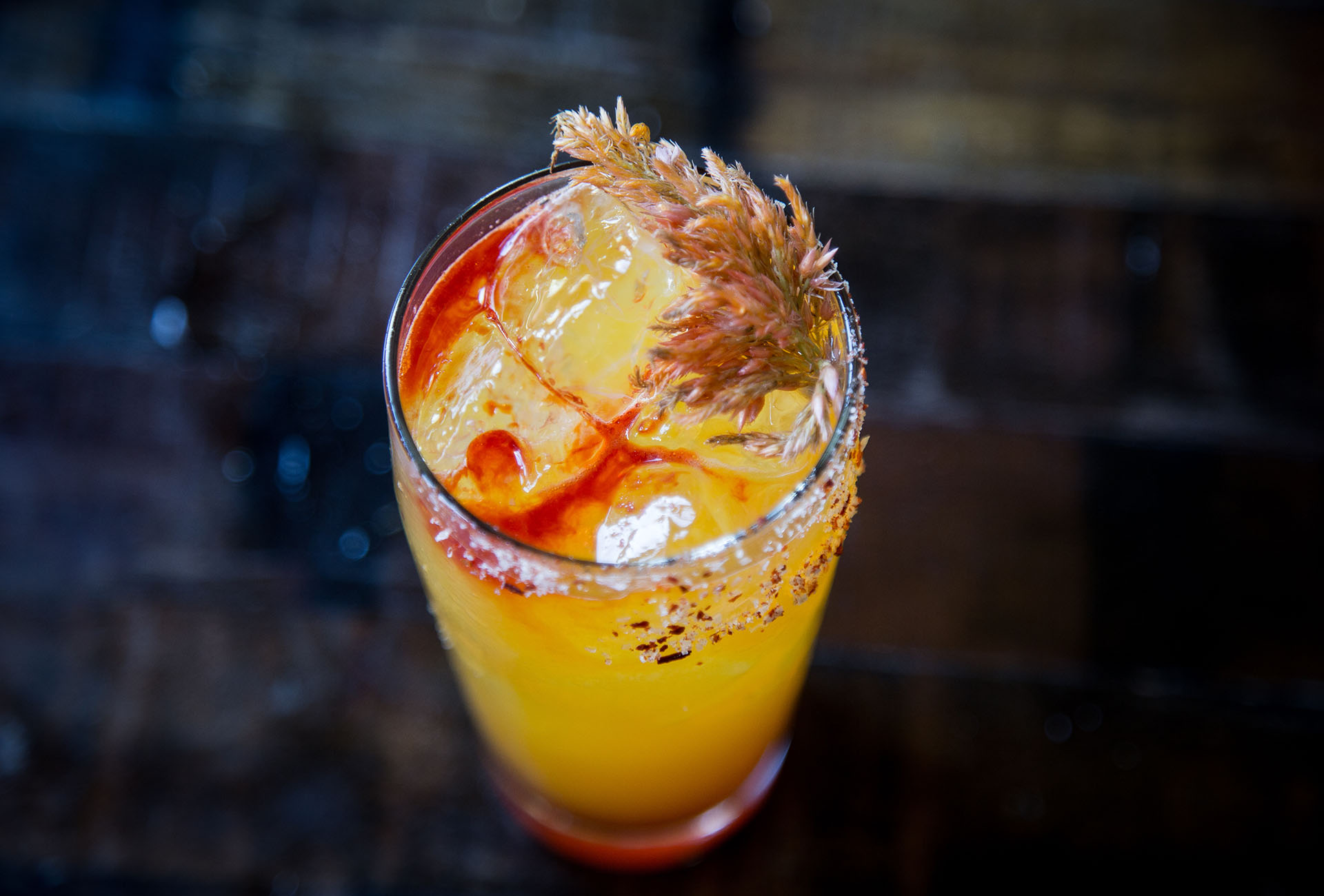
The Always Rising, named for gay activist Cleve Jones, made with tequila, passionfruit, peach, housemade habanero syrup, and lime.
The Always Rising, named for gay activist Cleve Jones, made with tequila, passionfruit, peach, housemade habanero syrup, and lime. (Patrick Wong)

Pride Cocktail Menu: Finn Town

2251 Market St, San Francisco, CA 94114

The Castro is likely where most will be naturally flocking to to enjoy Pride festivities, and thankfully, they won’t need to travel far to enjoy Finn Town’s special Pride month cocktail menu.

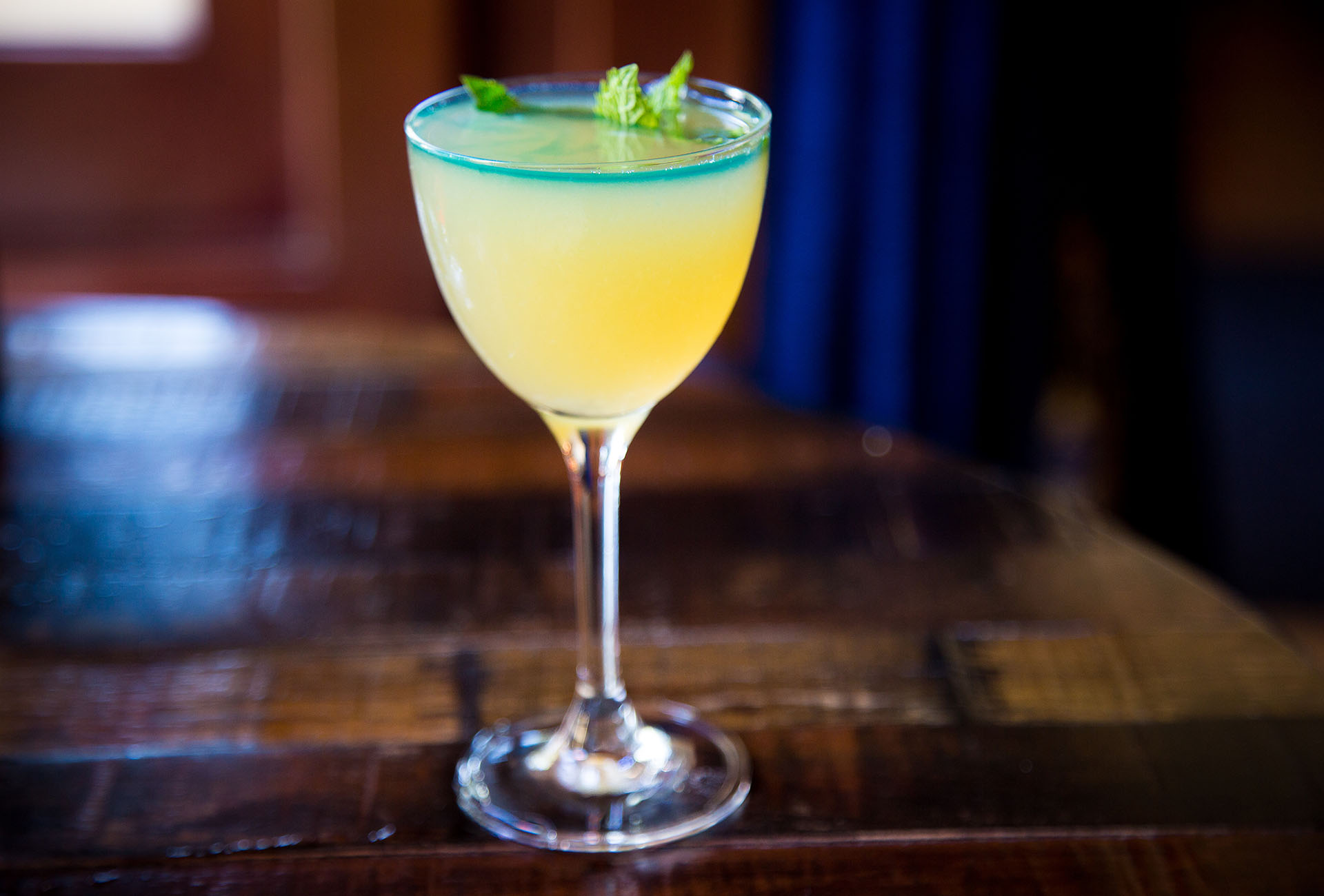
The Sparking Vibrations, a drink for Teresa Sparks, HRC Director--made with mezcal, luscardo, green chartreuse, and lime.
The Sparking Vibrations, a drink for Teresa Sparks, HRC Director–made with mezcal, luscardo, green chartreuse, and lime. (Patrick Wong)

It’s being called the “All You Need is Love” menu and features never-before-seen cocktails that are inspired by and named after prominent San Franciscan LGBTQ figures, from activists like Cleve Jones (who created the NAMES Project AIDS Memorial Quilt and is the cofounder of the San Francisco AIDS Foundation), to performers and spokeswoman Donna Sachet.

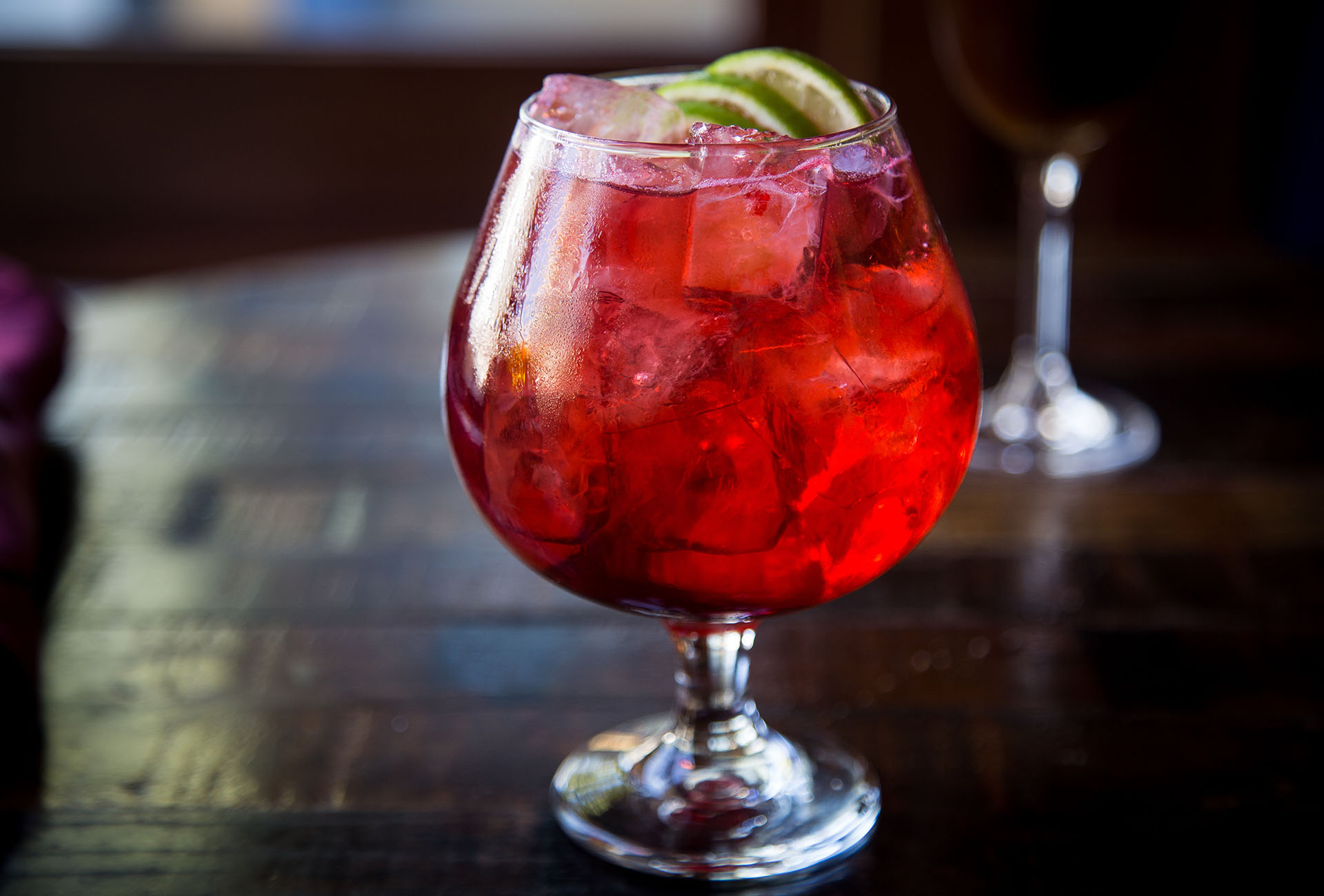
The Sachet Away named after performer and philanthropist Donna Sachet made with Sloe gin, gin, and tonic.
The Sachet Away named after performer and philanthropist Donna Sachet made with Sloe gin, gin, and tonic. (Patrick Wong)
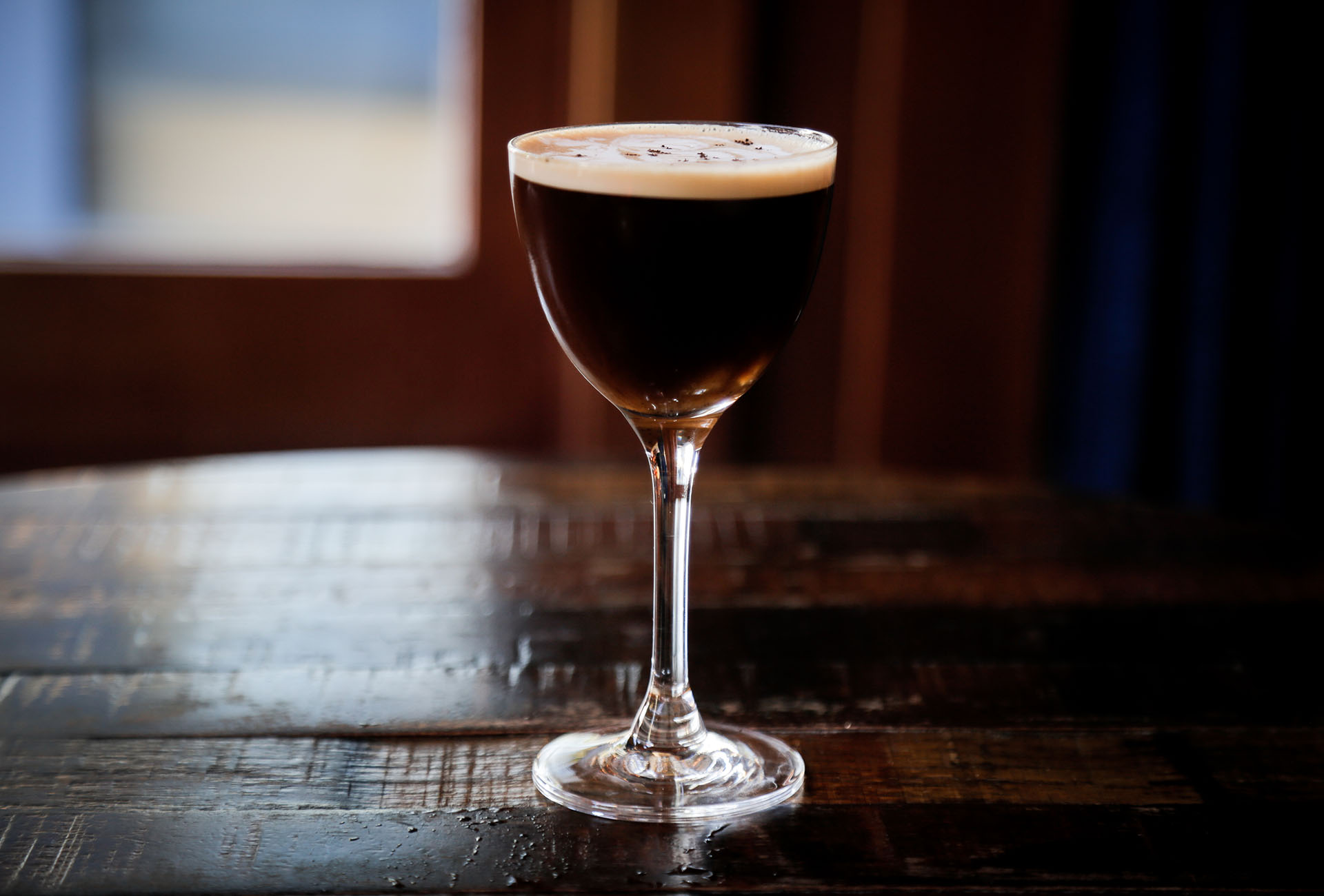
The Sylvester named for the famous singer and performer It's made with vodka, kahlua, vanilla, and espresso.
The Sylvester named for the famous singer and performer It’s made with vodka, kahlua, vanilla, and espresso. (Patrick Wong)

There will be seven cocktails in total, each with a different spirit to strike any person’s fancy.

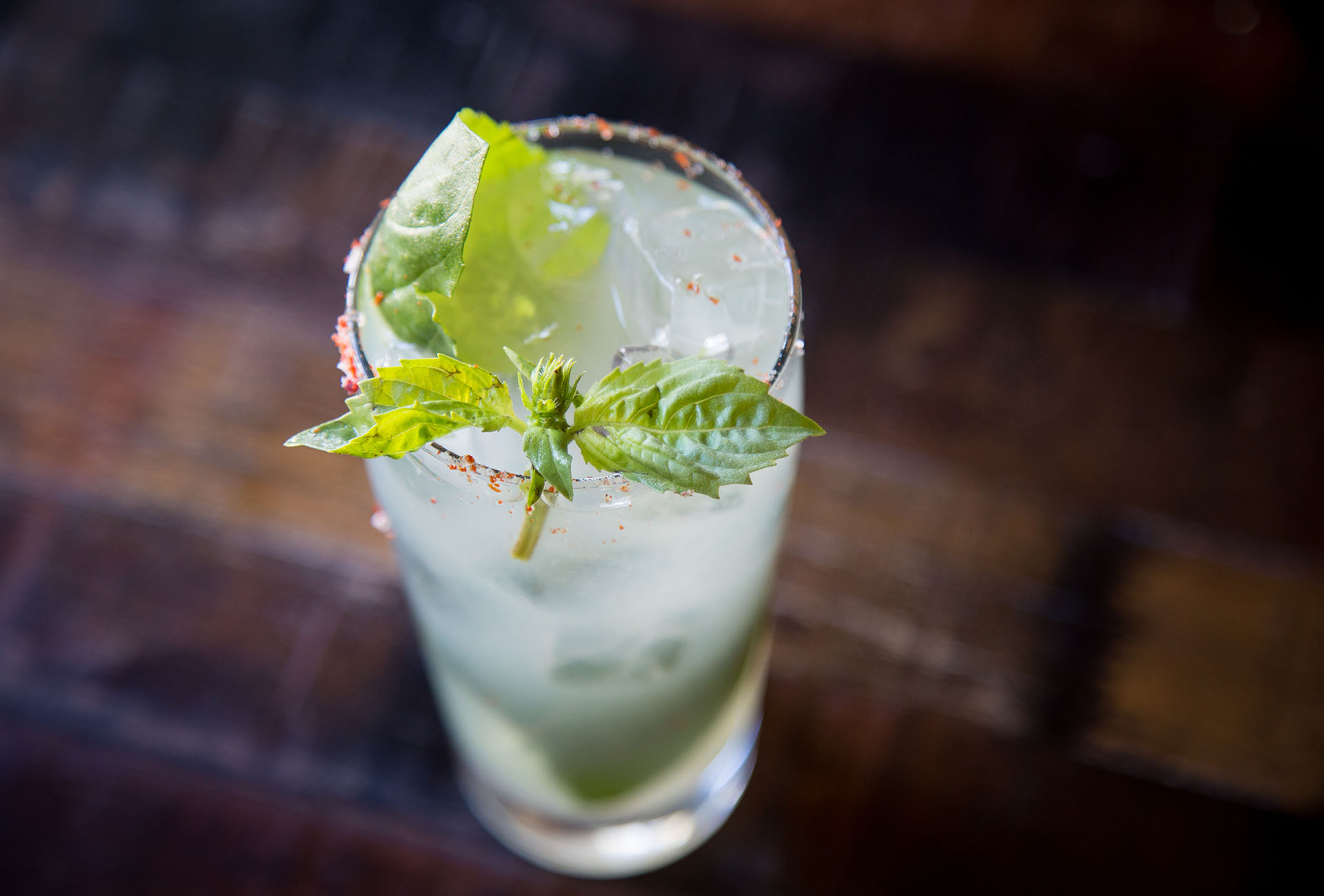
The Tails of This City, a drink named after author Armistead Maupin's famous book about San Francisco, Tales of This City--made of tequila, basil, lime, agave, and egg white.
The Tails of This City, a drink named after author Armistead Maupin’s famous book about San Francisco, Tales of This City–made of tequila, basil, lime, agave, and egg white. (Patrick Wong)
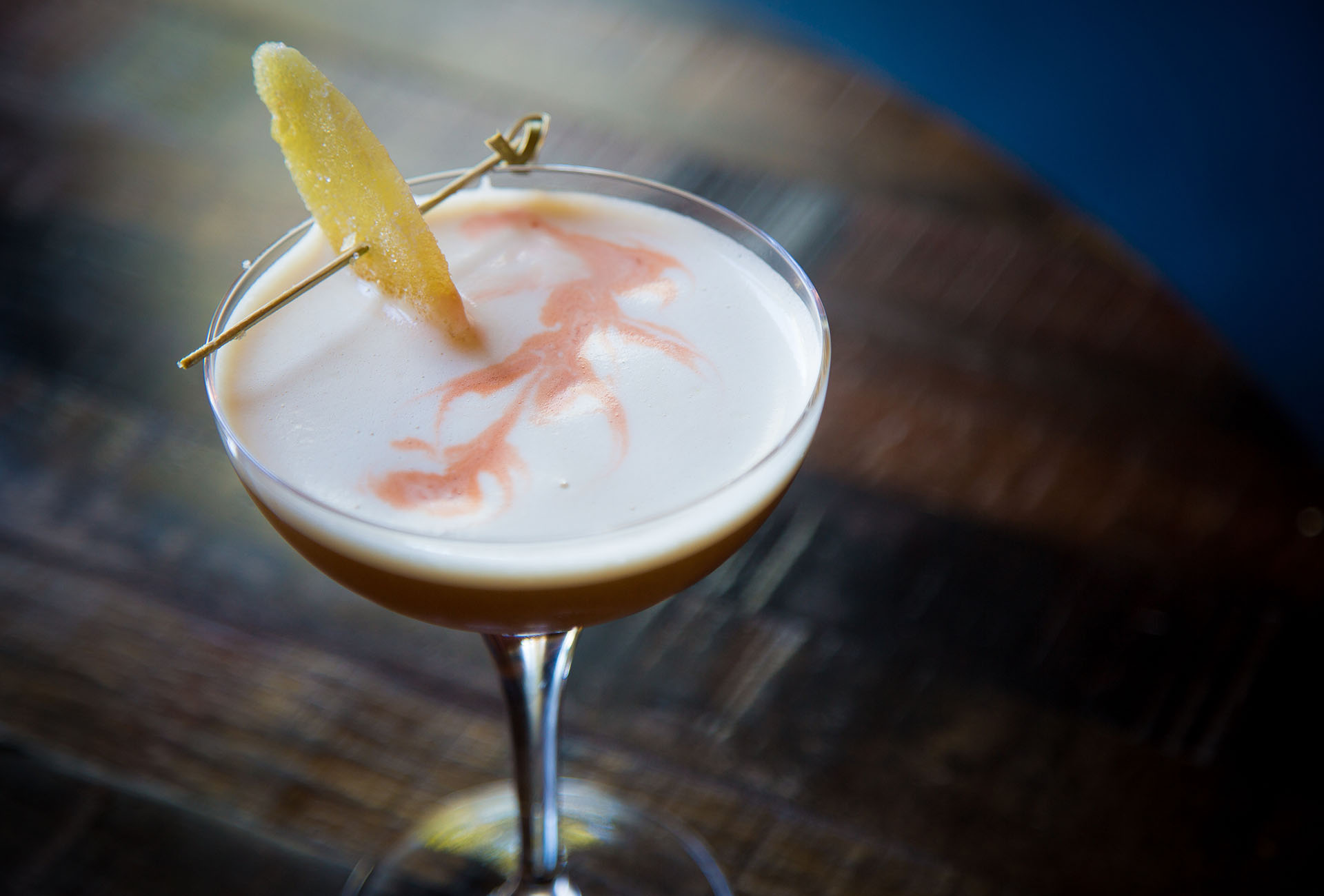
The Last Call at Maud's, a tribute to Del Martin and Phyllis Lyon, who are the founders of Daughters of Bilitis, the drink is made with whiskey, Pimms, ginger, lemon, and egg white.
The Last Call at Maud’s, a tribute to Del Martin and Phyllis Lyon, who are the founders of Daughters of Bilitis, the drink is made with whiskey, Pimms, ginger, lemon, and egg white. (Patrick Wong)

And while the drinks will be served during all of Pride month, Finn Town will also be hosting a couple of events during Pride Weekend (June 23-24). On both days, there will be Pink Brunch and Rainbow Brunch respectively, where brunch will be served all day, alongside the All You Need is Love cocktail menu. Ahead of that, on June 22, Finn Town will also go through a bit of a transformation and become “Club Finn,” which is being described as a “classy not trashy” Pride celebration with a red carpet, photographers, their signature Pride cocktails, and Jello shots.

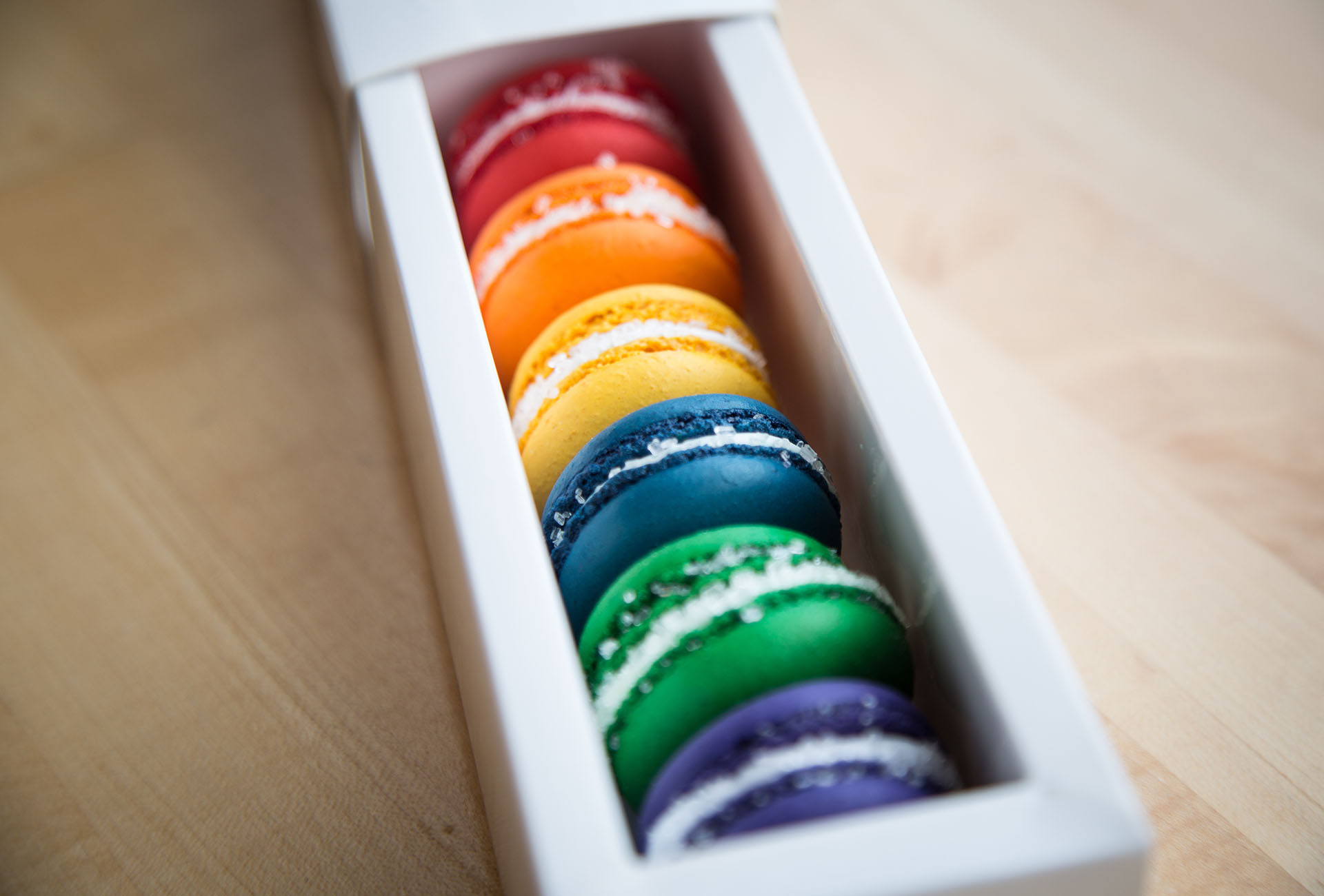
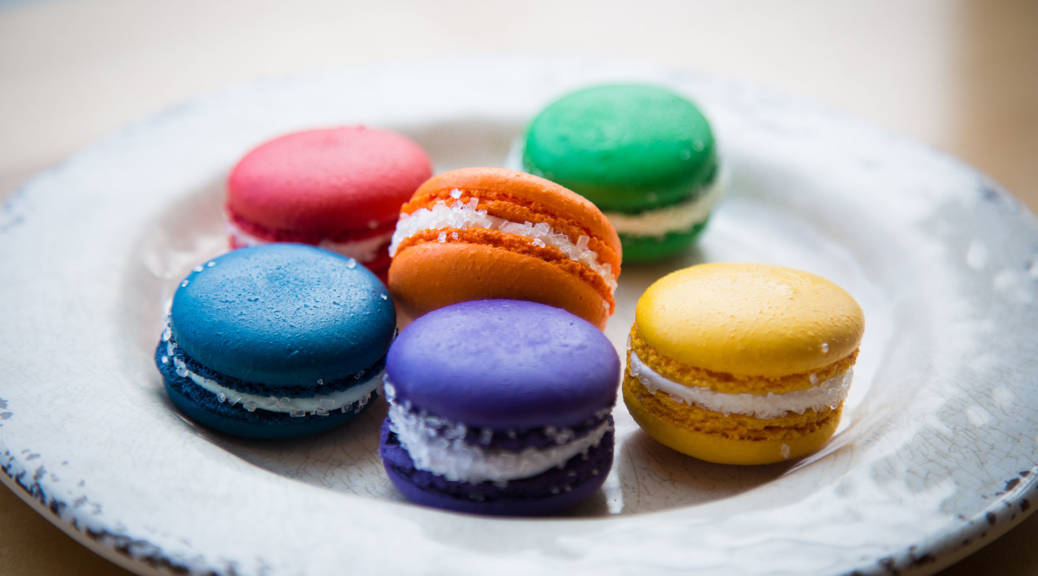
The Pride-themed Macarons are available to order online and come in a case of six.
The Pride-themed Macarons are available to order online and come in a case of six. (Patrick Wong)

Rainbow Macarons: Kahnfections

3321 20th St, San Francisco

Neighborhood bakery, Kahnfections, is typically known for its array of tasty pastries (grab a scone, biscuit, or croissant next time you’re there), so it’s not a huge surprise that Kahnfections has unveiled an equally as tasty baked good for Pride.

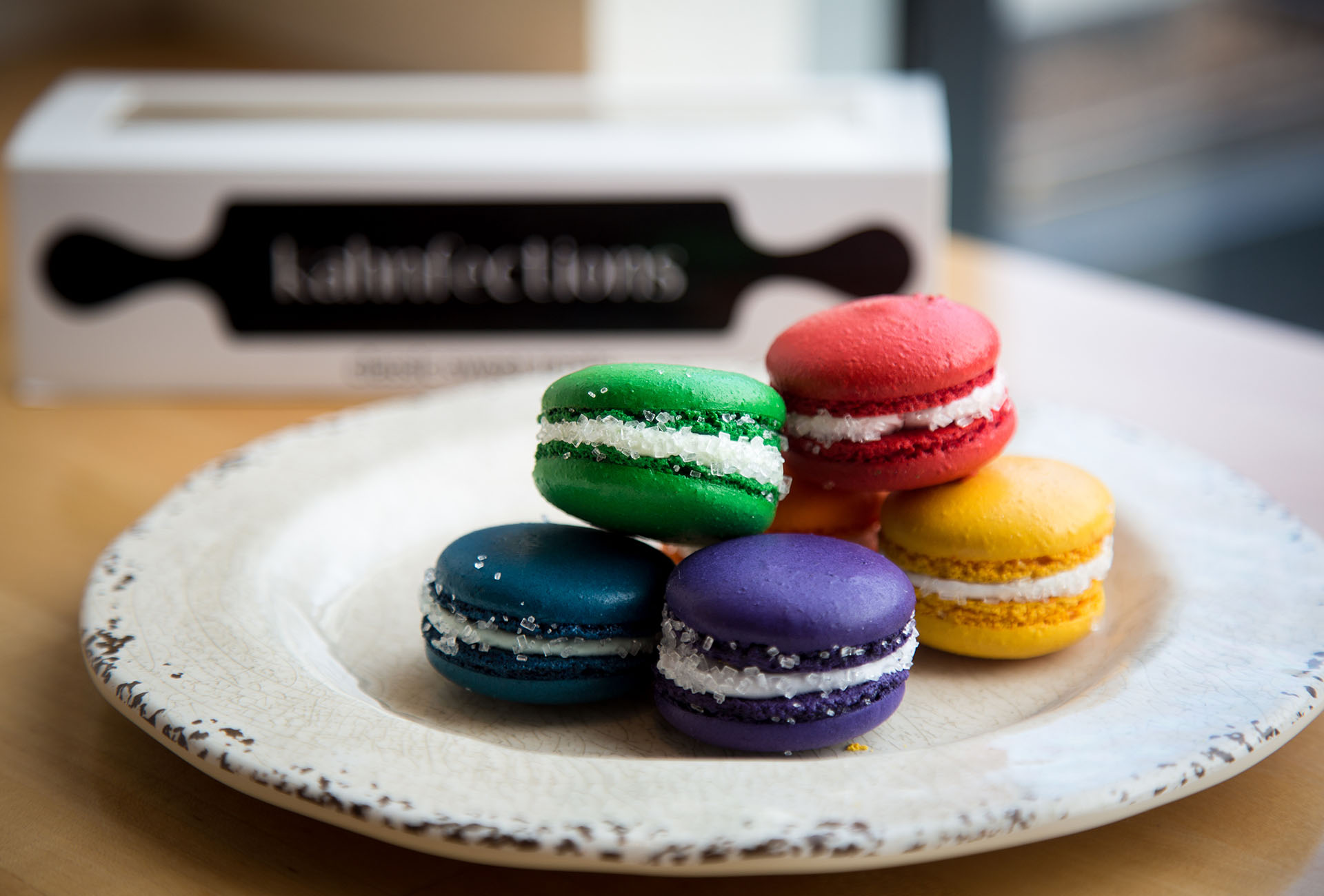
Available all month long are Kahnfections’ “Pride-themed Macarons,” which come in a set of six macarons, representing the colors of the rainbow. All six macarons can come in a boozy or non-boozy variety. Since Pride is a celebration, though, the cocktail-ed macarons are highly recommended. Flavors include midori sour, pina colada, bellini, and strawberry daiquiri, while the virgin macarons include earl grey, cassis, peach, and strawberry. Both versions’ macarons are brightly colored and studded with sugar, adding a nice little crunch to each bite!

The Six Pride-themed Macarons are all cocktail flavored.
The Six Pride-themed Macarons are all cocktail flavored. (Patrick Wong)

The macarons can be ordered via a special link on the Kahnfections website for $12 and are only available as an advanced order and can only be picked up in their Mission-based shop. While Kahnfections’ typical offerings aren’t Pride-related, picking up your Pride macarons is the perfect opportunity to peruse the display case and check out the wide variety of sugary goodies to give you a little more pep in your step for the month’s Pride festivities.

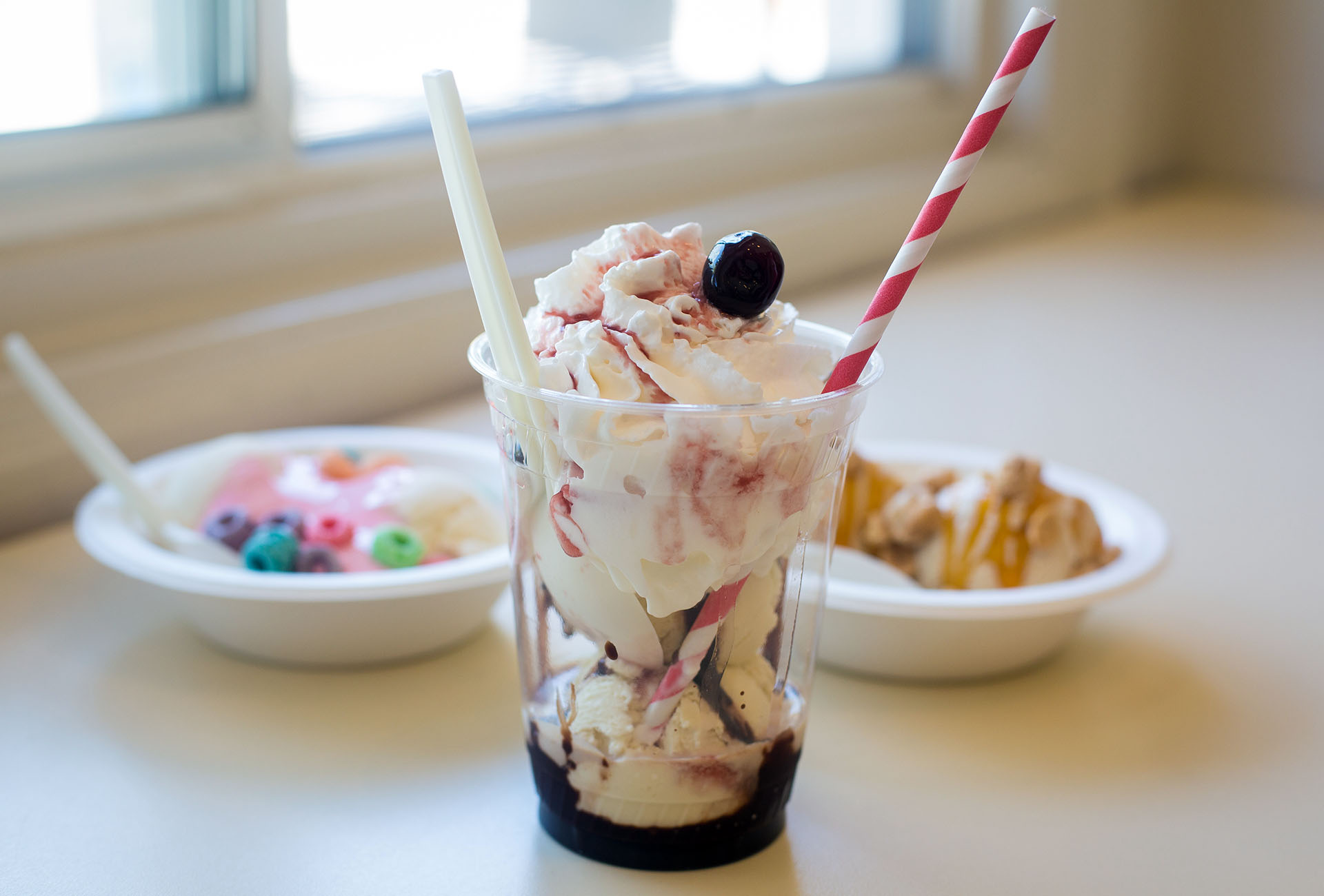
The Hot Mess Sundae, made with vanilla ice cream, butter scotch, marshmallow fluff, and topped with a cherry.
The Hot Mess Sundae, made with vanilla ice cream, butter scotch, marshmallow fluff, and topped with a cherry. (Patrick Wong)

Pride Sundaes: Humphry Slocombe

2790a Harrison St, San Francisco

Steel your belly, as Humphry Slocombe is coming at you with a triple threat of Pride goodies!

The ice cream shop, which serves a year-round flavor dedicated to Harvey Milk already in their Harvey Milk & Honey, will be serving three Pride-only sundaes to really make sure your sweet tooth is satisfied.

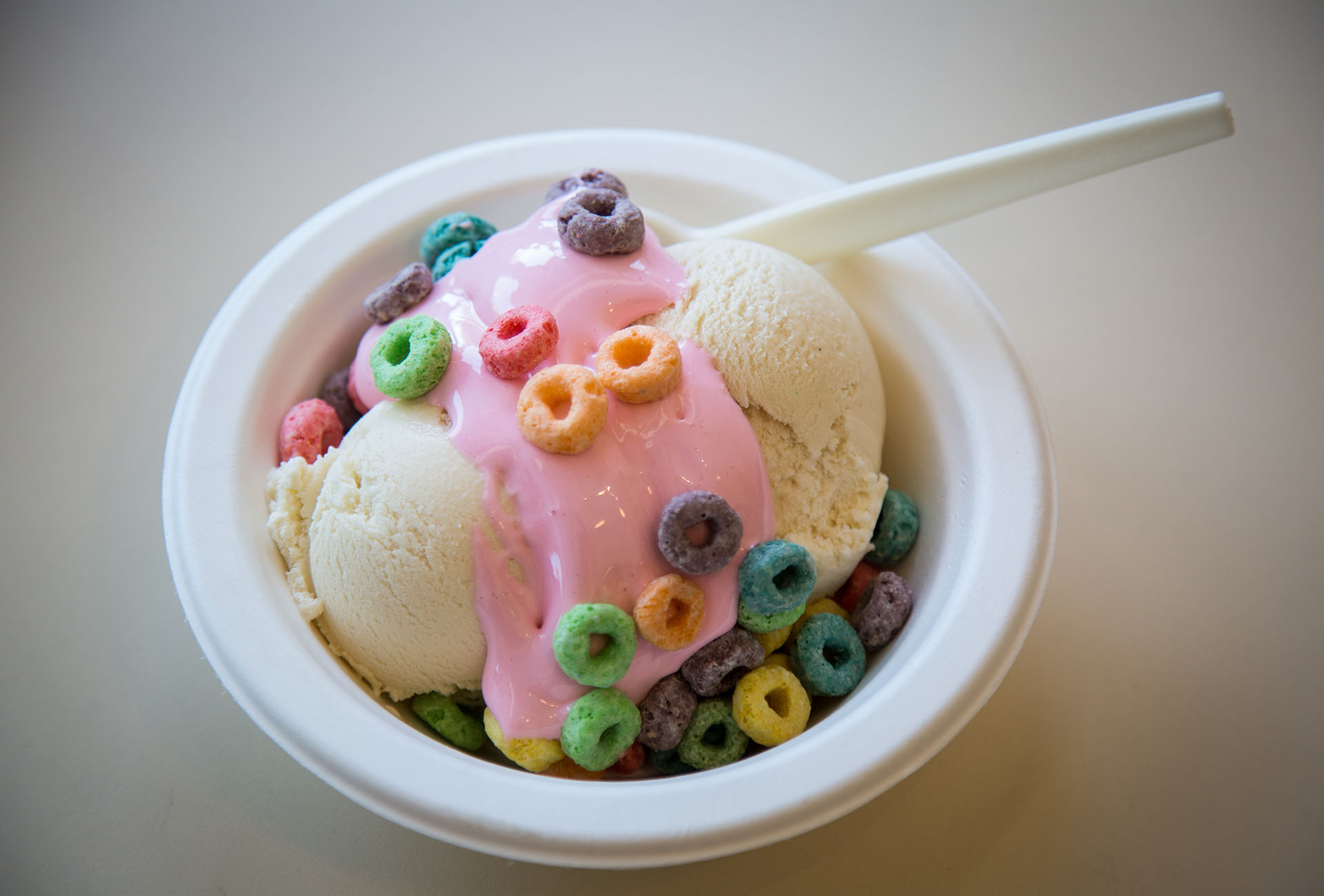
The Make It Gay Sundae, made with your choice of ice cream, house-made pink marshmallow fluff, and Fruit Loops.
The Make It Gay Sundae, made with your choice of ice cream, house-made pink marshmallow fluff, and Fruit Loops. (Patrick Wong)

First is the Make it Gay Sundae, served with your choice of ice cream (recommended is the vanilla or Harvey Milk & Honey), house-made bright pink marshmallow fluff, and Fruit Loops cereal. The fluff is the real stand-out in this sundae, adding a nice salty (and very pink) note to balance out the sweetness of the cereal and ice cream.

The Whos Your Daddy Sundae, made with beer ice cream, house-made frosted peanuts and bourbon caramel sauce.
The Who’s Your Daddy Sundae, made with beer ice cream, house-made frosted peanuts and bourbon caramel sauce. (Patrick Wong)

Second is the Who’s Your Daddy Sundae, made up of a beer ice cream (made with Anchor Coffee Porter), topped with bourbon caramel sauce, and frosted peanuts (which you could probably eat a whole jar of easily). Imagine a night out with Daddy (we’ll let you interpret that however you want) with a nice cold beer and bar nuts.

The Hot Mess Sundae.
The Hot Mess Sundae. (Patrick Wong)

Finally, it’s the Hot Mess Sundae, which is vanilla ice cream with marshmallow fluff, banana, and butterscotch, topped with a single cherry. There’s a lot going on, but like any hot mess, is still very much lovable.

Each sundae is between $8 and $9 and will be available at their shop in the Mission.

The Whos Your Daddy Sundae, alongside the Humphry Slocombe condoms, which are also available for Pride.
The Who’s Your Daddy Sundae, alongside the Humphry Slocombe condoms, which are also available for Pride. (Patrick Wong)

And while you’re there, be sure to ask for one of their Humphry Slocombe condoms!

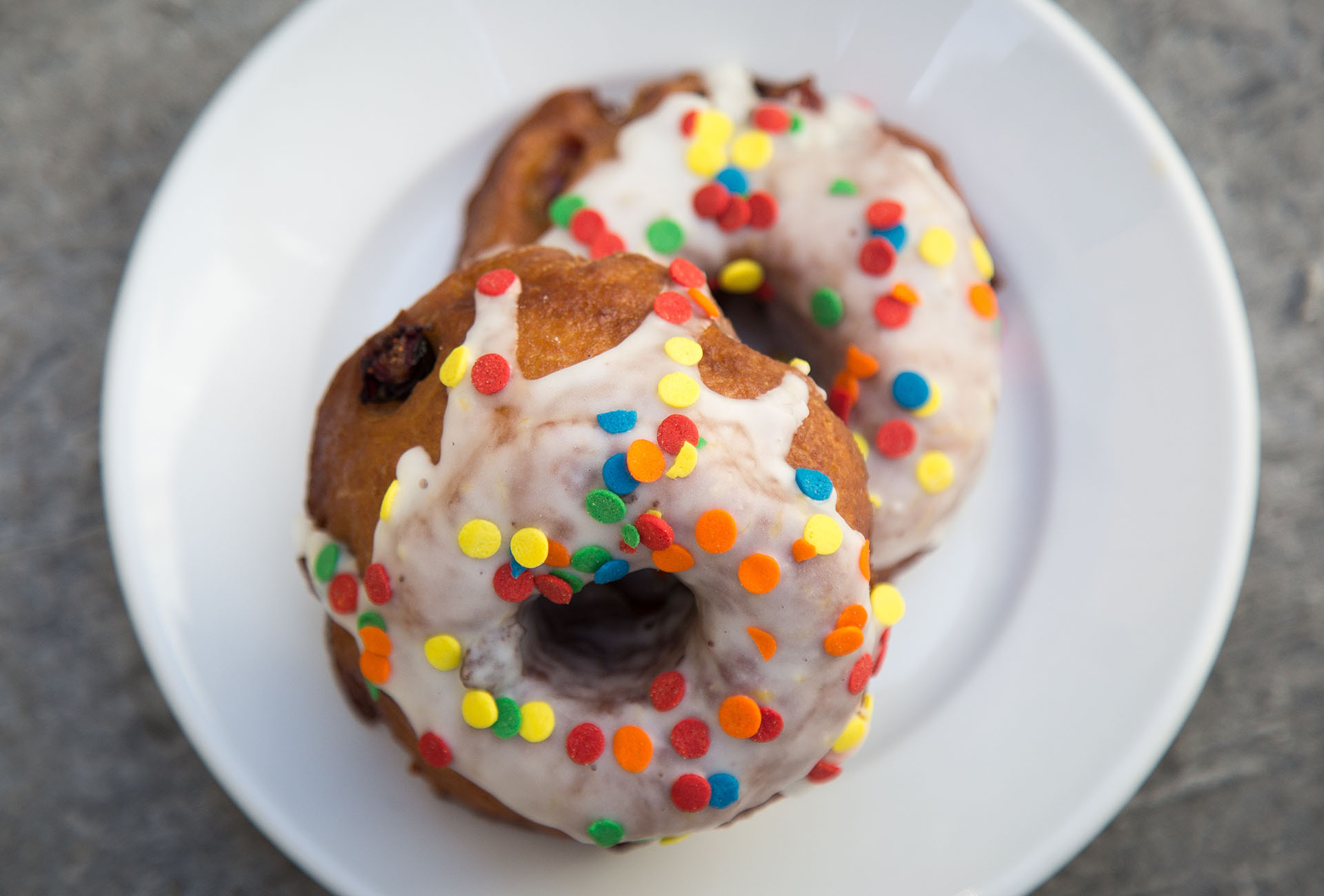
The Very Berry Pride Donuts are glazed with a champagne frosting.
The Very Berry Pride Donuts are glazed with a champagne frosting. (Patrick Wong)

Very Berry Pride Donut with Champagne Glaze: Dynamo Donut & Coffee

2760 24th St, San Francisco

No stranger to inventive flavors, Dynamo Donut will be offering a special Pride donut to join its already delicious donut ranks.

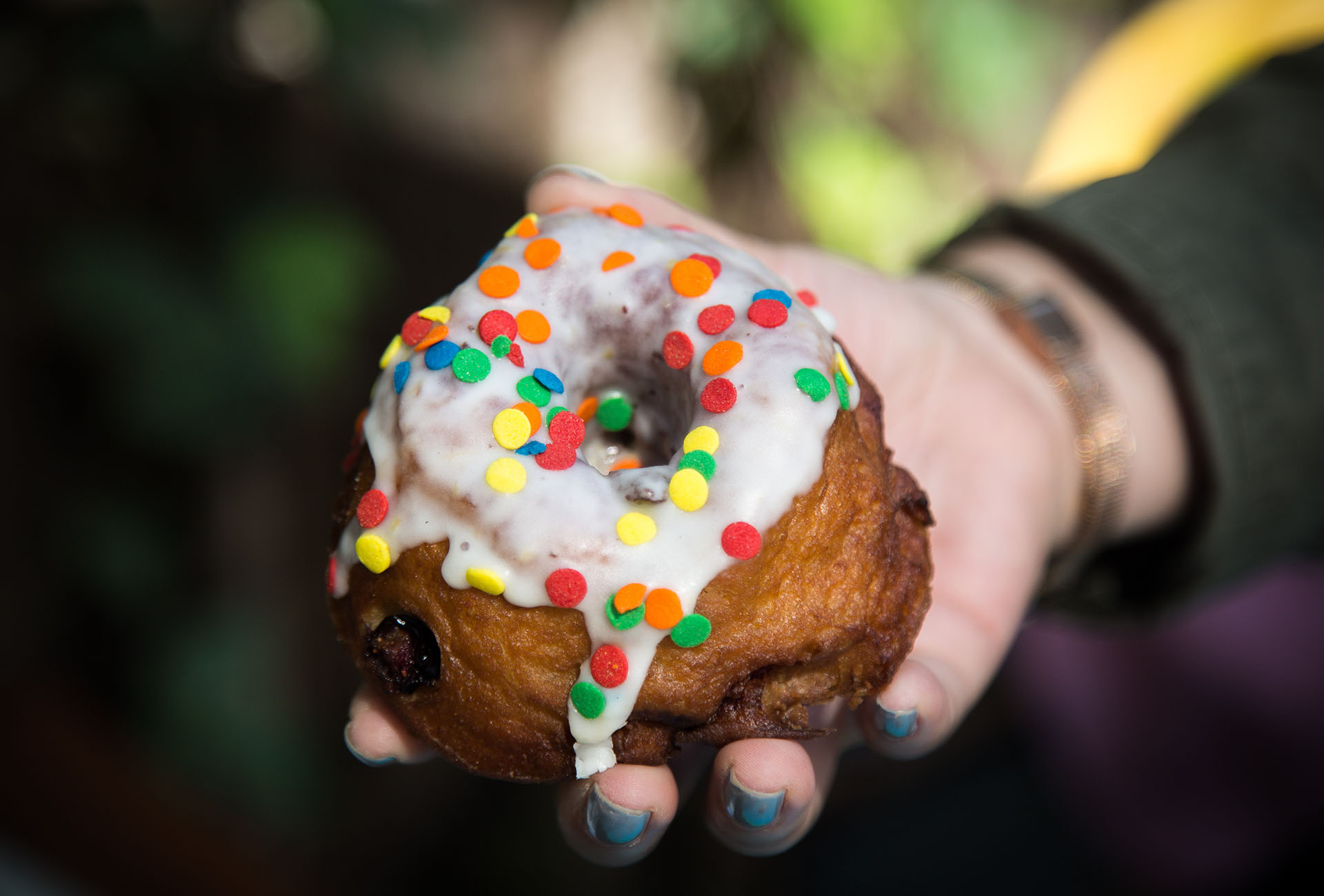
This year, their Pride donut is called Very Berry Pride and is a blueberry and strawberry donut (the berries are baked into the donut itself; just take a bite to see the proof). The donut is then topped with a generous amount of champagne glaze, just to add a little more decadence.

Very Berry Pride Donut from Dynamo Donut.
Very Berry Pride Donut from Dynamo Donut. (Patrick Wong)

The Very Berry Pride Donuts will only be sold Friday June 22 through Sunday June 24 ($3.50 each), but like any of their donuts, they do sell fast, so it’s recommended you get there earlier during their opening hours to snag yourself one (or two or three) of these ringed beauties.

And while you’re at it, explore the other monthly special flavors, which include Strawberry Earl Grey, Lemon Meringue, and Pineapple Basil. These will also cost you $3.50.

Word also has it that Dynamo has some exciting partnership flavors in the works, so post-Pride, keep your eyes peeled and get your stomach ready.

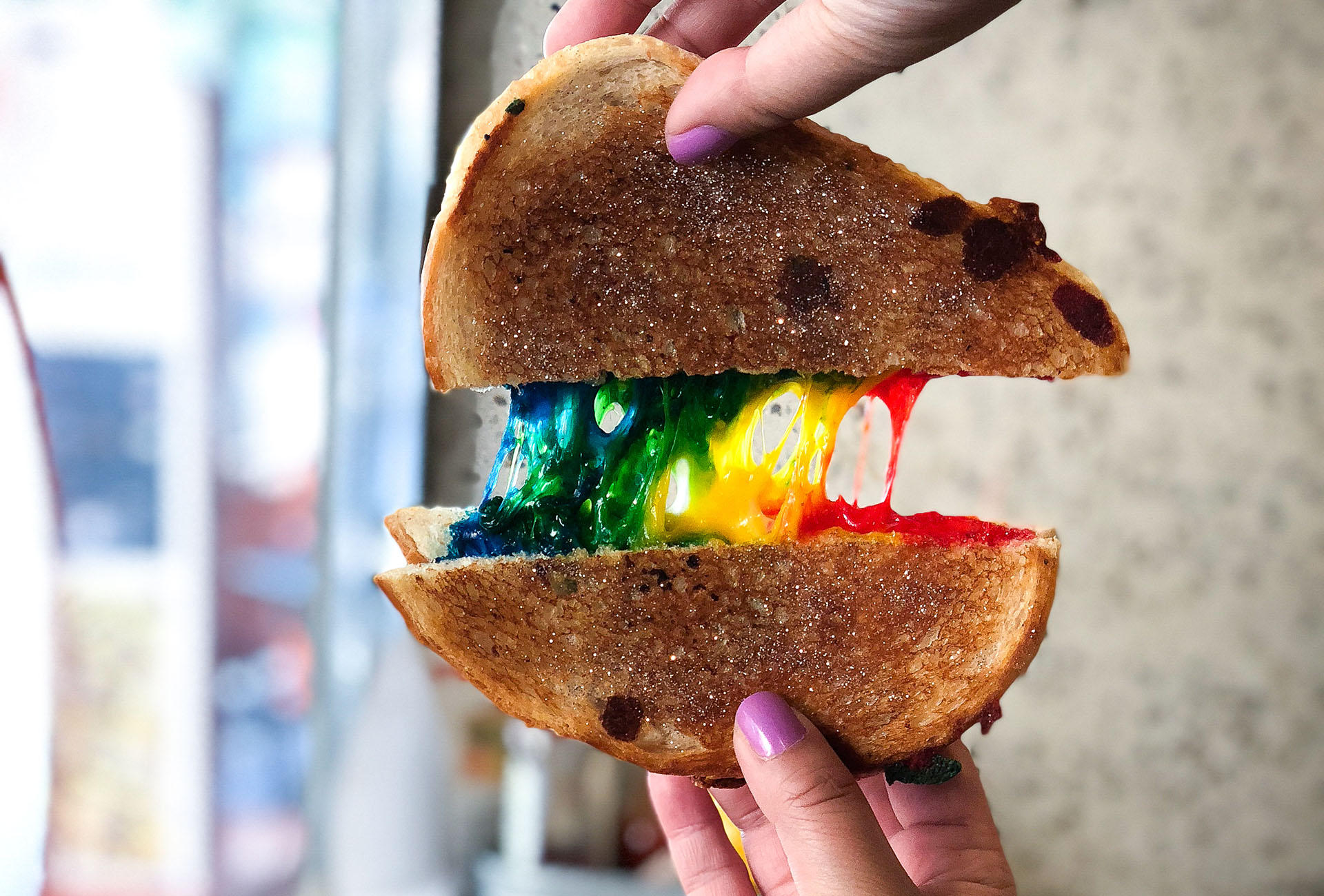
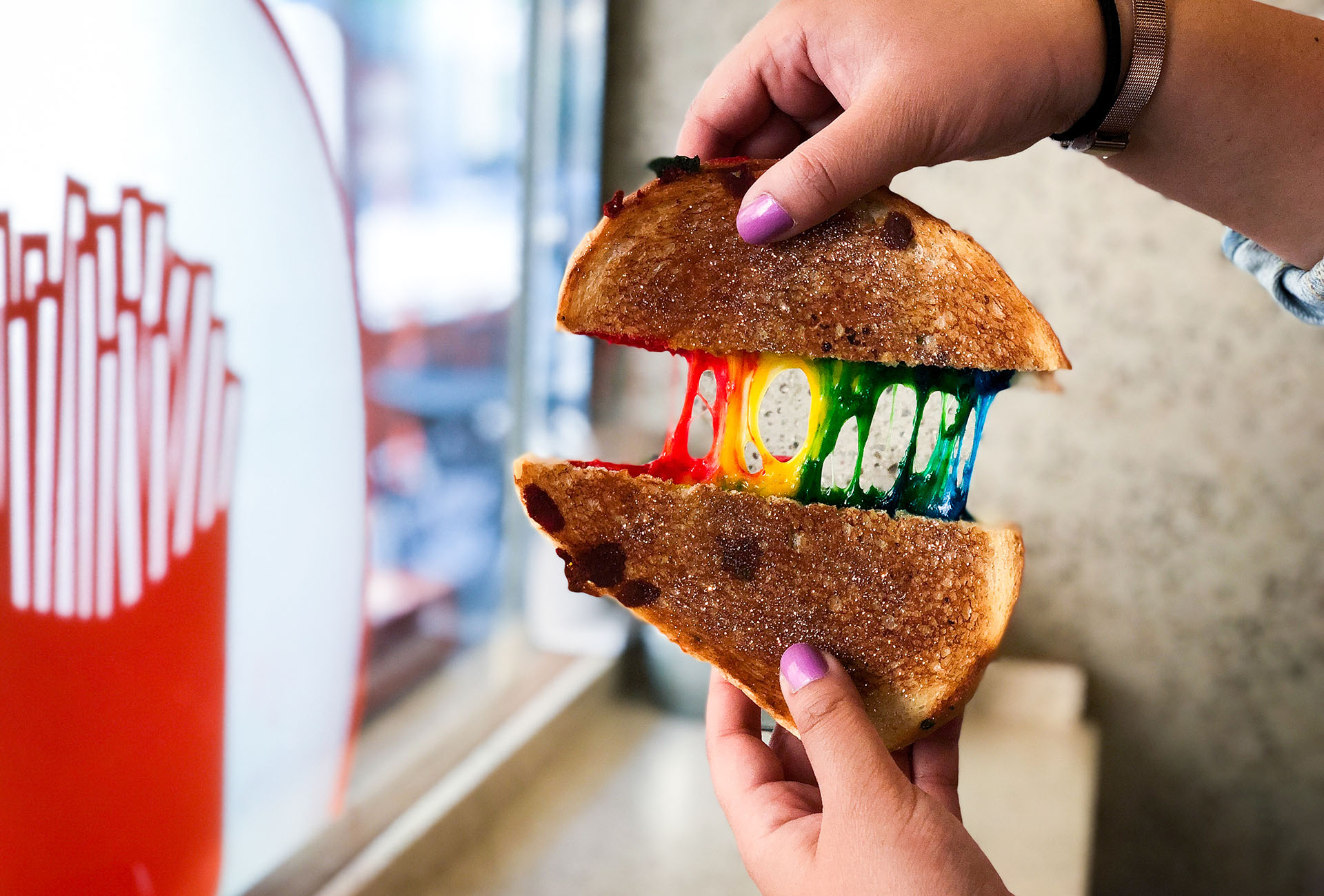
The Melt will donate a dollar per Magic Melt sold during Pride Month to Equality California.
The Melt will donate a dollar per Magic Melt sold during Pride Month to Equality California. (Patrick Wong)

The Magic Melt: The Melt

925 Market St, San Francisco

All that glitters is not gold, and in this case, it’s actually cheese. Rainbow-colored cheese to be exact.

The cheese connoisseurs at The Melt are serving up what they’re calling the “Magic Melt.” The Magic Melt is a grilled cheese sandwich stuffed with a delectable blend of cheddar, fontina, and muenster cheeses that have been transformed into a very ooey-gooey rainbow. And as if multi-colored cheese wasn’t enough to celebrate Pride with, The Melt magicians have also added edible glitter (so you can add a little sparkle to your insides as well).

And while you’re getting your dose of cheesiness, you’ll also be aiding in a really good cause. For every Magic Melt sandwich sold, one dollar will be donated to Equality California, an activism and advocacy group that fights for more LGBTQ rights and visibility.

The Magic Melt from the Melt is a mixtue of muenster, cheddar, and fontina cheese.
The Magic Melt from the Melt is a mixtue of muenster, cheddar, and fontina cheese. (Patrick Wong)

The Magic Melt will be available at both San Francisco Melt locations for all of Pride month; the Melt location located on Market Street will be selling the sandwiches during the Pride parade if you need something to fuel that day’s festivities.

And if the above isn’t enough, here’s some bonus drinks and treats to indulge in:

  • ROOH: Sip for a cause with ROOH’s Soul Sister cocktail which takes gin and local farmers’ market fruits and shakes them with lime, mint, and rosemary. The Soul Sister is served with multi-colored ice cubes representing the rainbow. A dollar from each cocktail will be donated to the SF LGBT Center. Available only during Pride Week (June 18-24)
  • One Market: For the entire month of June, One Market is offering a Pride milkshake called the Harvey Milkshake, as well as a special Pride cocktail called Friends of Dorothy. A dollar from both drinks will be donated to the Richmond Ermet AIDS Foundation (REAF).
  • Hakkasan: Hakkasan will also be serving a special Pride cocktail called the Escape to Paradise, a tropical rum-based drink. The Escape to Paradise will also only be available during Pride Week.
  • Bluestem Brasserie: On San Francisco Pride, June 24, Bluestem Brasserie will host a Pride Party on its rooftop terrace overlooking Market Street at 10am, in time to see the Pride Parade itself. Tickets are $45 and will feature a cocktail called the Green Lantern–named for the gay comic book superhero.
  • Smitten Ice Cream: Head to any Bay Area Smitten Ice Cream shop and pick up a commemorative ā€œSmitten is Smittenā€ Pride pin–one dollar from every sale will be donated to the SF LGBT Center. If you happen to travel to Los Angeles for Pride month, a dollar from each pin sale there will be donated to the LA LGBT Center.

California Restaurants Launch Nation’s First Transgender Jobs Program

Listen to the story on Morning Edition:

The unemployment rate for transgender people is double that of the general population. Now, California has set up the nation’s first ever large-scale program to help transgender people find jobs.

And it’s all because of Michaela Mendelsohn, a trans woman who’s employed trans people at her restaurants for years.

‘I’m A Trans Owner Supporting Trans People’

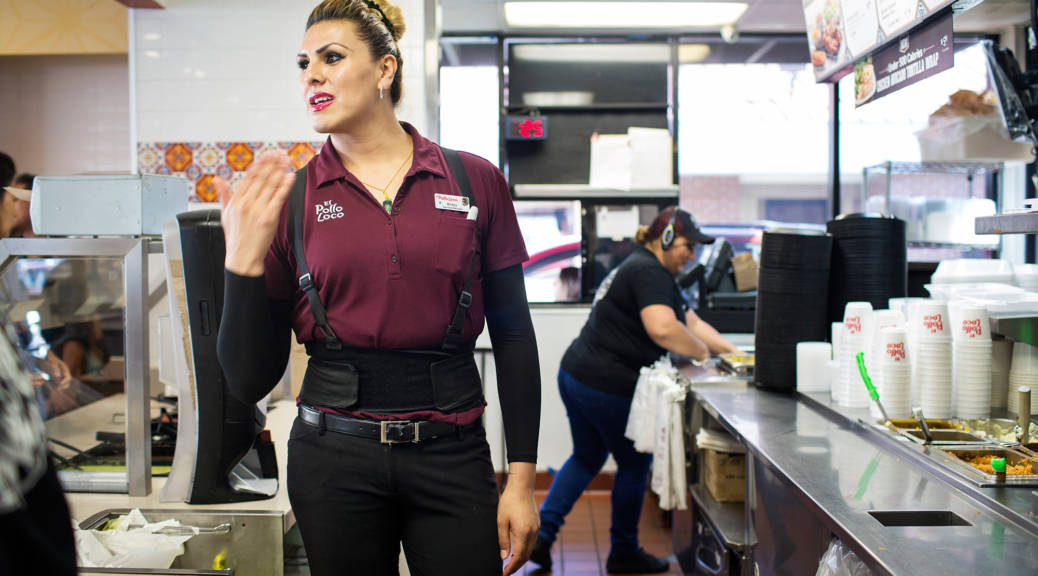
The lunch rush was supposed to end hours ago. But in the heart of Los Angeles, this fast-food restaurant, El Pollo Loco, is still buzzing. General manager Kristy Ramirez glides between the registers and the massive grill, surveying hundreds of pieces of chicken. But she’s not too busy to greet regulars like Vickie Parker.

“Thank you, mama,” Ramirez tells Parker, who replies, “Thank you, sweetie.”

Ramirez has worked for El Pollo Loco for four years and knows many of the regulars. She’s loyal to the company because it gave her a chance that no one else would consider, since she’s transgender. For that, she thanks Mendelsohn.

“The word’s just gotten out that I’m a trans owner supporting trans people,” Mendelsohn says.

In 1988, before she transitioned, Mendelsohn bought her first El Pollo Loco franchise. She just happened to like their menu. “I didn’t go to college to figure out which restaurant!” she says, laughing.

She acquired several more stores by the time she transitioned in 2004. Now she owns a total of six El Pollo Locos in Southern California.

But it wasn’t until 2012 that she hired her first trans employee. That person told her how hard it was to get a job.

Michaela Mendelsohn is a transgender activist, public speaker and businesswoman. "The word's just gotten out that I'm a trans owner supporting trans people," she says at one of six El Pollo Loco locations she owns.
Michaela Mendelsohn is a transgender activist, public speaker and businesswoman. “The word’s just gotten out that I’m a trans owner supporting trans people,” she says at one of six El Pollo Loco locations she owns. (Maya Sugarman/KPCC)

Workplace discrimination and stigma are some of the reasons that trans people have an unemployment rate that’s twice the rate of other Americans.

Mendelsohn was moved, and she started to reach out to other trans people looking for work.

“Currently, we have 8 to 10 percent of our total workforce is transgender, out of about 150 employees,” she says.

Then she had a thought: Is there a way to get other restaurants to follow her lead?

‘This Is A Civil Rights Issue’

Earlier this year, at a conference of the California Restaurant Association, Mendelsohn was chatting with other association members at a hotel bar — including her longtime friend Jot Condie, who heads the group.

Condie heard about the workplace discrimination that trans people deal with.

“I considered myself, as a person, somebody who had my head in the sand when it comes to what they’re really going through,” Condie says. “This is a civil rights issue.”

Condie says he was convinced to have the Restaurant Association back Mendelsohn’s big idea. “To me it wasn’t like, ‘Whoa are you serious?’ To me it made sense,” he says.

The idea was this: Mendelsohn would start a program connecting trans people looking for jobs with restaurants looking for workers.

The association has 22,000 members, large enough that it could make a real difference.

The first big step happened in late August at the Western Foodservice and Hospitality Expo in downtown Los Angeles.

The association sponsors this event every year. Vendors from around the country try to entice the 10,000 attendees to try new fare — sticky buns, pot stickers, spring rolls.

Delaney Martinez recently started working at this Southern California El Pollo Loco owned by Mendelsohn. "I feel like it's a supportive atmosphere," Martinez says.
Delaney Martinez recently started working at this Southern California El Pollo Loco owned by Mendelsohn. “I feel like it’s a supportive atmosphere,” Martinez says. (Maya Sugarman/KPCC)

And one floor up, the association hosted a seminar where Mendelsohn gave restaurateurs their first taste of the new California Transgender Workplace Project. “Take a seat. We’re here today for the new normal,” she told them, as she gave an intro course on the basics of trans people — call it Trans 101.

She explained how to join the project and be certified as trans-friendly. Mendelsohn also tells people that a state grant will pay for the first 60 hours of a new hire’s wages as an incentive.

Back on the expo floor, though, there’s some skepticism.

Some attendees say this program for trans people sounds like a good thing. “I don’t see why they can’t work the way everyone else is entitled to work in this country,” says Grant Theim.

But then he hesitates. “You know, I still think that there’s a majority of people out there that might have a problem with being served by somebody that’s transgender.”

That concern initially worried Mendelsohn, too. But she was surprised — in the years she’s had restaurants staffed with trans people, customers have been overwhelmingly supportive.

And when they aren’t, she says bosses should be prepared to stand up for their employees.

“You know, you always hear the thing, ‘The customer’s always right’,” she sayss. “In my restaurants, the customer’s always right unless they attack you personally.”

And with more trans people visible in the workplace, it could change the way all Americans view them, one order at a time.

General Manager Kristy Ramirez decorated the name tag she recently received when she was promoted at one of Mendelsohn's El Pollo Loco franchises.
General Manager Kristy Ramirez decorated the name tag she recently received when she was promoted at one of Mendelsohn’s El Pollo Loco franchises. ( Maya Sugarman/KPCC)


Copyright 2016 NPR.

Catering Entrepreneurs Build a Business and Plan a Community Garden in Bayview

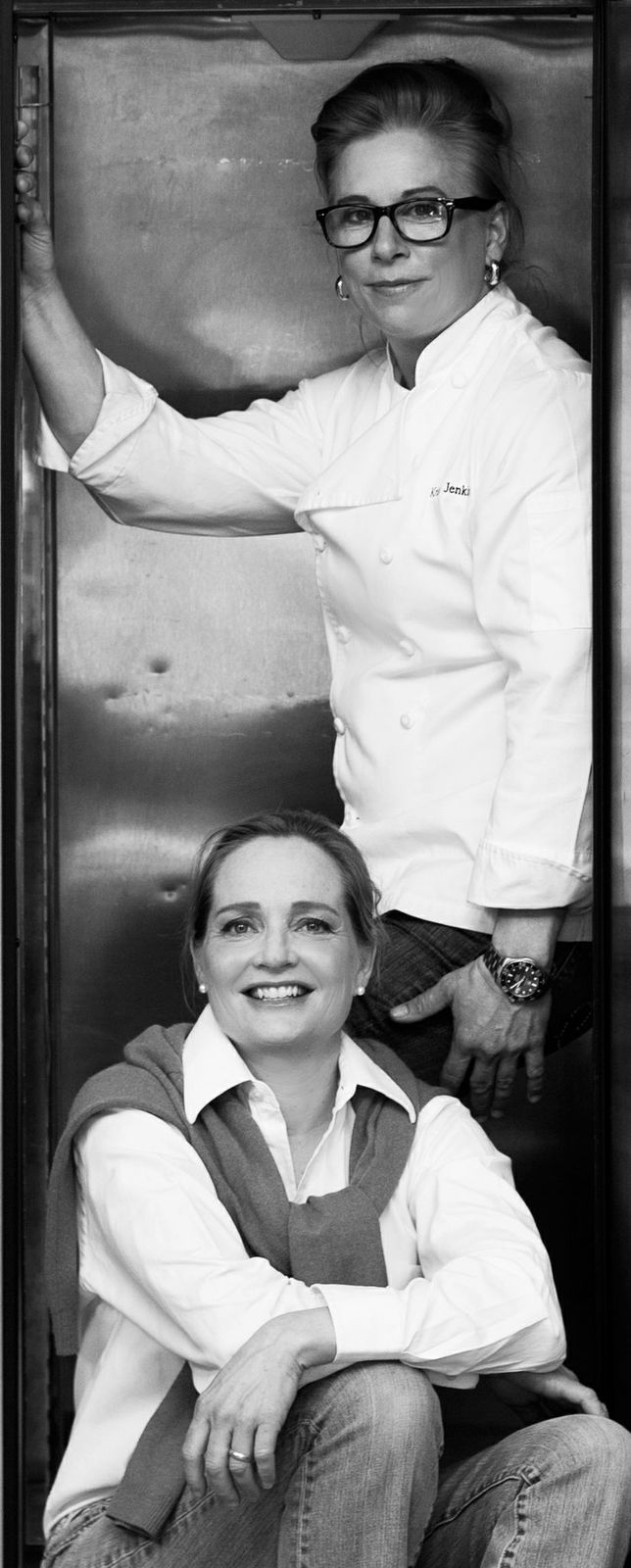
Kristin Jenkins and Barclay Nicholson. Photo courtesy of Nosh SF

Bayview District residents Kristin Jenkins and Barclay Nicholson are domestic partners growing not one but two food businesses that both have “SF” in the name: Nosh SF and SF Private Chef. The two have been together for over thirteen years and were introduced by a mutual friend. They live and work in Bayview and have done so for the last two years and this fascinating tale has a twist of kismet. The morning they were about to move out of their Bernal Heights home, their landlord called to let them know a fire had burned down the home they were moving into. On very short notice, they were able to find “the perfect space” in which they now live and have an office. Green thumbs, take note: there is also a garden space that the two are actively cultivating–more details on that in a bit.

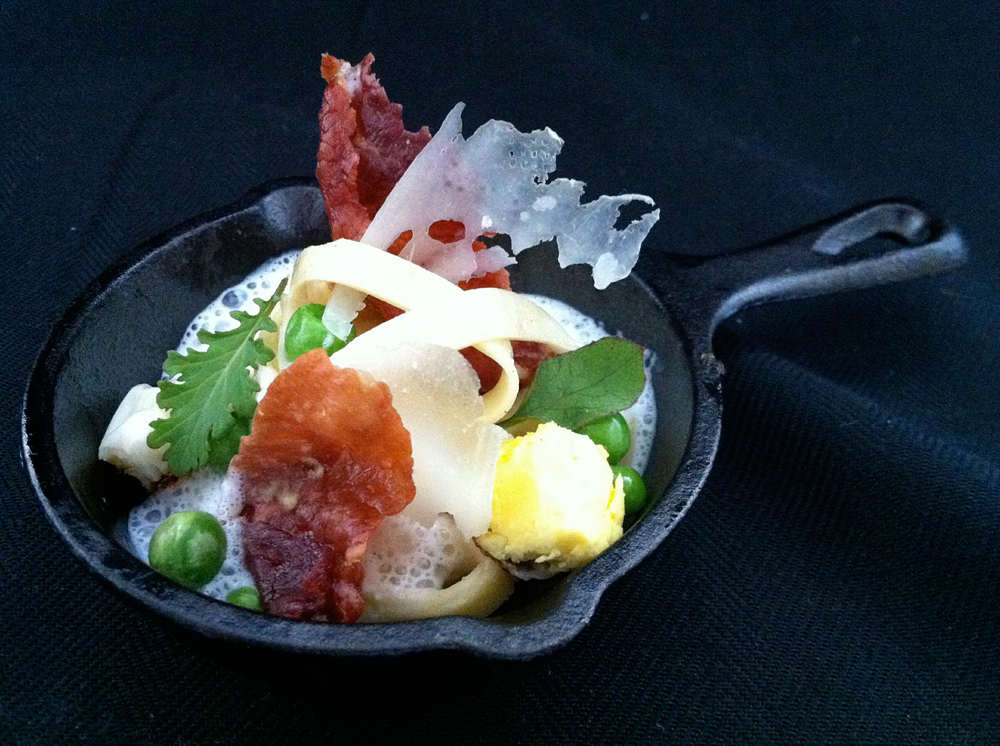
Amuse Bouche - Mini Pasta Carbonara with Deep Fried Prosciutto. Photo courtesy of Nosh SF
Amuse Bouche – Mini Pasta Carbonara with Deep Fried Prosciutto. Photo courtesy of Nosh SF

Nosh SF is a boutique catering company sporting a roster of local events that include a fundraiser for President Obama last year. SF Private Chef is a healthy meal delivery service and Jenkins has been working on the company since she founded it over ten years ago. Before these ventures, Nicholson was working in venture capital. Jenkins was pursuing golf in a somewhat serious fashion when she first started SF Private Chef. Bay Area Bites caught up with Jenkins and Nicholson recently. Their comments have been edited for grammar and clarity.


Bay Area Bites: You’ve lived and worked in the Bayview District for the past two years. What is your work and life routine like?

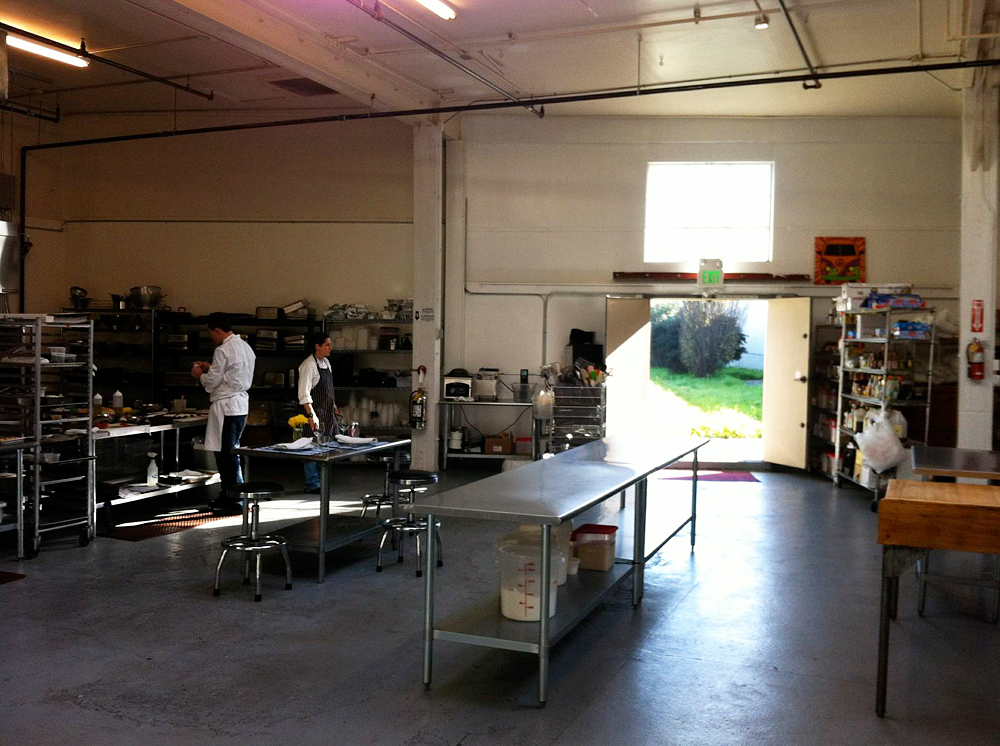
Nicholson: Our life has been focused on growing Nosh and SF Private Chef. Without much exaggeration, we have lived and breathed work for the last three years. To answer your question about our routine, it’s very routine. I get up, bring Kristin a coffee in bed while she watches a housewives show…No, seriously. We wake up, feed our two dogs and two cats. Make coffee and slide open the doors that separate our living quarters from our work quarters. I cross the threshold and head up the stairs to our office.

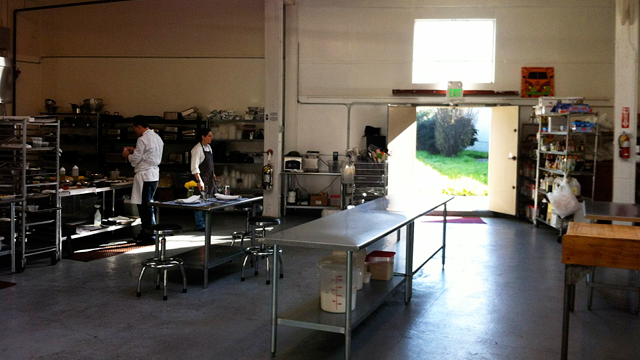
Kristin walks out the front door to the commercial kitchen (which we built out in record time at the end of last year), which is two doors down. The close proximity of the kitchen and our office helps us keep things very efficient. During the day we communicate often. (I would like to have an intercom system in the kitchen so I can page Kristin; Kristin has vetoed the idea.) Our ability to transition from work to events is very easy. We are able to pack out and pack back in and return home very seamlessly. Having our own kitchen has been invaluable.

Nosh SF and SF Private Chef commercial kitchen in Bayview - with view of outdoor garden. Photo: Courtesy of Nosh SF
Nosh SF and SF Private Chef commercial kitchen in Bayview – with view of outdoor garden. Photo: Courtesy of Nosh SF

Bay Area Bites: How do you support each other for your work and in your personal life?
Jenkins: I have spent the last 20-plus years in the industry, in one form or another. I am a creative person. One of Barclay’s strengths is that she is great at helping translate my vision to words.

Nicholson: I transitioned to this industry about three years ago. I had spent the prior 16 years in the venture capital industry. Kristin has been incredibly supportive in helping me learn the industry and understanding while I have transitioned to this new lifestyle. Among the many challenges, the physical aspects of my new career has been the most difficult.

We come from similar backgrounds and we have the same values. We are able to help keep other centered and on track. We feel very fortunate.

Bay Area Bites: How many staff do you have?
Nicholson: Both companies are small. Our employees have been cross-trained and are able to work in whichever capacity is necessary given work flow. Each company is headed up by its own head chef and sous chef. Kristin, as executive chef, leads the team.

Bay Area Bites: You have the start of a community garden going. How did that come about? What are you growing? And what future plans do you have for the garden?
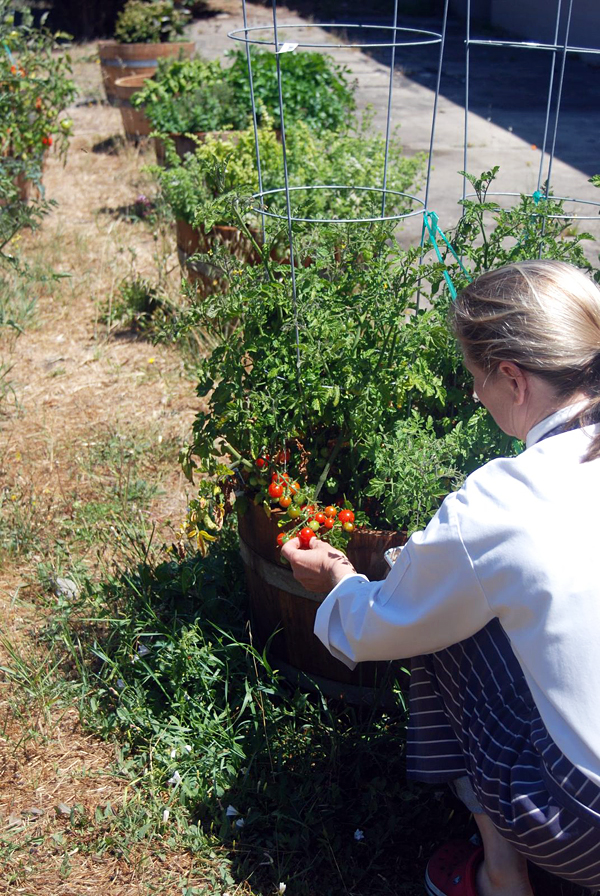
Nicholson: Kristin’s parents have a ranch outside of Santa Barbara. Since the two of us got together, we dreamed of having a large garden through which inner city kids could get exposure to growing produce and then learning to cook using the edibles. We also wanted to have goats so we could make cheese and milk. Given our current situation we feel we have an opportunity to realize at least part of our vision. There are some pre-existing apple, plum, fig, rosemary, bay leaf, wild fennel, wild roses, and more. We have added various types of tomatoes, various herbs and micro greens. We dream of making our dream happen.

Barclay Nicholson picks tomatoes in their Bayview garden. Photo courtesy of Nosh SF

Bay Area Bites: Tell me about how Nosh SF works as a business. Who are your typical customers?
Jenkins: I started the business about nine years ago cooking for two private families on the Peninsula. Since then, we have expanded both businesses by word of mouth. Most of our clients reside in and around Pacific Heights, as well as on the Peninsula. They are very busy with work and family and want to make sure they eat well, in spite of their schedules.

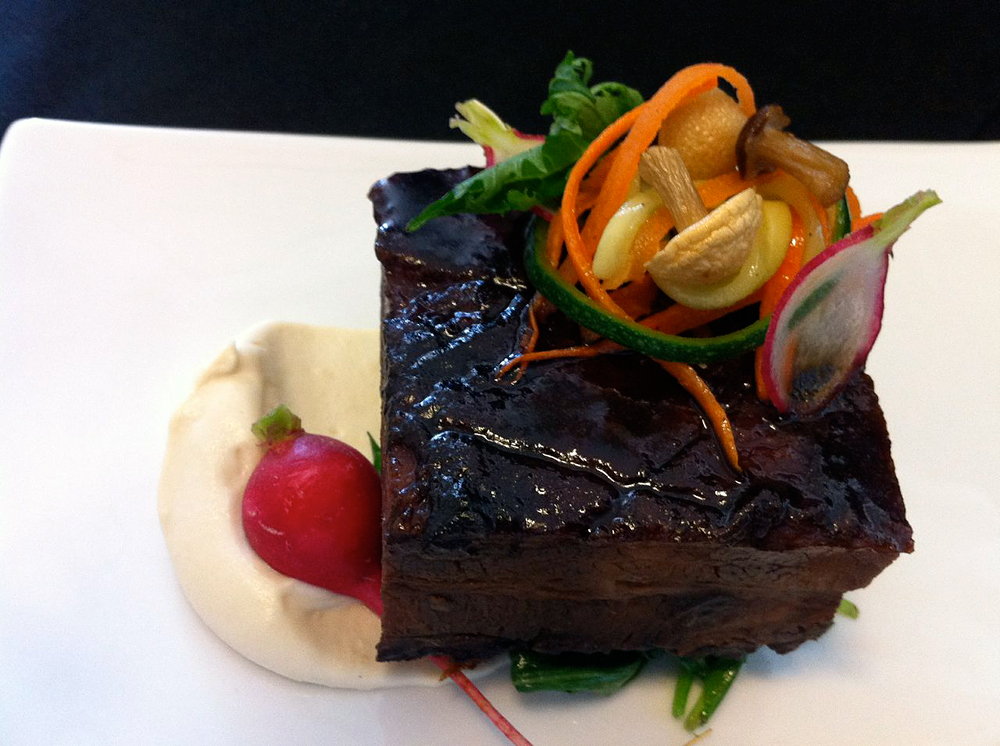
Asian-Braised Pork Belly with Gomae and Pickled Asian Veg. Photo courtesy Nosh SF

Bay Area Bites: What is your experience with regard to homophobia and LGBT acceptance within the culinary world?
Nicholson: We are lucky that we live and work in the Bay Area, where people are generally educated.

Jenkins: When I first started my career I worked in Switzerland and South Africa at a time when women weren’t well-accepted in the kitchen on the hot line. I experienced quite a bit of hazing but stuck it out. It was not about my sexuality.

Bay Area Bites: What was it like for you coming out professionally? When did you do it? What was your job at the time? Have you noticed a change over time?
Nicholson: I was about 26 and had just joined the venture capital firm on the Peninsula (from which I left after 16 years to join Kristin). The VC industry is very conservative and I was concerned about coming out. However, the firm I joined was led by two really great guys who turned out to be incredibly supportive and accepting. It was a great relief to be able to be out at work.

Jenkins: I was also about 26 and moving from South Africa to Ecuador. While there is a gay population in Ecuador it was very underground when I moved there. I came out to my family at this time but not professionally. I came out professionally when I relocated to Las Vegas, about one and a half years later. I worked for large restaurants; management didn’t want to know and, while the chefs I worked for weren’t thrilled, they weren’t really phased by it. Since moving to San Francisco my sexuality isn’t an issue.
Of our clients who are aware of our sexuality and relationship, it is a non-issue. It’s not something we think about. We feel very fortunate.

Bay Area Bites: I do catering and see hiccups at each event. Someone forgot to pack something that is at the shop (kitchen), miles away, one hour before the guests arrive. Do you have any blunder type stories you can share?
Jenkins: There are so many details and moving parts, as you know. In some ways, restaurants are so much easier.

I was doing a lunch event at Stanford. A fire alarm in a nearby building was set off. It caused our production to be stopped and the kitchen was evacuated for over an hour. When we were permitted to return to the kitchen, we had 30 minutes to unpack, start huge BBQs, cook food, set up and serve. It was totally out of our control, but our client was not sympathetic. It was the worst work feeling, to this day.

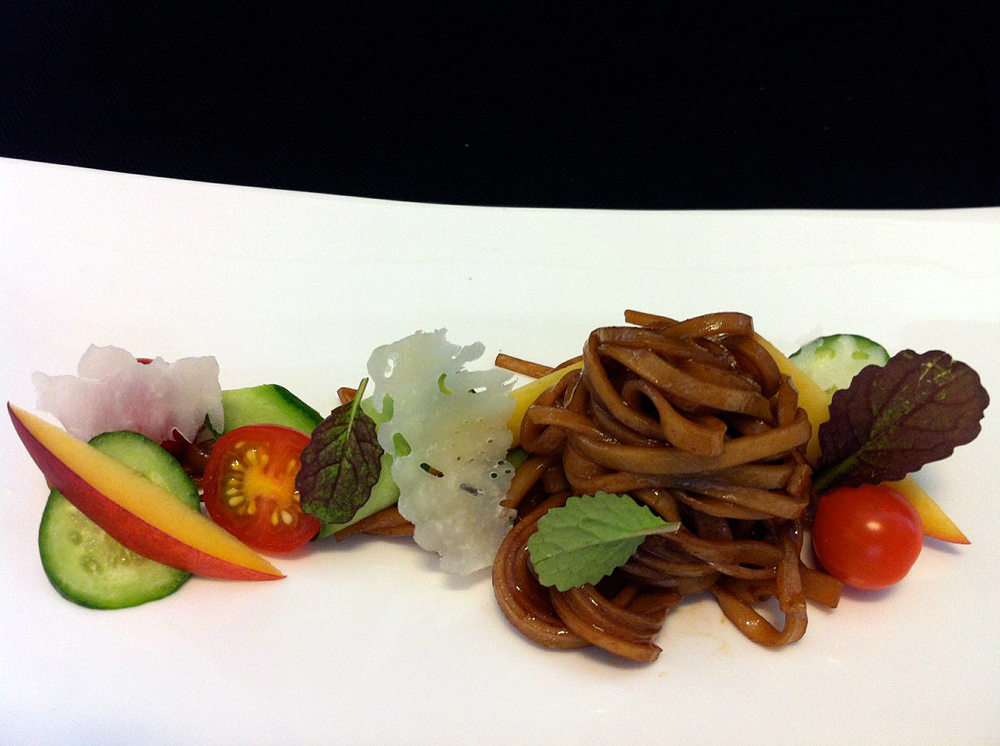
House Balsamic Pasta with Shaved Parm, Marinated Veg, Micro Herbs. Photo courtesy Nosh SF

Bay Area Bites: What Bay Area places do you like for food?
Jenkins: Of course, the farmers’ markets. Seeing and touching what’s in season helps inspire me. Speaking with farmers is always wonderful.

Rainbow Grocery is great for bulk items, organics and breads.

I like underground markets like Forage SF and am looking forward to checking out Batch Made Market.

Sushi is our mutual favorite. When working around food all day, it’s the perfect food to end with.

Bay Area Bites: Have you booked any same sex weddings? Or done menu proposals? What are people ordering?
Jenkins: Yes! Actually, we had a joint reception a few weekends ago for two couples who were married at City Hall on June 29. They wanted a very casual, fun, friends and family-oriented celebration. They have a beautiful house in the hills. We did something a little different for us; we made a BBQ with all the fixings. It felt like the right menu for these two couples. The cake had two men and two women.

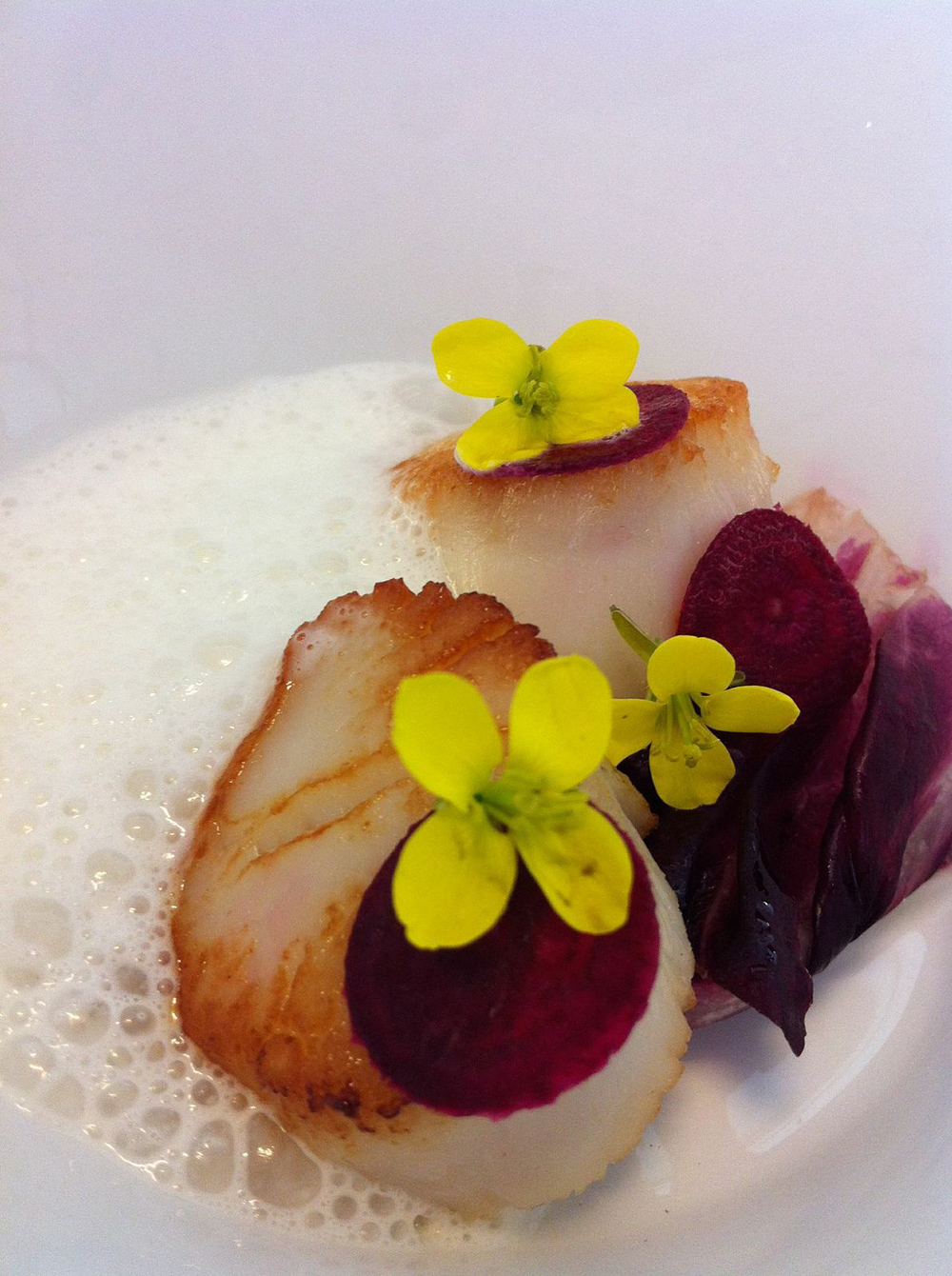
Seared Scallops with Grilled Radicchio, Shaved Beet, Truffle Parm Foam. Photo courtesy Nosh SF

Chef Preeti Mistry + Juhu Beach Club in Oakland’s Temescal

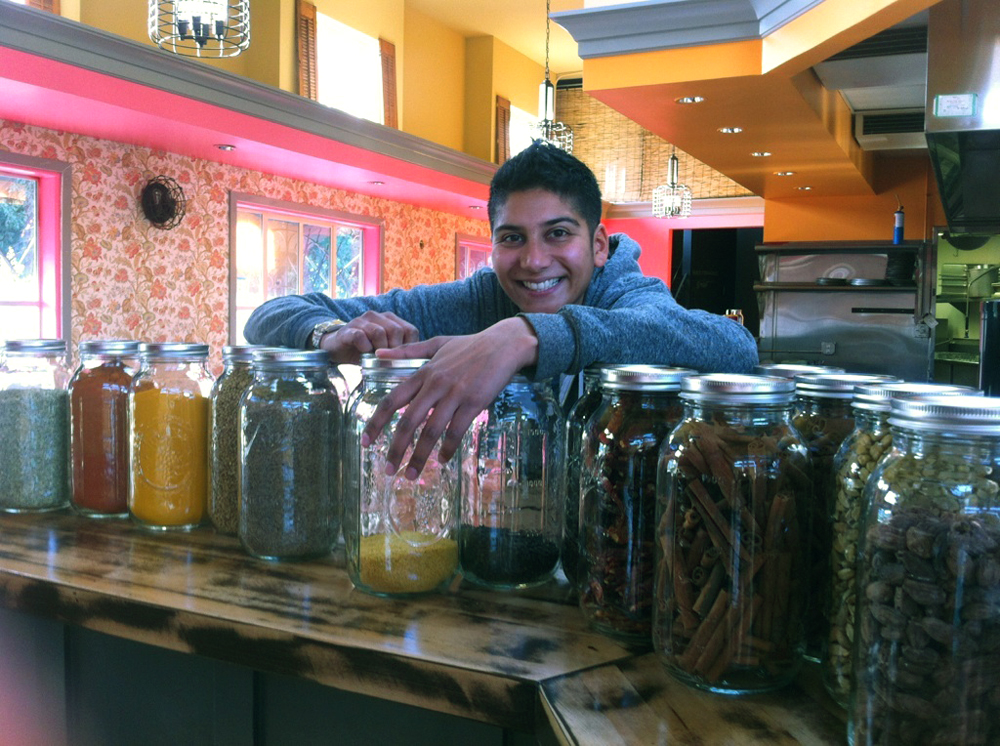
Preeti Mistry at Juhu Beach Club with spice jars. Photo courtesy of Preeti Mistry

Chef Preeti Mistry is gearing up to open her Indian street food-inspired, previously a pop-up, Juhu Beach Club in Temescal, Oakland on March 1. Having her restaurant business set up in the old SR24 space in the East Bay instead of the originally planned Mission District is a marked change from when I interviewed her last summer, for the Bay Area Bites’ annual LGBT Pride stories. Breaking off (amicably) with a business partner and wanting to live closer to her work were the main factors behind this decision. She shared that she is now working with family to run the business but has also been buoyed by offers of general help from fellow Oakland business owners. Getting a Top Chef to set up shop in Oakland is a bonus for Temescal, a district that has arrived as a food and dining destination–complete with its own new culinary tour from Edible Excursions and a thriving Sunday farmers’ market.

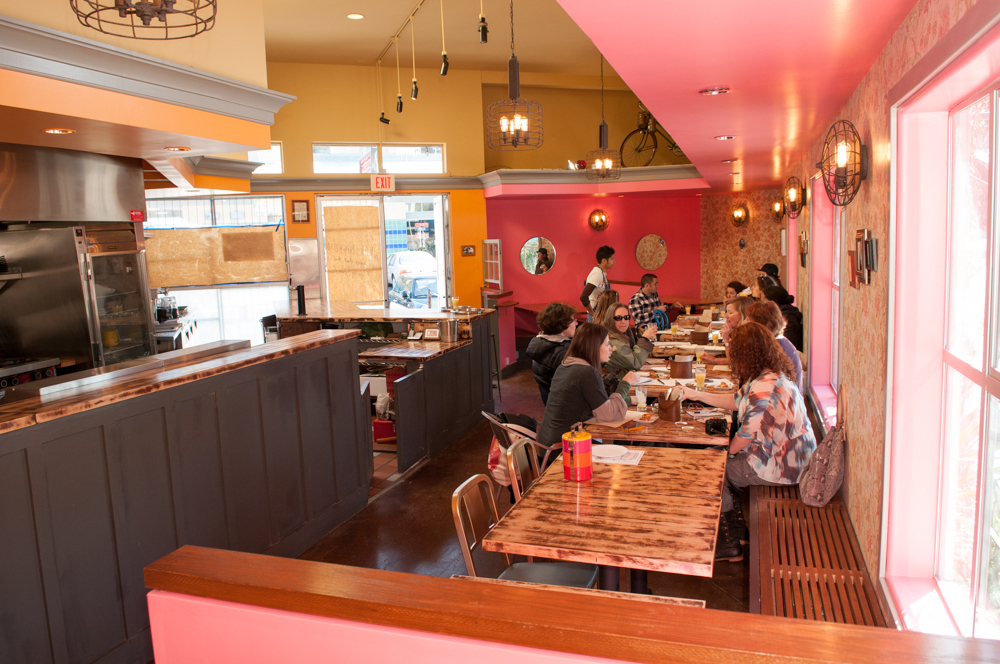
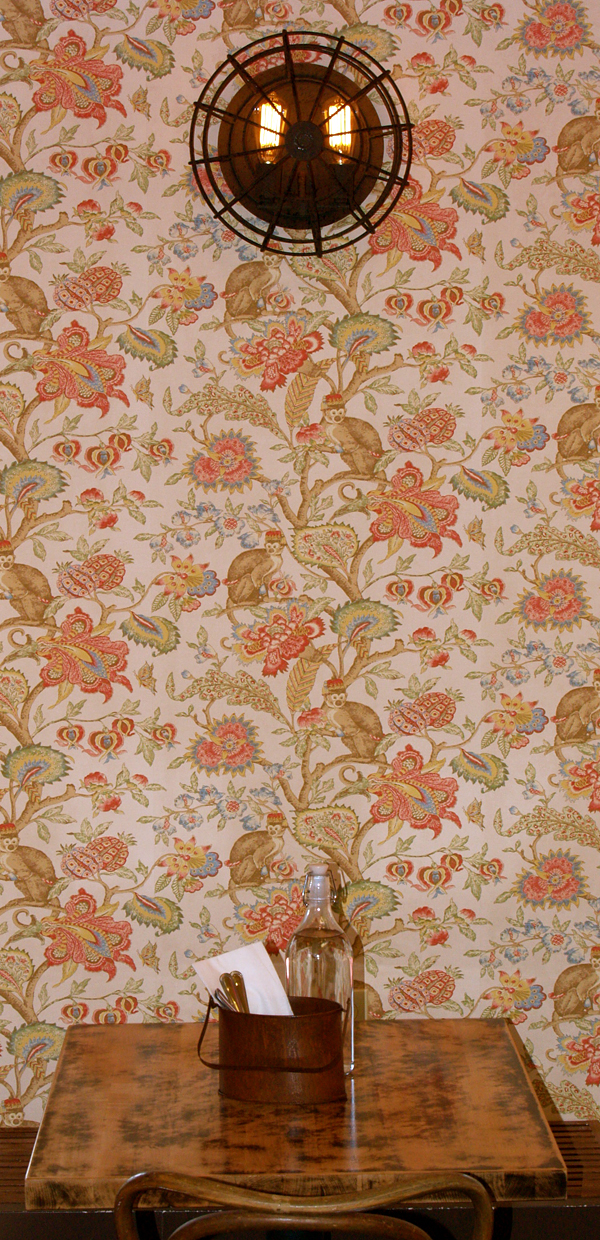
I was able to experience Juhu Beach Club via a stop on the Oakland Taste Temescal media tour from Edible Excursions. It’s obvious Chef Preeti and her crew have worked hard to transform the once grey and dark hues of SR24 into something that is definitely more Mumbai-beachy and fun: pink and orange swirl together with golden notes in a wonderful monkey wall pattern, which match the adorable tiffins that will be used to serve kids meals (a smart menu move, considering the local population). Her partner Ann Nadeau was on hand to help serve sassy lassis but mainly stayed in the background while the Chef talked to our group. Guests will be able to see the kitchen action, where Preeti will cook with her sous chef and line cooks.

Juhu Beach Club interior. Photo: Naomi Fiss

There are 50 seats and 6 stools and the open space definitely grants guests an up-close-and-personal view of the making of every slider-like pav (with custom rolls from Starter Bakery), Gujarti-style samosa, mung bean ā€œGuju chiliā€ soup, curry, salad and sassy lassi. The menu is approachable: vegetarians, carnivores and kids should all find something here. The color blocked kiddie-friendly tiffins are designed by a nearby artist and will be for sale; I am making space in my pantry after seeing how cute and functional they are. Juhu Beach Club just received their beer and wine license and will be opening for dinner March 1. Cheers!

I interviewed Chef Mistry to find out more about how the process is going from operating her pop-up restaurant to getting an actual restaurant finalized. Her comments have been edited for clarity and length.

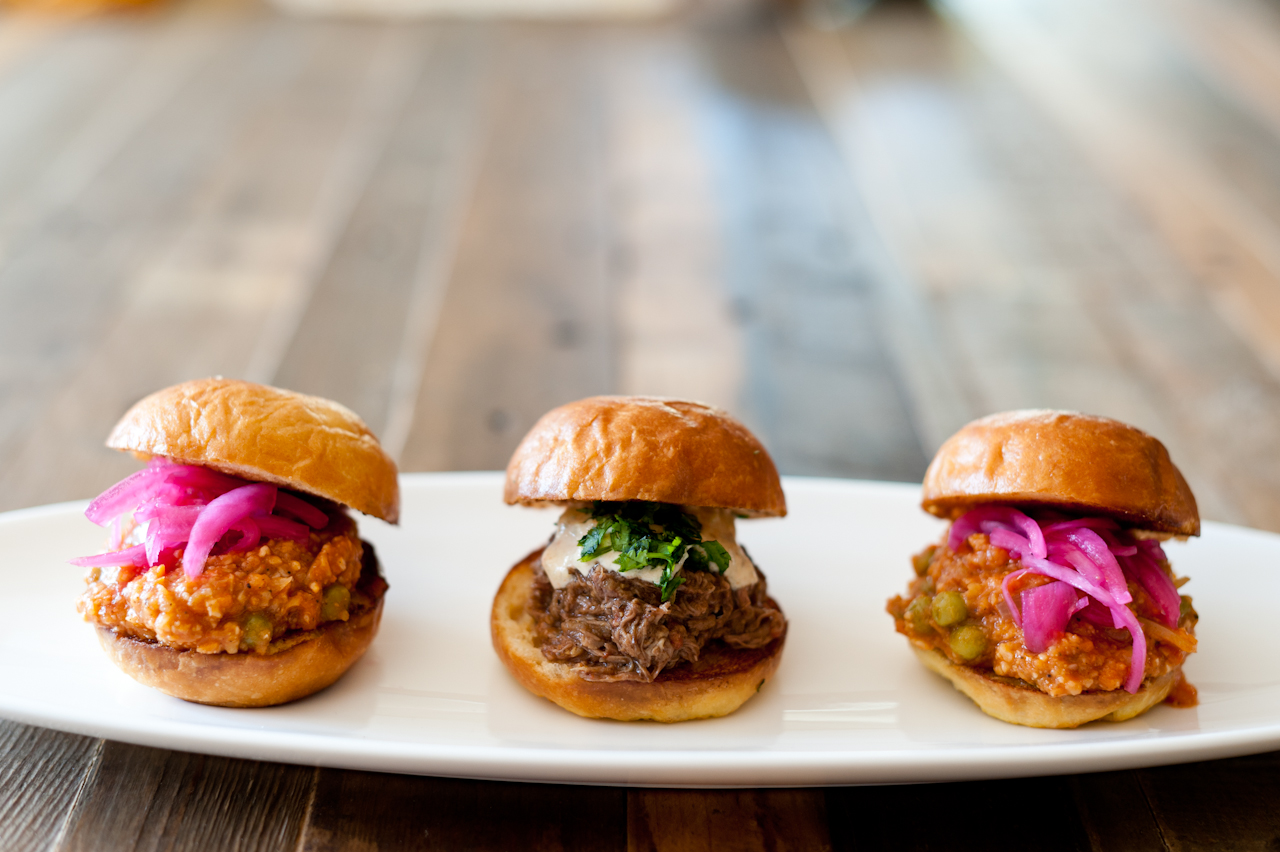
Pav (slider-sized sandwich) menu items: Sloppy Lil'P (left+right) Holy Cow (middle).
Pav (slider-sized sandwich) menu items: Sloppy Lil’P (left+right) Holy Cow (middle). Photo courtesy of Preeti Mistry

Bay Area Bites: Congrats on the new restaurant. When we last talked to you, you were planning to open a spot in the Mission. That situation changed for you in October 2012. Why do Indian Street Food in Temesal?

Mistry: It was a matter of circumstances. Even when I was in San Francisco, I was saying ā€˜I want to open in Oakland.’ The Mission space and the partner connected to that didn’t work out, which was actually a blessing. If we were having a hard time then, running a business wouldn’t have been easy. We were able to realize that and walk away from each other and there were no hard feelings ultimately. I moved to Oakland a year and a half ago. Once we walked away from a financial partner, I started looking at things financially but also looked at how it would affect my lifestyle. We’ve gotten to know the scene and it’s so happening here. Temescal is really fun, and there has been a great community in terms of chefs and restaurateurs.

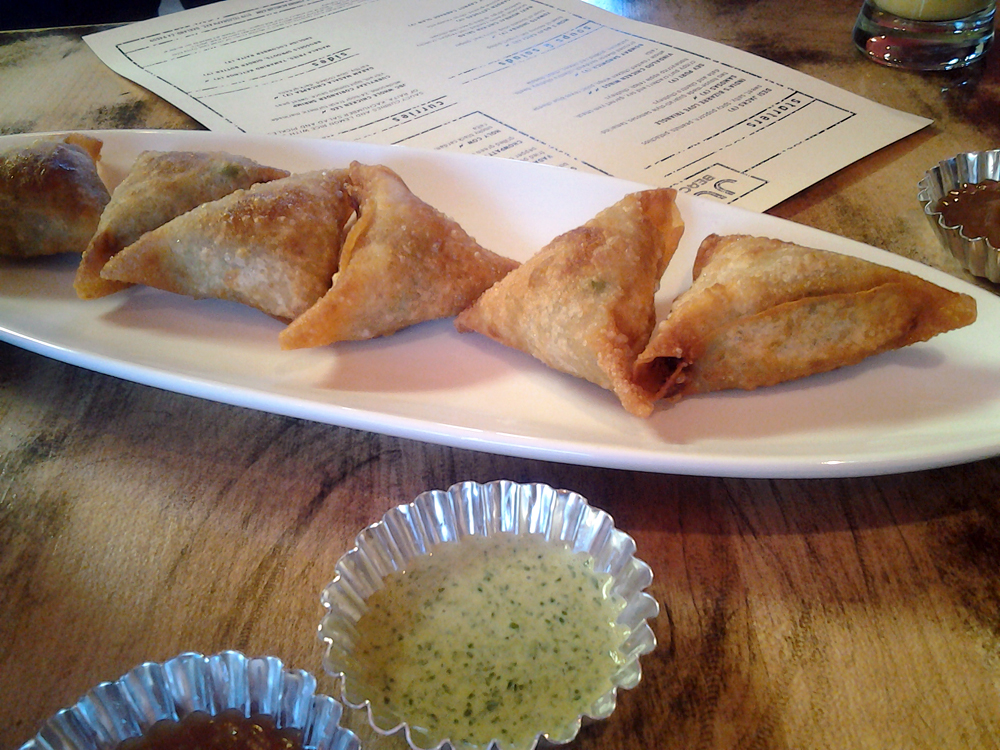
India's Bizarre Love Triangle Samosas. Photo: Mary Ladd
India’s Bizarre Love Triangle Samosas. Photo: Mary Ladd

Bay Area Bites: Do you have a new business partner? How did you come up with the funding after the relationship with your former business partner ended?

Mistry: No. (Laughs). It’s a family business now. So. You know. That was one of the reasons why we picked the space. It was really set up. I talked to a few contractors and architects and they were urging me to find a spot that was already set up. I looked at cheaper places but it was a Pandora’s box — they had been dumped for a reason. Once you start with the building department…. With our new Temescal location, it’s been all elbow grease and a little cosmetic work. There have been a few expenses that have come up but that’s par for the course.

We did a lot of cleaning and changed the space pretty dramatically. It was really dark in here, very Gothic with big chandeliers. The baseboard and entire ceiling were dark grey and then there was deep magenta red. We just brightened it so there is a lot of bright pink and orange on the walls. It gets an advantage of the sun that comes through in the day. We got funky wallpaper with monkeys to give the space a fun and casual feel, because we want to see people wanting to hang out here.

Monkey wallpaper at Juhu Beach Club. Photo courtesy of Preeti Mistry

Bay Area Bites: Have you met any of your restaurant neighbors?

Mistry: The person that owned this restaurant owns the taqueria next door. We share bathrooms and storage space and one of the more qualitative parts of purchasing was that he wanted to make sure it would be someone who’s cooperative. Not ā€˜I bought your restaurant. See ya later.’ I interact with his manager Kevin and family all day and they’ve been super. I’ve also talked with Jen Louise Dunning at Pizzaiolo. Tanya Holland was super helpful with advice as was Sarah Kirnon with Miss Ollie’s. I just ran into Paul Arenstam at the restaurant supply store and he said, ā€˜Give me a call if you need anything.’

Bay Area Bites: What are your favorite menu items?

Mistry: The Bombay sandwich, which we just tried out. The way it’s made in India is with a sandwich maker in a campfire. We’ll use a steak press and do it on the flat top. Everyone was like ā€˜I don’t know what this is but it’s awesome’ when we did the taste tests. I’ll press it with Jack cheese, cilantro chutney, sliced beets, potatoes, pickled onions and our house-made chaat masala. There’s also a healthy amount of butter and it’s like a veggie grilled cheese. I’ll change it seasonally. It’s kind of funny how the chutney and masala make it distinctly Indian. It’ll probably be priced at $7.

Bay Area Bites: How about drinks and desserts? … anything unusual?

Mistry: All of our wine will be on tap. I want to focus on beer more because it just pairs better in my opinion with the Indian food and spices. We’ll have 1-3 white wines. People want to pair Indian food with really sweet Rieslings and I can’t stand that. The wines will definitely be on the crisper side. For every tasting we’ve had, the big question is, ā€˜What will the red be?’ We’re looking for something nice and lean, and nothing really fruity and jammy or high alcohol.

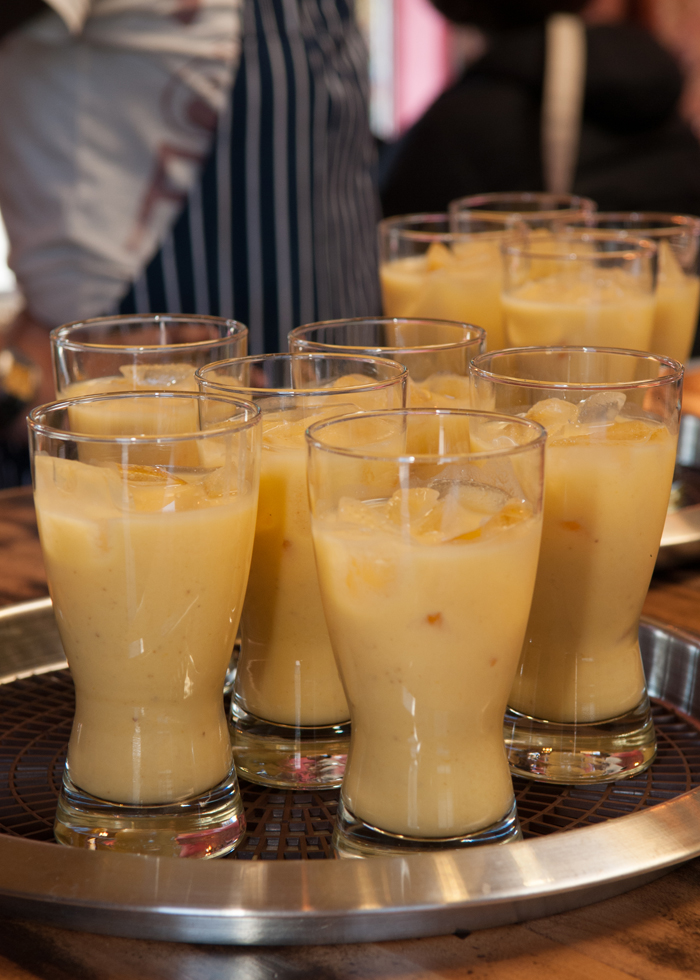
I make the sassy lassi in-house, and it’s sweet and salty. We’ll have cilantro lemonade and also the Darjeeling Limited, which is half cilantro lemonade and half tea. Gotta have a hot chai and we will be serving imported Thums Up plus Limca sodas, which are owned by Coke now. They have a distinctive Indian flavor.

Sassy Lassis. Photo: Naomi Fiss

We’re going to have Straus soft-serve for dessert, but will do it differently than other places. I may use infused oils as toppings: things like pistachio and pumpkin seed oils. There will be tropical fruit drizzles of passion fruit, guava or rosewater. I’m sure we’ll make some seasonal local macerated fruit. Then there will be add-ons like salty curried peanuts, Chai spiced pecans and those little fennel candies.

Bay Area Bites: Any advice for folks looking to open a restaurant?

Mistry: Laughs. That’s so funny. Cholita Linda was talking on the Edible Excursions tour about how they’re opening on Telegraph and that it had been in 3 months of waiting. I couldn’t wait like that!

I guess for me as a first time restaurateur I would say finding an existing business is a way to factor your time and money. Juhu Beach Club will not have that high a price point. The average check will not be $70 per person. The ability to make that money back and profit is crazy. For me, it was always start small and see if people liked it. Even with that funny liquor store in the Mission, we spent $1,500. My advice? Start small.

Vada Pav. Photo courtesy of Preeti Mistry

Bay Area Bites: Do you think there is a Top Chef celeb halo that helps or hinders your work? What is that like?

Mistry: I think for a long time I was really angry about Top Chef. But you know it’s the thing that has helped me get the word out. I suppose if I hadn’t been on the show it would take longer for people and media to show up. The fact that people already know who I am is helpful.

As for hindering, I can’t say that there is anything negative at this point four years later. People are excited. I’ve talked to people in Oakland and they’re excited to have someone from Top Chef. I was at the farmers’ market and a lady told me ā€˜I’m really excited you’re opening here.’

I was talking to the cashier at the planning department and she said she is a huge Top Chef fan and she recognized my name. It’s nice that people recognize me. If my food didn’t stand up or the service wasn’t helpful then people wouldn’t continue to show up. Especially in the Bay Area, where there are so many good chefs who haven’t been on TV.

Preeti Mistry at Juhu Beach Club. Photo: Naomi Fiss

Related Information:
Juhu Beach Club
Opening March 1 for Dinner
Address: Map
5179 Telegraph Avenue
Oakland CA 94609
(510) 652-7350
Hours: Tue – Sat: 5:30 pm – 9:30 pm
Twitter: @juhubeachclub
Twitter: @chefpmistry
Facebook: Juhu Beach Club

The Bay Lights: Restaurants with a View and Interview with Artist Leo Villareal

The Artist and his Canvas. Leo Villareal at Bay Bridge. Photo: Lucas Saugen

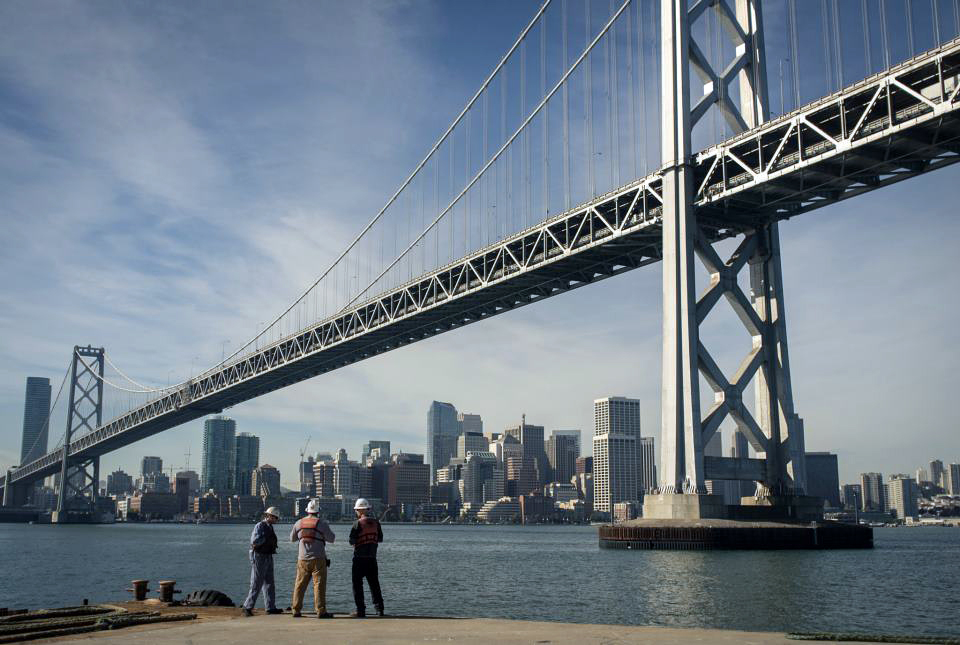
The next time you are on the Embarcadero at night, you many want to look up, up, up. A recent dinner outing to Palomino Restaurant to catch up with Chef Adam Jones, profiled for Bay Area Bites LGBT Pride last year gifted me something extra: the chance to see the Bay Bridge lit up in a spectacular and unusual fashion. Palomino staff and guests were downright giddy to see the blinking lights on the bridge that has traditionally gotten short shrift when compared to that other iconic bridge on the other side of the Bay.

The Bay Lights is the name of a living art sculpture with 25,000 lights that is said to be the biggest of its kind from artist Leo Villareal. It is a definite coup to have Villareal on this privately funded project, because he is known for his expertise in using LED lights and computer-driven imagery. Plan-ahead types may want to book that restaurant dinner now for March 5 to see the main lighting event. Everyone else can rest easy knowing that the Bay Lights will be shining bright for the next two years.

Homes, restaurants and bars along the Embarcadero have the best views of the Bay Bridge, including Waterbar, Epic Roasthouse, Sinbad’s, Perry’s, Americano and Chaya Brasserie. Bay Area residents can also expect frequent testing and sequencing in the nights leading up to March 5. If you have a friend lucky enough to live near the Bay Bridge, butter them up to nab an invite now!

[youtube http://www.youtube.com/watch?v=9Kuea04VuqY]

I interviewed Villareal recently to find out more about his work, where to view The Bay Lights, and how Burning Man played a role in his creative process. His comments have been edited for clarity and grammar.

Bay Area Bites: Give us your personal take on The Bay Lights project.
Villareal: My initial impulse was to add an additional layer to this already rich environment. I did not want to overwhelm the site but to augment it by creating a very integrated artwork. I believe my work will allow people to see this iconic piece of infrastructure in a new way.

The final concept is remarkably close to my initial idea. We have fought to keep the project as pure as possible, firmly rooted as an artwork. Each of the 25,000 lights is individually controllable and can display 255 levels of brightness. I write custom software that is based on simple rules but that creates sophisticated effects mimicking those found in nature. My interest is in how a set of numbers can appear to have personality and life. All my work is abstract with no images or text. I engage chance in my process and I am interested in the process of discovery.

The Bay Bridge. Photo: Lucas Saugen
The Bay Lights. Photo: Lucas Saugen

Bay Area Bites: What are your ties to the Bay Area? What does this art mean for the Bay Bridge and Bay Area as a whole?

Villareal: The Bay Lights is absolutely site specific. It is custom made for its environment and takes its inspiration from the systems that surround it– the traffic, weather, organic systems all factor into the abstracted movement of the lights.

The Bay Area is incredibly inspirational to me. I lived in San Francisco in the early 90s and worked at a research lab in Palo Alto. There is such a wonderful spirit of innovation and creativity that opened my mind and helped me to integrate art and technology in a deep way.

Bay Area Bites: The Bay Area is home to many Burning Man fans. You have long-term ties to Burning Man yourself. How does that relate to the Bay Lights?

Villareal: I was inspired to created programmed light installations in the mid-1990s. One year, at Burning Man, I put up an irregular grid of 16 blinking lights above my encampment to act as a beacon. I used it to get home after a long night out on the playa. The art-making both on and off the playa evolved from there.
Bay Area Bites: What do you like to eat while you are in San Francisco working on The Bay Lights?

Villareal: Antipasti and pizza funghi with Fontina and black truffle oil at Americano.

Octopus carpaccio, oak roasted Ono and Tomales Bay Oysters at Waterbar.

Hog Island clams and baked eggs at Zuni.

Related Information:
The Bay Lights
Twitter: @TheBayLights
Facebook: The Bay Lights

Q&A with Rebecca Kaplan, Oakland’s Councilmember At-Large

Rebecca Kaplan. Photo by Alison Yin

Rebecca Kaplan has been an Oakland City Councilmember since 2008 and this month celebrated getting over 61 percent of the vote in an instant runoff election. Kaplan is openly gay and has spent her time in office championing equality, public safety, economic development — with food playing an important role — and other issues relevant to the port city. Kaplan talked with us recently about the election, what’s next, and why she really wants a Jewish deli in Oakland.

Food production and dining are central to her plans to help Oakland grow economically. Kaplan helped introduce the food pod events that allow gourmet food trucks to operate legally. During our interview, she was enthusiastic about Oakland, and things like the expanded hours for the free Broadway shuttle, which runs to popular restaurant-dense areas and is a ā€œgreat way for people to explore the hot, hopping scene here.ā€ Kaplan’s comments have been edited for length and grammar.

Bay Area Bites: How does it feel to have won the election?
Kaplan: It feels great. I’m really happy of course for my own victory with 61 percent but also for the bigger picture. It’s a great moment for Oakland. We have several folks coming on to the city council and the people who ran the most divisive campaign, lost. It’s a really healthy moment. The division and negativity did not prevail. I think we’ll have a more functional city council dynamic going forward.

Bay Area Bites: What are your goals for food policy, urban agriculture & animal husbandry?
Kaplan: The food industry is one of the remarkable success stories in Oakland. We have restaurants and growing food manufacturers. Blue Bottle, Linden Street Brewery, wineries, and Numi tea, Back to the Roots and Hodo Soy are all here.
Food is a great thing to have for community vibrancy. It’s a very strong element for Oakland’s second development and creates quite a lot of jobs. It’s important that we support the food sector. There’s a lot more demand and we can really harness that here since we have the retail space.

For gardening and farming, that’s a great growth area that is creating new vibrancy in the Uptown area and contributing to our economic revitalization. Now we have the food pods with Bites on Broadway. The food truck cluster events were not allowed — that was a law that I changed and now we have seen great growth. Another change is to allow home gardening of tomatoes or basil or other edibles as a business. It’s also better for the environment when we’re not transporting produce so far and it’s also good for generating jobs.

Looking ahead, I see more of the micro industry and allowing people to develop that. We’re going to look at developing more licenses for shared commercial kitchens. If you’re going to make cupcakes, it has to be made in a commercial kitchen to be legal. So the small vendors can timeshare a license to produce a product for sale. That will include developing policies for animal products as well.

Bay Area Bites: It’s now legal to grow and sell fruits and vegetables at home, but big controversy remains around the idea of having residents raise and slaughter (process) animals for food consumption. The rules around slaughter are still being debated & appear to be a potential bellwether nationally. What are your thoughts on this?
Kaplan: There may be a shared, smaller facility that micro producers and home producers can bring their animals to for processing. We just started discussions and will have details in probably a few months. I think that would be a great innovation to have here.
Bay Area Bites: What else is happening on the food front?
Kaplan: We would also do more economic development for food manufacturing particularly as fuel prices go up and it costs more to transport things and more people are aware of the environmental impact.

Community gardens will be a part of the overall picture. People haven’t been talking about droughts until the droughts hit the farm belt this summer. The droughts are real. They aren’t going away. The notion that we’ll continue with monocropping and ship produce around the world will not be sustainable. We’re incredibly blessed here. We have the public, we have the climate, we have enough rainfall, and it’s not too hot or too cold. It’s not true everywhere in the country. We can easily grow everything from fruit trees to vegetables as well as raise livestock.
Another nice sign is we have the micro home beekeepers so we’ll have pollinators. The Midwest is suffering from bee colony collapse. We’ll have honey and pollinators.

One new project is the Oakland unified school district will develop a large commercial shared kitchen with a farm onsite. Instead of our kids being fed bad things, there will be a centrally located space operated by the school that will include culinary training. They will actually prepare food and grow vegetables and students will get training in culinary arts.

Bay Area Bites: You are out as a lesbian. You were successful in repealing Oakland’s Immoral Dress Code 9.08.080 which was instituted in 1879 to ban cross-dressing and was still on the books. Have you ever experienced discrimination in your work life?
I have experienced discrimination but not so much in Oakland. I came out when I was 17 and went to college in Boston, where I dealt a lot with a variety of anti-gay challenges including drunk frat boys yelling and throwing bottles at me. At MIT I helped pass an anti-discrimination policy on campus.

There has certainly been less than that in Oakland. [Discrimination] may take a more subtle form, where people may not be included in positions of leadership. Are LGBT people being respected and included? It’s not just about not having rocks and bottles thrown.

I remember Rachel Maddow got her TV show in 2008 and that was the first time that anyone who looked like me was in such a prominent position. I get asked by LGBT constituents about whether LGBT people are being considered in police recruiting and positions on citizen commissions.

I also want to make sure I don’t talk about the negative half. Despite the work that we still have to do, I was voted in overwhelmingly. I think we’re in a very good place so far both in terms of what went on and where we’re at. Let’s look at the police and fire departments, the citizens’ commissions and make sure we expand those opportunities as well. We have significant homeless LGBT youth — and we need to do something about that. Maybe people are thrown out of their home. That is something that has come up here. It was also a great election nationwide, with Tammy Baldwin winning, four states voting in same-sex marriage and we re-elected a President who supports equality for LGBT people.

Bay Area Bites: Where do you eat and shop?
Kaplan: One of the things that’s special about Oakland is we have the waterfront. Take Bocanova, where you can get drinks, snacks, or a whole meal, tapas style. It’s right over the water and they have outdoor seating — it’s not on a street. The outdoor patio faces the boat slips on the water. Have good food and see something unique and beautiful.

I also like Mua, PicƔn and Plum.

Everett & Jones has serious BBQ, which I highly recommend.

Piedmont Grocery, is a really nice “one shotter” chain. People don’t realize but they carry just about everything, even though it doesn’t look very big: organics and specialty and also more unusual things as well as regular grocery store stuff.

There’s an amazing Nature’s Best Foods on Jackson and 14th halfway between downtown and Lake Merritt — they have bike racks, are very friendly and have kombucha. That’s always the test, ā€œDo they have kombucha?ā€

Anyone who hasn’t been a part of Oakland’s food fabulousity, come on down! We don’t have an old school Kosher deli. If anyone needs contacts, give me a call. Same for food manufacturing: we can help people find manufacturing zoned buildings and tax enterprise credits. If you’re making tofu, cheese, whatever.

Bay Area Bites: Are you Jewish? How and where do you celebrate the holidays?
Kaplan: Yes. I celebrate them in a variety of different places. This year we did a prayer service in the woods. I grew up in an Orthodox community and I teach Torah kind of anywhere I go. Oakland has more congregations per capita than any other city west of Mississippi. That’s a really powerful thing — our faith based communities. There’s a wonderful opportunity to share in that with other churches and community.

Both in East Oakland Acts Full Gospel church and Allen Temple Baptist church work with people coming out of prison to recover their lives, get counseling, get placed in food industry, in construction. That’s a really important part in how we’ll succeed going forward. Disparate imprisonment is one of the most stark expressions of racial injustice and it is destroying people’s lives and families. We need to not be sending people to prison in the first place when they’re not a threat and we also need to work with these programs to help them get jobs and rebuild their lives.