Queers Makin’ Beers Homebrew Group Builds LGBT Community

Two years ago, Rebecca Sandidge, a Ph.D. student in Entomology at UC Berkeley and a longtime surfer, attended a homebrewers meetup in San Francisco, but only one other person showed up. Engineer Kate Summerhill happened, like Rebecca, to be a Bay Area transplant from Florida, as well as queer. They hit it off and, soon thereafter, Queers Makin’ Beers (QMB) was born in Sandidge’s Oakland backyard. The group now has more than 500 members across the Bay Area.
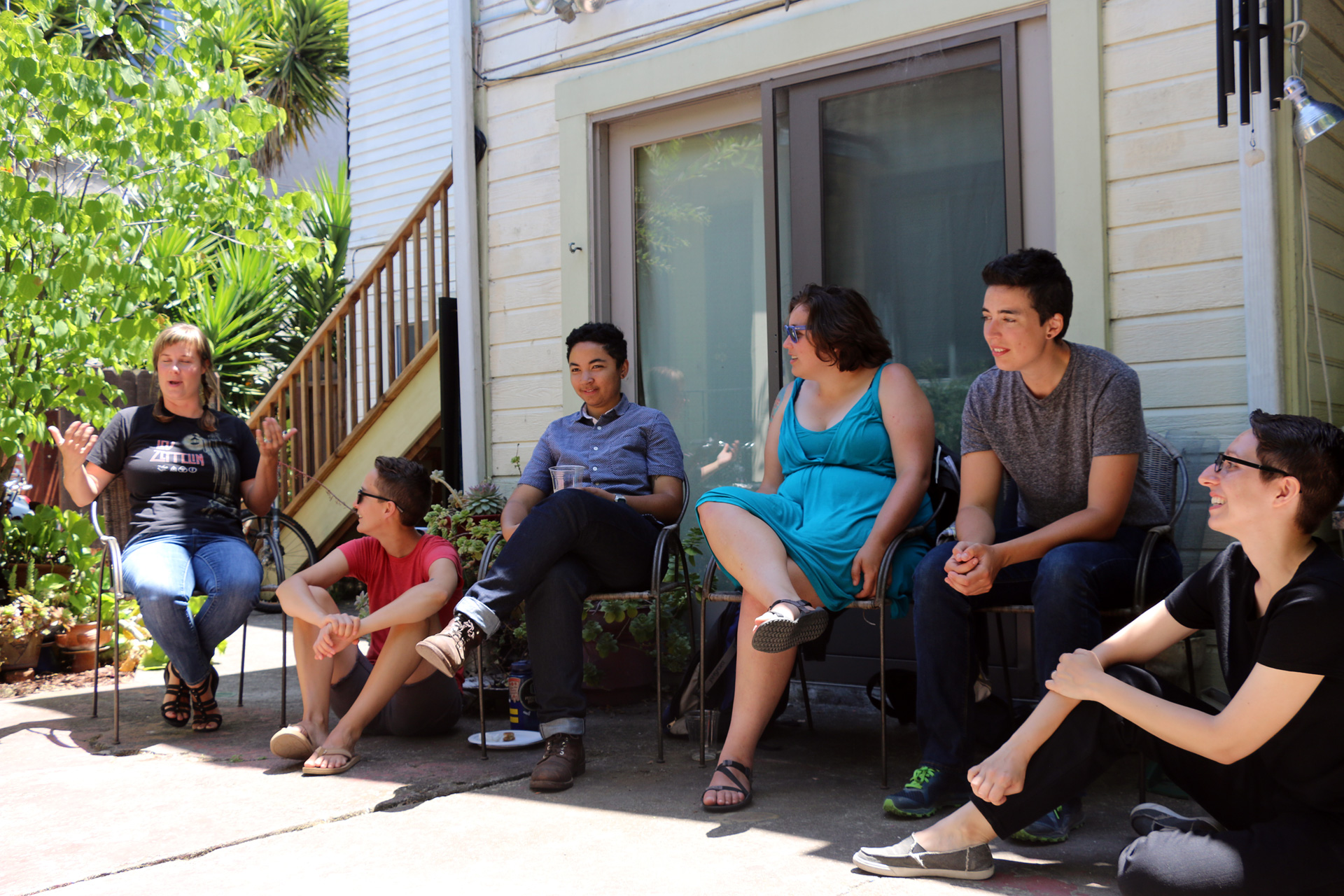
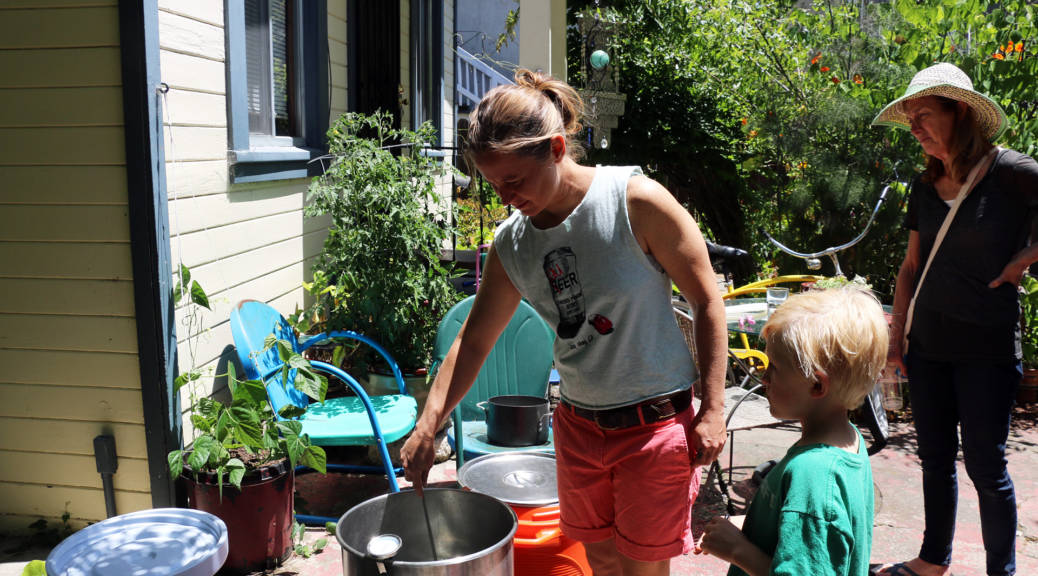
Group members hanging out during a brew day.
Group members hanging out during a brew day. (Kim Westerman)

While there are many events scheduled throughout the year, QMB’s main focus is on brew days, which are open to everyone who is queer-identified. Most of the core group members are women, and Sandidge muses that perhaps this is because it’s more of an educational gathering than a bar scene—these are science geeks experimenting with everything from IPAs to milk stouts, with a seriousness deeper than the average consumer of beer.
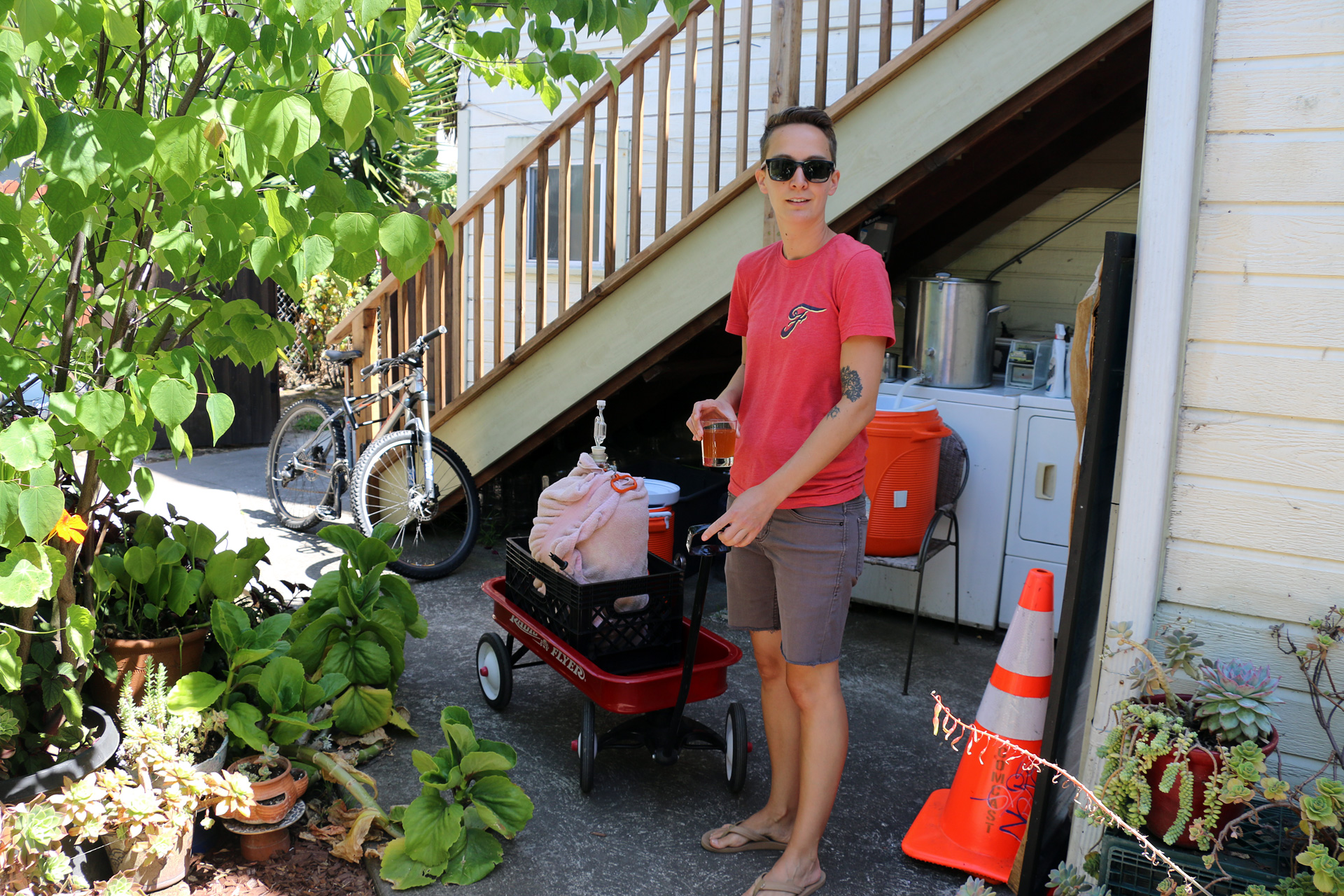
Kate Summerhill and her little red beer wagon.
Kate Summerhill and her little red beer wagon. (Kim Westerman)

That’s not to say the meetups aren’t social. In fact, there’s a lot of time to shoot the breeze while the six- to seven-hour process of brewing unfolds. I attended a recent weekend brew, along with my wife and kids, and hung out with about 10 other brewers, ranging from very experienced to total newbie. The atmosphere was super-casual and welcoming, but with a connoisseur’s eye toward the craft of brewing.

And there was beer, of course, in this case, a lager that hadn’t yet been lagered, or aged. This was the first time I’d encountered the word “lager” as a verb, and Sandidge explained that it means “to store” in German, but is now commonly applied to beer as a noun.
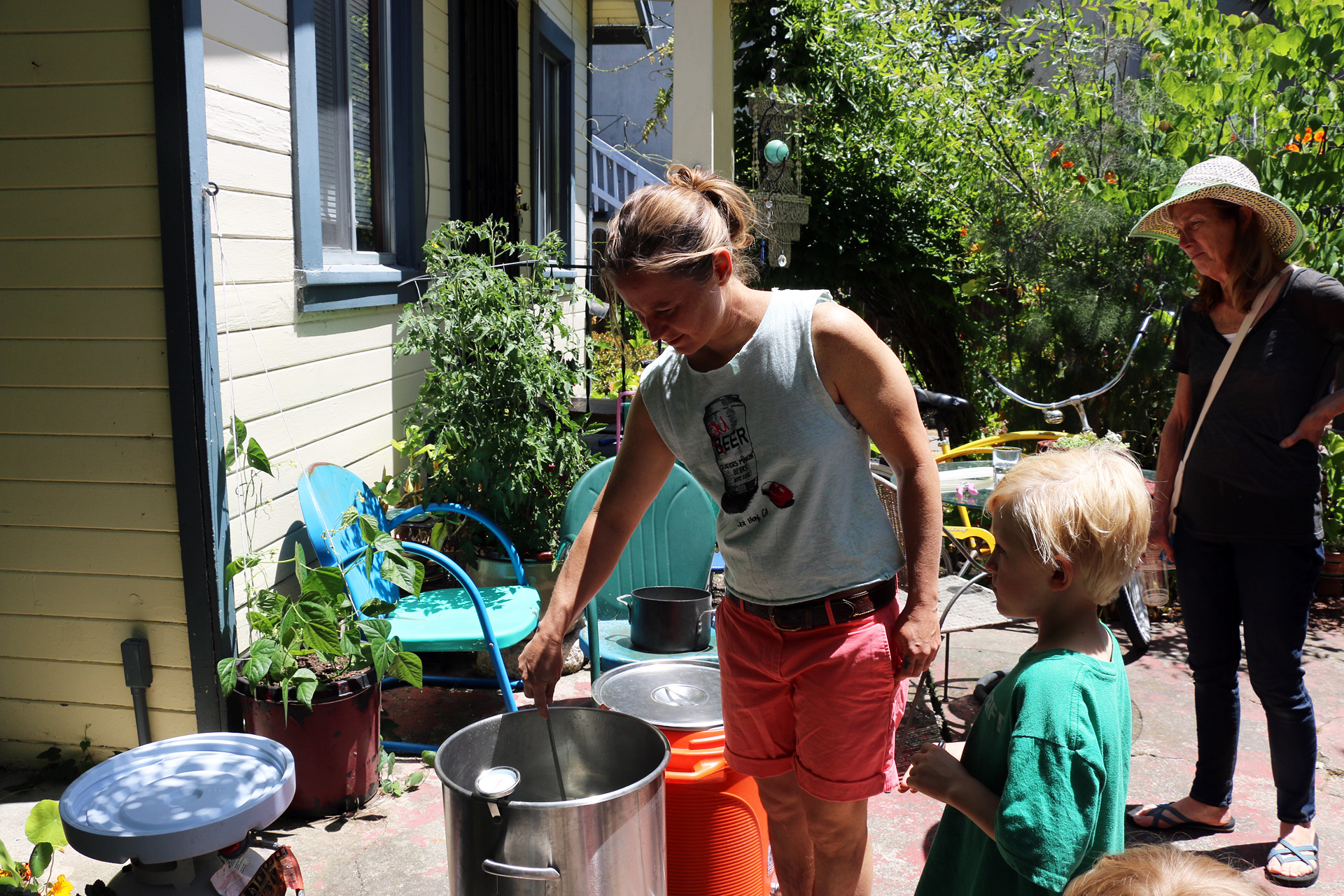
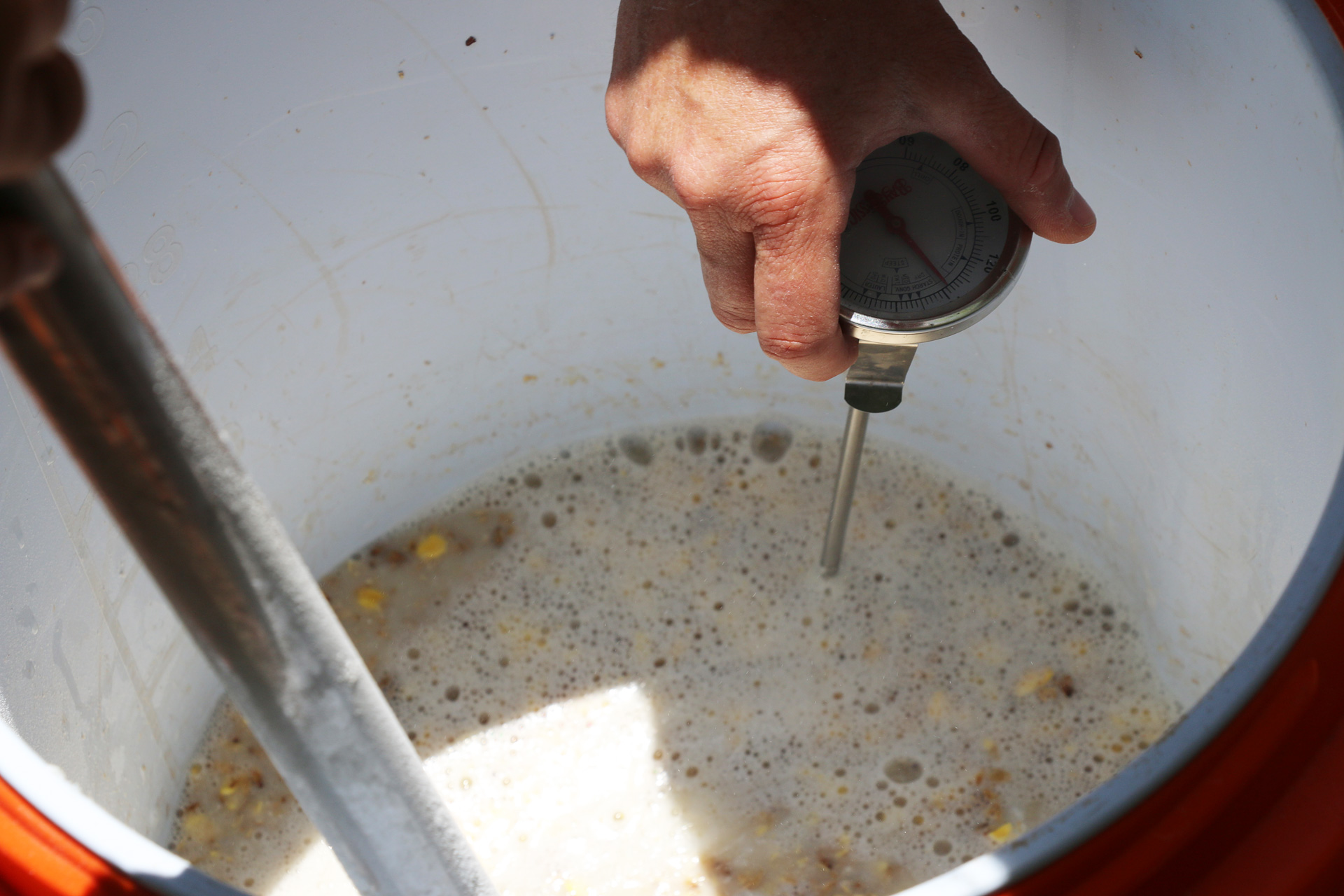
Rebecca Sandidge checks the water temperature before pouring in grist.
Rebecca Sandidge checks the water temperature before pouring in grist. (Kim Westerman)
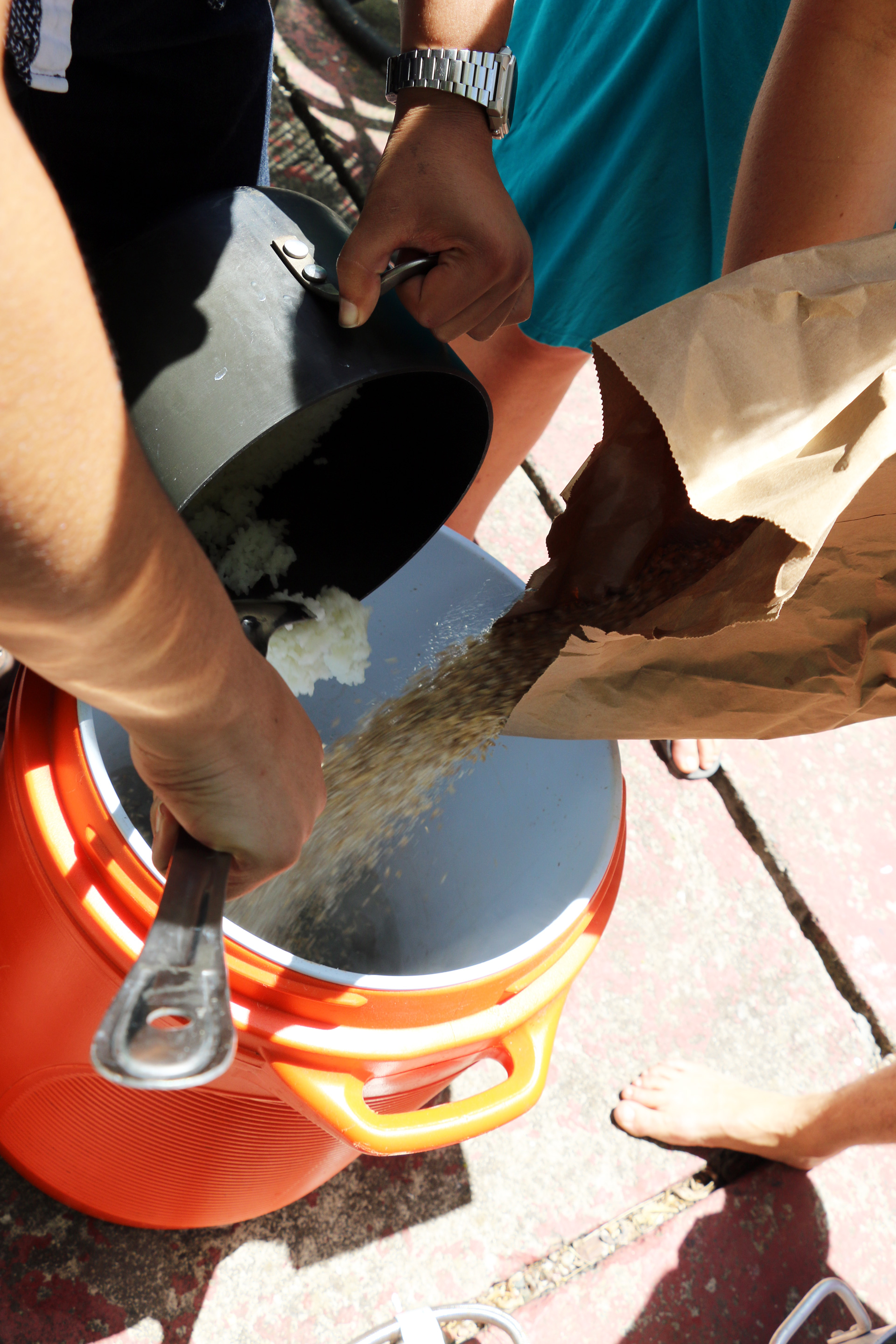
The grist is poured into the water to create the mash.
The grist is poured into the water to create the mash. (Kim Westerman)
The mash is brought to a controlled boil.
The mash is brought to a controlled boil. (Kim Westerman)

The typical sequence on brew days is that Sandidge, Summerhill and other experienced brewers start setting up early, first by boiling a big vat of water into which the grist (a mixture of malt and various grains) is poured to start the mash conversion. The enzymes in the malt convert the starches to sugars over a period of 45 minutes to an hour, then the liquid is poured off and brought to a controlled boil, at which time hops are added. Fermentation is the next step, in which any remaining particles are removed and yeast is added. Yeast converts the sugar into alcohol and, depending on the type of recipe, the beer then matures from one to six weeks. Most brewers combine the primary fermentation with a second fermentation after bottling, again, depending on the style of beer desired. Lighter beers typically require a shorter fermentation process, while darker beers take more time to develop. The final step is to filter and carbonate the beer, and then rest it for as long as you like.

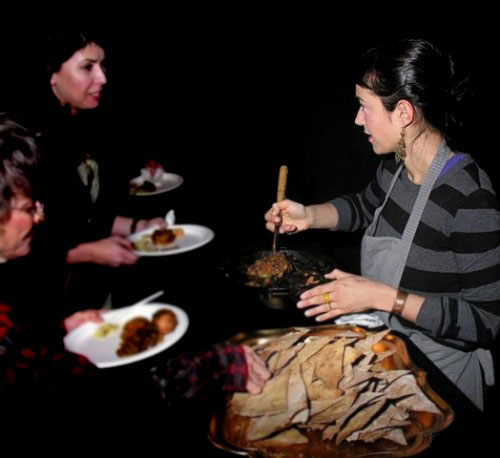
During this whole meandering process, people come and go. At the last brew, Summerhill managed the grill—hot dogs (with a veggie option) and grilled peppers—and Sandidge set up a table with logo merchandise, including glassware and t-shirts she designs and prints herself, as well as a donation jar and a raffle for a homebrewing kit.
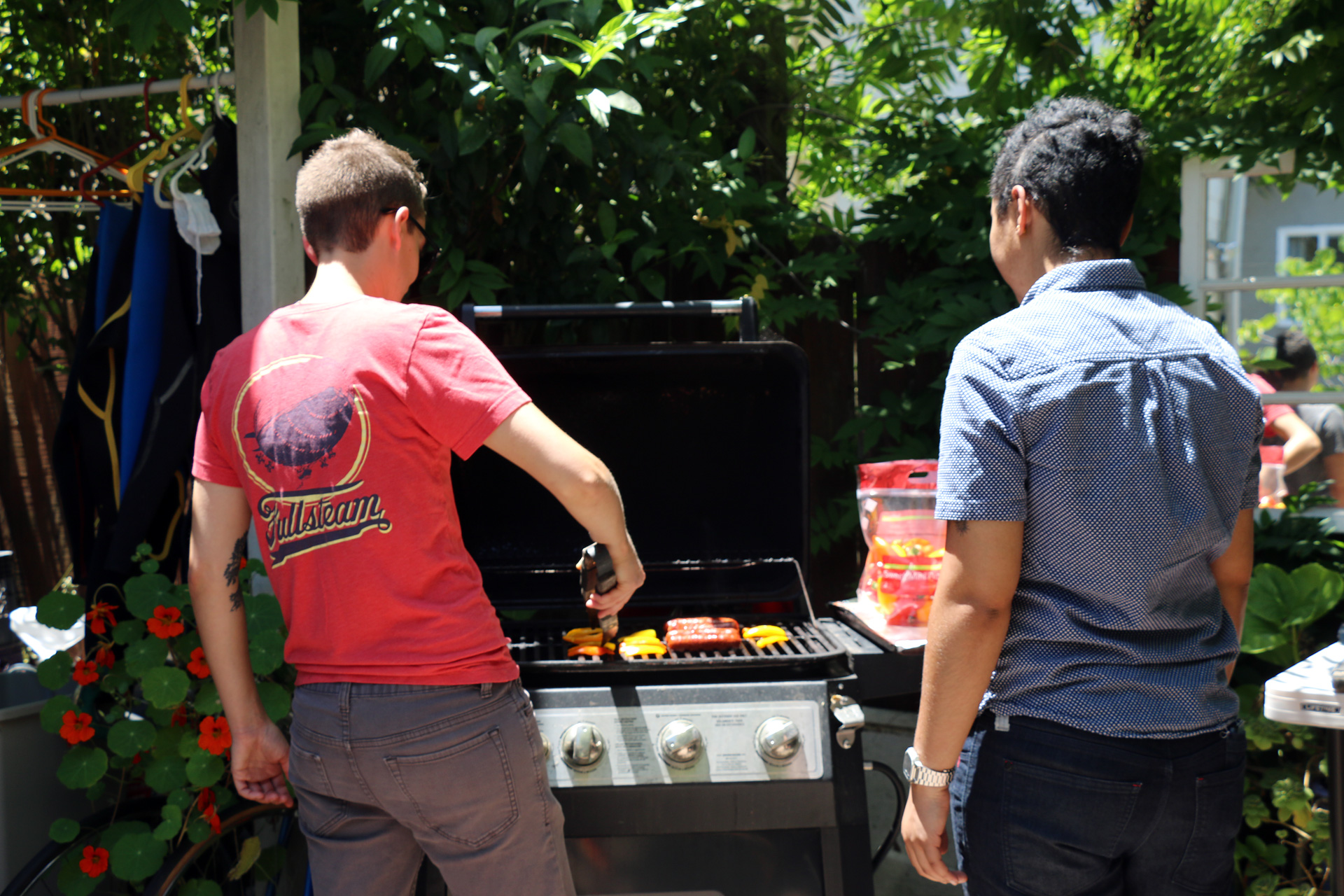
Summerhill grills up hot dogs for the group.
Summerhill grills up hot dogs for the group. (Kim Westerman)

“Why beer?” is clear, but why queer? The mission is straightforward: to address the need for experiential, educational spaces free of racism, misogyny, sexism, homophobia, transphobia, ableism, xenophobia, and judgment. It’s designed for the queer-identified, but anyone who rejects the prevalence of heteronormativity is welcome. As Sandidge adds, “Making good beer is a radical and empowering act,” so it stands to reason that one of the outcomes of this group is to empower the marginalized and create space in which this community can flourish.

Queers Makin’ Beers is trying to grow its reach by offering support to new chapters, as well as continue its work in brewing education. QMB’s fundraising campaign is trending now on GoFundMe, and they’d like to raise $15k by the end of June, which, perhaps not coincidentally, is LGBTQ Pride Month. So, raise a pint glass to these queer-beer-pioneers, and celebrate the diversity in our community.


Website: Queers Makin’ Beers
Facebook: Queers Makin’ Beers
Instagram: queers_makin_beers
Meetup Page: Queers Makin’ Beers
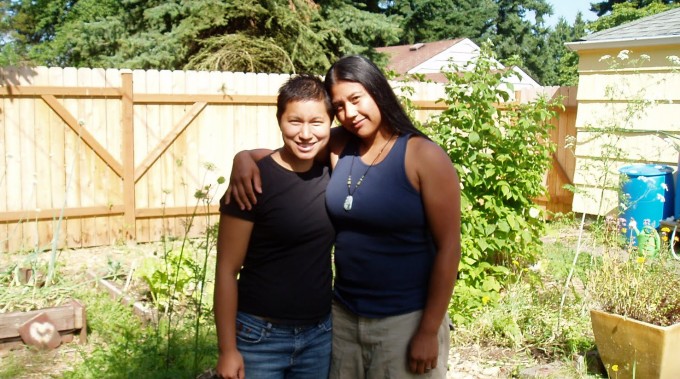
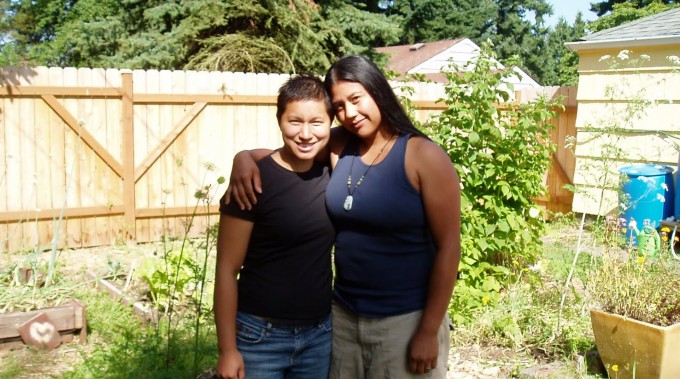
American Gaythic: LGBT Farmers Gain Visibility

Joanne Alcantara and Boo Torres of Seattle's 2 Brown Chicks Family Farm. Photo by Jonah Mossberg
Joanne Alcantara and Boo Torres of Seattle’s 2 Brown Chicks Family Farm. Photo by Jonah Mossberg

By Kristina Johnson, Civil Eats (8/19/14)

“Farming is a couple’s business,” says Jenks Farmer, a commercial flower grower in rural South Carolina. If you don’t have a spouse to help you out, he adds, “it is really hard to become an expert at marketing, growing, selling, accounting, and all the other aspects of the business.”

But for Farmer and his life and business partner Tom Hall, and for other Lesbian, Gay, Bisexual and Transgender (LGBT) farm couples, the legal advantages of marriage often do not apply. For instance, Hall works part-time on the farm and part-time in town at a job with healthcare benefits. But because South Carolina doesn’t recognize their partnership, Farmer can’t share in Hall’s employee medical coverage.

Farmer and Hall are not alone. There may be less outright discrimination against queer folks on farms and in farming communities than existed a few decades ago, but Maya Rupert, Policy Director at the National Center for Lesbian Rights (NCLR), says injustice can occur subtly. “There absolutely is discrimination happening,” she says. When you’re openly gay in a rural area, she adds, people may be more comfortable ignoring your application for a job or denying you public housing. Since rural areas have fewer advocacy groups focused on LGBT issues, there are fewer places to go for support when those kinds of injuries happen.

Enter the Rural Pride Campaign, a series of day-long summits focused on the LGBT experience in rural America sponsored by the U.S. Department of Agriculture (USDA), the NCLR, and the True Colors Fund.

“People assume that if you’re LGBT, you are urban and wealthy,” says Rupert. “But that just isn’t true.”

In fact, almost 10 percent of all same sex couples in the U.S. live in rural areas. And those that do, according to a report by the Williams Institute at the University of California at Los Angeles, are twice as likely to live below the poverty line than same-sex couples in cities. They even tend to have lower incomes than straight rural couples. What’s worse, Rupert says, the city-centered stereotype has meant that rural LGBT Americans aren’t on lawmakers’ radar the way their urban counterparts are.

“When people don’t know a community exists, policies don’t exist to protect them,” says Rupert.

This year, the first Rural Pride summit was held in Greensboro, North Carolina, in early June, with more meetings scheduled across the country over the coming months. Attendees at the town hall-style gatherings have called for protection from employers who seemingly dismiss their applications and federal agencies that might ignore their public housing needs, as well as states that don’t recognize their right to marry. (Twenty one states license same-sex marriage or have legalized it.) Most participants come from counties where farming is a dominant industry, even if they aren’t farmers themselves.

The Rural Pride Campaign dovetails with a recent amendment to the USDA’s internal code of conduct*, which now prohibits agency employees from discriminating on the basis of gender identity (i.e., how people dress, perceive themselves or otherwise expresses their gender) and political preference. Sexual identity was previously included in the law. While discrimination was generally prohibited by the agency before the amendment, the additional specificity should make it easier for complainants to receive redress.

All this could make farming and other forms of rural livelihood even more appealing for LGBT folks. Despite the fact that equality is still a work in progress, many summit attendees have said they are proud to be part of their rural communities. Rupert remembers one woman who felt more accepted in her small town than she ever did living in a city. Rural America might be more conservative, but the people who call it home have a sense of unity, too.

Connecticut farmer and filmmaker, Jonah Mossberg interviewed over 30 self-proclaimed queer farmers while making the 2013 documentary Out Here. The men and women he met during the project were often drawn to agriculture outside the city because it gave them a rare sense of freedom.

“So many queer people struggle to feel good about themselves. But farming makes you feel capable. You can be your freaky self, you can dress weird. As long as you work hard, it doesn’t matter,” says Mossberg.

That said, there is a difference between tolerance and real approval. In the film, one gay farmer describes interacting with non-queer members of his community in a way that’s reminiscent of “Don’t ask, Don’t tell. “We don’t talk about our sexuality. We talk about farming, because that’s something we can all connect to,” he says.

On a similar note, whenever Jenks Farmer presents to the local Master Gardener Association, he makes sure to show a photo of himself and Hall, standing in a field with their arms around each other.

“I tell people that Tom is my partner, and we have a business, a house, and a farm together. I give them words to understand us,” he says.

The Rural Pride Campaign wants rural LGBT Americans to realize that they aren’t alone. But the ultimate goal is to move past talk and into substantial policy improvements. The summits are a chance for policymakers to see where progress needs to happen, whether it’s installing an additional bus route so rural LGBTers can travel easily to LGBT-friendly job opportunities or making it easier for rural, transgender residents to apply for subsidized health insurance though Obamacare.

“We want to bring rural organizations together with federal policymakers,” says Rupert, who adds that in all policy work the trick isn’t just in writing new laws, but in broadcasting those changes to the public. “There has been so little outreach around the federal government’s LGBT policies to date. Our goal in partnering with the USDA is to help change that.”

You can learn more about the Rural Pride Campaign, find a summit near you, or invite NCLR/USDA to host a summit in your town online.

*It’s worth noting that the amendment only covers USDA-conducted programs, like those handling rural housing loans, but does not yet include USDA-assisted programs, like the Supplemental Nutrition Assistance Program, known as SNAP. NCLR hopes the agency will eventually apply the rule to all of its programs.

About the Writer
Kristina is a San Francisco-based writer, focused on issues in rural life and agriculture. She was previously in the trenches of ag policy at the Natural Resources Defense Council, campaigning to remove antibiotics from livestock feed and to reduce food waste. She graduated with a B.A. in Religious Studies from Davidson College, where she led students and farmers in a successful crusade to bring local, sustainable fare to campus. Before moving west, Kristina earned a second degree at the French Culinary Institute in New York City. Learn more at kristinacjohnson.com.

LGBT Pride: Where to Eat and Drink During the Dyke March

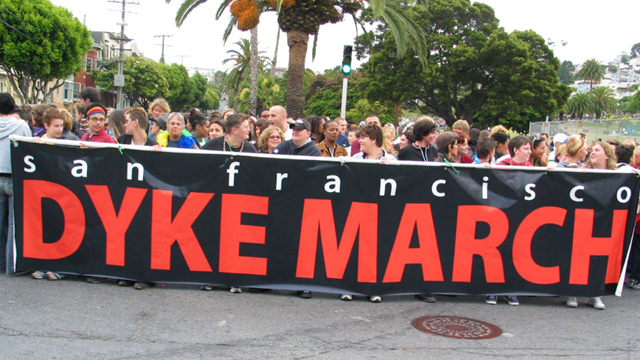
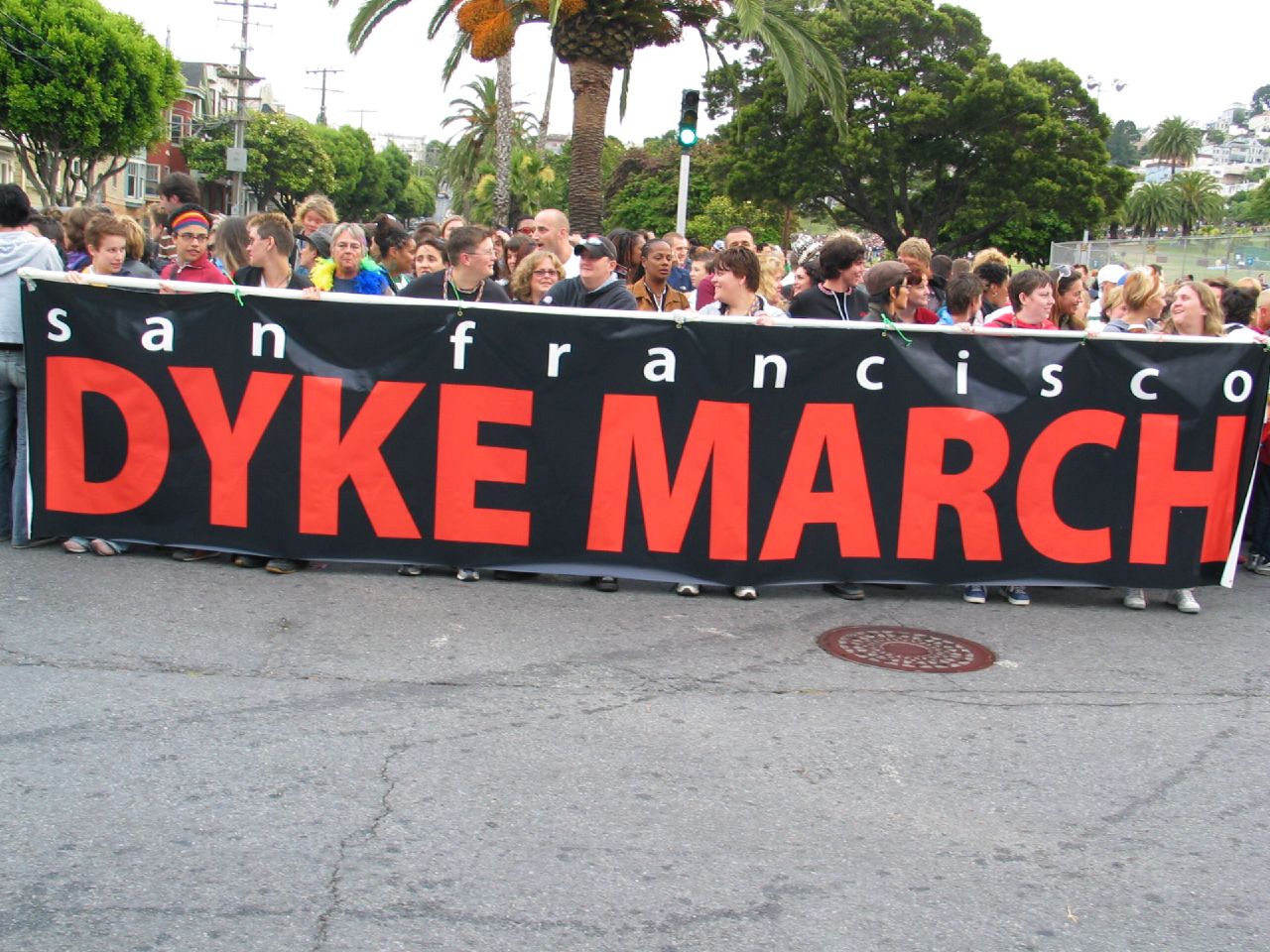
San Francisco Dyke March. Photo: Wendy Goodfriend

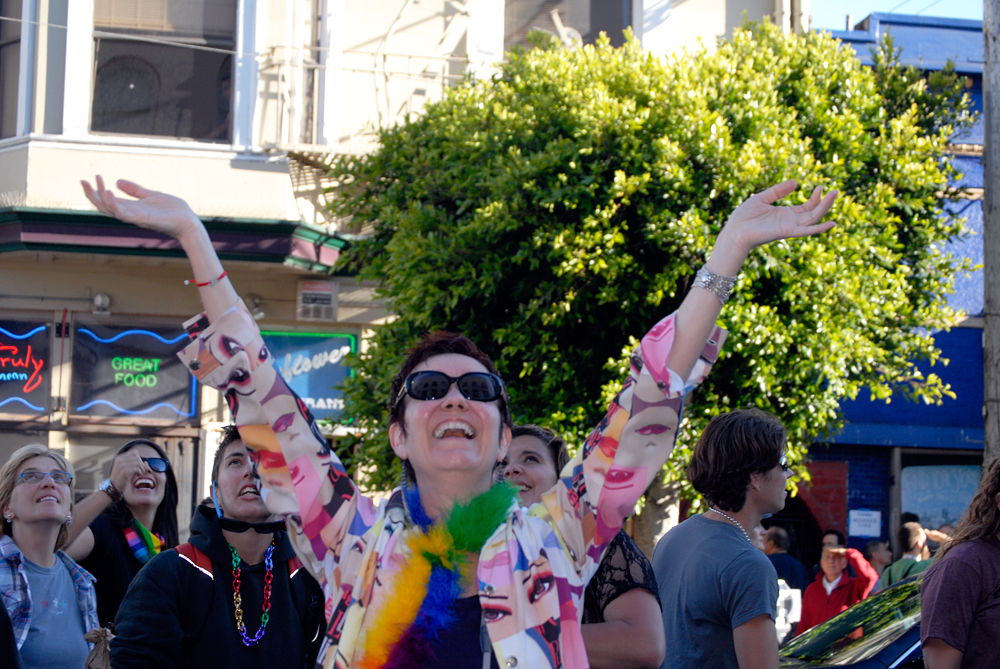
June is LGBT Pride Month and on Saturday June 28 in San Francisco, the Dyke March kicks off with a rally at 4 p.m. and march at 6 p.m. The Dyke March starts at Dolores Park and works its way through the Mission and over to the Castro. With any large gathering, my thoughts inevitably turn to food and drink: after all, people watching and marching can make anyone ravenous and wondering “where’s my next snack?” Dykes and in-the-know San Franciscans from all over the Kinsey spectrum had tips about the Dyke March. One advised to bring food from home and a longtime Castro resident said to seek out eateries off of the parade path. But if you don’t feel like prepping food and don’t want to miss out on the festivities we have collected a list of eateries and bars that are on the traditional march route.

Three of the most popular hangouts are on one block of 18th Street: Dolores Park Cafe, Delfina, and Pizzeria Delfina. For these three hot spots, I was able to find out what it’s like for those always popular eateries to participate in the Dyke March.

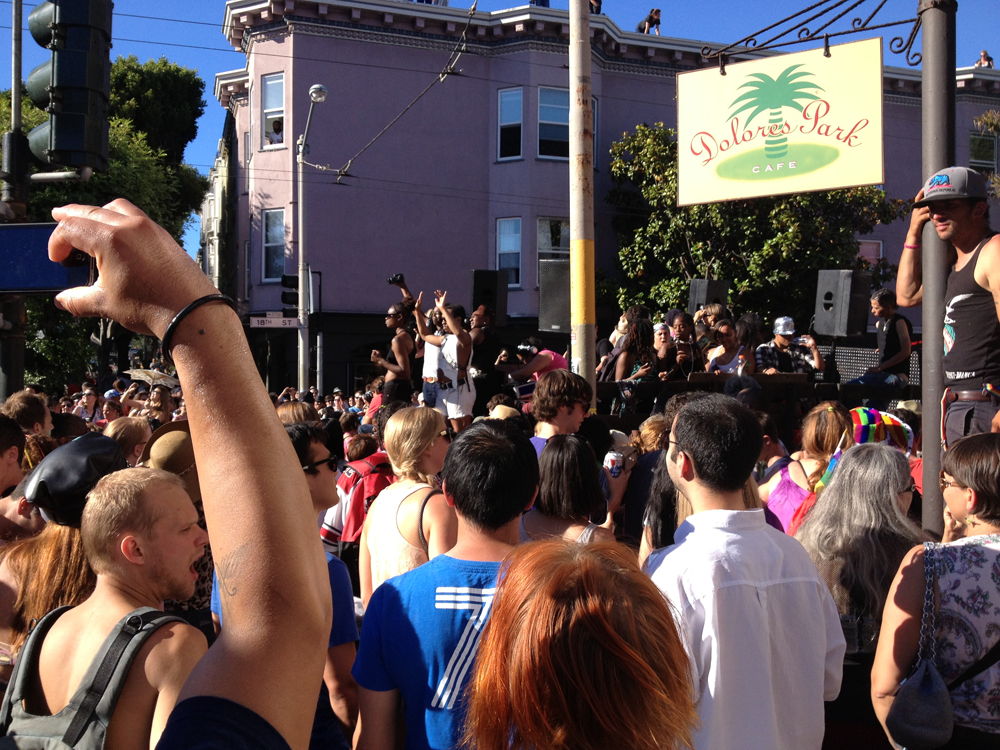
Dyke March at Dolores Park Cafe. Photo courtesy of Dolores Park Cafe

More than a few folks named Dolores Park Cafe as the best spot to people watch. Dolores Park Cafe’s Rachel Herbert told Bay Area Bites that:

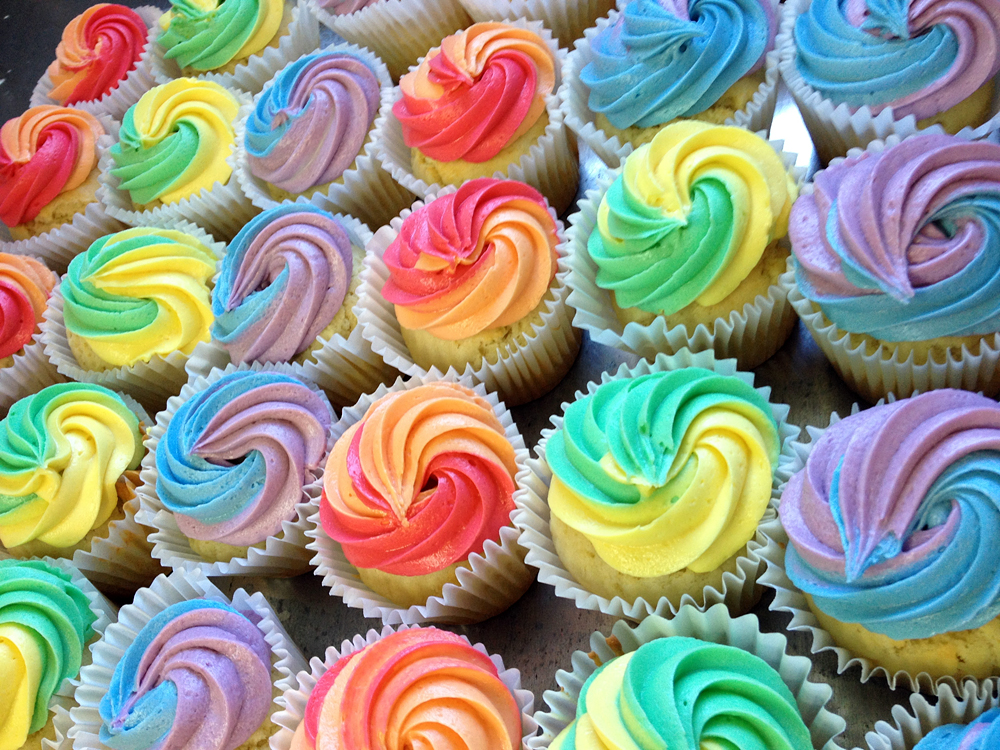
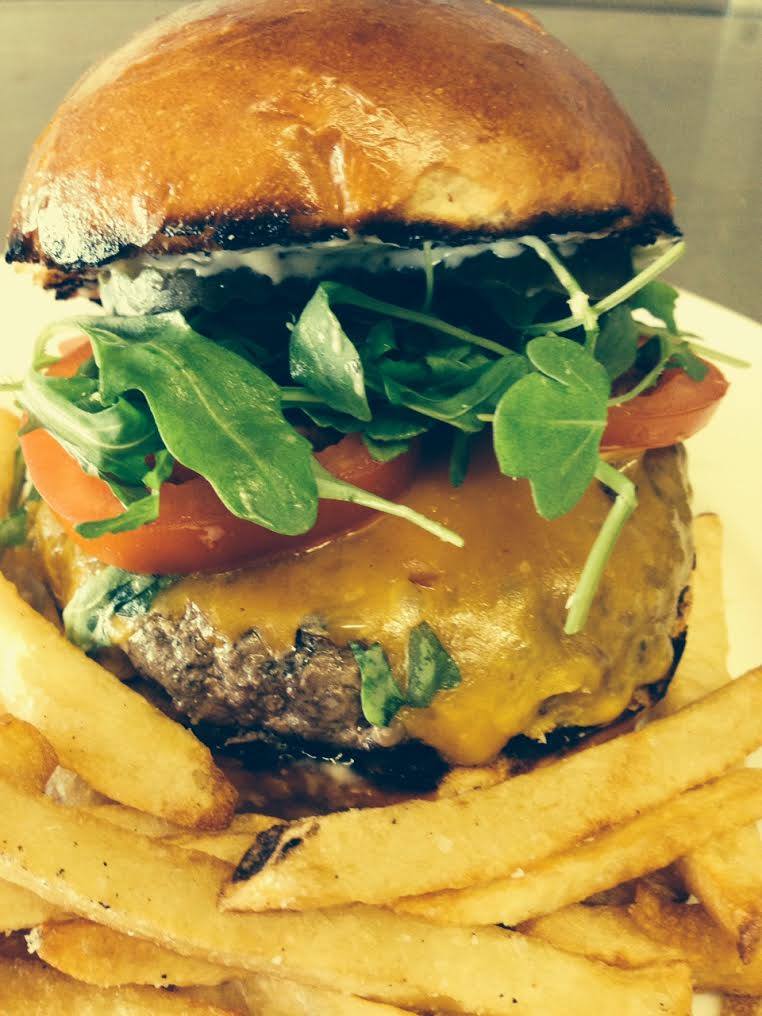
“We have special menu items for Dyke March and Pride every year. This year we are working on breast rainbow cakes (cupcakes), custom rainbow pops, and some special fresh squeezed organic juice combinations as well as Hunky Bear burgers & jello shots. The Hunky Bear burger is an eight ounce grass fed burger on a home-made challah bun with wild arugula, Roma tomatoes and our secret sauce. It’s all organic, including the flour used to make the bun.”

Pizzeria Delfina and Delfina are also great spots to take in the eye candy.

Delfina’s Ashley Bellview said:

“We love that the Dyke March passes right by us. It’s something that we look forward to every year and with our prime front row seating — it’s something that our guests look forward too as well. To help support the March, we both supported it financially as a sponsor as well as donate proceeds from our special edition Pizzeria PRIDE t-shirts.”

According to Bellview, the shirts are being finalized and can be purchased for $25 and will be available through all pizzeria locations. Look to their upcoming newsletter for more details.

The restaurants, eateries and bars are listed roughly in order of the Dyke March’s typical flow from start to finish.

Namu Gaji
499 Dolores [map]
Ph: 415-431-6268
Twitter: @NamuSF

Dolores Park Cafe
501 Dolores [map]
Ph: 415-621-2936
Twitter: @DoloresParkCafe

Bi-Rite Market
3639 18th St. [map]
Ph: 415-241-9760
Twitter: @BiRiteSF

Bi-Rite Creamery
3692 18th St. [map]
Ph: 415-626-5600
Twitter: @BiRiteCreamery

Fayes Video & Espresso Bar
3614 18th St. [map]
Ph: 415-522-0434

Delfina
3621 18th St. [map]
Ph: 415-522-4055
Twitter: @delfinasf

Pizzeria Delfina
3621 18th St. [map]
Ph: 415-437-6800
Twitter: @pizzeriadelfina

Izakaya Yuzuki
598 Guerrero St. [map]
Ph: 415-556-9898
Twitter: @IzakayaYuzuki

Farina Focaccia & Cucina Italiana
3560 18th St. [map]
Ph: 415-565-0360
The ginormous windows and pesto pasta are the biggest draws here.

Curry Up Now, Mortar & Pestle Bar
659 Valencia St. [map]
Ph: 415-504-3631
Twitter: @CurryUpNow

Curry Up Now is the only place where you can order naughty naan and sexy fries in the Mission. Yes, you probably want to share; just saying “naughty” and “sexy” out loud often helps move things along… at least in my mind. The Tikka Masala burrito is filling and fun.

Owners Akash and Rana Kapoor just launched Mortar & Pestle Bar inside the space, and feature low-proof cocktails that are made with tinctures, oleo and bitters. Designated marchers aka those wishing to stay sober can instead sip tasty sounding craft bottled sodas: Kola, pineapple-vanilla phosphate, cardamom-raspberry Rickey and mango Chai.

Go ahead and break the seal and pee here: there is reportedly no wait for bathrooms.

La Rondalla Restaurant and Cantina
901 Valencia St. [map]
Ph: 415-829-8444
La Rondalla just re-opened after a long shuttering and is known more for its strong margaritas and festive atmosphere.

Dyke March festivities on 16th Street. Photo: Wendy Goodfriend

Sunflower Restaurant
3111 16th St. [map]
Ph: 415-626-5023
Pho, veggie rice plates and other straightforward Vietnamese dishes.

Arinell Pizza
509 Valencia St. [map]
Ph: 415-255-1303
Counter spot with piping hot (quality) slices of pizza that fold over for easier eating. Bonus: open way late.

Pancho Villa
30171 16th St. [map]
Ph: 415-864-8840
Easy access, fast and friendly to-go burritos are a good option here. Or stay for the full-plate meals, agua fresca and Mexican beers in festive yet casual atmosphere. Service is efficient and able to handle the crowds — meaning they’ll quickly take care of the hangry types in your midst.
Truly Mediterranean
3109 16th St. [map]
Ph: 415-252-7482
The menu is short and sweet, and you’re toughest decision may be to get the falafel deluxe or shawarma, which makes for walk-as-you-eat-ease or settle into the more hearty combo plate, which rocks a light Baba ghanoush, hummus and other delights.

Super Duper Burgers
2304 Market St. [map]
Ph: 415-558-8124
Twitter: @SuperDuperSF

Cafe Flore
2298 Market St. [map]
Ph: 415-621-8179
Twitter: @CafeFloreSF

Lookout Bar
3600 16th St. [map]
Ph: 415-431-0306
Twitter: @LookoutSF

LGBT Pride Profile: Dining Around Radio Host Joel Riddell

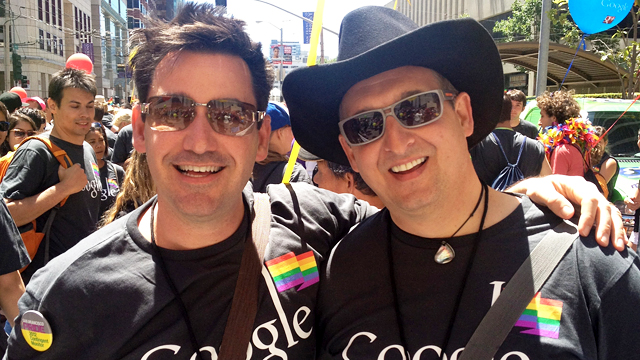
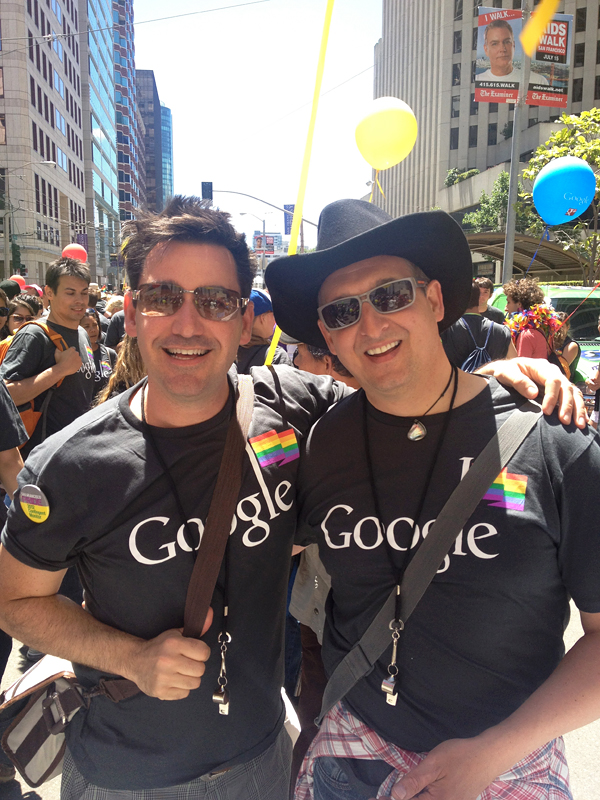
Joel Riddell and Robert Moon with Google contingent at San Francisco Pride Parade. Photo courtesy of Joel Riddell
Joel Riddell (L) and his partner, Robert Moon (R) with Google contingent at San Francisco Pride Parade.
Photo courtesy of Joel Riddell

Food fans and radio listeners are likely familiar with the voice of Joel Riddell, the award winning host and producer of Dining Around on Talk 910—-a show that is considered the Bay Area place for chefs and notable personalities to dish on food, wine, event and travel. Thought leaders like Lidia Bastianich Felidia, Michael Pollan, Hubert Keller, Margrit Mondavi and Joanne Weir hit the airwaves for interviews with Riddell, and he is often at food and fundraising events with his partner, Robert Moon. The couple is based in San Francisco and Moon, who works for Google, is an apt sidekick for his ability to photograph and document (in witty fashion) the details of their restaurant and home-cooked feasts from hole-in-the-wall Korean to white tablecloth joints. Chef Emily Luchetti enjoys checking out Moon’s social media to guess what Riddell may discuss on air the following weekend—the descriptions always make me hungry, too.
Riddell’s earlier career revolved around theatre, hospitality (he co-owned and operated a bed & breakfast) and internet publishing before he landed in San Francisco at KGO Radio where he was the Producer of the Gene Burns Programs for coverage in Israel, Cyprus, Tuscany, Vatican City, and French Polynesia. I first met Riddell over a decade ago via a local chef who was friendly with the radio broadcaster Gene Burns, who recently passed away and was a professional mentor to Riddell. I have catered for Riddell and Burns and spent time carousing with Riddell and Moon at media events including “pinch-me-now” dinner moments at Incanto Restaurant with Marco Pierre White and a fundraiser at E&O Trading Company in San Francisco with Anthony Bourdain.

June is LGBT Pride Month and there is so much energy focused on equal rights for the LGBT community right now, especially in California. The Supreme Court is set to rule on Prop 8, California’s same-sex marriage ban today as well as DOMA (Defense of Marriage Act), the federal law that defines marriage as only between a man and a woman. Regarding employment, professions that have been slow to open the closet doors are gradually yielding to the pressure and challenging homophobia within their systems. With that in mind, I asked Riddell about his personal and professional experiences being an out gay man in the food media world. His comments have been edited for length and clarity.

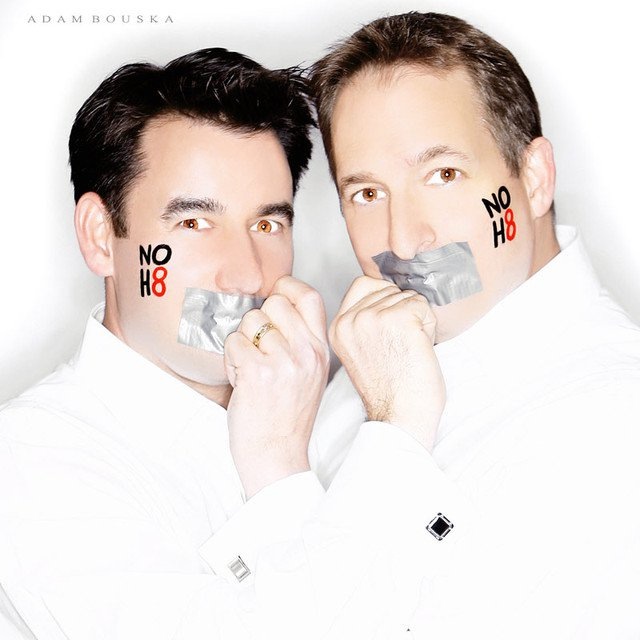
Joel Riddell and Robert Moon. Photo: Adam Bouska

Bay Area Bites: How long have you and Robert been together? You did a No H8 photo, share the same shoe size, and are pretty open about your love for each other. Tell us more.

Ridell: Robert and I have been together for over 17 years. He is my bright and shining star and at times my knight in shining armor, too. We do try to be a team. The night that we did our No H8 Adam Bouska photo, we went to Alexander’s Steakhouse and still had the tattoos on. We were wearing suits and ties but couldn’t wash off the tattoos. We were having dinner and the waiter said, “What’s with the tattoos? Six or seven waitstaff came by and said, ‘look at these two guys.’ Robert and I always try to walk hand in hand, and just let people know we’re a couple and that it’s totally normal.

Bay Area Bites: What is your experience with regard to homophobia and LGBT acceptance within the culinary & media worlds that you work in?

Ridell: I think within the media world you would expect that it would be very open and very cool. But when I first started over 10 years ago, it was okay to make sexist and homophobic comments. Fat comments, too. This was in the workplace, from management on down. Those comments made a lot of people uncomfortable. Things have gotten a lot better. Here at Clear Channel, they are the sponsors of Pride and the stations show range and personalities. It’s very multicultural and management makes it really clear that they won’t put up with any discrimination in the workplace. You have to pay attention to advertisers.

For restaurants, I think of old guard French restaurants that were very male-centric places but not necessarily homophobic. Here in the Bay Area, think of how many restaurants have staff that are Latino, European, Asian– we’re so multicultural.

Places who dub themselves as gay or lesbian before being a restaurant have more issues than the opposite. Take Arrows in Maine for example. Clark and Mark are amazing chefs. They were out on Top Chef Masters and on the forefront of many things. But they don’t have rainbow flags or rainbow chefs coats. Not that they are not proud but the clientele in that part of Maine can be a bit conservative. They are chefs and the restaurant is glorious and they just happen to be gay. Each of us needs to be as out as possible so we can be a united force against the hatred others feel. I have been fired for being gay and hired for being gay. It all depends upon the restaurant owner.

Bay Area Bites: What was it like for you coming out professionally? When did you do it? What was your job at the time? Have you noticed a change over time?

Ridell: It was sort of de rigueur. I’m working on a food show. In my old company, people would make odd homophobic comments. Usually when folks would realize I had a longtime partner they would say things like, “I certainly think it’s okay you’re together, but don’t think you should get married.” It’s like a weird club, ‘because we’re straight, we’re allowed all this stuff, but you’re not allowed to have it,’ kind of thing.”

My parents are quite religious but they’ve always been inclusive of everyone. If you’re going to be homophobic, it’s not a Christian attitude. For me it’s always been a positive and inclusive situation. With my mom, she has always shown that if you’re a loving individual, why would anyone criticize that?

I did have a woman at work who would call me “princess Joel.” That’s not okay. I told her many times “You just called me ‘princess Joel’ in front of 17 people.” She’d say, “You know I’m joking.”

I couldn’t tell her, “Lady, this is not cool,” because she was in management.

Bay Area Bites: What are your favorite places to eat and drink?

Riddell: We go to Fleur de Lys every Christmas and have done so for 15 years. The only year we missed was the year they had the fire, and we went to the Ritz and Hubert and Marie Chantal Keller were there. We went to Fleur de Lys when we signed our mortgage papers—-you need to celebrate things like that.

I love Acquerello.

I try to eat at a lot of different places. We’ve been to nopalito a bunch of times. I like Boxing Room and Dobb’s Ferry, the places you can go in and grab a table.

If we’re looking for seafood, we go to Hayes Street Grill.

Perbacco and Farallon are good and Trick Dog is really cool.

At Namu Gaji, the Lee brothers are smart and they know what they’re doing.

Bay Area Bites: You were a guest on KQED’s Check, Please! Bay Area. What was that experience like?

Ridell: Completely wickedly fun. Leslie is fun. Tina Salter is so smart and she’s got it down, and told us, ‘I don’t want you to talk about the restaurants to each other. Keep that to yourselves.’ I loved it. My experience was really exciting because I felt they respected and cared about my choices and they really want people to have their own opinion. I chose Farallon because I feel we should recognize those places that have worked so hard to keep themselves relevant and interesting.

One of the other guests chose Angkor Borei and there was an LGBT angle there. At the table near us, one man was Cambodian and the other Thai. They gave us suggestions and we had a fun time. The staff on the show really respected what we had to say about our experiences and that is an important aspect to the program; it’s totally driven by the people on the panel.

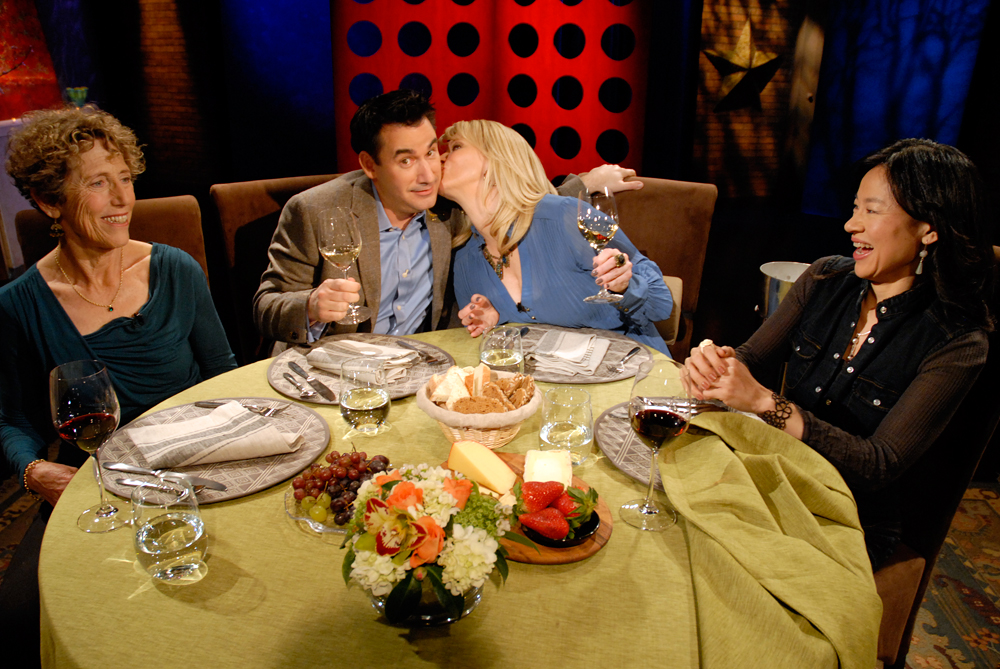
Joel Riddell was a guest on KQED's Check, Please! Bay Area 100th episode. Photo: Wendy Goodfriend
Joel Riddell was a guest on KQED’s Check, Please! Bay Area 100th episode. Photo: Wendy Goodfriend

Bay Area Bites: How do you celebrate Pride Month? Personally? Professionally?

Riddell: Last year Robert and I walked the parade with Google. I did a Dining Around show the day before. It’s a celebration.

I’ll be there 10am to 1pm broadcasting then I’ll be with my team, volunteering. I’m there because I think it’s really super important and our city gets benefits. We tend to hang out with friends. We’ll do a fundraising event next Thursday for the Academy of Friends.

LGBT Pride Profile: Jennifer Johnson & Serafina Palandech of Hip Chick Farms

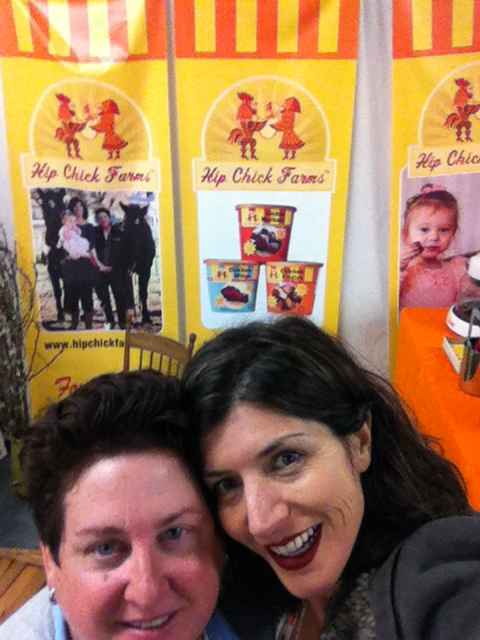
Hip Chick Farms travel: Jennifer Johnson and Serafina Palandech at the Expo West tradeshow in March, 2013. Photo courtesy of Hip Chick Farms

Jennifer Johnson & Serafina Palandech are partners in life and business: the duo co-founded Hip Chick Farms, a small batch company that fills a real need: chicken fingers, meatballs and wings that are quick-frozen minus hormones and fillers. Johnson brings culinary experience to the mix and Palandech’s background is in event planning. Anyone who’s ever felt guilty over the “I’m a busy parent, here’s another quesadilla” dinner routine may find relief and surprisingly good—even for adults–flavor in Hip Chick’s products. The company’s Kickstarter campaign says it well: “Our goal is to raise, process, and distribute our chicken products and manage the process from beginning to end. There are no preservatives, hormones, antibiotics, or filler in our products, and by freezing them, we can ensure their quality and purity. With your help, we can fulfill our goal of providing families with products kids will love that are lovingly made — from the way the chicken is raised to the way we cook them.”

Chef Jen Johnson’s current full-time gig is cooking for the Getty family in San Francisco while Palandech manages many of the operational aspects of Hip Chick Farms. While it is a Bay Area start up, the couple are also gearing up for the next round of growth that may likely include funding from investors.

June is LGBT Pride Month and there is so much energy focused on equal rights for the LGBT community right now, especially in California. The Supreme Court is set to rule on Prop 8, California’s same-sex marriage ban this month as well as DOMA (Defense of Marriage Act), the federal law that defines marriage as only between a man and a woman. Regarding employment, professions that have been slow to open the closet doors are gradually yielding to the pressure and challenging homophobia within their systems. With that in mind, I asked Johnson and Palandech about their experiences. Their comments have been edited for length and clarity.

Bay Area Bites: Chef Jen recently met President Obama via her work as a private chef in San Francisco. What was that like?

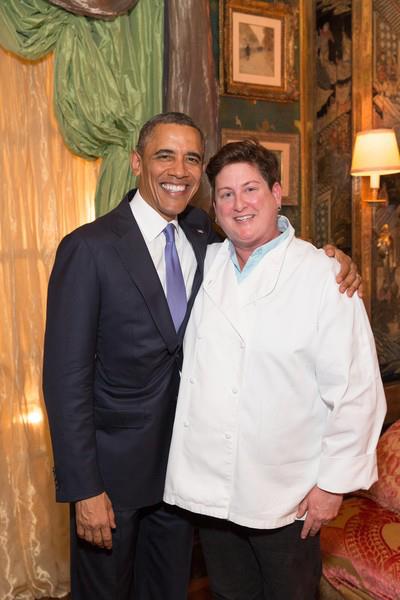
Palandech: President Obama came to a fundraiser at the home Jen cooks at a couple of months ago. Jen was invited to meet the President and have her picture taken with him, and carefully considered what she wanted to say to him. We love the President and his family, and are happy that he supports pro-gay marriage. When she met him, she said “Mr. President, my wife and my daughter and I love you and your family.” She had her photo taken with him, and as she was leaving, he pulled her back in and said “Hey, you tell your wife and daughter, ‘hi’ from the President.” He got it!

President Obama with Chef Jennifer Johnson. Photo courtesy of Hip Chick Farms

Bay Area Bites: How did you two meet?

Palandech: Jen and I met at a fundraiser in San Francisco over five years ago. Three months prior to our meeting, my best friend came over to my house, and told me all about this amazing woman she had met the night before at the Lexington Club. My friend was convinced that this women was “the One” for me. At the time, I was in a relationship and was unwilling to hear anymore about it. A few months later, this same friend and I went to a fundraiser and met Jen. Jen and I immediately connected in an intense way. At the end of the night, my friend remembered where she had met Jen before — and we realized that Jen was “the One” she had met months ago. My friend was right — she was the One for me. I went home from that night, broke up with the person I was with, and we were engaged three months later.

We have been married for four years and had our daughter, Rubyrose, almost three years ago. After we moved from San Francisco to our lovely little farm in Sebastopol, we started Hip Chick Farms. We wanted to live our beliefs about sustainable food systems and make a line of products from Jen’s amazing recipes made with impeccable ingredients. We love working together. It is intense and amazing and really hard work. But we are really proud of what we have built together in the past year and a half.

Serafina Palandech, Jennifer Johnson and their daughter Rubyrose at Hip Chick Farms. Photo courtesy of Hip Chick Farms.

Bay Area Bites: How do you support each other at home and in life?

Palandech: Gosh, I’m Jen’s biggest fan. I just think that she’s amazing and such a creative talented person and she works so hard. We have this shared vision of what we want our lives to be like and we’re taking this big risk together. It’s really stressful and we just try to support each other through this — she’s commuting and working a full-time job while we have Hip Chick Farms. We try to take care of each others’ strengths and weaknesses. When I get stressed out, she calms me down and I do the same for her. Our ultimate goal is that we’re all together.

Bay Area Bites: You two are building a business together and recently traveled to tradeshows. What is it like to market and promote yourselves and your product?

Palandech: We really believe in transparency with our business. It’s important to us for people to know that we are a family business. It’s not like it’s a priority to be a “gay business” but it’s the truth that that’s what we are.

We’ve gotten really positive feedback. With Jen’s amazing background people are impressed. It’s important for them to know where the product is sourced. Having Hip Chick Farms has really been positive experience. For us, that’s been wonderful.

We went to the UNFI tradeshow in Portland for a major natural food distributor. People love it and get what we’re about there. The other show was for Tony’s Fine Foods, which was different and more mainstream, and interesting. People like that Hip Chick Farms has a natural product and seem to respond really well to the fact that there’s real people behind it. We haven’t really gotten anything negative around it — and we’re promoting it as a family business.

Bay Area Bites: What is a typical week like for you with Hip Chick Farms?

Palandech: I work from home and for a typical week, I am managing the manufacturing and work really closely with the factory as well as the people providing the ingredients. There’s a lot of selling in my job: talking to stores, and doing product demos, which are a very important part of our business right now. We have to meet and educate our consumers and tell people our story. I’m doing sales calls, and on the manufacturing side, I’m working with our distributors.

Bay Area Bites: You two have a young daughter and are still building a business. What’s that like?

Palandech: I have a lot of meetings while I’m holding her in my lap. I’ve had potential investors come in since we’re trying to raise capital. As a startup, we’ve bootstrapped our financing to date so now we’re trying to generate investors. We place so much value on being together as a family. I think it’s hard to do it all and it’s really important to me for our daughter to be a part of this as much as possible. My mom was just here for a week visiting from up North. For the Tony show, my Mom stayed with Rubyrose, our biggest fan.

Bay Area Bites: What was it like for you coming out professionally? When did you do it? What was your job at the time? Have you noticed a change over time?

Johnson: I basically came out when I started working at Chez Panisse in 1991 at age 24. As you can imagine, I was met with open, loving arms at work. At home, coming out to my family was definitely more challenging and terrifying. I think working in the Bay Area and working with people who really believe in sustainable cooking and living — they tend to be a lot more open-minded then maybe other restaurant cooks that are less about the food and more about the show…in more macho kitchens is where I saw a lot more homophobia. So, I basically knew in my gut to stay far away from those kitchens and restaurants. I truly feel that when chefs are connected to their food and where it was raised or grown they just naturally tend to be more open-minded and welcoming — “family table,” come one, come all. Since 1991, the changes have been mind-blowing and yet there still needs to be more change, more awareness, and more tolerance!

Bay Area Bites: What are your favorite places to eat and drink?

Johnson: We live In such a glorious bubble that I feel like most or all restaurants are very open and welcoming of all clientele. I tend to eat at the same places (which is not often): Zuni, Chez Panisse, Tosca for drinks, and Tomasso’s. I also seek out hole-in-the-wall dive bars and am always trying to find the best pho and spring rolls in town!

My gorgeous wife and our adorable three-year-old daughter just celebrated Pride in Guerneville by walking in the parade with a bunch of queer families. I had to laugh and reminisce that prior to being a “wusband” and parent, gay Pride weekend was always a blast and ended with a pretty good hangover! I love my life and I love how I’ve been able to celebrate my life in so many different wonderful crazy ways. Professionally, me being present and being my authentic self is my way of celebrating my gay Pride every day!

Here’s The Story of Hip Chick Farms

[youtube http://www.youtube.com/watch?v=UisqXbqXjRI]

LGBT Pride Profile: Punk Domestics Founder & Writer Sean Timberlake

Sean Timberlake at Vertigo. Photo courtesy of Sean Timberlake

For those of us who still fear homey kitchen tasks like curing our own bacon or the seemingly simple act of getting a delicious and even interesting jam going (raw blueberry-blackberry Chia seed jam, anyone?) there is definitely help. Punk Domestics is a “yes you can” site launched by San Francisco-based founder Sean Timberlake nearly three years ago and is an informative and approachable food-based community — spanning cheese, home brewing, infusions and liqueurs, and other culinary pursuits. Timberlake is a friendly and witty San Francisco professional wordsmith (clients currently include Williams-Sonoma) who also mans the Hedonia food blog, which is still running strong after seven years. Timberlake and his husband, real estate agent dpaul brown live in Noe Valley and often attend food events together. The duo are both longtime supporters and guides for San Francisco City Guides and Timberlake also leads culinary walking tours for Edible Excursions. Having spent time with Timberlake throughout the years, I can’t think of a better person to stroll the Mission and nosh on local San Francisco delectables.

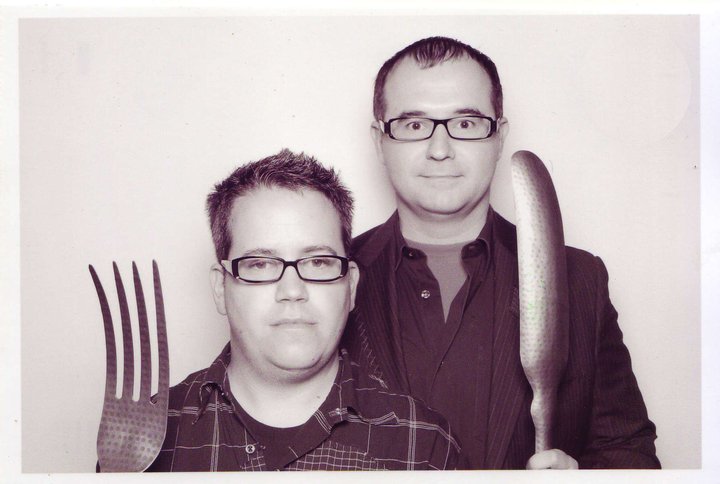
 Sean Timberlake and his husband dpaul brown simulate American Gothic. Photo courtesy of Sean Timberlake
Sean Timberlake and his husband dpaul brown simulate American Gothic. Photo courtesy of Sean Timberlake

June is LGBT Pride Month and there is so much energy focused on equal rights for the LGBT community right now, especially in CA. The Supreme Court is set to rule on Prop 8, California’s same-sex marriage ban this month as well as DOMA (Defense of Marriage Act), the federal law that defines marriage as only between a man and a woman. Regarding employment, professions that have been slow to open the closet doors are gradually yielding to the pressure and challenging homophobia within their systems. With that in mind, I asked Timberlake about his own experience recently. His comments have been edited for length and clarity.

Bay Area Bites: How did you and your husband dpaul meet? How long have you been together?

Timberlake: dpaul and I have collaborated on many things. We had a tee-shirt business with a friend in the 90s, and he has been my photographer both when I was a travel editor and for Hedonia, as well as some of my freelance work. He also contributes with the food — preparation and styling (and eating). I’m currently helping him with content needs for his real estate business, including his newsletter. We try to make it interesting for everyone, covering both trends in the market as well as food and lifestyle news about San Francisco.

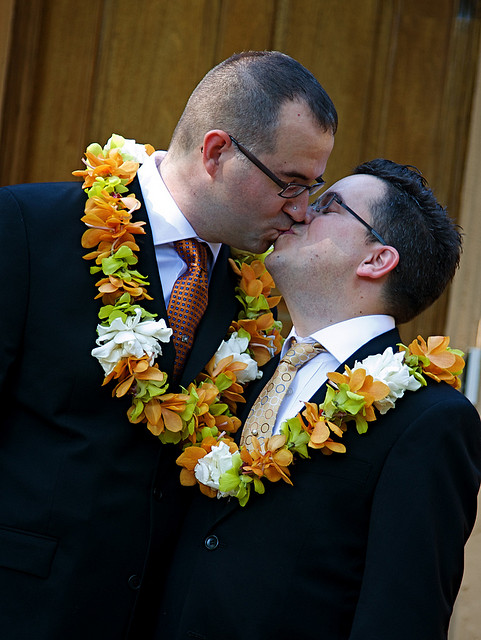
We met 21 years ago this month, via a personals ad in the Bay Times — pre-internet! Though it turned out that we had met multiple times before. He had just broken up with an acquaintance of mine, and so we had some friends in common. We first “married” in 1993, registering for domestic partnership in San Francisco, the greatest extent of legality we could have at that time. We “married” again in 2004, registering for domestic partnership in the state of California. And we married, no air quotes, in 2008, in the narrow window of opportunity between the CA Supreme Court overturning Prop 22 and the passage of Prop 8. We remain legally married, as do thousands of other same-sex couples in California. This September we celebrate our 20th, 9th and 5th anniversaries.

dpaul and Sean's third and legal wedding. Photo: Anita Crotty

Bay Area Bites: What is your experience with regard to homophobia and LGBT acceptance within the culinary world that you work in?

Timberlake: My entry into the professional food world was as a writer and blogger, and overall that’s a very accepting sphere. Just before BlogHer Food 2010, here in San Francisco, I joked in a piece that 80% of food bloggers are women, and of the balance, 80% of the men are gay. Many of the most prominent and esteemed male food bloggers are gay, like David Lebovitz, David Leite, Adam Roberts and local up-and-comers (and personal friends) Michael Procopio and Irvin Lin. So, I can’t say that I’ve experienced any outright homophobia among my peers.

But of course, having a blog means being exposed to a broader audience. Even so, only once have I encountered any push back from the general public. Shortly after Prop 8 passed, I wrote a rant on it that segued into a recipe for ropa vieja. Someone came across it, apparently from searching for ropa vieja recipes, and left a comment about marriage being between a man and a woman the way God ordained it to be. Her one comment sparked dozens of responses refuting hers with rational points about constitutional law, religious freedom and more supporting the right for same-sex marriage. It was awesome.

With my community site, Punk Domestics, my sexuality doesn’t really come into play. I don’t hide it — my bio on the About page clearly references dpaul — but the site is not about me; it’s about a huge, robust community of DIY foodies. Many of my contributors are LGBT, most are not. If any of them out there have a problem with homosexuality, it doesn’t come up.

Bay Area Bites: Do you find some areas of the food world more accepting than others?

Timberlake: I think acceptance is generally on the rise, and at least here in San Francisco I’ve never noticed an area that’s expressly homophobic. However, I would love to see more visibility for openly LGBT farmers (they exist!). Then again, I would love to see more visibility for all farmers. It’s grueling, thankless work, and these people literally feed us every single day. We owe them our attention and admiration.

Bay Area Bites: What was it like for you coming out professionally? When did you do it? What was your job at the time? Have you noticed a change over time?

Timberlake: I’ve been unapologetically out for over 25 years, long before I was writing about food, or anything for that matter. My first career, in the late 80s and early 90s, was in theater, albeit on the technical side, sets and props. It was like being a reverse minority: Most of the people on the technical side were straight, but the industry overall is so overwhelmingly gay, there was no issue of acceptance. If anything, I think I got more confusion from the gays on the performance and costuming side, seeing little gay me covered in sawdust and paint.

Bay Area Bites: Is there a gay subculture within the food world? In the Bay Area?

Timberlake: I often joke about the Lesbian Food Mafia. There are relatively few openly gay male chefs of note in the Bay Area, but some of our most esteemed female chefs and other food professionals are out. I don’t really know why that is. Where gay men are most prevalent and influential, though, is in the food media world. It’s as if we all descend from James Beard.

Bay Area Bites: Since San Francisco is a gay mecca are there restaurants (as opposed to bars that serve food) that are know to cater to a mostly gay clientele?

Timberlake: I used to be an editor for a now-defunct travel publication that recently rebooted as ManAboutWorld. Back in the early 2000s, we had to make a point to find the places where gays and lesbians would frequent. Nowadays, I don’t see as much of that; we’re everywhere. Conversely, as restaurants in the Castro are improving (thank heavens!), places like Frances and Fable are drawing in a more homogenized crowd. I think back to the days of Ryan’s or The Patio, which felt like the brunching version of 70s discos, and that just doesn’t exist anymore.

Bay Area Bites: What are your favorite places to eat and drink?

Timberlake: Contigo is probably our most frequented restaurant, in part because it’s a block from our house and because Brett and Elan Emerson are personal friends, but mainly because the food is amazing. We love to sit at the cava bar and chat up the staff. Ragazza is another fave, and again Sharon and her wife Alisha are buds. They came on my Punk Domestics trip to Italy last year, which we’re reprising, this fall.

I love Bar Tartine, and our favorite splurge is a languid evening of omakaze at ICHI Sushi with the boisterous Tim Archuleta. As for watering holes, we’re fans of both Blackbird and Churchill.

Bay Area Bites: How do you celebrate Pride Month? Personally? Professionally?

Timberlake: I just go on about being me same old gay self. Come Pride weekend, we’ll probably spend a couple hours at Pink Saturday, and on Pride itself we love to find a restaurant on Market Street somewhere between the festival and the Castro, sit in the window and watch the real parade.

dpaul, Reese and Sean. Photo courtesy of Sean Timberlake.

LGBT Pride Profile: Culinary Artist Yasmin Golan

Yasmin Golan photo courtesy of Eli Africa

Our gay-friendly town is full of visitors. June means that the Bay Area and more specifically, San Francisco, fills to the brim with folks from all over the world to observe and celebrate the events, marches and festivities that culminate in SF LGBT Pride. Bay Area Bites is noting this 42nd annual come-as-you-are love fest by telling stories from the LBGT chefs, personalities and waiters who keep us sated 365 days of the year. We’ve talked with Adam Jones, Preeti Mistry and Michael Procopio so far. Next up is a chef and culinary artist named Yasmin Golan, 33. She spends much of her time working for Calico Pie where she creates private food events and lessons. Golan is also one of the brains behind the gay pop-up Queer Food For Love. Chez Panisse, Incanto, Boulette’s Larder and Eccolo are among the restaurants where Golan trained and cooked before branching out to other artistic and food related projects. Bay Area Bites interviewed Golan via telephone and email recently.

Yasmin Fixing Pretty Platter
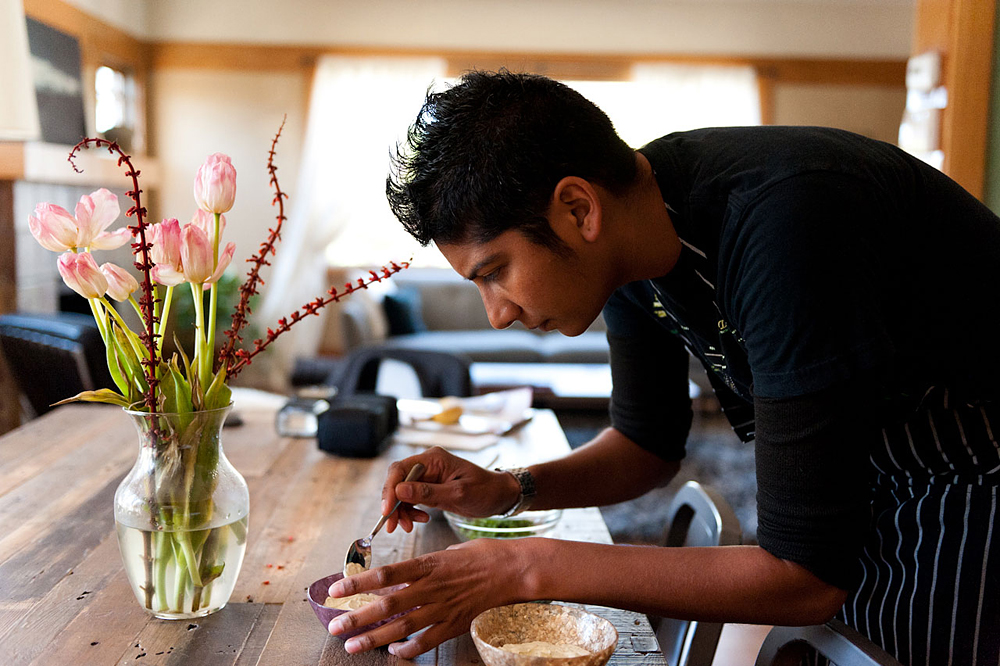
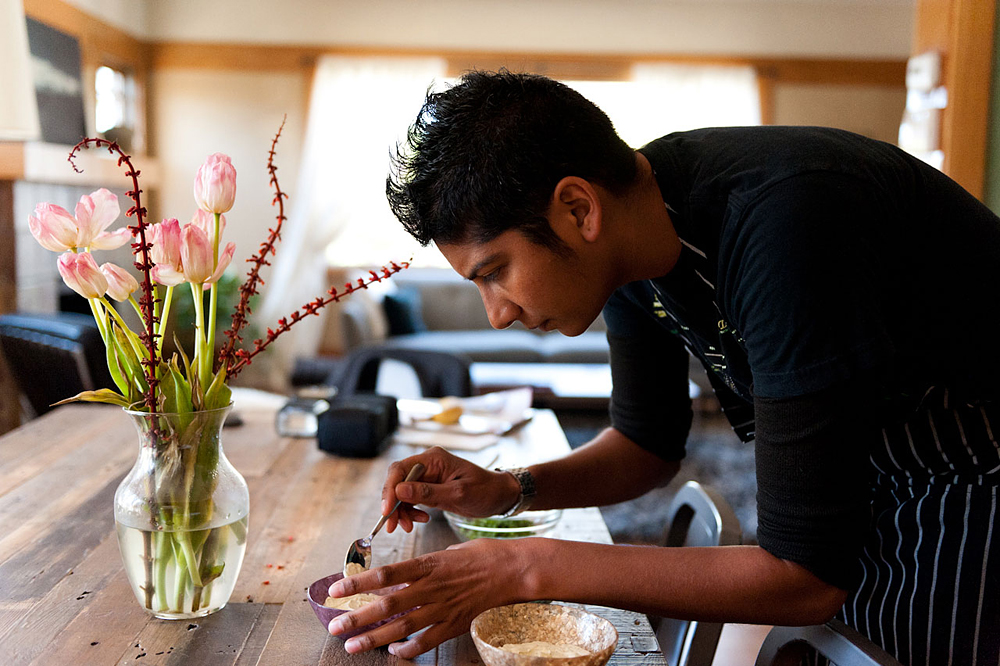
Yasmin Golan working and creating with food. Photo courtesy of Yasmin Golan

How is your work going? What’s new?
I am an interdisciplinary culinary artist who creates one of a kind dinners and pop-ups, usually around themes involving some kind of storytelling. Some of my past projects have included Queer Food For Love, a collaborative pop-up restaurant I co-organized in San Francisco for four years with queer cooks and artists; solo projects through my catering business, Calico Pie, exploring issues like food wastes and worm composting, the wars in Iraq and Afghanistan, and biographical dinners that tell personal stories of Diaspora and migration through food. My current project is starting a bike-up grocery in Oakland, called Humblebee Grocery, to provide week-round access to fresh produce and artisan foods east of Lake Merritt.

Where do you live? How did you and your partner meet?
I currently live with my partner Ami in Oakland. We fell in love over a picnic after I taught a cooking class in their shop. We raise animals, grow food together, worm compost, and keep bees in a multiracial, mixed-class neighborhood that we love. As a couple we are always thinking about how we can get our household more sustainable, by eliminating plastics from our lives or using reclaimed wood, or getting around by bicycle and biodiesel. Ultimately, we strive to create neighborhoods that are sustainable, too, serving local needs and creating jobs with dignity that treat people, plants, and animals with respect.

I was based out of San Francisco around the Mission for seven years and I feel like I’m just another casualty of gentrification of the city. I love Oakland but mourn the way the Mission is turning into a suburb of Silicon Valley. Hopefully people like me can bring the community spirit to organizing and queer arts stuff. I definitely feel passionate about Oakland, and I’m involved in and sad about what’s happening. It’s all interconnected.

As a queer, a majority of my stuff is in the city. Everyone’s scattering for survival. Queer Food for Love was an intersection between art and love and came out of time that people could whittle away from their day jobs. None of us got paid for that. We could find underground spaces and it required all of us to take time away from our jobs. People from that project had to scatter and look after themselves rather than the community.

Ami has lived in Oakland for a few years. I see tons of queer people. There are events here and there but there’s not that sense of running into people to get coffee like in the Mission.

Yasmin Serving
Yasmin Golan (R) serving food. Photo courtesy of Yasmin Golan

The culinary world has often been portrayed as quite sexist…what is your perspective and experience with regard to homophobia in the restaurant world?
Very little gratitude is paid to women and people of color who work in food establishments, including the farm workers, waitresses, cooks, and dishwashers. When more women become self-employed and support each other’s businesses; when restaurant workers organize and form unions to resist exploitation; when workers form co-operatives — I think more women, queer people, and folks of color will share the benefits and profits of growing, preparing, and serving food as a livelihood. Yes, the current food system operates within a framework of globalized racism, sexism, and class exploitation, but queer and feminist folks can help invent the future and create new systems for the production and distribution of food.

Is there a difference between the front of the house vs. the kitchen regarding this issue? A difference for men vs. women?
I feel like gender presentation does play a role in how people are treated in the workplace. As a femme I found it necessary to butch it up in kitchens to be taken seriously by straight men, and I’m sure a lot of straight women do, too. Does the gender role-playing in the kitchen make the food taste better? No. The more I work for myself, the less harassment I have to deal with, because I can focus on food and community-building instead of ignorance.

Yasmins Platter June 2012
Where art and food intersect: Yasmin Golan’s finished creation. Photo courtesy of Yasmin Golan.

What is it like coming out as a food professional? Has being an LGBT person affected your career in any particular way?
As a self-employed person I can say I am a queer, feminist chef — and people who would like to see the world made safer for women and queer people can support what I do. Economic empowerment is very important to being able to say who I am and what I believe. Those who resonate with the message can then come out, too. If I say I am a queer person who is concerned about global warming and I want to start a business that reflects that, then I am making the world safer for others who want that, too. Coming out means standing up for what is more important to you than money.

Is there a gay subculture within the food world and in the Bay Area?
I see women being inspired by each other to start their own businesses, and trans people inspired by other trans people to work for themselves. Empowerment is how queer people are making the world safer for ourselves.

Since San Francisco is a gay mecca are there restaurants (as opposed to bars that serve food) that are known to cater to a mostly gay clientele? Are there places exclusively for LGBT women vs. men?
I think more dykes and trans artists in San Francisco probably wrote books and put on performances and organized events and made art on diets of burritos and beer than any other food the city has to offer.

But if you really want to go somewhere queer, I recommend you shop at Rainbow Grocery.

How do you celebrate Pride Month personally and professionally?
I like to spend Pride weekend picnicking in the park with friends or camping in nature to remember what is really important to me: community, food, nature, love, and chosen family.

LGBT Pride Profile: Waiter and Writer Michael Procopio

Michael Procopio
Michael Procopio photo courtesy of Julie Michelle Photography

Our gay-friendly town is full of visitors. June means that the Bay Area and more specifically, San Francisco, fills to the brim with folks from all over the world to observe and celebrate the events, marches and festivities that culminate in SF LGBT Pride. Bay Area Bites is noting this 42nd annual come-as-you-are love fest by telling stories from the LBGT chefs and personalities who keep us sated 365 days of the year. We’ve talked with Palomino’s chef Adam Jones, and chef Preeti Mistry of the upcoming Juhu Beach Club.

Michael Procopio was on the top of our list of folks to talk to because he is funny and smart. Readers may remember his witty writing from his days here as a Bay Area Bites contributor. He currently turns out great lines like these at his Food for the Thoughtless blog:

“If the dough has become too warm at this point (read: if it feels as droopy as a retired wet nurse’s bosom) place the folded dough onto a tray and pop it into the freezer until it is once again pert.”

Then there’s this one, “Wash hands as thoroughly as if you were about to perform surgery on your own grandmother.” Procopio lives in North Pacific Heights and attended the California Culinary Academy. He grew up in Anaheim and is a professional waiter who also has experience cooking in restaurants. Procopio was interviewed via telephone recently.

The culinary world has often been portrayed as quite sexist. What is your perspective and experience with regard to homophobia in the restaurant world?
My experience has been very good actually. When I worked in the kitchen, I worked in a small restaurant for a Kiwi woman who was actually wonderful. I never had any problem in a restaurant kitchen. Oddly the only homophobia and discrimination was from someone famous that I’d rather not get into.


Michael Procopio photo courtesy of Julie Michelle Photography

Is there a difference between the front of the house vs. the kitchen regarding this issue? A difference for men vs. women?
Most of my career has been spent as a waiter. It’s been 20 years of waiting tables. There’s one woman in the kitchen at the restaurant where I work and she’s openly gay. She sort of straddles the two worlds because she’s on the floor as well. Our pastry chef was joking that gay men are in the pastry department and gay women are on the line, cooking. It seems a bit of a stereotype but at least it’s true in our restaurant. We’ve got a great kitchen staff. I think they’re all really nice people and they kick ass. If you don’t work well, that’s going to be more of an issue than whether you’re a man or woman.

What is it like coming out as a service professional? Has being an LGBT person affected you career in any particular way?
I was already out. I’ve lived here for 17 years. I’ve never had an issue. It’s just a part of who I am. It doesn’t define me as a person and a waiter. My sensibilities and humor come through individually. I don’t see it as gayness, I see it as Michael-ness and it can be a non-issue. I can’t speak for anybody but we have whatever we consider a normal-to-us life here.

Is there a gay subculture within the food world? In the Bay Area?
I lived in the Castro for several years and there were concentrations of gay restaurants: Mecca, Orphan Andy’s, The Sausage Factory… that’s just because of the neighborhood. Frankly it’s San Francisco for god’s sake. I don’t think people really bat an eye. To me it’s a non-issue.

As for a subculture, there’s not one that I’ve witnessed. I have gay friends and straight friends in the restaurant industry. I don’t’ see any concentration. At my restaurant, there’s three gay men and one gay woman. I work with one guy who’s very effeminate and stereotypical. He’s an extremely professional waiter and so am I. It’s something I don’t try to flaunt or hide. I don’t think there’s a gay union.

You live near the Red Door Café and call it one of the gayest spots around. Can you tell us more?
The clientele is mixed. The owner, Ahmed, is unapologetically gay. He often dresses in costumes and wigs. Sometimes there’s an hour and a half wait. During the wait, Ahmed makes people hold baby dolls. He’ll say, “If you can’t take care of the doll, you can’t take care of me.”

Or he’ll interview people with a mirror, and ask, “Tell me something fabulous about yourself, why I should serve you.”

He makes people play along. When you’re in, it’s theater. The food is good. It’s an incredible place: a performance piece, where everyone is participating. It’s really fascinating. He frankly doesn’t give a shit. He only wants people that want to be there. I told him this is what I feared San Francisco is losing… being there made me the happiest boy in the city. It’s awesome.

Red Door Café is only open four days a week, Friday through Monday. I rarely go in to eat because it’s so busy. I go get a coffee there and then hang out, chat and watch the action… watch the barista.

How do you celebrate Pride Month personally and professionally?

I don’t. It’s personal for me. I don’t like any kind of crowds, gay or straight. If it’s a drunk crowd, it gives me the creeps. I don’t care for parades because I worked in one every evening at Disneyland. I was even Goofy, and it was very hot in the costume.

I understand pride and the meaning of it. I have been to the parade. I showed up jaded and said, “Oh the floats suck.”

And then I saw people marching from the small towns from outside the city and saw how they were beaming and joyful. I thought, “they couldn’t do this where they live.” The only pride I felt was from that. I’m not proud that I’m a gay man — it’s not necessarily a thing to be proud of because it’s just who people are. But I was proud of my city because it fosters acceptance. The fact that all these people feel welcome here and can march in the open is really an incredible thing. I think that’s great. If I do go to anything, I go to the Dyke March because it’s fun and unstructured. I wander because I like to keep moving.

Do you think about your style of humor as particularly gay? Are you aware of it?
My humor is a product of my environment. I’ve always had a very gay sensibility. I grew up with an older brother, Doug, who was my primary source of entertainment. He was very funny and he was gay. He loved musicals. He was my primary influence. I owe a lot to him. I just happened to have an older brother who even as a teenager was a middle aged gay man trapped in a teenager’s body. For Anaheim, he had a very worldly outlook. And he was remarkably sophisticated. He died of AIDS. That’s part of the pride celebration that gets me, and it’s not in a bad way. I’m so grateful to see people marching with AIDS. When I do see them marching, it’s sort of a happy-sad time.

I’ve always been surrounded by smart people. Even in school I felt like I was keeping up with them. I kept myself sharp. I’ve been lucky enough to be surrounded with really talented, funny people.

LGBT Pride Profile: Top Chef and Juhu Beach Club’s Preeti Mistry

Preeti plating
Preeti plating photo courtesy of Albert Law

Our gay-friendly town is full of visitors. June means that the Bay Area and more specifically, San Francisco, fills to the brim with folks from all over the world to observe and celebrate the events, marches and festivities that culminate in SF LGBT Pride. Bay Area Bites is noting this 42nd annual come-as-you-are love fest by telling stories from the LBGT chefs, personalities and waiters who keep us sated 365 days of the year. We first talked with Palomino’s chef Adam Jones. Up second is chef Preeti Mistry, 35, who is readying to open her Juhu Beach Club, which will serve “Indian street food, snack food and a bit of home-style cooking” in the Mission and originated as a pop-up. Mistry was a Top Chef Contestant in 2009 and was executive chef for Google via Bon Appétit Management Company and was classically trained in London at Le Cordon Bleu. She was born in London, grew up in the United States and currently lives in Oakland. Bay Area Bites caught up with the chef recently via telephone and email interview.

How is Juhu Beach Club going?
The restaurant is moving along…slowly. We have been in the permitting process for eight months now. We are very close to being done with this part. I’m hoping once this is done that we can move much faster. I’m looking at opening by the end of the summer. The concept will be similar to the pop-up, with more choices and dinner options.

Our goal is to be open all day but I know that the location in the Mission will be much busier in the evenings. There will be several starters, or chaat. Those are items like my handmade samosas, as well as a Scotch egg with lamb mince, Vindaloo chicken wings with Bleu cheese raita and a seasonal bhel puri.

The heart of the menu will focus on the “pav,” which in Hindi means small bun or bread. It’s the portable holder that created the popularity of the vada pav, considered Mumbai’s number one street food snack. We will have a vada pav, but also eight to ten different choices of fillings for your pav. Many are popular sandwich fillings from the pop-up like the “holy cow” and the “chowpatty chicken.” There will also be baby potato & eggplant in a spicy peanut sauce and egg masala. We will most likely also have a few larger plates like fish and chips and a curry of the day.

The culinary world has often been portrayed as quite sexist… what is your perspective and experience with sexism and homophobia in the restaurant world?
The culinary world is a contradiction when it comes to both sexism and homophobia. On a basic level, there is a meritocracy in the kitchen. On this level it does not matter who you are or what you look like or what you do outside of the kitchen. If you carry your weight and then some, if you are a team player and work your ass off then you are “in.” Make great food and then nobody can mess with you. Starting out, this is what I loved about it. You walk into a kitchen full of guys. They have low expectations and you prove you can do the job and then you are part of the team. Also, as a queer woman, once you prove yourself you are just one of the guys. I suppose this may be more difficult for men… I don’t know.

For the next level, I think it only became more difficult when I moved up the chain. There is a change when you go from being in the trenches to being people’s boss. I think this is where homophobia (and sexism, and in my case racism as well) starts to really get in the way. When you don’t look like “the boss,” certain people don’t want to take orders from you.

Is there a difference between the front of the house (FOH) vs. the kitchen (back of the house or “BOH”) regarding this issue? A difference for men vs. women?
Yes of course, the FOH and BOH inhabit two totally different orbits. I suppose the typical stereotype is that there are more gay men in the FOH and more lesbians in the BOH. But it seems like with all the TV shows with gay characters, the political environment in general and changing attitudes of a younger generation, this is becoming less of an issue.

What is it like coming out as a chef? Has being an LGBT person affected your career in any particular way?
Well it’s very rare that I ever have to come out to people. I kinda wear it on my sleeve, but I suppose there is always someone who doesn’t get it. I don’t really bother with those people. They’ll figure it out.

Being queer has to affect everything I do because it is who I am. I think once I moved into a place in my career where I was applying for Executive Chef positions, my triple minority status has probably helped me from a diversity stand point. I also suppose it added to Bravo’s interest in me as a contestant on Top Chef. They want an interesting and diverse group of chefs.

Preeti and Ann Nadeau
Preeti & Ann Nadeau photo courtesy of Preeti Mistry

You’re in a relationship that’s lasted for over 16 years. How did you two meet?
Ann Nadeau and I actually moved to San Francisco together. We met at a bar in Ann Arbor. She works for a research consulting firm and used to work at Joie de Vivre in marketing.

Is there a gay subculture within the food world? In the Bay Area?
I think there are several that intersect with each other across styles of cuisine, restaurant groups, etc.

Since San Francisco is a gay mecca are there restaurants (as opposed to bars that serve food) that are know to cater to a mostly gay clientele? Are there places exclusively for LGBT women versus men?

Well there was Mecca. Which was awesome. I loved sitting at the bar and eating oysters. [Sigh.] So, of course the entire Castro… and now there are some great places like Frances. Honestly I don’t go to restaurants because they have gay clientele. I go for the great food and service. I suppose this is somewhat due to living in a “gay mecca” where we don’t have to make those distinctions as much because there are LGBT people everywhere. The Mission has so many great restaurants, and you are more likely to see more lesbians.

How do you celebrate Pride Month personally and professionally?
I used to work for the Frameline LGBT Film Festival before I went to culinary school so going to see some inspiring and fun queer films has always been a part of our Pride month activities. We will check out the Dyke March for a little while on Saturday. It’s always fun to run into people you have not seen in years. Then Sunday we have a tradition with friends to go see “Fun in Girl’s Shorts” at the Castro Theater followed by brunch at Zuni. It’s a great spot to watch everyone enjoying the festivities from the huge windows onto Market Street. The whole restaurant is usually super festive as well and it’s my favorite brunch spot in the city!

When the Juhu Beach Club is open, I hope to be able to get more involved with events around the city. Last year at the pop-up we had a Pride special lavender berry lassi that was very popular.

LGBT Pride Profile: Palomino Chef Adam Jones

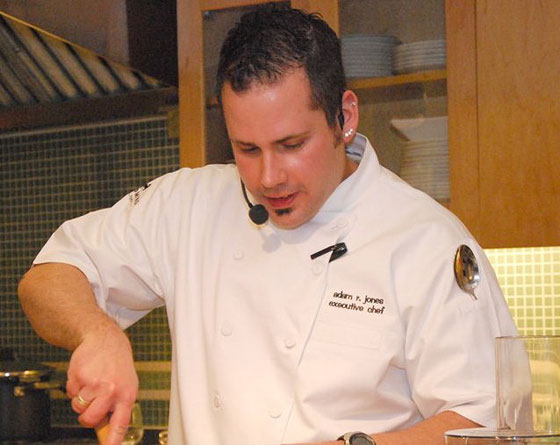
Adam Jones
Adam Jones. Photo courtesy of Adam Jones

Our gay-friendly town is about to get full of visitors. June means that the Bay Area and more specifically, San Francisco, fills to the brim with folks from all over the world to observe and celebrate the events, marches and festivities that culminate in SF LGBT Pride. Bay Area Bites is noting this 42nd annual come-as-you-are love fest by telling stories from the LBGT chefs, personalities and waiters who keep us sated 365 days of the year. Turns out, cooking and serving food here can be something of a non-issue for some of the LGBT folks we talked with.

Up first is Adam Jones, who is the Food and Beverage (“F&B” in industry parlance) Director and Executive Chef at the Embarcadero restaurant Palomino in San Francisco, where Jones said “forty per cent of our staff are gay.” Jones has spent 26 of his 38 years working in restaurants. The Kansas City native is from “the Missouri side, where it’s home of the Chiefs, restaurants and industrial stuff.” He has also cooked at the Hotel Whitcomb, and Restaurant Michael Mina. Jones was Executive Chef at the Franciscan Restaurant, which is known as much for its crab cakes as it is for being one of the only restaurants to ever sponsor a float for the San Francisco Gay Pride parade.

Bay Area Bites caught up with Jones via phone interview. His comments have been edited for clarity and brevity.

Adam Jones with Roland Passot
Adam Jones with Roland Passot at La Folie photo courtesy of Adam Jones

The culinary world has often been portrayed as quite sexist. What is your perspective and experience with regard to sexism as well as homophobia in the restaurant world?
I’ve seen way more women in the kitchen these days. It’s not just a San Francisco thing. I’ve been in kitchens all over: Paris, Venezia, Kansas City, and here. There are way more women now than there were before. I am 38 but 26 of those years have been spent in commercial kitchens. That kind of work is all I know. I have more women working for me now. I should say girls since some of them are quite young. Overall, I think having more women in the kitchen is a positive thing.

As for homophobia, I don’t think I’ve ever experienced it. There weren’t any gay people in kitchens in Kansas City when I got my start that I know of. Being gay on a chef’s resume may be a positive. If you’re a lesbian, then you’re super alpha and strong. And if you’re a gay man, it’s really the same thing.

Is there a difference between the front of the house versus the kitchen regarding this issue? A difference for men vs. women?
Front or back of the house, male or female, gay or straight, I don’t think there’s any difference in the experience each individual may have. I tend to find a few less lesbians in the front of the house because they tend to cook and be in the back of the house. Maybe I’m biased and have seen this set up because of me. [Laughs]. I don’t know.

Adam Jones Cooking
Adam Jones cooking. Photo courtesy of Adam Jones

What is it like coming out as a chef? Has being an LGBT person affected your career in any particular way?
I was kind of a late bloomer and moved out to San Francisco with the woman who was my wife. I came upon this discovery of being gay late, when I was around age 24. I was working at the Franciscan and had been there five or six years when I came out. Obviously I had worked with those folks for a long time. I had a wife, and then I had a husband. It was bizarre, funny and strange. I don’t regret anything that happened.

There were a few professional folks who said to me, ‘You can’t market yourself as gay.’ I don’t put being gay as my big selling point and it’s also something that I don’t deny. I’m proud to represent and I’ve done Pride events. Sometimes those things get political and if so then I keep my distance. There are some folks who have TV shows and they kind of go for a profile. In general, the gay community is made up of foodies and they have dollars to spend in restaurants like mine. Foodies in cities like this are gay friendly. I don’t wear being gay on my sleeve, but I’m happy to represent.

You and your husband Gary have been together for 14 years. What is coupled life like for you?
We have a house in Pittsburg in the East Bay and are signing adoption papers the same month of our anniversary this year. We’re doing an open adoption. It’ll be local and we’re stoked about it.

Is there a gay subculture within the food world? In the Bay Area?
I’ve done a lot of gay events and cooking demos at Macy’s. It used to be there was a gay subculture until all my other cohorts went on Top Chef and then fled the area. Ironically most are lesbians. Jennifer Biesty, Janine Falvo, Jamie Lauren and Yigit Pura come to mind. My gaydar is horrible but there’s Traci Des Jardins and Elizabeth Falkner. I have bleached blonde hair and used to get mistaken for Elizabeth all the time. People would come up to me and say, “Elizabeth?!” and start talking. I think her blonde hair is natural. Mine’s not.

I don’t hang out with the “big big wigs” like Gary Danko. Tracy Hsu was my mentor at Michael Mina and is my bestest buddy.

We chefs only call each other if we need something: “Oh my god, I need clams, I’m out of ‘em.” Or, “I need halibut.”

Since San Francisco is a gay mecca are there restaurants that are known to cater to a mostly gay clientele? Are there places exclusively for LGBT women vs. men?
There are more approachable restaurants here, like Market Street Grill. Everything on my resume fits that bill: Palomino, Michael Mina, and the Franciscan. I’ve always known Gary Danko, Michael Mina and Mecca as spots.

There are a few restaurants that cater and market to the gay dollar. The Franciscan was the only restaurant that sponsored a float in the Pride parade for two out of the ten years I was there. One of the Franciscan dining room managers said “put Adam’s name on it.” It was a lot of work, way more work than we thought. But it was fun, too. The Franciscan management was always really cool about that and morally supportive. The owners were two straight men! I was really stoked that they said, “Hey let’s support the parade.”

How do you celebrate Pride Month?
I’m a horrible person for this question. I’m the one that gets there the week before. I forget every year that it’s time for Pride. Gary and I lay low and try to be domesticated. We’ll probably be making stir fry for our dogs and planting tomatoes. I’m not really big into the party scene but I’m cool with it happening. We’ll probably be laying low this year.

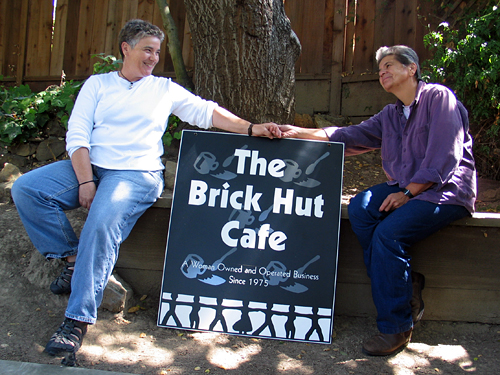
LGBT Pride: Remembering The Brick Hut Cafe – Part 2

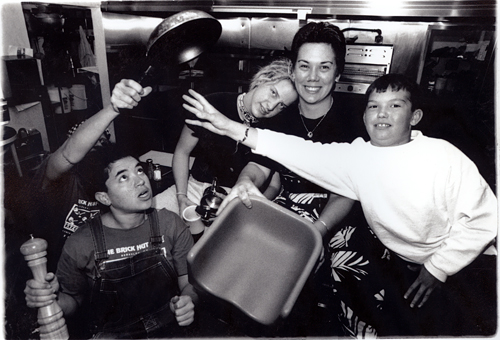
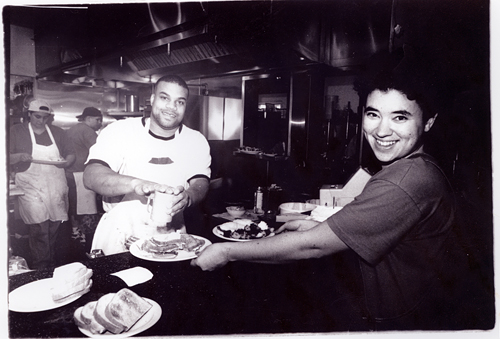
Brick Hut 3 - Kwan, Rami. Photo by Ace Morgan
Brick Hut 3: Kwan and Rami. Photo by Ace Morgan

Part 2: The Food… (Part 1: The Story)
Having a cafe was nobody’s dream, but it sustained us in our other
endeavors.

The Brick Hut was a place for us all to create a space in the world
where we could be our complete selves.

The food was the community, the edible fare was our way of bringing it
all together, with love.

Brick Hut 1: 1975-1983 “Women Invented Cheese”
In the beginning, it wasn’t all about the food. For us, owning our work place was about opportunity, self-determination, sanctuary. Every person did every job.

The Brick Hut was our anchor, as well as an anchor for our community.

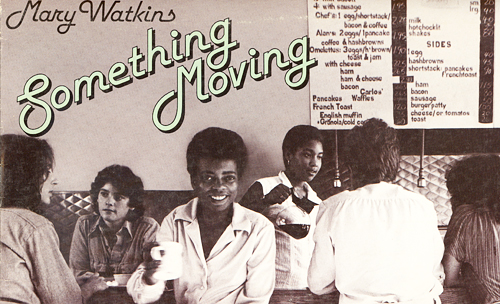
Brick Hut 1 - Something Moving album cover with menu
Brick Hut 1: Something Moving album cover with menu

The menu was small, painted by Peggy Mitchell of the band BeBe K’Roche, on a board attached to the hood above the stove. It is featured on the cover of Mary Watkins’ album, Something Moving which includes the song Brick Hut.
Listen to Brick Hut:

The food was simple. Comfort food: Eggs, waffles and pancakes, hash browns, toast, bacon, ham and sausage links, one kind of cheese — cheddar. A bottomless cup of coffee was 70 cents and customers could help themselves while waiting to be seated. And, bless them, wait they did.

In fact, waiting for a seat became a good time to meet old friends or make new ones, hold lively discussions or maybe just flirt with somebody.

Our specialty signature item was a spiced whole wheat batter for our delicious waffles and pancakes. Pure maple syrup was extra.

Our food evolved along with the business and the times. Debi Thow wanted to make muffins. She brought in a recipe from Gourmet magazine that we modified over time and the famous Brick Hut blueberry muffin was born. Amey Shaw showed us how to make a gorgeous Hollandaise sauce and brunch exploded in a bevy of Hollandaise dishes.

Hash browns became home fries and we saw our options were limited only by our imaginations.

People had ideas, we experimented.

We created omelets and named them for inspirational women: Sister Marion for a marathon-running nun; Ruth Reid for an early 20th Century lesbian poet and activist; Seven Sisters for the Berkeley feminist construction collective and the Mendocino omelet for the herb blend we ordered from a woman owned business.

    What’s in a Ruth Reid Omelet?

  • Avocado
  • Green chili
  • Jack cheese
  • Sour cream

Brick Hut 2: Joan and FrannaHut 2: 1983-1995 “Pancakes, Eggs and Fun”
When we expanded to a new location, the menu expanded too. More space meant the ability to offer more fresh foods: salads, fruit bowls, better breakfast meats, artisanal sausages, higher quality meat and poultry.

Seasonal fresh fruits topped the waffles and pancakes.

The Tofu Saute with fresh sautéed vegetables was a vegetarian favorite.

We made soups, improved our chili, made salsas, offered a beautiful variety of baked goods, some house-made, some from Berkeley’s Nabolom Bakery.

We installed an espresso machine to round out our epic breakfast experience. There was still a line down the street.

We played with our food. We joked that we cooked 50 items 500 ways.

One day, I thought it would be fun to offer something completely new: eggs scrambled with pesto. It was an immediate sensation and was copied by several other cafes in the area, as well as a few in other parts of the country, thanks to customers who had moved away and talked their local eatery into trying it out.

Occasionally, the brunch board offered one special: the Mystery Omelet. I think I started that just to avoid having to make a million of my least favorite omelets (the Ruth Reid– too many moving parts, too many substitutions!)

We just asked if the customer was vegetarian or not and proceeded to create a whatever omelet on the fly—no two alike all day.

Kids loved our Mickey Mouse pancakes and it wasn’t unusual to see a server carrying around a baby so mom could eat unencumbered.

People came in for breakfast during the times of the Iran-Contra hearings or when Anita Hill was testifying at the Clarence Thomas confirmation hearings and ended up joining people at other tables for discussion and, eventually, lunch.

If a customer asked for something different, we did our best to make it happen.

    Tofu Saute

  • Cut medium/firm tofu into 1/2″ thick triangles
  • Cut, blanch and shock: carrot, broccoli, zucchini, set aside
  • In heated sauté pan, add: Chopped garlic and ginger
  • Add tofu
  • Add tamari or soy,
  • Add sliced onions and mushrooms (shiitakes are best for this)
  • Add vegetables, a little salt and black pepper
  • Cover to finish
  • Drizzle a little sesame oil to flavor
  • Top with toasted sesame seeds, maybe some chopped scallion
  • Serve on rice or with home fries and toast

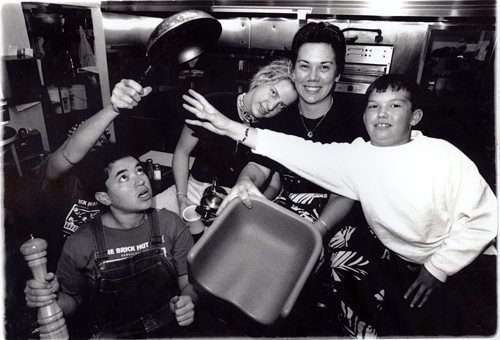
Brick Hut 3 kitchen chaos. Photo by Ace Morgan
Brick Hut 3 kitchen chaos: Sharon, Rami, Monica, Luana, Kaja. Photo by Ace Morgan

Hut 3: 1995-1997 “Girl Town”
Once again we moved and our menu expanded into dinners. We served pastas, using old family recipes, pizzas, using a cornmeal crust by none other than Sophia Loren. We offered fresh fish, grilled veggies. We made our desserts in house or supplemented them with items, like our sorbet, from local businesses. We served wine and beer (featuring St. Supery, a woman-run winery and Lost Coast Ales, by Master Brewer Barbara Groom).

We bought a fryer and made French fries, chicken wings, and anything that we could make up that we thought our customers would like.

There really was something for everyone.

Still, there was a line down the street, but mostly on weekends.
People were surprised when we closed our doors forever, believing that that line happened all week.

I am grateful for all of the folks who came through those doors, to work or to eat. Every one of them created a part of the Brick Hut.

To this day, we hear from old customers that they really miss us and that they wish there was a Brick Hut. My old friend and business partner, Sharon Davenport usually replies, “There was a Brick Hut.”

Join the Remembering The Brick Hut Cafe group on Facebook. Share your memories, thoughts and photos.

View Brick Hut Cafe Photos!

    Sophia Loren inspired pizza dough

  • 5c. warm water
  • 8T active dry yeast
  • pinch sugar
  • mix lightly to dissolve yeast
  • gently stir in:

  • 1.5 c. sweet olive oil
  • 1/4 tsp salt
  • freshly chopped herb blend (or just rosemary)
  • 2T chopped garlic (can also be roasted)
  • 8c. pizza flour
  • 2c. corn flour (medium grind)
  • mix thoroughly, cover, let rise
  • punch down dough, divide in 1/2
  • cover and let rise again
  • after second rise, divide into 12-15 11 oz. dough balls
  • stretch, form crust, sprinkle coarse corn meal on pizza pan,
    add whatever toppings you like
  • bake at 450 degrees for 6-8 minutes

LGBT Pride: Remembering The Brick Hut Cafe – Part 1

Sharon Davenport and Joan Antonuccio at The Brick Hut Cafe. Photo: Ace Morgan
Sharon Davenport and Joan Antonuccio at The Brick Hut Cafe (3). Photo: Ace Morgan

Part 1: The Story… (Part 2: The Food)
For nearly 22 years, from 1975 to 1997, The Brick Hut Café was a popular destination for the LGBT community in the East Bay and beyond. It was for most of its life a lesbian-feminist owned and operated community café. I was one of the founding members.

BRICK HUT 1
In February of 1975, the Brick Hut Café Collective was a worker-owned, feminist collective located at 3017 Adeline Street in Berkeley, CA across the street from the Berkeley Flea Market. The original members of the collective were Cheryl Jones, Claudia Hartley, Helen McKinley, Karen Ripley, Marshall Berzon (left in 1977 to open the Homemade Café), Randi Hepner, Sharon Davenport, and Wendy Welsh. By 1976, the collective included Joan Antonuccio, Cynthia La Mana, and Teresa Chandler.

The first Brick Hut was small: three booths and nine counter seats. We welcomed everyone who was an ally in our common cause of social justice and inclusion. The weekend crowds spilled out into the street even after we built a backyard patio where we served a limited menu of blueberry muffins, coffee, and tea.

We were a haven for lesbians and gay men, an information center for LGBT activists, an anchor for a diverse community that included working girls, bad-boys, suburban queens, transmen and transwomen. We were the Dyke Diner: the Lesbian Luncheonette: the Chick Hut: the Brick Hug. When AIDS hit a group of customers affectionately named the Shattuck Street Fairies (SSF) we became a refuge and an information outlet for AIDS awareness. Sometimes we were the last stop: as when Ron, one of the SSF housemates, was lovingly carried in on the arms of his friends for his last Brick Hut meal.

The Brick Hut Cafe contingent at the 1984 San Francisco Pride parade
The Brick Hut Cafe contingent at the 1984 San Francisco Pride parade. Enjoy Life…Eat Out More Often!

We always closed on what was then called Gay Day and we closed to attend political demonstrations and rallies. We left a sign on the door, JOIN US AT the parade, rally, or demonstration. We supported through contributions of food and energy to anti-nuclear demonstrations, anti-war rallies, and the feminist causes of Inez Garcia, Norma Jean Croy, Joan Little, and Yvonne Wanrow. We closed and attended the vigil for the assassinations of Harvey Milk and George Moscone. We closed to protest the Dan White verdict.

We worked to maintain the Brick Hut as a viable business in spite of threats and intimidations. We invited all our customers to cross the demoralizing barriers of class, race, and gender differences, and join us at the community table. We had our share of broken windows, vandalism, and public harassment. In one instance, we placed a poster in our window announcing we were boycotting Florida orange juice because of the Anita Bryant Campaign to repeal the anti-gay discrimination law in Dade County and our windows were broken.

These were politically active times for lesbians. “We are the women that men have warned us about” (Robin Morgan, 1970, Goodbye to All That (pdf)).

There was a brief appearance of the Night Hut, with Chef Amy Shaw making her culinary debut cooking and serving dinner.

Between 1976 and 1983, Brick Hut collective members Karen, Helen, Randi, Cheryl, Teresa, and Wendy left to pursue other careers and interests as cultural activists, healers, and educators. Marie Della Camera joined the collective around 1983.

View Brick Hut Cafe Photos!

BRICK HUT 2
In 1983, with the financial help of the Cheese Board Collective, and the efforts of customers and friends, the Brick Hut moved to a new location at 3222 Adeline Street. Seven Sisters Construction, a feminist collective helped remodel the new space. The Brick Hut became a community gathering spot for local merchants, Berkeley City Council members, writers, musicians, and artists. We also continued to support feminist and queer causes and activities like the Lyon-Martin Clinic, Queer Nation, and East Bay Act Up. KPFA Radio broadcasted their International Women’s Day program directly from the Brick Hut. With our larger wall space, we featured community artists’ work. Amana Johnson, Grace Harwood, Barbara Sandidge, Kyos Featherdancing, Cathy Cade, and Wendy Cadden were some of the artists who filled our walls. Once a year, we featured the work of the children of Berkwood-Hedge School to benefit their program.

In subsequent years, Cynthia, Claudia, and Marie left the collective to pursue other careers. At the second location, the Brick Hut was robbed and vandalized over 17 times in eleven years. With the ownership of the Hut left to Joan and Sharon and the neighborhood falling to the ravages of crack, we initiated plans to move the Hut to a safer location.

BRICK HUT 3
In 1995, the Brick Hut moved to a new, expanded location at 2512 San Pablo Avenue. The new space was constructed primarily by O’Malley and Latimer Construction (formerly members of Seven Sisters) and included a performance, meeting, and gallery space. We also opened for dinner. Our first salon featured writer Dorothy Allison and singer/songwriter Alix Dobkin hosted a regular open mike night. Women artists once again filled our walls: Franna Lusson, Mariella de la Paz, and Grace Harwood to name a few. We wanted the new, larger Brick Hut to be an attractive and active space for our community. Other women-owned businesses opened on the same block: Good Vibrations, West Berkeley Women’s Books, and It’s Her Business. Collectively we were known as Girl Town.

In 1996, the Brick Hut fell into serious financial difficulties; we filed for Chapter 11 status. In 1997, we filed for Chapter 7 bankruptcy and closed our doors for the last time at 2pm on March 24, 1997. We had a big, crowded, raucous party.

At the Brick Hut, I believe we celebrated difference. We were visibly different, we forefronted difference, we encouraged difference, we hosted difference. We did not try to assimilate, disappear into conformity, or become mainstream. We did not build The Brick Hut Cafe so we could have jobs, although that was good. We did not build it to have careers, or support career-moves, although that was a possibility. We did not build it only to make money for ourselves, although we wanted to maintain a viable business that supported our friends, our fellow workers, our causes, and ourselves. We built it to create the possibility of a workplace and a community where no one’s politics or cultural affiliations were left at the front door. We built the Hut to celebrate difference, to celebrate YOU. It was a home for a while and we still mourn its passing. Thanks to everyone who contributed to and supported the Brick Hut (1975-1997).

Join the Remembering The Brick Hut Cafe group on Facebook. Share your memories, thoughts and photos.

Joan Antonuccio and Sharon Davenport. Photo by Wendy Goodfriend
Joan Antonuccio and Sharon Davenport remembering The Brick Hut Cafe. Photo: Wendy Goodfriend

Happy Pride! Celebrate Local LGBT Chefs

gay prideHappy Pride! The Gay High Holy Days—or week, or month, depending on your stamina and affinity for dance music, tank tops, rainbow balloons, sign-waving, marches, guys in banana thongs, and standing in line, endlessly, for tickets, beer, and/or bathrooms—are coming to their sunny, sweaty close today. Time to get off the Blue Angel-martini-and-popcorn diet and put those silver latex shorts back in the closet, at least til the Folsom Street Fair.

Or that’s how it might be in other cities, where Pride comes around but once a year. Here in our lovely fog-bound burg, though, we can be prideful every day, even if we still-still!-can’t get married in City Hall.

But there is something particularly fabulous in seeing the typical straight-to-gay ratio of just about everything upended this month. I still remember walking into 2223 Market one night near the end of June last year, and feeling like everyone there was gay. Gay couples, gay friends, gay parents–it was just like being in the straight world, except this time it was all ours.

Naming all the LGBT chefs and business owners who have made the SF food scene what it is would turn this column into a faygelah version of Adam Sandler’s Hannukah Song, but still, let’s raise a glass to Traci des Jardins, for running a fancypants place in Hayes Valley and a taqueria with a conscience, and never turning down the chance to help out a good cause; to bad boy Jeremiah Tower, for making Stars sparkle; to Elizabeth Faulkner and her partner Sabrina Riddle, for giving the dyke food mafia an official clubhouse, first at Citizen Cake, now at Orson; and to food photographer Frankie Frankeny, because she shoots what we want to eat, and finds a way to sneak her daschunds into every shoot.

And let’s not forget a toast to vinologist Pamela Busch, of the late Hayes and Vine and the current Cav Wine Bar, and to Absinthe’s Jamie Lauren and her Top Chef Team Rainbow, for making “hot chef” replace “folk singer” as the default lesbian occupation. Also heating up the room is Gialina pizza diva Sharon Ardiana, turning Glen Park into Naples, and Celia Sack of Omnivore Books, for bringing us cookbook-browsing perfection with nary a 30-Minute-Meal or celebrity diet in sight, just up the street from the ever-charming Lovejoy’s Teahouse, run by Muna Nash and Gillian Briley. Were we getting married, we might just drag pastry chef Yigit Pura of Taste Catering out to Iowa with us, just so we could show that corn-fed state just how divine his chocolate-hazelnut daquoise with passion fruit filling wedding cakes can be.

And thank you Rainbow Grocery, for letting us shop for veggie dogs on the 4th of July but closing for Pride Sunday, so your collective members can be out and proud rather than stuck restocking the spirulina. Even Food Not Bombs gets into the spirit now, serving up free eats (in tuxedo shirts and fake mustaches) at their mobile Chez Gay Cafe in Dolores Park before the Trans March. We’re here, we’re queer, let’s eat!