After early teaching stints in far flung locales from Ecuador and China to New York and Sunnyvale, 4th year middle school teacher Alison Ball, 29, came to Urban Promise Academy (UPA), where she is having a blast teaching seventh grade.
Aside from computation and life science, Alison is excited about Crew, a UPA program focusing on the social and emotional learning skills that are part of OUSD’s strategic plan.
“What drives my work,” Alison said, “is that it’s such a time of self discovery, with students getting to discover themselves as people, figuring out, ‘what do I stand for as a person? How can I navigate the social world that I’m in?’”
Allison helps provide opportunities for students to talk with one another about what they are studying. “What I find is that in general students will have the conversation when they have the skills to have the conversation. If sometimes there’s some goofing off, it’s because they don’t know how to have that conversation or they don’t know how to explain their thinking.”
She uses a variety of strategies to help prepare students to talk about their thinking and how they arrive at conclusions.
“The math,” she explained, “is about the element of logic – students being able to see the logic and predictability, being able to solve problems, to ask what are my tools, beyond math, figure out possible outcomes. That element of mathematical thinking provides reasoning beyond math. Those kinds of things can be really empowering for students.”
Alison finds that the greatest reward of teaching is getting to spend time with young people. “My job never gets old, it’s never boring. There is always something that I‘m working on professionally, always new goals I’m setting.”
Although Alison did not originally set out to be a teacher, she says she tries to emulate her 3rd grade teacher Mr. Kramer. “He had a sense of wonder in the classroom. There were always weird, gooey, crawly things around the classroom – worms and brine shrimp, and I loved the ‘ew, gross!’ factor.” She also values the high standard he had for his students.
Alison advises new teachers not to take on too much that first year, which can often backfire, she says. She also reminds them to “breathe. At that moment, when you have a decision to make in the classroom, about how to respond to a student, that can feel really overwhelming, watching yourself making a decision, I definitely can and do breathe, on many occasions.”
“We could go out right now and pull 5 random people and ask them is there a difference between public schools in this country that serve poor children and public schools in this nation that serve wealthy children and everyone would say yes. So everyone knows. Then to me that’s deliberate, it’s not an accident, it’s not a mystery everyone knows. Everyone knows [schools] are fundamentally unequal in almost everyway. And yet the narrative of meritocracy, narrative of opportunity persists. Even though everyone knows it’s a myth. It’s a rigged game. And you don’t have a choice to play; everybody’s on the same Monopoly board trying to get home, but there are a group of people that everybody knows starts with way more money in their bank and then we act as though we’re all playing the same game under the same set of rules.”–Jeff Duncan-Andrade Ph.D
Jeff Duncan-Andrade Ph.D, is an Associate Professor of Raza Studies, Education Administration and Interdisciplinary Studies at San Francisco State University. He serves as Director of the Educational Equity Initiative at the Wangari Maathai Institute for Sustainable Cities and Schools. He is an English teacher at Mandela High School, where he is the director of the East Oakland Step to College Program. Working as a middle school and high school teacher for 21 years, while researching urban school pedagogy, has inspired a new project, Roses in Concrete, a charter school, which redesigns many of the standardized practices of the modern educational system.
On Improving Teacher Recruitment, Training and Professional Support and Development
With almost half of new teachers estimated to leave the profession within five years, Jeff Duncan-Andrade suggests some solutions to the staggering teacher turnover rate. First, teacher recruitment needs to be a priority of colleges or universities the way they pursue students of other disciplines. He asserts, “There are certainly relationships between colleges and communities, but it’s not about finding the best educators.” Duncan-Andrade concedes colleges are no strangers to recruiting; athletes are sought out from middle school. He believes colleges should be recruiting educators the same way they recruit athletes. It’s important to be able to recognize who potentially would be the best educators and without a strong recruitment system, it’s impossible to actively find them. District wide policies should require recruiting teachers who know what’s happening on the ground and are culturally responsive to the area.
Beyond recruitment, training and education are areas Duncan-Andrade believes need a complete overhaul. In California, an undergraduate student cannot major in Education. The belief is, if you have content expertise then you must be able to teach it; the art of teaching is highly undervalued. Our system for training teachers needs to be rethought, “[Learning how to teach is] crammed into two semesters and a few weeks of student teaching and then you’re handed keys to go and serve the community that has the highest needs and the least amount of resources and we have a 50% leave rate for teachers in their first two years. No surprise why.” Duncan-Andrade proposes a teacher training system modeled on the medical field: teachers are trained for 4-6 years and do a minimum of a two-year apprenticeship. “Just like in the medical field, you do your residency and at the end of your residency if you’re chief resident decides that you’re not fit, you don’t become a doctor.”
The third tier pertains to professional development and teacher longevity. Often the best training comes from experience, Duncan-Andrade explains, “What we know from the fairly extensive body of research about longevity is a lot of teachers leave the classroom because of the working conditions. So it wasn’t about their training, it wasn’t about their recruitment, it was about, ‘now I got my own site, I’m getting no support, I’m not getting meaningful professional development and…frankly a lot of the stuff that I was actually trained in, I believe in, things like social justice, around things like care, loving your students, building a family environment. All those things I received in my training, those things are not allowed…” Duncan-Andrade has set about to develop a set of tools that identify who are the most successful teachers and to begin positioning them as leaders in policy-making practices. “We do [recruitment, training, retention] badly, I mean really badly. And everybody knows, that’s the thing that makes me upset. Everybody knows. At best it’s been benign neglect, at worst it’s deliberate.”
On Full Service Community Schools
“I think the people who are talking about [community full service schools] are so far removed from the reality of the classroom.”
Duncan-Andrade explains there’s a gap in education between theory and practice, between imagining how issues can be addressed and how they should realistically be addressed. “On the white board everything works. On the ground it’s messier… and I think the problem is the people having those conversations don’t understand the ground, because you don’t have the top 100 teachers. You couldn’t even say who the top 100 teachers in Oakland are. How are you going to develop school wide, city wide, district wide policies that are reflective of what actually works on the ground?” Duncan-Andrade points to the health clinic at Fremont High School. He explains, “My kids won’t go to the health clinic because it’s staffed by people who don’t understand them. They have all the medical training, they’re from UCSF and Berkeley. All that training they don’t understand our community, they don’t understand our kids. So our kids go there, they get referred there and they come back and they’re like ‘I’m not going back there.’ So I have to get them medical referrals to community doctors that I know that are culturally responsive that actually understand what it’s like to be a black woman or what it’s like to be a Latino immigrant. That’s the gap. Do I think [Superintendent Smith] ideas are right headed? Yes. Do I think they have a long way to go to understanding how to actually take those really good ideas and make them manifest on the ground? Yes.”
On Roses in Concrete Charter School
“I don’t think the point of education is escape poverty. I think the point of education is to end it, but we’re not taught that in our schools. Not when you grow up poor. School is your way out and I think that’s why poverty persists because the people who are most able to understand poverty and be able to fundamentally attack it and change it with the way that they think and the way that they’re educated, they are encouraged to escape it and attack it from the distance with a checkbook. I think ideologically, our school will be fundamentally different than say Head Royce [a private school in Oakland, Ca.]. Cosmetically it might look somewhat similar…but ideologically, it will be different. The kinds of students we’ll produce and the sense of purpose about their lives they’ll have, will be somewhat different than what a lot of schools produce.”
The planned Roses in Concrete Charter School is modeled on the Maori educational system in New Zealand. It’s centered on the belief that everyone in the school is a family. Maori schools are overseen by their own school board and by local members of the community. Duncan-Andrade explains, “[With local control] the accountability changes… they control the food, they control the building design.” The Maori classrooms have no walls, which is very much a part of the their cultural traditions and norms; they have several classes occurring in one large area. They don’t separate students by age, often 16 year olds can be seen working with 8 year olds. The students don’t rotate from teacher to teacher. Duncan-Andrade goes on to explain, “When we thought about building this school…[we thought] about what does it mean to be a family? How does it actually operate? We eat together. A couple nights a week kids and faculty stay at the school. They go to sleep at the school.”
He plans to build a state of the art campus, that responds to and reflects the cultural values of Oakland’s community. It’ll focus on an Ethnic Studies driven model of education, which concentrates on the student’s sense of self and cultural identity; the students must know themselves, love themselves first and understand their own greatness. This allows them to enter a diverse society in a much more meaningful way. His vision includes a full serve community center within the school similar to the model set out by the Oakland Unified School District, “It’s not just about having doctors, it’s about having doctors that really understand our community. It’s not just about having access to housing, it’s about having access to having housing that’s responsive to the needs of our community. I think those are the conversations that we’re most interested in having with people. It’s not only about the kind of resources you can bring, but how can they fit into the particular contexts of East Oakland.”
SMASH is a three-year enrichment program that assists talented high-achieving low to moderate income high school students of color from historically underrepresented communities (i.e. African American, Latino/Hispanic, Native American, Southeast Asian and/or Pacific Islander) to become competitive and successful in science, technology, engineering, and mathematics (STEM) studies at selective colleges.
They are currently looking for current 9th grade students attending Bay Area public high schools or private schools on scholarship in the San Francisco Bay Area to attend our UC Berkeley and Stanford programs. Students should have at least a 3.0 GPA or better, currently be enrolled in (or have already completed) Geometry or the equivalent with a B average. This is a FREE program for ALL participants!
They are searching for students who show a particular interest in math or science and are willing to maximize the opportunity to reside and attend classes on a college campus for five weeks with like-minded students.
The application and additional information about SMASH can be found on our website http://lpfi.org/smash. Online application is due March 8, 2013 (Note: Letters of Recommendation, Transcripts and Test Scores must be received via mail or uploaded by no later than March 23, 2013).
Following the day-to-day stories of students, parents, teachers and staff at the Washington Metropolitan High School (DC MET), “180 Days: Inside An American High School” is an intimate portrait of a public school that attempts to make a difference in the lives of students each and every day.
Whether they are preparing for college or becoming teen moms, the students at DC Met face many challenges with spirit and resilience and welcome us to challenge many of our own assumptions as we travel with the first graduating class to commencement. Led by a charismatic and outspoken young principal, DC Met invites us in for an unprecedented first-hand account of life inside of the school reform movement.
Airs 3/25 10pm and 3/26 4am KQED
Airs 3/26 9pm and 3/27 3am Life
The Gay-Straight Alliance Network (GSA Network) is a national organization which links school-based Gay-Straight Alliances across the country with each other, to community partners, as well as aids in leadership development and activist training. Jill Marcellus, the Communications Manager at GSA Network based in San Francisco, explains how deeply involved youth are in their organization, “GSA Network is a youth-driven organization, and we operate on a model of youth-adult partnership. This carries all the way to the top of the organization: young people comprise about half of GSA Network’s Board of Directors. There are a number of opportunities for youth to become leaders within the organization, from becoming a youth trainer and leading the peer-to-peer workshops that are at the heart of our work to joining a regional Youth Council and helping shape our program work for the year. We train young people not only to change their schools, but to become leaders in LGBT and other social justice movements.”
One component of the work the GSA Network does is the Youth Empowerment Summit (YES) held annually. December 5, 2012 marked the 8th YES summit and drew over 700 allied youth and adults to Mission High School in San Francisco. Those who attended heard four keynote speakers, attended over 40 workshops, met with community partners in a resource fair, participated in discussion groups and students could take part in a youth only drag show and dance.
As part of the conference, three panelists, Emery Cohen, Espii Gutierrez, Raymond Ferronato, T. Murray, and moderator Isaias Guzman discussed this year’s theme: the school-to-prison pipeline and how it affects their community and themselves. As one GSA member, Sabina Jacobs, a senior at Sequoia High School in Redwood City, explains, “the…pipeline is polices and practices that school districts use to unintentionally push out LGBT, people of color, people with disabilities, or low income youth.” Sabina believes this year was a huge success and in the years to come would like to see the workshops’ topics expand. Sabina explains, “[I’d like to see] more comprehensive workshops on gender identity in general,” and beyond the YES conference, Sabina expresses the need for a system to be put in place to educate young people about the gay, lesbian, bisexual, and transgender community and demystify the continuing stigma. “We need to educate people and make school a safe place for learning. While it is a safe place for some, it’s not for all. Especially if you’re going to school and worried about getting beat up in the locker room for how you’re dressing or who you’re dating. We need to make school an actual safe place and help people out who need the help.”
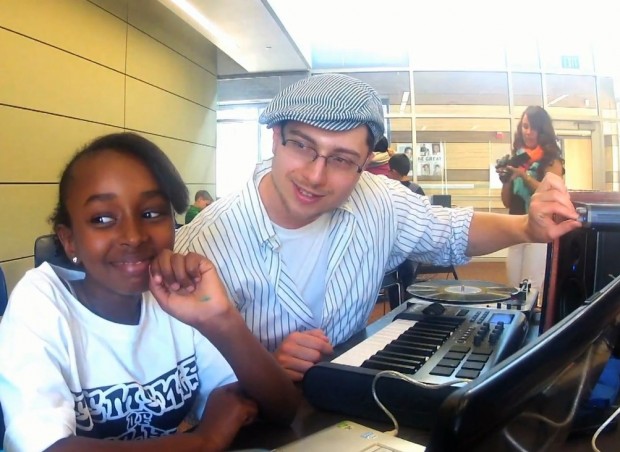
Dr. Elliot Gann is standing in front of his beat-up and stickered black Mazda Protégé in the parking lot of West Oakland Middle School. In his left ear is a Bluetooth earpiece, which, as he eats a Trader Joes sandwich wrap, enables him to lament to a friend the parking ticket he just received. To his side is a worn green Atlantic suitcase that wobbles with a broken wheel. Inside, its contents are packed tight: two sets of studio monitors, two audio interfaces, wires, cables, and cords, and a few MIDI controllers. All of these tools he needs to conduct the workshops he puts on several times a week in Bay Area middle schools.
“Dr. Elliot,” as the children he teaches affectionately call him, is the founder of Today’s Future Sound, a non-profit he started seven months ago to serve under-privileged youth by teaching them music production skills, or beat making. Gann, who received his Ph.D. in psychology from the Wright Institute in 2010, views his service as an alternative to traditional psychology. “It’s an effective way to deliver services that maybe a traditional therapist can’t,” says Gann. What he seeks to accomplish with his non-profit is not simply to improve kids’ music skills, but also to help their own personal development. “It’s teaching kids coping mechanisms. It’s teaching them to regulate themselves,” says Gann. “I think it’s a really healthy way to help kids process trauma.”
What is the American Graduate Student Film Festival?
The American Graduate Student Film Festival (AGFF) is an online video competition for students ages 10 to 19 to engage youth about the high student dropout crisis. AGFF is a program of the National Black Programming Consortium and the American Graduate initiative supported by the Corporation for Public Broadcasting (CPB). You can learn more about the drop out issue atamericangraduate.org.
Are there prizes?
Yes! Members of each winning team can win up cool prizes like an iPad, iPod Touch or $100 gift certificate. Prizes are awarded to individuals and teams consisting of a maximum of five members. The winning team will be flown with a chaperone to Washington, DC to receive their prize.
Who can enter the competition?
Submissions can come from students currently enrolled in middle or high school. Individuals or a group with a maximum of five team members are also eligible to submit a project.
What can I do to win?
You can create your own original short form video, PSA, music video, or animation (including animated graphic novel). The maximum length is five minutes (including 60 seconds max credits).
You will be competing with students from around the country, so be creative and innovative. Give us something we haven’t seen before on the subject.
What must be the themes of videos submitted to the festival?
Any of the following themes will be acceptable when judging for official selections into AGFF 2013.
Vulnerable Students: Why are some students more vulnerable to dropping out? What are their stories and how have some overcome these challenges? What are the external forces that keep students from succeeding and how can young people over come them?
The Role of Youth in Dropout Prevention: Young people can play an important role in saving themselves and/or helping each other.
Not so Old School: How can schools, parents and communities be more effective in helping students facing academic or social challenges succeed in school?
As you can see, we want your videos to challenge us with exciting stories, new ways of addressing the issues, and bring new solutions to bear from a youth perspective.
Oakland schools have launched programs to help students manage their emotions, establish positive relationships and resolve conflicts. One of the programs, Roots of Empathy, brings infants and their mothers into school to help students recognize emotions and experience empathy. We discuss the social and emotional learning movement, which aims to teach fundamental life skills in schools, and how it’s being used in Oakland.
Today, as part of our occasional first-person series, “What’s Your Story,” we’ll hear from Caheri Gutierrez, a violence prevention educator for Youth Alive. She began working with at-risk youth after she was shot in the face as a teenager in Oakland. Hear Audio

 February 22, 2013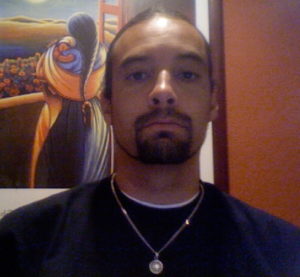
 180 Days: A Year In An American School
 January 31, 2013

 By Justin Richmond