Asides

Mary Sano

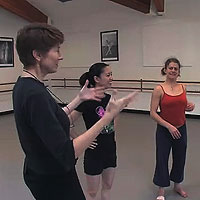
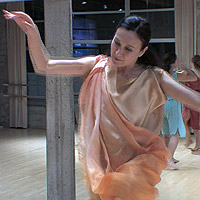
The free-spirited passion of neo-Romanticism remains alive at Mary Sano’s Studio of Duncan Dancing, where Sano passes on the work and teaching of the great early-20th-century modern dancer Isadora Duncan. Spark follows Sano as her company prepares for its 10th-anniversary performances and as she passes on the legacy of Isadora Duncan to a new generation of dancers.

Sano was first introduced to the world of Duncan’s dancing in 1979 during a visit to San Francisco. The daughter of a Japanese mother and an American father, Sano found a connection to the San Francisco-born Duncan through teacher Mignon Garland, who studied with Irma and Anna Duncan, themselves original students of Isadora Duncan.

Impressed by the freedom and imagination of Duncan’s style, Sano founded Japan’s first school of Duncan dancing in 1983, and after moving to San Francisco a couple of years later, she earned her M.A. in dance from Mills College in 1991. Sano established her own company — Mary Sano and her Duncan Dancers — in 1993 and finally opened the doors to her SOMA studio in 1997.

Sano sees her goal as not just the transmission and preservation of the hundreds of dance pieces that Duncan left behind, but also the creation of new work inspired by the Duncan style. At her company’s annual Dionysian Festival, a commemoration of Isadora Duncan’s birthday in May, and at the Terpisichorean Celebration in the fall, Sano not only has presented historical compositions by Isadora Duncan, but also has hosted guest dance artists performing with their own companies.

Melding Duncan’s philosophy with dance forms as diverse as Japanese butoh, hula, Indian classical bharata natyam and Native American dance, Sano also regularly works with artists from a wide variety of cultural backgrounds. For her company’s 10th-anniversary performances in 2008, “Dancing Dreaming Isadora,” Sano collaborated with Japanese koto player Shoko Hikage on an original piece of dance theater as well as with drummer Dennis Banks on a work inspired by Native American themes.

  • Array
  • Array
  • Array
  • Array
  • Array

Vienna Teng

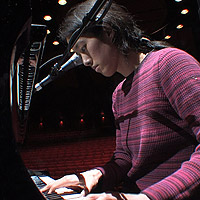
In Silicon Valley, software engineers often exit lucrative careers and strike out on their own. What’s less common is leaving the fast-paced epicenter of technological innovation to bet on success as an independent singer-songwriter. But that’s exactly what Bay Area-raised performer Vienna Teng did in 2002. And before she knew what was happening, Teng was landing gigs on NPR and David Letterman, and she was on her way to performing hundreds of concerts around the globe.

“Like so many other aspiring pre-meds, I was undone by organic chemistry. And that was around the time I started to think, ‘Well, maybe this is not really what I’m supposed to do,'” Teng tells Spark during a visit to perform at the Palace of Fine Arts in San Francisco.

After falling out of love with the idea of a future in medicine, Teng put her computer science degree from Stanford University to work at Cisco Systems. In her off-hours, she channeled the music skills she’d been honing since she was a little girl into original songs that drew upon the classical training of her youth and her parents’ music collection, one steeped in folk rock, Mozart and Mandarin pop tunes. Promoting her music through open mic nights and online under the stage name she created as a pre-teen, Teng — whose birth name is Cynthia Shih — soon secured a record deal with a small startup label.

“When I was 12, that’s when I came up with the name, and I thought, ‘Oh, if I’m a rock star, I’m going to have this stage name, and, like, no one will know my real identity,'” Teng recalls.

Along with a new identity, Teng brought forth an eclectic, hybrid sound she dubs “chamber folk.” Narrative-driven songs featuring Teng’s high, agile vocals unfold against a genre-defying backdrop of violin, cello, piano and percussion into a sonic landscape that’s strikingly unconventional despite its classical underpinnings.

Teng has released three albums. Her fourth, titled Inland Territories, is due out in April 2009. According to the singer-songwriter, Inland Territories is her most personal album yet. Says Teng, “I think ultimately I was more interested in being a storytelling kind of songwriter.”

  • Array
  • Array

Wayne Thiebaud

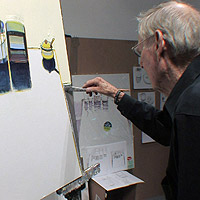
Originally making his mark as part of the Pop Art movement of the 1960s, Wayne Thiebaud‘s careful studies of everyday objects, figures and landscapes have come to be part of the art world vernacular. Spark checks in on Thiebaud as he reflects on a career that has spanned more than seven decades.

Thiebaud began working in the commercial arts in the late 1930s, primarily as a cartoonist and designer. During World War II, he served as an artist for the U.S. Air Force. Upon his return to civilian life, he continued working as a commercial artist until enrolling in the master’s program at Sacramento State College. After earning his M.A. in 1952, Thiebaud went on to teach at Sacramento City College, eventually landing a position at the University of California, Davis.

In the 1960s, Thiebaud took a leave of absence from UC Davis to spend some time in New York, where he met abstract expressionists Willem de Kooning and Franz Kline, along with then-emerging artists Robert Rauschenberg and Jasper Johns. Impressed with their work, Thiebaud began a series of small paintings showing food displayed in windows – subject matter that he returned to again and again throughout his career. In fact, Thiebaud’s subject matter forms a kind of record of the artist’s life, as new experiences and environments brought new objects and views to represent.

Although Thiebaud may be best known for his everyday subject matter, his works are also painstaking examinations of the fundamental language of paint: light, color, space, composition and surface. Each canvas offers him an investigation of a series of formal problems. A painting of a bowl of cherries might reveal a study of varied light effects, while a San Francisco cityscape might allow him the opportunity to play with rational space.

Spark visits with Thiebaud in his studio as he prepares for a traveling retrospective of his work from the past 50 years, including more than a hundred paintings. Though many of the paintings were completed years before, Thiebaud tirelessly works and reworks aspects of images that he wants to change, often building up the surfaces of his backgrounds, resolving the image, then reopening it again.

Array

  • Array
  • Array

Janice Garrett

Since its founding in 2001, the San Francisco-based Janice Garrett & Dancers has rapidly become one of the most respected small modern dance troupes in the Bay Area. Garrett’s choreography is notable as much for its craftsmanship as for its dazzling speed, musical clarity and wit. Spark follows Garrett and her dancers on the road to their sixth San Francisco season and reveals why all the hard work and sacrifices are worth it.

Garrett came to dance relatively late, at the age of 23, after she had already graduated with a B.S. in mathematics from Stanford. She subsequently studied dance at Mills College, then, in 1980, moved to New York, where she joined the modern dance company of Dan Wagoner, an alumnus of the Martha Graham, Merce Cunningham and Paul Taylor companies.

After 10 years in New York, Garrett returned to the Bay Area, although she continued to work extensively in Europe, choreographing pieces for the Scottish Dance Theatre, London Contemporary’s 4D Performance Group, the London Contemporary Dance School and the School for Modern Dance in Denmark. At the London Contemporary Dance Theater, she collaborated with British director and choreographer Jonathan Lunn on a range of productions and built a reputation for whimsical, kinetic dances.

In 2001, Garrett put together an evening of her own work at San Francisco’s ODC Theater, assembling a group of eight local dancers who would later form the core of her own company, Janice Garrett & Dancers. In only a few short years, her company attracted substantial attention, garnering five nominations from the Isadora Duncan Dance Awards. Garrett herself was nominated in 2004 as one of Dance Magazine’s “25 to Watch,” and demand for her skills and talent grew, abroad as a teacher for Rambert Dance Company, DV8 Physical Theatre and Matthew Bourne’s New Adventures and at home as a teacher for ODC Commons.

Garrett’s work, which has been described by one critic as “exuberantly fluid,” draws not only on her wealth of experience as a choreographer, but also on events in her life. The patterns and connections that tie lives together forms a theme in her work, and it’s an interest that she pursues in her capacity as director of performing arts for the Center for Changing Systems, where she develops new and innovative models of communication and nonlinear decision making.

  • Array
  • Array

Amy Tan

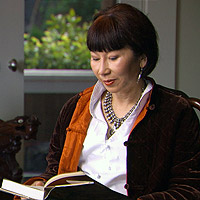
Bay Area author Amy Tan is a critically acclaimed novelist with a literary resume that includes The Joy Luck Club, The Kitchen God’s Wife, The Hundred Secret Senses and, more recently, The Bonesetter’s Daughter.

Like Tan’s other novels, The Bonesetter’s Daughter revolves around the complicated relationship between an immigrant Chinese mother and her American-born daughter. But this story is Tan’s most personal, written while her mother was dying of Alzheimer’s disease. During her mother’s illness, Tan learned more about her family history, in particular about her grandmother, who took her own life when Tan’s mother was young after being raped by a wealthy man. In Tan’s story, the ghost of the grandmother leads the daughter to learn the secrets of her mother’s past.

For her birthday in 2001, Tan’s friend and composer Stewart Wallace turned the first few lines of The Bonesetter’s Daughter into an a cappella musical composition for three women’s voices. Wallace composed the piece without reading the book and was unaware that the story coincidentally revolved around three main female characters. Tan was pleased and surprised by this musical offering, and Wallace was unable to get the story and music out of his head. This musical gift became the seed of inspiration for what was to become a full-length opera.

Tan became the librettist for the opera. She and Wallace embarked on a five-year collaboration that involved several trips to China to explore Chinese music and culture. They visited towns and villages, and attended gatherings where traditional Chinese music was performed, including a rural funeral. They listened to Chinese musicians and instruments, and were introduced to professional Chinese opera singers and conductors who understood how the music, lyrics and emotional heart of the story are intertwined. In the process, Wallace discovered how to evoke the spirit of China in his score by incorporating Chinese instruments and sounds into the musical narrative.

Bringing the opera to the stage of the San Francisco Opera has required the talents of hundreds of American and Chinese singers, musicians, acrobats and behind-the-scenes personnel, including director Chen Shi-Zheng, who directed The Peony Pavilion (a 19-hour Chinese opera that previously had not been presented in its entirety for 500 years); Li Zhonghua, master percussionist and director of the Beijing Opera; mezzo-soprano Zheng Cao (she played Suzuki in The San Francisco Opera’s 2007 production of Madama Butterfly); mezzo-soprano Ning Liang, who plays the mother; and the star of The Peony Pavilion, Qian Yi, who plays the role of the ghost of the grandmother.

The end result of this highly collaborative effort is a distinctly American opera with its roots in traditional Chinese music. It is a compelling account of a contemporary human story that merges the past and the present, love and loss, grief and forgiveness, as expressed through Chinese and American voices.

Array

  • Array
  • Array
  • Array
  • Array

Maya Lin

Maya Lin

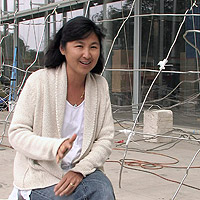
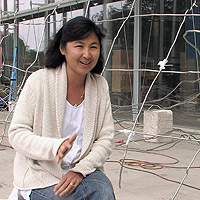
Spark follows renowned artist and architect Maya Lin as she plans, constructs, and installs her sculptural work for the California Academy of Sciences in San Francisco’s Golden Gate Park. The site-specific piece is a topographical imagining of the San Francisco Bay. It is placed on the western facade of the new building designed by Renzo Piano, which is set to open to the public in September 2008.

Lin became well known in 1981, when as a senior at Yale University, she entered the national competition to design the Vietnam Veterans Memorial in Washington DC. Her submission was selected from thousands, and her stark, non-representational design became an important landmark for a grieving nation. Since then, Lin has designed several other memorials, including the Civil Rights Memorial in Montgomery, Alabama, and the Women’s Table at Yale University.

In Lin’s recent artwork, she has explored new ways of looking at the landscape, utilizing topographical maps, sonar imaging, and other scientific data. It was this interest in the natural sciences, as well as a life-long passion for environmental conservation, that prompted Lin to respond to the call for proposals issued by the San Francisco Arts Commission and the California Academy of Sciences in 2006. This public art installation for the CAS will be the first permanent work by New York-based Lin in the City of San Francisco.

  • Array
  • Array
  • Array

Victor Cartagena

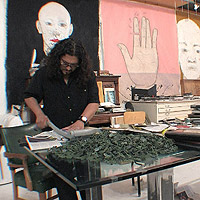
The work of visual artist Victor Cartagena defies stylistic or cultural categories. Cartagena’s installations, paintings, assemblages, and video-based work shift easily from medium to medium, while remaining resolutely provocative, causing his audience to think carefully about what are often thorny topical issues.

Cartagena left his native El Salvador in 1985 and came alone to San Francisco at the age of 19, fleeing a bloody civil war that had begun in 1980. As a result, Cartagena’s early work drew on his experiences from that terrible time of suffering, exploring memories and images from his experience of the civil war. As Cartagena’s work developed, he began to turn his eye to his adopted home and beyond, taking on several of the major issues of the 21st century.

Spark visits the Galeria de la Raza for Cartagena’s “Invisible Nation” show, which deals directly with the challenges that many immigrants face when they arrive on American shores. Several of the works in the exhibition draw on a collection of passport portraits that Cartagena acquired from a photo store in downtown San Salvador. Since the outbreak of the Salvadoran Civil War more than 25 years ago, over 2 million people have come to America from Cartagena’s native country.

Arriving as refugees, many Salvadorans became low-paid laborers. Cartagena addresses their stories in an installation called “Labor Tea,” a pun on the word “liberty.” Affixing the small photos to tea bags, the images are repeatedly dunked into teacups filled with water. As Cartagena explains, it’s a strong commentary on the back-breaking work many recent immigrants perform, which sucks as much energy as possible out of the laborers before they are replaced with others.

Cartagena’s work also relates to local issues in San Francisco’s Mission District, like homelessness and gang warfare — issues that have touched the artist directly. Cartagena’s younger brother got involved with gangs and was shot. Partly in response to this, Cartagena created “Bang Bang Toy Gun,” an installation that combines dozens of toy guns suspended from the gallery ceiling with video images of young boys shooting toy guns directly at the camera. The piece speaks to a culture of violence that the artist sees in America, which he feels is supported by the Second Amendment to the American Constitution, which guarantees the rights of citizens to bear arms. The installation draws relationships between play violence and the real life violence that is part of the everyday reality of many young people, both here and in war torn regions.

Cartagena draws on contemporary world events in his work and the manner in which he has experienced them. On the eve of the Iraq war, Cartagena was at a dinner party with friends. Despite the fact that Cartagena and his friends were concerned about the impending invasion, they did not discuss it. The experience helped crystallize an idea that the artist had been exploring in his scrapbooks, eventually leading to “Con los Ojos Vendados (With their Eyes Blindfolded).” The installation features an elegantly set table, with blindfolded faces made of bread dough served on the plates. The work evokes images of war prisoners and hostages, but also suggests American’s detachment from the war, far from the horror of the conflict.

Victor Cartagena has exhibited throughout the Bay Area at Southern Exposure, Palo Alto Cultural Center, the University Art Museum at UC Berkeley, Galeria de la Raza, New Langton Arts, Ampersand International Arts, Intersection for the Arts, Catharine Clark Gallery, Euphrat Museum, the Mission Cultural Center, MACLA/Center for Latino Arts, and the Sonoma Museum of Visual Arts, among others. Cartagena has also exhibited in New York, Philadelphia, Honolulu, Los Angeles, Mexico, Argentina, Chile, Japan, El Salvador, Spain, Belarus, Ecuador and Greece. He has served as Artist-in-Residence at ZEUM, Southern Exposure, and SF Art Commission’s WritersCorps, and has taught at New Age Academy.

Array

  • Array

San Jose Taiko

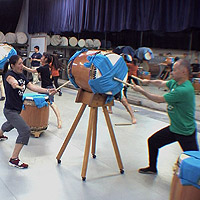
San Jose Taiko (SJT) is a drumming ensemble based in San Jose’s Japantown. They are renowned for their unique blend of traditional Japanese music with world-music influences. Spark joins SJT as they prepare for their 35th anniversary celebration.

SJT was started in 1973 by Reverend Hiroshi Abiko, Roy Hirabayashi, and Dean Miyakusu. They were looking to promote Japanese cultural awareness in San Jose, a city with one of the longest established Japanese communities in the United States. They chose taiko for its excitement and athleticism, and because it offered them a chance to engage with third generation Asian Americans who had not been raised with the traditional music of their ancestors.

Early on, SJT developed its unique take on taiko by fusing it with a variety a beats from the R&B music the members grew up on, and the percussion sounds of Bali, Africa, and Brazil. While some early critics were skeptical of the SJT’s departure from the traditional, they’ve started a trend of innovation in the art form that has spread across the country. The ethnically diverse performing company tours extensively both nationally and internationally, reaching over 100,000 people each year.

  • Array

Sean Dorsey

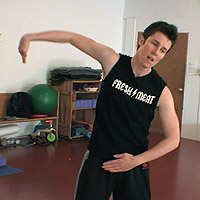
Transgender performer Sean Dorsey brings stories of his own struggles with gender and sexuality to the stage, making them accessible to a wider audience. Spark visits with Dorsey while he works on “Lost/Found.” For this work, Dorsey uses journal entries, memoirs and letters culled from the trans and queer community to piece together a narrative in which he fantasizes about the normal childhood he might have had if he was born a boy.

In addition to performing his own choreography around the country, Dorsey is the founder and artistic director of the Fresh Meat Festival, a trailblazing annual performance event featuring queer and transgender performers. Founded in 2002, the festival features a wide-range of genres from hip hop and opera to traditional clogging.

San Francisco-based modern dancer and choreographer Sean Dorsey is also the performance director of the Tranny Fest Film and Video Festival and a member of Lizz Roman and Dancers. Dorsey’s first major body of work, “The Outsider Chronicles,” garnered him two Isadora Duncan Awards and a Goldie Award for performance. Dorsey is the recipient of a Wallace Alexander Gerbode Choreographer’s Commission and an Individual Artist Commissions from the San Francisco Arts Commission.

  • Array
  • Array

Hot Club of San Francisco

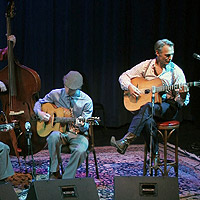
Bay Area musician Paul Mehling is helping to introduce a new generation of music lovers to the work of legendary guitarist Django Reinhardt. Known as one of the godfathers of the Gypsy jazz revival, Mehling, along with his band, Hot Club of San Francisco, attempts to recreate the sounds, tales, and atmosphere of Reinhardt’s band, Quintette du Hot Club de France, active mostly in and around Paris in the 1930s and 40s.

Reinhardt was one of the first European-born jazz musicians to gain international acclaim, and was commonly considered to be the most virtuosic guitar player alive. Reinhardt was single-handedly responsible for the invention and popularization of Gypsy jazz — or “jazz manouche,” a style of music that fused Gypsy guitar technique with swing jazz. Reinhardt’s influence was felt far beyond the arena of Gypsy jazz, his music continuing to inform guitarists working in a wide spectrum of idioms.

Mehling first discovered Reinhardt’s music as a teenager while listening to his father’s record collection. Inspired by the rhythms and inflections of Gypsy jazz, these recordings fueled Mehling’s desire to learn the guitar. In search of Gypsy jazz players, Mehling moved to Paris at the age of 23. He spent six months honing his skills and retracing the footsteps of his hero. He has since become a teacher, instructing Reinhardt enthusiasts in Gypsy guitar technique.

For about two decades, Mehling has led the Hot Club of San Francisco, which copies the exact, unusual instrumentation of the Quintette du Hot Club de France, combining three guitarists with violinist and string bassist. Though jazz manouche is usually associated with fast, hot guitar licks, Mehling is particularly attached to the more mysterious, melancholy aspects of the genre, incorporating many haunting, wistful tunes into the band’s repertoire.

Spark follows Mehling’s band to the 2008 San Francisco/Mill Valley Djangofest, one of several festivals around the world that bring together musicians from diverse backgrounds to celebrate Reinhardt’s legacy. Playing at Mill Valley’s historic 142 Throckmorton Theatre, the Hot Club of San Francisco, along with many other bands working in the jazz manouche style, are helping bring Reinhardt’s sounds to a new generation of music lovers.

Array

  • Array
  • Array

Rebeca Maule贸n

Pianist Rebeca Maule贸n grew up in San Francisco listening to Carlos Santana. When she started playing professionally in her early twenties, Maule贸n performed and recorded with some of the luminaries of Latin and jazz including Tito Puente, Israel “Cachao” Lopez, even Santana himself.

Today, she’s a prolific player, composer, and arranger, but she does more than create music. Maule贸n is a musicologist and author, having written several texts on Latin music technique, including the Salsa Guidebook. Spark catches up with Maule贸n as she switches hats, more than once — composing Latin music for software companies, teaching Caribbean music traditions at City College of San Francisco, and leading her own ensemble on stage and off.

  • Array
  • Array
  • Array

Jewish Music Festival

For more than 20 years, the Jewish Music Festival has brought eclectic music from every corner of the Jewish diaspora to Bay Area audiences. For their 23rd annual event, festival director Ellie Shapiro has commissioned nine artists from Israel, Ukraine, New York, New Orleans and the Bay Area to create groundbreaking new Jewish music — and they only have six days to do it.

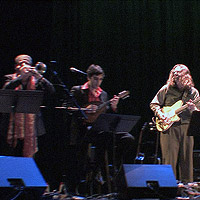
While the festival is underway, the musicians hole up in the basement of a divinity school in the Berkeley hills. On the seventh day, The Ark artists premiere the work at the closing night on the 2008 Jewish Music Festival. Spark gets an insider’s look at the process.

The Ark musicians all share a deep commitment to traditional music (from Mississippi Delta blues, to Ukrainian village ballads and Old World klezmer) and have used their talent to take these forms in creative new directions. Almost all of them have worked together before in different configurations. The Ark artists include: Frank London (trumpet), Aaron Alexander (percussion), Avi Avital (mandolin), Stuart Brotman (bass), Jewlia Eisenberg (vocals), Glenn Hartman (accordion and piano), Mariana Sadovska (vocals and harmonium player), John Schott (guitar), and Jessica Ivry (cello).

  • Array

Hijos del Sol

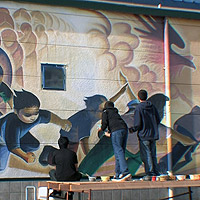
Like many immigrant children, Jose Ortiz had trouble adjusting to living in new country when his family moved the United States from Mexico when he was 11 years old. His awakening happened when a teacher noticed his artistic talents and encouraged him to start working on canvas. However, it wasn’t until Ortiz was in college that he took meaningful art classes.

Now a successful artist, Ortiz decided that other kids who needed a place to learn about art shouldn’t have wait as long as he did. So in 1992 he started Hijos del Sol, an after school program in East Salinas focusing on murals helping keep youth off the streets. All are welcome at Hijos del Sol but most of the participating youth are immigrants due to the fact that Salinas is a farming town, where migrant workers and their families have settled.

Spark follows the Hijos del Sol crew as they finish up a mural for a group called Healthy Start, which provides social services to immigrant families in East Salinas. The mural is full of vibrant colors and symbolic images. The focus is on the family and the most striking image is of a mother letting her child go so that he may soar over the fields of strawberries.

Many of Ortiz’s former students have returned to work with him and gone on to teach art. Rafael Estrada painted with Hijos del Sol at nine years old until he was in high school. He is now a teacher and recognizes the importance of passing on the knowledge and guidance that Ortiz gave him, to others.

There are now many Hijos del Sol murals around the city including ones by Ortiz’s former students. East Salinas is still struggling with its gang problems, but Ortiz keeps his eyes out for new artists to help him keep painting the walls of this community and pass on his artistic legacy.

Besides being a muralist, Jose G. Ortiz is also an illustrator, painter, and sculptor. He is the visual art director for the Alisal Center for the Fine Arts, which provides arts instruction and arts programming to East Salinas. He received the Benefactor of the Arts Award from the Cultural Council of Monterey County in 1995 and was a Distinguished Fellow for California State University Monterey Bay in 2000.

  • Array

Yoshi’s

After more than 35 years, Yoshi’s, an internationally known East Bay jazz nightclub and restaurant, has recently opened a second outpost in San Francisco’s historic Fillmore District. Incredibly, the same three friends who started Yoshi’s in 1973, Kaz Kajimura, Yoshie Akiba, and Hiroyuki Hori, have owned and ran both clubs until when Hori announced his retirement in 2008.

The new club in San Francisco is Yoshi’s biggest gamble yet. The Fillmore, nicknamed the Harlem of the West, was a jazz and blues hot spot in the 1940s and ’50s. But the neighborhood was obliterated by a redevelopment project begun by the city of San Francisco in 1958.

Many hope that Yoshi’s, and some of the other smaller music venues, will spark a revitalization of the old jazz district. But some critics feel that the upscale club is out of place with the rest of the neighborhood. In an effort to keep the music accessible to the community, Yoshi’s puts on a series of concerts dubbed “Local Legends,” featuring homegrown musicians and lower ticket prices.

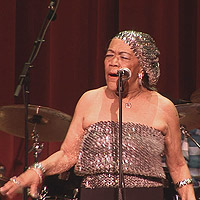
Spark captures a fiery performance by blues singer Sugar Pie de Santo, who returns to the Yoshi’s Fillmore stage — just around the corner from where she grew up and was discovered by Johnny Otis in 1955 at the Eddy Street theater talent show. Kajimura and Akiba also discuss the club’s history, from its start as a tiny Japanese restaurant in Berkeley, to their move to Oakland’s Jack London Square, and now its current incarnation.

  • Array