Asides

Robert Bechtle

For more than 40 years, Robert Bechtle has been widely recognized as one of the founders of American photorealism, a style of painting that rivals the detail and objectivity of a photograph. In “Paint x 3,” Spark watches Bechtle at work rendering one of his favorite subjects — his Potrero Hill neighborhood — and talking about his motivations and images as he prepares for a retrospective exhibit of his work at the San Francisco Museum of Modern Art (February 12 through June 5, 2005).

When Bechtle began painting in the late 1950s and 1960s, the local art scene in the Bay Area was dominated by figurative and abstract expressionist painters who used the broad, painterly gestures of the East Coast abstract expressionist style to depict figures and landscapes. Bechtle initially began working in this expressionist style, but quickly found himself drawn toward making carefully detailed portrayals, observed and executed with the unblinking accuracy of a camera. Along with fellow realist artists Ralph Goings and Richard McLean, Bechtle helped popularize photorealism, a mode of painting whereby the artist covers over any trace of brushwork to produce an image that approximates a photograph as closely as possible.

The camera is an essential tool in making Bechtle’s paintings. His process begins by making photographs of the landscape around him, which he uses as a kind of sketchbook, selecting single images to develop into paintings. Bechtle projects the image onto the canvas and traces the basic lines and shadows of the image. He then completes the painting by matching his paints to the colors in the photograph.

Bechtle chooses as his subject matter the urban and suburban landscape that surrounds him — a terrain populated by neat bungalows and gleaming cars bleached by the California sun. His neutral, near featureless scenes — often devoid of any human presence — of neighborhood streets of San Francisco, Oakland and other communities reveal the deep-seated sense of alienation that characterizes the American middle-class neighborhood of the early 20th century.

Bechtle earned a B.A. in 1954 and M.F.A. in 1958, both from the California College of Arts and Crafts. From 1969 until he retired in 1999, he taught in the painting department at San Francisco State University. His works have been exhibited widely throughout the United States and Europe, as well as in Japan, Australia and New Zealand. Bechtle’s paintings can be found in the collections of the Metropolitan Museum, the Whitney Museum of American Art and the Museum of Modern Art in New York, the National Gallery of Art in Washington, D.C., the San Francisco Museum of Modern Art, the Oakland Museum, and many other public and private collections across the United States and abroad.

Array

  • Array
  • Array
  • Array

Margaret Jenkins

For more than 30 years, choreographer Margaret Jenkins has been expanding the physical and conceptual boundaries of modern dance in the Bay Area. Her dance company has spawned an entire generation of experimental dancers and artists. In the episode, “Dance Masters,” Spark follows Jenkins from rehearsing “Danger Orange” in San Francisco to conducting workshops on composition and sharing choreographic ideas with the Beijing Modern Dance Company in China.

“Danger Orange,” a 45-minute outdoor site-specific performance in San Francisco’s Justin Herman Plaza, was performed in October 2004 before the presidential elections. Collaborating with renowned visual designer Alex Nichols, sound designer Jay Cloidt, and poet and writer Michael Palmer, Jenkins wanted “Danger Orange” to address the times we are living in. The color orange metaphorically references the national alert systems and evokes danger.

A native of San Francisco, Jenkins began her dance training with Judy and Lenore Job, Welland Lathrop, and Gloria Unti. She continued her studies in New York City at the Juilliard School of Music with José Limón and Martha Graham. After training at UCLA, she returned to New York to dance with a number of modern dance companies, including those of Gus Solomons, Viola Farber, Twyla Tharp and Sara Rudner. She was on the faculty of the Merce Cunningham Studio for 12 years.

In 1970, Jenkins returned to San Francisco, where she opened a school to train professional modern dancers and formed the Margaret Jenkins Dance Company in 1973. In 2004, Jenkins and her company began Choreographers in Mentorship Exchange (CHIME), a program to foster creative interaction and long-term relationships between emerging and established choreographers. Jenkins is the recipient of a Guggenheim Fellowship, an Irvine Fellowship in Dance, the San Francisco Arts Commission Award of Honor and two Isadora Duncan Dance Awards. For her contributions to the San Francisco Bay Area arts community, she was awarded the Bernard Osher Cultural Award in 2002.

Array

  • Array
  • Array
  • Array

Michael Smuin

Michael Smuin

Editor’s note: Michael Smuin passed away on April 23, 2007.

San Francisco choreographer and dancer Michael Smuin boasted an exceptionally broad dance vocabulary, from classical ballet to Broadway, nightclubs and even ice rinks. Spark visited with Smuin and his versatile company in 2005 as they worked on their annual “Christmas Ballet” and his “Fly Me to the Moon,” set to songs by Frank Sinatra.

Smuin was a principal dancer with the San Francisco Ballet before moving to New York to dance on Broadway and appear in film and television. He was also both principal dancer and choreographer-in-residence with the American Ballet Theatre. In 1973, he returned to San Francisco to be the artistic director of the San Francisco Ballet, a post he held until 1985. During his tenure, he created “Romeo and Juliet,” “The Tempest” and “A Song for Dead Warriors” — all of which won EMMY Awards.

Though he has produced many traditional ballets, Smuin was equally successful choreographing for Broadway, television and film. As a choreographer, Smuin has won Tony, Drama Desk and Fred Astaire awards for “Anything Goes,” and he was nominated for Tony Awards for “Sophisticated Ladies” for both director and choreographer. His feature film credits include “Rumble Fish,” “Cotton Club,” “Dracula,” “The Joy Luck Club” and “Return of the Jedi, Special Edition.”

In 1994, he started his own company, Smuin Ballet, in which he combined ballet with many other dance styles, such as jazz, tap and tango. His mission was to entertain the audience using his vast dance vocabulary in any number of ways to guarantee that no one was ever bored.

  • Array
  • Array
  • Array

Rosa Montoya

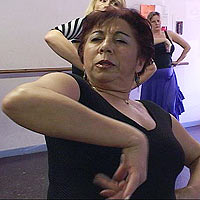
Now retired, Rosa Montoya lives most of the year in Spain, but whenever she returns to the Bay Area for a visit, word spreads quickly through the local dance community and students flock to learn from her. In the episode “Masters of Dance,” Spark goes into the dance studio where Montoya is immersed in coaxing the best out of each of her students. She makes it clear to them that flamenco requires having not only the dedication to master the technique, but also — and more important — the feeling and attitude that must accompany this passionate dance form.

Born in Madrid, Spain, into a gypsy family of world-famous flamenco guitarists, Ramón Montoya and Carlos Montoya, Rosa grew up surrounded by music and dance. She began her formal dance training at age 8 studying flamenco at Amor de Diós, Spanish classical dance at Círculo de Bellas Artes and ballet at the Instituto Nacional de Ballet. Her professional career began at La Zambra when she was 16, and shortly after, she was touring with José Marchena and Company.

Montoya was discovered by Ciro Diezhandino, who invited her to join his group, Casa Madrid, as a lead dancer. As partners, from 1961 to 1972 they toured Asia, Europe, Australia and the United States. In 1964, Diezhandino opened the nightclub Mesón del Flamenco in San Francisco, where Montoya met her future husband, Carlos Mullen, a guitar player.

When Montoya settled in San Francisco in 1971, she set out to make her art form much more visible in the existing dance landscape. A few years later she opened a school and started a company, Rosa Montoya Bailes Flamencos. Montoya joined the faculty of San Francisco State University’s ethnic dance department in 1985. Now retired from performing, she is still passing on her rich legacy to aspiring students around the world.

Rosa Montoya may be contacted at:
Calle Tomasa Ruiz 6,
Segundo Piso, C
Madrid 28019
Spain
Phone (dailing from the United States): 011-34-914-698-760

  • Array
  • Array
  • Array
  • Array

Danongan Kalanduyan

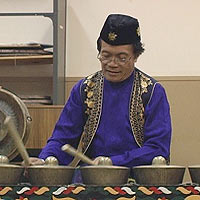
Master musician and ethnomusicologist Danongan Kalanduyan is the only expert on southern Filipino music living in the United States. In ” Global Village,” Spark catches a glimpse of the master at work as he teaches a class on Maguindanao, Maranao and Tausug tribal music and dance at San Francisco State University.

Kalanduyan is a master of the kulintang, a set of eight small embossed gongs in graduated sizes, arranged horizontally on a rack called an antangan. The kulintang is the central instrument in Kulintang music, which features a number of different percussion instruments: the babendil, a small handheld gong; the dabakan, a single-headed kettle-shaped wooden drum; the agung, a large wide-rimmed vertical gong; and the gandingan, a set of four large graduated vertical gongs.

Kalanduyan’s foremost goal is to use his music to help connect contemporary Filipino American culture with ancient tribal traditions. Kulintang music finds its roots almost entirely in a small Muslim region of the southern Philippines, but existed before both the Muslim and the Hispanic influences. In recent years, it has been embraced by young, secular Filipino Americans for whom it has come to serve as a symbol of pan-Filipino unity.

Kalanduyan earned his graduate degree in ethnomusicology at the University of Washington, Seattle, where he remained as an artist-in-residence for many years. In 1990, he served as a master artist in the California state apprenticeship program. In 1995, Kalanduyan was awarded the prestigious National Heritage Fellowship from the National Endowment for the Arts. Currently a lecturer at San Francisco State University, Kalanduyan is also the leader of the Palabuniyan Kulintang Ensemble. He has been a featured artist in performances at such major venues as the Hollywood Bowl (with the Los Angeles Philharmonic), the Metropolitan Museum of Art in New York, the Kennedy Center, and countless concerts and festivals throughout the United States.

  • Array
  • Array
  • Array

Naomi and Zak Diouf

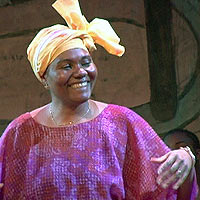
Diamano Coura means “those who bring the message” in the Senegalese Wolof language. Diamano Coura West African Dance Company was founded in 1975 by the husband and wife team of Dr. Zak Diouf and Naomi Washington Diouf. They are dedicated to the preservation, teaching and appreciation of traditional West African music, dance, theater and culture. Diamano Coura offers ongoing performances, classes and workshops as well as youth and community outreach programs.

In the Spark episode “Global Village,” Diamano Coura is preparing for its 2004 annual repertory show, “Kudul Khelate.” Zak, who comes from Senegal, and Naomi, from Liberia, both express the idea that in African cultures there is no separation of music and dance from daily life. They believe that “if you can walk, you can dance. If you can talk, you can sing.” Unlike Western European traditions, in which participation in the fine arts is historically the purview of the upper classes and experts to perform and produce, African cultures integrate all the art forms together within a community.

Dr. Diouf earned his Ph.D. in ethnomusicology from UC Berkeley and was the director of the Mali Ensemble, Les Ballets Africains and the Senegalese National Dance Company before founding Diamano Coura. He has performed as a dancer and drummer and has choreographed for such groups as the African American Dance Ensemble, Oakland’s Dimensions Dance Theater and the Harambee Dance Company. He has been on the faculties of Southern Illinois University, San Jose State University, Sonoma State University, the University of San Diego, UCLA, San Francisco State University and Hayward State University. He currently teaches West African music, dance and history at Laney Community College and music and dance at the Malonga Casquelourd Arts Center in Oakland.

Naomi Diouf began dancing at age 10 studying with prominent dancers and musicians of West African countries. Later, she studied ballet and modern dance in Paris. She holds a B.A. in sociology, with a minor in African history, from UC San Diego. She has choreographed works internationally for companies such as the Dutch Theater Van Osten in the Netherlands and Belgium, Dimensions Dance Theater, and Washington D.C.’s Kankoran Dance Company. She currently teaches West African dance and culture at Berkeley High School, Laney College and the Malonga Casquelourd Arts Center, as well as conducting workshops and consulting in costume design, cultural program coordinating and West African culture.

Array

  • Array
  • Array
  • Array

Circus Center

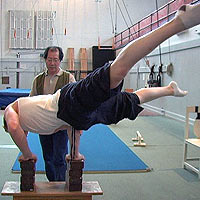
Lu Yi is transplanting the centuries-old art of Chinese circus to the Bay Area. Since the early 1990s, the former star performer and artistic director of the world-renowned Nanjing Acrobatic Troupe has turned the Circus Center into the most comprehensive Chinese acrobatics program outside of China. Spark checks in on Lu Yi as two of his American protégés, Olga Kosova and Philip Rosenberg, share their professional debut in the Pickle Circus’s “The Birdhouse Factory.”

Before coming to America, Lu Yi was well-known in China, as both an acrobat and an artistic director, for his whimsical tricks that stunned circus audiences. His skills in this traditional art form, however, were not popular with the Communist regime. In 1970, followers of Mao Tse Tung’s Cultural Revolution ransacked his house and demanded that he give up his art. When Lu Yi refused, he was locked away, unable to see family or loved ones for an entire year. After the Tiananmen Square Massacre in 1989, Lu Yi decided to leave China for good, to establish his art in the United States and eventually, he hopes, across the world.

Chinese circus is a far cry from the loud spectacles of lion tamers and human cannonballs most often associated with Western big tops. Chinese acrobats spend a lifetime studying the subtle, even spiritual principles of force, balance and agility. Learning the acrobatic arts is excruciatingly difficult, and Lu Yi teaches his students to always keep in mind the traditional Chinese saying “Training is bitter.” But years of tireless effort have paid off for Lu Yi’s students, as their debut is met with resounding success. The circus’s careful combination of theater, dance and art direction produces an unusual, lyrical performance unlike any other.

San Francisco School of Circus Arts was founded as a project of the Pickle Family Circus in 1984 by Wendy Parkman and Judy Finelli. Lu Yi became a trainer and artistic director of the school in 1990 and established the San Francisco Circus in 1996 to give his students performing opportunities. The school changed its name in 2001 to the Circus Center, which now encompasses the San Francisco School of Circus Arts, the New Pickle Circus and the San Francisco Youth Circus. The Circus Center is the only school outside of China that specializes in Chinese acrobatics.

Array

  • Array
  • Array

Ben Wood

Video artist Ben Wood is using his skills as a digital image maker to uncover a piece of San Francisco’s artistic heritage hidden from view for more than 200 years. In “Through the Lens,” Spark watches as Wood, archaeologist Eric Blind and curator Andrew Galvan photograph Mission Dolores’s rare mural, which may very well be the only one of its kind in California.

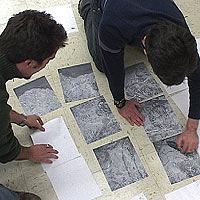
Behind the Baroque altarpiece at San Francisco’s historic Mission Dolores stands a mural believed to have been a collaboration between local Ohlone Indians and Franciscan priests in 1791. The painting, executed in natural red, yellow, and black dyes on the untreated stone wall of the mission, is perhaps the best-preserved and earliest example of art from the period of Native Californians’ first contact with Europeans. The mural is dominated by two sacred hearts of Jesus penetrated by swords and daggers, which are surrounded by swirling decorative motifs believed to be Native in origin.

Working atop the redwood ceiling beams of the mission building, Wood and Blind suspend a digital camera on a network of pulleys into the narrow gap between the altarpiece and the mural. Working within only 18 inches of clearance from the mural and no ambient lighting, the team has been painstakingly photographing the entire 22-foot expanse of the mural a few inches at a time. Once the entire mural has been photographed, the two will begin the equally laborious process of organizing the images into a complete picture of the lost artwork. The final image will then be projected onto a wall of the adjacent Mission Dolores Museum.

  • Array
  • Array
  • Array

Catherine Wagner

For more than 25 years, Catherine Wagner‘s photographs have served to record the world around us in ways that make the ordinary suddenly appear infused with mystery and wonder. In “Through the Lens,” Spark looks in on Wagner’s latest project, “Flux Density: A Narrative of Bubbles,” a large-scale commission for Frisson, a San Francisco restaurant.

Wagner’s past series have captured the world of our lives, from detailed black and white images of microscopic cell structures to our architectural environment. In the late 1990s, Wagner documented the construction of San Francisco’s Moscone Center in stages, from the excavation of the foundation to the cladding of the finished structure. Wagner’s “Home and Other Stories” series from the early 1990s chronicled domestic interiors. Always absent of human figures, the photographs focus instead on the conscious and unconscious details of living spaces that most reveal aspects of those who live within them.

In the last few years, Wagner has turned her lens increasingly toward the natural sciences. “Art & Science: Investigating Matter” brought Wagner into the laboratory to shoot the equipment and materials of scientific investigation. With “Cross Sections,” Wagner used magnetic resonance imaging technology to render materials transparent and reveal the internal structure of the organic world.

For “Flux Density,” Wagner shot a cloud of tiny aqueous bubbles onto a black and white 8-by-10-inch negative, rendering an extreme close-up with a startling degree of detail and precision. Though Wagner usually shoots on film, the negative for “Flux Density” was translated into a large digital file for transfer onto three large Plexiglas sheets. The sheets were then mounted onto a light box, creating a mammoth 6-by-30-foot image that is a stunning meditation on the beauty of everyday things.

Catherine Wagner earned a B.F.A. in 1975 and an M.A. in 1977, both from San Francisco State University. She has shown her work internationally and has held a faculty position in the art department at Mills College since 1979.

  • Array
  • Array
  • Array

Kerry Laitala

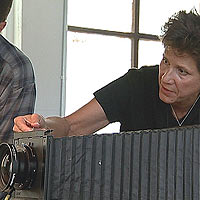
Kerry Laitala is an experimental filmmaker who is interested in how films are made — one frame at a time. Laitala hand-builds her films, manipulating the surface of the celluloid and exposing each frame individually to create works that stand at the edge of both film and art. Spark follows Laitala’s painstaking work on her ongoing tribute to the film medium itself, “The Muse of Cinema.”

Film is a strip of celluloid. Until the 1950s, celluloid was produced with nitrates and was highly flammable. Today, film is usually manufactured on a cellulose acetate or ester base, which is not combustible. Although it comes in varying lengths and speeds, all film is comprised of identical individual frames. Film has light-sensitized silver halides coated in an emulsion that forms images when exposed to light. The images are invisible to the human eye until the film is processed and the images become visible.

For “The Muse of Cinema” series, Laitala produces direct films, exposing the film directly with a light source, not a movie camera. This method often physically alters the surface of film. The techniques Laitala uses include placing objects directly on unprocessed film stock, then exposing and developing it. Filmmakers using this method also paint, scratch or otherwise manipulate processed film. The resulting images, though photographic, retain a handmade, unrefined quality that characterizes the direct film aesthetic.

As a practice, direct manipulation of film is a slow, laborious process because of the number of frames required to make a film of any substantial length. Film that appears normal is shot and played at 24 frames per second (fps). Increasing or decreasing the fps can change the perception of motion, blur the images or cause the images to shake. Laitala’s cranking speed usually ranges between 8 fps and 24 fps, and she intends for “The Muse” to be feature-length (60 to 90 minutes), requiring her to produce more than 3,000 feet of film.

“The Muse of Cinema” is an ongoing project that began when Laitala found a box of early-20th-century magic lantern slides at a flea market. Slides such as these were used to entertain audiences during technical difficulties, giving the projectionist a chance to solve a problem with the projector. Laitala transferred these slides onto 35mm motion picture film, which became the first footage for her project. The rest of the film is being shot on orthochromatic film intended for use in an X-ray camera, a type of film that is not sensitive to red light.

Working under red light in her apartment, Laitala places a variety of objects on the celluloid, then exposes the film with the help of a flashlight. She then processes the film using a hand-cranked processing tank. Laitala’s interest in the tactile, hand-manipulated qualities of film extends to the way in which her films are screened. For “The Muse of Cinema,” Laitala purchased and restored a vintage 1928 Acme film projector, which is hand cranked, requiring the projectionist to move at just the right speed in order for the motion to be perceived as the filmmaker intended.

Laitala studied film and photography at the Massachusetts College of Art and the San Francisco Art Institute. She has screened work internationally and has won various awards including the Princess Grace Award. She also held residencies at the Akademie Schloss Solitude in Germany.

Array

  • Array

Amy Franceschini

Amy Franceschini is a pioneer in the burgeoning field of net art, an art form that is created, circulated and experienced through the Internet. She is the founder of Futurefarmers, an art and design collaborative dedicated to expressing environmental and community interests through digital media. In “Shaken and Stirred,” Spark checks out her piece, “Fingerprint Maze,” at Pond gallery.

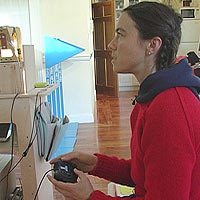
While playing video games one day with a friend, Franceschini imagined getting inside her own fingerprint and finding her way around within its twisting grooves as one would within a labyrinth. Her latest piece provides just such an experience. A scanner takes an image of a participant’s print, which is then modeled into a virtual, three-dimensional maze and projected onto a wall. The participant can then enter into the labyrinth of his or her own fingerprint as though it were a topiary maze. Franceschini has plans to save these mazes and allow others to try them out via the Web.

In addition to founding Futurefarmers, Franceschini helped to start Atlas, an online magazine, in 1995. She has taught at art and design in schools across the Bay Area, including Stanford University. She has shown at Yerba Buena Center for the Arts, Cooper-Hewitt, the National Design Museum and Transmediale in Berlin, and was invited, along with Futurefarmers, to participate in the 2000 Whitney Biennial.

  • Array
  • Array
  • Array

Kal Spelletich

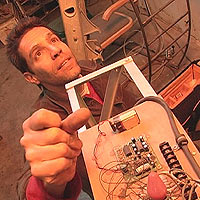
Machine artist Kal Spelletich uses his work to provoke a response in his audience: wonder, awe and even fear. Combining scrapped computer parts with welded metal, Spelletich’s machines interact directly with audience members, sometimes taking them right to the edge of bodily harm. In the episode “Shaken and Stirred,” Spark visits Spelletich in his warehouse-turned-studio as he works on some of his latest creations.

Since the late 1970s, San Francisco has been the epicenter of machine art, a creative practice that fuses kinetic technologies with artistic performance. Spelletich’s work is a unique combination of high and low technologies, combining outmoded computer hardware from Silicon Valley with the metal detritus from abandoned factories at the fringes of the city.

Spelletich’s fascination with machines developed at the age of 15, when he began working on cars in his industrial hometown of Davenport, Iowa. After years of odd jobs, Spelletich enrolled at the University of Iowa, where he studied photography and graduated with a B.F.A. in interdisciplinary art. In 1987, he founded SEEMEN, a machine art collective, before completing his M.F.A. at the University of Texas, Austin, in 1989.

Lately, Spelletich has been making works that involve pyrotechnics, incorporating moving gas flames that come within inches of audience participants. For Spelletich, it is at these moments, when his works provoke a reaction of fear or anxiety, that art becomes most transformative. Spelletich has also been experimenting with biofeedback medical technology, using information emitted from a participant’s body to make a piece function. In this way, an audience member may have a reaction to a work, but the work itself also reacts to the participant, reflecting the user’s emotional state.

  • Array
  • Array
  • Array

Scott Snibbe

For more than a decade, Scott Snibbe has been combining interactive computer technology with Eastern philosophy to create artworks that are at once technologically sophisticated and hauntingly lyrical. In the Spark episode “Shaken and Stirred,” get a glimpse of his recent work, including the large-scale interactive sculpture “Blow Up.”

All of Snibbe’s work depends upon the participation of its audience to work. Using a projector-camera-recorder loop and Snibbe’s own recognition software, several of his pieces produce a kind of video based on participants’ actions. “Cause and Effect” (at Rx Gallery in November 2004) allowed audience members to produce projected silhouettes that trace their own movements. In “Shy” (at the Exploratorium through February 2005), a projected geometrical form timidly withdrew from participants’ advances.

Much of Snibbe’s work finds its roots in ideas that come from Buddhism. Snibbe attends several classes a week at the Tse Chen Ling Center for Tibetan Buddhist Studies, in San Francisco. His concept of interactivity is closely related to the Buddhist belief that the central delusion of human existence is that each of us exists independently of everything else around us. Through their ceasing to exist without the input of participents, Snibbe’s interactive works demonstrate that all things are connected.

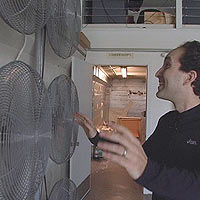
Designed for the Yerba Buena Center for the Arts, “Blow Up” is Snibbe’s first large-scale sculptural piece. It is conceptually continuous with the works that came before it. Participants can blow into a set of sensors, which then activates a corresponding grid of industrial fans. Through the movement of the fans, the participant’s breath is both represented and amplified. The piece links breath to wind, connecting the personal with the cosmic, the inside of the body with the space that surrounds it, and demonstrating the lack of difference between the two.

Scott Snibbe’s work has been shown internationally at venues that include the InterCommunications Center, Tokyo; Ars Electronica, Linz, Austria; Eyebeam, New York City; New Langton Arts, San Francisco; ICA, London; and The Kitchen, New York City. He holds B.A. degrees in computer science and fine art, and an M.A. in computer science from Brown University. Snibbe studied experimental animation at the Rhode Island School of Design and has taught media art and experimental film at Brown University, The RISD and UC Berkeley. He has held research positions at Adobe Systems and Interval Research.

Array

  • Array
  • Array
  • Array
  • Array
  • Array
  • Array

David Choe

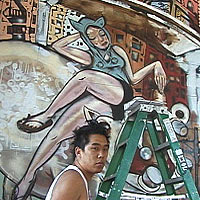
Like the sketches and murals that clutter his brain and blaze through his fingertips, David Choe confounds predictability. The South Bay graffiti artist is celebrated for startling visual intensity crossed with streetwise vision. He paints fast and furious — using aerosol, acrylic and watercolors — able to nimbly capture the slightest emotional serration. His works bridge two worlds and mindsets — the street and the gallery.

As a young man, Choe earned a reputation as a talented, free-spirited, law-flaunting graffiti artist, hustler and world traveler. His self-published award-winning graphic novels, “Bruised Fruit” and “Slow Jams,” have attracted people who were theretofore clueless about museum art and graphic novel genres. David’s talent for illustrating, through words and pictures, minute details of hopelessness, boredom and inner turmoil earned him a cult following. His work also earned equal amounts of criticism and acclaim for its flagrantly explicit and nihilistic nature.

The years passed, and his work matured with subtle depth, dignity, beauty and richness. His paintings commanded higher and higher prices; he produced illustrations for high-profile magazines and mounted dozens of gallery shows. In late 2003, Choe was invited to Tokyo to create a mural and participate in a group art show, and while there, he had a life-changing run-in with the law that resulted in his being curled up in pain in a Japanese jail cell. The charges, “committing violence,” stuck, and he spent three months in prison, the bulk of the time in solitary confinement.

While in jail, the last book he thought he would turn to was the Bible. Too cliché, too predictable, he thought. But like the born-again junkies and fallen rock stars and actors before him, the Bible became his saving grace. In the episode “Up from the Street,” Choe gives Spark his first on-camera interview since returning from jail. He talks about the incarceration, his new motivations and how his artwork may — or may not — change.

  • Array
  • Array
  • Array