Category Archives: Dance

Ashkenaz Music & Dance Community Center

Ashkenaz

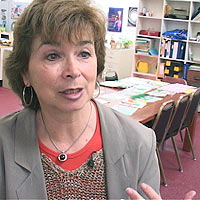
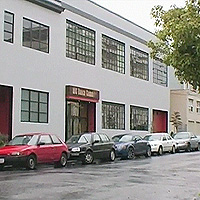
Ashkenaz Music & Dance Community Center is a non-profit music and culture venue that has operated as a self-contained global village, specializing in the presentation of live roots music. The mission of Ashkenaz is to bring people of all classes, races, cultures and ages together with musical programs. Their programs are as diverse as the communities it hosts, including Balkan, Celtic, Cajun/Zydeco, Middle Eastern, African, Caribbean, and Reggae, as well as American roots traditions from Appalachian to the Blues. In the Spark episode “Community Institutions for the Arts,” viewers visit this nationally renowned venue and meet its dedicated staff as they provide a much-needed space for thousands of people in the Bay Area to enjoy traditional music and dance from around the world.

In 1973, David Nadel founded Ashkenaz as a community gathering place, expressing his belief that dancing and moving to music was akin to a spiritual experience that united peoples of all ages, backgrounds, and ethnic heritages. What began as a folkdance venue with recorded music gradually expanded to feature live bands representing the diversity of the region. And indeed, people from all over the Bay Area come for the performances and dance classes. Even Sue Schleiffer, the Executive Director, started coming to Ashkenaz in the 1970s to enjoy folk dancing and has been there ever since.

Despite the fact that Nadel himself is no longer part of the daily life of Ashkenaz, his spirit lives on. Nadel was shot and killed in 1996 by a disgruntled visitor who was asked to leave and returned to the venue after-hours. Dedicated friends and colleagues have worked tirelessly to keep the organization and Nadel’s dream going, exemplified by staff members such as night manager Larry Chin, who has worked at Ashkenaz for 20 years. Today, Chin walks in Nidel’s footsteps, doing everything from bartending to taking care of the artists.

Many artists and national acts come to Ashkenaz knowing that it may not be as profitable as performing at other venues, but the loyal, diverse, and appreciative audience amply compensates. Additionally, folk artists often find that there is a sense of community at Ashkenaz that immediately connects them to their audience, as if they are playing to people from their own countries, hometowns, and villages, encouraging them on their path towards sharing their traditions and cultures.

Ashkenaz Music & Dance Community Center
ashkenaz.com
Where: 1317 San Pablo Ave., Berkeley
Phone: (510) 525-5054

Ashkenaz is wheelchair accessible and family friendly with free admission for those 12 and under.

Array

  • Array
  • Array
  • Array

Young Audiences of Northern California

Editor’s note: In May 2004, Young Audiences of San Jose and Silicon Valley merged with Young Audiences of the Bay Area to become Young Audiences of Northern California

Young Audiences of the Bay Area (YA Bay Area) is the area’s oldest and largest provider of arts education programs and services. Founded in 1958, YA Bay Area is one of 32 non-profit chapters of Young Audiences, Inc. across the nation. Collectively, Young Audience chapters are the single largest provider of arts education programs in the US. In 2001-02, the 5,016 professional artists working for YA chapters provided 102,980 arts programs for 8.1 million young people and educators.

As one of the YA network’s top 10 chapters, YA Bay Area is dedicated to making the arts (classical, contemporary, and multicultural) an essential part of every young person’s education and life. Founded in 1958, the organization offers performance assembly performance, workshops, artist residencies, and professional development in dance, music, theater, media, storytelling, and circus, literary, and visual arts to K-12 and public audiences.

In 2000-2001, YA Bay Area reached 189,976 students, teachers, and families through its in-school, community, and public programs in ten counties of the Bay Area. YA Bay Area’s diverse roster includes over 150 professional artists and ensembles from the Bay Area and the greater US. All of YA Bay Area’s artists are auditioned on an annual basis by YA Bay Area staff and advisory committee to ensure the highest quality programs.

In the Spark episode “Art Goes Back to School,” tag along with a few of the artists represented by YA Bay Area from in-school assemblies with Kulintang Dance Theatre and Eddie Madril from Native American Dance & Arts, to artist residencies with Poet Gail Newman and Photographer Shashari Murphy. Assembly performances are 45-minute performance demonstrations designed to introduce an artform(s) and usually the culture or tradition of the practicing artists. Artist residencies are longer-term (8-32 weeks) experiences between an artist(s) and a group of students designed to provide hands-on learning beyond the introductory level.

In addition to these valuable educational programs, YA Bay Area also offers the ArtsCard, a free family arts program offering discounts to over 50 arts and culture organizations throughout the Bay Area — including discounts on admission, special events, membership, and classes. Enrollment is open to all families with children between preschool and grade 12.

Array

  • Array
  • Array
  • Array

San Francisco School of the Arts (SOTA)

Editor’s note: SOTA was renamed the Ruth Asawa San Francisco School of the Arts in 2010.

Spark visits the San Francisco School of the Arts (SOTA), humming with end of the year excitement as students prep for final art shows, theater reviews, and end of the year concerts. Meet, among others, student Anna Pasternak and teacher Elvia Marta, who give an insider’s look at SOTA’s dance department as students prepare for final exams — a four-night run of concerts.

SOTA is a public visual and performing arts high school dedicated to providing students with an alternative educational program that fosters artistic development and creativity. Since its founding in 1982, SOTA has admitted students selected by audition from all over the Bay Area in areas of performing, visual, and literary arts, thus creating an ethnically diverse and energetic student body.

In what the school calls its “pre-professional” program, SOTA engages students in a curriculum that combines academics with art instruction. SOTA offers art instruction in nine disciplines, including creative writing, dance, film and video arts, instrumental music, piano, theater arts, theater design and technology, visual arts, and voice. The teaching staff at SOTA, which is comprised of specialized arts teachers as well as artists in residence, create an educational program which allows students to study their selected discipline for at least two hours a day.

SOTA was originally founded by a group of renegade artists and teachers, and has continued to be a work-in-progress, frequently changing campuses and even sharing spaces with other schools. However, as of fall 2002, SOTA moved to its own campus where it has since been awarded the title of California Distinguished School. SOTA is not merely being recognized on a local level but also is well on its way to establishing a national reputation for itself. Pending on the allocation of funds, the school may eventually move to the Civic Center where it would neighbor the Symphony, Opera, Ballet, and Asian Art Museum. By joining the art mecca of downtown San Francisco, SOTA would no doubt increase its visibility and attract even more students to its growing population of young and emerging artists.

  • Array
  • Array
  • Array

ODC Dance

View Spark Web extra with Brenda Way discussing the new ODC Dance Commons. (Running Time: 2:02)


View Spark segment on ODC Dance. Original air date: September 2003. (Running Time: 8:20)

Editor’s note: In 2004, ODC/San Francisco officially changed their name to ODC Dance.

In the 1970s, a group of dancers, musicians and artists from Oberlin College formed the Oberlin Dance Collective (ODC/San Francisco), a collaborative project dedicated to developing and performing new modern dance works. ODC has since become the premier contemporary dance company of the West Coast, performing for more than 50,000 people a year.

One of the founding enthusiasts was Oberlin College faculty member Brenda Way, who for more than 30 years has managed to preserve the spirit and intention of this original inspiration in ODC. Way has received numerous awards and accolades for her innovative work, including a Guggenheim Fellowship awarded in 2000. Trained at the School of American Ballet and a student of dance legend George Balanchine, Way is both a dancer and an intellectual whose more than 70 works explore the potential of movement. She has been called the first “post-modern” choreographer, who “constructs” dances.

The women who run ODC along with Way, co-artistic director KT Nelson and associate choreographer Kimi Okada, are considered some of the finest contemporary female choreographers in the United States. Their collaboration supports Way’s vision of ODC as a “family,” a theme that runs throughout both the creative and administrative sides of the organization. Under Way’s leadership, ODC became the first modern dance company in the United States to build its own facility, which includes the ODC School, Theater, and Gallery, serving as a home for the resident dance company, offering classes for adults and young people, and presenting programs of national and international dance performers and companies.

Today, ODC is a corps of dancers who actively participate with Way to develop and perform a dynamic repertoire of modern dance. To keep this constant rate of development, performance and outreach, ODC company members work 40 to 42 weeks a year, an unparalleled commitment in the dance world. In the Spark episode, “Leaders,” viewers are afforded rare views inside auditions and rehearsals for “Noir.”

Array

  • Array
  • Array
  • Array

Aesha Ash

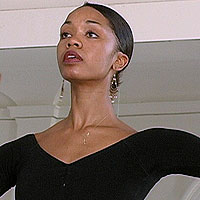
In the career of a dancer, taking new steps as an artist can also mean changing your life. That’s what Aesha Ash has done over and over, moving from the New York City Ballet to Switzerland’s Béjart Ballet Lausanne and then to Alonzo King’s LINES Ballet in 2005. Spark visited Ash during a rehearsal, where she discussed her adjustment to the third dance company change of her career.

Ash’s willingness to move from place to place is an effect of her motivation to grow artistically as a dancer. Before joining LINES, Ash was about to retire from the dance scene; worn out from the scrutiny of her body that is not like most ballet dancers’ stick-thin figures and the pressures of being the only African American woman in the New York City Ballet. However, her move to LINES has revived her love for dance through King’s improvisation and contemporary choreography.

Aesha Ash has been featured in the PBS special “Live From Lincoln Center” and photographed for Bazaar, Marie Claire, New Woman, Dance Spirit and Essence. She is the recipient of the Dance Master of America Honor and was the double for actress Zoe Saldana in the dance sequences of the film “Center Stage.” Alonzo King’s LINES Ballet is considered one of San Francisco’s premier dance companies, famous for King’s sinuous choreography and his dancers’ athleticism and expressive movement.

  • Array
  • Array

Joe Goode

Maverick choreographer Joe Goode is internationally recognized as an innovator in the development of contemporary dance-theater. Since 1986, his Joe Goode Performance Group (JGPG) has been synthesizing a genre that combines text, gestures and humor with Goode’s own deeply physical, high-velocity dancing. In the episode “Trailblazers,” Spark trails along with Goode and his loyal company as they develop “Folk,” a brand new performance piece about rural life, with less than two months from the initial concept in Goode’s mind to the opening-night curtain.

Born in 1951, Goode earned a BFA in drama from Virginia Commonwealth University, then studied dance in New York City. In 1979, he began his signature genre of dance-theater synthesis. The essence of Goode’s concern as an artist is to explore a “deeply felt, profoundly human experience” in theater. His work has been recognized with numerous awards and prizes, including a New York Bessie; two Bay Area Izzies; a National Endowment for the Arts fellowship; and a Heritage Award from the California Dance Educators Association. Goode has recently joined the full-time faculty of the University of California at Berkeley in the department of theater, dance and performance studies.

To produce a new piece, rather than starting off with a story and filling it with material, Goode starts off with smaller elements and creates a story out of them. This process from creating original choreography and writing their own words and music to premiering the finished work usually takes the JGPG three to four months.

Over the past 13 years, Goode and his troupe have toured extensively throughout the United States, Canada, Europe, South America, the Middle East and Africa. JGPG is committed to reaching out to population groups who have little access to the performing arts, including gay/lesbian/transgendered/bisexual teens and young adults, low-income and at-risk youth, juvenile offenders, senior citizens, and battered women, as well as pre-professional dance artists.

Array

  • Array
  • Array
  • Array

Project Bandaloop

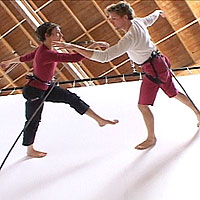
In an innovative combination of rappelling and dance, Project Bandaloop suspends dancer/athletes in mid-air and allows them to explore both vertical and horizontal movement. They have performed in all kinds of places: suspended beneath the Space Needle in Seattle and off of El Capitan in Yosemite.

Spark watches the dance group as they introduce a new “floor” into their routine — a vertical, trampoline-like surface that enables an even more interesting relationship between dance and gravity. The addition of this trampoline allows them to show projections as well as travel to venues around the world tp introduce new audiences to their unique perspective on dance.

  • Array

Roberto Borrell

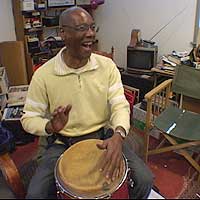
In the Spark “Transplanting a Tradition” episode, master percussionist, dancer and bandleader Roberto Borrell brings his passion for Cuban music and dance to students and audiences, reiterating the need to preserve the roots of Cuban music so that it will continue to grow and so that future generations can experience it. Viewers get to sit in on a dance class, see a segment of a performance by Borrell’s 12-piece Orquesta La Moderna Tradición and get a glimpse of the life of a traditional artist living outside his native country.

Borrell grew up in the 1950s and 1960s in Havana, Cuba, during the heyday of popular dance hall music, when danzón orchestras and big bands played all night performing a variety of genres, such as danzón-cha, cha-cha-chá, son-montuno, mambo and boleros. He enjoyed a successful career, first with the Conjunto Nacional de Cuba and later directing his own dance company. With the advent of the Cuban Revolution in 1959, however, many aspects of the culture in Cuba changed, and it became an increasingly difficult environment for artists, especially those who refused to join the Communist Party. Like many other thousands of Cubans, Borrell fled to the United States in 1980. Upon relocating to the Bay Area, Borrell met violinist, composer and arranger Tregar Otton, and together in 1996 they founded Orquesta La Moderna Tradición, perhaps the only ensemble in the United States that is dedicated to presenting traditional Cuban dance music, especially the lilting grooves of danzón.

Danzón, one of Cuba’s first unique dance/music genres has a long history that represents a fusion of African and European elements, and it represents the roots for many popular dance styles today. One of the most unique and compelling characteristics of danzón is the intricate connection between the music and the dance and between the musicians and the dancers. Following the musical structure and specific musical cues, dancers of classic danzón change their steps accordingly and move with musical phrases, at times allowing for some improvisation within the structure. This requires them to listen very closely to the music in order to hear an important cue, such as when to pause, when to make a big turn or when the music is about to end.

Array

  • Array
  • Array
  • Array

Artship

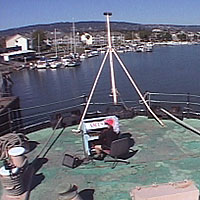
The Artship was one of the more unusual Bay Area arts venues. A cargo-passenger ship built in 1939, the vessel was used as a gallery, studio, classroom and performance space by visual and performing artists from 1999 to 2004. Unfortunately, the public gathering space and house for the arts lost its East Bay dock space due to commercial development.

Spark takes you inside the Artship as it was. Today, the Artship organization continues to support and produce exhibitions and performances through their dance/theater and urban/visual arts programs. The program particularly encourages artistic endeavors that build community by working to reclaim public space or increase audience/performer exchange.

  • Array

Legacy Oral History Program

Editor’s note: In 2008, the San Francisco Performing Arts Library and Museum became the Museum of Performance & Design

Jeff Friedman became concerned about the vulnerability of the dance community to loss of documented work as many of his colleagues in the arts began contracting AIDS in the 1980s. In order to preserve not only the work of younger dancers at risk for AIDS but also the elders in his community, Friedman began the Legacy Oral History Program.

Friedman’s dance heritage program joined with the San Francisco Performing Arts Library and Museum to preserve not only dance but also theater, music, and other performing arts. The collection includes audio and video taped life history interviews, transcripts, photographs and other illustrations, as well as additional ephemera — all of which are available to the public. Spark talks to Friedman about how this project began.

  • Array

Halau ‘o Keikiali’i

Editor’s note: In 2004, Hula Halau Aloha Pumehana ‘o Polynesia officially changed their name to Halau ‘o Keikiali’i.

The flourishing presence of hula schools around the Bay Area is proof that distance makes the heart grow fonder. Spark spends time with Halau ‘o Keikiali’i‘s Käwika Alfiche, who has devoted his life to reviving ancient Hawaiian music and dance traditions which have been threatened by two centuries of assimilation.

Hula is a form of storytelling and dance that is traditionally learned with a teacher, who is called a “ke kumu.” Käwika Alfiche, the ke kumu of Halau ‘o Keikiali’i, has been teaching hula and other aspects of Hawai’ian culture for more than 10 years. Study of this art form includes “oli” (chanting), “mele” (traditional songs), “himeni” (modern songs), “nä mea hula” (arts, crafts and toolmaking), “lole hula” (hula regalia), ´ölelo (language) and “mo’olelo” (stories and storytelling).

The San Francisco-based Halau ‘o Keikiali’i is a “ka hälau,” a traditional Hawai’ian performance ensemble. Founded in 1994, their mission is to educate the general public about Hawai’ian people, customs, values and protocols by focusing on performance and preservation of Hula Kahiko, or ancient dance. The multi-generational group offers classes, stage performances and cultural events throughout the year.

Halau ‘o Keikiali’i
keikialii.com
Where: 415 423 Baden Ave., South San Francisco

Array

  • Array
  • Array
  • Array
  • Array
  • Array

Healy Irish Dance Studio

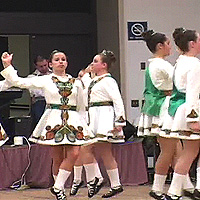
Beneath all the smoke and lights of popular stage shows like “Riverdance” and “Lord of the Dance” lies the precise and fleet-footed drama of Irish step dancing, a traditional folk dance with a history hundreds of years old, that continues to be passed down from generation to generation.

With its lively and intricate music — jigs, hornpipes, reels — and a scrupulously unbending carriage of the torso, Irish dancing is uniquely demanding, requiring both a high level of skill and of concentration to create the right combination of mesmerizing rhythms and graceful movement.

As with many forms of folk dance, step dancing originated as an entertainment for social gatherings — dancers would often perform in barns or pubs, and sometimes dance on unhinged doors to amplify the rhythms of their feet. It was a natural part of local festivals of music, dance and storytelling, which evolved in the late 19th century into a kind of colorful competition known today as the feis.

Scores of feisanna (the plural of feis) can be seen throughout the country every year, and in order to compete, a dancer must train at a school accredited by the organization that sponsors a feis, such as the Irish Dancing Commission. In “Roots,” Spark visits the San Francisco 2003 Feis to follow the progress of young Megan Anderson, a talented and dedicated young dancer from Healy Irish Dance Studio, as she dons her own brightly sequinned costume complete with wig, to keep up a highflying tradition.

Young performers from the Healy Irish Dance Studio, compete in annual San Francisco Feis under the tutelage of Ann Healy, her daughter Patti Ann Ranum and granddaughters Christina and Alisa Ranum. Healy’s grandfather, William J. Healy brought the traditions of Irish dance from his home in Kilcorney, Cork where a local feis has been held annually since 1910, and his son — Ann’s father — William P. Healy founded the still family-run dance studio.

  • Array
  • Array
  • Array
  • Array
  • Array

Destiny Arts Center

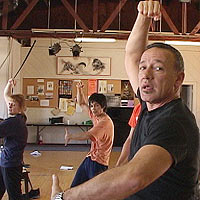
Spark talks with teens in programs at the Destiny Arts Center. The center, which offers a range of classes including martial arts, modern dance, theater and leadership training, has been building self-esteem and confidence in youth since 1988. By using movement to express emotion and incorporating performance into a violence prevention program, the center encourages self-awareness while simultaneously aiding in conflict resolution.

Destiny, which stands for “de-escalation skills training inspiring nonviolence in youth” provides a supportive, positive environment for Oakland-area children and teens. Its arts education program includes classes culminating in recitals by the participants, and many of its programs, such as Dance for Social Change, unite the arts and social issues. The center also hosts a multicultural youth performance company, which creates performance art pieces that critique contemporary society.

  • Array

Rasta Thomas

Gifted with movie star good looks, prodigious talent and a youthful ambition, dancer and actor Rasta Thomas could be thought of as the epitome of the dance world’s perfect star — a mercurial action hero as at home in the ballet classics as he is in Broadway musicals.

Born in San Francisco in 1981, Thomas displayed a phenomenal natural affinity for movement early on, studying martial arts, swimming and gymnastics from the age of three on. He won his first dance competitions at 9, and made a splash in the ballet world at Varna, Bulgaria in 1996 when he won the gold medal in the Junior Division, and then again in 1998 when he won the gold medal in the Senior Division at the International Ballet Competition in Jackson, MS — the first 16-year old to do so.

His remarkable talent has given Thomas the ability to forge a unique path to a career in the dance world. Instead of joining a single company to secure his future, Thomas has the luxury of an array of choices. It’s an advantage that has resulted in a diverse resume that includes every thing from ballet companies (Dance Theatre of Harlem and LINES Contemporary Ballet) to film (Patrick Swayze’s “One Last Dance”) to the musical stage, starring as Eddie in the tour of the Broadway hit “Movin’ Out.”

In “Fame,” Spark follows Thomas to Los Angeles, from ballet class with Adrian Dellas — one of his first dance teachers — to rehearsal with Debbie Allen on her show, “Pearl.” It’s a typically hectic day in the life for the mercurial Thomas, who sees himself as the artist of the future, a dancer for whom any kind of movement is both an open challenge and an opportunity.

  • Array
  • Array
  • Array