Editor’s note: Michael Smuin passed away on April 23, 2007.
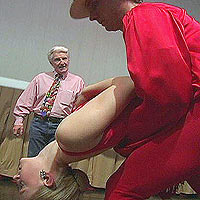
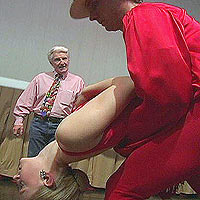
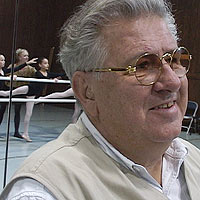
San Francisco choreographer and dancer Michael Smuin boasted an exceptionally broad dance vocabulary, from classical ballet to Broadway, nightclubs and even ice rinks. Spark visited with Smuin and his versatile company in 2005 as they worked on their annual “Christmas Ballet” and his “Fly Me to the Moon,” set to songs by Frank Sinatra.
Smuin was a principal dancer with the San Francisco Ballet before moving to New York to dance on Broadway and appear in film and television. He was also both principal dancer and choreographer-in-residence with the American Ballet Theatre. In 1973, he returned to San Francisco to be the artistic director of the San Francisco Ballet, a post he held until 1985. During his tenure, he created “Romeo and Juliet,” “The Tempest” and “A Song for Dead Warriors” — all of which won EMMY Awards.
Though he has produced many traditional ballets, Smuin was equally successful choreographing for Broadway, television and film. As a choreographer, Smuin has won Tony, Drama Desk and Fred Astaire awards for “Anything Goes,” and he was nominated for Tony Awards for “Sophisticated Ladies” for both director and choreographer. His feature film credits include “Rumble Fish,” “Cotton Club,” “Dracula,” “The Joy Luck Club” and “Return of the Jedi, Special Edition.”
In 1994, he started his own company, Smuin Ballet, in which he combined ballet with many other dance styles, such as jazz, tap and tango. His mission was to entertain the audience using his vast dance vocabulary in any number of ways to guarantee that no one was ever bored.
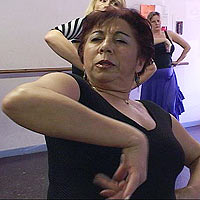
Now retired, Rosa Montoya lives most of the year in Spain, but whenever she returns to the Bay Area for a visit, word spreads quickly through the local dance community and students flock to learn from her. In the episode “Masters of Dance,” Spark goes into the dance studio where Montoya is immersed in coaxing the best out of each of her students. She makes it clear to them that flamenco requires having not only the dedication to master the technique, but also — and more important — the feeling and attitude that must accompany this passionate dance form.
Born in Madrid, Spain, into a gypsy family of world-famous flamenco guitarists, Ramón Montoya and Carlos Montoya, Rosa grew up surrounded by music and dance. She began her formal dance training at age 8 studying flamenco at Amor de Diós, Spanish classical dance at Círculo de Bellas Artes and ballet at the Instituto Nacional de Ballet. Her professional career began at La Zambra when she was 16, and shortly after, she was touring with José Marchena and Company.
Montoya was discovered by Ciro Diezhandino, who invited her to join his group, Casa Madrid, as a lead dancer. As partners, from 1961 to 1972 they toured Asia, Europe, Australia and the United States. In 1964, Diezhandino opened the nightclub Mesón del Flamenco in San Francisco, where Montoya met her future husband, Carlos Mullen, a guitar player.
When Montoya settled in San Francisco in 1971, she set out to make her art form much more visible in the existing dance landscape. A few years later she opened a school and started a company, Rosa Montoya Bailes Flamencos. Montoya joined the faculty of San Francisco State University’s ethnic dance department in 1985. Now retired from performing, she is still passing on her rich legacy to aspiring students around the world.
Rosa Montoya may be contacted at: Calle Tomasa Ruiz 6, Segundo Piso, C Madrid 28019 Spain Phone (dailing from the United States): 011-34-914-698-760
Diamano Coura means “those who bring the message” in the Senegalese Wolof language. Diamano Coura West African Dance Company was founded in 1975 by the husband and wife team of Dr. Zak Diouf and Naomi Washington Diouf. They are dedicated to the preservation, teaching and appreciation of traditional West African music, dance, theater and culture. Diamano Coura offers ongoing performances, classes and workshops as well as youth and community outreach programs.
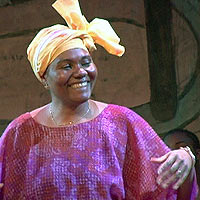
In the Spark episode “Global Village,” Diamano Coura is preparing for its 2004 annual repertory show, “Kudul Khelate.” Zak, who comes from Senegal, and Naomi, from Liberia, both express the idea that in African cultures there is no separation of music and dance from daily life. They believe that “if you can walk, you can dance. If you can talk, you can sing.” Unlike Western European traditions, in which participation in the fine arts is historically the purview of the upper classes and experts to perform and produce, African cultures integrate all the art forms together within a community.
Dr. Diouf earned his Ph.D. in ethnomusicology from UC Berkeley and was the director of the Mali Ensemble, Les Ballets Africains and the Senegalese National Dance Company before founding Diamano Coura. He has performed as a dancer and drummer and has choreographed for such groups as the African American Dance Ensemble, Oakland’s Dimensions Dance Theater and the Harambee Dance Company. He has been on the faculties of Southern Illinois University, San Jose State University, Sonoma State University, the University of San Diego, UCLA, San Francisco State University and Hayward State University. He currently teaches West African music, dance and history at Laney Community College and music and dance at the Malonga Casquelourd Arts Center in Oakland.
Naomi Diouf began dancing at age 10 studying with prominent dancers and musicians of West African countries. Later, she studied ballet and modern dance in Paris. She holds a B.A. in sociology, with a minor in African history, from UC San Diego. She has choreographed works internationally for companies such as the Dutch Theater Van Osten in the Netherlands and Belgium, Dimensions Dance Theater, and Washington D.C.’s Kankoran Dance Company. She currently teaches West African dance and culture at Berkeley High School, Laney College and the Malonga Casquelourd Arts Center, as well as conducting workshops and consulting in costume design, cultural program coordinating and West African culture.
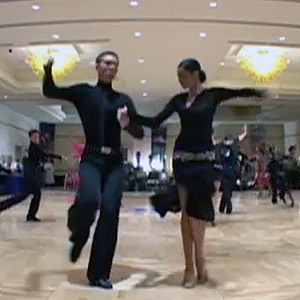
Spark goes behind the scenes with the teenage competitors in the Bay Area’s first Ballroom Blitz Junior Dance Sport Championship. The event features six couples, which are finalists selected from hundreds of junior couples across the U.S. In the course of the evening, these couples will dance rhumba, cha-cha, samba, paso doble, and jive. The winning couple of the event is eligible for the regional competition and will have an opportunity to travel to Europe representing the U.S. in an international competition.
Spark catches up with choreographer Robert Moses and the young poets of Youth Speaks as they debut a new collaboration called “Cause” that looks at hate — it’s history, legacy, and future. Robert Moses met weekly with the poets over the course of several months in a writing workshop to compose the piece that incorporates prose and poetry in the composition. The poets will be performing on stage with the dancers. Excerpts from their poems are incorporated into the original soundtrack/score by Jonathan Norton.
Internationally renowned New York-based choreographer Mark Morris has been spending more and more time in the Bay Area. In addition to his long-standing relationship with the San Francisco Ballet, Morris recently announced a partnership with Berkeley’s Cal Performances that will bring the Mark Morris Dance Group to the University of California campus for two seasons a year. In the episode “The Art of Interpretation,” Spark follows Morris as he choreographs his latest project, a production of Léo Delibes’s little-known ballet “Sylvia” for the San Francisco Ballet.
In 1999, San Francisco Ballet artistic director Helgi Tomasson approached Morris to do a full-length ballet, a rare event given the deep investment of time, money and resources required for such a production — and a great show of confidence in Morris’s skill and talent. Morris chose to do “Sylvia,” a work that has not been staged in its entirety for more than 100 years, and never by an American company. The production will also be Morris’s first evening-length work for any dance company other than his own.
Morris chose Delibes’s work primarily for the score, but also for its libretto, which the choreographer found to be unusual in a classical ballet. Whereas ballet narratives often feature women abandoned at the alter, forever brokenhearted and doomed to a life of celibacy, “Sylvia” tells the story of a self-sufficient nymph who is dedicated to Diana, Roman goddess of the hunt. An unusually modern coming-of-age tale set amidst a backdrop of forests, fantasy and mythological beings, the story follows Sylvia’s transformation as she switches her allegiance to Eros, god of love and sex. Rather than lose her self-sufficiency in this transformation, she becomes a fully fulfilled, sexually conscious and ever-powerful woman.
In an effort to maintain a sense of the original Victorian feel of the work while updating it to a more modern sensibility, set designer Allen Moyer has chosen to use a heavily swagged curtain motif throughout the ballet’s three acts. His choice was inspired by the Paris Opera House, where the work was first performed. Using more than 3,300 square yards of a variety of fabrics, including a richly textured crushed velvet and a fine linen specially woven in Belgium, the sets juxtapose an opulent luxuriance of materials with an uncluttered, spare arrangement. As a backdrop, each act uses a translucent painted scrim featuring images inspired by period wallpaper.
Morris is known for his fresh approach to both modern dance and classical ballet, a reputation that has earned him the distinction of being one of America’s youngest certified national treasures. Instead of having his dancers awe their audiences with a series of difficult moves, Morris tries to instill in his performers a sense of the meaning of the piece so that they may use their skills to express the narrative in ways that are both spontaneous and subtly nuanced. Emphasizing natural over virtuoso movement, Morris believes that this kind of emotive communication has been at the heart of artistic endeavors since antiquity and that is why art continues to affect audiences deeply and personally.
More about San Francisco Ballet San Francisco Ballet was founded as San Francisco Opera Ballet in 1933. Initially its primary purpose was to train dancers to appear in lavish, full-length opera productions. In 1942, the ballet company became a totally separate entity and was renamed San Francisco Ballet. As America’s first professional ballet company, the company presented the first full-length productions of “Nutcracker” and “Swan Lake” in the United States. Today, under the artistic direction of Helgi Tomasson since 1985, San Francisco Ballet continues to push boundaries with cutting-edge new works by contemporary international artists while remaining committed to the classical tradition.
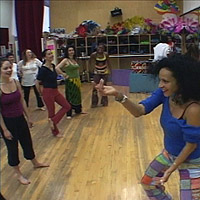
Conceição Damasceno brought the spirit of Carnaval with her when she came to the San Francisco Bay Area from Brazil. She teaches different styles of Brazilian dance and is president and artistic director of BrasArte, which is a nonprofit organization created to preserve Brazilian music, dance, and culture. Spark heads to Damasceno’s class and learns about the meaning of Carnaval in the life of the dancer/choreographer.
In the Spark episode “Legacies,” dancer and teacher Vishal Ramani talks about how she came to the United States from India 30 years ago and has since fostered a creative environment in which Indian traditions have taken root in the Silicon Valley. Ramani is the founder of Shri Krupa Dance Foundation, a center where students go to learn the traditional art form of Bharata Natyam seven days a week, year-round.
Born in India, Vishal Ramani was a child prodigy. At 7 years of age, she made her dance debut, or “arangetram,” in Bombay, performing the dance art of Bharata Natyam. However, her dream of becoming a professional dancer in India ended when she came to the United States with her husband in 1974, at that time finding only a small Indian community in the Bay Area. Ramani soon found a new passion — being a teacher. Today, after teaching for more than 30 years, Ramani runs Shri Krupa, an important cultural center for Indian Americans — the fastest-growing community in the country.
Dating back for centuries, Bharata Natyam is the oldest classical dance form in India. The dance is a storytelling art form based on Hindu mythology and executed through a complex series of body gestures, facial expressions, music and rhythmic movement. Students learn how to contact the earth with their bare feet and use 28 single-handed gestures, 24 double-handed gestures, and many more body and facial expressions to portray dramatic events and emotions.
Of Ramani’s guiding principles as a teacher, the two most important are to instill dedication and devotion in her students. These two elements, she says, are the most significant in order to master any great art form. However, she emphasizes, Indian dance teaches much more than just dance. Movement, confidence, charisma and poise as well as an entire value system are embedded within the process of learning Bharata Natyam, and students carry these skills with them for a lifetime, regardless of what career they pursue.
In additional, Ramani has been co-hosting a weekly show on local television that presents a wide range of subjects of interest to the local Indian community, including music and dance. It is one more indication of how much the community has grown and how culturally vibrant it is. And as the community grows, her students are being called upon to perform for weekly events, and religious holidays and at the Hindu temples.
“The New York Times” has called her “the answer to the book industry’s multicultural dreams.” “If There Would Be No Light: Poems from My Heart” was published when she was 8 years old; the forward was written by Gloria Steinem. Her work has been praised by the likes of Phoebe Snow, Bill Cosby, Quincy Jones and Bonnie Raitt. This kind of literary accomplishment would be enough for most kids in middle school; however, writing is only a part of artist Sahara Sunday Spain‘s creative arsenal. In addition to being an accomplished poet, Spain is a dancer, a songwriter, a singer, a visual artist and a globe-trotting social activist.
One cannot look at Spain without looking at her environment as well. Her talents, impressive regardless of context, might have languished without the presence of her mother, professional photographer Elisabeth Sunday. It was Sunday’s decision to raise Spain in a world scrubbed clean of the noxious influence of popular culture. Without television, electronic toys or junk food to impede her creative development, the young poet was speaking in complete sentences by 14 months. Spain was 5 years old when she wrote her first poem, entitled “Mother’s Milk,” which reads, “When I drink mother’s milk/my heart sweats with love.”
As for her activism, Spain keeps with the family spirit. Her father is Johnny Spain, a former Black Panther who has spent a long time in jail and is no longer an active presence in his daughter’s life. Nevertheless, she carries on his tradition of activism. She has taken it upon herself to aid village girls in Mali by creating the Kah-Monno group — a name taken from the one she was given by Mali elders. “Kah-Monno” means unity and understanding through conversation. Spain plans to fund the education of 35 girls there, hoping to use the proceeds from her sale of rights to a song she wrote, “The Night of the Day.”
If you’re an artist with a family, working to nurture your child’s creativity while sustaining your own can become two sides of the same coin. Sunday herself notes, “We are a creative family. It’s easy to be inspired.” Indeed, in addition to having a photographer for a mother, Spain has a grandfather who’s a stained-glass designer, a grandmother who’s a potter and a great-grandfather who’s a painter. For this reason, Spain’s second book of poetry, “River of Ancestors,” is an homage to her deeply artistic heritage.
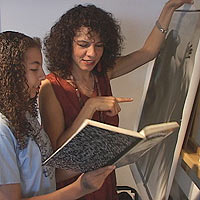
In the Spark episode “All in the Family,” spend a day in the life of Sahara Sunday Spain and her mother Elisabeth Sunday, the latter working hard to make it as both an artist and a single parent, having to squeeze her creativity in between dropping Spain off at school in the mornings and picking her up in the afternoon. Learn about the artistic stream running through Spain and Sunday from their relatives. Above all, see that behind these artists is a loving family to support and inspire them.
Born in Copenhagen in 1936, dancer and choreographer Flemming Flindt is one of dance world’s most distinguished artists. Trained at the Royal Danish Ballet School, Flindt joined the main company at the age of 19, quickly rising to the rank of international star. One of the most courtly and gifted premier danseurs of the 1950s, he was made etoile at the Paris Opera Ballet, starred at the Royal Ballet and the London Festival Ballet, and in 1950 he danced at the celebrations of Grace Kelly’s wedding.
By 1963, his attention had turned to choreography with his highly regarded balletic adaptation of Eugene Ionesco’s “The Lesson,” and in 1966, at the age of 29, Flindt was appointed director of the Royal Danish Ballet, a post he held for twelve years.
Like many of the dancers of the Danish tradition, Flindt himself was as at home interpreting the characters of the 19th century narrative ballets of August Bournonville as he was in contemporary work of Birgit Cullberg and Roland Petit. And during his tenure at the Royal Danish Ballet, he was credited with carefully shepherding the historical heritage of the company while expanding the repertoire to include the work of modern choreographers such as Paul Taylor, Murray Louis and Glen Tetley.
Flindt’s own works, like the great ballets of the classical era, derive their strength from dramatic stories, but his choreography, nevertheless, has always had a modern edge. In “The Jet Set” Spark follows him to San Jose, where he recreates his ballet “Out of Africa” for Ballet San Jose of Silicon Valley, a company for whom he has restaged many of his works.
Based on Isak Dinesen’s novel of the same title, Flindt’s ballet, a shorter version of which he initially created as a gift for Queen Margrethe and Prince Henrik of Denmark on their Silver Anniversary, encompasses an even larger theatrical vision than it did in 1992.
Staged in only three and a half weeks, under a highly compressed and grueling rehearsal schedule, “Out of Africa” explores both the psychological as well as the romantic aspects of Dinesen’s life as an ex-patriot in Kenya. Assisted by San Jose ballet master Raymond Rodriguez, who originally danced in the ballet, Flindt expands his original work adding not just new scenes, but lavish costumes, vividly dramatic sets, and a full choir along with expanded music by Danish composer Carl Nielsen.
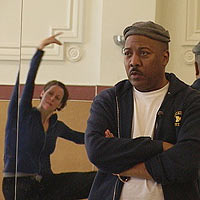
Choreographer Alonzo King has created contemporary ballets for more than 50 international dance companies as well as dozens of pieces for film, television, opera and his own company, LINES Contemporary Ballet. Easily one of the most sought-after ballet masters in the world, Alonzo King is often living out of a suitcase, traveling to multiple locations in short order. Spark travels with King to New York City as he mounts new ballets with the Alvin Ailey American Dance Theater and the Cedar Lake Ensemble.
LINES has grown steadily since founding its in 1982. The company has received international recognition for choreographic innovation, creative collaborations and world-class dancers. King’s choreography adapts the forms and disciplines of classical ballet in ways that appeal to contemporary audiences. One of the hallmarks of Alonzo’s method is how he communicates his ideas: rendering the abstractions of complex choreography into directions that the dancers can feel and see, activating all their senses, and demanding that the dancers dig deep within themselves to expose their true emotions. For him, it is not about the steps. He wants to create “what is real.”
The drive to make art is what keeps King on such a rigorous travel schedule and why he continues to search for new ways of sharing and expressing his art. In 1989, under the direction of King, LINES founded the San Francisco Dance Center, which serves as a resource for the entire Bay Area dance community. It has become the largest public dance space on the West Coast, offering a wide variety of movement and dance forms, including ballet, modern, Jazz, flamenco, Afro-Latin, East Indian, Brazilian, yoga and pilates. In 1994, LINES launched a major initiative to expand the involvement of world-renowned artists in the creation of new work and became one of the resident companies at San Francisco’s Yerba Buena Center for the Arts.
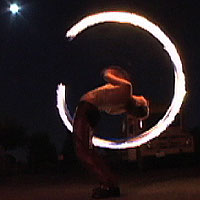
Belva Stone teaches poi, the ancient Maori art of dancing with balls on ropes. However, she takes this performance art to the next level by adding fire to the mix and dancing while swinging flaming wicks around her body.
Like Maori women, who use poi to increase coordination and tell stories, Stone and her female students are both empowered and exhilarated by the practice of fire dancing. Spark follows Stone’s class from rehearsal to performance at The Crucible.
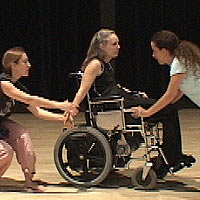
Since 1987, AXIS Dance Company has created an exciting body of work developed by dancers with and without disabilities. The company has become internationally recognized for its high artistic and educational standards and for being on the cutting edge of physically integrated dance. Under artistic direction of Judith Smith, the 10-member company has developed a powerful repertory that includes works by Bill T. Jones, Joe Goode and Joanna Haigood as well as by its own company members.
In the Spark episode “Frontiers of Dance,” AXIS Dance Company members work on a new piece directed by Los Angeles-based choreographer Victoria Marks. With six months between first rehearsal and opening night, the members of AXIS spend a week improvising together to explore how they interact as dancers and to develop different themes and ideas that will inform their movements. Over time, the themes of desire and longing emerge — desire in terms of space and the need to move forward and longing in terms of physical attraction and how the gravitational pull between them as dancers inspires interesting dance dynamics.
After several months, as recipients of the Wattis Artists in Residence award, the company moves to Yerba Buena Center for the Arts. Two weeks before opening night, the piece has no ending or title and the musical score is unfinished. In more traditional dance companies, dances are set to a completed musical score. In the organic process used by AXIS, composer Eve Beglarians is able to finish her score while watching the dancers, incorporating all the sounds of the movement in the final composition, even the hums and clicks of the wheelchairs. And, at long last, the ensemble finds a title for its collaborative work: “Dust.”
One of only a few companies of its kind, AXIS Dance Company challenges our perceptions about what dance is and can be and about disability, without allowing that to be the focus of the dance except to open people’s minds to possibilities of what we are capable of, including our strengths and weaknesses. Like any professional group, they are always striving for excellence, creating performances that are poignant and whose content has weight and humor. As theater and society become more accessible, integrated dance groups will probably be more prevalent, and future generations will find it easier to participate in this art form.
In addition to their professional performances, AXIS Dance Company has an educational outreach program designed to bring physically integrated dance education directly to the community. Called Dance Access, the program comprises a team of eight teaching artists (five with disabilities) led by education director Alisa Rasera. Dance Access offers performances, assemblies, workshops, lecture-demonstrations, in-school residencies and after-school programs to schools and communities around the Bay Area.
Jo Kreiter is a former gymnast who danced and trained as a choreographer with ZACCHO Dance Theater before founding her own company, Flyaway Productions, in 1996. She chose “flyaway” because of the emotional power and physicality of freedom symbolized by the concept of flight. Her dance troupe performs in the air in both traditional and site-specific venues such as on trapezes, rooftops, fire escapes, suspended steel merry-go-rounds and outdoor walls. It is breathtakingly audacious work, using the physicality of risk as public spectacle. Kreiter says of her company, “It’s a company of women, and in our art we use physical strength as a metaphor for female empowerment.”
In the Spark episode “Art in Public Places,” Kreiter clearly articulates her values and what motivates her to create politically responsive works such as “How to Be a Citizen.” Flyaway Productions’ public performance of this commissioned piece brings to life the place that San Francisco’s Market Street holds the history of protest and progressive ideas. As such, it encapsulates Kreiter’s approach to public art — making a political statement by making use of a specific site to call upon the importance of its own history.
Market street and the buildings on it have borne witness to those who have taken to the street to make their voices heard. Flyaway Productions’ performance honors the courage of the thousands of ordinary people in history who have come forward to strive for justice and social change by assembling and taking to the streets. “How to Be a Citizen” was inspired specifically by the February 2003 peace march in San Francisco against the war in Iraq declared by President Bush. It is not a literal translation of the events of that month, nor is it a protest movement. It is a physical expression of the feelings and emotions of protesters as interpreted by Kreiter.
Performing on a 74-foot-long ramp rising 7-feet high with the words “dissent,” “compassion” and “justice” stenciled on it, the eight dancers’ unified movements symbolize the unity of public protest. “How to Be a Citizen” also featured a number of collaborators who made significant contributions to the work, including Pamela Z, who composed the haunting, chanting musical score, and designer Lalo Cervantes, who constructed the ramp. During the performance, local labor historian Harvey Schwartz recounted a number of historical reference points along the timeline of the history of protest in San Francisco that were integral to the piece.
Jo Kreiter has been a recipient of numerous awards, including a 2001 CA Dancemakers/Irvine Fellowship and a 2000 Gerbode Foundation Award for Choreography. She has been nominated for Isadora Duncan Dance Awards in Choreography (2000) and Performance (1999). She also teaches classes and workshops that highlight her unique approach to dance and physicality. To illuminate the importance of risk in her work, she quotes the British writer Jeanette Winterson “What you risk reveals what you value.”