Doctors Expect Climate Change to Worsen Lung Diseases

In some parts of California air quality is already a big issue

This post originally appeared on KQED’s State of Health blog.
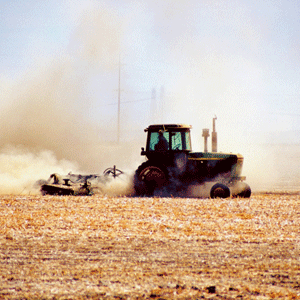
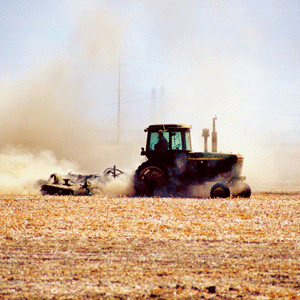
Farming in the Central Valley contributes to the poor air quality there.

As if there wasn’t already enough to worry about, now doctors are predicting that climate change will harm people’s respiratory health. The American Thoracic Society is so concerned it filed a report with two goals. The Society not only wants to raise awareness with doctors so they can take preventive measures with their patients but also is enticing researchers to take on the question for further study. They found that climate change has a direct impact on air quality. A hotter climate, wildfires, more pollen in the air and rates of airborne diseases are worsening respiratory health worldwide.

Climate change will likely affect different places in different ways, but in California it could mean hotter summers and more wildfires. The itchy eyes and sneeze-inducing allergies that plague many people during pollen season could also hang around longer if weather patterns continue to change. All of that is bad for asthmatics, children and the elderly, but also for poor people – as it turns out.

“It was really an eye opener for us,” said Kent Pinkerton, a professor of pediatrics at UC Davis and the lead author on the report. “We were really not aware of the implications of change in temperature on respiratory health. But it really is a global issue. It’s not just a concern for here in our country,” he added. In some parts of Africa and Turkey desertification and increased particulates in the air have already forced people to relocate, often into cramped conditions, which further heightens their risk for respiratory diseases.

Continue reading Doctors Expect Climate Change to Worsen Lung Diseases

Are You in Harm’s Way? Rising Seas Increase Flood Risk in California

San Francisco Bay, the Delta and Southern California are most susceptible in the state

Sea level rise compounded with storm surges and high tides could raise the water level by four feet.

Tens of thousands of Californians will be placed at risk in the years to come as sea levels continue rising along the California coast. The official planning parameter for the San Francisco Bay Area acknowledges a potential 16-inch rise by 2050. But with help from high tides and storm surges, it’s not likely to stop there. A new tool from Climate Central maps out which cities, neighborhoods, and even streets, will be most affected.

The state’s Cal-Adapt site offers a similar tool but the East Coast-based science education group, Climate Central has added a new layer: population. According to Climate Central, which is a content partner with Climate Watch, there’s a one-in-six chance that under the right conditions — sea level rise, plus storm surge, plus high tides — the sea could rise four feet by 2030 in the Bay Area. That effects not just the coast, but also cities around the Bay and farther inland, in the Sacramento-San Joaquin Delta. The cities with the most people at risk are San Mateo, with 35,000 people living in areas that would be flooded under that scenario, and Stockton, with more than 72,000.

In Southern California, the threat is farther off, but by 2060, there’s a one-in-six chance of sea levels topping a four-foot increase with help from a storm surge. If that happens, more than 44,000 people in Huntington Beach would be in harm’s way, and 11,000 in LA.

Will California be a Game-Changer for the Chevy Volt?

GM is hoping new carpool incentives and a green focus will boost Volt sales in the Golden State

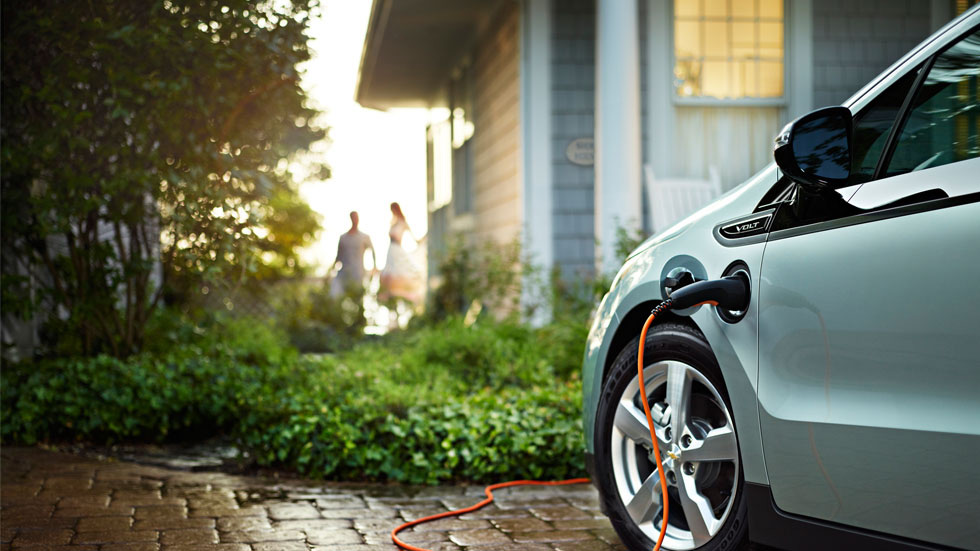
The Volt now qualifies for California’s HOV lane status and a $1500 state rebate.

When General Motors CEO Dan Akerson was in San Francisco last week, I spoke to him about the five-week long suspension of the Chevy Volt production — and why he thinks the re-launch of the new-generation Volt could be a winner in California.

The Golden State accounts for one-in-four sales of the Volt, the plug-in hybrid made by General Motors. The car offers a potential solution to the “range anxiety” hurdle many would-be EV buyers face; but to gain traction against rivals like the Toyota Prius hybrid and the all-electric Nissan Leaf, it still has to surmount its red-hot price and fiery reputation.

Akerson says the new Volt qualifies for California’s HOV lane status and a $1,500 state rebate, thanks to changes in the combustion configuration of the engine. The new Volt will have an additional emissions system fan to reduce tailpipe emissions and Akerson anticipates that the average 36 minutes a day that commuters save by using the carpool lane will deliver an effective “California twist” to the vehicle’s marketability here.

Continue reading Will California be a Game-Changer for the Chevy Volt?

Marine Robots Break Record for Journey from SF Bay to Hawai’i

Wave Gliders are collecting data as they travel across the Pacific

"Wave Gliders" use wave energy to move and solar energy to power their scientific instruments.

Four ocean-going robots called Wave Gliders have made their way from San Francisco to the Big Island of Hawai’i, setting a Guinness world record for distance traveled by an unmanned, wave-powered vehicle. They’re not just long-distance voyagers though, they’re also collecting data on ocean conditions and the weather.

Wave Gliders, created by Sunnyvale-based  Liquid Robotics, are about the size and shape of surfboards, but they do more than catch waves. They’re attached to a cable and a set of fins below the surface of the water, which capture wave energy and move the vehicle forward, and they’re equipped with solar panels and scientific instruments. They collect data and send it back via satellite, saving the time and money that go into manned research expeditions.

Continue reading Marine Robots Break Record for Journey from SF Bay to Hawai’i

This Winter Looking Like Fourth Warmest for Lower 48

Could be second-driest winter on record for California, Pacific Northwest

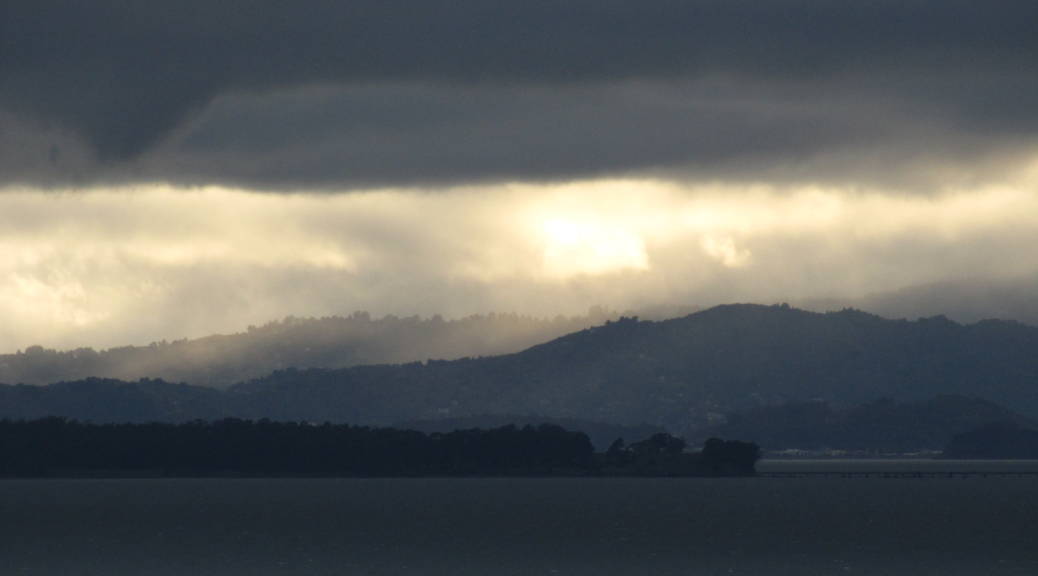
Rain comes late to Northern California: A March storm front hovers over San Pablo Bay, north of San Francisco.

Last week’s State of the Climate report issued by the National Oceanic and Atmospheric Administration found that this winter is stacking up as the warmest since 2000 and the fourth warmest on record in the contiguous United States.

According to NOAA, 47 of 48 states experienced above-average temperatures in the period between December and February, with the greatest increases seen in the Northeast and Midwest.

Only New Mexico saw below-average temperatures. Continue reading This Winter Looking Like Fourth Warmest for Lower 48

Life After Wildfire: Studying How Plants Bounce Back

After a fire at a California state park, volunteers used satellite imagery to study the recovery

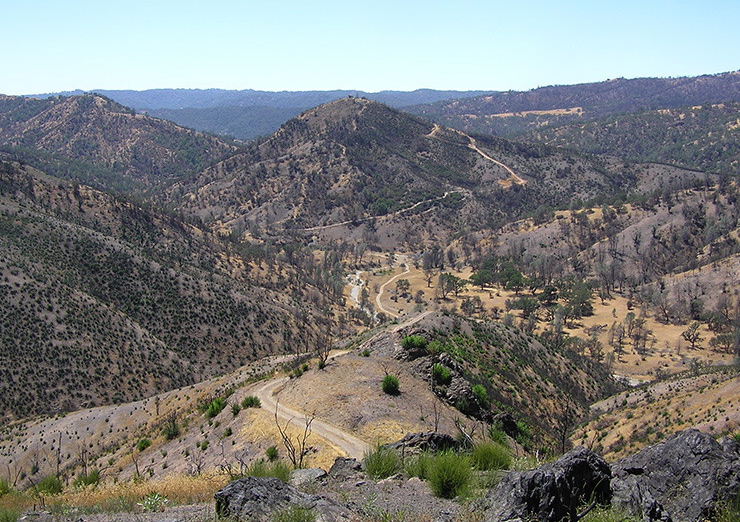
Henry Coe Park in Santa Clara County is big: 87,000 acres of former ranch land, dotted with oak trees, meadows that burst with wildflowers each spring, and vast stretches of chaparral. Given that Coe is nestled near Silicon Valley, it makes sense that the retirees who volunteer here bring a certain technical bent to their appreciation of the place.

Case in point: the Lick Fire of September 2007 (Craig Miller reported on it for The California Report). Named the Lick Fire after it was first spotted from the nearby Lick Observatory, the wildfire burned 47,760 acres in the Mt. Hamilton Range by the time it was contained, eight days later.

Since then, citizen scientists who volunteer for the park have been paying close attention to see how the burned land bounces back. In particular: Bob Patrie, a former project manager in Silicon Valley, and Winslow Briggs, Director Emeritus at Carnegie Institution of Washington’s Department of Plant Biology. Together, they’ve pored over satellite imagery to document the impact of the fire on various plant communities in Coe Park.

Continue reading Life After Wildfire: Studying How Plants Bounce Back

La Niña on its Way Out, but so Is Winter

La Niña is weakening, but don’t hold your breath for a “March miracle”

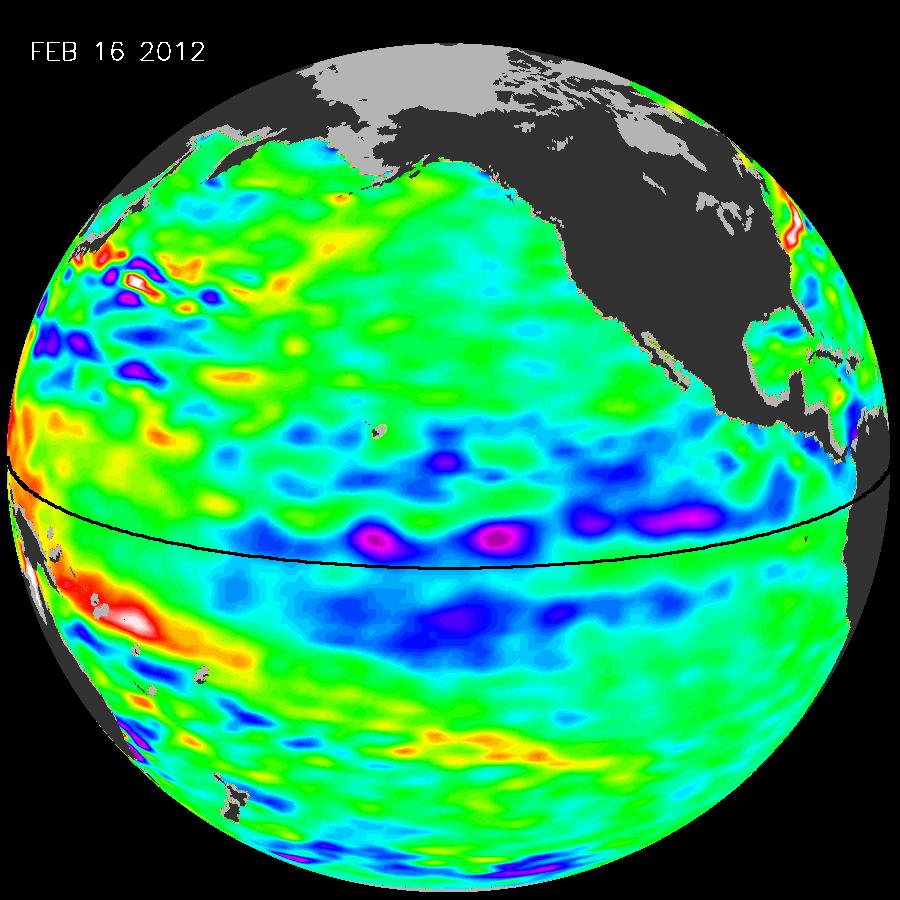
This image shows La Niña conditions from last month, collected by NASA's Jason-2 satellite.

This has been a historically dry winter, dry enough that it’s likely to land a spot as one of the top ten driest since the Gold Rush. And even though La Niña is waning, that probably won’t make much of a difference, because there’s a delay between when ocean surface temperatures change, and when that change actually has an effect on our weather.

“March 20 is just around the corner, and that’s the first day of spring. Our winter — our snowpack and our rain — is essentially over,” NASA Jet Propulsion Laboratory climatologist Bill Patzert told me. Though Patzert’s observation comes as three Pacific storms are poised to potentially bring a week of rain to Northern California, he said, “a weakening La Niña won’t necessarily give us a March miracle in terms of snowpack and rainfall.”

La Niña is caused by colder-than-average ocean surface temperatures in the equatorial Pacific. It typically makes for warm, dry winters in California. But not always. Last year was also affected by La Niña, and it was historically wet.

Continue reading La Niña on its Way Out, but so Is Winter

Pacific Institute’s Peter Gleick Breaks Silence

Beleaguered climate scientist emerges but stays mum on Heartland

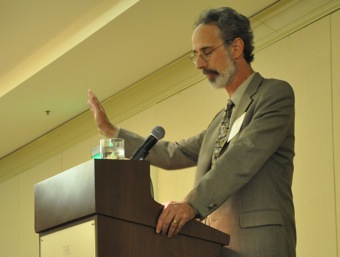
Pacific Institute founder Peter Gleick steered clear of his current controversy in his remarks at a water policy conference in L.A.

Nearly three weeks after admitting that he had faked his identity to obtain documents from a conservative think-tank, noted California scientist and president of the Pacific Institute, Peter Gleick, returned to the public arena.

Gleick spoke at the annual California Water Policy Conference in Los Angeles and was warmly received by a crowd of roughly 300 California scientists, regulators and advocates.

Notably missing from Gleick’s talk — which focused on a wide range of global and regional water issues central to the Pacific Institute’s core mission — was any specific mention of last month’s confession that he had impersonated of a board member of the Chicago-based, libertarian Heartland Institute to obtain internal documents outlining the group’s anti-climate change campaign. Continue reading Pacific Institute’s Peter Gleick Breaks Silence

Should NOAA Focus on Climate or Weather Research?

House Republicans question NOAA chief on her agency’s priorities

Satellite imagery shows the storm that spawned tornadoes across the Midwest earlier this month.

Jane Lubchenco, director of the National Oceanic and Atmospheric Administration, answered questions about the agency’s budget today in a hearing held by the House Subcommittee on Energy and the Environment.

Lubchenco began by sending her condolences to people who lost loved ones to the tornadoes that tore across the Midwest in the past week. This year, she said, now ranks in the top five for the number of tornadoes occurring in the first two months of the year. She said making the nation “weather-ready” is a top priority in her budget request for Fiscal Year 2013, which comes to $5.1 billion, an increase of $153 million over last year’s.

Not all programs get more money in the budget request. NOAA is asking for nearly $20 million less than last year for the National Weather Service (NWS), a point with which Andy Harris, Maryland Republican and chair of the subcommittee, took issue.

Continue reading Should NOAA Focus on Climate or Weather Research?

Fuel Cell Reality Check: A Blooming Solution at Caltech?

The “Bloom Box” may be moving one step closer to affordability at Caltech — but is it even close to tipping point for the mass market?

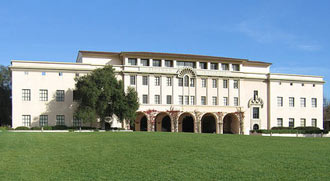
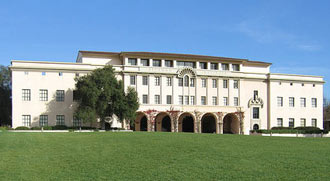
Caltech needed more generation capacity to meet the demands of its energy-intensive research.

Sunnyvale-based Bloom Energy made a big splash in 2010 when it came out of stealth mode – on the CBS program 60 Minutes no less – and announced its high-efficiency fuel cell, spawned by a NASA project for Mars. It has earned an impressive roster of clients including Google, eBay and Walmart.

But beyond the inevitable skeptics, the really big catch? “Bloom Boxes,” as the fuel cells have been dubbed, have a price tag of around $700,000. Hardly affordable for all but the largest companies with plenty of cash.

Yet California Institute of Technology, the private research university generally known as Caltech, had twenty Bloom Boxes installed on its Pasadena campus in 2010. Each box now produces 100 kilowatts of electricity for a total of two megawatts capacity; or 17% of the university’s electricity demand.
Continue reading Fuel Cell Reality Check: A Blooming Solution at Caltech?