New Bill Would Make Confidential Groundwater Info Public

Documents include details on depth and location of wells in California

A well on a farm in the Central Valley. Groundwater accounts for 30-to-40 percent of all water used in California.

[POST UPDATED, 4/3, 5:04pm]

It’s no secret that with several recent years of drought, California’s groundwater supplies have come under increasing strain. But Dennis O’Connor, a water consultant with the State Senate Natural Resources and Water committee, wants to rewrite an arcane piece of California water law that, for decades, has kept documents containing information on the state’s groundwater resources under wraps.

The documents O’Connor wants released to the public are called well completion reports, or “well logs” – technical documents filed by well drillers with the state. Under California water law, well logs are confidential, accessible only by individuals in state agencies or those who meet special criteria.

“These logs are rich sources of information. The data can help you connect the dots and create a three-dimensional picture of what’s going on underground,” O’Connor told me. Logs contain data on the depth, location and geology of the sites as well as engineering details such as the kind of casing used and the angle of drilling.

Continue reading New Bill Would Make Confidential Groundwater Info Public
California Delays First Cap & Trade Permit Auction

State will start with a dry run while questions remain about how to spend the money

Starting next year, industries will have to track their greenhouse gas emissions and some will have to pay for carbon pollution rights.

Mary Nichols, chairwoman of the California Air Resources Board (ARB) announced at a state senate hearing that the first carbon permit auction will be pushed back to November 14th.

The surprise announcement came at a hearing called to discuss what to do with proceeds from the sale of permits to emit greenhouse gases, the first of which is expected to flow into state coffers late this year.

Nichols’ announcement stole the headlines, though she said that the new auction date will not affect the overall timeline for implementation and that August will now be a “practice auction.”

“We’ll give everybody a free round in August where the auction won’t really count,” Nichol told me. “So that gives all the stakeholders, including of course, all the companies that are going to have to be purchasing allowances at the beginning an opportunity to see how the system will actually work.” Continue reading California Delays First Cap & Trade Permit Auction

Survey: Waning Support for Alternative Energy Among Westerners

Meanwhile, support for mining and drilling has gone up

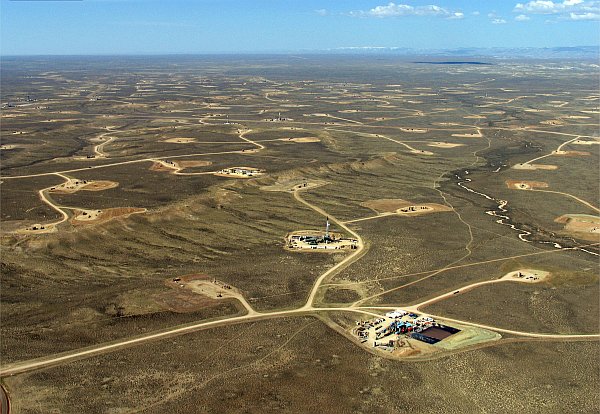
Wells stretch to the horizon in a Wyoming gas field. A recent Pew survey found increased support in the West for expanded gas and oil drilling.

As gas prices surge, support is waning for alternative energy sources, according to a survey from the Pew Research Center released last week. The decline has been particularly pronounced in the western U.S., a region characterized in previous surveys by strong support for alternative energy.

Ebbing enthusiasm for alternatives, according to the survey, is coupled with greater support for “traditional” gas and oil development. In a survey last year conducted by Pew, 73% of Western respondents said they supported increased development of alternative energy, while only 19% were in support of increased development of traditional sources such as oil, gas and coal.

Fast-forward a year. With the price of gas nationwide averaging close to $4 per gallon – up nearly 9% from the same period last year – the percentage of respondents in support of alternatives declined by 20 percentage points, whereas support for expanding mining and drilling jumped by 20 points, to 39%.

Continue reading Survey: Waning Support for Alternative Energy Among Westerners

EPA’s New Carbon Rule Doesn’t Do Much in CA

California enacted similar limits to pollution from power plants in 2006

The EPA's new rule limits carbon emissions from new power plants nationwide.

The US Environmental Protection Agency will, for the first time, begin restricting greenhouse gas emissions from fossil fuel-fired power plants. The EPA’s new standard limits how many pounds of carbon can be emitted per megawatt-hour of electricity generated. It doesn’t apply to existing power plants or to new plants that have already been permitted, and natural gas-powered plants should be able to meet the standard without changes. But coal-powered plants will no longer make the cut without adding carbon capture and sequestration technology.

This won’t have much of an effect on California’s energy industry, Dave Clegern from the California Air Resources Board told me, though he’s not complaining. “It’s always good to see a national standard, and we’re glad the EPA is doing it.”

Former governor Arnold Schwarzenegger signed a similar standard for power plants in California back in 2006. The state gets very little electricity from coal-powered plants, and the coal-fired power California residents do use comes from outside of California.

Continue reading EPA’s New Carbon Rule Doesn’t Do Much in CA

Coastal Erosion in SF Prompts Planning and Debate

City planners are looking at ways to reconfigure the city’s western edge

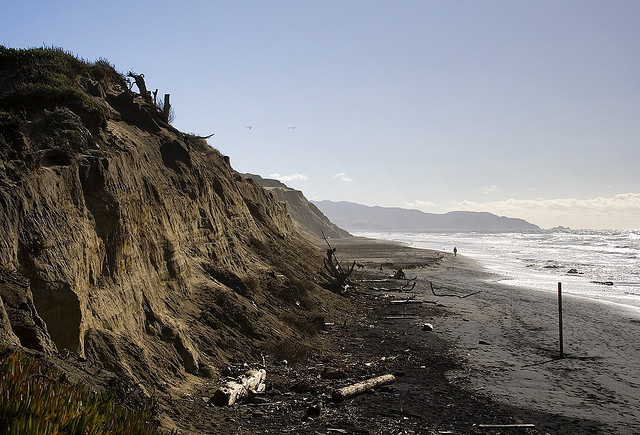
One of the challenges for the Ocean Beach Master Plan is how to slow the erosion of Ocean Beach's sandy cliffs.

San Francisco’s Ocean Beach is eroding; that’s not up for debate. But planners are still figuring out the best way to handle the erosion that’s already happening, and how to prepare for sea level rise. And that’s going to take a lot of planning: Ocean Beach itself is part of the Golden Gate National Recreation Area, managed by the National Park Service, but there are also the nearby residential neighborhoods to consider; plus the Great Highway, a wastewater treatment plant, the parking lot at the beach, endangered species, surfers, dog walkers and the occasional hopeful sun bather.

The Ocean Beach Bulletin, a local news site and one of KQED’s News Associates, has been covering the development of the new plan for San Francisco’s coastline, called the Ocean Beach Master Plan, which will attempt to address erosion and rising sea levels, while balancing the myriad social and environmental needs.

Over the weekend, the New York Times weighed in, too:

Continue reading Coastal Erosion in SF Prompts Planning and Debate

Wet Enough For Ya? California Precip Makes Sprint for the Finish Line

The rainy weather has helped, but the state’s still in deficit for the year

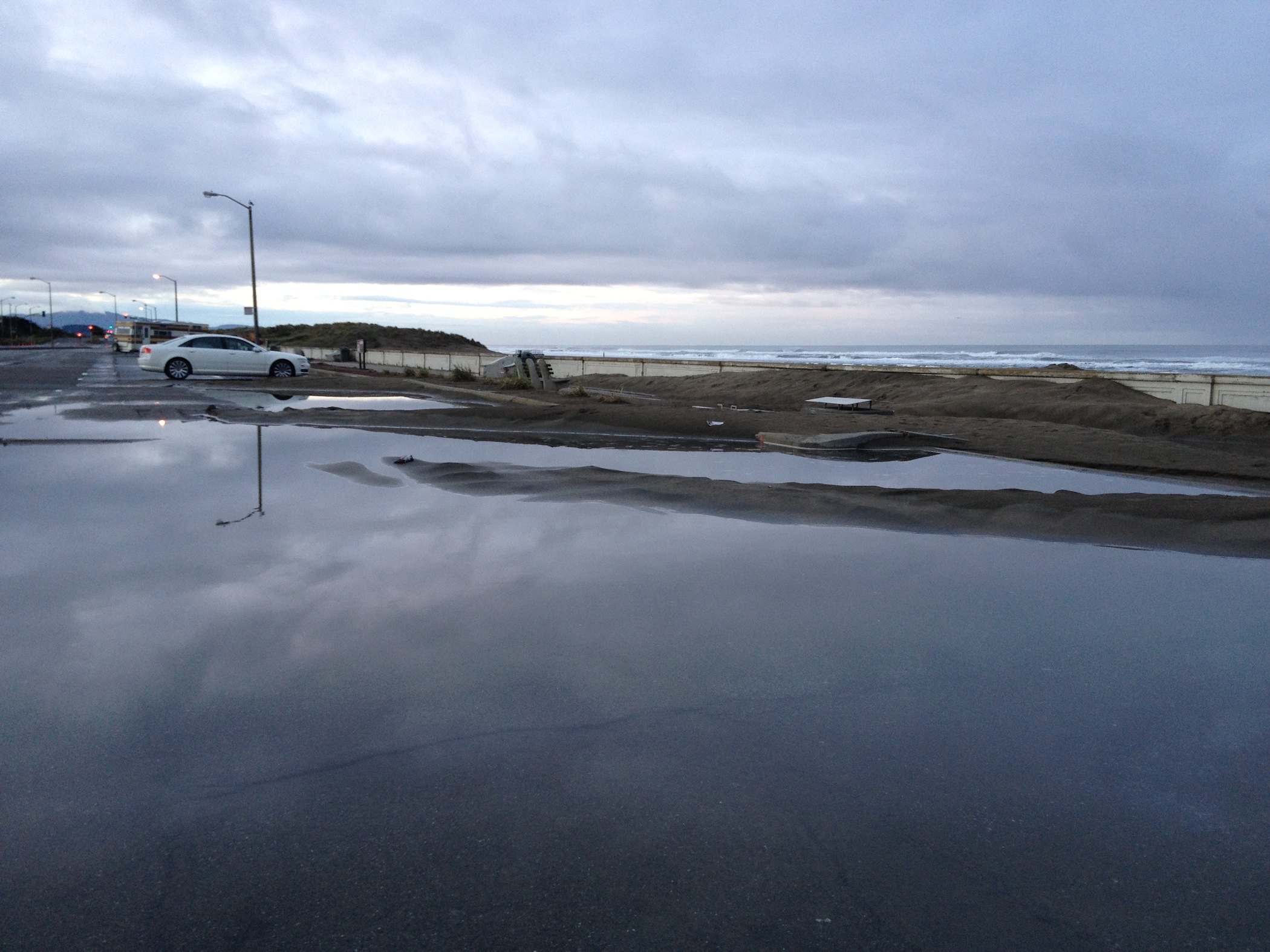
Heavy rain flooded the parking lot at San Francisco's Ocean Beach over the weekend.

California’s water supply is in better shape after this weekend’s storms and the wet weather earlier in the month (though the parking lot at San Francisco’s Ocean Beach is in worse shape). The water content of California’s snowpack is hovering around fifty percent of what’s considered “normal” for this time of year — not quite cause for celebration but much better than it had been; on February 28, the date of the most recent manual snow survey, water content was only 30% of normal.

So this winter isn’t going to be the driest on record, or even the second-driest, but it’s bound to be on the dry side, regardless of what happens now. It’s just too late in the year to catch up, even with more storms heading our way this week.

Continue reading Wet Enough For Ya? California Precip Makes Sprint for the Finish Line

At the Blunt End of the Hockey Stick: Q&A with Michael Mann

A reluctant combatant in the “Climate Wars” has learned to embrace the role

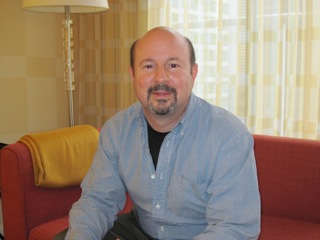
Michael Mann, the climate scientist, not the movie director.

Anti-intellectualism isn’t a new phenomenon in America. But the current war of words over climate science has taken on the tone of a religious war. Comments on this very blog often testify to that. As some scientists have discovered, the war has escalated beyond words, to tactics that include espionage, intimidation, and even attempts at prosecution.

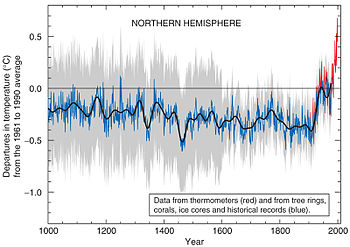
For several years, Michael Mann has been on the front lines of this conflict. Though he says he finds himself a combatant more by conscription than enlistment, the Penn State climatologist has made it the subject of his recent book, The Hockey Stick and the Climate Wars. Continue reading At the Blunt End of the Hockey Stick: Q&A with Michael Mann

Why Shell Oil Supports California’s Climate Change Legislation

Shell CEO is pro-AB 32, but stands by taking legal action against environmentalists in Alaska

Shell has partnered with MIT to explore carbon sequestration.

Royal Dutch Shell CEO, Peter Voser affirmed his company’s commitment to AB 32, California’s climate change legislation, and also explained why a carbon trading system is crucial to the development of alternative energy sources.

“We are clearly in favor of cap and trade systems,” he said to an audience of Silicon Valley business people and climate experts Wednesday in Burlingame. “We’d like to have it globally, to level the playing field.”

This statement from Shell, the global oil and gas company headquartered in the Netherlands and one of the world’s largest companies, is notable when you consider the strong opposition to AB 32 from the oil industry at large. In 2010, Proposition 23 attempted to derail the imposition of AB 32 provisions and was largely bankrolled by Tesoro and Valero, two Texas oil companies.

Continue reading Why Shell Oil Supports California’s Climate Change Legislation

How Much Carbon Do California’s Forests Hold?

It’s a tough number to nail down, but a federal program is zeroing in on it

Trees, grasses and freshwater aquatic systems all play a part in the carbon cycle.

The U.S. Geological Survey is developing a series of reports on how much carbon and other greenhouse gases the nation’s ecosystems hold. Trees and plants, soils and rivers, farms and wetlands all sequester carbon to greater or lesser extents. But how much? And how might that number change in the future? That’s the crux of the USGS study, which was initiated by the Energy Independence and Security Act of 2007 [page 223 of the PDF]. (There’s a simultaneous study, also by the USGS, to assess geologic carbon sequestration).

The national assessment will include details on greenhouse gas sequestration nationwide: how much carbon is stored now, how that carbon sink might be altered by different land use scenarios in the future (for example, increased or decreased logging, urbanization, wetland restoration efforts or agriculture), plus impacts from other sources, such as wildfire and climate change.

Continue reading How Much Carbon Do California’s Forests Hold?

Humans and the History of Water

Q & A With Brian Fagan, archaeologist and author of Elixir: A History of Water and Humankind

The Sacramento-San Joaqiun Delta provides water for tens of millions of Californians.

While many work to understand the world’s current water problems with a laser focus on the present, a few, such as University of California at Santa Barbara emeritus professor of archaeology, Brian Fagan, have chosen to look back, at the water engineering efforts of past civilizations. In his recent book, Elixir: A History of Water and Humankind, Fagan finds striking historical parallels to California’s myriad challenges.

He agreed to answer some questions for Climate Watch.

JEREMY MILLER: In previous books such as The Long Summer and The Great Warming you have written about the influence of climate on ancient civilizations. How did you decide to make water the focus of your latest book, Elixir? Did living in California play any part in your decision?

BRIAN FAGAN: I got into the history of water as a result of giving a talk to the California Water Policy Conference on medieval drought, where some participants strongly encouraged me to undertake such a history.

Two experiences have shaped my perspective on water. The first was living in East and Central Africa for six years when I lived among subsistence farmers and saw the problems of drought first hand. The second is, of course, California, which has a classically erratic rainfall pattern that varies greatly one year to the next. In both cases, I learned just how precious water is to us.

Continue reading Humans and the History of Water