All posts by Craig Miller

Craig is a former KQED Science editor, specializing in weather, climate, water & energy issues, with a little seismology thrown in just to shake things up. Prior to that, he launched and led the station's award-winning multimedia project, Climate Watch. Craig is also an accomplished writer/producer of television documentaries, with a focus on natural resource issues.

Climate Watch Joins New KQED Science Unit

Move forms California’s largest science & environmental unit for electronic media
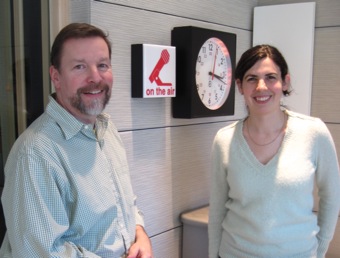
Climate Watch Sr. Editor Craig Miller with Producer Molly Samuel in the KQED studios.

After four years, numerous awards, and something just shy of 900 blog posts, the multimedia reporting effort that’s been known as Climate Watch is turning a significant page. KQED is combining our efforts with Quest, the station’s more broadly-based science and environmental news and programming effort.

We’ll continue to cover climate-related issues, as evidenced by the recent rollout of Heat and Harvest, a major multimedia project with the combined resources of Climate Watch, Quest and the Center for Investigative Reporting. Through a documentary now airing on public television stations throughout California, radio features on The California Report and an extensive lineup of online features, Heat and Harvest examines some of the ways in which climate change is already challenging farmers in the Golden State. Continue reading Climate Watch Joins New KQED Science Unit
Autumn Makes a Sultry Entrance

California’s heat wave came late and is staying late

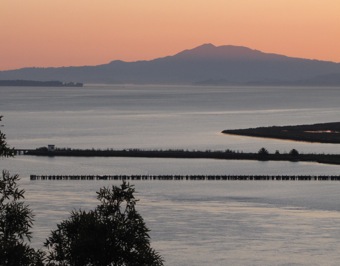
Sunset on San Pablo Bay. Coastal areas saw a balmy end to September, accompanied by air quality alerts.

The Great American Heat Wave of 2012 arrived later in California than in many parts of the country — and it’s in no hurry to leave.

Having nudged the upper 90s on Sunday, Sacramento closed out the month of September with a record 26 days of 90-plus highs, surpassing the 1974 record of 24 days. The trend is forecast to continue into the first several days of October, with a chance of hitting 100 for the first time since mid-August. Farther north, Sacramento Valley towns like Redding and Red Bluff are suffering similar bake-offs. Continue reading Autumn Makes a Sultry Entrance

California’s Farm Belt Didn’t Dodge the Summer Heat Wave

Abnormally warm summer temperatures were felt across much of interior California

By Nicholas Christen and Craig Miller

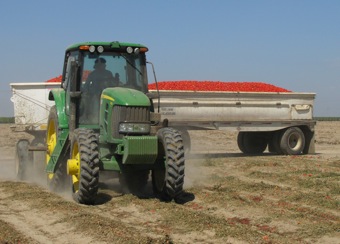
Even tomatoes can only take so much heat. A belt from Bakersfield to the northern Sacramento Valley produces a third of the nation's canning tomatoes.

Autumn is here, so says the calendar. Living on the coast, it might be easy to think that California escaped the heat wave suffered by much of the nation this summer. While that may be true for most of the large coastal population centers, it was a different story for much of the state’s interior farm belt.

Throughout June and July, even Central Valley spots escaped much of the heat felt by the Great Plains, though Cal Expo officials blamed the heat, in part, for tamping down attendance at the state fair. Then things heated up quickly — especially in the Sacramento and San Joaquin Valleys — through August and into September.  Valley towns including Redding, Red Bluff, Sacramento, Merced, Madera, Fresno, and Bakersfield, have been on the order of three-to-five degrees above normal for the duration of August and September. Continue reading California’s Farm Belt Didn’t Dodge the Summer Heat Wave

Animation: The Arctic’s Record-Breaking Ice Melt

Arctic sea area covered by ice sets new low

 ” credit=”Nat’l Snow & Ice Data Center

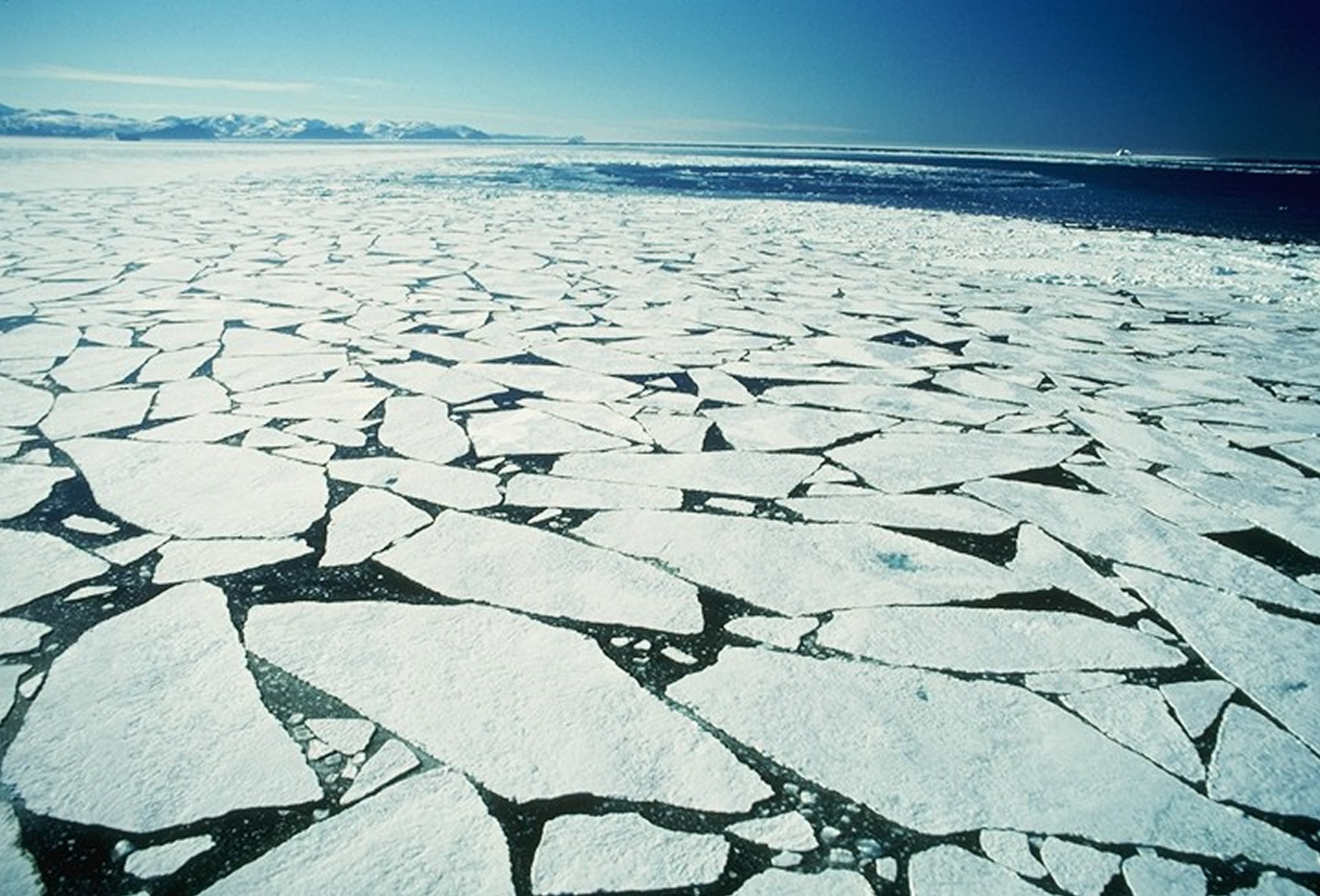
NOAA has created a startling animation of this year’s record shrinkage of ice in the Arctic Ocean. The 34-second clip zooms in from a western hemisphere view and presents as a time-lapse, tracking the ice from January 1 to September 14. This is the first time since NOAA started using satellites to monitor the Arctic in 1979, that sea ice area has shrunk to less than 4,000,000 square kilometers. What happens in the polar regions has a profound effect on the world’s climate.

Studies: Offshore Wind Potential is Huge

Harnessing wind offshore and at higher altitude could meet all electricity needs — theoretically

The U.S. has lagged behind other developed countries in capturing offshore wind for electricity..

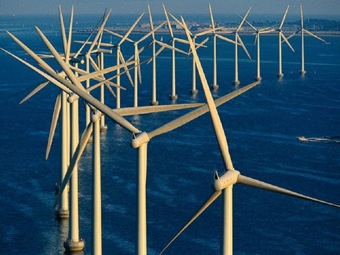
The U.S. has lagged behind European countries in capturing offshore wind for electricity, but a spate of recent studies suggest that a bigger push might be in order.

The latest, from Stanford civil & environmental engineer Mark Jacobson concludes that off the East Coast alone is enough moving air to meet a third of the entire nation’s energy needs.

Running out the string quite a bit further, studies from Stanford and Lawrence Livermore National Lab point to a breezy bounty offshore and at higher altitudes that could theoretically power the planet, perhaps as soon as 2030.

Of course, that would take four million powerful turbines. Continue reading Studies: Offshore Wind Potential is Huge

Jerry Brown’s Anti-Anti-Climate Science Site

California governor posts a direct rebuttal to climate change contrarians

Governor Brown is pushing back against those who deny the evidence for climate change and this week, used a Lake Tahoe environmental conference to say that he’s taken his campaign online.

Jerry Brown's new website is a countermeasure against climate science "deniers."

The Governor has long been a vocal supporter of climate action but his new “Just the Facts” website represents his most definitive reaction against what he calls “the deniers” of widely accepted climate science.

About half the site is devoted to a rehash of the evidence that global warming is real and effects are happening now. The other half is a rebuttal to climate science contrarians, whom the site describes as, “a small-but-vocal group” that “has spread misinformation about the science, aiming to cast doubt on well-established findings and conclusions.” Continue reading Jerry Brown’s Anti-Anti-Climate Science Site

Nuclear Woes Could Create a Window for Geothermal Energy

Industry looks for inroads in a “stalled” California market

One of California’s two nuclear power plants remains offline amid roiling speculation about its future. At a geothermal energy conference in Sacramento this week, the head of California’s Independent Energy Producers association put the odds of the San Onofre Nuclear Generating Station (SONGS) “ever” coming back online at 50/50.

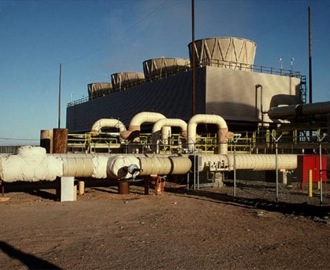
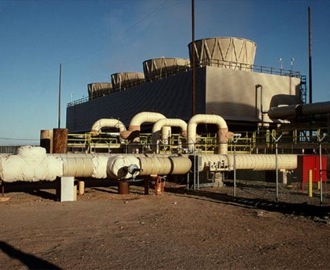
A "flash steam" geothermal plant in East Mesa. Geothermal plants tap the heat energy underground to produce steam for electricity.

The odds matter because nuclear plants provide so-called “baseload” power, which is to say that they produce electricity 24/7 — when they’re on. Geothermal power — tapping energy from underground sources of heat — also has the virtue of being baseload. While geothermal plants can lose potency during the hottest part of the day, they don’t stop producing completely. Solar and wind are considered “intermittent” sources as they’re at the mercy of the sun shining and wind blowing.

At this week’s meeting of the Geothermal Energy Association, there was visible consternation over geothermal being the odd man out in California’s race for renewables, even though the Golden State is endowed with the most geothermal capacity in the nation. Continue reading Nuclear Woes Could Create a Window for Geothermal Energy

No Relief in Latest California Climate Assessment

But hope persists that we can blunt the worst impacts, if not slow down the warming

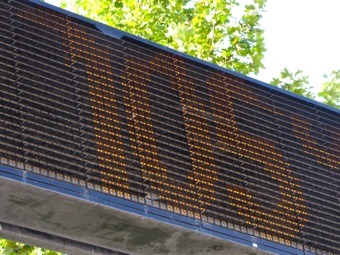
The new normal? A temperature display in the Kern County town of Taft shows 105 degrees on a late afternoon in July.

Granted, it’s been a relatively cool summer in many parts of California. But state officials are saying, “Don’t get used to it.” How would you like to see the number of “extremely hot” days (105 or hotter) in Sacramento increase fivefold in the next few decades? That’s just one of many new projections from the state’s latest official climate assessment.

One hundred-twenty scientists worked on the report, entitled California’s Changing Climate (PDF). Funded by the California Energy Commission, it’s actually a portfolio of studies and contains some of the most specific warnings we’ve seen. For instance, it projects that going forward, average temperatures in the state will warm at three times last century’s pace. It’ll mean heat waves happening more often and lasting longer. Continue reading No Relief in Latest California Climate Assessment

Precipitation Trends Reveal a New North-South Split in California

“Extreme” rain and snow events happening more often in the south, less often up north

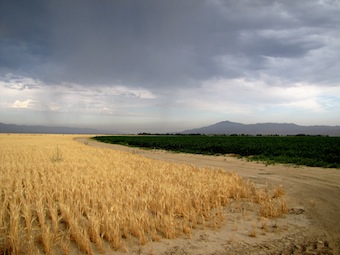
Rare summer rain clouds approach a farming valley near the Coast Range, west of Bakersfield.

A new report suggests that global warming is playing out quite differently in California, depending on whether it’s north or south of San Francisco Bay.

The project, by the Environment California Research & Policy Center, studied precipitation trends between 1948 and 2011, with an eye on “extreme” events — storms that dumped unusual amounts of rain or snow on the state.

They found a dichotomy in California — but not the usual “north has all the water” split. It turns out that north of San Francisco Bay, the extreme precipitation events were happening 26% less often, but south of the Bay, they were happening 35% more often. The authors calculate that a storm that used to come along once a year on average, is happening more like once every nine months to the south, which includes the Central Coast. In fact, Santa Barbara showed the biggest increase in frequency, 72% since 1948. Continue reading Precipitation Trends Reveal a New North-South Split in California

Combatants in New CA Water War Dig In

 Opponents call Governor’s Delta plan “plumbing before policy” and “a wink and a promise”

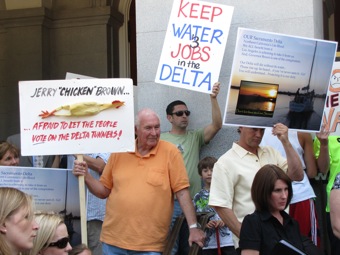
Opponents to Governor Brown's Delta plan were gathered on the Capitol steps within an hour of the announcement.

You can hear a one-hour discussion of the proposed Delta plan on KQED’s Forum.

“You’ve launched a war. We’ll fight the battle,” was the rallying cry from congressman John Garamendi, within hours of the announcement of Governor Jerry Brown’s revised plan for California’s already embattled Sacramento-San Joaquin Delta.

Brown was flanked by U.S. Secretary of the Interior Ken Salazar and officials of the National Oceanic & Atmospheric Administration in rolling out a plan which Brown’s Natural Resources Agency says, “will undergo a rigorous public environmental review.” The plan’s centerpiece is a long-debated tunnel to shuttle water from the Sacramento River, north of the Delta, to the vast plumbing system that carries water to farms in the San Joaquin Valley and cities in Southern California. The conveyance is touted as a way to protect fish from the voracious pumps that fill the canals heading south. Continue reading Combatants in New CA Water War Dig In