All posts by Craig Miller

Craig is a former KQED Science editor, specializing in weather, climate, water & energy issues, with a little seismology thrown in just to shake things up. Prior to that, he launched and led the station's award-winning multimedia project, Climate Watch. Craig is also an accomplished writer/producer of television documentaries, with a focus on natural resource issues.

Is Hydroelectric Power a ‘Renewable’ Energy Source?

Most California hydro doesn’t count toward utilities’ renewable energy mandates. Should it?

Tricky waters: a kayaker navigates the surge at the outlet of the Oxbow Powerhouse on the upper American River.

It’s a fair question and one that a reader posed during our recent series on “Water and Power” in California. Hydro has its virtues. It’s clean, once it’s built; producing hydropower creates no significant greenhouse gas or other emissions. And it’s certainly “renewable” as long as the water flows. But it’s not without its environmental impacts, especially where large “terminal” dams are involved (the kind that fish can’t get past).

In fact, state regulators divide the resource into “large” and “small” hydro, the latter being defined as anything producing 30 megawatts of power or less. Utilities can count small hydro toward their mandated Renewable Portfolio Standard (RPS) but not the bigger operations. But why? Continue reading Is Hydroelectric Power a ‘Renewable’ Energy Source?
Hydropower With a Shrinking Snowpack

And why that could show up in your electric bill

We’ve mapped all of California’s hydropower dams as part of our series on “Water and Power.”

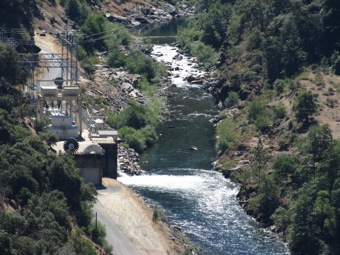
PCWA's Ralston Powerhouse on the Rubicon River in Placer County. California typically gets about 15% of its electricity from hydro facilities inside the state..

While much is uncertain about California’s warming climate, there is little doubt that it’s already changing the fundamentals of how most of us get our water. In fact, the Bureau of Reclamation has estimated that the Sierra snowpack could be reduced by half as soon as a decade from now.

And that has some far-reaching implications that could even show up on your electric bill.

“When you hear people talk about a depleted snowpack, it’s because of warmer temperatures and the snow just cannot stay in the hills,” says Robert Shibatani, a hydrologist and consultant to numerous government agencies. He says the “hydrograph” for California — the “usual” pattern of precipitation and runoff — is already changing. “There’s no question about it,” he told me in a recent interview. “That’s not an if. It’s not even a when, because I can tell you the when. It’s happening now.” Continue reading Hydropower With a Shrinking Snowpack

Richard Muller: Yep, Still Skeptical

Tagged by some as a “convert” to global warming, the Berkeley physicist talks about his work, some of its controversial funding, and his views on renewable energy

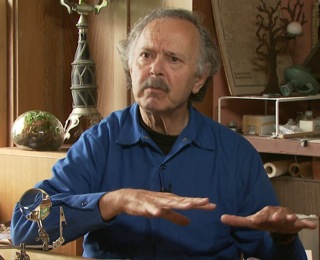
While Richard Muller has come around on global warming, he remains skeptical toward many aspects of climate science.

The outcome of Richard Muller’s sweeping independent audit of temperature data surprised a lot of people — including him. Known as the Berkeley Earth Surface Temperature study, or BEST, the project was rooted in Muller’s own skepticism toward some of the key data underlying conclusions that the UN’s influential climate panel has drawn about global warming.

The author of two books worth of science advice “for future presidents” now concedes that “global warming is real,” but he remains skeptical about a lot of things, like:

  • The objectivity of some of his colleagues
  • The link between climate change and severe weather
  • The future of some renewable energy sources, like solar thermal and geothermal

In the video clip (below), Muller talks about the perils of accepting scientific findings at face value.

Here are some more excerpts from our recent conversation: Continue reading Richard Muller: Yep, Still Skeptical

Muller on Climate: It’s All About China

Forget California, says the outspoken Berkeley physicist. It’s what China does that matters

Richard Muller

Despite some well-publicized recent conversions on climate matters, Richard Muller’s reputation as a climate skeptic is well earned. In two books, one published and one forthcoming, the UC Berkeley physicist offers counsel on physics and Energy for Future Presidents.

One thing Muller is highly skeptical of is California’s legislated climate strategy, a perspective that he laid out for me in a recent interview at his home in the Berkeley Hils. What matters, he says, is what China does. And little else:

CM: The point here is, and you’ve written about this, is that California can’t save the world in terms of cutting emissions, that no matter what we do, what matters is what China’s doing.

RM: Certainly, California is far too small a part of the global warming problem that anything we do here cannot really help. Even setting an example is something that, I think, is not something we are going to do. But if we can develop an industry that lowers the price of solar cells that lowers the price of wind, that makes nuclear safe, if we can do those things, then that could have a real impact on the future. Continue reading Muller on Climate: It’s All About China

A More Agreeable Climate for Iowa

The ship, not the state

The USS Iowa being readied for towing from Richmond to San Pedro, CA.

This has nothing to do with climate as we usually cover it here and everything to do with Memorial Day. But somewhere off the California coast, the battleship USS Iowa is on its final voyage to become a floating museum in San Pedro. That’s a long way from speculation a couple of years ago that she would become a reef at the bottom of some ocean.

People like Bob Rogers were not about to let that happen. “She’s the last of the dreadnoughts,” says Rogers, who led one of several efforts to save the Iowa from scrapping or sinking. “She was a true ship-of-the-line, designed to go toe-to-toe with any ship, including the enemy’s largest, slug it out and survive.” And survive she did, through five decades and three wars. And though Rogers’ campaign to land her for Stockton was not successful, he’s just glad she found a good home after eleven years in limbo. “She’s going to a great place,” he told me, on the ship’s final morning in Richmond. “We all had the same goal. We wanted to see this ship saved.” Continue reading A More Agreeable Climate for Iowa

Fire Season Off to a Roaring Start

Wildfire response in California doubling last year’s pace — with fewer resources

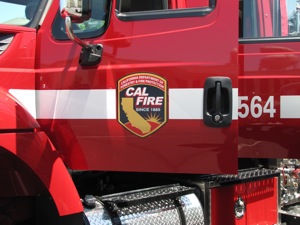
For the second straight year, CalFire is running its engines with reduced staffing.” credit=”Craig Miller

Get ready for what might be a nasty season for wildfires in California. Though few have made big news so far, CalFire says that its crews have already responded to more than 1,000 fires this spring — that’s double the pace from a year ago and well ahead of the five-year average.

And fires aren’t the only challenge. State firefighters are already trying to do more with less. CalFire is working with a smaller budget and reduced staffing on its engines.

“It’s tough,” says Clare Frank, CalFire’s assistant deputy director. “I won’t say we’re unimpacted. We’re doing our best to minimize the impact on the public.” Frank says that so far, budget cuts have not affected the agency’s basic attack strategy in the field. “We’re still going to pursue our goal of keeping 90% of the fires at 10 acres or less,” Frank told me after an inter-agency briefing on Wednesday.” “We want to keep small fires small, we want to hit them hard with initial attack, and that strategy remains the same.” Continue reading Fire Season Off to a Roaring Start

Cap-and-Trade and Your Electric Bill

State rebates could offset electrical sticker shock, finds a new study

Forcing utilities to pay for their carbon emissions, as California plans to do, will mean more costly megawatts. Six months before formal compliance with the state’s new cap & trade system begins, regulators are still sorting out what to do about that.
One of them is to provide rebates to offset hikes in electric bills. A new report from the clean-economy advocates, Next 10 attempts to sort out the options and put some concrete numbers on them. For example, the authors estimate that for PG&E customers, pricing carbon will add somewhere from two-to-seven dollars a month to summer electric bills, and anywhere from $2.50-to-more than $10 for customers served by Southern California Edison. Where you fall in that range depends in part on which of California’s many climate zones you live in. Places like the Inland Empire, which rely more on air conditioning, would fall in the upper end of the range. Continue reading Cap-and-Trade and Your Electric Bill

A Visual Deep Dive into California’s Delta

Ambitious mapping & data effort accompanies KQED multimedia series

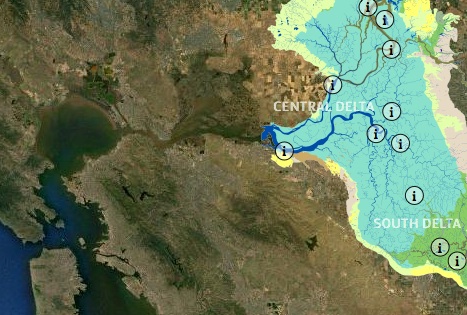
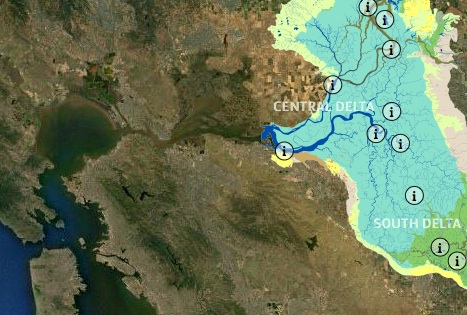
"Deadlocked Delta" is a multilayered look at where much of California's water comes from.

If, like most Californians, you’re a bit fuzzy on why the Sacramento-San Joaquin Delta matters to you, take a tour through the impressive new online resource from KQED’s science unit, the San Francisco Estuary Institute, and Stanford’s Bill Lane Center for the American West.

“California’s Deadlocked Delta” is more than a data trove for water geeks, it’s a visually pleasing deep dive into the single most important piece of California’s persistent water puzzle. It provides some eye-opening glimpses of how this critical intersection for the state’s freshwater supply has changed over generations. Continue reading A Visual Deep Dive into California’s Delta

First Real Partner for California’s Cap & Trade Program

Quebec takes the plunge with California to swap carbon emissions permits

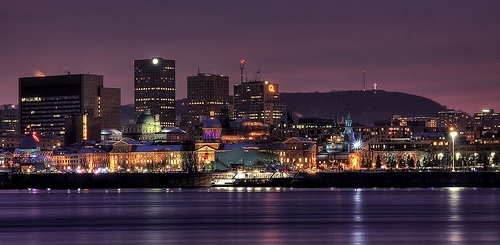
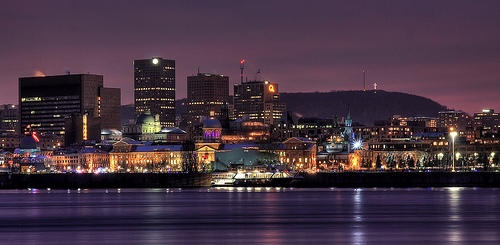
Montreal at sunset: Quebec's economy is about one-sixth that of California.

Quebec has emerged as California’s first full-blown partner in the carbon trading program that ramps up later this year. That means that, pending final approval next month, when the two governments issue their first round of greenhouse gas pollution permits in November, industrial buyers will be able to use them both interchangeably. Continue reading First Real Partner for California’s Cap & Trade Program

Iconic Icebreaker Makes Last Voyage — to Scrapyard

A reminder of U.S. vulnerability in the polar seas?

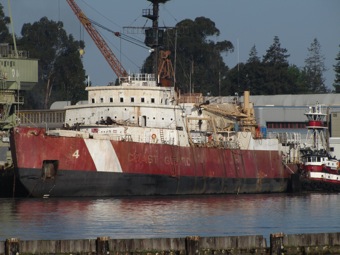
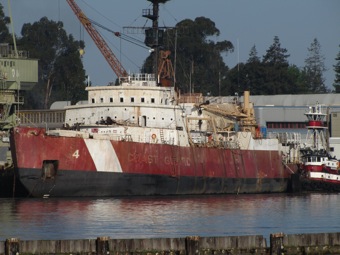
The retired Coast Guard icebreaker Glacier prepares for its final voyage.

Glaciers are slipping away everywhere. It was tough to see this one go.

I’m talking about a ship, not an actual river of ice. This morning I watched the retired Coast Guard icebreaker Glacier cast off on what is likely to be its final voyage, from a Vallejo dry dock to a scrapyard in Brownsville, Texas. It seemed like a poignant moment, given the decline of the U.S. icebreaker fleet. Just as Arctic seas are opening up to unprecedented shipping activity, the Coast Guard is left with just one icebreaker in working order. Icebreakers are important research platforms and could play a vital role in responding to oil spills from offshore drilling in far northern waters. Continue reading Iconic Icebreaker Makes Last Voyage — to Scrapyard