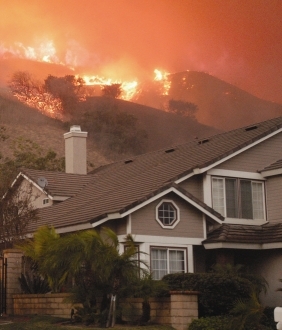
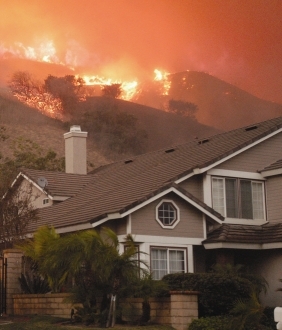
A review of national fire data suggests that the “typical” wildfire season may need redefining
This post is based on a report produced by Climate Central, a non-profit climate education group.
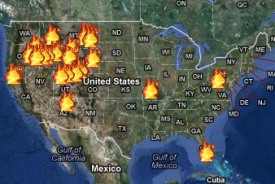
Screenshot from Climate Central's Interactive Wildfire Tracker. Click on the image to see where wildfires are currently burning.
The 2012 wildfire season isn’t over yet, but already this year is shaping up to be the one of the worst on record in the American West. According to the National Interagency Fire Center, with nearly two months still to go in the fire season, the total area already burned this year is 30% more than in an average year, and fires have consumed more than 8.6 million acres, an area larger than the state of Maryland.
Yet, what defines a “typical” wildfire year in the West is changing. In the past 40 years, rising spring and summer temperatures, along with a shrinking mountain snowpack, have increased the risk of wildfires in most parts of the West.
A century of fire suppression means there are more trees to burn, and they burn more dramatically
This has been a devastating wildfire season. Nationwide, more acres have burned this summer than at this time in any other year on record. In May and June, New Mexico weathered the largest fire in its history. Hundreds of homes and tens of thousands of acres have burned in Colorado. As the summer wears on, fire season has moved west — as it tends to do — and now the Ponderosa Fire is raging near Redding.
Has it always been like this? A new NPR series by Christopher Joyce explores what a century of fire suppression has meant for forests in the Southwest.
Energy from trash and fewer catastrophic fires? What’s the catch?
A wood-burning power plant in Northern California. In 2007, "biomass" energy accounted for roughly 2.1 percent of California energy production. A new state bioenergy plan seeks to substantially increase that percentage.
Wood scraps, animal manure, household garbage and other wastes may soon fuel a sweeping “clean energy” initiative in California, if the collective vision of several state agencies comes to pass.
“Swift action on bioenergy will create jobs, increase local clean energy supplies, and help businesses grow in California,” said resources agency secretary John Laird in a Department of Natural Resources release. Currently, the bioenergy sector employs roughly 5,000 people and contributes $575 million to the state economy; the agency estimates the new plan could create an additional 4,000 jobs statewide. Continue reading California Powers Up Plan for Waste-to-Watts→
Forecast: warmer, drier and more of us in harm’s way
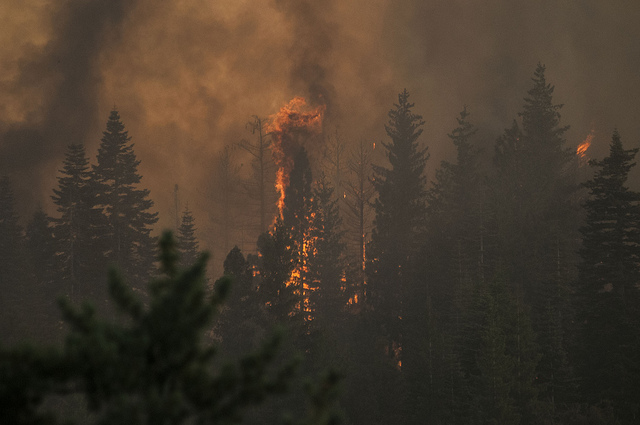
The towering flames of the Robbers fire, which burned 2,600 acres and destroyed five buildings in Placer County in July. A new UC Merced report says such fires may double in the next 40 years because of urban growth and warming temperatures.
As notices begin to arrive in the mail to nearly 850,000 California residences in fire-prone areas for Cal Fire’s controversial new fire prevention fee, a study out of the University of California Merced offers a powerful rationale for beefing up the state’s wildland firefighting resources.
Warmer average temperatures coupled with urban growth will greatly increase wildfire risk to California homes in the decades to come, according to the new UC study [PDF] prepared for the California Energy Commission.
800,000 will be getting billed to help fight wildfires
By Alice Daniel
Rural homes are at greatest risk of wildfires. The state will now charge those homeowners a fee to help pay for fire protection services.
It’s fire season in California. The blazes may not be big enough to draw national TV news crews, but pulling from the top of CAL FIRE’s news feed it’s easy to see the agency is busy.
There’s the Volcano Fire in Riverside County, the Salt Creek Fire in Shasta, the Graham Fire in Tuolumne. Demand for services is as big as it’s ever been, but CAL FIRE has not been spared from budget cuts, which explains a new bill that roughly 800,000 rural homeowners, those who live in the most fire-prone areas, will soon have to pay.
The legislature-approved fee is up to $150 per home and should generate $84 million per year, says CAL FIRE spokesperson Daniel Berlant.
“All that money will go towards fire prevention in the state responsibility area,” Berlant said. “The most notable activities include brush clearance, forest health, fuel reduction.”
But hope persists that we can blunt the worst impacts, if not slow down the warming
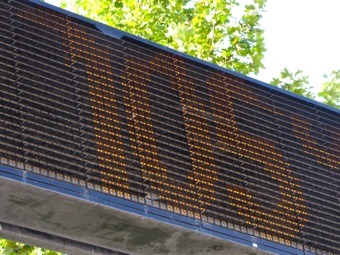
The new normal? A temperature display in the Kern County town of Taft shows 105 degrees on a late afternoon in July.
Granted, it’s been a relatively cool summer in many parts of California. But state officials are saying, “Don’t get used to it.” How would you like to see the number of “extremely hot” days (105 or hotter) in Sacramento increase fivefold in the next few decades? That’s just one of many new projections from the state’s latest official climate assessment.
One hundred-twenty scientists worked on the report, entitled California’s Changing Climate (PDF). Funded by the California Energy Commission, it’s actually a portfolio of studies and contains some of the most specific warnings we’ve seen. For instance, it projects that going forward, average temperatures in the state will warm at three times last century’s pace. It’ll mean heat waves happening more often and lasting longer. Continue reading No Relief in Latest California Climate Assessment→
There have already been more than 2,500 wildfires in California this year
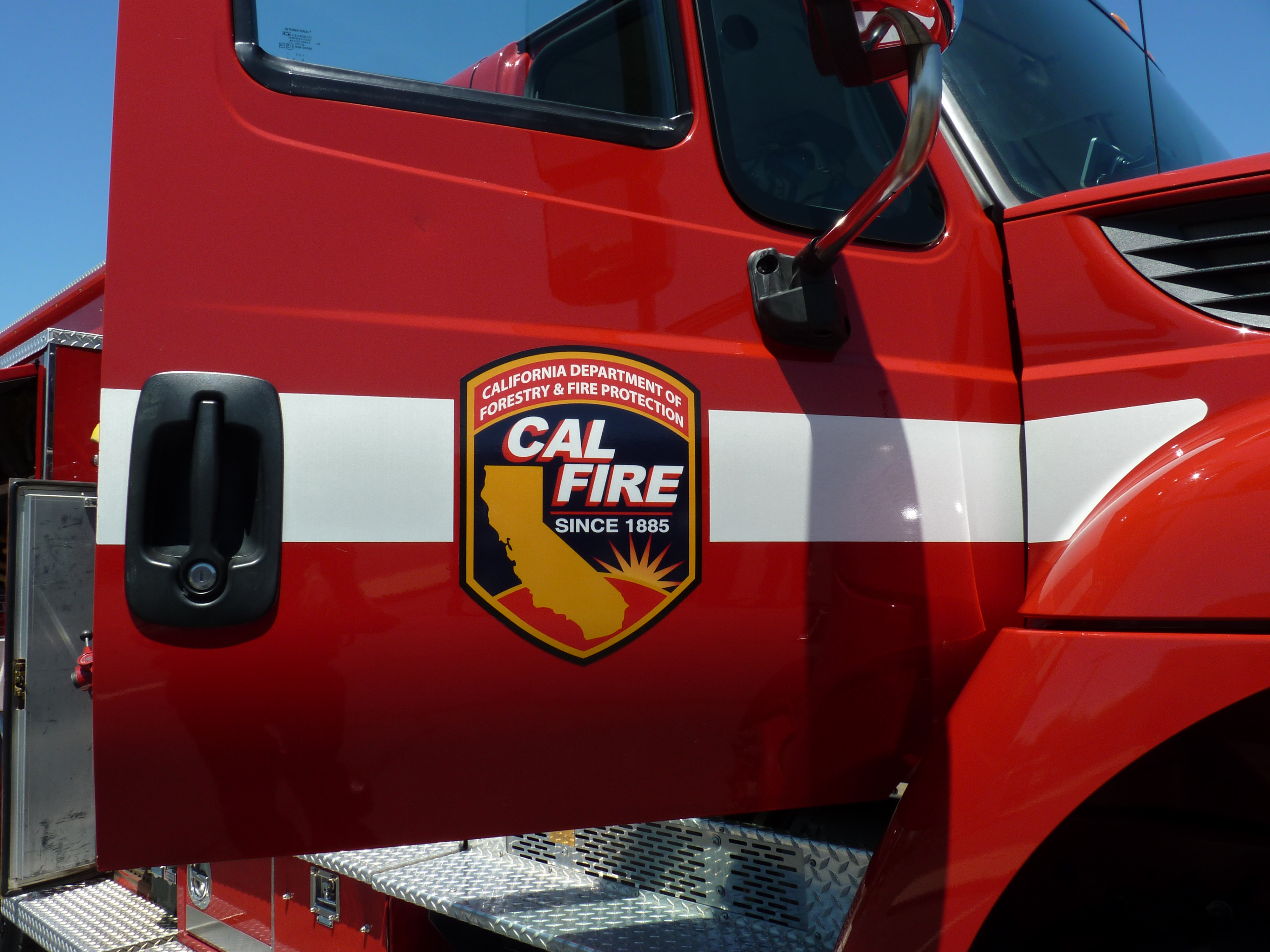
A wildfire truck owned by California Department of Forestry and Fire Protection (CalFire).
While CalFire experts, embedded with the California National Guard are helping fight the massive wildfires in Colorado, CalFire is also beefing up at home, preparing for the peak of California’s fire season. As of this week, the agency is fully staffed, with 7,000 personnel, hundreds of engines and dozens of air tankers and helicopters.
CalFire has already responded to 2,308 fires this year — that’s more than 1,000 more than at this time last year, and higher than the five-year average, too. Combined with the fires in local jurisdictions, there have been more than 2,500 fires this year, and that doesn’t include wildfires on federal land. Continue reading CalFire: Watching Colorado, Preparing for the Worst→
Record-breaking heat combined with drought create ideal conditions for wildfire
So far this summer, California has been spared from massive wildfires like the ones raging in Colorado. You can keep tabs on fires in California on CalFire’s statewide map.
The Waldo Canyon fire burns off the southern border of the U.S. Air Force Academy in Colorado Springs.
Blistering and desiccating heat across the West and High Plains helped aggravate an already dangerous wildfire situation in Colorado and several other states, and now the heat is moving eastward toward the Midwest, South Central states, and eventually the Mid-Atlantic and Southeast.
Denver endured a record fifth straight day of 100-degree temperatures on Tuesday, and the high temperature of 105°F tied the city’s all-time record high, a milestone that reached just a day earlier. Colorado Springs also hit an all-time mark on Tuesday, with a high of 101°F.
Fire management in the West: A dangerous game of Whac-a-Mole
U.S. Fish and Wildlife and Cal Fire crews fighting a wildfire near San Diego. Federal and state budget cuts have greatly reduced California’s wildland fire resources.” credit=”USFWS
As more than 400 firefighters attack a 2200-acre wildfire in Riverside County, and huge fires continue to burn in Colorado and the Southwest, recent studies have projected that the western U.S, wracked by an increasingly hot and dry climate, will experience more frequent and intense fires in the near future.
The job of seasonal wildfire forecasting, it turns out, falls to an agency called the National Interagency Fire Center. Each month, the Boise-based NIFC, a collaborative of eight federal agencies, including the National Forest Service, Bureau of Land Management and National Weather Service, issues its Wildland Fire Outlook [PDF], which offers a year-to-date tally and projections of acres burned along with a comprehensive look at where fire conditions are ripe.
Ed Delgado, manager of the NIFC’s Predictive Services program, says his team looks at a number of factors including snowpack, drought, fuel conditions (that is, the amount of dry vegetation available to burn) and periodic climate variations such as El Niño and La Niña.
This year, the Great Basin, Rocky Mountains and northern Sierra are in the “above normal” category for fire, said Delgado, because of prolonged drought, low snowpack and high fuel-loading of of dead timber and grasses. “We had a very limited snow in the deserts of the Great Basin and that allowed grasses from previous years to remain standing tall,” said Delgado. “This added to the fuels available to burn.”
As for California, the NIFC has predicted that the central Sierra and the Coastal Ranges will come into above average fire danger from July to September, with fires above 8,000 feet more likely than in recent seasons. (Richard Minnich, a fire ecologist at the University of California, Riverside, has predicted low fire risk at low elevations in the southern half of the state because of scant winter rainfall that killed grasses before they deposited seeds.)
Delgado says he has personally seen fire season come earlier by a matter of a few weeks in parts of Utah and Nevada. But the NIFC’s forecasts do not examine whether such changes in seasonal fire activity – such as that in the central Rocky Mountains where the forecast number of fires (1,888) are more than double, and the number of acres projected to burn (186,083) nearly double, the June average – are the result of long-term shifts in climate, or fire suppression, grazing and other management practices that have increased fuel stores – or some combination of these ingredients.
Figuring out just how these factors contribute to fire activity, year-to-year, may be critical, especially with resources stretched thin because of deep cuts to wildland firefighting budgets at federal, state and local levels. Earlier this month, for example, the Guardian reported $512 million in federal cuts for wildfire suppression and preparedness – an overall decrease of 12 percent since 2010. In California, governor Jerry Brown announced an $80 million reduction in the Cal Fire budget. In response, the agency downsized the number of seasonal firefighters on its rolls from 3100 in 2010, to 1700 this year, and for the second straight year has reduced staffing on engine crews from four to three. (Cal Fire faces another $60 million in trigger cuts next year if the governor’s new tax plan fails to be adopted in the November election.)
Experts wondered if “fighting” these colossal fires wasn’t about as effective as dropping DC-10 tanker loads of $100 bills into the flames. More than three million acres have burned each year since 1999—and a 10-million-acre year is almost certainly on the horizon. As the cost of firefighting crossed the billion-dollar mark every year since 2002, another measure of “mega” began to catch policy makers’ eyes: mega expensive. The money being thrown around to douse these fires has pretty much gone up in smoke—and more than 400 wildfire fighters have died since 1987.
The fire-prone reaches of the West are faced with a daunting future. Climate change coupled increased fuel loads from periodic drought, fire suppression and pine beetle outbreaks will make fires more frequent and more intense. Declining budgets coupled with rising costs of fighting these growing conflagrations will limit the resources available to suppress them. While fire is indeed necessary to germinate seeds and reduce fuels, suburban and exurban growth has pushed to the edges — and deep into the interiors — of the nation’s forests and rangelands. (For example, more than 800,000 structures now sit in fire prone areas amid the 31 million acres of California open space overseen by Cal Fire.) This creeping development has permanently altered the natural dynamics of forests and has made some of the best tools for preventing large wildfires – prescribed burns, for example – into highly risky propositions.
The heat is on for solutions. What are your thoughts?
A new study projects fires in the western U.S. will become more frequent within the next 30 years.
Large fires in the western U.S. — such as those currently raging in Colorado and New Mexico — may be part of a shifting pattern of wildfire risk brought on by climate change, according to a study led by researchers at UC Berkeley.
The study, published Tuesday in the journal Ecosphere, analyzed the results of 16 different global climate change models. The models included variables such as annual precipitation and mean temperature of the warmest month and projected an increase in the frequency of fires across the majority of North America and much of Europe within the next 30 years.