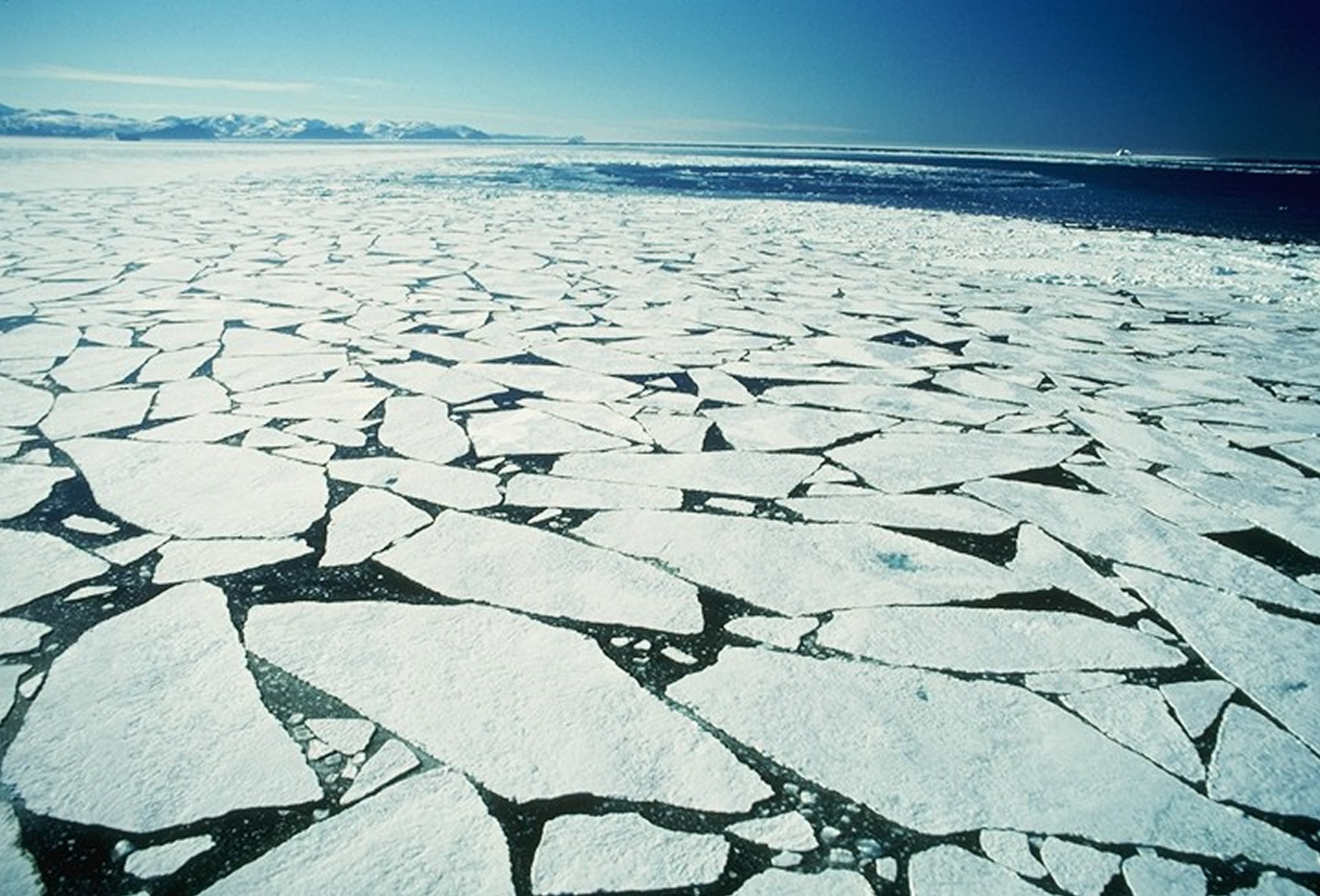
NOAA has created a startling animation of this year’s record shrinkage of ice in the Arctic Ocean. The 34-second clip zooms in from a western hemisphere view and presents as a time-lapse, tracking the ice from January 1 to September 14. This is the first time since NOAA started using satellites to monitor the Arctic in 1979, that sea ice area has shrunk to less than 4,000,000 square kilometers. What happens in the polar regions has a profound effect on the world’s climate.
Tonight: The latest in our series of TV interviews with climate change thought leaders
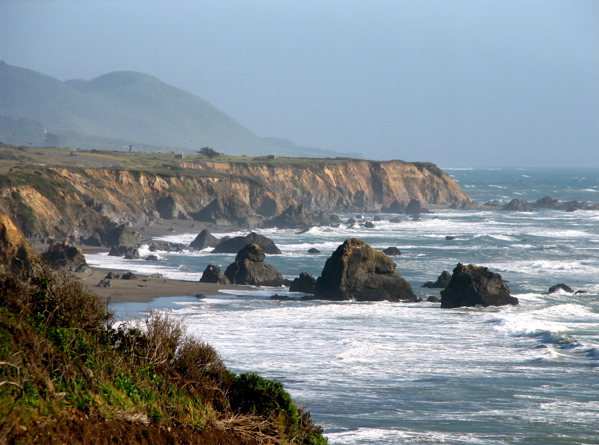
As head of NOAA’s Coastal Services Center, Margaret Davidson has her eye firmly on the future of the country’s coasts, and the threats imposed from rising seas and more extreme weather. Davidson is based in South Carolina, but is a close watcher of California, where coast and climate may be on a collision course.
Climate Watch Senior Editor Craig Miller spoke with Davidson about sea level rise and the California coast. Their conversation will air this evening on This Week in Northern California, on KQED Public Television 9.
Here’s a clip that’s not included the TV broadcast.
House Republicans question NOAA chief on her agency’s priorities
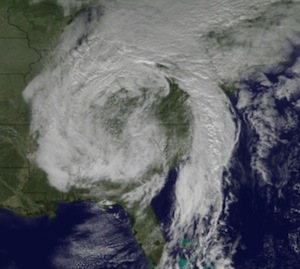
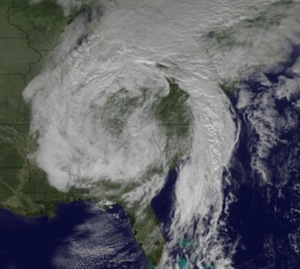
Satellite imagery shows the storm that spawned tornadoes across the Midwest earlier this month.
Jane Lubchenco, director of the National Oceanic and Atmospheric Administration, answered questions about the agency’s budget today in a hearing held by the House Subcommittee on Energy and the Environment.
Lubchenco began by sending her condolences to people who lost loved ones to the tornadoes that tore across the Midwest in the past week. This year, she said, now ranks in the top five for the number of tornadoes occurring in the first two months of the year. She said making the nation “weather-ready” is a top priority in her budget request for Fiscal Year 2013, which comes to $5.1 billion, an increase of $153 million over last year’s.
Not all programs get more money in the budget request. NOAA is asking for nearly $20 million less than last year for the National Weather Service (NWS), a point with which Andy Harris, Maryland Republican and chair of the subcommittee, took issue.
Two more events added to the dozen with $1 billion-plus in damages
"And it's going to keep on falling," he shouted, "until your whole great marble palace tumbles down!"
From droughts and wildfires to tornadoes and hurricanes – and let’s not forget flooding, hail and that Halloween snowstorm — last year will go down as one of the most extreme weather years on record.
This week the National Oceanic and Atmospheric Administration (NOAA) released the final tally for 2011.
The two latest disasters to make the grim list are September’s Tropical Storm Lee which swept up the East Coast to cause record flooding and 21 deaths, and July’s severe weather that brought high winds, hail, and flooding to the Rocky Mountains and the Midwest, and took two lives.
Across the planet it was the 15th consecutive year of above-average temperatures. Here in the U.S., the portion of the nation in extreme drought or very wet conditions was the highest ever: 58%, and that’s nearly three times normal. No surprise that temperatures in Texas made for the second warmest year on record, with the drought there surpassing the severity of ones in the 1930s and 1960s. Seven states across the Midwest and Northeast had their wettest years ever. Continue reading It’s Official: 2011 a Record-Breaking Year for Climate Extremes→
Fifty-two billion dollars and counting, one thousand deaths — double the yearly average — from 12 extreme weather events in 2011 alone.
NOAA
Those grim numbers are part of the reason why the country’s top weather official is calling for better and smarter observation tools, new climate models and a new national readiness.National Oceanic and Atmospheric Administration (NOAA) Administrator Jane Lubchenco shared those stats with scientists here at the American Geophysicial Union’s fall meeting in San Francisco (#AGU11), many of whom are giving presentations about how to better forecast these events and measure them.”
I think that people have to appreciate how very bizarre the weather has been this year,” Lubchenco told us in an interview following her keynote presentation. “And it’s pretty clear that for some of those events like heat waves, droughts, really big intensive rainfall events – those we can connect the dots to climate change pretty convincingly.” Continue reading NOAA Chief Wants Nation “Weather-Ready” for More Extreme Events→
Agencies hope the next-generation satellite will serve as a bridge between the nation’s aging satellite fleet and the new ones yet to come.
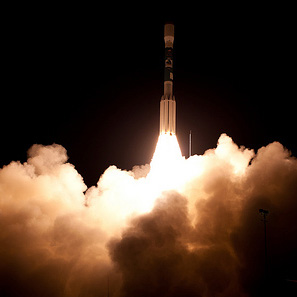
Launch of the NPP satellite from Vandenberg Air Force Base on Friday.
In a joint effort to improve observations of the Earth from space, NASA and NOAA launched a new satellite on Friday from Vandenberg Air Force base near Lompoc, CA. The satellite carries with it a suite of next-generation technologies and tools that the agencies say will enable scientists to continue monitoring climate change and weather patterns as many existing Earth-observing satellites are reaching the outer edge of their life expectancies.
Ocean Acidification topped the list of concerns for a panel of marine scientists opening the annual Society of Environmental Journalists conference in Miami this week.
The topic was oceans, and when moderator Nancy Baron of the science education group, COMPASS asked the scientists to “Tell us how it is, really,” panelist and top NOAA administrator Jane Lubchenco said that rapidly rising acidity in the ocean is a “huge challenge.”
“It’s the most important under-reported global environmental story today,” she said. “The ocean has become 30% more acidic over the last century, and this massive change is likely to have serious impacts, and it’s likely to get worse.” Continue reading NOAA Chief: The Climate Crisis the Media is Missing→
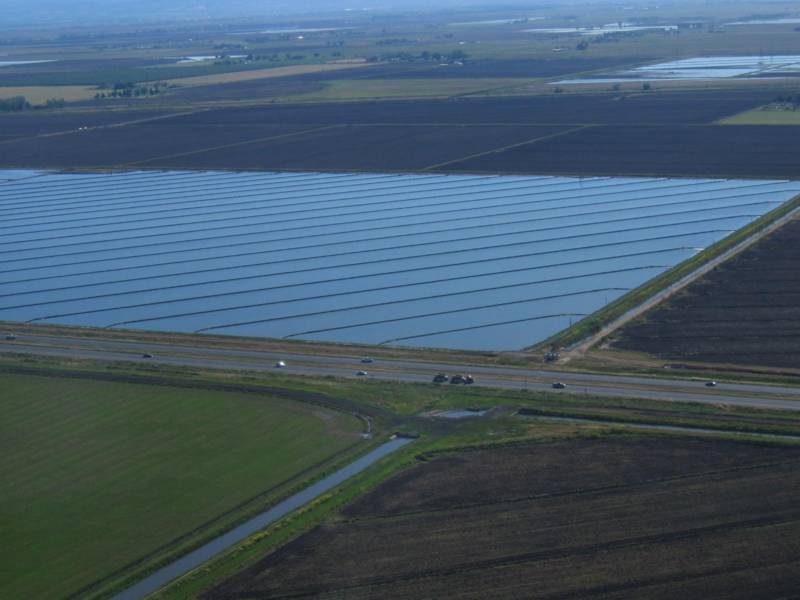
A rice field in the Sacramento Valley. According to NOAA, rice paddies are a source of methane emissions. Photo: Craig Miller
Despite all the focus on regulating CO2 as a way to combat global warming, a new NOAA study finds that to really put the brakes on climate change, the world can’t ignore the other greenhouse gases.
The study takes an inventory of non-carbon greenhouse gases including methane, which emits from landfills and farms, and nitrous oxide, which primarily comes from soil management and combustion. Per molecule, the study notes that these gases have a stronger muscle for trapping heat compared with carbon dioxide, but they don’t last as long in the atmosphere.
“This study looks at what would happen if society decided to go after the short-lived greenhouse gases, as well as CO2.” said Jim Butler, Director of Global Monitoring at NOAA and author of the study.
Short-lived is a relative term in atmospheric science. Butler said it takes decades for methane to fully run its course in the atmosphere, during which its potential to trap heat is much greater, even though its share in the atmosphere is pennies compared to that of CO2.
Carbon dioxide sticks around much longer, some of it for thousands of years, said Butler.
Federal officials this week launched a new climate change research center, designed to be a hub for studies on the impacts of climate change on the San Francisco Bay and coastline.
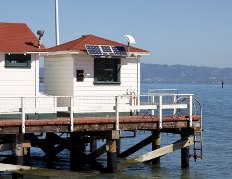
The tidal gauge off of San Francisco's Fort Point is the oldest in North America.
The Ocean Climate Center is housed in a collection of century-old military buildings on the edge of the Bay at Crissy Field. It couldn’t be a more picturesque — and critical — location. Adjacent to the oldest tidal gauge in North America, the center will allow cash-strapped federal agencies to pool resources into climate change research and work with natural resource managers to combat negative impacts on the marine ecosystem and communities along the coastline. Continue reading Center to Study Climate Impacts on Ocean→
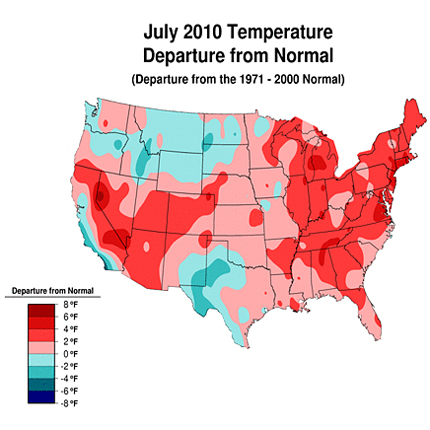
People along the West Coast from Seattle to San Diego, who have shivered through an unusually cool summer, can be forgiven for being just a little bit jealous of residents of the East Coast, where warm temperature records have repeatedly been smashed this summer. During June, July and part of August as well, it seemed that many coastal areas of the West were missing out on summer entirely.