Is Your Town California’s “Coolest?”

Let the Carbon Games begin: cities compete to cut emissions
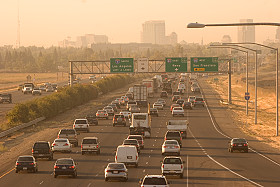
Sacramento is one of the cities competing to be "Coolest California City."

We must’ve missed the opening ceremonies with the parade of flag-bearing competitors and giant torch-lighting — or maybe it was canceled to save energy. Either way, ten California cities are competing over the next year to reduce their carbon emissions.

Individuals, local governments and businesses will all be involved in the project, called the Cool California Challenge. The Cool California website has a carbon calculator, tips on reducing your footprint and links to rebates. Plus there’s a social media element, so you can envy, goad or cooperate with your neighbors as you see fit.

The competing cities are Chula Vista, Citrus Heights, Davis, Gonzales, Pittsburg, Pleasanton, Sacramento, Santa Cruz, San Jose and Tracy. Participants — whether they’re individuals, companies or other types of organizations — earn points by being more carbon-conscious.
Continue reading Is Your Town California’s “Coolest?”

The Sorry State of the Salton Sea

As more water flows to the coast, California’s largest inland water body teeters on the brink

By Sam Harnett

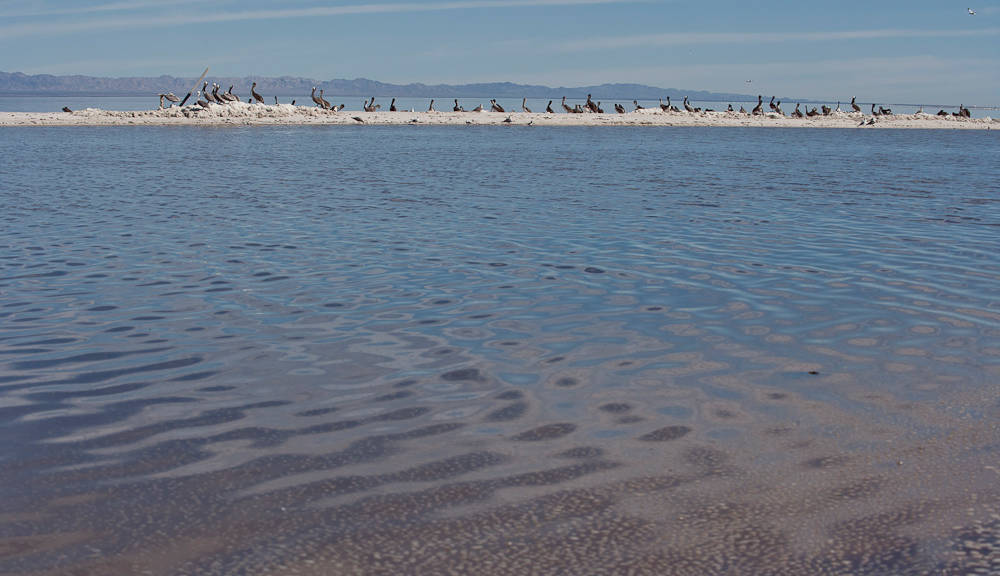
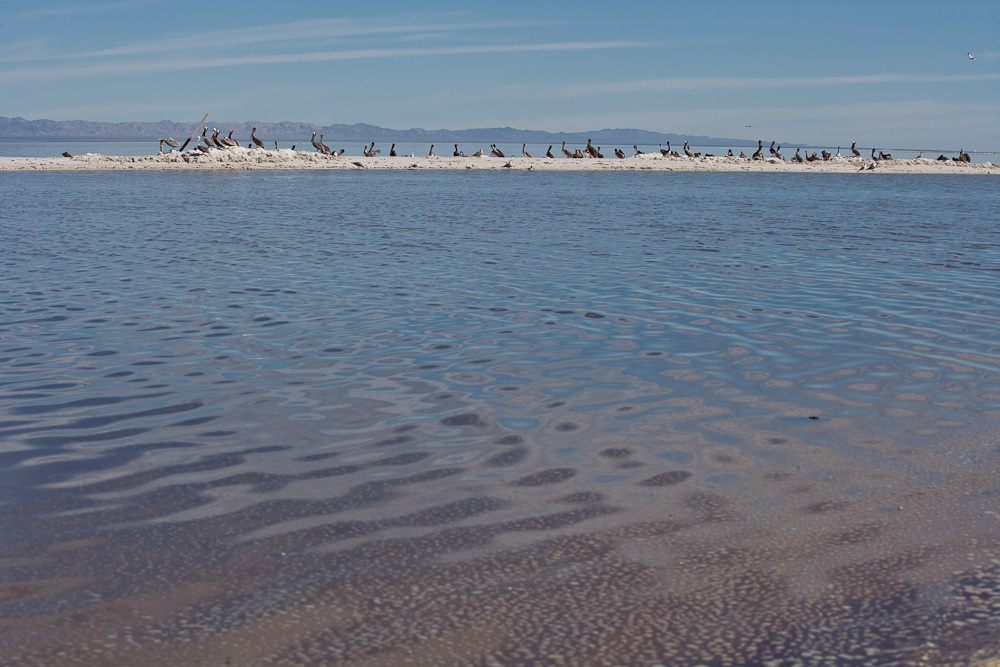
The Salton Sea, northeast of San Diego, is an important stop on the Pacific Flyway for migrating birds. Millions of birds stop there every year.” credit=”Gundi Vigfusson

Last month the California Supreme Court upheld a water transfer deal that sends billions of gallons of water a year from Imperial County farms to cities in San Diego County. The 2003 deal is the largest agriculture-to-urban water transfer in the history of the United States, and it will have major environmental and economic impacts on the region. One of the areas most dramatically affected will be California’s largest — and in many ways its most notorious — inland body of water: the Salton Sea.

The Salton Sea has a fraught history. It used to be part of the Colorado River Delta, but with the diversion of water the area has become desert. In 1905, a massive flood caused the formation of the current Sea, and during the following decades it became an iconic resort location, drawing fishermen and pleasure seekers from across the country. In the 1970s, the Sea fell from favor. Rising salinity killed all the sport fish, celebrities stopped coming, and the resort developments were abandoned. Today, the only water the Sea receives is agricultural run-off from nearby farms, and without that water, the Sea will disappear in a matter of years. Continue reading The Sorry State of the Salton Sea

Jean-Michel Cousteau on Oceans, Energy, and Our Collective Fate

Explorer keeps his father’s legacy alive by shining a light on the world’s oceans

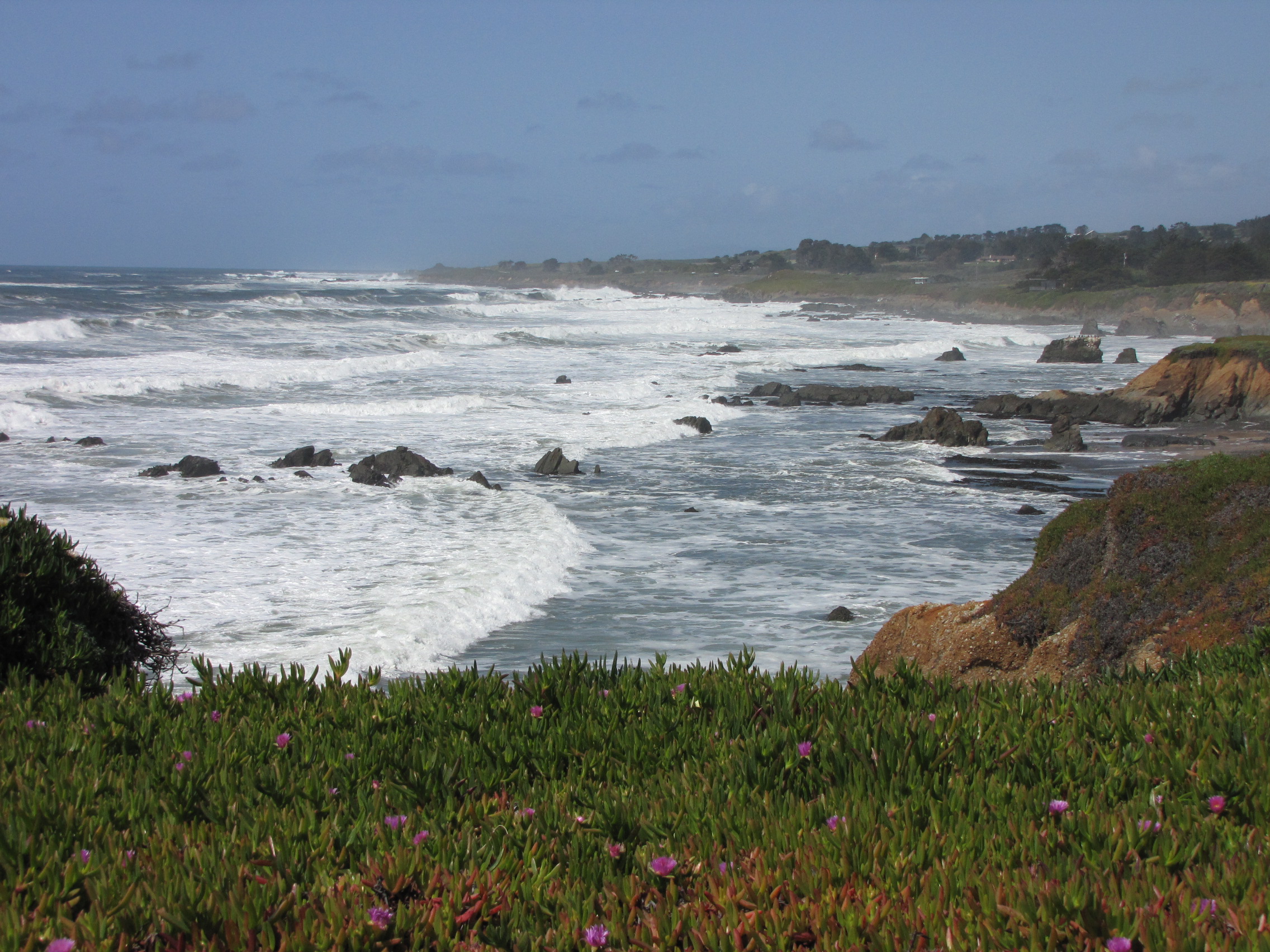
The California coast near Pigeon Point.

When ocean explorer and documentary filmmaker Jean-Michel Cousteau brought his environmental message to Silicon Valley, I caught up with him to discuss climate change; President Obama’s energy policy efforts; and AB 32, California’s response to climate change.

Jean-Michel Cousteau is the son of legendary ocean explorer, Jacques Cousteau, and chairman of Ocean Futures Society, a non-profit dedicated to exploring, protecting and educating people about the world’s oceans. He was vocal in condemning BP for its Gulf oil spill and has frequently highlighted the link between climate change and the state of our oceans and coastline. Continue reading Jean-Michel Cousteau on Oceans, Energy, and Our Collective Fate

New Reports Highlight Climate Challenges to State Water Supplies

Good news, bad news for California: we’re well-prepared but still vulnerable

The Sacramento-San Joaquin Delta is the hub of California's complex water system.

California is both highly prepared and highly vulnerable to the effects of climate change on its water systems, according to two recent studies.

Released today, the National Resources Defense Council’s “Ready or Not” report ranked states in terms of overall water preparedness. The rankings took into account susceptibility to various climate-related factors – such as coastal erosion, saltwater intrusion and flooding – as well as steps being taken to curb carbon emissions and to recognize and tackle vulnerabilities to a changing climate. Continue reading New Reports Highlight Climate Challenges to State Water Supplies

Green Light for Feed-in Tariff to Spark L.A. Renewable Energy

City Council OK’s demo program to buy power from small-scale renewable generators

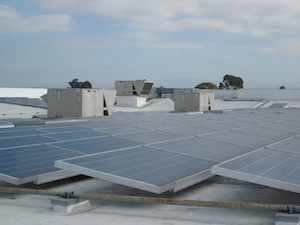
Feed-in tariffs from private solar arrays like this one enable the world's largest source of renewable energy.

The Los Angeles Department of Water and Power (LADWP) now gets to ramp up a pilot phase that could add up to 150 megawatts of renewable electricity after 2016 — enough to power 22,000 homes — all with an eye toward hitting the state-mandated goal of 33% of its power from renewables by 2020. The measure awaits the mayor’s signature, expected late next week.

A common example of the new program would be a commercial real estate or large warehouse owner installing a rooftop solar power system and selling that power back to the local utility. The simplest definition I’ve found comes from another city that just approved a similar program for solar energy, Palo Alto: “Feed-in tariff programs involve a utility paying a fixed price, a “tariff,” for the power that is “fed into” their electric grid from local generation systems.” Continue reading Green Light for Feed-in Tariff to Spark L.A. Renewable Energy

Crazy Weather? You Might Be Able to Blame the Arctic

Arctic warming is altering weather patterns, study shows

By Andrew Freedman

Path of the jet stream on March 21, 2012.

By showing that Arctic climate change is no longer just a problem for the polar bear, a new study may finally dispel the view that what happens in the Arctic, stays in the Arctic.

The study, by Jennifer Francis of Rutgers University and Stephen Vavrus of the University of Wisconsin-Madison, ties rapid Arctic climate change to high-impact, extreme weather events in the U.S. and Europe.

The study shows that by changing the temperature balance between the Arctic and mid-latitudes, rapid Arctic warming is altering the course of the jet stream, which steers weather systems from west to east around the hemisphere. The Arctic has been warming about twice as fast as the rest of the Northern Hemisphere, due to a combination of human emissions of greenhouse gases and unique feedbacks built into the Arctic climate system.

Continue reading Crazy Weather? You Might Be Able to Blame the Arctic

Citizen Science Project Blooms With Early Spring

Contributions to Nature’s Notebook have surged since spring has sprung

Tracking of when flowers bloom--and how the date changes over time--can help provide insight into how they're affected by weather and climate change.

The participative science project known as Nature’s Notebook is closing in on its one-millionth observation. The crowd-sourced program collects data from across the country on the timing of natural events like plants flowering, leaves growing and eggs hatching. The study of those seasonal life stages, called phenology, gives scientists insight into how they’re connected to each other, and how they’re affected by climate and weather.

Jake Weltzin, the executive director of the USA National Phenology Network (USA-NPN), which manages Nature’s Notebook, said he thinks that spring arriving ahead of schedule across much of the country has sparked people’s interest.

Continue reading Citizen Science Project Blooms With Early Spring

Snow Survey Says: It Could Have Been Worse

Thanks to last year’s wet winter, California’s reservoirs are still in good shape

In January of this year, snow was still sparse at high elevations in the Sierra Nevada.

Researchers from the Department of Water Resources conducted their April manual snow survey today. It’s the most important snow survey of the season, because it’s supposed to capture the Sierra snowpack at its peak. The DWR found that statewide, snow water content is 55% of average for this time of year.

Still, it could have been worse. The previous manual snow survey, which took place on February 28, measured snow water content at only 30% of normal for that date. So the rain in March did help.

“This was certainly a moderately good March at least,” Jeanine Jones, the Interstate Water Resources Manager at the DWR told me. “But the downside is that we are now getting outside of our peak precipitation window. On average about 75% of statewide precipitation comes between November and March.”

Continue reading Snow Survey Says: It Could Have Been Worse

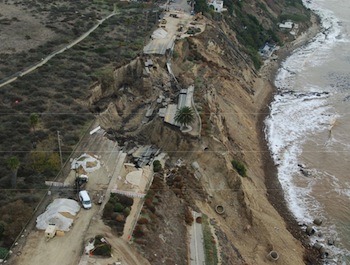
Storms and Rising Seas Present New Threats to Unstable SoCal Peninsula

The geologic features of the Palos Verdes Peninsula make it a hotspot for landslides

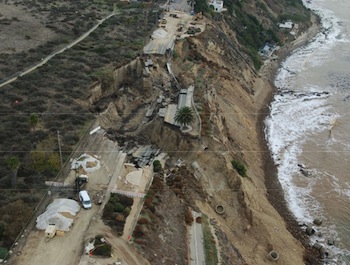
November's sea cliff failure took out 600+ feet of roadway and sidewalks.

The latest Palos Verdes Peninsula slide may calve, and the main slide mass is likely to keep “moving oceanward.” That’s according to a preliminary draft of a geotechnical study commissioned by the City of Los Angeles in early winter, but that’s the extent of the news for now. The same report says based on the studies completed to date, the risk of landslide movement behind last November’s slide — landward into a nature preserve and beyond a new chain link fence — is low.

That’s just the latest from an area southwest of downtown L.A. that has been generating geological news for decades. According to a landslides map by the California Geological Survey, the PV Peninsula boasts 175 slides, 49 of them active.

Continue reading Storms and Rising Seas Present New Threats to Unstable SoCal Peninsula

Politics, Climate Change and Human Rights in the Maldives

The Island President tells the story of the former president’s fight for climate action

The new documentary, The Island President, depicts former-president Mohamed Nasheed’s efforts to draw the world’s attention to the plight of his country. The islands that make up the Maldives lie barely above sea level. With a few feet of sea level rise, they will be inundated.

John Shenk, the San Francisco-based director of the film, was a guest on KQED’s Forum last week. He talked about how Nasheed, the country’s first democratically-elected president (he resigned in February), and a former human rights campaigner, became a climate change activist.

“He took office and immediately plunged into the climate debate,” Shenk said. “He’s framing the climate debate as a human rights issue. He very much sees the climate fight, the struggle against climate change, as an extension of his fight for democracy.”

In a quote from the film, Nasheed explains: “When we came to power we thought we won the fight. After twenty years, we thought, ‘Look, OK, we’ll have a happy life.’ But we had our first few cabinet meetings, and most of the pending issues were climate change issues. Weather patterns are changing, and that’s having a very big impact on fisheries. We have lost a lot of the shoreline. Our islands are going to be flooded.”

Continue reading Politics, Climate Change and Human Rights in the Maldives