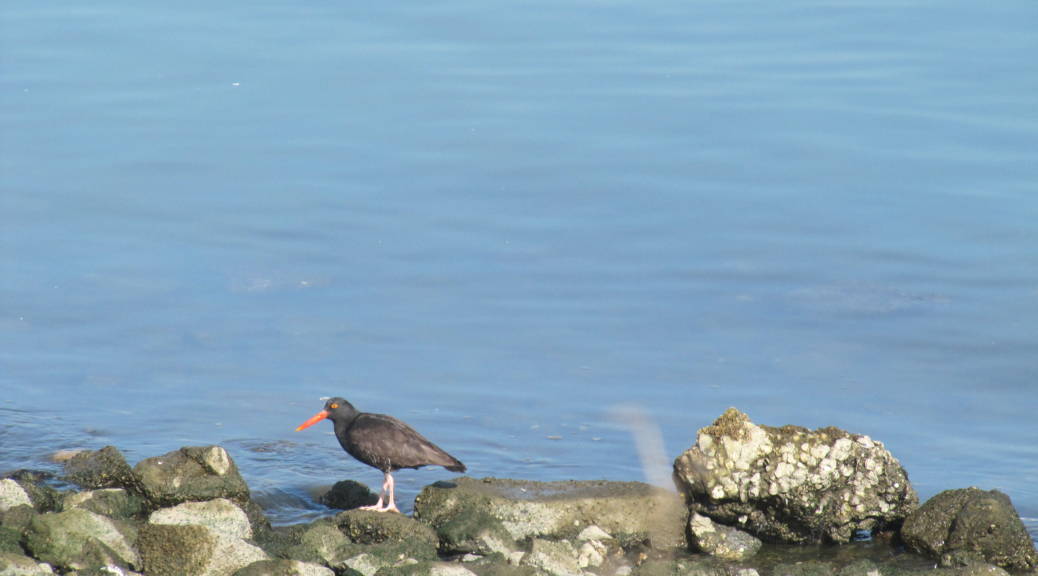
San Francisco Bay is home to the majority of the most vulnerable birds. “That’s primarily because of sea level rise and also because there are already so many imperiled species that use that habitat in the bay,” says Tom Gardali, an ecologist is PRBO Conservation Science.
University of Southern California and 17 others surveyed 300 million years of ocean life
Increasing ocean acidity can also affect nutrients like nitrogen.
The breadth of this study – 18 research institutions and 21 scientists worldwide — and the examination of hundreds of studies stretching so far back into the geologic record makes this conclusion a singularly solid statement about the present trend.
“From everything we know today, it looks like the current rate of carbon dioxide (CO2) emissions” may spell the loss of “organisms we care about — coral reefs, oysters, salmon,” says Bärbel Hönisch, the study’s lead author, who I reached by phone in New York. She’s a paleo-oceanographer at Columbia University’s Lamont-Doherty Earth Observatory. The paper’s being published today in the journal Science.
The danger comes from what happens when CO2 is absorbed by the oceans: CO2 and water create carbonic acid, the stuff that makes soft drinks bubbly. It also makes the oceans more acidic. That acid can dissolve the shells of “keystone” species that are the building blocks for marine life. The world’s oceans are already twice as acidic – a pH drop from 8.2 to 8.1 — as they were at the start of the Industrial Revolution. That’s an acidification rate 10 times faster than anything found in the record over the past 300 million years, according to this new survey.
For her part in the study, USC doctoral candidate Rowan Martindale was looking at the juncture between the Triassic and Jurassic eras, 200 million years ago. It was a cataclysmic time when the earth’s continents were splitting apart, huge strings of volcanoes were erupting, atmospheric CO2 was at one of the highest levels ever and — you guessed it — hardly any evidence of limestone or coral, two things that dissolve in acidic water. It marked one of the five biggest extinction events in the planet’s history. Atmospheric carbon was increasing at the rate of one gigaton – about 2.2 trillion pounds — per year.
[module align=”left” width=”half” type=”pull-quote”]“The modern ocean chemistry is changing, and nobody really knows exactly what’s going happen.”[/module]
Today, atmospheric carbon is increasing at the rate of eight gigatonnes per year — about 17.6 trillion pounds. ‘Something weird was going on in the ocean back then,” Martindale says. “The modern ocean chemistry is changing, and nobody really knows exactly what’s going happen.”
Hönisch says the team cited hundreds of studies — the journal had to put a limit on their end list of 218 items — and looked at many more over the past year-and-a-half. “The strength is that when we compare these different events [in the geologic record], we can see the similarities. We can also see where we need more information.”
Both Honisch and Martindale will tell you the paleo record has its gaps and intriguing questions for further study — exactly how atmospheric warming interacts with ocean acidity, and key ocean sediments they’d love to sample that have disappeared back below the sea floor, for example — but their conclusion is clear: the world’s oceans are acidifying at a rate that has never been seen before.
“Maybe things are not as bad as we think, but we don’t know, says Hönisch. “[And] by the time we do, it may be too late to turn around.”
More people think the climate is changing, and many say the weather convinced them
People cited their experience of warmer temperatures as a major influence in their views of climate change.
Most Americans now say that the climate is changing, according to the National Survey of American Public Opinion on Climate Change (PDF). Nearly two out of three people (62%) answered “yes” to the question, “Is there solid evidence that the average temperature on Earth has been getting warmer over the past four decades?” The primary reasons they gave for that answer? About one in four said it’s because they’ve observed warmer temperatures, and an identical 24% because they’ve observed weather changes — and the survey was taken last fall, before this year’s generally mild winter in the U.S. had entered the national chatter (we recall a recent tweet from NOAA saying that Midland, TX had logged more snowfall this winter than New York, Boston and Philadelphia combined). Continue reading Belief in Climate Change Depends on Which Way the Wind Blows→
Kaiser, UCSF and Stanford University Medical Center are all looking for ways to get greener
By Kamal Menghrajani
Solar panels on the roof of Kaiser's hospital in Modesto will help the Oakland-based health care provider reduce its greenhouse gas emissions.
All across California, people are looking for ways to be more eco-friendly: composting, recycling, driving less, and turning out the lights. Now it looks like hospitals in the area are following suit, as Kaiser Permanente announced new ‘green’ initiatives this week.
The Oakland-based health care provider is installing fuel cells and solar panels at its hospitals and clinics throughout the state. The huge non-profit is also turning to green building techniques for new construction projects and to save energy where possible in existing facilities.
Proposed law would stop salmon restoration, deliver more water to Central Valley farms
The San Joaquin River flows from the Sierra Nevada to the Central Valley, where much of its water is diverted to aqueducts.
UPDATE: The House has passed the bill, with a vote of 246-175. It now goes to the Senate.
Meandering through the halls of Capitol Hill is a bill that would dramatically change California’s water picture. Sponsored by Tulare County Congressman Devin Nunes, the sweeping proposal would pipe more water to farms, and challenge the largest river restoration project in U.S. history.
Environmentalists and farmers tangoed for 18 years in federal court over the fate of the San Joaquin River, finally agreeing to restore water to some 60 miles of dry riverbed, and bring back the salmon that died off when the river was dammed just above Fresno.
“Most people associate the San Joaquin as a dry toxic river,” says Chris Acree, director of Revive the River, a Fresno-based non-profit. “Now that this water is back in that river, it allows us to identify ourselves with this river as a living river. This restoration program really is the broadest collaboration between agencies, landowners, stakeholders, and water users, where everybody has a voice.”
But Congressmen Devin Nunes says many Central Valley farmers have been left out of water decisions that put fish before farmers. His bill would not only reverse plans to restore salmon to this river, it would relax pumping restrictions in the Delta designed to protect other endangered fish.
While some resorts are struggling, Vail group is expanding and insulating itself
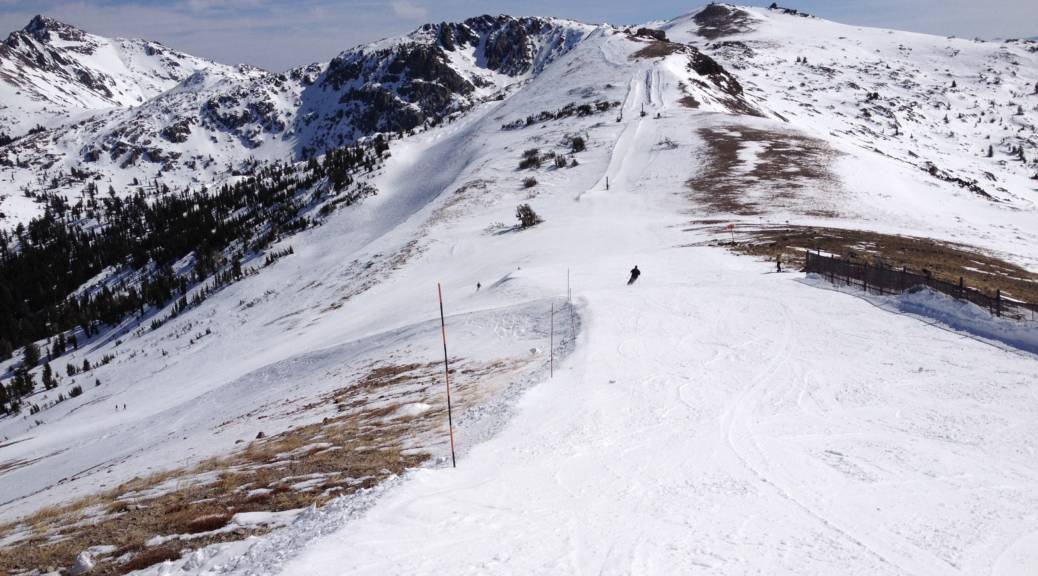
On a recent winter weekend, Kirkwood's slopes had bare patches.
What a difference a season makes at one laid-back California ski area known for deep powder, sweeping bowls and short lift lines.
Kirkwood Mountain Resort, located 35 miles southwest of the glittering mega resorts of Lake Tahoe, is well off its average of 500 inches of snow per year (and a far cry from last year’s record-setting 748 inches). This weekend’s North Face Masters big mountain snowboard competition has been postponed because of lack of snow on the area’s high cirques. And last Wednesday, the resort was bought for $18 million by Colorado-based Vail Resorts.
Kirkwood’s purchase by Vail, a company whose aggressive expansion and intensive development at its other ski areas (including Tahoe resorts Heavenly and Northstar) may portend multi-million dollar ski chalets, luxury boutiques and high-speed gondolas — all things the remote Kirkwood has eschewed in its 40 years of operation.
But according to some industry watchers, Vail’s business model may offer economic insulation from a changing climate, as California’s mountain snowpack is projected to decline by as much as 25% by mid-century.
Farmers, used to water shortages, prepare for bad news
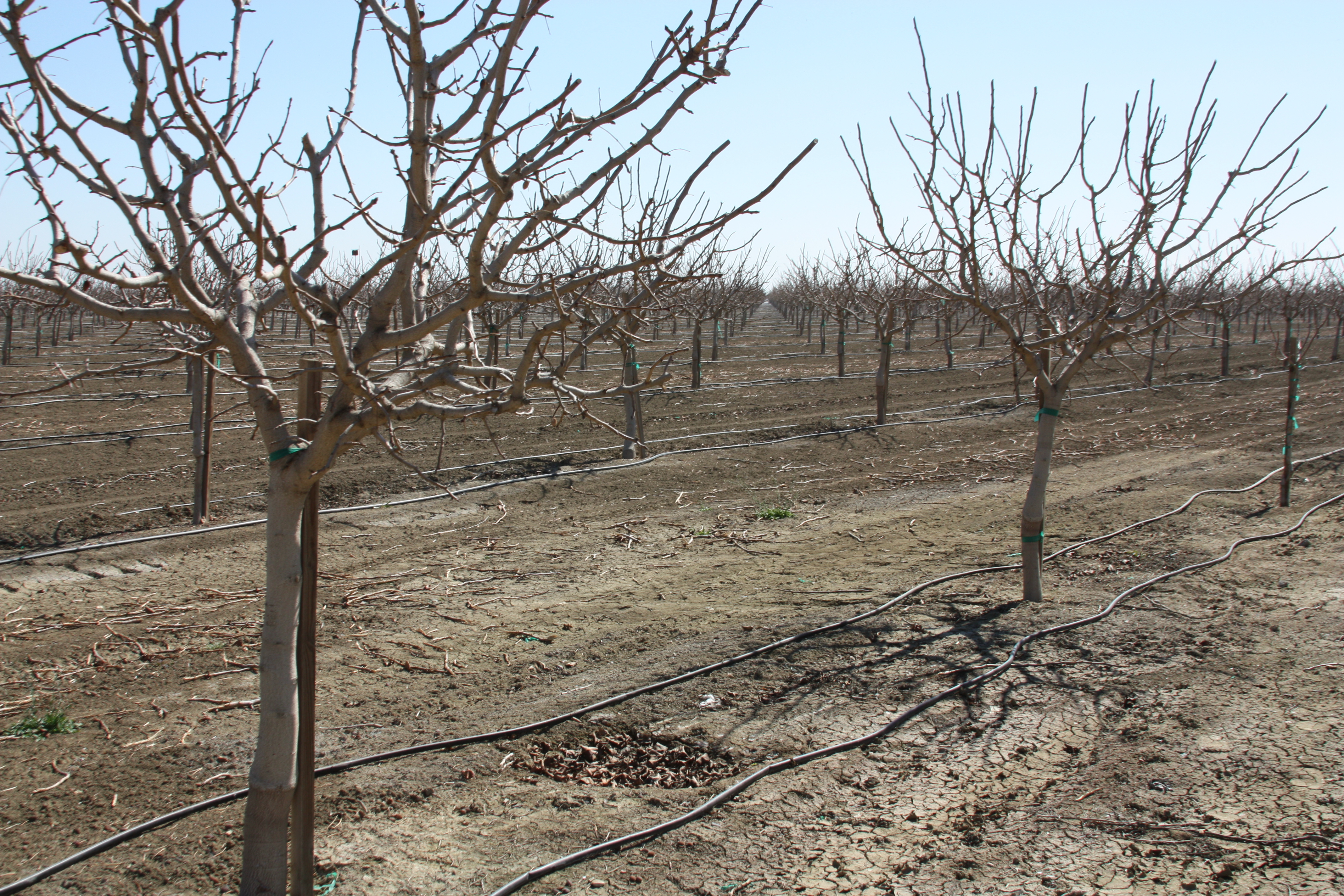
Pistachio trees on a drip irrigation system. Drip systems can dramatically reduce water loss from evaporation.
UPDATE: Despite snow closing Interstate 5 over the Grapevine Pass on Monday, state snow surveyors returned from the Sierra today with more forlorn figures. The third snowpack measurement of the season showed water content in the accumulated snow at just 30% of the average for this date and 26% of the average for April 1, typically when the snowpack reaches its peak for the season.
Even though more snow is on the way, as I explain in my radio story for The California Report, Central Valley farmers are getting ready to face a fourth dry year in the last five.
The Pacific Institute and the Heartland Institute: Both sides are digging in
Peter Gleick is taking a temporary leave of absence from the Pacific Institute.
The Pacific Institute has posted a new statement to its website, saying the board is hiring an independent firm to investigate the actions and allegations surrounding its founder, Peter Gleick, who admitted last week to using deception in order to obtain documents from the Heartland Institute.
Gleick requested a temporary leave of absence over the weekend and the board has nominated Elena Schmid, an independent consultant, to head the organization on an interim basis. According to a bio from the Pacific Institute, Schmid has worked at California Independent System Operator, “focusing on policy, communications, and human resources for this corporation that manages the high voltage transmission lines for California,” and at the California Public Utilities Commission, “developing policies, programs, projects, and budgets that resulted in active representation of long-term consumer interests in telecommunications, gas, water, and electric industries.” Continue reading New Boss at the Pacific Institute, New Salvo from Heartland→
UPDATE: Founder asks for leave of absence in the wake of impersonation scandal
Founded in 1987, the Pacific Institute is housed in this Oakland Victorian.
ANALYSIS
The old blue-and-gray Victorian in Oakland’s preservation district is familiar turf for me and other journalists on the resources beat. It’s long been a place we could rely on for solid information and interviews.
The analysts who inhabit the rabbit warren of offices at the Pacific Institute are doing honest work on issues that are critical to the future of California and the West, notably where our water will come from. There are few issues more deserving of study than that one.
California could benefit from the controversial technology behind “clean coal”
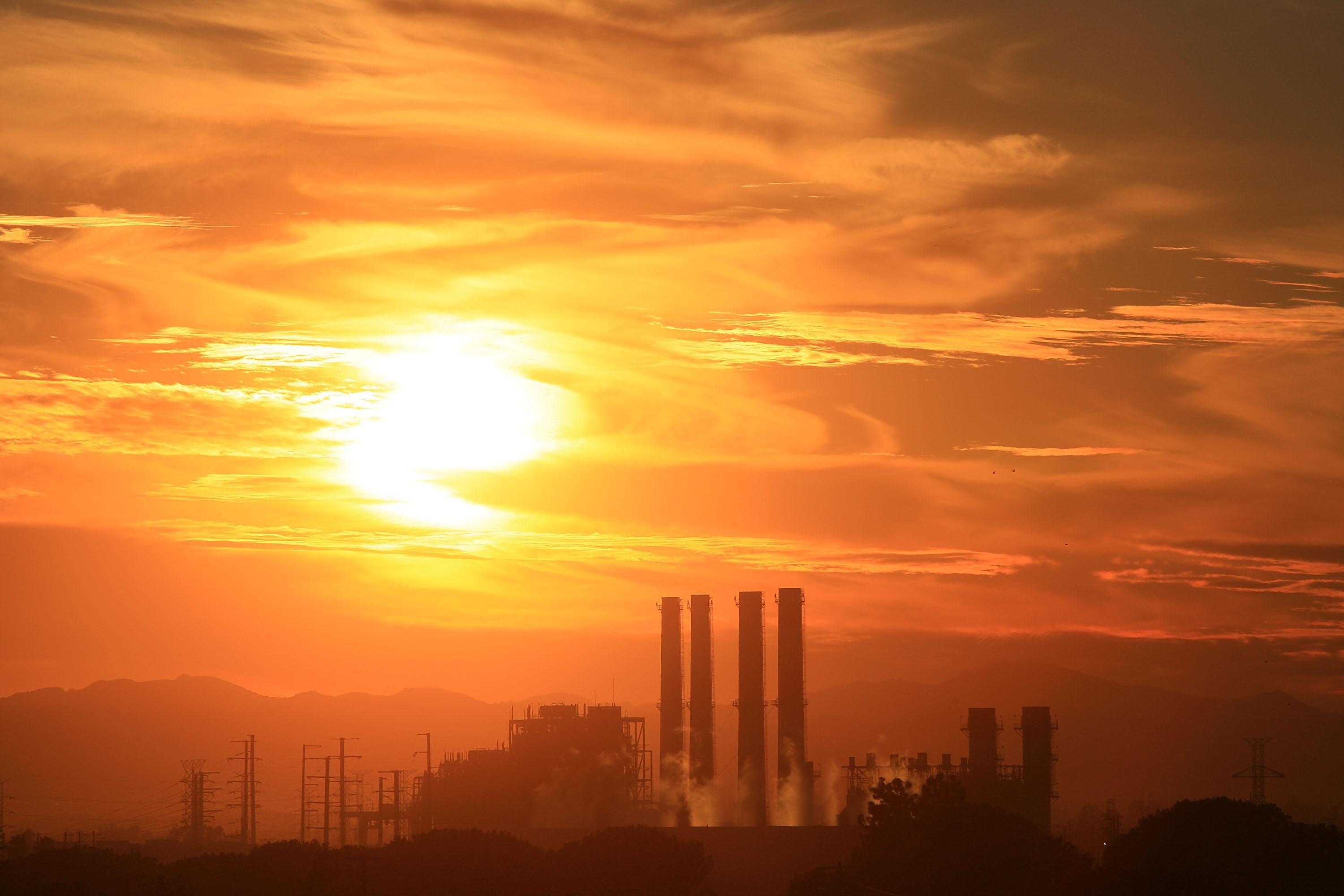
It's not just for coal: Natural Gas-fired power plants could use carbon capture technology, too.
A prominent researcher says it would be foolhardy to abandon plans to siphon off the carbon dioxide from industrial emissions and store it underground. The concept, known widely as “carbon capture and sequestration,” or CCS, has been a slow starter in the U.S. In fact, worldwide, there are only a handful of working projects.
“It never had a chance,” said Sally Benson, following a panel at a major science conference. Benson directs the Global Climate & Energy Project at Stanford University, and is a proponent of CCS — though she says companies that were leading the charge are now “wavering.” She told me that the 2010 UN climate talks in Copenhagen were a turning point; when it became apparent that governments weren’t about to put serious restrictions on carbon emissions, she says investors backed away from CCS, which is still in the pilot stage of development and very pricey. Continue reading Are We Giving Up Too Soon on Carbon Capture?→