Molly Samuel joined KQED as an intern in 2007, and since then has worked here as a reporter, producer, director and blogger. Before becoming KQED Science’s Multimedia Producer, she was a producer for Climate Watch. Molly has also reported for NPR, KALW and High Country News, and has produced audio stories for The Encyclopedia of Life and the Oakland Museum of California. She was a fellow with the Middlebury Fellowships in Environmental Journalism and a journalist-in-residence at the National Evolutionary Synthesis Center. Molly has a degree in Ancient Greek from Oberlin College and is a co-founder of the record label True Panther Sounds.
The Southwest and Northeast have warmed the most. California is, well, average
They call it “global warming” but where you fall on the warming scale depends a lot on where you live. Not everywhere has warmed the same amount (or at all), and it certainly hasn’t happened at the same rate.
A new analysis from Climate Central, a climate education organization (and content partner with Climate Watch), breaks down the warming trends in the continental U.S., state by state.
Some states show an increase in average temperatures (Minnesota, Maine, Arizona and New Mexico, for instance), and some show nearly none (Florida, Alabama, Georgia). California ends up pretty much in the middle of the pack. Continue reading Mapping the Patchwork of U.S. Warming Trends→
Scientists stumbled on Fallen Leaf Lake and the ancient trees under its surface
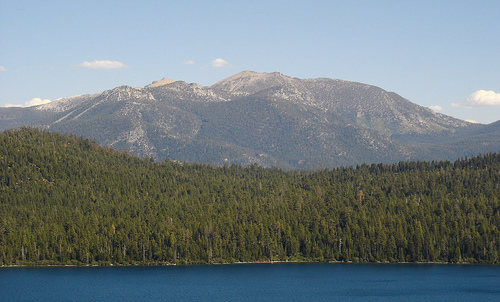
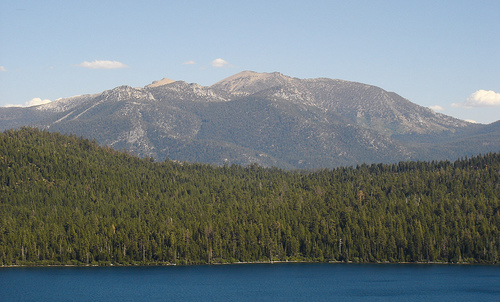
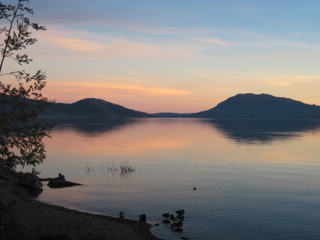
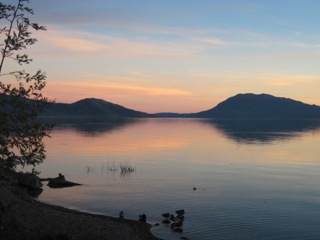
Scientists found important climate clues hidden away under Fallen Leaf Lake, just south of Lake Tahoe.
Graham Kent wasn’t researching megadroughts when he and a team of scientists began studying Fallen Leaf Lake, just south of Lake Tahoe. They were mapping faults. The little lake is a good place to study West Tahoe Fault, which cuts right through it.
“Little did we know it was a natural lab for droughts, as well,” Kent, director of the Nevada Seismological Lab at University of Nevada, Reno, told me over the phone. “So what started out as a seismic hazard endeavor became both a seismic hazard and climate study.”
There are still many questions about bird migration, including how it’s affected by climate
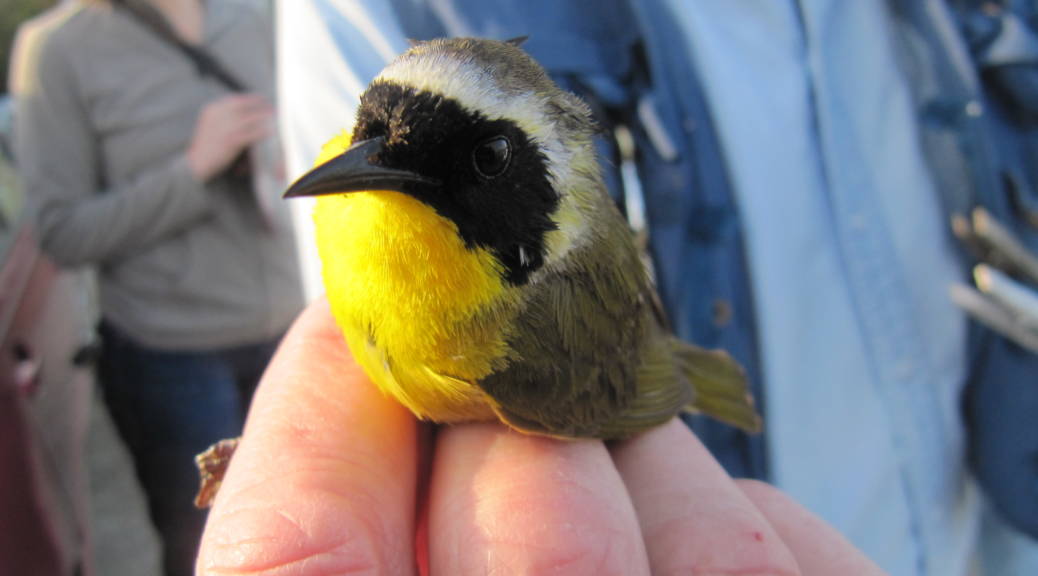
Millions of birds make their way through the San Francisco Bay Area on the way north to their breeding grounds every spring. Many shorebirds and waterfowl have already left, and now waves of songbirds are passing through. As well-watched as birds are, there are still a lot of things scientists don’t know about migration, including precisely where different species go each summer and winter, and what exactly triggers them to get going. Since so many birds pass through here, the Bay Area is a good place to try and sort out some of the questions, and to try to tackle another: how does climate change affect birds?
Most Americans want government to do something about climate change
The majority of Americans want the government to take action on climate change, but the majority is shrinking.
Two polls in as many weeks find that the majority of Americans support government policies to shift to cleaner energy. According to the first, conducted by the Yale Project on Climate Change Communication and the George Mason University Center for Climate Change Communication, nearly three-out-of-four Americans (72%) think climate change should be a priority for Congress, and 70% want corporations and industry to do more to address climate change.
The second, conducted by Stanford, finds that though they’re still a majority, the proportion of Americans who support climate change policies, versus those who don’t, has dropped by ten percentage points since 2010.
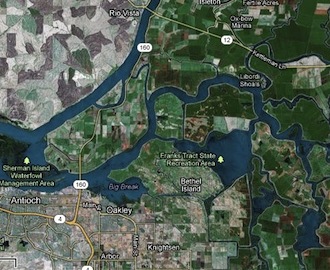
The Sacramento-San Joaquin Delta: ground zero for fights over water, fish and farms
The Sacramento-San Joaquin Delta is a key to the water supply for 25 million Caliornians.
California’s Delta, where the Sacramento and San Joaquin Rivers meet, is the heart of the state’s complex water infrastructure. Where water from the north gets funneled to the south, wetlands have been turned into farmland, and native fish are in decline. Millions of Californians use water from the Delta, but in a poll conducted earlier this year, 78% of respondents didn’t know anything about it.
KQED’s Lauren Sommer is producing a series about the Delta, beginning today with a story introducing the architecture of the Delta, the battles being fought there and possible solutions–all made more complicated by climate change.
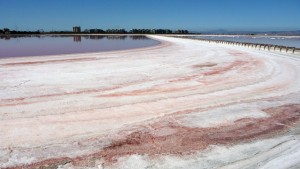
Saltworks, in Redwood City, would have built thousands of homes in salt ponds on the Bay
Salt ponds in Redwood City where the new Saltworks development is proposed.
The low-lying land along the Bay in Redwood City has been the center of a climate controversy: should the salt ponds that have been producing salt for Cargill for decades be turned into housing, or back into wetlands? Supporters of the development point out that Silicon Valley needs more housing. Supporters of the wetlands respond, birds need a place to land, too — plus, the wetlands will provide a much-needed buffer as the sea level rises.
Tonight: The latest in our series of TV interviews with climate change thought leaders
As head of NOAA’s Coastal Services Center, Margaret Davidson has her eye firmly on the future of the country’s coasts, and the threats imposed from rising seas and more extreme weather. Davidson is based in South Carolina, but is a close watcher of California, where coast and climate may be on a collision course.
Climate Watch Senior Editor Craig Miller spoke with Davidson about sea level rise and the California coast. Their conversation will air this evening on This Week in Northern California, on KQED Public Television 9.
Here’s a clip that’s not included the TV broadcast.
Clear Lake, north of San Francisco Bay, is California's oldest lake and a potential treasure trove for climate scientists.
Clear Lake is one of the largest lakes in the state, and one of the oldest in North America. For half a million years or more, pollen and dead bugs have been collecting on the bottom. That gives scientists a unique opportunity to look deep into California’s past to learn what’s grown here through ice ages and warmer “interglacial” periods.
Dr. Cindy Looy, an assistant professor in Berkeley’s Department of Integrative Biology, is leading a project to core Clear Lake, unearthing sediment that’s been collecting on the lake bed for up to 200,000 years. Looy is especially interested in the interglacials, times between ice ages, when the climate was warmer. We’re in one now — it began about 12,000 years ago — but Looy is prospecting in the one that began about 130,000 years ago, when the earth might have been warmer than it is now.
“There are a lot of people working on models to predict what the climate will look like,” she says. “In order to find out how plant life and animal life will respond to climate change, you can go back in the past, to periods where the climate was changing rapidly and even getting warmer than it is today.”
By 2014, federal clean-tech investment may tumble by 75% from its peak in 2009
Government policies and subsidies that support clean-tech are phasing out over the next two years. That could be disastrous for the industry, though it doesn’t have to be, according to a new report from the Brookings Metropolitan Policy Program. In 2009 when federal support was peaking, the industry received $44.3 billion. But the report, entitled Beyond Boom and Bust: Putting Clean Tech On a Path To Subsidy Independence[PDF], projects that by 2014, federal subsidies will have dropped to $11 billion.
“Undeniably, there’s a massive reset before us,” Mark Muro, a senior fellow at Brookings and one of the report’s authors, said this morning on KQED’s Forum radio program. Muro and the other authors examined 92 programs that provide policy or financial support to the clean-tech industry. Of those, 61 have pre-set expiration dates and, unless extended, will no longer be in place by the end of 2014.
Probably billions, as climate change complicates conservation
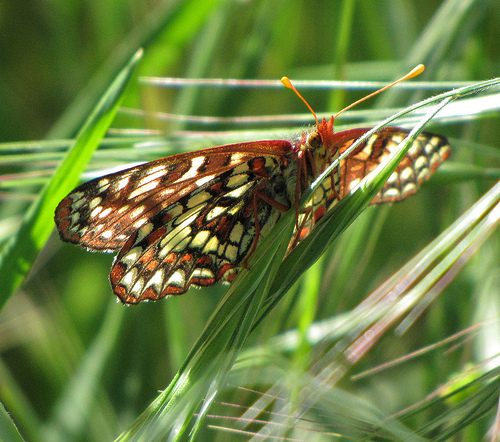
The Bay checkerspot butterfly is one of the species that might need help migrating.
Traditional approaches to preserving biodiversity may not hold up as the climate changes.
One common tool environmental groups use now is to buy land. But that tactic only works if, once the land is protected, the species that live there can stay there. Climate change scrambles that notion. Species won’t necessarily be able to stay where they are in perpetuity. A new study in the journal Conservation Biology (abstract only) examines what it would cost to stick to the current approach and the same conservation goals in one area in California. And that number — again, for just one conservation area — is staggering. By 2100, the study finds, the total price tag will be about $2.5 billion.
“It is a dizzying number,” Rebecca Shaw, the associate vice president of the Environmental Defense Fund and one of the study’s authors, told me. “And it’s dizzying because climate change is dynamic and our conservation strategies are designed for static systems.”
Shaw explains that the current approach — searching out good habitat, buying the land, hands-on management and monitoring — is expensive anyway. But she predicts that climate change will double the cost.