Today the California Public Utilities Commission announced the results of an independent evaluation of PG&E’s Smart Meter program. The audit, conducted by The Structure Group, found that the meters — and the associated billing — are accurate. However, it did fault PG&E’s customer service practices for exacerbating the problem of Smart Meter-related complaints about high bills. The New York Times Green blog has more on the audit. Continue reading CPUC says Smart Meters are Accurate
All posts by Gretchen Weber
US EPA Official Says “No on 23”
The ranks of officials publicly opposing Proposition 23 seem to be growing. Earlier this month we reported that Energy Secretary Steven Chu said passing the measure would be a “terrible setback” for California’s clean energy leadership and that the state’s Air Resources Board Chairman Mary Nichols called Prop 23 a “very serious threat” to the core programs of AB 32 and related regulatory programs.
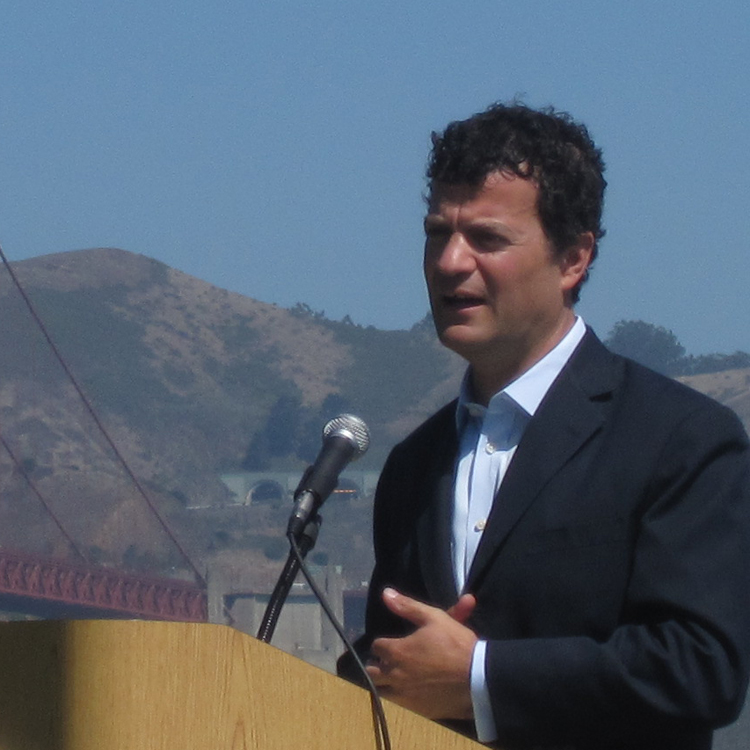
Today, at a meeting of the California Air Pollution Control Officers Association in San Francisco, federal EPA Administrator Jared Blumenfeld urged attendees to vote against the measure.
Doing so, he said, “is certainly what you should do.”
Continue reading US EPA Official Says “No on 23”
Climate News Roundup
A few items in the climate news that caught our eyes this week…
1. CEC approves 250-megawatt solar thermal project in Kern County
The California Energy Commission approved the Beacon Solar Energy project on Wednesday. It’s the first time in 20 years that state energy regulators have approved construction on a solar thermal farm, the Los Angeles Times reports.
2. Geoengineering won’t curb sea-level rise, study finds
A new report from the Proceedings of the National Academy of Sciences finds that geoengineering strategies to combat global warming by blocking the sun’s radiation would not have much of an impact on rising sea levels, unless the efforts are extremely aggressive. (Read more at Nature.com)
3. Earth’s plant growth fell due to climate change, says NASA
After 20 years of increasing growth under warming temperatures, the Earth’s vegetation saw a slight decrease over the last decade, according to a new NASA analysis. Scientists reported they were surprised to find that the negative effects of regional droughts outweighed the positive influence of a longer growing season.
4. Another hurdle cleared for the world’s largest solar farm
Federal regulators are one step closer to approving plans for the 1,000 megawatt plant proposed by Oakland-based company Solar Millennium LLC. The project would be located across more than 7,000 acres in Riverside County. (Read more at The New York Times.)
Another Mountain Critter Confronts Climate Change
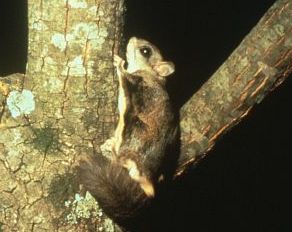
The San Francisco-based Center for Biological Diversity (CBD) filed petitions with the US Fish and Wildlife Service today to protect four mountaintop species from climate change, including the San Bernardino flying squirrel. The CBD is requesting that the species be listed as threatened under the federal Endangered Species Act and that critical habitat be designated.
The San Bernardino flying squirrel is a subspecies of the northern flying squirrel. Historically it has thrived in the high-elevation conifer forests of Southern California, in just two locations: the San Bernardino and San Jacinto Mountains. But according to Shaye Wolf, a biologist at CBD, the species has likely disappeared from the San Jacinto Mountains in the past few decades. Studies indicate that the remaining population is isolated in the San Bernardino Mountains, which is bordered on the north by the Mojave Desert, a formidable barrier to migration. Continue reading Another Mountain Critter Confronts Climate Change
Water Bond Shelved Until 2012

From KQED’s The California Report:
The $11 billion water bond was the product of a tough political compromise last year. Lately, it’s been the focus of a lot of criticism — detractors say it is too filled with pet projects, and it contains too much borrowing for a state in fiscal chaos.
Last night, the Legislature pushed the bond onto the ballot two years from now, a plan to pay for new dams, water conservation, and some changes in the fragile Delta ecosystem. Supporters say the delay isn’t likely to hurt the state’s water needs. But no one can say whether a two-year postponement will allow the proposal to be fine-tuned or killed by its many opponents.
Today’s San Francisco Chronicle has more on the fate of the bond measure, which had been scheduled to appear on this November’s state ballot.
For more on California’s water issues, including an interactive map of where the $11 billion in this bond measure was proposed to go, visit California’s Water.
A Glimpse of How Regional Carbon Trading Might Work
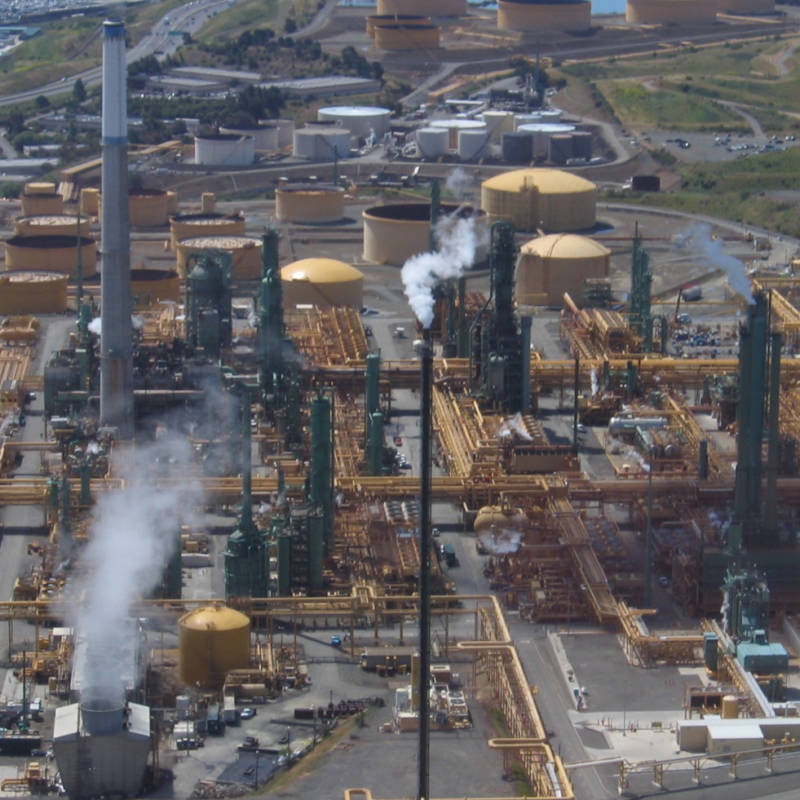
After three years of deliberations, participants in the regional carbon trading pact known as the Western Climate Initiative have released a “comprehensive strategy” for how the coalition will achieve its goals of reducing emissions 15% below 2005 levels by 2020. The plan, “Design for the WCI Regional Program” lays out details for a regional cap-and-trade system, offsets and incentives, and energy efficiency programs. Continue reading A Glimpse of How Regional Carbon Trading Might Work
Another Climate Change Impact: Smog
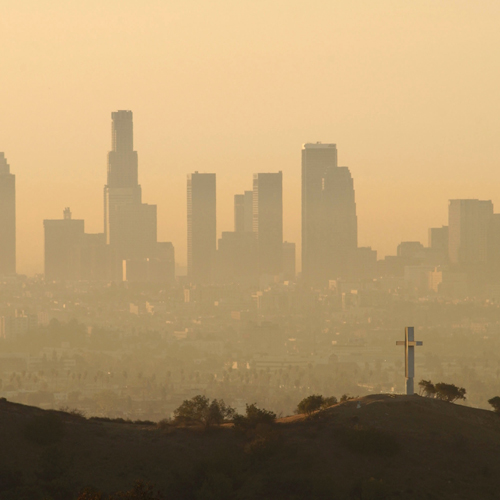
Air pollution, already a problem for much of central and southern California, will get worse as temperatures warm, according to a new report from scientists at UC Davis and UC Berkeley.
By mid-century, trouble spots like the Central Valley and Los Angeles could experience between six and 30 more days per year when ozone concentrations exceed federal clean-air standards, depending on how much temperatures rise, and assuming that pollutant emissions in the state remain at current levels, the scientists project. Continue reading Another Climate Change Impact: Smog
More Heat Waves and Health Problems Ahead

I wore a wool coat to work today. And I’m ashamed to say that last night I turned the heat on in my apartment. San Francisco is obviously a special place, particularly in July. And by “special,” I mean foggy, windy, and cold. Weather.com says that it was in the 50’s last night and this morning, but I have trouble believing that.
So I found it a little bit hard to relate this morning on a conference call with journalists and scientists talking about climate change, heat waves, and public health. It seems that much of the world beyond San Francisco has been experiencing some unprecedented heat lately. According to NOAA, global combined surface and ocean temperatures for January through May 2010 are the warmest on record. But in California, according to Tom Evans of the National Weather Service (NWS), so far this summer we’ve experienced pretty normal average temperatures, and that’s what the NWS Climate Prediction Center is forecasting for the rest of the summer for most of the state, he said, although the southeastern portion of the state may be in for some hotter-than-normal weather in the coming months.

On the call this morning, which was put together by the Union of Concerned Scientists, the speakers were careful to point out that one or two heat waves cannot be considered evidence for global warming, just at the snowstorms on the East Coast this winter couldn’t be used to refute it. (This recent article in the Christian Science Monitor has more about the heat waves and changing attitudes about climate change.)
However, said NOAA climatologist David Easterling, “Warming temperatures increase the probability of heatwaves. By the end of the century, what we currently consider a heat wave, or an extremely hot day, might become the norm.”
Warming temperatures can impact public health in a number of ways, said Michael McGeehin, director of the National Center for Environmental Health at the Center for Disease Control.
“Climate scientists predict that the U.S. will see an increase in the duration, intensity, and frequency of heat waves, and we know that heat waves are a public health disaster,” he said. “They kill.”
And they could kill in large numbers in the centuries to come, according to a recent paper by Matt Huber of the Climate Change Research Center at Purdue. Huber was on the call this morning to discuss his analysis, which found that if CO2 levels continue to rise over the next 200 years, hotter temperatures could make areas that are home to 50% of the world’s population uninhabitable during heat waves in the the centuries after 2100. Problems start happening when the heat index is about 130, he said. (A temperature of 105 degrees F with a humidity level of 50% has a heat index of 134.)
“I personally think that we’ve already committed to at least 2 degrees (Celsius) of warming, but the kind of warming we’re talking about here, which is on the order of at least 10 degrees Fahrenheit, maybe more like 15 degrees Fahrenheit, that’s something that we can still decide to avoid,” he said. “And from our calculations it looks like we should really try and avoid that.”
And it looks like that potential warming could be becoming reality faster than some expected. A new study out of Stanford announced today finds that “exceptionally long heat waves” could become commonplace in the United States in the next 30 years, particularly in the western US. The study, headed up by Noah Diffenbaugh of the Woods Institute, used climate models to analyze what might happen if global temperatures rise two degrees C above pre-industrial levels by 2039. (An increase of two degrees Celsius is the limit agreed upon in the non-binding 2009 Copenhagen Climate Accord (PDF).)
The Stanford researchers found that “an intense heat wave – equal to the longest on record from 1951 to 1999 – is likely to occur as many as five times between 2020 and 2029 over areas of the western and central U.S.”
The analysis predicts during the 2030s the worst heat waves maybe be even more frequent.
It’s 57 degrees in San Francisco this afternoon, and I am wearing a winter scarf at my desk. Despite all these grim predictions, right now it’s hard not to think that a little extra heat might be nice.
Humans and Climate, Past and Future
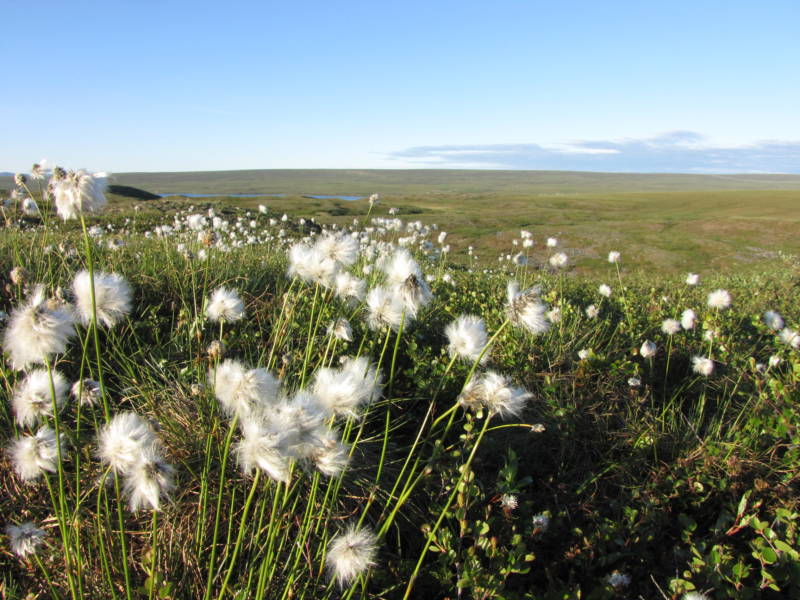
Two new studies out of Stanford’s Carnegie Institution for Science raise interesting questions about human influence on the future of the world’s climate and about our role in global warming thousands of years ago.
The first study, authored by Ken Caldeira and Long Cao, used models to examine the climatic effects of actively removing CO2 from the atmosphere. What they found is that even if all CO2 emissions were magically halted, and CO2 levels in the atmosphere were instantly reduced to pre-industrial levels, the resulting drop in temperatures would offset less that half of the CO2-induced warming.
This discrepancy, the scientists say, is due to complexities in the carbon cycle. First, as CO2 in the atmosphere drops, the ocean, which acts as a carbon sink by absorbing CO2 from the air, will release more of its stored carbon. Second, the carbon balance on land will change, too. As temperature and CO2 concentrations change, soils will begin to release more carbon than plants take in.
Therefore, in order for CO2 scrubbing to be effective, said Caldeira in an email, we may have to commit to it for a long time. “To maintain atmospheric CO2 at low levels would require removing CO2 from the atmosphere as it degassed from the oceans and land surface. This process takes many decades, even centuries,” he wrote.
That revelation, “has obvious implications for the public and for policy makers as we weigh the costs and benefits of different ways of mitigating climate change,” according to Caldeira.
The second study, which has been the target of some skepticism in the blogosphere, suggests that humans may have been influencing the climate thousands of years ago, long before was previously believed. In the paper, authors Chris Doughty, Chris Field, and Adam Wolf, all of the Carnegie Institute, propose that the extinction of mammoths 15,000 years ago, caused in part by human hunters, may have contributed to global warming by causing a change in the albedo of the land surface in the far north. Mammoths ate birch, which kept the dark green plant in check across the grasslands of North America and present-day Russia. As the population of the large mammals declined, the authors assert, the birch spread and dominated the lighter-colored grasslands, which effectively changed the color of the landscape. A darker land surface absorbs more heat than a light one. This in turn heats up the air, creating a positive feedback loop that encourages the spread of more birch.
The authors estimate that the mammoth extinction could account for approximately one-quarter of the spread of birch at that time, and that the increased birch cover could have warmed the planet .18 degrees F over several centuries.
Postcard from Prudhoe Bay
The only way to drive to the Arctic Ocean from Toolik Station, or really, any place else in Alaska, is to take the Dalton Highway north until it ends in Prudhoe Bay. I thought the Haul Road was bumpy from Fairbanks to Toolik, but taking it the additional 140 miles from Toolik Field Station to Prudhoe Bay took things to a whole new level. It’s the kind of drive where you have to be careful not to touch your face, because the van is bumping along so wildly, you’ll likely poke your eyeball out. Which is particularly challenging when you also need to be vigilantly swatting mosquitoes the size of hummingbirds.
Very few people actually live in Prudhoe Bay, but at any given moment it is home to thousands of workers working 12 hours shifts, two weeks on, two weeks off, at the country’s largest oil field. It’s basically a gigantic work site, operated by BP. The airport and general store are down the road a bit in the settlement of Deadhorse. And there’s no other way to say it — Prudhoe Bay comes across as one depressing place.
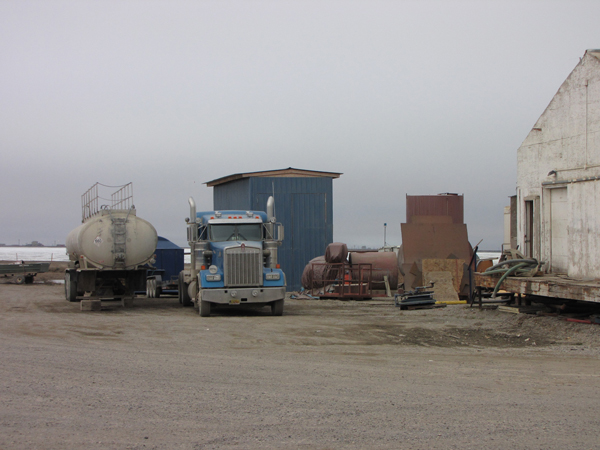
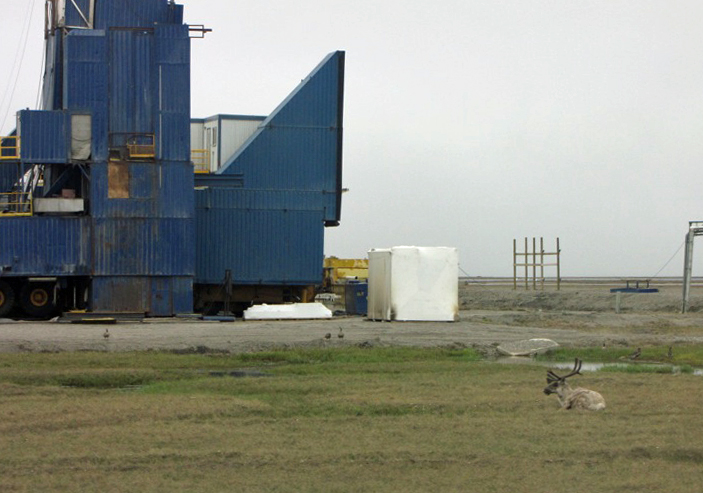
We made the four-hour journey there last Tuesday, arriving just after 4pm. The temperature was in the 30’s, but the wind made it feel much colder. Gray clouds hung low and close to the ground. Massive oil rigs and processing facilities dominate the landscape in Prudhoe, along with modular unit-type buildings used as living quarters, and parking lots full of trucks. Everything was covered in gray mud. The sky was gray, the icy water was gray, the mud-coated buildings were gray, and even the ocean sand dunes and the marshy landscape around the facilities were a muted, grayish brown. Someone in our group described the scene as “post-apocalyptic,” and another mentioned the movie Blade Runner. Looking around at the trash-strewn landscape, the huge trucks caked with dirt, and, in one spot, the massive pipes belching flames, I was reminded of Cormac McCarthy’s novel, The Road.
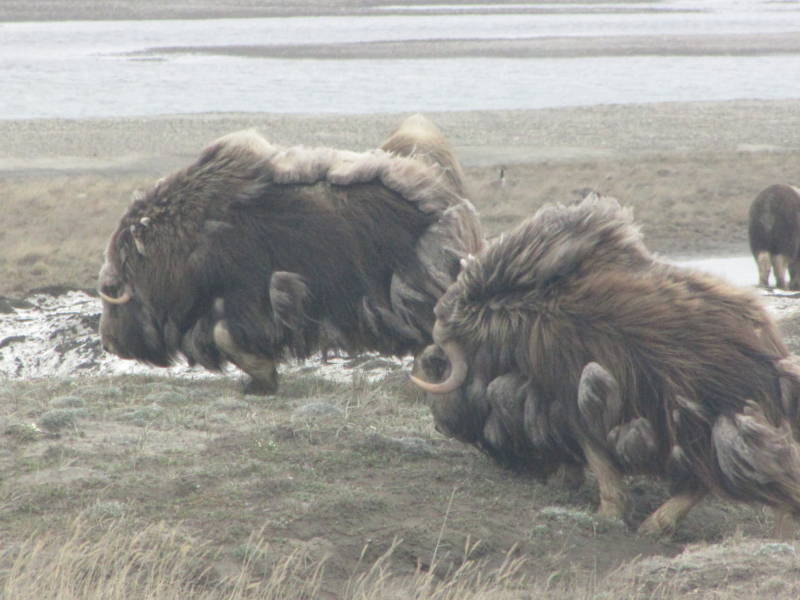
To actually access the Arctic Ocean, which was our group’s true mission, we had to pass through a BP checkpoint. And to be able to do that, we had to be on a company-sanctioned tour, which consisted mainly of driving around looking at buildings and equipment, with a nice but not-very-chatty security guard. But a true highlight was just a few minutes into the bus ride when we encountered a group of wild muskoxen. (Another highlight was the BP promotional video we were forced to watch before we boarded the bus.) Then we headed to a rocky beach, where three brave souls took a full-body plunge into the 29 degree waters of the Arctic Ocean. The chunks of ice floating on the surface were enough to deter me from even wading in at all.
In addition to all the headlines about the Gulf disaster, BP has also been drawing attention over developments here in Prudhoe Bay. According to a recent article in The New York Times, the company plans to start drilling this fall at a new site about three miles off the shore at Prudhoe Bay, despite Obama’s moratorium on new offshore drilling projects. By building an artificial island in the shallow waters, BP has acquired an “onshore” designation for the controversial project, the article explains. This graphic from the Times illustrates how the proposed drilling would work.
Our tour guide didn’t discuss the Liberty project, and when we called ahead about our visit, a BP spokesperson said that no one would be available to talk with us. So, after our tour, we warmed up with some hot chocolate, and then we took our cold selves back to Toolik Field Station with lots of new questions and not many answers.