All posts by Gretchen Weber

Positive Feedbacks in a Warming Arctic

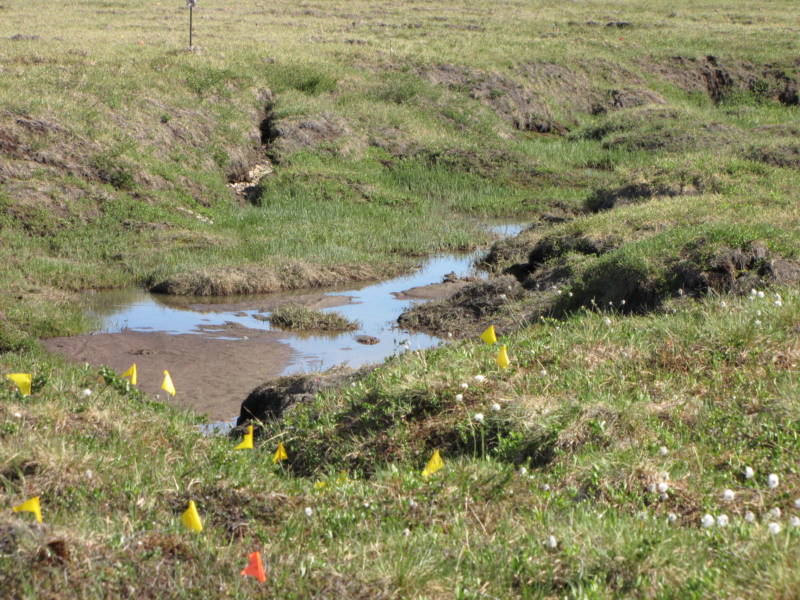
A thermokarst study site near Toolik Field Station (Photo: Gretchen Weber)

The Arctic is warming, almost twice as fast as the global average, according to a recent study.  Much of the accelerated warming here is due to positive feedbacks, including one related to the loss of summer sea ice in recent decades.  White surfaces, like snow and ice, reflect most of the sun’s energy and have a high albedo, while the unfrozen ocean absorbs it.  This creates a feedback loop: the warmer the temperatures, the less sea ice.  The less sea ice, the more heat absorbed, the higher the temperatures.  (As Molly Samuel reported recently, scientists are studying albedo as it relates to California’s snowpack and water supply.)

Another concern in a warming Arctic is thawing permafrost.  Earlier this week, I was out with my polar fellow colleagues measuring the depth of the permafrost here around Toolik Lake with a metal probe and a plastic ruler.  In some places we measured it to be just centimeters below a thin surface layer of plant-supporting soil called the “active layer.”

According to Breck Bowden, a scientist from the University of Vermont who studies permafrost here at Toolik, the latest modeling shows that approximately half of the permafrost in the Arctic will thaw in the next 50 years.  That’s significant not just for the Arctic ecosystems, but potentially for the entire planet.  Scientists estimate that there’s one to two times as much carbon frozen in the Arctic soils as there is currently circulating in the atmosphere, said Bowden.   The problem is that as the permafrost thaws, that carbon (mostly in the form of frozen organic matter), some of which has been frozen for thousands of years, will be processed by microbes in the soil and ultimately released into the atmosphere as greenhouse gases: CO2 and methane.

“So why should someone who is living in Alabama, or Nigeria, or the Phillippines worry about what’s going on the Arctic?” said Bowden. “Well, they should worry a lot if there’s going to be a massive amount of CO2 that gets into the atmosphere and your sea level rises or your crops fail because of changes that are related to CO2 changes globally. What happens here in the Arctic is going to affect everything on the globe.”

One indicator that the permafrost in the Arctic is already thawing is the increase in thermokarsts, which are places where the permafrost has thawed and the ground has collapsed, causing a disturbance in the landscape, and often releasing large amounts of sediment into nearby streams. Several scientists, including Bowden, study thermokarsts around Toolik Lake, and they’ve observed that the number of them is increasing.

A group of us were in the field with Bowden yesterday as he paid a visit to one of his research sites about 20 minutes up the Dalton Highway from Toolik Field Station, and a 30-minute hike across the uneven ground that defines the tundra landscape.
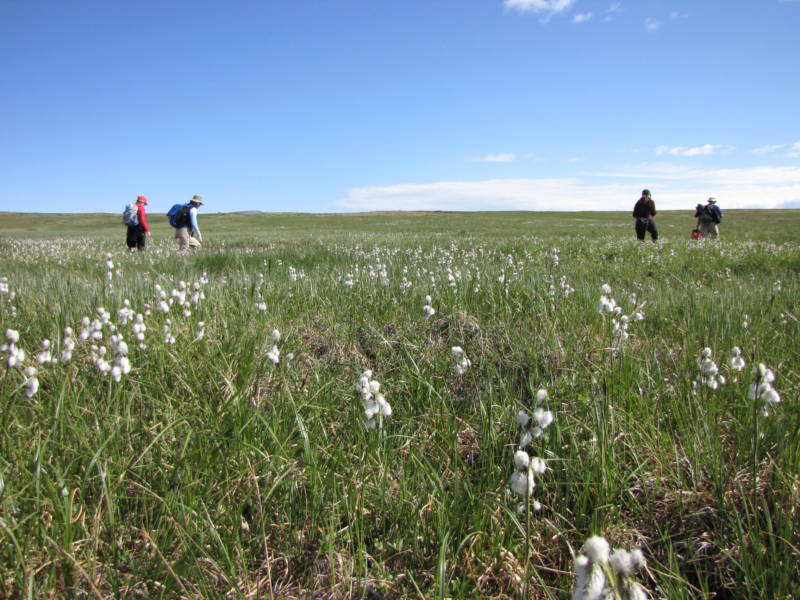
Picking our way through the tundra (Photo: Gretchen Weber)

“The Arctic explorers uniformly and universally cursed walking on the tundra, and you can see why,” Bowden explained as we hiked.  “You step on it, you break your ankle. You step between it, you break your ankle.  It’s very lumpy.”

The thermokarst we hiked to was not particularly catastrophic-looking to my untrained eye.  It’s a gully that’s about 300 meters long, 20 meters wide, and about five meters deep.  The collapse happened in 2003, and in the subsequent years it has widened, and vegetation has grown back along its sides, giving them a gentle, convex shape.  Someone like me might have hiked down one side of this thermokarst and up the other without giving it much thought.

Bowden was careful to point out that thermokarsts are a natural phenomenon.  (They also have been known to occur when roads and houses are built in the Arctic without proper insulation.)  But he also believes that the increase in thermokarsts observed in remote areas around Toolik is not natural.

“Thermokarsts have been going on as long as there’s been an arctic landscape, and there have been more of them when it’s warmer and fewer of them when it’s colder,” he said.  “But I do firmly believe that there are more of them now than there were 20 years ago, as a consequence of warming we can document in a variety of places.  The question is, why is the warming occurring?”
A Sauna…for Science

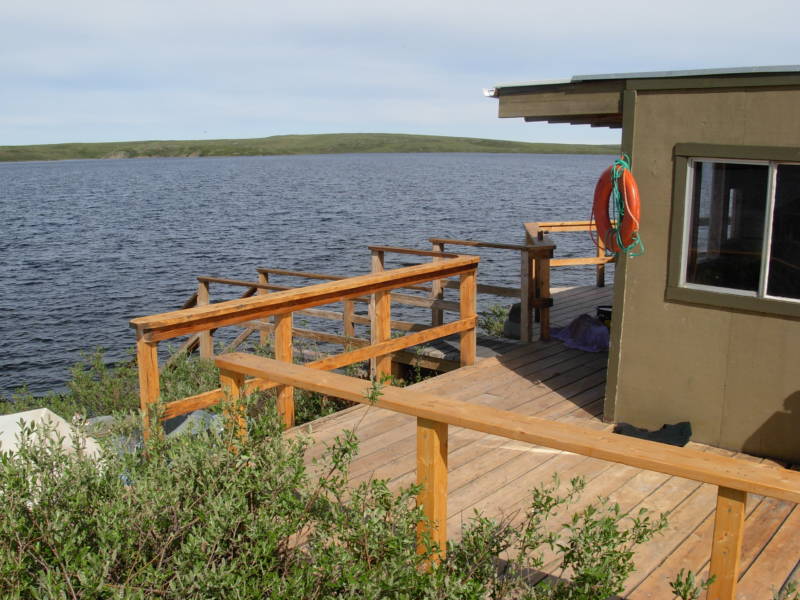
The sauna at Toolik Field Station

Last night I celebrated my first summer solstice in the Arctic by participating in one of the most beloved activities here at Toolik Field Station.  I took a sauna. Then I jumped in the lake, which still had ice on it one week ago, according to the Toolik Naturalist’s Journal.  The sauna at Toolik is spoken about in almost reverential tones, and with good reason.  It’s a small wooden cabin a few dozen yards from the main camp, perched at the water’s edge, and there’s a window that lets you soak up the stunning expanse of lake, tundra, and mountains, while you warm your bones after a plunge in the frigid waters.  “Sauna Nirvana” was how one of the scientists described the experience.

But people don’t just love the sauna for the view and the warmth.  They also love it because here at Toolik, it’s the main way to get clean.  The process entails warming up in the sauna, running outside and dumping lake water over yourself, soaping up with some biodegradeable cleanser, dumping more lake water over yourself, and then running back into the sauna so you don’t freeze to death.  Or, if you are hard-core, you can skip the water-dumping part and just jump in the lake.

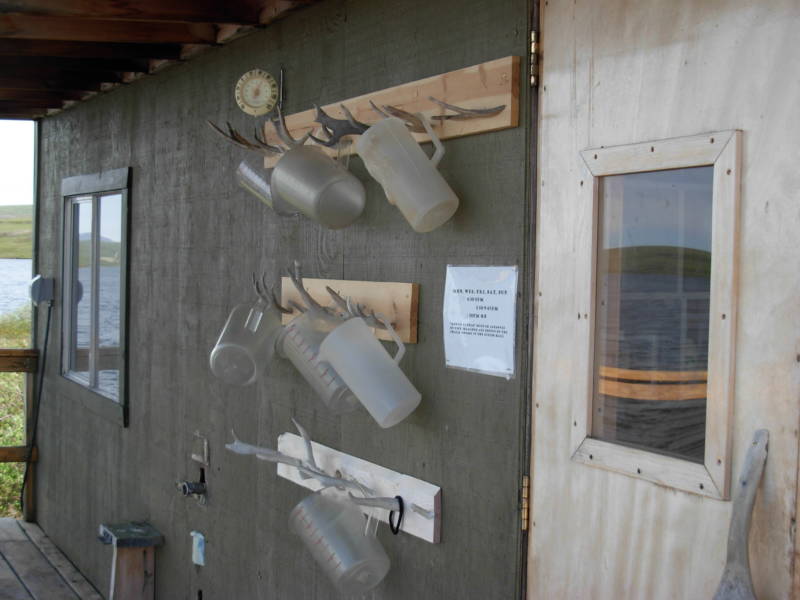
Pitchers for bathing, on hooks outside the sauna (photo: Gretchen Weber)

The station didn’t have any showers at all until 2001 (researchers have been coming here since 1975), and even now, residents are limited to two two-minute showers per week.  Water conservation here is taken very seriously, not because there isn’t enough supply, but because all of the waste water from the showers, kitchen, and outhouses, has to be trucked 140 miles north to Prudhoe Bay for disposal at a cost of $1.24 per gallon.  Because this is such an active research site, scientists aren’t too keen on the idea of a leach field right next to the spots where they are sampling nitrogen and phosphorus.  So, in the name of science, we sauna.

Last summer, 85,680 gallons of waste water were trucked out of Toolik, which translates to 9.77 gallons of water per day, per person, according to Michael Abels, the Toolik Operations Supervisor.   Compare that with the 99 gallons per day that San Franciscans use, per capita, or the 287 gallons in Sacramento.  True, the conditions here are pretty extreme, but it’s an interesting experiment to see what it’s like to get along on 10 gallons of water each day. Of course, no one here is watering any lawns or trying to keep a swimming pool full.  And since we’re only allowed one load of laundry every two weeks, maybe everyone smells a little differently than they do in the rest of the US–but I think most people here would agree that living on 10 gallons of water a day isn’t half bad.

Field Notes from the Arctic: The Journey North

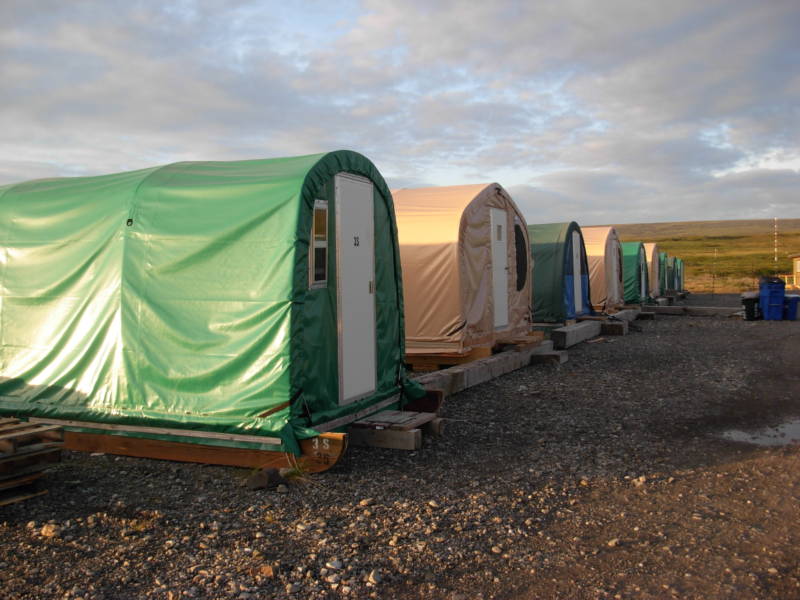
Sleeping quarters at Toolik Field Station, at midnight (photo: Gretchen Weber)

Naively, I thought Alaska’s “Haul Road” would be smooth.  For some reason, I’d pictured the 414-mile route that runs north, from near Fairbanks, to Deadhorse, near Prudhoe Bay, to be a picture of modern asphalt-laying engineering, and that, during our 350-mile drive to Toolik Field Station, I would be able to catch up on some of the sleep I’d been missing after two nights in a University of Fairbanks dorm room (think college students on summer break in a place where the sun barely sets).  After all, this is the road that tracks the Trans-Alaska Pipeline, connecting the largest oil field in North America (which happens to be operated by BP) to the rest of the continent.

As it turns out, I was heartbreakingly wrong.  Roughly a quarter of the road, which is officially called the Dalton Highway, is paved.  And the paved parts are actually the worst. Between the frost heaves caused by the alternate freezing and thawing of the ground, and those Ice Road Trucker tires chewing up the road, driving the Haul Road is more like an amusement park ride, at least from the back seat of a 15-person van.  Suffice it to say that I did not catch up on any sleep during the ride, which turned out to be a good thing, because the second half of this ride was through some of the most beautiful country I have ever seen.

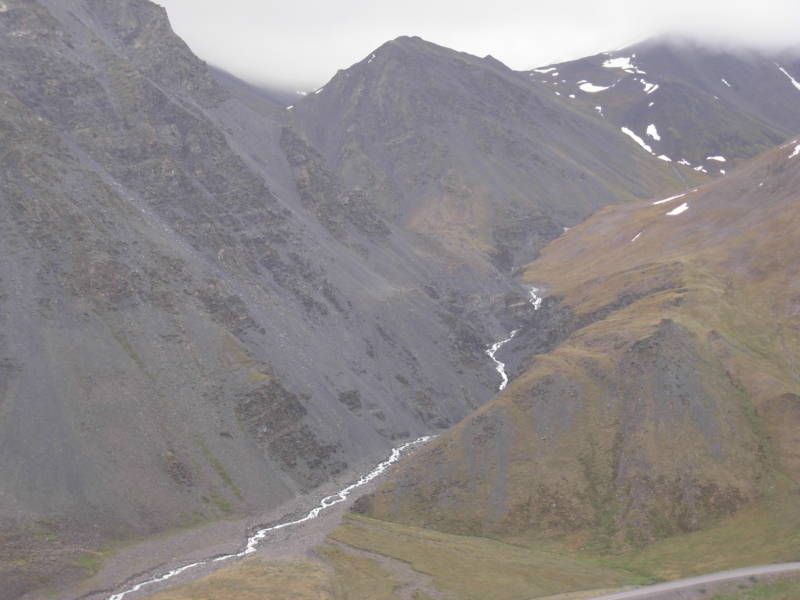
View from just below Atigun Pass (4643 ft) in the Brooks Range (photo: Gretchen Weber)

About 70 miles north of Coldfoot, one of the three “towns” along the road, and 120 miles north of the Arctic Circle, we passed a sign marking the “Farthest North Spruce Tree.”  It actually wasn’t the farthest north spruce tree we saw, and also, it was dead, but right around there was where we crossed the treeline, leaving behind the white and black spruces stunted from extreme temperatures, and crossed into the tundra.

Back in Fairbanks, over breakfast (reindeer sausage), a biologist named Andi Lloyd had talked about her research on the treeline in Alaska.  There’s a lot of evidence showing that climate in the Arctic is changing faster than any place on Earth.  Here, mean winter temperatures have climbed between six and eight degrees F since 1960, and in summer, between two and three, said Lloyd.  This change is affecting how the boreal forest is expanding, she said, and causing the treeline to move north. In some places, such as the Seward Peninsula, Lloyd says it has moved ten kilometers (six miles) in the last century. “The Arctic is changing faster than we can study it,” said Lloyd.

But the relationship between climate change and the forest is not as simple as warmer temperatures equal northern expansion.  Rising temperatures also mean a drier environment, said Lloyd, as precipitation in the region has not increased as much as temperatures, and more warmth means more evaporation.  Lloyd and others have found that trees in the boreal forest are increasingly drought-stressed, which means they are growing much slower than they did in the mid 1900s, and that they are more vulnerable to insect infestation.

“I had a naive idea that the temperature controlled everything, but then I had a dawning awareness that the boreal forest is a moisture-limited forest,” she said.

There are no trees here at Toolik Station, where I will be for the next two weeks talking to scientists about the changing Arctic. The camp is nestled on the shore of Toolik Lake, in the northern foothills of Alaska’s Brooks Range. During the time I am here, the population of the camp will be about 140 people.  We arrived at 10 p.m., after 13 hours of driving, and the sun was still high in the sky.  It was still up there casting shadows when I awoke at 2:30 a.m.  At breakfast time, however, camp is encased in fog, and the temperature is about 45 degrees–kind of feels like I never left San Francisco.

Climate Watch associate producer Gretchen Weber is spending two weeks at Toolik Station, as a Logan Polar Science Fellow.

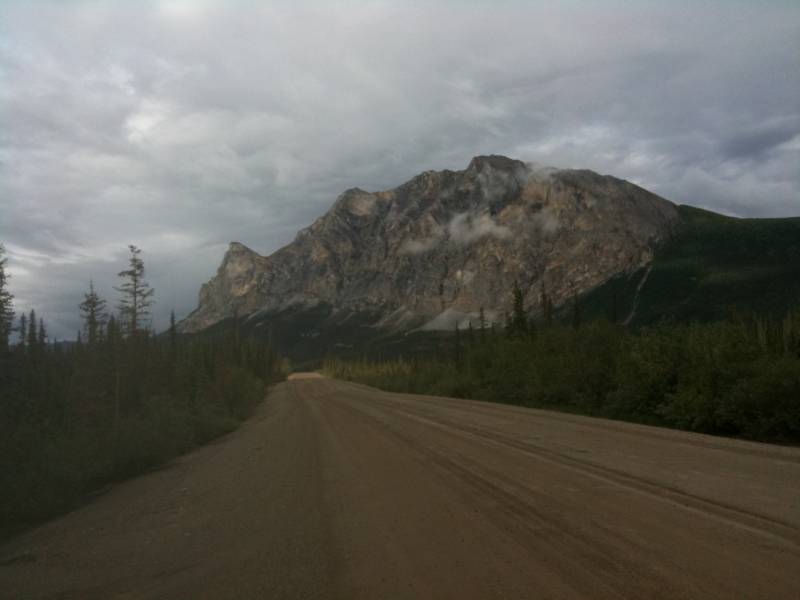
The Dalton Highway (photo: Gretchen Weber)

“Merchants of Doubt” Traces Roots of Denial

A new book asserts that the very same group of Cold War ideologues who banded together to spread doubt about the link between tobacco and cancer also spearheaded the first efforts to discredit climate scientists as they began warning about the effects of anthropogenic global warming.
In “Merchants of Doubt,”  science historians Naomi Oreskes of UC San Diego and Erik Conway of the NASA Jet Propulsion Laboratory at CalTech, argue that the seeds of the current groundswell of climate change “denial,” and an assault on science in general, were planted decades ago.

The authors say it started with a handful of respected scientists, who, motivated by free-market political ideology and funded by the tobacco industry, worked to cast doubt on well-established scientific knowledge.

Conway discussed the book last Friday with Greg Dalton of Climate One at the Commonwealth Club of San Francisco.

“One of the strategies the tobacco companies decided to pursue in the early 1990’s is the undermining of science, broadly,” said Conway. “They began to use their PR apparatus not just to undermine the science of tobacco and cancer and health effects, but…to attack all regulatory sciences in general.”

That strategy was one of the motivations for the book, said Conway.  “We wondered, ‘What effect will this have on science when it’s being under continuous corporate assault, especially in a society that is very dependent on science and engineering?”

According to Conway, one of the scientists central to the tobacco industry’s efforts was Fred Seitz, a physicist and former president of the U.S. National Academy of Sciences.   Others were the prominent physicists Fred Singer, Robert Jastrow, and William Nierenberg, who was once the director of the Scripps Institution of Oceanography in San Diego.  All were associated with a conservative think tank, the George C. Marshall Institute.  In the 1990’s, said Conway, “the Marshall Institute decided to make its main issue the effort to cast doubt on global warming.”

Conway said that the scientists were motivated by their experiences during the Cold War and the political beliefs they developed during that time.

“Really, this is about opposition to government regulation,” he said. “We don’t think the scientists were in this for the money. They were working for the tobacco industry, to defend Star Wars (the Reagan administration’s space defense plan), to prevent acid rain and global warming regulation.” Conway says these “merchants of doubt” were pursuing “a political ideology to defend market fundamentalism and their political beliefs, not because they were in the pay for big money.”

The authors argue that the legacy of this Cold War ideology lives on in today’s climate change “denial” discourse.  The seeds planted then continue to sprout, they contend, despite the fact that today’s “merchants” are far less influential within the scientific community.

“There is a second generation, but one that is not nearly as respected,” said Conway. “The think tank network  now exists and has been institutionalized and is self-perpetuating. They simply hire their own people who have some credentials, rarely actually climate scientists, who continue to do that kind of thing.  But they don’t have nearly the kind of stature that Nierenberg did or that Fred Seitz had.”

A 2008 study also makes a link between conservative think tanks an climate skepticism.  The report, published in the journal Environmental Politics, found that of 141 English-language, “environmentally sceptical” books published between 1972 and 2005, 92% have links to conservative think tanks, 90% of which, the report found, “espouse environmental scepticism.”

NASA Launches Arctic Sea Ice Expedition

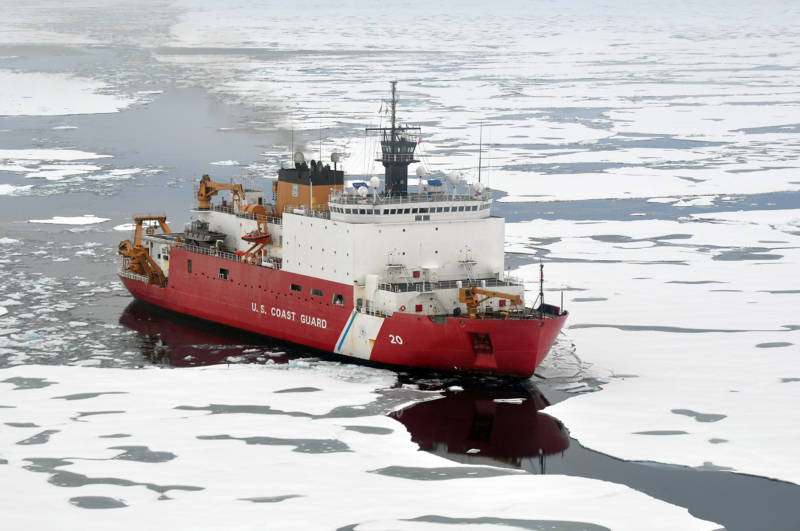
Coast Guard Cutter Healy (Photo by Petty Officer Patrick Kelley, US Coast Guard)

Next week, a NASA team of more than 40 scientists will take to the seas for a five-week expedition in the Arctic to study how changing conditions there are affecting ocean chemistry and ecosystems.  The voyage, NASA’s first dedicated oceanographic research mission, is named ICESCAPE, which stands for “Impacts of Climate on Ecosystems and Chemistry of the Arctic Pacific Environment.”  It will take place aboard the US Coast Guard Cutter Healy.

“We’re  trying to address what is the long term impact of climate variability and change, both natural and anthropogenic, on the biogeochemistry and ecology of the Arctic,” said Paula Bontempi, program manager for NASA’s ocean biology and biogeochemistry research program.

The expedition will give scientists a chance to make field observations about the ocean, sea ice, and the atmosphere in regions where researchers often must rely on remote sensing technology for their data.  One main focus of the research will be to observe how changes, such as a substantial decrease in sea ice, may be affecting the ocean’s ability to absorb CO2 from the atmosphere and the consequent effects on ecosystems.

“The Arctic is in the midst of some substantial changes,” said ICESCAPE Chief Scientist Kevin Arrigo of Stanford.  “In the last 10 years, the ice-free season in the Arctic Ocean has increased by about 45 days.  And this has a big impact on organisms in the Arctic that are keyed to these events.”

Arrigo says that the sea ice retreats about 28 days sooner than it did just a decade ago, and advances about 17 days later. He says this change has shifted the timing of food production.  Phytoplankton, the base of the food chain in the Arctic Ocean, are now growing a month earlier than they did in the 1990s, says Arrigo, which could spell a problem for organisms such as the California gray whales, which time their migrations around peak food production.

“Over the years satellite imagery has shown a significant decline in the Arctic ice cover,” said Don Perovich, a research geophysicist at the Cold Regions Research and Engineering Laboratory in Hanover, NH, who is part of the ICESCAPE expedition. “But there’s really more to it than just the ice.  It’s important to remember that sea ice isn’t just some isolated component. It’s part of larger system.”

Sea ice, he said, serves as a barrier between the atmosphere and the ocean, limiting the exchange of heat, moisture and gases; acts as a reflector of sunlight; and is a habitat for a rich marine ecosystem.

“It’s an ecosystem where sea ice and biology are intricately intertwined,” said Perovich. “You can think of the ice and the biology as executing this intricate dance, but it’s a dance where one of the partners has started changing its steps. And that partner is the sea ice cover.”

The 2010 ICESCAPE expedition starts in Dutch Harbor in the Aleutian Islands, will continue across the southern Chukchi Sea and into the Beaufort Sea along Alaska’s northern shelf.  A second expedition is planned for 2011.   NASA estimates the cost of the ICESCAPE project to be $10 million over four years.

The expedition blog has already launched, and will be updated daily once the expedition is underway, according to NASA spokesman Steve Cole.

I’ll be launching my own “Arctic expedition” next week.  Starting June 18th, I’ll be spending two weeks with climate scientists at the Toolik Field Station in northern Alaska, as part of the Logan Science Journalism Program, run by the Marine Biological Laboratory in Woods Hole, MA.   Check back here for periodic dispatches about the science, the landscape, and the impacts of constant daylight on one journalist’s mental state.

Study Eyes Climate Impacts on Ocean Ecosystems

Farallone Islands (Photo: Jan Roletto, NOAA)

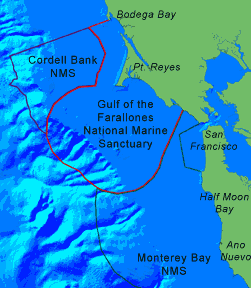
The north-central California coast is likely to experience rising seas, more extreme weather events and coastal erosion, increased ocean acidity, and shifting marine habitats as a result of climate change, according to a new report released today from the National Oceanic and Atmospheric Administration.

The report, “Climate Change Impacts: Gulf of the Farallones and Cordell Bank National Marine Sanctuaries,” was developed in collaboration with 16 agencies and organizations and was released today at the California Academy of Sciences in San Francisco.

“This report provides insight into how climate change will play out in our region, how the ocean environment in the Gulf of the Farallones and over Cordell Bank will change and how the organisms that live there will be impacted by it,” said the report’s lead author, oceanographer John Largier of the Bodega Marine Laboratory and UC Davis.

Largier was careful to explain that the report does not make predictions about the future, nor is it a complete assessment of current conditions.

“It’s a group of scientists getting together and making their best judgment of how things are changing, how things will change, and what are we most concerned about,” said Largier.

Topping the list of concerns, he said, are rising sea levels of approximately 1.5 meters by 2100, warming oceans, an increase in the variability of precipitation (drier dry years and wetter wet ones), and ocean acidification, which he called, “the other CO2 problem,” and stressed as both a global and regional concern.

“There are a lot of things we know that are happening.  The real question we have to figure out now is how much this could all this change the ecosystem,” said Largier.  “The system is so complex, it’s not totally clear how it’s going to evolve.  Some populations might do a lot better with climate change, and others are going to be hammered. ”

NOAA
Image: NOAA

The report makes some recommendations for the sanctuaries, including a greater focus on public education, implementing policies that allow for flexibility and adaptation to change, and mitigating other factors that impact the ecosystem such as pollution, invasive species, fishing, and infrastructure development.

“We are just now getting to the state where we say what does climate change mean for us, for my community?” said Largier.  “It’s warming, sure, but what does it mean for ‘here’?  How is it going to play out? And what are the things that are going to happen that really matter at a regional and local level?  This is a huge scientific challenge that we are struggling with, but it’s an essential management and policy challenge.”

Bill Douros, the West Coast Regional Director of NOAA’s Marine Sanctuary program expressed the same sentiment in his opening remarks at the Cal Academy today.

“As we all know, the ocean is going to warm, it’s going to get more acidic, sea levels are going to rise, and those concepts are important, but what’s really important to someone who might be managing those marine protected areas is “How much?” and “By when are the sea levels going to rise and temp going to increase?”  And that’s what this report today provides to us.”

Key Issues highlighted in the report:
⇒ Observed increase in sea level (100-year record at mouth of San Francisco Bay)

⇒ Expected increase in coastal erosion associated with changes in sea level and storm waves

⇒ Observed decrease in spring runoff of freshwater through San Francisco Bay (decreased Sierra snowpack)

⇒ Observed increase in precipitation variability (drier dry years, wetter wet years)

⇒ Observed increase in surface ocean temperature off the continental shelf
(50 year record)

⇒ Observed increase in winds driving coastal upwelling of nutrient-rich waters and
associated observed decrease in surface ocean temperature over the continental
shelf (30 year record)

⇒ Observed increase in extreme weather events (winds, waves, storms)

⇒ Expected decrease in seawater pH, due to uptake of CO2 by the ocean

⇒ Observed northward shift of key species (including Humboldt squid, volcano
barnacle, gray whales, bottlenose dolphins)

⇒ Possible shift in dominant phytoplankton (from diatom to dinoflagellate blooms)

⇒ Potential for effects of climate change to be compounded by parallel
environmental changes associated with local human activities

Has the Southwest Passed “Peak Water”?

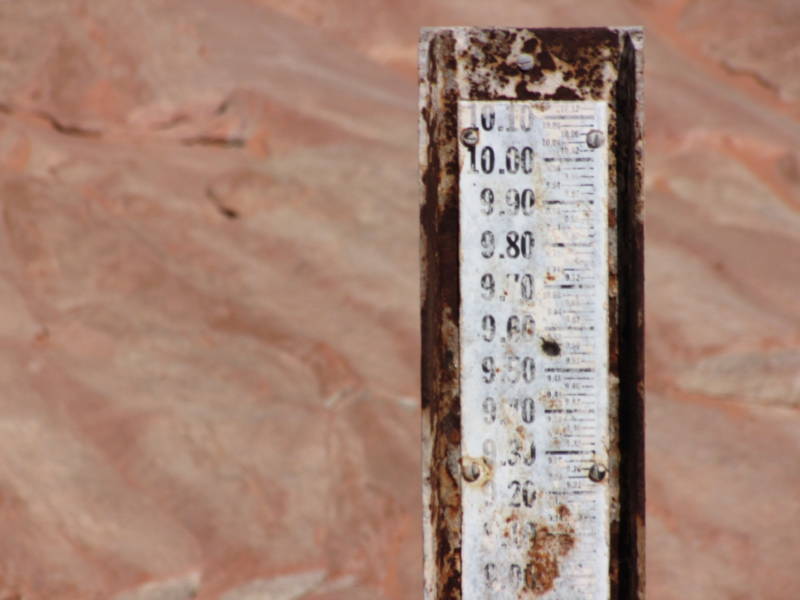
Historic water marker on the shores of Lake Powell, April 2010 (Photo: Gretchen Weber)

People have been talking about “peak oil” for decades now, debating when oil production will peak and then start to decline as remaining resources become scarcer and harder to access.   Less attention has been given to the idea of “peak water,” which is the subject of a new analysis by the Oakland-based Pacific Institute.  The concepts of peak oil and peak water aren’t entirely analogous for a number of reasons, not the least of which is the fact that, overall, water is a renewable resource.  But there are limits to what water is renewable, and how fast supplies recharge.  While the world is not going to run out of water, the report authors argue, in parts of the world including the southwestern US, we’re likely long past the point of peak water.  That matters a lot, said study co-author Meena Palaniappan, because unlike oil, which is shipped across the world, water is still a local and regional issue.

“We’re not going to run out of water,” said Palaniappan, “but we’re going to see a change.  We’re at the end of cheap, easy access to water.  We’re going to have to go further, pay more, and expect less in terms of fresh water.”

The report divides peak water into three types: peak renewable water, the total annual supply of water from sources such as rainfall, rivers, and groundwater sources that are refilled relatively quickly; peak non-renewable water, which includes groundwater aquifers that either do not refill or do so extremely slowly; and peak ecological water, past which, the value of ecological services provided by water is greater than the value it provides in direct human services.  Or simply, it’s the point where taking water causes more ecological damage than it’s worth.

“The goal is to find the sweet spot, where we can maximize the human value water provides as well as the ecological value,” said Palaniappan.

In the western US, we are definitely past peak ecological water, said Palaniappan.  As evidence of this, she cited the Central Valley aquifer, which is being pumped down far faster than it can recharge and the Colorado River, which supplies Southern California with much of its water, and no longer reaches the ocean most years because every drop of it is appropriated for human use.

Last week, I was in Salt Lake City to talk with Terry Fulp, the Bureau of Reclamation‘s Deputy Regional Director of the Lower Colorado Region.  He said that after 10 years of drought on the Colorado, each of the seven states that draw from it are still getting their allotted water supply, and the reservoirs are about half full.  The Colorado River system, which supplies water to more than 30 million people, has a huge storage capacity, equal to four times the river’s annual flow, Fulp said. But increasing demand due to the drought and to population growth have the Bureau looking ahead at the challenges the system may be facing in the not-too-distant future.

“The supply and demand curves basically have crossed,” said Fulp.  “If you look over the last 100 years, the water supply has been above the demand, but demand has been growing, and essentially, today they have met.  We’re operating on a tight margin, a very tight margin, so the question is about projecting what we think the future will look like twenty years out.”

Like Palaniappan, Fulp says that conservation is critical and may become increasingly so in the near future. But even so, he said he doubts the demand for Colorado River water is going to decrease. The supply may, however.  Long droughts are common in the paleorecord, and water managers are planning for an additional 10-15% reduction in flow due to the effects of climate change.   This matters a great deal in a system where just about every drop is spoken for.  Fulp says that developing methods for accessing new water supplies, such as groundwater and desalinization plants, needs to be central to a long-term water management strategy for the region.

What’s Soot Got to Do With It?

By Andrew Freedman, Climate Central

Most of the discussion regarding the highly anticipated Senate energy and climate change legislation, which Senators John Kerry (D-MA) and Joseph Lieberman (I-CT) introduced last week following months of negotiations, has focused on the bill’s provisions pertaining to offshore oil and gas drilling, incentives for renewable energy, and cap on carbon emissions for certain economic sectors.

Although the bill’s carbon dioxide (CO2) emissions reduction targets–an 80 percent emissions cut by 2050 compared to 2005 levels–would yield significant long-term climate benefits, the bill also addresses man-made climate change in the shorter term.

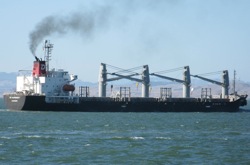
Stack emissions from a bulk freighter in San Francisco Bay. Photo: Craig Miller

A little-noticed portion of the bill concerns short-lived air pollutants such as black carbon (otherwise known as soot) and tropospheric ozone. These pollutants disrupt the climate on far shorter timescales than CO2, which scientists consider the most important greenhouse gas and the main villain in the climate change story.

Once emitted by the burning of fossil fuels, the use of solid-fuel cooking stoves or biomass burning, among other sources, black carbon only stays aloft for days to a few weeks before being washed out of the atmosphere by precipitation. This means that once black carbon emissions are reduced, there would be almost immediate climate benefits.

The Kerry-Lieberman bill would direct the US EPA to use its existing authority under the Clean Air Act to reduce black carbon emissions from diesel engines, using devices called diesel particulate filters which trap soot emissions before they escape from a vehicle’s tailpipe.

It would also call upon the EPA to publish a report on black carbon “sources, impacts, and reduction opportunities,” including an examination of how foreign assistance programs could help reduce emissions in other nations. In addition, the bill would establish an inter-agency process to facilitate “fast mitigation strategies” that focus on non-CO2 warming agents. This process would involve agencies such as the EPA and the Energy Department (DOE).

How big a climate player is black carbon?

Black carbon is thought to be a powerful warming agent in many regions, particularly snow and ice-covered areas such as the Himalayas and the Arctic. As its name suggests, black carbon particles are dark in color, and are therefore strong absorbers of incoming solar radiation. They warm the atmosphere and alter cloud characteristics, and when they land on brightly colored snow and ice, they darken the surface, causing a large uptick in the absorption of solar radiation, which hastens melting.

In the Arctic, black carbon contributes to a feedback loop that has helped cause a rapid melting of sea ice cover and drive temperatures upward at nearly twice the rate of the rest of the world. The decade from 1999-2008 was the warmest ten-year period in the Arctic of the past 2,000 years, according to a study published in the journal Science in 2009.

In addition to Arctic warming, black carbon has been shown to alter regional climate patterns such as the Indian monsoon, and human inhalation of soot particles is known to be a major health hazard worldwide.

In recent years numerous scientists, most prominently V. (Ram) Ramanathan of the Scripps Institution of Oceanography and James Hansen of NASA have called for significant cuts in short-lived air pollutants as a way to reduce climate change in the near term, while efforts continue to address CO2 emissions in the long run. Ramanathan’s studies have shown that black carbon may be the second largest contributor to global climate change.

In March testimony before the House Select Committee for Energy Independence and Global Warming, Ramanathan stated that the current global warming effect of black carbon “may be as much as 60 percent” of the CO2 warming effect. He noted, however, that there are significant uncertainties about black carbon’s role in the climate system.

Ramanathan told House lawmakers that reducing black carbon emissions “may provide a possible mechanism for buying time to develop and implement effective steps for reducing CO2 emissions.”

Bill is aligned with recent scientific advice

The Kerry-Lieberman bill’s inclusion of rapid mitigation strategies is consistent with advice contained in a new paper from an interdisciplinary panel of scholars, published on May 11 by the University of Oxford in the UK. The paper argues that non-CO2 drivers of climate change have been overlooked “for reasons of convenience in framing policy” rather than due to scientific concerns, and it presents a vision for an overhaul of climate policy that would include a much more prominent role for addressing emissions of short-lived air pollutants.

“Since action on these non-CO2 ‘forcers’ may have quicker impact and large, immediate primary benefits, we would give them priority, now. In contrast to long and arduous tasks, these can be ‘quick hits’,” the report states.

The bill’s provisions are also consistent with the findings of a scientific panel that examined options to address rapid Arctic climate change. In a 2008 report, the panel strongly endorsed pursuing emissions reductions of black carbon and other short-lived air pollutants. “…Curbing short-lived climate forcing agents, through rapid international action and Arctic nation leadership, may prove to be the best and perhaps only viable strategy for slowing Arctic warming in the time frame of years to a decade,” the report stated.

Considering that the Kerry-Lieberman bill itself faces a highly uncertain future, with significant resistance in both political parties, it may yet take even longer to address what many experts consider to be a ripe, low hanging fruit of the climate challenge. This does not bode well, given the much more difficult work that lies ahead to reduce CO2 and other longer-lasting greenhouse gases.

In April, Molly Samuel reported on the effects of black carbon and snow albedo on the California’s water forecasting efforts.

Rising Temps Taking a Toll on Lizards

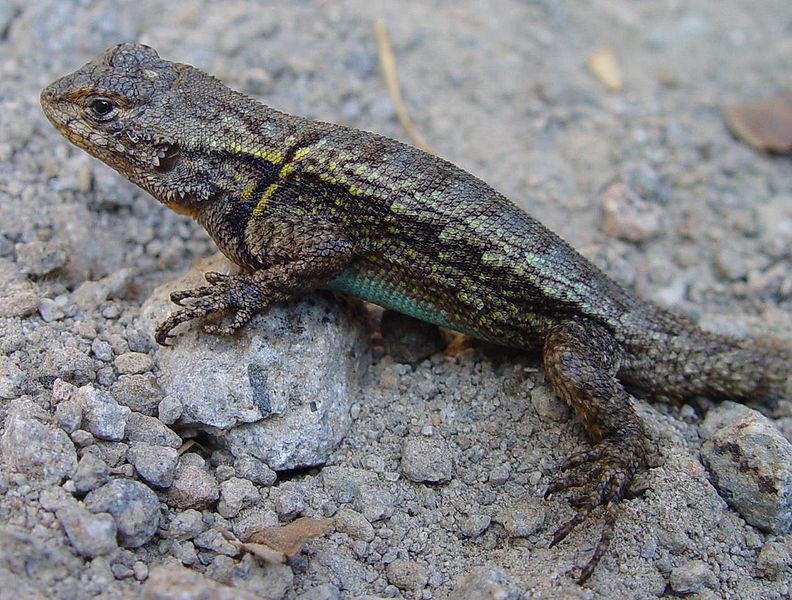
The mesquite lizard is a member of the Sceloporus genus. Sinervo’s study included 48 species of Sceloporus.

A new study published this week in the journal Science finds that local lizard populations around the world are going extinct, likely due to climate change.  According to the research, conducted by a team of scientists including Barry Sinervo, a herpetologist at UC Santa Cruz, four percent of the world’s lizard populations have disappeared in the last 35 years, and another 20% of all lizard species could go extinct by 2080 if global temperatures continue to rise.

Using field observation and experiments, and computer modeling, Sinervo and his team determined that increased daytime temperatures in some areas have shortened the amount of time each day during which lizards can forage for food. The data–and that of collaborating scientists on five continents–indicates that higher temperatures and reduced feeding time correlates with the pattern of local extinctions among lizard species across the globe (the Science website has a slideshow explaining how the research was conducted).

Sinervo described his research today on the NPR program Science Friday as part of a panel discussing modern extinctions.  He was joined by UC Berkeley integrative biology professor Tony Barnosky and San Francisco State Biology professor Vance Vredenberg.  Christopher Joyce reported on the study’s findings yesterday on NPR’s All Things Considered.

Polls Underestimate Climate Change Concerns, Study Finds

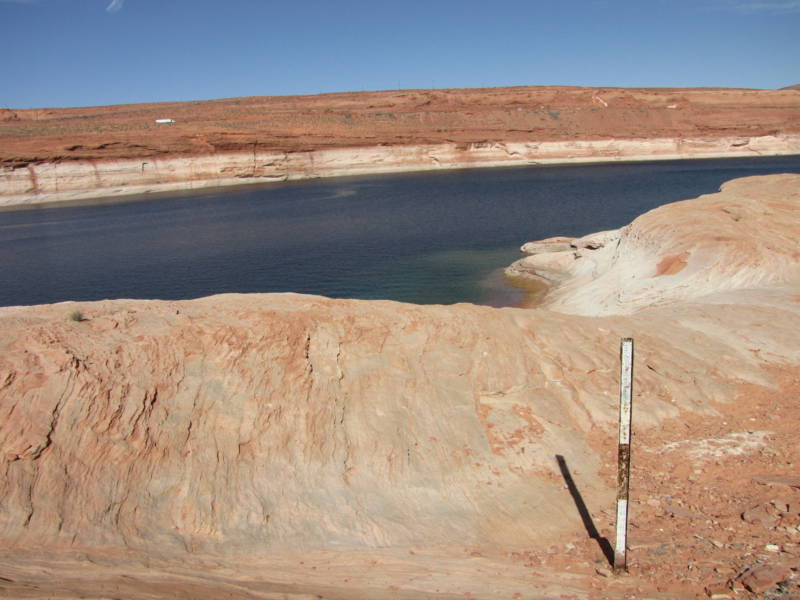
A historic water marker left high and dry at Lake Powell in April 2010. (Photo: Gretchen Weber)

If you’ve been paying attention at all over the last year, you’ve no doubt heard that Americans don’t care very much about climate change.  Pew polls, Yale polls, Gallup polls–all have found in the past year that climate change and the environment rank pretty much dead last when it comes to issues people care about in the United States.  But new research out of Stanford suggests that the truth might actually be a bit more complicated, and that Americans might be a lot more concerned about climate change than these polls indicate.

As it turns out, it’s all in the asking.

Jon Krosnick, a Senior Fellow at Stanford’s Woods Institute for the Environment, recently found that the standard “Most Important Problem” question, which has been a staple of polls and surveys for generations, might not capture the true nature of public sentiment toward environmental issues.

Krosnick has been studying the public’s perception of climate change since the 1990s. He said that during that time his findings have continually indicated that “huge majorities” agreed that the planet is heating up and that the government should take action, but that global warming was repeatedly left off the list when people were asked what was the country’s most important problem.

It was a Stanford undergraduate, Samuel Larson, who suggested that perhaps how the question was being asked was influencing the answers, said Krosnick.  Maybe, Larson postulated, if the question were opened up to consider the world, rather than just the United States, and if it asked about the future, rather than today, people’s answers might reflect something different.

In fact, their answers changed dramatically, researchers found.  In the May 2010 study, the team analyzed the results of two polls from the fall of 2009 that addressed the issue in two distinct ways.   When asked, “What do you think is the most important issue facing the world today?” about half (49%) of respondents in the first poll answered “the economy” or “unemployment,” while only one percent mentioned global warming or the environment.  In the second poll, the responses were 54% economy and two percent environment.

But when the question was re-framed as “What do you think is the most serious problem facing the world in the future if nothing is done to stop it?” the results swung dramatically.  In the first poll, 25% said the environment or global warming, and 10% said the economy.  In the second poll the results were 21% and 16%, respectively.

For specific data on Californians and their views on environmental issues and climate policy, see last summer’s PPIC report: Californians and the Environment.