All posts by Gretchen Weber

Reported Miscues at the Air Board

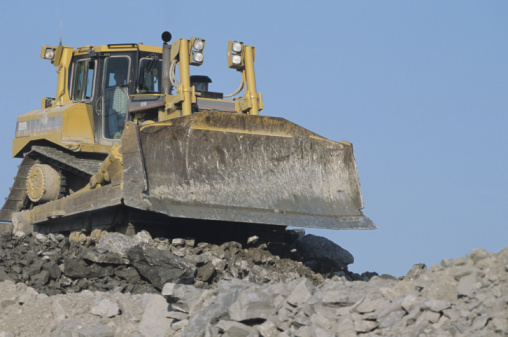
Today the California Air Resources Board announced proposed changes to the state’s “off-road” diesel regulation.  Adopted in 2007 the rules affect approximately 150,000 construction, mining, and airport support vehicles.   The proposed new rules delay the start of the regulation until 2014 (rather than 2010), increase the number of exempted vehicles, and relax some requirements.

The San Francisco Chronicle reports that the revisions come after the Air Board staff admitted to miscalculations that led to the original regulation.  According to the Chronicle, regulators overestimated emissions from off-road diesel vehicles by 340% in a scientific analysis used to set the 2007 rule.
Feds Float Future Fuel Efficiency Plan

Photo: Craig Miller

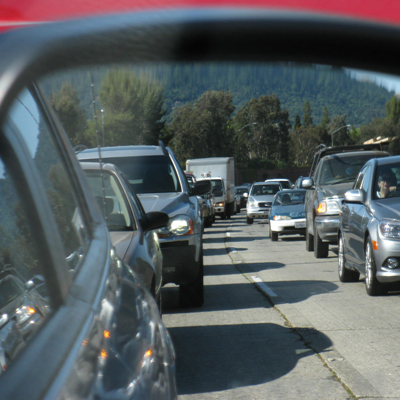
If, fifteen years from now, new cars across the country are getting twice the miles per gallon that they do today, California can rightly claim some of the credit.

On Friday the Obama Administration released plans for improving fuel efficiency in cars and light trucks for model years 2017 through 2025, with a final standard somewhere between 47 and 62 miles per gallon. The move builds on the new federal fuel standard, based on California’s, for model years 2012 through 2016.

California is scheduled to adopt its own fuel efficiency standards for 2017-2025 vehicles in January, said California Air Resources Board (CARB) member Dan Sperling, which is well before federal agencies expect to set a national standard.   CARB staff will release the proposed state standard later this year, he said.

“Presumably what California does will have a strong impact on what the U.S. EPA decides,” said Sperling, adding that there is a “a lot” of communication between the state and federal agencies. Continue reading Feds Float Future Fuel Efficiency Plan

Candidates Question Climate Science

Third-party candidates for governor call the science of global warming “junk science” and “a scam at worst.”


Photo: Craig Miller

While Meg Whitman and Jerry Brown debate the pros and cons of the state’s global warming law (AB 32) and the ballot initiative that would suspend it (Proposition 23), two of the four “alternative” candidates interviewed this morning on KQED’s Forum program, attacked the science behind California’s climate change policy.

“I’ve become convinced that the whole thing is an exaggeration at best, and a scam at worst,” said Dale Odgen, the Libertarian Party candidate.  “The science has been fudged in order to get grants for people.  People like Al Gore have used it to become even more wealthy at the expense of the rest of us.” Continue reading Candidates Question Climate Science

California Heats Up

A chilly summer suddenly switches to record-breaking heat in much of California.  Is this climate change?

Photo: Craig Miller

It reached 113 degrees in Los Angeles on Monday, a record. And while a string of hot days in California doesn’t signify climate change any more than do record snowstorms in Washington D.C., the summer of 2010 did set quite a few records for high temperatures and heat waves. Although for us here in California, this week notwithstanding, we’ve had a pretty cool summer.

But this week’s heat — especially in Southern California — is a reminder of the ripple effects that could become commonplace if predictions of more frequent and severe heat waves come to pass, with a changing climate. Utilities pleaded with customers to conserve power as temperatures triggered record spikes in the electricity load and subsequent strain on the electrical grid. Continue reading California Heats Up

Schwarzenegger Blasts Oil Companies

Photo: Angela George

California Governor Arnold Schwarzenegger used his appearance at the Commonwealth Club in Santa Clara today to “put a spotlight” on what he called the “self-serving greed” of oil companies Valero, Tesoro, and Koch Industries. These companies, two of which he described as among the state’s top polluters, are bankrolling Proposition 23 for their own gain, while trying to hide behind a false claim that the initiative would be good for the state’s economy, said the Governor. Prop 23 would suspend California’s Global Warming Solutions Act, AB 32, which authorizes incentives and regulations for reducing the state’s greenhouse gas emissions to 1990 levels by 2020. Schwarzenegger’s speech was timed to the fourth anniversary of the law.

Proponents of the ballot measure claim that allowing AB 32 to be fully implemented would drive businesses from the state and could potentially cost the state more than a million jobs, a figure which has been challenged in several studies. Continue reading Schwarzenegger Blasts Oil Companies

Californians Split on Prop. 23

ConocoPhillips refinery in Rodeo, CA (Photo: Craig Miller)

A new poll finds that while two-thirds of Californians think global warming is an important issue, they are divided right down the middle when it comes to Proposition 23, the LA Times reports.  Prop. 23 is the ballot initiative that would suspend AB 32, California’s Global Warming Solutions Act, until the employment situation improves.  The poll, which was conducted for the Los Angeles Times and the University of Southern California, found 40% of those surveyed  in favor of Prop. 23 and 38% opposed.  Twenty-two percent were undecided.

More Proposition 23 coverage from Climate Watch

Tackling Greenhouse Gases from Cars

Photo: Craig Miller

California’s regional planning authorities need to find new ways to get people to leave their cars at home.

Passenger vehicles are the single largest source of greenhouse gases in California, comprising one third of all the state’s emissions.  Senate Bill 375, passed in 2008, is designed to chip away at those emissions by curbing sprawl and encouraging infrastructure that gets Californians to drive less — or at least, not as far.

This week the state Air Resources Board met a milestone (so to speak) in the implementation of the law by sending to California’s 18 regional planning organizations, greenhouse gas reduction targets for cars and light trucks .  Now it will be up to the regions to create their own strategies for linking land use and transportation planning in ways that lure Californians out of their cars. Continue reading Tackling Greenhouse Gases from Cars

How to Save 890 Million Gallons of Water a Day

A new study out of the Pacific Institute in Oakland finds that California can save more than a million acre-feet of water each year — or 890 million gallons a day — through conservation and improved water efficiency.  That’s close to 12 times the annual water usage of the city of San Francisco, and it’s roughly equal to the water required to grow all the grain produced in California.

The report’s lead author, Heather Cooley, says the strategies outlined in this report can help the state achieve its goal of a 20% reduction of per capita urban water use by 2020.
Continue reading How to Save 890 Million Gallons of Water a Day

The Science of Reconstructing Past Climate

To find out what tree rings are telling us about droughts in the Colorado Basin, and to get some current perspective on the current eleven-year drought in the region, listen to my radio story for The California Report and view the slide show of my journey to the region. — Gretchen Weber

With cores from trees like this one, TIngstad was able to reconstruct more than 1,000 years of climate history in this region.

Abbie Tingstad is a paleoclimatologist whose doctoral work at UCLA involved reconstructing climate in the Upper Colorado River Basin, using tree rings and lake sediments.

By Abbie Tingstad

Unlike biology, chemistry, or most mainstream sciences, it’s hard to envision what someone who studies paleoclimatology actually does. I run into a lot of blank stares at dinner parties. So I’ve started describing the field as “climate forensics.”

Paleoclimatology and forensics of the Law & Order or Bones variety share the basic goal of reconstructing something that has happened in the past. In the latter, of course, the sequence of events that led to a crime is put together. In the former, researchers identify past variations in climate.  These sciences also have quite a lot in common when it comes to the basic methodology: Continue reading The Science of Reconstructing Past Climate

Reducing Emissions with Inflated Tires

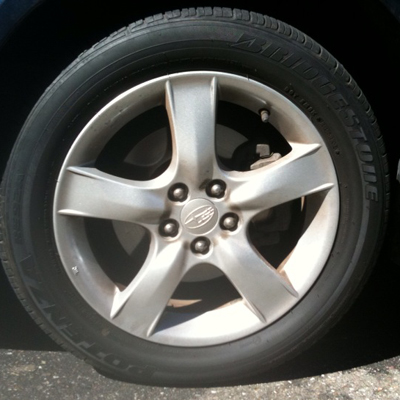
The state Air Resources Board passed a new regulation this week designed to increase fuel efficiency and reduce the state’s greenhouse gas emissions.  It requires auto shops to check the tires on their customers’ vehicles and to inflate them to proper levels whenever they are doing an oil change or providing any other service.

CARB estimates that if every car in California had properly inflated tires, the state could save 75 million gallons of fuel and reduce emissions by 900 metric tons. Continue reading Reducing Emissions with Inflated Tires