All posts by Gretchen Weber

Rich and Poor Collide in Cancun

Contrasts and bus connections in Cancun provide a metaphor for the climate talks going on there.
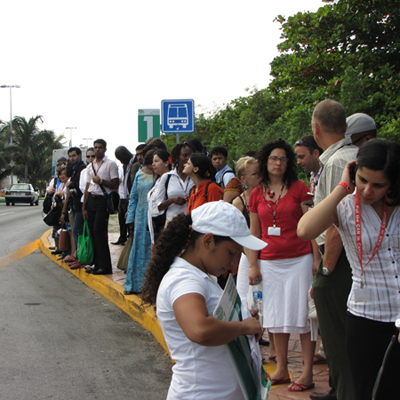
COP16 attendees waiting in line for the UN bus (Photo: Gretchen Weber)

For a conference aimed at lowering the world’s greenhouse gas emissions, COP16 sure looks like it has big carbon footprint.  Just the air travel alone for the thousands of people coming to Cancun from literally all over the world is a huge source of emissions.  But once you get here, the excess emissions continue.  Cancun’s hotel zone is one long line of huge beachfront resorts boasting luxury accommodations, all-you-can-eat buffets, and — in the case of my hotel — giant jacuzzi tubs in every bedroom, despite the sign on the bathroom sink suggesting that guests remember to conserve water.

Fortunately (or unfortunately), there isn’t really time for taking baths in enormous tubs, because attendees must spend so much time on the road.  Special UN buses are shuttling people back and forth between the Hotel Zone and the negotiations constantly, commutes made more arduous and carbon-intensive by the added miles and long circuitous routes the buses have to make due to security.  Most of the hotels are located north of the negotiations, but security to attend them is located to the south. Therefore, attendees must first travel south, then north (up the same road) to get into the conference.   A common conversation on the buses is wistfully recalling how wonderful it was at COP15 last year, when attendees could simply take public transit (or walk through the streets of Copenhagen) to reach the talks.

At least the long intervals spent standing in line at bus stops provide a chance to warm up in the hot sun and recover from the Arctic conditions inside the conference centers.  Despite the fact that attendees were encouraged to “dress down” this year: traditional Mexican shirts for men and cotton dresses for women, so that the venues could save emissions with less air conditioning, many of us are wearing jackets and sweaters inside the venues.

One journalist described this year’s conference to me as “an island within an island.”  Military blockades have closed roads at various points, diverting local traffic.  Because of the geography, it would be very easy for people to come to COP16 and never actually see the town of Cancun, which, is a far cry from the Hotel Zone.  There’s a sharp divide between rich and poor here, with the opulence of these resorts just a few miles from abject poverty — which may be a fitting metaphor for the climate talks themselves.

Rich nations and poor ones are, in many ways, lined up on opposite sides of a fence as they sort out how to level the field.  Last year, as part of the Copenhagen Accord, a coalition of developed nations, including the United States, agreed to provide funding to help developing nations deal with climate change: $30 billion by 2012 and $100 billion by 2020. A major issue at this conference is working out how to allocate this money. While much of that money has been pledged, much of it has yet to materialize.

While the United States is moving forward with building and solidifying the Copenhagen Accord, according to chief negotiator Johnathan Pershing, some people (and nations) are concerned that this path will not be enough to stop the Earth from warming to dangerous levels. Even UNFCCC Executive Secretary Christiana Figueres, who heads the UN climate effort, said on Monday that if all the emissions-reduction promises made in the Copenhagen Accord were delivered, the world would be on track for warming more than the two degrees Celsius that the accord was designed to meet.

On Tuesday night I attended a community prayer vigil in downtown Cancun.  There were about 200 local people from different denominations, including Pentecostals and Catholics, gathered to sing songs and say prayers for the Earth.  Victor Menotti, head of the California-based International Forum on Globalization described the Copenhagen Accord as a path to “collective suicide.”

“The Copenhagen Accord doesn’t get us what we need in terms of emissions reductions, financing, and technology transfer,” he said. “All it is, is a collection of voluntary pledges that don’t add up.”

California Floats Plan B in Cancun

Photo: Gretchen Weber

After the hype and subsequent disappointment surrounding last year’s UN climate talks in Copenhagen, which failed to produce binding global agreement on emissions reductions, the expectations for this year’s talks, which open in Cancun, Mexico today, are much more modest.

“We’re not going to get a global, legally binding deal at Cancun,” UK Prime Minister David Cameron announced at the Governors’ Global Climate Summit at UC Davis earlier this month. “We’ve got to make it a staging post toward that deal.”

Rather than focusing on a comprehensive binding agreement, negotiators will likely focus on technical steps that could pave the way for a final deal at next year’s talks in South Africa, when the Kyoto Protocol expires. Those might include financing for developing nations to deal with climate change; setting standards for measuring, reporting, and verifying nations’ greenhouse gas emissions; and tackling emissions from deforestation.

Meanwhile, California is moving ahead with its plans to organize a network of sub-national cooperation, called the R20, which Governor Schwarzenegger announced in Copenhagen last year and officially launched at his summit in Davis two weeks ago.

“As a binding international agreement remains elusive, we know that there’s a lot of work that can be done at the sub-national level,” said Cal-EPA Secretary Linda Adams, who will be in Cancun promoting R20.  “In fact the UN itself says that up to 80% of all mitigation that will be required to keep the Earth’s temps stable will be done at the sub-national level.”

That work will primarily focus on organizing regional and local governments around to world to work together on clean energy projects, said Terry Tamminen, the former Cal-EPA chief who is currently leading R20 efforts.

“Basically our main purpose [at Cancun] is simply to say to them ‘Look, you’re not the only ones in this game, and we know you’re all frustrated because you haven’t been able to reach a successor agreement to Kyoto, but we at the subnational level are here to help. We’re going to be this bottom-up, even as you continue to try to get the top-down agreement and we’ll be waiting for you, whenever you show up,'” said Tamminen.

Over the last year, R20 has grown to include 69 governments and organizations, and Tamminen said he expects 100 members by the end of the year.  He said he’ll spend the next few months recruiting members, organizing structurally as an organization, lining up financing, and identifying projects that are “low-hanging fruit,” such as installing efficient street lighting, replacing old boilers with more efficient ones, and piloting waste-to-energy programs.

Tamminen said that Gov. Schwarzenegger plans to “devote a lot of his time” to R20 when he leaves office in January. 

“Next year in South Africa when the world meets, and the UN is once again looking for a global deal, you can imagine him taking center stage and saying, “Well, we’ve got a deal for you!” said Tamminen.

Gretchen Weber will remain in Cancun for the next two weeks, following the UN climate talks as a fellow with the Earth Journalism Network, a project of Internews. You can check back here, at the Climate Watch blog for dispatches, and follow her on Twitter at: www.twitter.com/gxweber.

Regions Make Their Own Climate Stand

In the absence of an international agreement, states and provinces commit to work together to fight climate change.

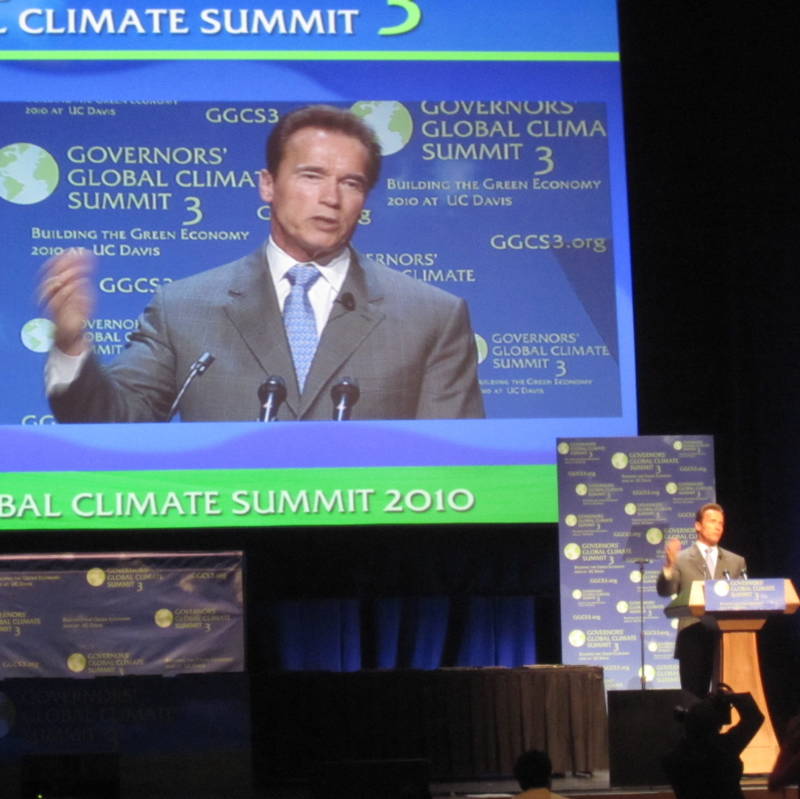
Gov. Schwarzenegger making closing remarks at the Governors’ Global Climate Summit (Photo: Gretchen Weber)

Governor Arnold Schwarzenegger’s third and final Governors’ Global Climate Summit wrapped up Tuesday with the launch of a new international coalition aimed at developing projects that cut carbon emissions around the globe. R20, or “Regions of Climate Action” is the culmination of Governor Schwarzenegger’s efforts to spur “subnational” action to address climate change.

“We can’t afford to wait for national and international movement,” he said in a press release announcing R20. “Action is needed now.” Continue reading Regions Make Their Own Climate Stand

What the Gov’s Global Climate Summit and “The Goonies” Have in Common

When the parents aren’t taking action, sometimes the kids need to step in and solve the problem in whatever ways they can piece together.

"GGCS 3" is Governor Schwarzenegger's third climate summit. (Photo: Governor's Office)

I’m at the Governors’ Global Climate Summit in Davis this week, where representatives from more than 80 regional and local governments have come together for two days to try to figure out ways to reduce emissions and put the brakes on climate change.  The idea is that since last year’s UN climate summit in Copenhagen failed to produce a binding international agreement, and the US Congress can’t get it together to agree on any sort of energy and/or climate bill, cities and states and provinces can’t stand by and do nothing while the international community haggles and CO2 levels continue to creep higher. Continue reading What the Gov’s Global Climate Summit and “The Goonies” Have in Common

Running Dry? California Water Supply at Risk

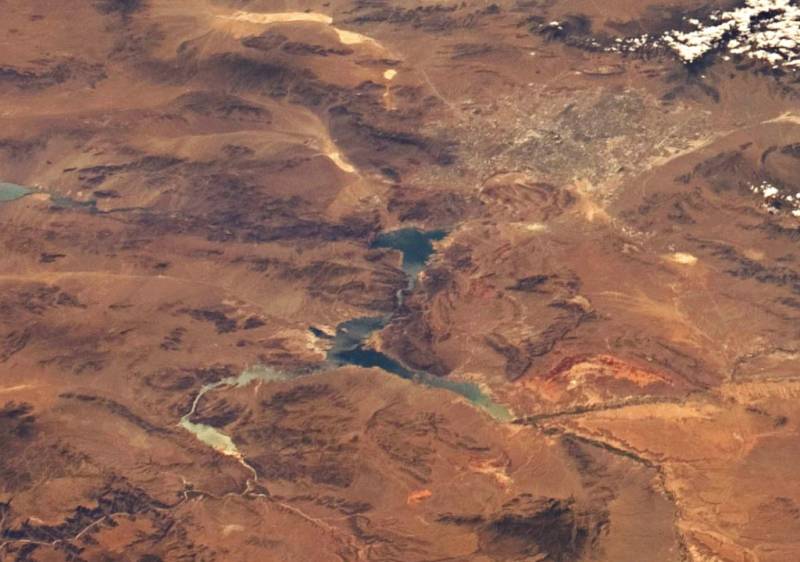
View of Lake Mead on 9/9/10 (Image courtesy of the Image Science & Analysis Laboratory, NASA Johnson Space Center)

Lake Mead is the largest reservoir in the country.  It’s located on the Colorado River, which provides water for about 27 million people in seven states, including millions of Californians.  In fact, California gets more than a trillion gallons of water from the Colorado River each year, directly from Lake Mead via the Colorado River Aqueduct which snakes across the desert.  Eighteen million people in Southern California are dependent on the Colorado for 40% of their water.  And for some agricultural operations, that percentage is more like 100.  Needless to say, it’s a critical source of water.

The thing is, after 11 years of dry conditions in the region, Lake Mead dropped to its lowest level ever in October.  And so far, it’s stayed there.  Since Hoover Dam was completed in the 1937 the water level has never been so low.  As of today, it’s at 38% of capacity.  And it’s not just Lake Mead that’s low.  The whole Colorado River storage system is at just 55% of capacity, so forget just filling it up with water from upstream.  Of course, winter’s on it’s way, and with that, precipitation, so the lake shouldn’t stay quite so low for long.  And, thanks to a wet year, Northern California’s reservoirs are doing well. Continue reading Running Dry? California Water Supply at Risk

Geoengineering Report: Could Work, Go Slowly

Photo: Gretchen Weber

More research is essential to determine whether or not geoengineering is a viable approach for addressing climate change, according to the final report from a spring geoengineering conference at Asilomar.

Today’s report, stemming from a week-long conference of scientists in March, states that:

“Without an aggressive pursuit of a multi-faceted global response strategy to limit and and then reverse climate change, the environmental consequences will be severe, with concomitant social costs that are likely to lead to widespread suffering in the most affected regions.”

The types of technologies discussed at the conference included intervention strategies that attempt to remove carbon from the atmosphere such as ocean fertilization, as well as those that attempt to mitigate the effects of climate change by blocking sunlight to reduce warming, such as spraying sulfur aerosols into the atmosphere or increasing the reflectivity of clouds with sea water. The Asilomar report suggests that:

“If research demonstrates that such approaches could be effectively and responsibly deployed, they could contribute a bridging strategy that would have the potential to moderate climate change and at least some of its impacts until sharp cuts in emissions return atmospheric composition and climate change to much lower levels.”

Of course, that’s a big “if.” Continue reading Geoengineering Report: Could Work, Go Slowly

Climate News Roundup

Geoengineering: Use it or Lose it?

Just as delegates from 193 nations agreed to a voluntary moratorium on geoengineering research last week at the international Convention on Biological Diversity (CBD) in Nagoya, Japan, the US House Science and Technology Committee issued a report outlining how federal geoengineering research could be pursued in the United States. The international agreement to ban the research does not apply to the US, which has not ratified the CBD. (More from The Washington Post and Climate Central.) Continue reading Climate News Roundup

Climate News that Went By in a Blur

Some of the week’s energy, climate, and emissions developments in California, that may have been overshadowed by other news:

Largest Solar-Thermal Project Breaks Ground
Officials broke ground on the first large-scale solar-thermal plant to be built in the United States in 20 years. BrightSource Energy says its $2 billion, 10,000-MW Ivanpah project, located in the Mojave Desert, will be the largest solar thermal project in the world.  (More from KQED’s The California Report and The New York Times)

Prop. 23 Funding
Opponents of Proposition 23 have contributed three times as much money to the campaign as those in favor of the measure that would suspend California’s climate change legislation.  As of October 29, the “No” campaign had raised more than $30 million, while the “Yes” campaign had raised just over $10 million, mostly from out-of-state oil refiners Valero and Tesoro.  (More from maplight.org, and to see where across the US the money is coming from, check out Climate Watch‘s interactive map that tracks the major funders.) Continue reading Climate News that Went By in a Blur

San Benito PV Array Clears a Key Hurdle

Photo: Craig MIller

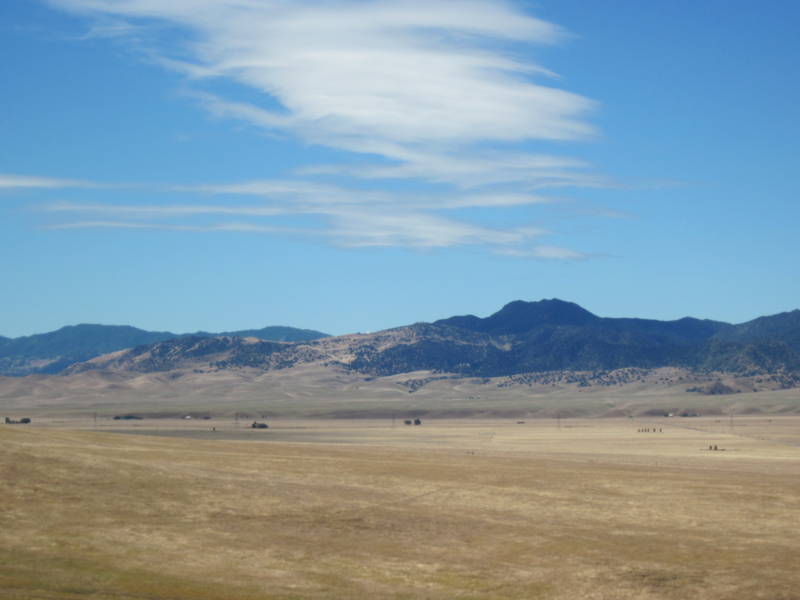
Cupertino-based Solargen Energy cleared a major hurdle this week in its plan to build a nearly 400-megawatt solar farm in the Panoche Valley. Late Tuesday the San Benito County Board of Supervisors unanimously  approved the company’s environmental impact report. The project has seen opposition from environmental groups and valley residents concerned about the impact of covering more than 4,700 acres with photovoltaic (PV) solar panels. The Board also approved the water supply assessment and canceled several Williamson Act contracts, both paving the way for the project to move forward.
Continue reading San Benito PV Array Clears a Key Hurdle

Arctic Tipping Points Affect World Climate

The Arctic is warming, and what happens there has consequences for California.

Take in the companion radio feature and slide show at The California Report weekly magazine. Gretchen’s slide show also appears below.

Photo: Gretchen Weber

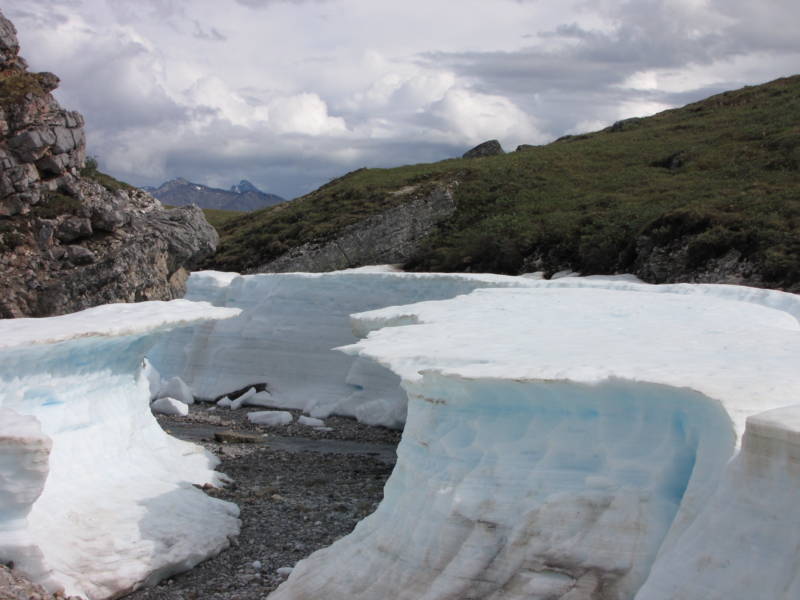
During the two weeks I spent in the Arctic at Toolik Field Station this summer, there was a lot of talk about positive feedbacks and how what happens in the Arctic can affect the entire planet. Thawing permafrost, which I explore in my radio piece for The California Report, is cause for some of the greatest concern.

Another is the loss of sea ice. Mean summer temperatures in the Arctic have risen about three degrees Fahrenheit since 1960, and summer sea ice is shrinking more than 11% per decade.  This year ranks third for the minimum Arctic summer sea ice extent since satellite record-keeping began in 1979.   2007 and 2008 hold the records, and 2009 is in fourth place. Continue reading Arctic Tipping Points Affect World Climate