
All posts by Gretchen Weber

CA Says “So Long, Energy-Sucking Light Bulbs”


(Photo: Craig Miller)

This post originally appeared on California Watch, a KQED content partner and a project of the Center for Investigative Reporting.

By Susanna Rust

Say goodbye to your 100-watt incandescent light bulbs. On Jan. 1, it’ll become increasingly challenging to find one on a store shelf in California.

That’s because the state has ordered a phaseout of the high energy-consuming light bulb.

The state is pressing to have the old incandescents replaced with newer, more efficient bulbs, such as compact fluorescents, halogens and light-emitting diode light bulbs, or LEDs.

And beginning in 2012, 100-watt incandescents will be off the shelves completely.

As is typical, California is getting a jump-start on a trend that will begin nationwide in a few years. Three years ago, the federal government enacted legislation to phase out the old bulbs. National phaseout will begin in 2014. Other countries, such as Australia, Ireland and Cuba have already banned them.

There are drawbacks to the new bulbs, however.

Fluorescent bulbs, or CFLs, contain mercury, which can be harmful to the environment and to human health. Therefore, the bulbs must be handled differently than other household waste.

Local hazardous waste centers, and some hardware stores, will take spent fluorescent bulbs for recycling. The other bulbs contain chemicals such as bromine and iodine. These do not require special recycling.

Consumers looking to find a replacement for the old 100-watt bulb will likely choose the energy-efficient 72-watt bulb, which will provide an equal amount of light but uses less power.

“The consumer will still be able to use the product and have the same results to light an office, a desk lamp, a hallway. A 72-watt light bulb will still provide the same service as the old 100-watt bulb,” Adam Gottlieb, a spokesman for the California Energy Commission, told the Scripps Howard news service. “Consumers really need to know they won’t see any difference. The difference they’ll see is a more energy-efficient bulb.”

The California Energy Commission website has a user-friendly FAQ page about the new light bulb standards and how the rules affect consumers.
EPA’s CO2 Rules Old-Hat for California

A much-hyped EPA ruling to regulate greenhouse gases in 2011 doesn’t really change much for California.

A lot’s being made of the move by the federal Environmental Protection Agency’s move to start regulating greenhouse gases in the new year, but policy analysts are greeting it as a relative non-event in states like California (and Massachusetts), which are already moving ahead with their own carbon regulation strategies.

“It’s really a complement to what we’re doing with AB 32,” said California Air Resources Board spokeswoman Gennet Paauwe.

The EPA is acting in response to a 2007 US Supreme Court finding that greenhouse gases fall under the jurisdiction of the Clean Air Act, and therefore are subject to regulation by the federal agency.

Critics of the EPA’s move, such as incoming House Energy Chair Fred Upton (R-Mich), say it’s a job-killer that will hurt domestic energy production. Other members of Congress, like California’s Barbara Boxer, support the EPA’s action.

The new regulations will affect power plants and refineries, which together produce about 40% of all carbon dioxide emissions in the United States.  Starting January 2, industry will be required to consider new technologies and implement measures to mitigate greenhouse gas pollution for approval of new facilities and “major modifications” to existing ones.

“This is about taking a look at what technologies are available that can cost-effectively achieve reductions in greenhouse gases,” EPA assistant administrator Gina McCarthy told reporters in a recent conference call. “We set the standards, and the industry themselves figure out the most cost-effective ways to achieve those standards,” she said.

Vickie Patton, a lawyer for the Environmental Defense Fund, says a similar process is already in place for monitoring many other pollutants, and the new ruling simply adds greenhouse gases to the list.

Existing power plants and refineries will have to address greenhouse gas emissions, too, but not for at least a year.  Draft standards (providing details of the new rules) aren’t expected for power plants until July 2011, and December for refineries.  The agency says those standards wont be finalized until mid-to-late 2012 after a long period of public comment. By that time California’s cap & trade plan under AB 32 will be up and running, barring any legal delays.

The EPA says it will be up to each state to devise it’s own plans for implementing the standards.  And that’s where much of the uncertainly lies.  Texas has already refused to cooperate and sued unsuccessfully to stay the EPA ruling, long before the draft standards have been released or any formal process has been established for implementation.

“We’re really early stage,” said McCarthy. “I can’t tell you what types of reductions we hope to achieve. That’s all going to be driven by the technologies that come to our attention through the public comment period.”

Patton says that despite that state’s high profile objections, most states are on board with the federal process.

“Virtually every state in our country has rolled up its sleeves, prepared for this transition, and is ready to begin carrying out these protections to address global warming pollution, except for Texas,” she said.

Patton said that states like California, which has been a pioneer in both new technologies and in emissions regulation, will have “an important voice” as the standards are being developed.

“In the absence of an effective price on carbon or other incentives for industrial plants to choose clean technology, this is very important and useful tool to help the transition to clean energy and industry in California,” said CARB’s Paauwe. But once the AB 32 program is in motion, she said, this regulation could be redundant, as CARB hopes that the state cap and trade program as well as other market incentives will motivate firms to install the cleanest technologies on their own.

At that time, she said, “We can look at whether a separate clean technology process is necessary.”

Soggy Mountain High: Big Start for Sierra Snowpack


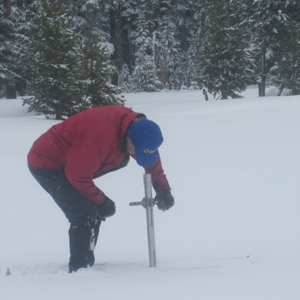
Frank Gehrke conducting last year’s first snow survey of the season. (Photo: Gretchen Weber)

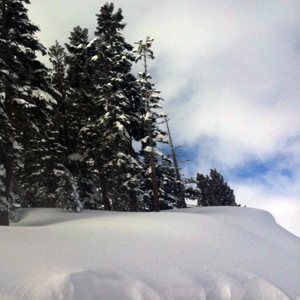
All the wet weather that’s been drenching much of the state has left the Sierra Nevada with an extra-thick blanket of snow, which has water officials optimistic about the state’s water supply for 2011.

Using a combination of manual and electronic measurements, the state’s Department of Water Resources conducted its first snow survey of the season on Tuesday, and found the water content of the state’s snowpack at 198% of normal for this time of year.   Last year at this time, the statewide average was just 85% of normal.
Continue reading Soggy Mountain High: Big Start for Sierra Snowpack

…And It’s Not Even Winter Yet

Photo: Gretchen Weber

Good news for cities, towns and farms across the state that rely on the State Water Project: Today California’s Department of Water Resources doubled its projected 2011 deliveries of water from its initial 25% estimate to 50% of amounts requested.

Fifty percent doesn’t sound like much but compared to last year, when the initial projection for 2010 was a record-breaking low of five percent, this year is off to a pretty soggy start.  These allocations tend to climb throughout the season, so the 25 million Californians who rely on this water could actually see much higher numbers as the winter progresses.  2010 ended up with a 50% allocation despite its conservative early estimates.

Statewide, remote sensing indicates the mountain snowpack is 122% of normal for this date. As of Wednesday, the northern Sierra had already received nearly half its “normal” precipitation for the entire water year, which runs from October 1 to September 30, according to DWR.

And it looks like more of the same for the near future.  Meteorologists are predicting up to 15 feet of new snow for parts of the Northern Sierra by the middle of next week.

Federal Gov’t Eyes CA for Solar Projects

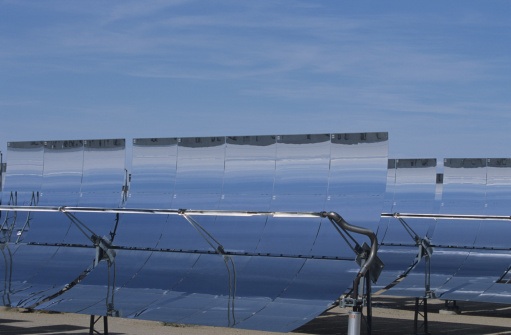
The federal government is recommending 24 areas in six Southwestern US states it says are “best-suited” for large-scale solar projects, both economically and environmentally.   Four of these “Solar Energy Zones” are in California: two in San Bernadino County and one each in Imperial and Riverside Counties, and together they account for nearly half of the nearly 700,000 acres recommended by the Obama Adminstration.

“These are areas in those states which have been determined to have the highest solar potential and the fewest amount of environmental and resource conflicts,” said Interior Secretary Ken Salazar on a conference call with reporters Thursday.

He said that because the recommended areas are likely to have fewer delays related to environmental issues, projects sited there are likely to have a faster permitting process.   The report and its recommendations, he said, will help speed up the implementation of renewable energy projects around the Southwest. (!–more–>

“It presents a common sense and flexible framework from which to grow our nation’s renewable energy economy,” he said.

While representatives from environmental groups such as the Wilderness Society, the Nature Conservancy, and the Center for Biological Diversity applauded the federal government for planning ahead for efforts to make the siting of solar projects more efficient, some voiced concerns about the specific sites named as Solar Energy Zones.

Ilene Anderson of the Center for Biological Diversity expressed concern that one of the areas designated in California, a swath of more than 200,000 acres called Riverside East, contains habitat of the endangered desert tortoise. Another zone she finds problematic is the Iron Mountain Zone, which Anderson says is too far from population centers, meaning that projects there could require the construction of additional transmission infrastructure.

Beyond the specific areas, however, Anderson said what concerns her to most is that the federal strategy leaves open the possibility for solar projects in sites outside the designated zones.

“My concern is that they’re still going to be entertaining applications anywhere on public lands, and that gets us back to the problem that we’re currently seeing which is these renewable energy projects spread willy-nilly across the desert,” she said.

You can see what the recommended sites actually look like with this interactive map that identifies the Solar Energy Zones and provides on-the-ground panoramic views of the sites.

Californians Who Rely on Delta at “Severe Risk”

Here’s a shocker: Yes, action is necessary on the San Francisco Bay Delta

(Photo: US Fish & Wildlife)

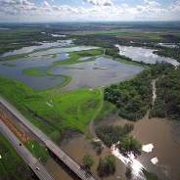
State and federal authorities provided an update Wednesday on the Bay Delta Conservation Plan (BDCP), which is tasked with restoring the damaged ecosystems of the Sacramento-San Joaquin Delta and safeguarding California’s water supply.

“The 25 million Californians who rely on the Delta for clean drinking water are at severe risk,” said Secretary of the Interior Ken Salazar, on a call with reporters. Continue reading Californians Who Rely on Delta at “Severe Risk”

“Tangible” (if Minor) Progress in Cancun

Photo: Gretchen Weber

The UN climate talks in Cancun finally closed in the wee hours of Saturday morning with an agreement that doesn’t set new limits on greenhouse gases, but does move the discussion forward in key areas, such as funding to help developing nations deal with climate change and broad plans to reduce emissions by slowing deforestation in tropical areas. Continue reading “Tangible” (if Minor) Progress in Cancun

Climate Battle Takes to the Streets

In Cancun and San Francisco, a call for climate solutions from the ground up.

Photo: Gretchen Weber.

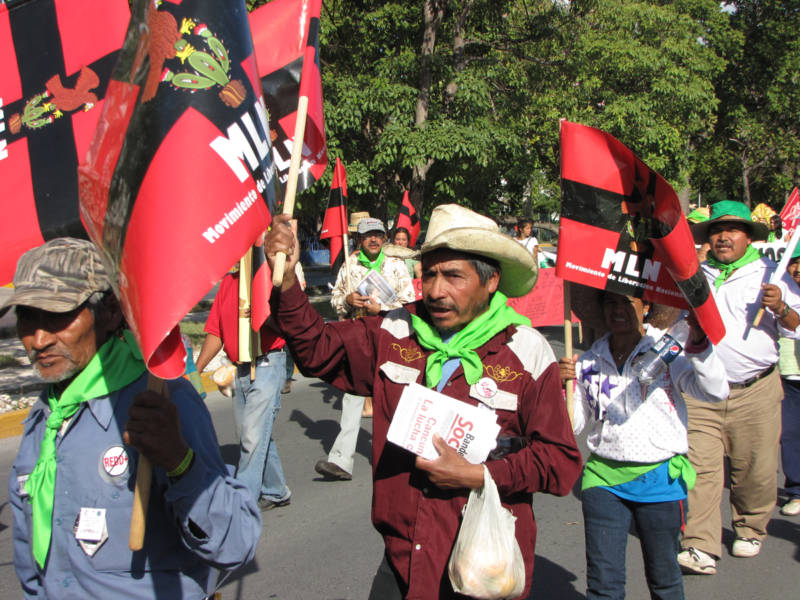
Chanting the Spanish equivalent of “The fight continues!”, hundreds of protesters made their way through the streets of downtown Cancun Tuesday, to call for dramatic action on climate change.  Located about an hour by bus away from the Moon Palace where the UN talks are being held, the procession brought together climate activists from around the world, members of Mexico’s indigenous communities, and dozens of journalists eager to report on one of the few major protests at COP16.

Coordinated by a network of climate groups who dubbed Tuesday a “Global Day of Action – 1,000 Cancuns,” the march was timed with demonstrations around the world, including one in San Francisco.  In Cancun, the marchers chanted, sang, beat drums, and danced in the streets, called for workers’ rights, protested inaction on global warming, and in some cases, denounced capitalism. Continue reading Climate Battle Takes to the Streets

Chu Tones it Down for Cancun

Energy Secretary takes the cautious route in Cancun; just part of the sideshow at COP16.

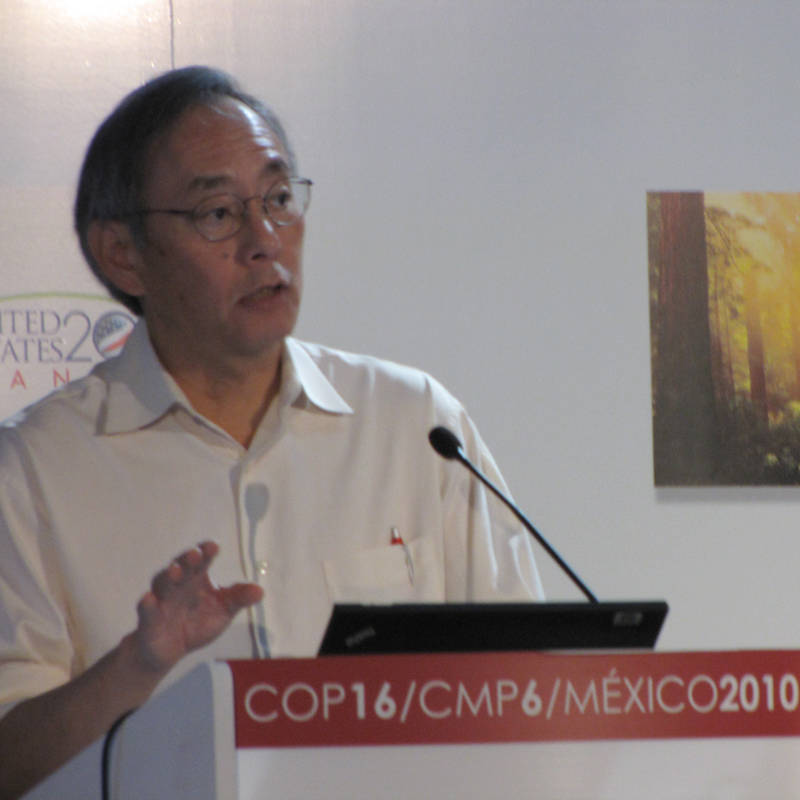
US Secretary of Energy Steven Chu adhered to COP16’s more casual dress code when he spoke at the US Center in Cancun on Monday. (Photo: Gretchen Weber)

The UN climate negotiations in Cancun may be the official attraction, but in many ways, there’s just as much happening at the “side events” here at COP16.  There are dozens everyday — last week there were more than 150, and that number is increasing this week as more people arrive for the final days of the talks.  While the negotiations are limited to representatives from national governments, the side events provide a stage for non-governmental organizations (NGOs), scientists, business leaders, and local and regional government officials, many of them, it turns out, from California. Continue reading Chu Tones it Down for Cancun

New Google Tool Helps Monitor World’s Forests

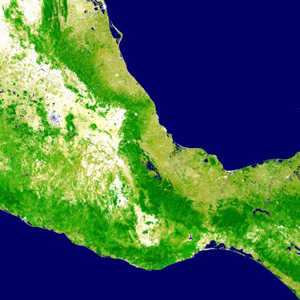
Map of Mexico created with Google Earth Engine by scientist Matthew Hansen and CONAFOR. Google says this is the finest scale forest cover map produced of Mexico to date.

This week in Cancun, in a jungle-themed conference room with green lighting and an audio track of rain forest sounds, Google launched a new technology platform designed to help scientists — and ultimately developing countries — monitor deforestation. Google Earth Engine combines LandSat satellite imagery from the last 25 years (much of which was not previously available online) with analytical tools provided by scientists, which will allow users to make fine-scale maps.

Greg Asner of the Carnegie Institute at Stanford is one of Google’s partners in the project. His lab provided some of the algorithms built into the Earth Engine that will allow users to analyze the satellite data online.

“There have been two major bottlenecks in helping people to map and keep track of deforestation and degradation: getting access to the satellite data and making it user-friendly,” said Asner. Continue reading New Google Tool Helps Monitor World’s Forests