The California Report: South L.A. Foster Kid Faces Uncertain Future

shranktcrMay 3, 2013
Coriah Welch has about 20 colleges to choose from after she graduates. But the decision is a difficult one. For the last few years, Welch has been raising three of her four half-brothers in their foster home in South Los Angeles, and she’s afraid to leave them. For our new series “Graduation Day,” budding reporters from USC Annenberg’s School of Communication and Journalism were assigned to profile high school students counting down the days until graduation. Reporter: Aaron Schrank

The morning bell at her high school has already rung, but Coriah Welch is still at home.

She’s busy getting three little boys ready for school.

“I have to wake up very early in the morning,” she says. “I have to pick out three outfits and comb three full heads of hair and make three meals a day. That’s why most of the time I’m late for school, if I’m not up early enough. Then when I come home, it’s the same. I do everything over and put them to bed.”

It sounds like a lot of work, and it is. Coriah is 17. She and three of her four half-brothers are living in a foster home in South Los Angeles. She’s not just their big sister, but also their protector.

“We kind of have the same name,” Coriah says. “My name’s Coriah, and then there’s Cordel Jr., Cortlenn, Cortez-Dubois and Coreon. They’re 4, 3, 2 and 1, back to back. They’re really good kids, those are my babies.”

Coriah is currently a senior at a high school in South Los Angeles, formerly known as South Central. It’s the seventh one she’s been to, thanks to bouncing around in the foster care system with her brothers. She has applied to more than 70 universities. She wants to go into politics and work to help foster kids. But first, she needs to decide on a college.

Coriah attended Foshay Learning Center for most of her senior year. She spent almost every lunch period sitting in the office of academic counselor Renysha Scott, talking college options. Her biggest worry: moving to another state and leaving her brothers behind.

“Her heart is not going to allow her to leave if she doesn’t feel like they’re secure,” Scott says. “I think a huge part of it has to do with what happens with them between now and the time she gets ready to actually attend somewhere. I think she is very tenacious, so I really feel like whatever she wants to achieve, she’ll absolutely get there.”

Coriah wasn’t always a foster kid. Her mother hasn’t been in her life since she can remember, but she and her brothers lived with her father until two years ago. After a domestic dispute between her dad and the boys’ mother, the kids were separated, sent to foster homes all over Los Angeles.

“I would think every day like, ‘Are they eating OK? Are they bathing every day? Can they sleep at night?’ Coriah says. “Because I wasn’t sleeping at night. Sometimes, I thought in my head like, ‘How could my mom not feel like this when I’m away? How does a mother not feel this?”

Coriah fought to get her family back together. She spent a lot of time on the phone with the Department of Children and Family Services and the lawyers representing her brothers.

“Every day, they got a call from me,” she said. “I was bugging them.”

After months of calling, Coriah got herself and three of her brothers into a foster home with a family friend. The fourth brother went to Coriah’s grandmother. It’s not a perfect situation, but the kids are pretty much together. Every Sunday, they spend the day at their grandmother’s, hanging out and playing video games.

Hear here.

KQED Forum: David Kirp’s Strategy for Public Schools

In rebuilding our public schools, education policy expert David Kirp says we should stick to what works, like quality early-childhood education and creating word-rich curriculums. In other words, avoid getting carried away by quick fixes and the latest trends. His new book, “Improbable Scholars,” tells the success story of Union City, New Jersey, and argues that all our public schools can benefit from what was learned there.

Guest:
David L. Kirp, James D. Marver Professor of Public Policy at the Goldman School of Public Policy at UC Berkeley, member of President Obama’s 2008 education policy transition team, and author of “Improbable Scholars: The Rebirth of a Great American School System and a Strategy for America’s Schools”
Listen here>>

KQED Perspectives: It's a Big Deal

GabrielGangosaMay 8, 2013
KQED Perspectives
Written By: Gabriel Gangoso

Busy high schooler Gabriel Gangoso is missing out on being a kid.

“Always shoot for the stars,” they say. So many kids, some out of ambition, many out of fear, rocket towards those very stars. Academics and filing college resumes becomes kids’ whole lives. Especially now, when my AP and honors classes get harder, as my extracurriculars demand more and more of me, I find myself telling my friends and family “Sorry, I’m busy”. Sure, some will say, “Oh, you missed a birthday party or two. Big deal.”

Yes, it is a big deal.

Read more>>

Perez Pushes Rainy Day Fund and Scholarship Plan

May 9, 2013
Newsfix
Written by Scott Detrow

California’s state government may be turning the corner from a painful recession, but Assembly Speaker John Perez is already thinking about the next one. The Los Angeles Democrat wants to start setting aside money in a rainy day fund, so legislators aren’t faced with deep spending cuts the next time the economy goes south.

California’s Capitol (Justin Sullivan/Getty Images)

That’s one of several budget priorities Perez laid outduring an interview this week with The California Report.

Just like Gov. Jerry Brown, Speaker Perez isn’t getting too excited about the additional $4.5 billion of  tax revenue that California collected this year. The better-than-expected tax haul has led to talk about restoring years’ worth of cuts in education and other state programs, but Perez said that conversation is premature.

“This does not mean that in the out year we’re going to continue to have extra amounts of money,” said Perez, pointing out the revenue is less than the $7 billion of new taxes that Propositions 30 and 39 generated. “So we have to be responsible in using this money that is short-term money differently than long-term money.”
Perez wants to use the money for one-time expenses, like paying off debt.
Read more>>

Oakland Local: A Better Chance Celebrates 50 Years of Increasing High-Quality Education for Youth of Color

Image_0May 2, 2013
By Corey Olds

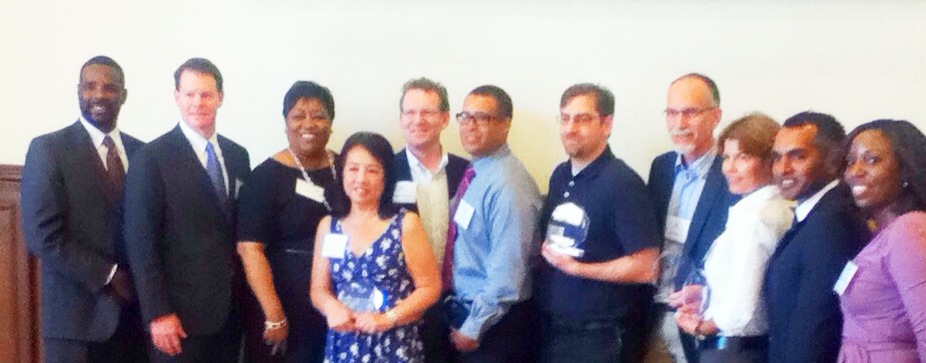
Approximately 75 directors of admission and diversity from Bay Area independent schools gathered for breakfast at the UC-Berkeley, Clark Kerr Campus Wednesday to celebrate the 50th anniversary of A Better Chance (ABC), a national organization headquartered in New York City, that annually places 500 or so academically-promising students of color in grades 6-12 in more than 300 ABC Member Schools throughout 27 states.

In 1963, A Better Chance partnered with 16 prestigious independent schools (14 of them in New England) to provide talented, but economically-disadvantaged students access to the best education available.

Over the decades, ABC and its Member Schools such as Milton Academy, the Ethical Culture Fieldston School, and Phillips Academy have produced nationally-renowned figures like Massachusetts Governor Deval Patrick, NAACP Legal and Educational Defense Fund president Debo P. Adegbile, founder and president of the Fellowship of Latino Pastors of New England Dr. Roberto Miranda, and creator of the Violence Prevention Program and trauma surgeon at the University of Maryland Medical Center Dr. Carnell Cooper. Including these distinguished men, ABC boasts 13,800 alumni nationwide.

Yesterday’s “50th Anniversary Member School Breakfast” marked the second of four such celebrations planned for this year. Earlier this spring, a celebration breakfast was held in Washington, D.C., and there will be one in Atlanta, prior to the June 11, 2013, “50th Anniversary A Better Chance Awards” in New York City.

Besides honoring the 16 original member schools, Roger W. Ferguson Jr., Chief Executive Officer of TIAA-CREF, will receive the Chairman’s Award and ABC alumnus Theo Killion, Chief Executive Officer of Zale Corporation, will accept the DreamBuilder Award.

A local educational leader, Kareem J. Weaver, who serves as executive director for the San Francisco office of New Leaders, a nonprofit that develops transformational school leaders and designs leadership policies for school systems nationwide, delivered the keynote address.

Oakland Local: Much at stake for Oakland students in governor's education funding proposal

0430131759May 3, 2013
By Barbara Grady

Underpaid teachers, kids wishing they had counselors to talk with and crowded classrooms where students learning English don’t get enough help could all be in the past for Oakland schools if the governor’s plan for reforming education funding prevails.

Gov. Jerry Brown’s Local Control Funding Formula being debated in the state legislature would boost funding for all school districts, but give substantially more per pupil funding for students who are low income, are English learners or who are in foster care. Also, school districts with concentrations of such students would get an additional bonus.

For Oakland, this could mean as much as much as $3,860 more per student in seven years from now, according to state figures – half again as much as Oakland receives per pupil now. If it gets passed by the legislature before June 30, it could mean a boost of $271 per student right away in September.

So much is at stake for Oakland schools, that students at Castlemont and Skyline High Schools asked three legislators representing Oakland, the county education superintendnet and the Oakland acting superintendent-elect to commit to supporting the measure and work for its passage. Inviting them to a youth event at Castlemont High School on Wednesday, they received those commitments from assistants to Rep. Nancy Skinner (D-Berkeley and Oakland), Rep. Rob Bonta (D-Oakland) and Alameda County Education Superintendent Sheila Jordan and personally from Dr. Gary Yee, superintendent-elect of Oakland. They all listened to the students.

“To me, it seems very important,” said Precious Brazil, one of the student campaigners and a sophomore at Castlemont. “I was a foster youth for a while. I feel that is I had support when I was going though my situation, I would have done better in school.”

Yee, who will become acting superintendent on June 30, not only committed to advoate for the measure but said he’s arranged to meet with legislators next week to convince them of its importance.

To read more.

Oakland Local: GO Public Schools: reading, teaching and OUSD's progress towards goals (Community Voices)

Healey Pic

April 25,2013
By Caitlin Healey

Which Oakland schools are producing promising results and raising achievement for all students? Who are the people teaching in our schools and what are they like? How is OUSD meeting its goals for operational excellence and student achievement?

We are running a series of blogs at GO Public Schools Leadership Center and our sister organization, GO Public Schools:


• Oakland achieves bright spot schools

• Getting to know Oakland teacher policy fellows

• OUSD scorecard updates

Here’s a sampling of each:

Oakland achieves bright spot schools

Where are Oakland students thriving? And what are these schools doing right? The Oakland Achieves report identifies “bright spots” – areas in which Oakland schools are beating expectations. In this post, Manzanita SEED third grade teacher Anne Perrone discusses how reading is an essential part of the school day at her school:

“Students are processing language at SEED throughout the day, and using their expertise in one language to help understand another. This makes reading and rereading text, even more essential, as students absorb and process vocabulary and concepts they may only be hearing, talking, reading and writing about at school.

“Students soon learn that they are experts for part of the day and depend on the expertise of classmates for another part of the day. This need to collaborate also makes SEED unique, as students support each other as they process difficult texts and concepts.”

To read more.

KRON 4: Oakland Middle School Teacher Honored at White House

oaklandteacher1
April 23, 2013
By Sylvia Ramirez

An Oakland teacher was honored by President Obama at a White House ceremony on Tuesday.

I’Asha Warfield is a 7th grade English teacher at Oakland’s Frick Middle School. She is California’s only nominee for the 2013 National Teacher of the Year Award.

“It is my aim that students are able to use their life experiences and connect them to the world through analysis and evaluation. Simultaneously, I hope that with the skills they develop they are able to look beyond their own experience to critically and creatively engage in this world,” Warfield wrote in her application.

Warfield has taught English and reading intervention, and world history at Frick Middle School since 2000. She also works as a coach in the Beginning Teacher Support and Assessment program to help guide new teachers through their self-assessment process in order to clear their California credential.

Warfield serves as a representative in Frick’s Instructional Leadership Team to help assess the instructional needs of the school through data analysis and teacher feedback. She also works as a consultant to the Bay Area Writing Project that presents teacher trainings on secondary literacy with an emphasis on writing.

Prior experience for Warfield includes working as a consultant with the California Reading and Literature Project; a corps member advisor at Teach for America Summer Institute; a collaborating teacher at the University of California, Berkeley and Mills College; and an assistant language teacher with the Japanese Exchange Teaching Programme, Miyagi, Japan.

The Oakland teacher and other nominated teachers from around the country applauded when Jeff Charbonneau, a high school science teacher from Zillah, Washington, was awarded the National Teacher of the Year by the president.

Charbonneau teaches chemistry, physics and engineering at Zillah High School, all subjects he knows many students look at as the “hard” science classes. He is also founder and director of the award-winning Zillah Robot Challenge, which is open to students and schools across the state and is designed to help students gain confidence in addressing science and engineering concepts.

A National Board Certified teacher, Charbonneau has been teaching for 12 years. He has a bachelor’s degree in biology and a master’s degree in education from Central Washington University.

He is the 63rd National Teacher of the Year, a contest sponsored by the Council of Chief State School Officers. The winner, chosen by a committee of representatives from 15 education organizations, is pulled from the cohort of State Teachers of the Year, who themselves are selected through different processes in various states.

The Education Report: OUSD Board’s Gary Yee candidate for acting superintendent

Source: Oakland LocalApril 22, 2013
By Katy Murphy

The Oakland Board of Education will host a press conference on Monday April 22nd to announce Dr. Gary Yee as a candidate for the position of Acting Superintendent in the Oakland Unified School District (OUSD). The Board will formally consider the matter during its next Regular Board Meeting on Wednesday, April 24 when a vote will be taken on the replacement for current Superintendent Tony Smith.

Read full announcement.

KQED: High-Performing American Indian Charter School Struggles for Survival

April 15, 2013
By Laird Harrison
Sometimes success is not enough. Students at the American Indian Model Schools have consistently outperformed most of their peers, nationwide. But Sunday night found parents and board members groping for a way to keep the schools’ doors open.

The Oakland School Board voted on March 20 to revoke the schools’ charter at the end of the year because of financial improprieties. At an emergency meeting on Sunday night, parents, teachers and administrators tried to figure out how they could effectively appeal the decision.

Read more.