Category Archives: Theater

Best of Broadway presents “Hairspray”

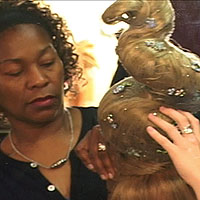
With a name like “Hairspray,” it’s easy to guess what an important part costuming, hair and make-up must play in the success of this Tony Award-winning musical. Spark gets a look at the woman behind the big hair with Best of Broadway’s “Hairspray” wig master Joy Marcelle.

  • Array
  • Array

San Francisco Opera

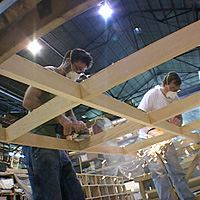
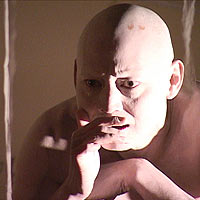
Producing an opera means thousands of hours of hard work and ingenuity, and many of the people that make it happen are not those in the spotlight. In the episode “Backstage Crafts,” Spark goes behind the scenes with the San Francisco Opera as the set construction crew takes on the staggering task of building the ambitiously designed scenery for the production of Ferruccio Busoni’s 1925 opera “Doktor Faust.”

Whereas American operatic productions have mostly stuck with traditional designs for sets and costumes over the last 20 years Europeans have been more interpretive in their art direction. “Doktor Faust,” which is co-produced with the Stuttgart Opera, brings some of the more avant-garde aspects of the new European opera to American shores. Set designer Anna Viebrock came up with a single set that will carry a narrative that takes place in four distinct scenes.

The opera tells the story of a man, whose life is shattered after he makes a deal with the devil, and Viebrock wanted the scenery to emphasize the harsh reality of Faust’s plight. While visiting the Potrero Hill warehouse where the SF Opera’s set construction crew works, she discovered a crumbling industrial scene shop that captured exactly the mood she hoped to create. The carpenters and painters then set about faithfully reproducing the room’s decrepit, ’50s-era acoustic tile ceilings, peeling paint, rusted water pipes, fire sprinklers and industrial windows.

One of the challenges of the design came from Viebrock’s set with more than 1,500 industrial acoustic tiles of the kind that she saw at the warehouse. But those tiles are no longer being manufactured. Moreover, they would have deadened the sound of the singers on stage. So the SF Opera scene shop contracted with an Ohio outfit to manufacture plastic replicas that were painted to look like the real thing. The surface was then painstakingly treated to simulate the stains and peeling paint that result from water damage.

The set for “Doktor Faust” is unusually large. The typical set for San Francisco’s War Memorial Theater, where the opera is being put on, is about 60 feet wide. At 98 feet across at its widest point, the L-shaped set for “Doktor Faust” occupies the entire stage, reaching 60 feet upstage and standing 48 feet tall. The floor, walls and ceiling of the set, an area of 10,000 square feet, required approximately 200 sheets of plywood, all of which were hand-painted by scenic artists to the specifications of the design.

Because the War Memorial Theater puts on more than one production at a time and because the opera will be traveling to the Stuttgart Opera, the set needed to be easy to break down, ship, and reassemble. The set construction team accomplished this by making 100 modular flats that are able to fit into four standard 8x8x40-foot shipping containers. Even the enormous ceiling for “Doktor Faust” is designed to be disassembled. Put together, with its skylights, hanging industrial sprinkler pipes and fluorescent lighting, the ceiling weighs approximately 9,000 pounds.

More about the San Francisco Opera
Founded in 1923 by Gaetano Merola, the San Francisco Opera is now the second-largest opera company in North America. The War Memorial Opera House has been the home of the SF Opera since 1932, when it was inaugurated with a performance of “Tosca.” All of their productions include supertitles — English translations of the libretto projected over the proscenium simultaneously with the action on stage. Additionally, the SF Opera presents an annual free concert in Golden Gate Park on the Sunday following opening night of their fall season.

  • Array
  • Array
  • Array

John O’Keefe

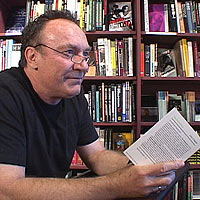
In the episode “World Premieres,” Spark talks to John O’Keefe, a San Francisco playwright who’s been on the scene for decades. From the first draft to final rehearsals, from his home in the artist community Project Artaud to the stage at Cinnabar Theater, watch the development of his new play, “Queer Theory,” set to make its world premiere in Petaluma.

“Queer Theory” is the story of the meeting of two women following separate paths that have lead them to the birthplace of the BrontĂ«s. One woman, Rebecca, is a ruthless power broker in the academic world; the other, an Iowa farm woman. These seemingly mismatched characters eventually become roommates.

That the farm woman is from Iowa is perhaps a personal touch — O’Keefe himself is a native Iowan. Born in Waterloo, Iowa, in 1940, O’Keefe was drawn first to singing. He attended the University of Iowa on a vocal scholarship. However, O’Keefe switched tracks in college, going on to graduate with a B.A. in philosophy and an M.F.A. in theater arts. He then became involved with the Center for New Performing Arts and the Iowa Theater Lab.

O’Keefe came to San Francisco in the early 1970s, beginning an affiliation with Magic Theater that continues to this day. O’Keefe also co-founded the Blake Street Hawkeyes, a performance-lab ensemble based in Berkeley. In 2000, O’Keefe embarked on a residency with Cinnabar Theater to create a trilogy exploring the ethos and personal traumas of the World War II era. “Queer Theory” is the fourth O’Keefe play to premiere at Cinnabar — the others being “Glamour,” “Times Like These” and “Spook.” The relationship allows O’Keefe to test his new works before producing them in larger venues and cities.

Internationally renowned, his works have toured the country and abroad. O’Keefe has received numerous awards and honors throughout his career, including winning the Bay Area Critic’s Award for his play “All Night Long,” a Bessie Award for “Shimmer,” and residencies at the Sundance Film Institute and the University of Iowa. Most recently, O’Keefe has been awarded a Gerbode Foundation grant to write a libretto for the Berkeley Opera for 2004 and a 2002-2003 Los Angeles Drama Critics Circle Award for “Times Like These.”

More about Cinnabar Theater
Cinnabar Theater is part of the larger Cinnabar Arts Corporation, established in 1974 by Marvin and Jan Klebe to operate the theater and to provide an umbrella organization under which all the various projects and companies could operate. Cinnabar presents a wide array of performances, from operatic to experimental to little-known classics. The theater’s Young Rep program offers classes in musical theater, voice training, classical and contemporary acting techniques, opera, dance, and technical theater taught by professional singers, actors and directors.

Cinnabar Theater
cinnabartheater.org
Where: 3333 Petaluma Blvd., North Petaluma
Phone: (707) 763-8920

  • Array
  • Array
  • Array

The Crucible

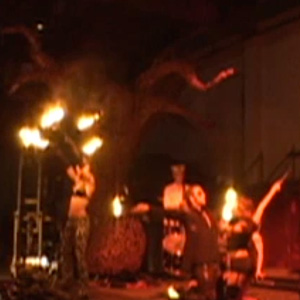
In what might qualify as an unlikely artistic collaboration, the San Francisco Opera and Oakland’s industrial arts center, The Crucible team up to stage a pyrotechnic version of Purcell’s “Dido and Aeneas.” Spark visits The Crucible’s cavernous warehouse as The Crucible director Michael Sturtz and San Francisco Opera director Roy Rallo are preparing to unveil something never before seen — the world’s first fire opera.

  • Array
  • Array

A.C.T. and Carey Perloff

Considered the greatest success of Samuel Beckett’s career, “Waiting for Godot” premiered on January 5, 1953, at the tiny Theatre de Babylone in Paris. Although critics labeled “Godot” as “the strange little play in which nothing happens,” it gradually became a success through strong word of mouth and eventually ran for 400 performances. Since then, “Godot” has been produced the world over and translated into more than 20 languages. Beckett later won the Nobel Prize for literature in 1969.

In the Spark episode “The Art of Interpretation,” the American Conservatory Theater (A.C.T.) celebrates the 50th anniversary of the Paris premiere of “Waiting for Godot” with a new production directed by artistic director Carey Perloff. Abandoning conventional techniques of plot, character, setting and dialogue while distilling life and art to their very essence, “Waiting for Godot,” Perloff believes, is at once an existential vaudeville, an anatomy of a marriage, a plea for resistance and a philosophical meditation on being in the world.

As a former English literature scholar at both Stanford and Oxford, Perloff is well versed in the classics. Her passion for Beckett was sparked by her mother, Marjorie Perloff, who is a renowned Beckett scholar and professor emerita of English at Stanford. Marjorie’s writings on the play expand on Hugh Kenner’s observations that the play resembles Beckett’s experience in the French resistance — part of Beckett’s job was to wait to receive coded messages about German troop movements, translate them, pass them along to a stranger, then continue to wait for the next message.

“The truth is, all of us have spent a good portion of our lives waiting — waiting for something to happen,” says Perloff. “We believe there is a purpose to our existence, but for much of our time on Earth, that true purpose seems mysterious and hidden. The reality that Beckett so brilliantly explores in ‘Godot’ is that while we’re never certain of what is ahead of us at any moment, we go on longing for certainty anyway. That is what it means to be human, and it is what makes the characters in ‘Godot’ so moving: In the bleakest hour in the most desolate landscape, they never give up hope. What better play for this moment in history?”

More about the American Conservatory Theater
Founded in 1965 by William Ball, A.C.T. opened its first San Francisco season at the Geary Theater in 1967. Since then, more than 300 A.C.T. productions have been performed, along the way winning a Tony Award for outstanding theater performance and training. A.C.T.’s conservatory was the first training program in the United States not affiliated with a college or university that is accredited to award a master of fine arts degree. Danny Glover, Annette Bening, Denzel Washington, Benjamin Bratt and Winona Ryder are among the conservatory’s distinguished former students. A.C.T.’s performance, education and outreach programs reach more than 250,000 people in the San Francisco Bay Area every year.

Array

  • Array
  • Array
  • Array
  • Array

Marga Gomez

Nationally touring comedienne and actress Marga Gomez writes and performs solo shows based primarily on biographical material. Spark goes backstage with Gomez at The Marsh as she discusses her transitions between the worlds of stage comedy and Hollywood and workshops “Los Big Names,” which is about her experience growing up in a show-business family.

  • Array
  • Array

Porchlight

Every month Beth Lisick and Arline Klatte organize Porchlight, a venue for unscripted and unrehearsed storytelling. The Spark episode “First-Person Narratives” follows Lisick and Klatte as they put together an evening of testimonials at San Francisco’s CafĂ© du Nord that share the theme “I Quit.”

Both of Porchlight’s organizers have long been involved with the art of storytelling. Klatte is a widely published freelance journalist and former lifestyles editor for the “Moscow Times,” and Lisick has done performance art, written fiction and poetry, and works as a columnist for SF Gate. But Porchlight is not a venue for experienced storytellers. In an attempt to present a more spontaneous, everyday kind of tale telling, Lisick and Klatte consistently bring together groups of people who, though comfortable enough to get up on stage and speak before a full house, are not professional performers. Stories are unscripted and performers are permitted only one rehearsal in front of Porchlight organizers and fellow presenters.

Lisick and Klatte pride themselves on their commitment to selecting performers that come from varying backgrounds and experiences. And certainly, one of the greatest strengths of the Porchlight series is the broad range of people who contribute. In addition to a number of emerging local literary talents, past storytellers have included cartoonist Keith Knight, a 70-year-old mushroom hunter, a tow truck driver, a forensic scientist and formal mayoral candidate Matt Gonzalez.

Performers are encouraged to reveal as many details and feelings as possible, as Lisick and Klatte have found that audiences respond to authenticity. Lisick and Klatte also have been pleased to discover that such testimonials help to create a sense of community. In the breaks between the storyteller’s stories audience members often share their own, similar tales.

  • Array
  • Array
  • Array

Tamalpais High School’s Conservatory Theater Ensemble

In the Spark episode “First Person Narrative,” visit the Conservatory Theater Ensemble (CTE), an award-winning theater education program that offers a four-year training program in all aspects of theatrical production. Based at Tamalpais High School, whose drama program boasts the participation of almost a third of the students, the CTE is a student-run theater company that draws particularly committed drama students and instills within them a professional approach to theatrical production. The CTE program has opened the door for many to pursue a variety of careers in this field.

Under the direction of guest artist John Warren, students develop, write, produce and perform an original play. The current production, being put on by 13 students, is “Vaulting the Median: Stories of Protest on Camino Alto.” The production examines social protest in Mill Valley through the stories of the town’s residents. As a documentary theater project, the play’s dialogue is scripted entirely from interviews conducted by the students themselves. On stage, the actors speak the words of the people they interviewed, seeking to understand and and accurately represent their views. The Spark story follows the students through the entire development of this production, leading up to opening night. Through this process, the production team gains knowledge of Mill Valley’s rich history and a better understanding of the complex social issues that surround the act of protesting.

“Vaulting the Median” echoes another CTE documentary theater piece, “Patterns of Interference: The John Walker Lindh Project.” Similarly, the play was based upon the words of the local residents of Marin County and scripted from more than 50 interviews conducted by students to elicit an understanding of the residents’ responses to the issue. Also directed by Warren, the intention was to articulate the multiple opinions in a dynamic and accurate way and in so doing, to promote a deeper understanding of the controversy. Warren is committed to this principle of dialogue and debate, offering ordinary people the chance to be heard.

The CTE is one of the most comprehensive public-school theater programs in the country. Students are trained in all aspects of the theater, from fund-raising and business management to production and stage management — together with all the technical skills involved. In its use of ensemble performances, the CTE also teaches students a collaborative approach to theater and the benefits of effective teamwork. Everyone, from actors to playwrights to backstage crew, contributes to the power of the performance.

Array

  • Array
  • Array
  • Array

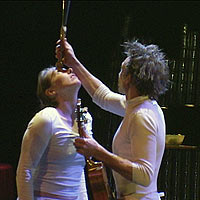
Gypsy Snider

Circus artist Gypsy Snider is familiar with the circus arts. At age 4, she began performing in the Pickle Family Circus in San Francisco with its founders, her mother Peggy Snider and stepfather Larry Pisoni. Since then, she has studied theater and circus arts at the world-famous Teatro Dimitri in Verscio, Switzerland, and has enjoyed a full career as a performing artist in a variety of circus companies, including the world-renowned Cirque du Soleil. The Spark episode “All in the Family” follows Snider as she mounts a performance with her new troupe at San Francisco’s Palace of Fine Arts Theatre.

Snider has recently joined forces with six other passionate and talented artists to create Les Sept Doigts de la Main (the seven fingers of the hand), a Montreal-based company that tours internationally. All seven members were at the height of their careers, performing with Cirque du Soleil, when they decided to leave the big arena for a smaller company dedicated to a new kind of circus performance.

The concept behind Les Sept Doigts’ work is to create a show that combines the wonder of circus performance with the reality of people’s everyday lives. The show presents the performers as seven real people interacting with each other, learning to live together, and entertaining one another. The set resembles a simple, inner-city apartment and the performers are costumed in just T-shirts and long underwear, and they use minimal makeup.

Without elaborate sets and costumes to distract them, audience members are able to focus on the virtuoso performances of the players. By incorporating juggling, aerial acts, clowning, contortion and hand balancing into their interactions, performers are able to play off the individual strengths and talents of each other, transforming real-life situations into something fantastic.

Just as the circus was inseparable from her childhood family life, the adult Snider also integrates family and performance. She is married to Patrick Leonard, a classically trained performer and fellow member of Les Sept Doigts, and together they are raising their young daughter, Laska, within the collective. Laska goes on the road with her parents, but has not been put in the show. Although Laska is surrounded by circus performers and is learning acrobatics, Snider wants her daughter to make her own decisions about her future.

Array

  • Array
  • Array
  • Array

Opera San Jose

Far removed from the designer reality-show sets, a different “real world” plays out, a short distance away from the overpriced bungalows of Silicon Valley. Each year, Opera San JosĂ© chooses budding vocalists for its resident company. They live in a 14-unit apartment complex and pursue the dream of becoming a professional opera singer. Spark drops in on this unique solution to the affordable housing crisis: a generous arts organization enabling gifted singers to live and work together full time as they prepare for their dĂ©buts. Currently in production is the 19th-century George Bizet opera “The Pearl Fishers.”

A principal artist at New York’s Metropolitan Opera for 20 seasons, general director Irene Dalis founded Opera San JosĂ© in 1984. With support from a dedicated subscriber and sponsor base, the company acquired two 24,000-square-foot operations facilities and two apartment buildings (14 units total) for free artist housing. The singers participate in the equivalent of opera boot camp: They perform at least four feature or leading roles in Opera San JosĂ© productions during one season. All the singers receive an annual salary, benefits and free housing.

Dalis and music director David Rohrbaugh patterned this residency after Dalis’s experiences as a youth in a German opera company whose singers were housed together. The arrangement allowed residents to completely immerse themselves in their art without worrying about rent. It is this spirit of community and creativity that Dalis successfully transplanted to San Jose.

In its explorationof the Opera San JosĂ© company, the Spark episode “Making Room for Art” shows that drama isn’t limited to the stage. Six of the company singers live in an apartment building located a 15-minute drive from the rehearsal hall. A husband and wife singing duo live with their two children (it is rare in the opera world to be parents because of the high risk of catching colds). They all take vocal lessons, experience a pending theater relocation, and go through production issues and wardrobe malfunctions. When they return to their apartments, it’s back to bills, dirty diapers (for some) and what’s for dinner.

The program accelerates the learning process and prepares singers for the rigors of a professional opera career. They don’t have to deliver pizzas or singing telegrams to make a buck. What Opera San JosĂ© has accomplished is one of the most innovative artists-in-residence programs in the country — a program that enables artists to work on their craft 24/7. In a unique twist to reality programming, nobody gets voted off.

  • Array
  • Array
  • Array

Sha Sha Higby

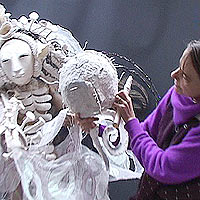
It’s wonderfully difficult to describe the work of Sha Sha Higby. Her costumes, or moving sculptures, are tornados of colors, textures and shapes. They look like everything and nothing at the same time. There are no analogies that can fully characterize Higby’s work, but one might be reminded of a Venetian Carnivale mask, African tribal art or a character in Japanese Noh theater.

That familiar images make up an otherworldly whole in her costumes is perhaps appropriate, given the experience of the artist herself. The path of Higby’s artistic development has been a journey through distant places, landing her here in the Bay Area. When Higby was a child, she made birds, filling her house with paintings and drawings of them. Her parents were divorcing at the time, and she described the birds as “something to divert me, a way out.” This artwork was a form of escape, but it was also the first step in her development as an artist.

After college, Higby’s career took flight, carrying her from her home in Marin to Asia. Her experiences abroad give her work its marked Eastern influence. “I studied with a craftsman who creates for the Noh theater. They have very elaborate costumes — and these heads, these masks — they move so slowly, they’re like sculptures. They have this strong, emotional quality, but it’s very slow. It’s subtle.”

Later, Higby received a Fulbright scholarship to study shadow puppetry and make sculptures in Indonesia, a country whose artistic sensibilities balanced well with Japan’s. “I went to Indonesia to study the elaborateness,” she explains. “Japan is simplicity. Indonesia is the fullness of the ornate. … It’s like a flat landscape when you look at it, but when you peel it away, there’s all this richness and complexity of layers, which I like in my work.”

In the Spark episode “Fusion,” get a glimpse of Higby’s creative process, a process that has wandered through time, leaped over oceans and slowly grown by accretion. Each individual costume that is used in performance can take years to make and is informed by a lifetime of experience. The semi-abstract nature of Higby’s costumes allows viewers to color the experience with their own imagination — one might end up in a place far away that the artist herself may not have imagined. With her art, Higby has found her journey and achieved her escape. The hope is that the viewers will find theirs as well.

Array

  • Array
  • Array
  • Array

Calligraphy of Thought

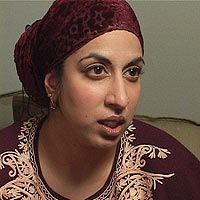
In the Spark episode “Fusion,” listen to Calligraphy of Thought as they create and rehearse new works for a performance at the Oakland Box Theater, celebrating the release of several new albums on the Remarkable Current label. Calligraphy of Thought poets Eman Tai and Cathy Espinoza stand proud and speak from the heart about their personal and political concerns as the tight rhythms of rap and its energy and insistent beat transform the power of their words and demand attention.

Calligraphy of Thought is an East Bay Muslim poetry collective whose members transpose the beauty of expression into spoken word, celebrating what it means to be Muslim. Through its various performance forms, Calligraphy of Thought has rekindled the vital link between Islam and poetry while providing a forum for young artists to voice their opinions and ambitions.

Prompted by the discrimination against Muslims following the events of September 11, Calligraphy of Thought seeks to extend the view of Muslims beyond the political conflicts that pervaded the American media. “I want people to get a sense of how we experience love, friendship and frustrations as well as politics,” says Tai.

Tai, who has been writing poetry for many years, became aware of the absence of Muslims at the poetry slams she attended. Inspired by poet and professor June Jordan, she organized the first Calligraphy of Thought event in Oakland in 1999 to create an atmosphere of spiritual consciousness, to give Muslim artists a platform for their voice and to challenge stereotypes, particularly those of Muslim women. Since Calligraphy of Thought has been around, poetry readings, hip hop, rap and funk events have been held in the East Bay and San Jose for Muslims to make their voices heard in a uniquely American and contemporary way.

Array

  • Array
  • Array
  • Array
  • Array

Ledoh and Salt Farm Butoh Dance Company

During the social upheaval and rapid Westernization of Japan following World War II, the dance form known as butoh emerged. Unlike anything traditional Japanese or Western culture had seen before, butoh (originally “ankoko butoh”) began as an avant-garde dance practice that offered both a new means of expression to its practitioners and a fundamentally different way of life. At once grotesque and humorous, erotic and violent, the first butoh performers explored a range of issues previously considered inappropriate for the content of dance, such as decay, devastation and the loss of nature in post-A-bomb Japan. Today, almost 50 years later, there are nearly as many ways of performing butoh as there are artists exploring the form.

In the Spark episode “Frontiers of Dance,” the dancers of the Salt Farm Butoh Dance Company and their artistic director Ledoh work on a new piece called “River of Sand,” an exploration of Ledoh’s birthplace. Complete with music and visual projections, the group worked on the various elements of the performance for months before the event at the Headlands Center for the Arts (HCA). As participants in the HCA’s resident artist program, the Salt Farm members have been working on the costuming, set design, lights and music and sharing the activities of their daily lives.

Ledoh was born into the Karen hilltribe of Burma. He relocated to the United States, then returned to Asia in the late 1980s, to Japan, where he first encountered butoh. Ledoh remained in Japan through the early 1990s as a member of the Saltimbanques dance troupe, led by longtime butoh dancer Katsura Khan. Now a resident of the Bay Area, Ledoh is using butoh as a vehicle to uncover his Burmese ancestry while also exploring universal themes of understanding that connect him and his audiences.

Unlike many modern dancers who are also choreographers, Ledoh resists the structure of choreography in his work and the work of his company. Instead he opts to invite the dancers to improvise and explore themes and movements together, alternately leading and following. Ledoh directs and guides the dancers, but ultimately even the performance is not choreographed in the traditional sense.

The success of a Salt Farm butoh performance is also gauged differently than other modern dance performances. One of Ledoh’s fundamental beliefs is that the audience must be physically, mentally and emotionally present, therefore participating fully in the moment. In order for this to occur, the dancers in a butoh performance must also be fully present to draw audience members into the transformative possibilities of the performance. According to Ledoh, “To see a good butoh performance is to be present in the space and be enveloped by it.”

Array

  • Array
  • Array
  • Array

Brenda Wong Aoki

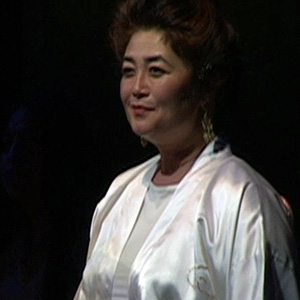
Brenda Wong Aoki’s ancestors were Chinese, Japanese, Spanish and Scottish. She’s shares the stage at Yerba Buena Center for the Arts with Gayle Ross a descendent of John Ross, Chief of the Cherokee Nation. The two women come from cultures that are worlds apart but they share a lifelong passion for telling stories in this segment of Spark.

  • Array