This post was contributed by Andrew Freedman of our content partners at Climate Central. Find out why scientists are using volcanoes as a possible model for global climate intervention, on the Climate Watch blog and on KQED’s Forum program.
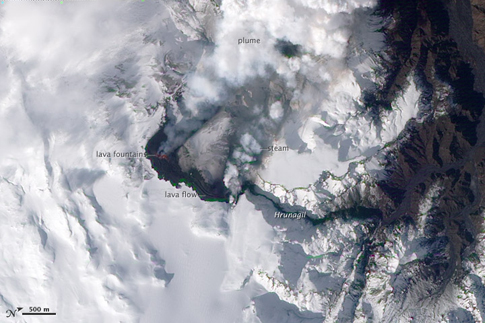
The ongoing eruption of Mt. Eyjafjallajokull in Iceland is disrupting flights across Europe, shutting down some of the busiest airports and aviation corridors in the world. But could it also disrupt the climate system, leading to a temporary cooling trend this summer?
Not likely, according to Rutgers University environmental sciences professor Alan Robock, an expert on how volcanoes alter the composition of the Earth’s atmosphere. According to Robock, the Icelandic eruption hasn’t contributed enough sulfur dioxide to the upper atmosphere to significantly alter the climate.
“From what I’ve seen from the observations so far, there hasn’t been enough put into the atmosphere to have a large climate effect,” he said in a telephone interview.
It is well known that volcanic eruptions can affect the climate. Just ask historians, who can tell you about the “year without a summer” that followed the enormous eruption of Mt. Tambora in Indonesia in 1816. More recently, the 1991 eruption of Mt. Pinatubo in the Philippines, which contributed about 20 megatons of volcanic material to the atmosphere, cooled global average surface temperatures by about one degree Fahrenheit in the year following the eruption.
By vaulting particles of sulfur dioxide and other reflective aerosols high into the stratosphere, volcanic eruptions can reduce the amount of solar radiation reaching the planet’s surface. However, this only results in temporary cooling, since chemical processes and air currents remove the particles over time.
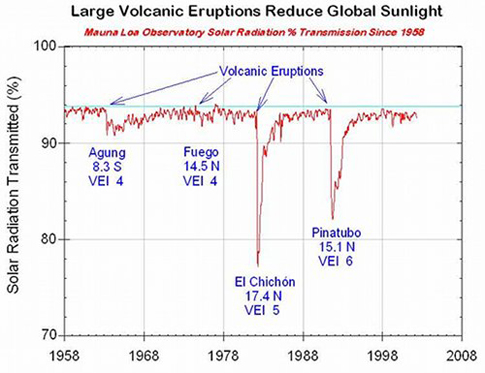
In addition to causing short-term cooling, volcanoes also contribute carbon dioxide (CO2) to the atmosphere, which in the very long-term balances slow CO2 losses from other causes. The volcanic contribution of CO2 to the atmosphere is estimated to be well less than the recent human contribution, on average.
Robock noted that the ash cloud that is canceling flights would not alter the climate, since it will fall out of the air in a matter of days. “What’s dangerous for airplanes is not what causes climate to change,” he said.
The volcano’s climate impacts may also be limited by its high-latitude location, since the air circulation in the upper atmosphere in the high latitudes tends to be more efficient at getting rid of volcanic material, compared to lower latitudes where sulfur dioxide particles from volcanoes can linger for years.
Robock noted that Icelandic eruptions have disrupted climate in the past, such as a long duration event in 1783-4 that cooled temperatures in Europe, catching then US ambassador to France Benjamin Franklin’s attention. According to the National Oceanic and Atmospheric Administration, Franklin was a pioneer in linking a volcanic eruption to climate change.
It’s still possible that this volcano, which is continuing to erupt, may yet send more volcanic material into the upper atmosphere, thereby causing a cooler summer in the northern hemisphere.
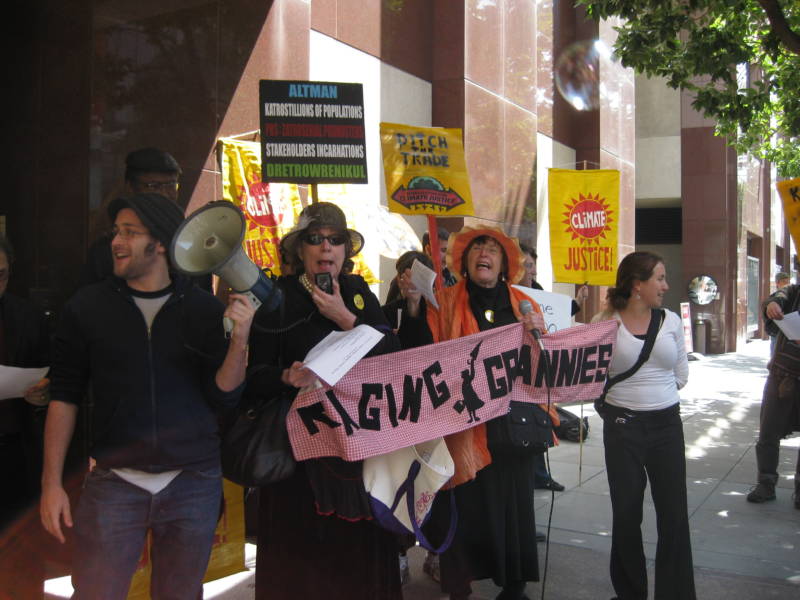
 California has had a climate change mitigation law on the books for more than three years now–but getting that law’s regulations fully in place is proving to be a tough slog.
 California has
  By 2020, California will see two million new jobs whether the state implements its climate law AB 32 or not, according to a
 Aside from the political and economic risks associated with geoengineering, which we explored in
  Here’s a news flash: California has an air pollution problem. According to the American Lung Association’s