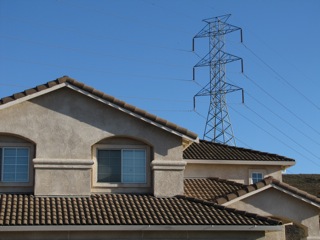
Most Californians rely on electricity from distant sources.
By Thibault Worth
California’s mandated goal of 33% renewable energy by 2020 may be bold and ambitious. But there’s room to raise the bar still higher, say proponents of local renewable power.
A report commissioned by Governor Jerry Brown last year — and released this week by Berkeley School of Law’s Center for Law, Energy & the Environment (CLEE) — lays out a plan for developing 12,000 Megawatts of renewable power generation close to homes and workplaces by 2020. Continue reading Amping Up Local Renewable Power→
The Heartland Institute cries foul as Gleick is invited back to work
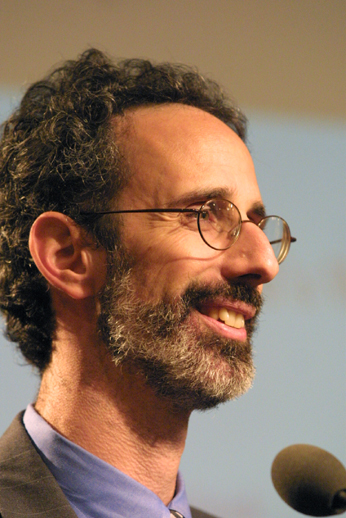
After a three-month internal investigation, Pacific Institute president Peter Gleick has been cleared of further wrongdoing in the Heartland Institute scandal.
The announcement that Peter Gleick has been reinstated as president of the Pacific Institute was met with an outcry from the Heartland Institute, which has vowed to press ahead in its effort to prosecute the noted scientist for fraud.
“The Pacific Institute’s board of directors has failed to perform its duty and should be deeply ashamed,” said Heartland president Joseph Bast in a statement released today. “We have asked the federal government to prosecute Gleick for what we believe were serious crimes he committed, and we await its decision.”
Gleick took a leave of absence from the Oakland-based Pacific Institute in February, as an independent internal investigation began looking into allegations that he had given a false name to Heartland, and also manufactured a document containing detailed strategy information on Heartland’s national effort to downplay climate science.
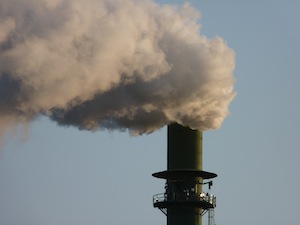
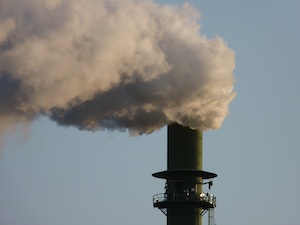
CO2 levels have been climbing since the Industrial Revolution.
I’m not big on taking note of milestones. They’re artificial, and usually meaningless, but people get all worked up about them anyway. I don’t like to stay up late on New Year’s Eve, for example, because Dec. 31 is a purely arbitrary date. Nothing real actually begins the next day, but we all pretend otherwise. I have similar feelings about the first day of spring, the temperature reaching 100° as opposed to 99° and all sorts of other magic-sounding dates and numbers that don’t have any real significance.
But since no law says I have to be consistent, I’m going to take note of a milestone that happened some time in the past couple of months, and which was reported last week by NOAA. For the first time in recorded history, and almost certainly for much longer than that, the atmosphere’s concentration of carbon dioxide, or CO2, has nipped above 400 parts per million in at least one part of the world. Monitoring stations in Alaska, northern Europe, and Asia have all noted readings above that level during this past spring.
In one sense, this isn’t all that important. There’s no meaningful difference between 399 ppm and 400, and the current world average is more like 393. Even in the Arctic, scientists know the CO2 level will drop back below 400 this summer, as trees in the Northern Hemisphere suck carbon dioxide back out of the atmosphere (you can see the annual ups and downs as trees start growing in the spring and go into hibernation in the fall). We won’t get to a world average of 400 for several years yet. Continue reading 400 ppm: A Milestone that Means Everything, and Nothing→
Jump-starting the Bay Area’s battery research could yield answers beyond 2020
By Thibault Worth
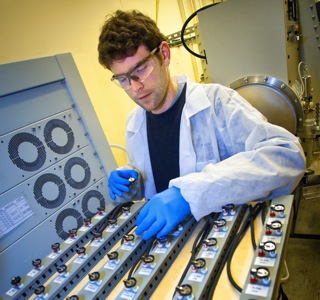
Tommy Conry loading a lithium coin cell for testing at LBNL's battery lab.
We’ve reported extensively about AB 32, California’s 2006 greenhouse gas reductions law that calls for 1990-level carbon emissions by 2020.
But what happens to carbon reduction efforts beyond that date?
A less publicized, yet more aggressive 2050 target calls for slashing carbon emissions to 80% below 1990 levels by mid-century. That goal was established by an Executive Order by Governor Arnold Schwarzenegger in 2005. Achieving such an ambitious target will require a range of initiatives, including building better batteries.
AB 32 calls for 33% of California’s energy to come from renewable sources by 2020. But while solar and wind energy produce zero carbon, they also fluctuate. The current solution is to balance those fluctuations with fast-ramping natural gas-fired power plants. And they produce carbon aplenty. Continue reading Can Better Batteries Shrink California’s Carbon Footprint?→
Lawmakers weigh in on what to do with the carbon-trading windfall
AB 32 requires California's largest emitters to meet carbon reduction targets. If a firm's emissions are below state-mandated targets, it may auction off its remaining "allowances" to firms that exceeded their emissions targets.
On Tuesday, the State Assembly passed new legislation, AB 1532, that narrowed the options. The bill, which the California Chamber of Commerce has described as a “job killer” and an “illegal tax,” passed 47-26 and awaits action in the Senate. If ratified, it would establish a “Greenhouse Gas Reduction Account” within the state Air Pollution Control Fund and authorize spending auction proceeds on clean energy technology, low-carbon transportation, conservation and green energy research and development.
Scientists stumbled on Fallen Leaf Lake and the ancient trees under its surface
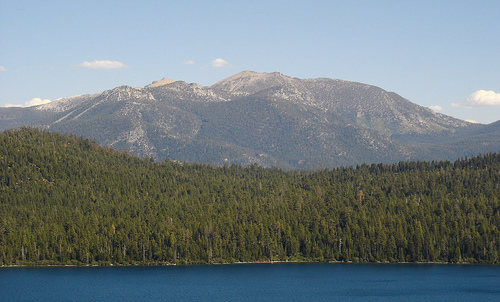
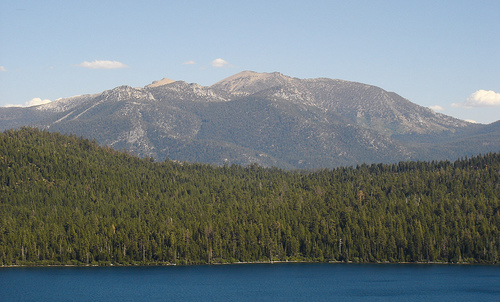
Scientists found important climate clues hidden away under Fallen Leaf Lake, just south of Lake Tahoe.
Graham Kent wasn’t researching megadroughts when he and a team of scientists began studying Fallen Leaf Lake, just south of Lake Tahoe. They were mapping faults. The little lake is a good place to study West Tahoe Fault, which cuts right through it.
“Little did we know it was a natural lab for droughts, as well,” Kent, director of the Nevada Seismological Lab at University of Nevada, Reno, told me over the phone. “So what started out as a seismic hazard endeavor became both a seismic hazard and climate study.”
The USS Iowa being readied for towing from Richmond to San Pedro, CA.
This has nothing to do with climate as we usually cover it here and everything to do with Memorial Day. But somewhere off the California coast, the battleship USS Iowa is on its final voyage to become a floating museum in San Pedro. That’s a long way from speculation a couple of years ago that she would become a reef at the bottom of some ocean.
People like Bob Rogers were not about to let that happen. “She’s the last of the dreadnoughts,” says Rogers, who led one of several efforts to save the Iowa from scrapping or sinking. “She was a true ship-of-the-line, designed to go toe-to-toe with any ship, including the enemy’s largest, slug it out and survive.” And survive she did, through five decades and three wars. And though Rogers’ campaign to land her for Stockton was not successful, he’s just glad she found a good home after eleven years in limbo. “She’s going to a great place,” he told me, on the ship’s final morning in Richmond. “We all had the same goal. We wanted to see this ship saved.” Continue reading A More Agreeable Climate for Iowa→
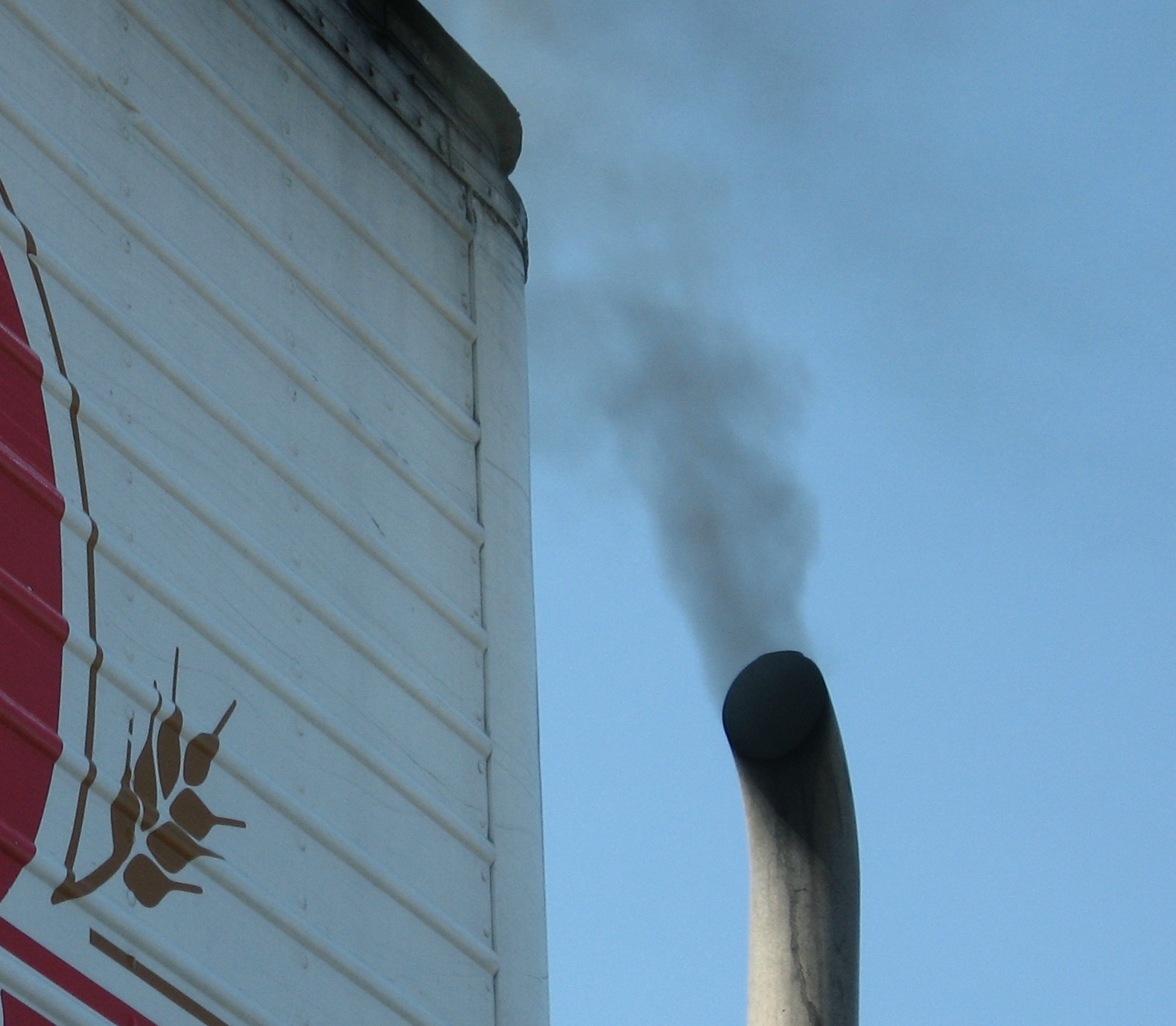
While carbon dioxide reductions are at the heart of efforts in California to curb greenhouse gas emissions, state air regulators were reminded in a hearing on Thursday not to overlook a number of other “short-lived” greenhouse pollutants in meeting targets outlined under AB 32, the state’s Global Warming Solutions Act.
Wildfire response in California doubling last year’s pace — with fewer resources
For the second straight year, CalFire is running its engines with reduced staffing.” credit=”Craig Miller
Get ready for what might be a nasty season for wildfires in California. Though few have made big news so far, CalFire says that its crews have already responded to more than 1,000 fires this spring — that’s double the pace from a year ago and well ahead of the five-year average.
And fires aren’t the only challenge. State firefighters are already trying to do more with less. CalFire is working with a smaller budget and reduced staffing on its engines.
“It’s tough,” says Clare Frank, CalFire’s assistant deputy director. “I won’t say we’re unimpacted. We’re doing our best to minimize the impact on the public.” Frank says that so far, budget cuts have not affected the agency’s basic attack strategy in the field. “We’re still going to pursue our goal of keeping 90% of the fires at 10 acres or less,” Frank told me after an inter-agency briefing on Wednesday.” “We want to keep small fires small, we want to hit them hard with initial attack, and that strategy remains the same.” Continue reading Fire Season Off to a Roaring Start→