Vote on $11 Billion Water Bond Delayed Another Two Years

The massive bond, which would have been on this year’s ballot, will now go to voters in 2014
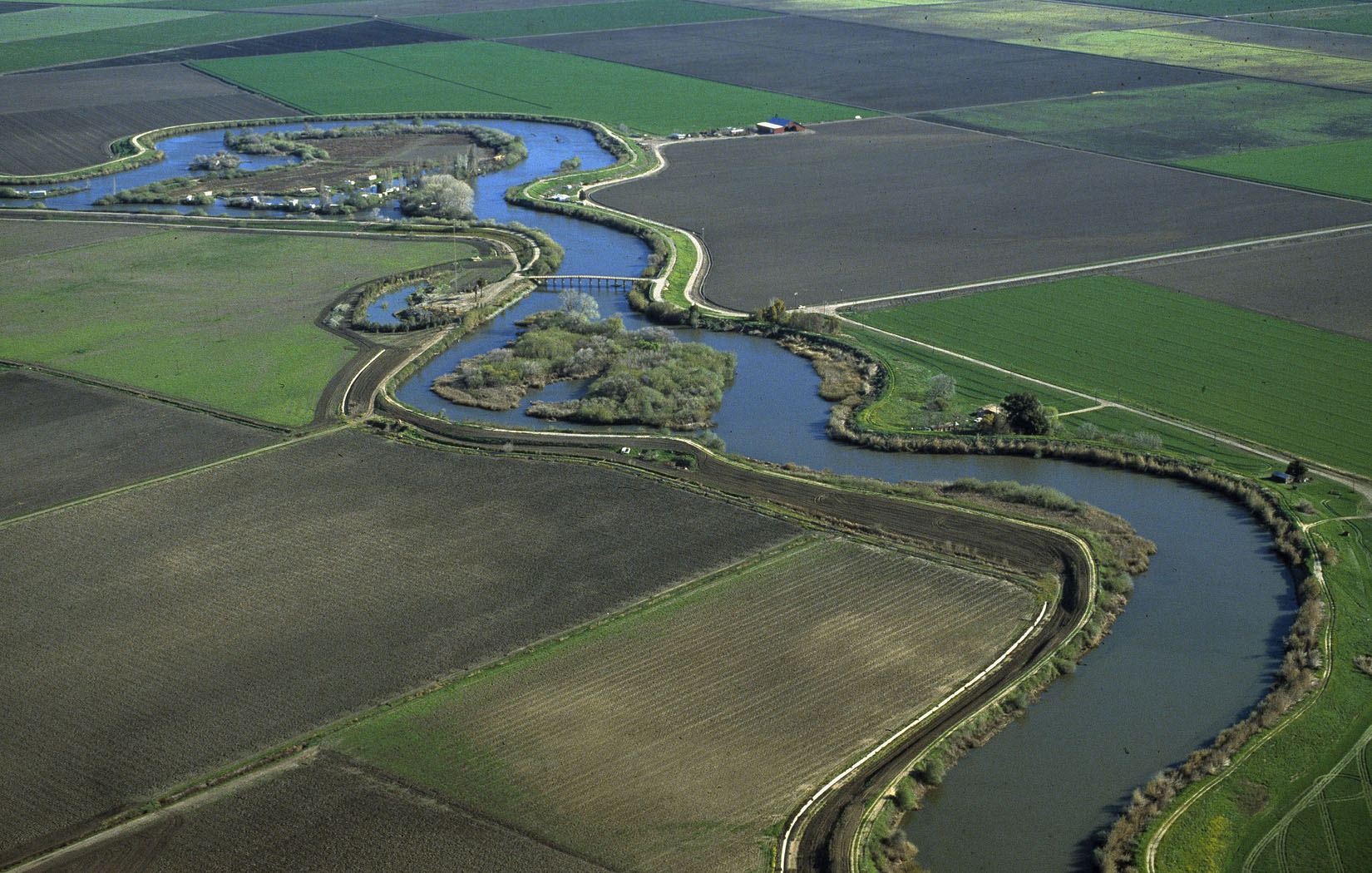
The water bond would help fund restoration projects in the Delta.

The California legislature voted in favor of postponing the state’s water bond on Thursday. The bond, which would provide funds for water supply, environmental restoration and groundwater protection projects, was originally scheduled to be on the November, 2010 ballot. Then, the legislature voted to delay until this year, when they pushed it back, again.

“The ballot was too crowded and people had a lot of other things on their mind,” Senator Jean Fuller told me before the vote. “People are much more concerned about financial issues.”

Governor Jerry Brown’s tax measure is on this November’s ballot. He had previously asked for the water bond to be delayed, because he also didn’t want the competition.

An analysis by the Pacific Institute found that the bond is the largest since the one that funded the State Water Project in the 1960’s. Continue reading Vote on $11 Billion Water Bond Delayed Another Two Years
CalFire: Watching Colorado, Preparing for the Worst

There have already been more than 2,500 wildfires in California this year

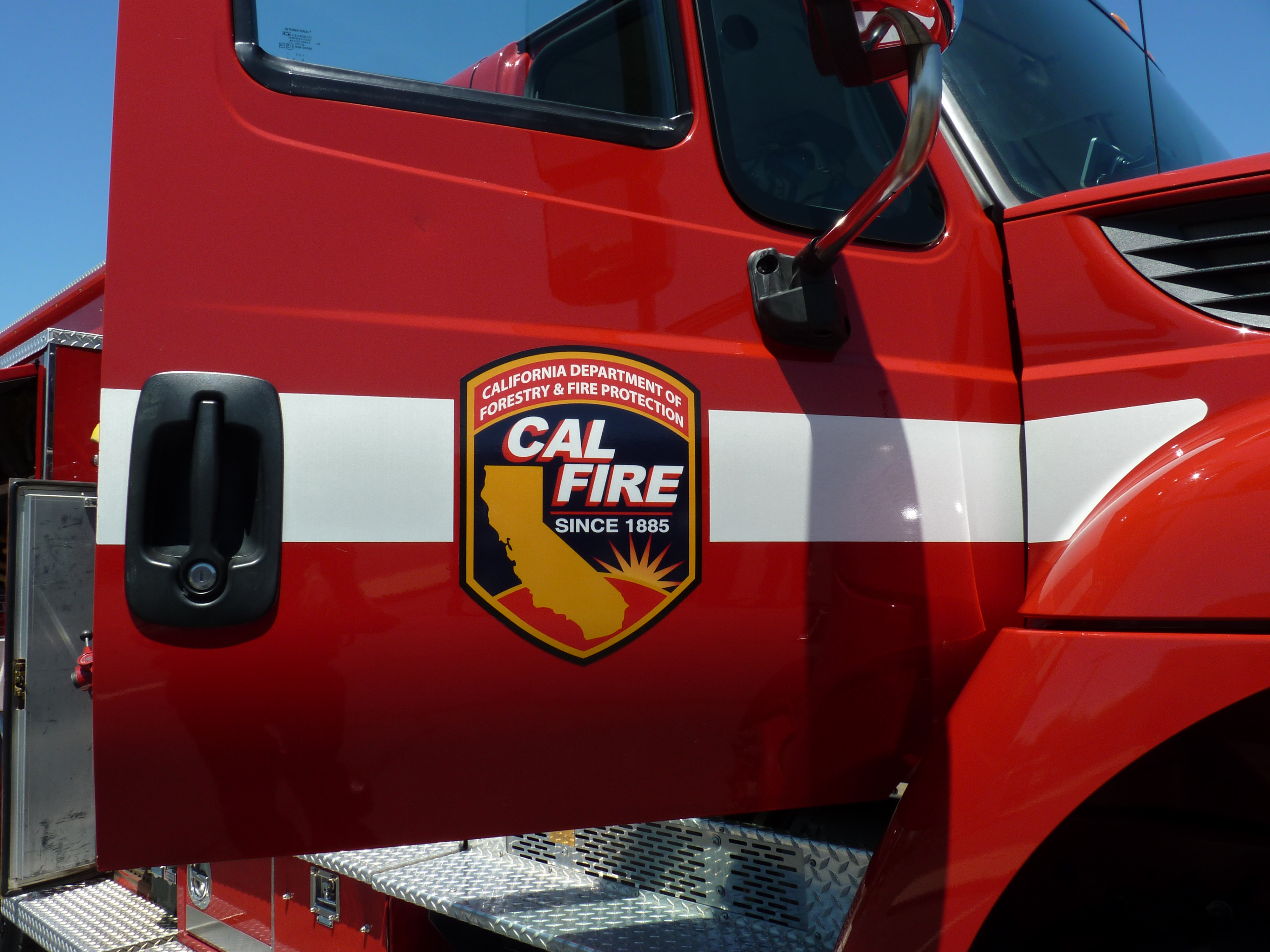
A wildfire truck owned by California Department of Forestry and Fire Protection (CalFire).

While CalFire experts, embedded with the California National Guard are helping fight the massive wildfires in Colorado, CalFire is also beefing up at home, preparing for the peak of California’s fire season. As of this week, the agency is fully staffed, with 7,000 personnel, hundreds of engines and dozens of air tankers and helicopters.

CalFire has already responded to 2,308 fires this year — that’s more than 1,000 more than at this time last year, and higher than the five-year average, too. Combined with the fires in local jurisdictions, there have been more than 2,500 fires this year, and that doesn’t include wildfires on federal land. Continue reading CalFire: Watching Colorado, Preparing for the Worst

Talking Climate, Online in Real Time

Stanford professor is using new tools to hang out and chat

Stanford professor Noah Diffenbaugh is using real time, online video chat to engage the public in discussions of climate science.

Noah Diffenbaugh, an assistant professor in the Department of Environmental Earth System Science at Stanford, has focused largely on climate variability and the influence of humans on the global climate system. Lately, he’s also being spending time in the cloud.

In April, he launched an online discussion forum called Hangouts on Air, in which participants from anywhere around the world (with a broadband connection, that is) can participate in real-time online discussions about climate.

Participation has been limited in these first months, but Diffenbaugh says the model holds promise for engaging the public on the complex, contentious and rapidly evolving issues in climate science. He agreed to answer some questions for Climate Watch. Continue reading Talking Climate, Online in Real Time

Heat Wave Adds to Colorado Wildfire Woes

Record-breaking heat combined with drought create ideal conditions for wildfire

So far this summer, California has been spared from massive wildfires like the ones raging in Colorado. You can keep tabs on fires in California on CalFire’s statewide map.

By Andrew Freedman

The Waldo Canyon fire burns off the southern border of the U.S. Air Force Academy in Colorado Springs.

Blistering and desiccating heat across the West and High Plains helped aggravate an already dangerous wildfire situation in Colorado and several other states, and now the heat is moving eastward toward the Midwest, South Central states, and eventually the Mid-Atlantic and Southeast.

Denver endured a record fifth straight day of 100-degree temperatures on Tuesday, and the high temperature of 105°F tied the city’s all-time record high, a milestone that reached just a day earlier. Colorado Springs also hit an all-time mark on Tuesday, with a high of 101°F.

At least 23 daily high temperature records were broken or tied in Colorado alone on Tuesday. Continue reading Heat Wave Adds to Colorado Wildfire Woes

Why is Hydropower Relicensing So Complicated?

Unraveling the knot of hydropower development on the Yuba River

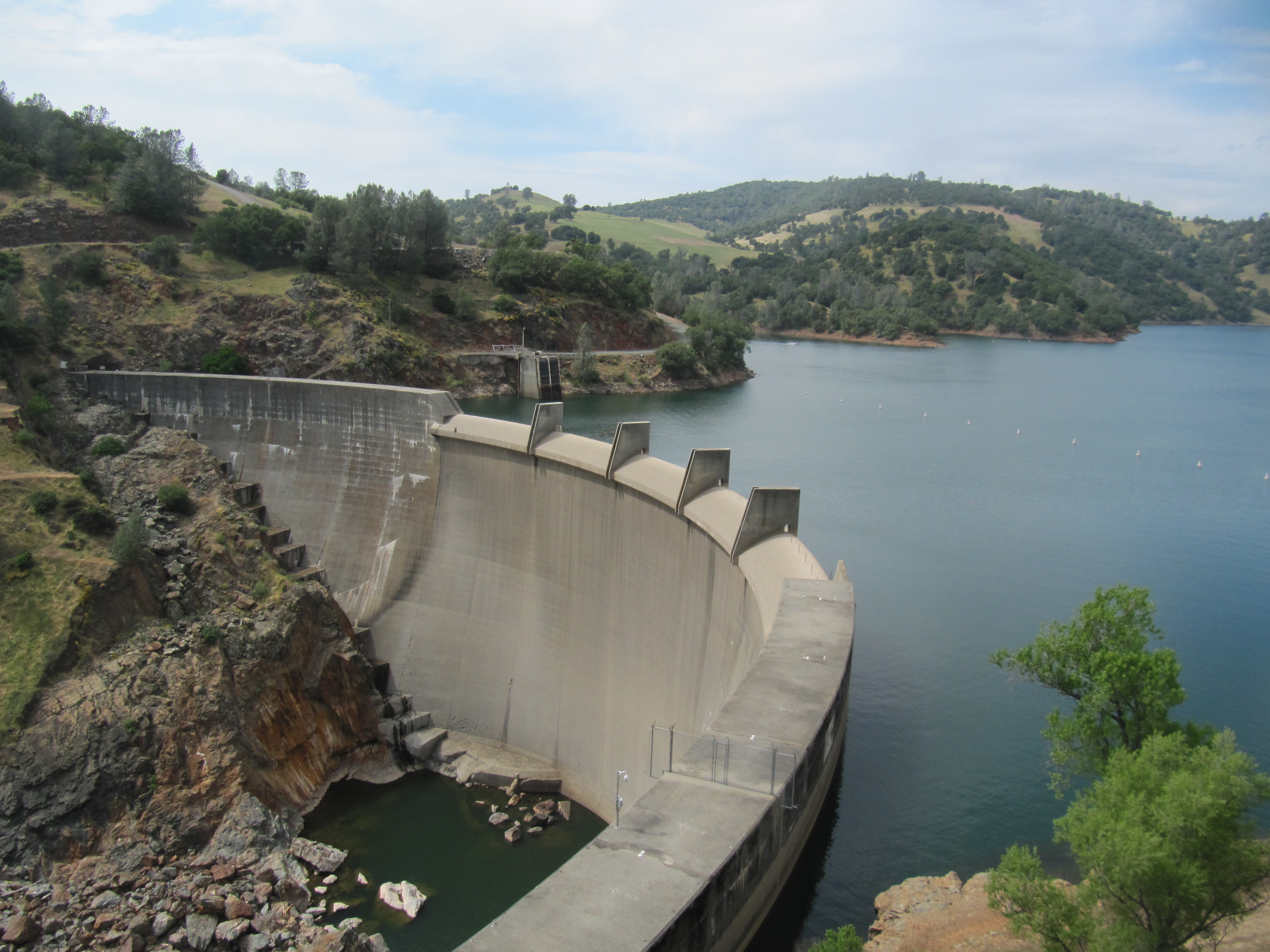
Englebright Dam is not part of any of the hydro projects on the Yuba River, but it's surrounded by them.

When most of the dams in California were built, there were few, if any, safety or environmental regulations governing how they operated. Now most hydropower projects, whether they’re owned by local agencies or power companies, need licenses from the Federal Energy Regulatory Commission, or FERC. (Federal projects don’t require FERC licenses.) Licenses are good for 30 to 50 years, and licensees don’t have to keep up with, for instance, environmental laws passed in the intervening years. So when a hydropower project does come up for relicensing, there’s a lot to catch up on.

I described some of the relicensing process in a radio story for The California Report for Climate Watch’s “Water and Power” series. Dennis Smith, the Hydropower Relicensing Manager for Region 5 for the Forest Service, gave me a taste of how complicated relicensing is when he showed me a flow chart [PDF] of how the process works. It has 39 boxes on it, each a discrete step. A typical application takes at least five years to complete. Some take much longer.

“You could have a child and he would be in the first grade by the time you got a license for a dam,” Smith said. Continue reading Why is Hydropower Relicensing So Complicated?

Sea Level Rise Will Hit Calif. Harder Than Rest of the West

New study zeroes in on sea level rise on the West Coast, finds variation based on location

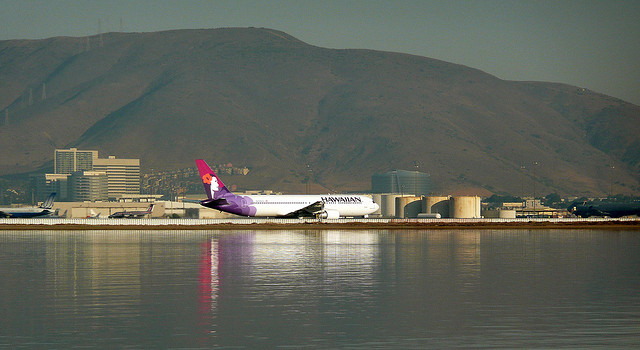
San Francisco International Airport could be underwater within the next few decades.

By 2030, sea levels on most of California’s coast will be five inches higher than ten years ago. By 2100, three feet higher. That’s according to a new report by the National Research Council. The study arrived at numbers that aren’t far from previous projections of sea level rise, but other research has been on a global scale, and this one focused specifically on the West Coast.

“What was surprising to me was Oregon and Washington being so different,” Robert Dalrymple told me; he’s a professor of civil engineering at Johns Hopkins University and chair of the Committee on Sea Level Rise in California, Oregon, and Washington, which wrote the report.

Sea level rise happens at different rates at different places. Continue reading Sea Level Rise Will Hit Calif. Harder Than Rest of the West

Zooming in on L.A.’s Warming Climate

First-of-its-kind study breaks down predictions for 27 L.A. microclimates

Green roofs like this one at Vista Hermosa City Park are part of the solution for Los Angeles

Listen to the radio version of this story on The California Report.

The City and County of Los Angeles now have customized climate predictions, thanks to a new UCLA study that took global climate science and made it local. A UCLA supercomputer ran for eight months to downscale 22 different global climate models, distilling them into a surgically precise look at L.A. County and beyond. It’s a new kind of Hollywood close-up and it’s a sobering one: temperatures will rise in areas of Los Angeles County by an average of 4 to 5 degrees by mid-century.

Commissioned by the city of Los Angeles, funded by a U.S. Department of Energy grant and conducted by UCLA’s Department of Atmospheric and Oceanic Science, the study focused on forecasting for the metro area between 2041 and 2060. But instead of relying on the global climate model grids that use data from 100 kilometer-square cells of the earth’s surface, the UCLA team’s “quintillion-plus” calculations — yes, that’s with 18 zeros — zoom in to a resolution of 2 square kilometers, just over a square mile.  So instead of data and forecasting for the whole county, you can talk specifically about climate change for Corona, for example. Continue reading Zooming in on L.A.’s Warming Climate

Is Hydroelectric Power a ‘Renewable’ Energy Source?

Most California hydro doesn’t count toward utilities’ renewable energy mandates. Should it?

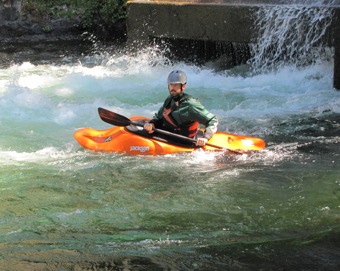
Tricky waters: a kayaker navigates the surge at the outlet of the Oxbow Powerhouse on the upper American River.

It’s a fair question and one that a reader posed during our recent series on “Water and Power” in California. Hydro has its virtues. It’s clean, once it’s built; producing hydropower creates no significant greenhouse gas or other emissions. And it’s certainly “renewable” as long as the water flows. But it’s not without its environmental impacts, especially where large “terminal” dams are involved (the kind that fish can’t get past).

In fact, state regulators divide the resource into “large” and “small” hydro, the latter being defined as anything producing 30 megawatts of power or less. Utilities can count small hydro toward their mandated Renewable Portfolio Standard (RPS) but not the bigger operations. But why? Continue reading Is Hydroelectric Power a ‘Renewable’ Energy Source?

Can Cutting Carbon Fuel Growth?

The perennial debate returns, this time at a symposium on the Low Carbon Fuel Standard

Daniel Sperling, director of UC Davis' Institute for Transportation Studies, speaking at the Asilomar Conference in 2011.

Do environmental regulations boost innovation and job creation, or do they just make the state a more expensive place in which to live and do business?

The Low Carbon Fuel Standard (LCFS), the section of California’s landmark 2006 global warming act that deals with the decarbonization of transport fuels, has become the latest focus of that debate.

The enforcement element of LCFS begins January 1, 2013. But the standard—complex and 5 years in the making—remains largely unknown to the public. Continue reading Can Cutting Carbon Fuel Growth?

Water From Above and Below Likely Culprit in SoCal Landslide

Rain, irrigation and residential development contributed to November’s San Pedro Slide

Options for fixing the San Pedro Slide in southwestern Los Angeles range from several million to 62 million dollars.

It’s a long and inconclusive list of usual suspects that appear in the final draft report [PDF] released by the City of Los Angeles this week. The Department of Public Works tapped the Glendale geotechnical consulting firm Shannon and Wilson to investigate the slide that sent a 600-foot section of seaside roadway toward the Pacific last November.

My radio report and blog post back in April explained the slippery mix of water and soft sediment that permeates the Palos Verdes Peninsula, and what happens when too much water gets between those unstable layers of earth.

Shannon and Wilson’s report lists the following as “contributors” to the slide: irrigation — both residential and watering done inside the White Point Nature Preserve adjacent to the slide — coastal bluff erosion, precipitation, road construction and underground utilities. Just above the Preserve is a 13.2-acre complex of U.S. Air Force housing, and watering from those homes could be “influencing groundwater” near the slide. Continue reading Water From Above and Below Likely Culprit in SoCal Landslide