Battle lines are forming as Governor Brown prepares to roll out his proposal for the Delta
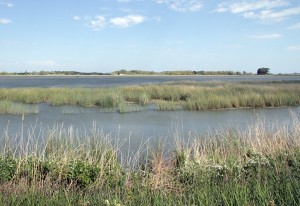
The Sacramento-San Joaquin Delta plays a crucial role in the state’s water supply.” credit=”Josh Cassidy/KQED
On Wednesday, Governor Jerry Brown and Interior Secretary Ken Salazar are expected to announce a multi-billion dollar plan designed to fix California’s longstanding water war in the Sacramento-San Joaquin Delta.
Their proposal for a 35-mile water tunnel is set to reignite the fight over how water is exported from the Delta. The announcement comes just months after federal and state wildlife agencies warned that the proposed version of the project could have dramatic impacts on Delta fish.
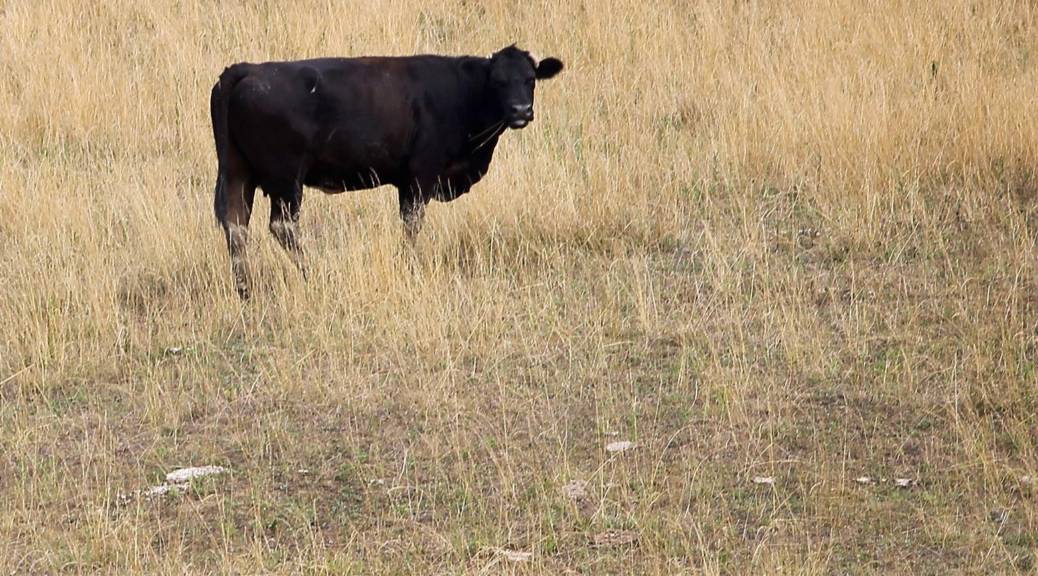
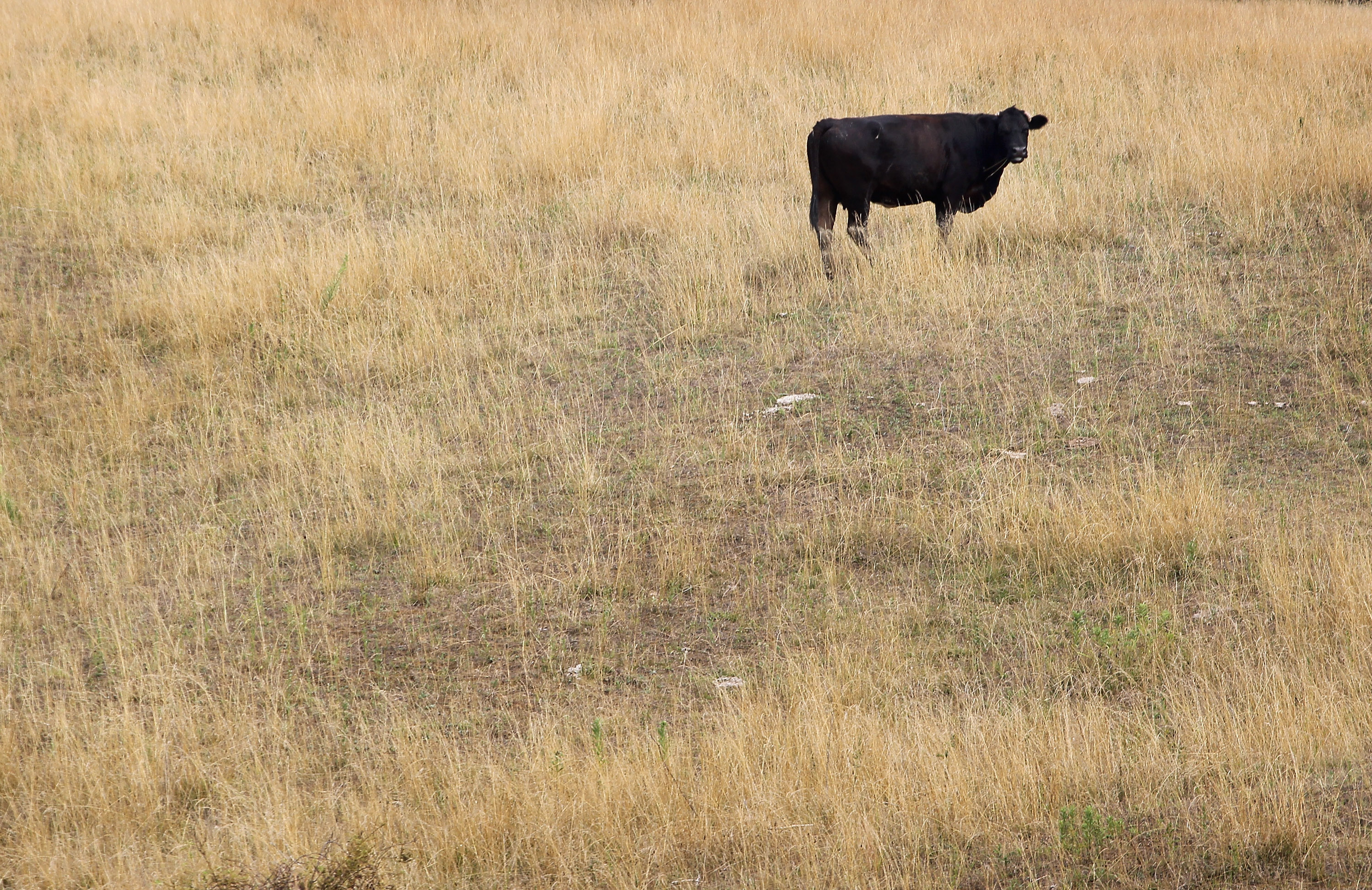
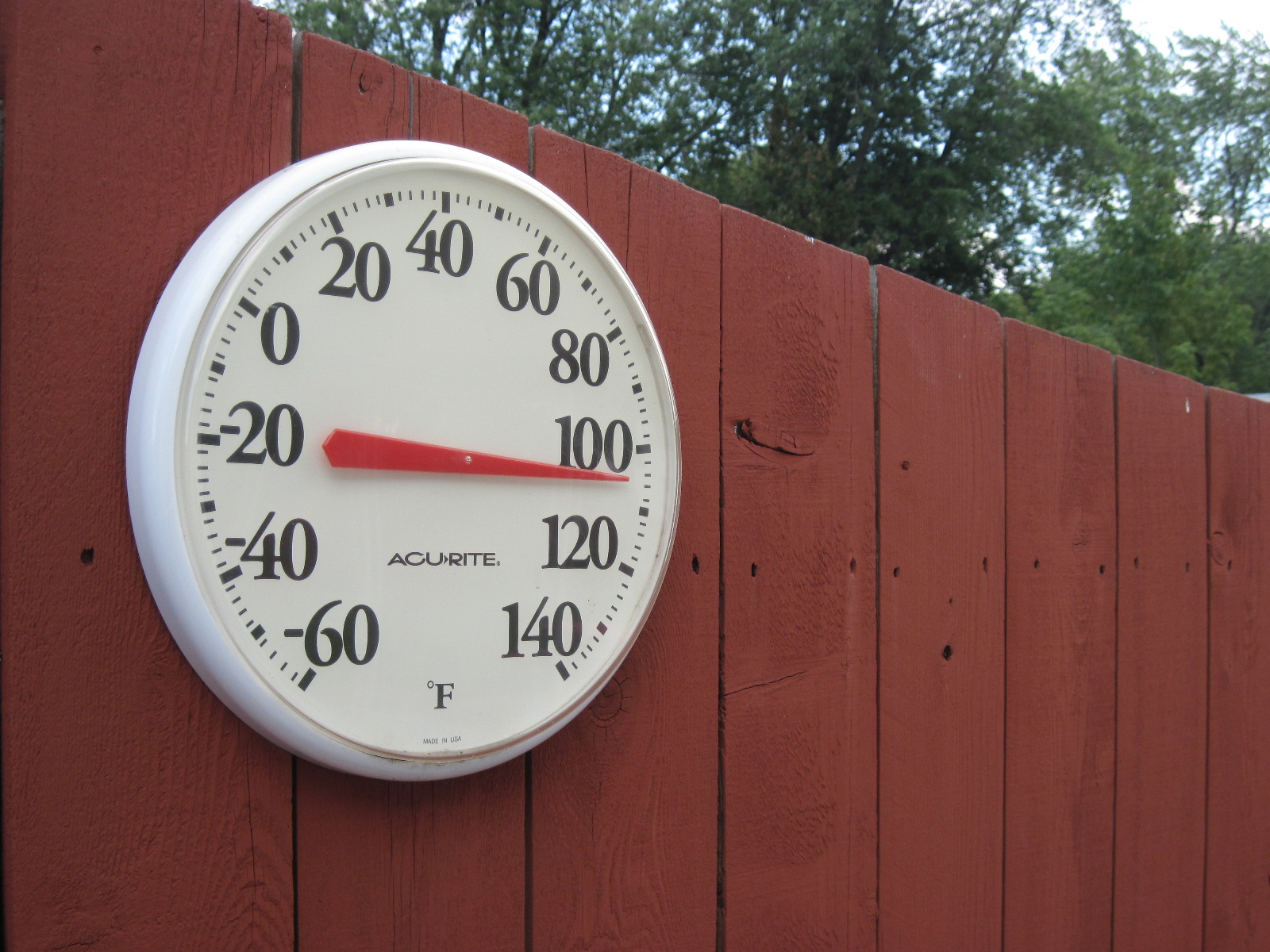
A cow feeds in a drought-damaged pasture as temperatures climb near 100 degrees on July 17, 2012 near Princeton, Indiana.
Driven by a combination of natural climate variability, manmade global warming, and plain old bad luck, drought conditions are so widespread in the U.S. that it’s possible to take a cross-country flight from Washington, D.C. to San Francisco — a distance of approximately 2,400 miles — without once overflying an unaffected area. With about 81 percent of the lower 48 states experiencing at least abnormally dry conditions, and 63 percent mired in moderate-to-exceptional drought, it’s becoming harder and harder to find an oasis. And the dog days of August are yet to come.
The National Oceanic and Atmospheric Administration (NOAA) already ranks this drought as one of the worst on record, comparable to the drought events of the 1950s. The last time there were such widespread drought conditions in the corn-growing region of the country was in 1988, and that drought cost at least $40 billion.
Researchers hope to sway Congress on expanding the California-based standard, though it remains untested at home
Proponents of California’s low-carbon fuel standard (LCFS) hope problems with the federal Renewable Fuel Standard (RFS) could spell an opportunity to promote the state’s groundbreaking alternative approach at the national level.
Dan Sperling is leading California's LCFS research group.
Scientists from six research institutions—including UC Davis—are attending a bipartisan briefing on Capitol Hill this week to present the results of a new study touting the potential benefits of a national low-carbon standard.
Facing the difference between how much water plants need, and how much they’ll get
Scientists are looking at climatic water deficit, the water plants need but don't have.
We hear a lot about how climate change will affect rainfall in California, but climate scientists are increasingly looking at a new indicator: water deficit.
“Climatic water deficit” relates to how much water plants need to survive. “It’s the difference between what a plant would use if it had the water and what is actually available,” Alan Flint, research hydrologist with the US Geological Survey, explained on Wednesday at the North America Congress for Conservation Biology.
The value combines temperature, rainfall, the soil’s capacity to hold water and how plants use water. In agriculture, farmers irrigate their crops to make up the water deficit, but plants in the natural world aren’t so lucky. Continue reading Bay Area Landscape Likely to Come Up Short on Water→
As soil dries, more of the sun’s energy goes into heating the air directly, rather than evaporating moisture from the ground.
Droughts such as the one currently gripping a majority of the U.S. may dramatically increase the odds of extremely hot days, a new study found. The study, published in Proceedings of the National Academy of Sciences, explores a dynamic that is playing out right now across the country, particularly in the Great Plains, where the severe drought is priming the atmosphere in favor of an above-average number of extremely hot days.
This occurs because of feedbacks between the ground and the air: as the soil and vegetation dry, more of the sun’s energy is able to go into heating the air directly, rather than going into evaporating moisture from plants and the soil.
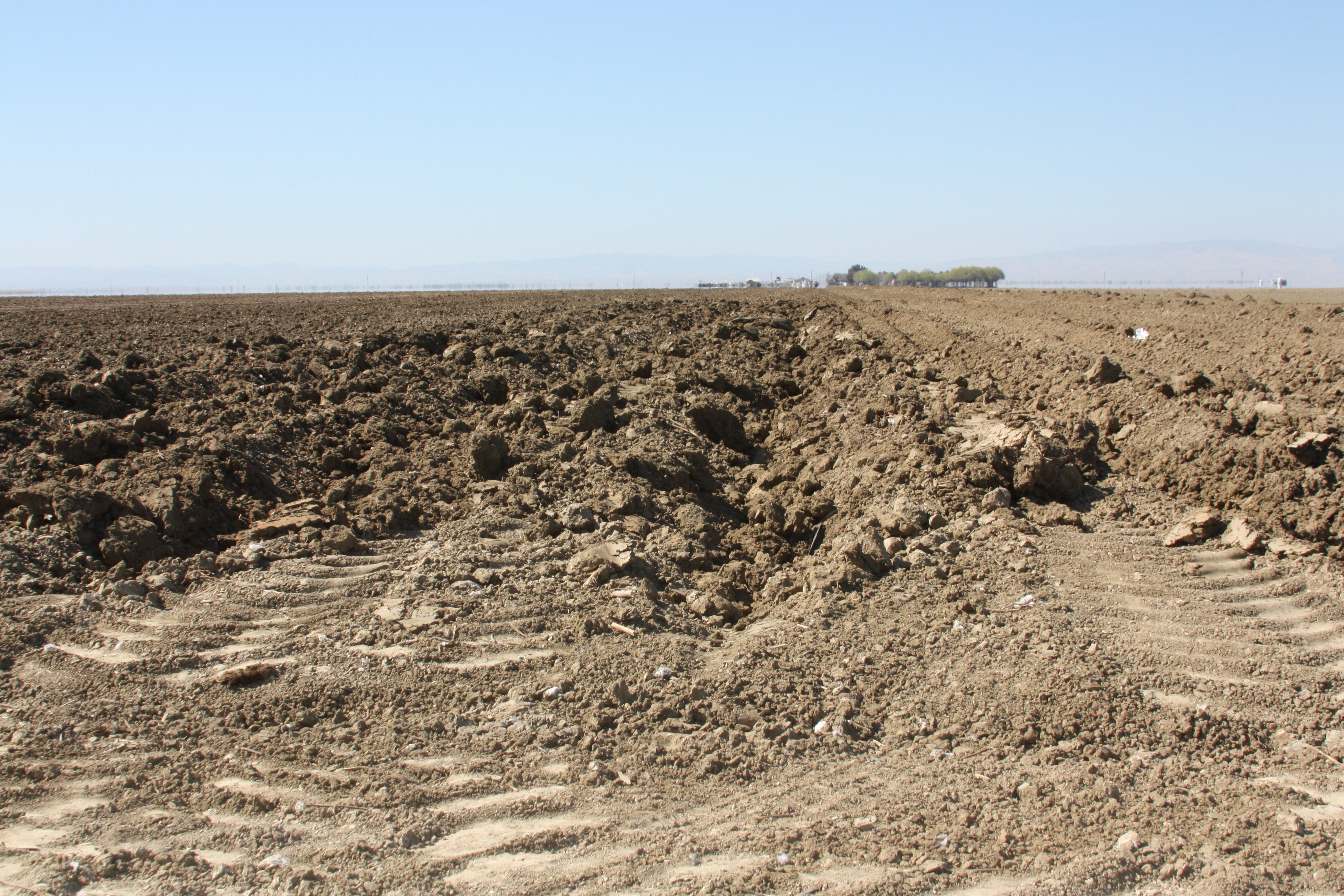
Researchers at CSU have teamed up with NASA to test water-saving technology on California crops
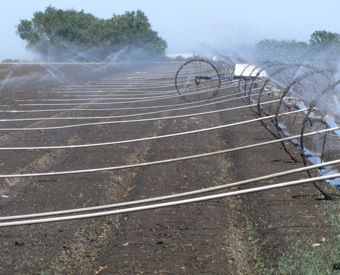
Watering fields in the Sacramento Valley: traditional irrigation methods have required a lot of guess-work.
By Vinnee Tong
Near the Central Valley town of Los Banos, Anthony Pereira opens a tap to send water into the fields at his family’s farm. Pereira grows cotton, alfalfa and tomatoes. And he is constantly deciding how much water is the right amount to use.
“Water savings is always an issue,” he says. “That’s why we’re going drip here on this ranch. We gotta try to save what we can now for the years to come.”
Thanks to some new technology, that might get a little easier. To help farmers like Pereira, engineers at NASA and CSU Monterey Bay are developing an online tool that can estimate how much water a field might need. Here’s how it works: satellites orbiting the earth take high-resolution pictures — so detailed that you can zoom in to a quarter of an acre.
“The satellite data is allowing us to get a measurement of how the crop is developing,” says CSUMB scientist Forrest Melton, the lead researcher on the project. “We’re actually measuring the fraction of the field that’s covered by green, growing vegetation.” Continue reading Satellites Helping Save Water on California Farms→
The dean of conservation biology has a message for young scientists: Get out of the lab
Hundreds of scientists are gathered in Oakland this week to share ideas on how to stem the tide of extinctions among plants and animals. On opening night of the inaugural North American Congress for Conservation Biology, they got an earful from Michael Soulé, professor emeritus at UC Santa Cruz, founder of the Wildlands Network and the Society for Conservation Biology. Considered the “father” of conservation biology, Soule is concerned that the work he started is getting bogged down in the lab. I sat down to talk with him at the conference. This is an edited version of the interview.
What were the biggest problems when you started working on conservation biology?
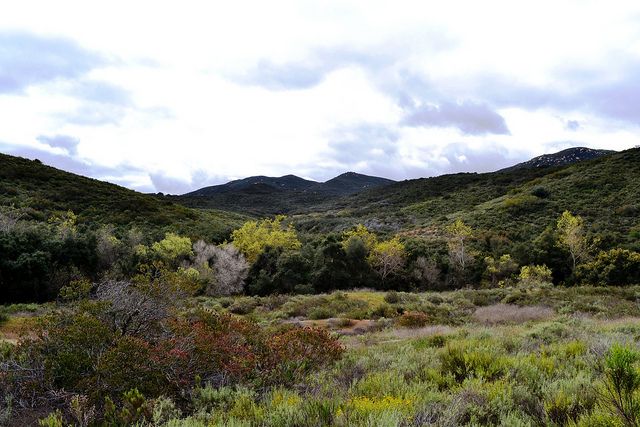
Coastal sage scrub and riparian habitat on the San Diego Refuge.
I was a kid naturalist in San Diego. I went around collecting things and going to tide pools and playing in the chaparral, the coastal sage scrub. Those places are gone now; they’ve been bulldozed and they’re now housing developments. So I saw with my own eyes, and was gradually more and more horrified to see, everything I loved disappear, bulldozed.
Later, in the late ’70s and early ’80s, I recognized that human population growth was a tremendous factor in changing and shrinking habitats all over the world. And we recognized that pollution — in those days it was DDT — was a big factor in causing the disappearance of brown pelicans, for example, on the West Coast. Continue reading Preserving Biodiversity in the Age of Climate Change→
Contaminated areas along the San Francisco Bay could be inundated
The Hunter's Point Naval Shipyard is one of the EPA's Superfund sites in the Bay Area.
As water levels rise, old landfills, shipyards and industrial sites that line the San Francisco Bay are at risk of being submerged, exposed to higher storm surges and inundated by groundwater. Toxic substances, including arsenic, lead, petroleum products, asbestos and DDT that have been sealed off could leech into groundwater or into the Bay.
While the agencies that have a hand in keeping the Bay clean consider sea level rise in new clean-up projects, they can’t necessarily revisit every old one, according to reporter Nate Seltenrich, who wrote about the problem in this week’s East Bay Express. Continue reading Rising Sea Levels Threaten Toxic Sites→
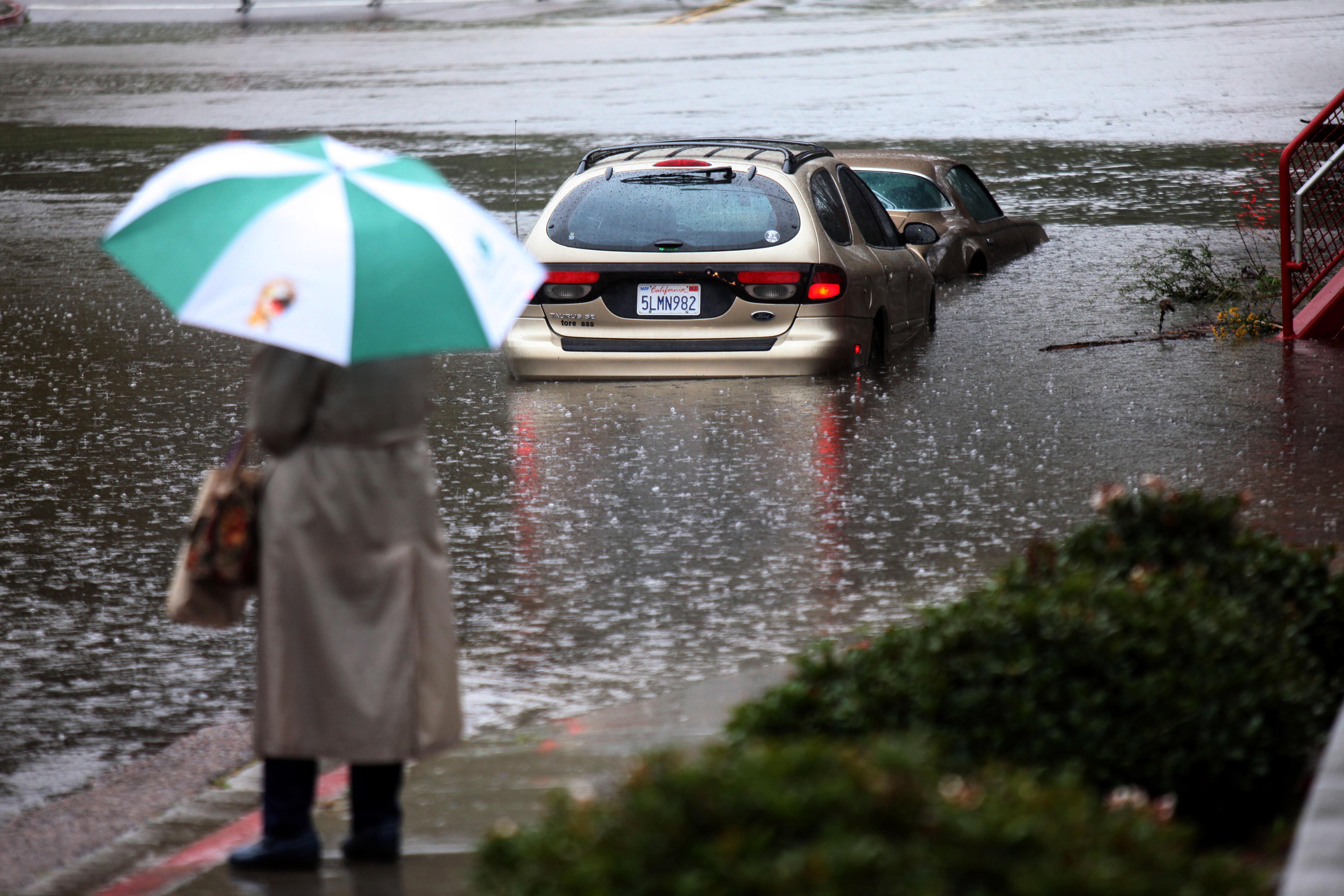
In 2010, a series of strong storms linked to El Niño caused major flooding in Southern California.
If you thought the first six months of the year were chock full of weird weather events, just wait — according to climate scientists there is an increasing likelihood that El Niño conditions will soon develop in the tropical Pacific Ocean. El Niño events, which are characterized by an area of unusually warm sea surface temperatures in the tropical Pacific Ocean, can have a huge influence on global weather patterns. Its effects on the U.S. tend to peak during the winter.
The U.S. has already had a record warm January-to-June period, and has already had two extremely rare heat waves this year, one in March and the other in mid-June to early July. Entering mid-summer, drought conditions are covering 56 percent of the lower 48 states, a record drought extent in the 21st century. Continue reading After Two Years of La Niña, El Niño May Be on the Way→
As the rest of the country roasts, California has enjoyed a moderate summer
California has not experienced the extreme heat much of the rest of the country has this summer.
For more than a week, record-breaking temperatures have been baking the Midwest and East Coast. But while cities in other parts of the country broke and tied records for the hottest Fourth of July, in San Francisco I bundled-up in a couple sweaters and watched the fireworks through the fog. Which is typical. Overall, it’s been an average summer here in California, at least temperature-wise.